

B3935 on 2015-2020 Chevrolet Impala: Understanding the Security Fault and No-Start Causes
On a 2015-2020 Impala, code B3935 almost always points to a security system error caused by Radio Frequency (RF) interference. Before replacing any parts, remove all other keys, fobs, and access cards from your keychain and try starting the car with the Impala key alone. If the key fob battery is weak, placing the fob in the dedicated transmitter pocket in the center console may allow the vehicle to start. This simple step often resolves the no-start issue.
- B3935 means your car's security system is preventing it from starting due to a key authentication failure.
- The most likely cause is not a broken part, but interference from other RFID devices on your keychain.
- Always start diagnosis by removing the Impala key from your keychain and trying to start the car with the key by itself.
- If interference is not the cause, your next steps are to try a spare key and then replace the key fob battery before considering more complex repairs.
- Do not replace expensive modules like the BCM or starter without confirming these simple, high-probability causes first.
What's Unique About the 2015-2020 Chevrolet IMPALA
The tenth-generation Impala, built on the GM Epsilon II platform, shares its sensitive immobilizer system with vehicles like the Buick Regal and Cadillac XTS. General Motors has issued multiple Technical Service Bulletins (TSBs), such as PIC5650M, acknowledging that intermittent no-start conditions with code B3935 are often not caused by a faulty part, but by external radio frequency interference from other devices on the owner's keychain. The official advice is to exhaustively investigate this interference before attempting any parts replacement, as this is the most common cause.
Diagnostic Flowchart
Tap your situation to follow the diagnostic path that matches what you're seeing on this vehicle.
Symptoms You May Notice
- Intermittent no-crank, no-start condition.
- Engine starts briefly and then immediately stalls.
- The security indicator light is illuminated or flashing on the instrument cluster.
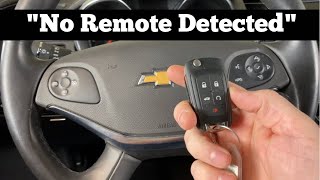
- A "No Remote Detected" or "Service Theft Deterrent System" message appears on the Driver Information Center (DIC).
- Replacing the starter motor. A starter issue typically won't set a security code like B3935.
- Replacing the vehicle's main 12V battery. While a low battery can cause many electrical issues, B3935 specifically points to a key authentication failure, not a lack of cranking power.
- Replacing the Body Control Module (BCM) or Theft Deterrent Module (TDM) without first ruling out RF interference and faulty keys, as explicitly warned against in GM service bulletins.
Most Likely Causes
- Radio Frequency (RF) Interference 🔴 High Probability The vehicle's immobilizer system operates at a frequency (125 kHz) that can be disrupted by other RFID devices. GM TSBs like #PIC5650M specifically list items like other vehicle keys, office key cards, gas station payment fobs, gate passes, and even some aftermarket LED lights or phone chargers as potential sources of interference.
How to confirm: Remove the Impala key from the keychain, isolating it from all other keys and electronic devices. Attempt to start the vehicle with the key alone. If the concern is intermittent, ask the driver what other items are on their keychain or in the car.
Typical fix: Keep the vehicle key on a separate ring from other RFID-enabled cards and fobs. Remove aftermarket chargers or lighting that may be causing interference.
Est. part cost: $0 - Defective Ignition Key 🟡 Medium Probability → Shop Ignition Switch The transponder chip embedded in the key head can fail over time due to being dropped or from internal electronic failure, preventing it from correctly responding to the TDM's security challenge.
How to confirm: Attempt to start the vehicle with a known-good spare key. If the spare key works consistently, the original key is faulty. A locksmith or dealer can also test the key's transponder function.
Typical fix: Replace the defective key. A new key must be cut and programmed to the vehicle by a dealership or qualified automotive locksmith.
Est. part cost: $75-$250 - Weak Key Fob Battery ⚪ Low Probability → Shop Vehicle Battery While the transponder chip is passively powered by the ignition coil, a very weak fob battery can cause erratic communication. For push-button start models, if the fob battery is weak, the car will display "No Remote Detected". This can sometimes be accompanied by security codes.
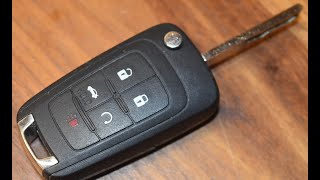
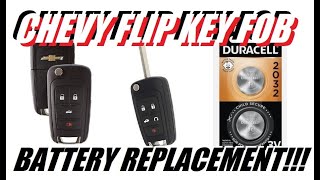
How to confirm: Replace the battery inside the key fob (typically a CR2032 coin cell 🎬 See this quick guide on replacing your flip key battery.). For push-button start models, place the key fob in the dedicated transmitter pocket located in the front of the center console storage area and attempt to start the engine. 🎬 Watch: How to start your Impala with a dead key fob. If it starts, the fob battery is weak.
Typical fix: Install a new CR2032 battery in the key fob.
Est. part cost: $5-$10
Rare But Worth Checking
- Body Control Module (BCM) Software Glitch: → Shop Body Control Module In some GM vehicles, a similar issue with B3935 was traced to a software problem within the BCM that required an update. TSB PI1180A addresses a no-start with B3935 and B2955 on related GM trucks and SUVs, fixed by a BCM reprogram. If the code persists after ruling out interference and key issues, checking for available software updates with a dealer is a valid step.
- Faulty Theft Deterrent Module (TDM) or Antenna: → Shop Anti-Theft Control Module The module itself or the antenna ring (exciter coil) around the ignition cylinder can fail, but this is uncommon. TSB #PIC5650M specifically advises against replacing parts until interference has been ruled out, suggesting this is a rare cause. A failure here would typically result in more consistent, non-intermittent starting problems.
Diagnosis Steps
- Check for other Diagnostic Trouble Codes (DTCs) to see if B3935 is accompanied by others like B3055 or B3060.
- Isolate the key. Remove the Impala key from your keychain. Ensure no other keys, fobs, or RFID cards are nearby. Attempt to start the vehicle. This is the most critical step.
- If the vehicle starts, the issue is RF interference. The diagnosis is complete. Advise the owner to keep the key separate.
- If the vehicle does not start, try using a spare key. If the spare key works consistently, the primary key is faulty.
- For push-button start models, if a "No Remote Detected" message appears, place the key fob into the transmitter pocket inside the center console storage area and try to start the engine. If it starts, replace the CR2032 fob battery.
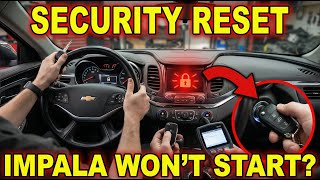
- If neither key works and interference is ruled out, a vehicle security relearn procedure may be attempted. However, for this specific code (authentication error vs. no key learned), it is less likely to succeed. The '30-minute relearn' is more for when a key or module has been replaced.
- If the problem persists, the vehicle requires professional diagnosis. A technician will use a scan tool to check live data from the TDM/BCM, check for available BCM software updates, and test the circuitry of the immobilizer antenna.
Parts You'll Likely Need
- Ignition Key Fob
(OEM #OHT01060512 (4-Button), OHT05918179 (5-Button PEPS))— If the transponder chip in the original key has failed, a new key is the only solution. This is a common point of failure after ruling out RF interference.
Trusted brands: ACDelco, GM Genuine Parts
OEM price range: $100-$250
Aftermarket price range: $75-$150 - Key Fob Battery
(OEM #CR2032)— A weak battery can cause a 'No Remote Detected' message and is an inexpensive and simple item to replace during diagnosis before moving to more costly repairs.
Trusted brands: Energizer, Duracell
OEM price range: $5-$10
Aftermarket price range: $2-$8
Related Codes That Often Appear With This One
- B3055 — This code indicates a problem with reading the key transponder itself. It often appears with B3935 as part of the same no-start event, as noted in TSB PIC5650M.
- B3060 — This is another transponder-related code indicating an issue with the key's signal. It is frequently cited alongside B3935 in GM service bulletins.
- B2955 — On some GM platforms, this code can set along with B3935 when a BCM software issue is the root cause, as detailed in TSB PI1180A.
Technical Service Bulletins (TSBs) & Recalls
- PIC5650M: Addresses an intermittent no crank, no start, or start/stall concern with the security light on, listing B3935 as a potential code. It provides a long list of potential RFI sources, from other keys to aftermarket LED lights and phone chargers.
- PIC5650L: An earlier version of the above TSB, which specifically links the no-start concern and code B3935 to potential Radio Frequency Identification interference and advises against replacing parts as a first step.
- PI1180A: While for different models (Silverado, Tahoe), it shows a precedent for a BCM software update being the fix for a no-start condition where DTCs B3935 and B2955 are set.
Platform-Specific Known Issues
- This platform is known to be sensitive to Radio Frequency Identification (RFID) interference, as documented in GM Technical Service Bulletin #PIC5650M, which warns technicians not to replace parts before asking the customer about devices on their keychain.
- An intermittent no-crank or start-stall concern associated with B3935 is a documented condition in TSB #PIC5650M.
- For models with push-button start, there is a specific transmitter pocket in the center console designed to read the key fob even if its battery is dead or there is interference. Many owners are unaware of this feature.
Mechanic-Grade Diagnostic Values
- Starter Relay Control Voltage — expected: 12V when the key is turned to the 'start' position.. Failure: A significantly lower voltage, such as 6V, indicates the relay is not receiving the proper signal from the control module (ECM/BCM) to activate the starter.
Hidden / Shadow Codes Worth Checking
- B3935 57: The '57' is a symptom byte that specifies 'Transponder Authentication Error'. While the main code B3935 tells you the key failed authentication, the symptom byte confirms it was a calculation mismatch after the key was successfully identified, which points more toward a faulty key chip or interference rather than an unknown key. (see via A professional scan tool like a GM Tech2 or GDS2 that can read manufacturer-specific symptom bytes.)
Scan Tool Commands That Help
- GDS2 (Global Diagnostic System 2): Vehicle Theft Deterrent Learn — This function is used after replacing a key, the BCM, or the TDM. It initiates a 10- or 30-minute security relearn procedure to program new keys to the vehicle's immobilizer system.
- GDS2 with SPS (Service Programming System): Body Control Module Reprogramming — If a no-start condition with B3935 is suspected to be caused by a software glitch (especially if seen with B2955), this function is used to update the BCM with the latest calibration from GM's TIS2Web service.
- GDS2: Add/Replace Key Fobs (under Remote Control Door Lock Receiver) — This is used specifically for programming the remote functions (lock/unlock) of the key fob, which is a separate procedure from programming the immobilizer transponder chip for starting the vehicle.
Wiring & Ground Locations
- Body Control Module (BCM) — Located under the driver's side of the dashboard, typically positioned above the OBD-II diagnostic port and to the left of the steering column.. The BCM is the central hub for the theft deterrent system. All related wiring from the ignition switch, immobilizer antenna, and TDM routes to the BCM. A poor connection at one of its main connectors (e.g., X1, X2) or a bad ground supplying the module can cause intermittent security codes like B3935.
- Main Engine/Chassis Grounds — Key locations include the negative battery cable to the chassis, a strap from the engine block/head to the firewall, and a large ground cable on a bellhousing bolt stud.. While not specific to B3935, a weak or corroded main ground can cause low voltage or electrical noise throughout the vehicle. This can lead to unpredictable behavior in sensitive modules like the BCM and TDM, potentially triggering false security codes.
Real Owner Repair Stories
- iATN (International Automotive Technicians Network) (2008 Chevrolet Impala LS 3.5L) — No Start, "Service Theft Deterrent System" message on the instrument cluster, DTC B3935 set.
❌ Tried (didn't work) A 30-minute relearn procedure failed to resolve the issue.
✅ What actually fixed it The vehicle had a starter replaced by another technician who accidentally damaged ('burned') the original Theft Deterrent Module. The technician then installed a used TDM. The final fix required the new (used) TDM to be properly reflashed using a Tech2 scan tool and GM's TIS2Web service to program it to the vehicle's VIN.
Model Year Variations Within This Range
- 2015-2020: The primary variation is not year-specific but option-based: systems with a standard bladed ignition key versus those with PEPS (Passive Entry Passive Start) push-button start. While both use a transponder and can set B3935, the diagnostic approach for a weak fob battery differs. PEPS vehicles have the transmitter pocket in the center console as a backup, whereas standard key vehicles rely on the passive power from the ignition cylinder's exciter coil. The key fob part numbers are also different, as noted in 'parts_most_commonly_needed'.
Helpful Videos

We Have This Part in Stock



The information in this article is provided for general reference and educational purposes only. Vehicle specifications, procedures, and part compatibility can vary by production date, trim level, and region. Always consult your vehicle's factory service manual and verify part numbers before purchasing or performing repairs. Safety-critical components such as airbags, seat belts, and braking systems should be installed by a qualified professional.
- Chevrolet IMPALA:
- 🧭 Diagnostic Flowchart
- 🎬 Helpful Videos
- 🛍️ Shop This Part
- What's Unique About the 2015-2020 Chevrolet IMPALA
- Symptoms You May Notice
- Most Likely Causes
- Rare But Worth Checking
- Diagnosis Steps
- Parts You'll Likely Need
- Related Codes That Often Appear With This One
- Technical Service Bulletins (TSBs) & Recalls
- Platform-Specific Known Issues
- Mechanic-Grade Diagnostic Values
- Hidden / Shadow Codes Worth Checking
- Scan Tool Commands That Help
- Wiring & Ground Locations
- Real Owner Repair Stories
- Model Year Variations Within This Range
- 🎟️ Get 5% Off