

B3935 on 2017-2024 Chevrolet Traverse: Causes of Security Light and No-Start
Code B3935 on a Chevy Traverse almost always indicates Radio Frequency Interference (RFI) is preventing the key from being read, causing a no-start and security light. Before replacing any parts, remove all other electronic devices (especially phone chargers, dash cams, and USB power banks) and keys from the keychain. This is usually a no-cost fix, as heavily documented in numerous GM Technical Service Bulletins.
- B3935 means your Traverse's anti-theft system can't verify your key.
- The most likely cause is not a broken part, but interference from a phone charger or other electronic device.
- Before calling a mechanic, remove all aftermarket electronics from the car and take all other keys off your key ring.
- If interference isn't the cause, the next most likely fix is a simple, inexpensive key fob battery replacement.
- Do not replace expensive components like the BCM unless all other possibilities have been exhausted, as per GM's own service bulletins.
What's Unique About the 2017-2024 Chevrolet TRAVERSE
The Chevrolet Traverse from this era, along with its platform mates, is particularly sensitive to Radio Frequency Interference (RFI), a fact documented in a long series of official GM Technical Service Bulletins (PIC5650). Unlike many other codes that point to a failed part, B3935 on this vehicle is frequently caused by an external issue, such as an aftermarket phone charger, a dash cam, or another key fob on the same ring. This leads to many misdiagnoses where parts are replaced unnecessarily when the fix is often as simple as unplugging a device from the 12V outlet.
Diagnostic Flowchart
Tap your situation to follow the diagnostic path that matches what you're seeing on this vehicle.
Generation note: This year range covers the end of the first generation (2017), the full second generation (2018-2023), and the start of the third (2024). The issue is explicitly documented in TSBs for the second and third generations and is known to be caused by Radio Frequency Interference (RFI) affecting the 125 kHz, 315 MHz, and 433 MHz frequencies used by the security and TPM systems. While the TSBs don't specifically name the 2017 model, the underlying security system technology is similar, making it susceptible to the same issues, and earlier versions of the same TSB covered the first generation Traverse.
Symptoms You May Notice
- Intermittent no-crank or no-start condition
- Engine starts and then immediately stalls
- Security indicator light is on or flashing on the dashboard.
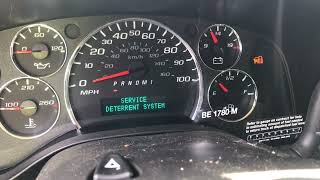
- "Service Theft Deterrent System" message on the driver information center.
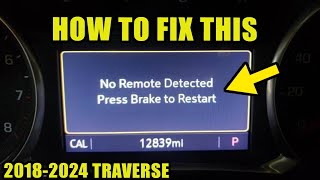
- "No Remote Detected" or "Place Transmitter in Pocket to Start" message on the DIC.
- Poor range for the Remote Keyless Entry (RKE) system.
- "Service Tire Pressure Monitor" message may appear concurrently, as the TPM system uses similar radio frequencies that are also susceptible to RFI.
- Replacing the Body Control Module (BCM) without checking for RFI or software updates.
- Replacing the ignition switch or keyless entry antenna.
- Replacing the starter motor when the issue is a security system lockout.
- Replacing the key fob without first trying a new battery or checking for RFI.
Most Likely Causes
- Radio Frequency Interference (RFI) 🔴 High Probability As noted in GM TSBs PIC5650L, PIC5650M, PIC5650J, and others, the immobilizer system is highly sensitive to external radio signals from common aftermarket devices.
How to confirm: Remove all other keys, fobs, access cards, and aftermarket electronic devices (especially phone chargers, dash cams, and USB power banks) from the vehicle. Unplug everything from the 12V and USB ports. Try starting the vehicle with only the Traverse key present. If the vehicle starts, RFI was the cause.
Typical fix: Isolate and permanently remove the source of RFI. Common culprits include non-OEM phone chargers, other vehicle key fobs, gate access cards, aftermarket LED interior lights, and even some decorative trim rings around the ignition.
Est. part cost: $0 - Weak or Dead Key Fob Battery 🟡 Medium Probability → Shop Vehicle Battery
How to confirm: Try using the vehicle's second key fob. If the second fob works reliably, the battery in the first fob is the likely issue. For push-to-start models, placing the problematic fob in the designated transmitter pocket inside the center console may allow the car to start, which also points to a weak battery.
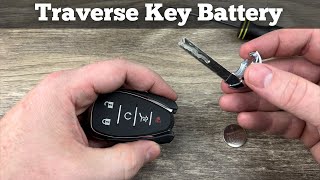
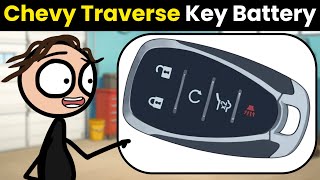
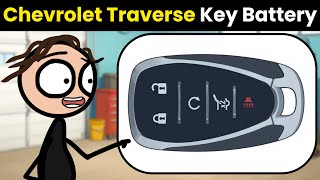
Typical fix: Replace the battery inside the key fob (typically a CR2032 coin cell 🎬 See this step-by-step guide to changing your key fob battery.).
Est. part cost: $2-$10
Rare But Worth Checking
- Faulty Key or Transponder: If the battery is good and RFI has been ruled out, the key's internal transponder chip may have failed. This is more common with aftermarket keys.
- Body Control Module (BCM) Software Glitch: → Shop Body Control Module In some cases, particularly on related GM trucks and SUVs from 2014-2015, a BCM software update was released (TSB PI1180A) to fix this code when appearing with B2955. While not specific to this Traverse generation, it highlights that a software issue can be the root cause and a dealer should check for any available updates.
- Faulty Theft Deterrent Module (TDM) or Antenna: → Shop Anti-Theft Control Module The module or the antenna ring around the ignition that reads the key can fail, but this is uncommon and should only be considered after all other possibilities are exhausted.
Diagnosis Steps
- Check for and remove all potential sources of Radio Frequency Interference (RFI) from the vehicle. Unplug everything from the 12V and USB ports, especially aftermarket chargers.
- Isolate the Traverse key fob by removing all other keys, fobs, and access cards from the key ring and try to start the vehicle again.
- If the problem persists, try starting the vehicle with your second key fob.
- Replace the battery (CR2032) in the key fob that is causing the issue.
- For push-button start models (2018+), attempt to start the vehicle by placing the key fob in the transmitter pocket. This pocket is located inside the center console, underneath the removable top tray and bottom liner.
- Attempt a security system relearn procedure. This typically involves turning the key to the 'ON' position for 10-15 minutes until the security light stops flashing, then turning it off and trying to start the engine. 🎬 Watch: How to reset the anti-theft system to start your car. For push-button start models, a more complex procedure involving the physical key in the driver's door may be required.
- If the issue remains, the vehicle should be diagnosed by a professional with a scan tool capable of reading GM-specific body codes to check the Theft Deterrent Module and BCM data and to check for any available software updates.
Parts You'll Likely Need
- Key Fob Battery
(OEM #CR2032)— A weak battery is a common cause for the key's transponder signal not being read correctly, triggering the authentication error.
Trusted brands: Energizer, Duracell, Panasonic
OEM price range: $5-$10
Aftermarket price range: $2-$8
Related Codes That Often Appear With This One
- B3055 — Also relates to a problem with the key transponder system, often set together with B3935 due to RFI or key issues.
- B3060 — Another key-related security code that can be triggered by the same interference or key failure.
- C0750, C0755, C0760, C0765, C0775 — These are Tire Pressure Monitor (TPM) sensor codes. They can appear alongside B3935 because the TPM system also uses radio frequency (315/433 MHz) and can be disrupted by the same RFI source.
- B2955 — On some other GM vehicles, this code for 'Security Sensor Data Circuit Malfunction' can appear with B3935 and was addressed by a BCM software update, indicating a potential module-level fault.
Technical Service Bulletins (TSBs) & Recalls
- PIC5650M: Links B3935 to intermittent no-start/stall conditions with the security light on, and lists it with other RFI-sensitive codes.
- PIC5650L: Directly advises against replacing parts for B3935 and points to Radio Frequency Interference (RFI) from customer devices as the primary cause.
- PIC5650J: Provides a comprehensive list of aftermarket devices known to cause RFI that triggers B3935 and other related codes.
- PIC5650F/K: Later revisions of the same bulletin, expanding the list of RFI sources and affected models, confirming this is a long-standing, well-documented issue across the GM lineup.
- PI1180A: While for 2014-2015 trucks/SUVs, it documents a BCM software update as a fix for B3935, establishing a precedent for software-related causes.
Platform-Specific Known Issues
- GM Technical Service Bulletin PIC5650L explicitly warns technicians *not* to replace parts for a B3935 concern until investigating RFI from aftermarket devices.
- TSB PIC5650M and PIC5650J expand on this, listing numerous sources of RFI including phone chargers, toll passes, and even non-OEM LED interior lights that can cause a no-start condition with this code.
- For 2018-2024 models, the emergency start procedure requires placing the key fob in a specific transmitter pocket located at the bottom of the center console storag 🎬 Watch: How to find the transmitter pocket and start your Traverse.e bin, under the liner.
Mechanic-Grade Diagnostic Values
- Battery Voltage at BCM — expected: Should be above 11.5V for stable operation.. Failure: Voltage below 10.5V may prevent the BCM from operating correctly and initiating a start sequence, even if accessories power on.
- Immobilizer Antenna Circuit — expected: With the K89 Immobilizer Control Module disconnected, a test lamp should illuminate between the low reference circuit (terminal 1) and B+.. Failure: If the test lamp does not illuminate, it indicates a fault (open or short) in the power or ground circuit to the immobilizer antenna.
Hidden / Shadow Codes Worth Checking
- B3935 with Symptom Code 57: Indicates 'Transponder Authentication Error'. This specific symptom points to the transponder's calculation in response to the BCM's challenge not matching the expected calculation. (see via GM-specific scan tool like GDS2 or high-end aftermarket scanners.)
- B3977: 'Engine ECU identification not recognized by the immobilizer.' This code can appear with B3935 and indicates a mismatch between the BCM and the Engine Control Module (ECM), often requiring a programming procedure to resolve. (see via GM-specific scan tool like GDS2.)
Scan Tool Commands That Help
- GDS2 (GM Techline Connect): IMMO Immobilizer Learn — This function is required after replacing a key, the BCM, or the ECM. It guides the technician through a timed procedure to securely pair the components.
- GDS2 (GM Techline Connect): Add/Replace Keys — Used to program new or additional keys to the vehicle's immobilizer system. The process involves placing keys in the transmitter pocket and following on-screen prompts.
- Data Bus Diagnostic Tool (within GDS2): Detected State Test — This tool helps identify which control modules on the CAN bus are not communicating. If the BCM or other related modules are not responding, it points to a network or module power/ground issue rather than just a key problem.
Wiring & Ground Locations
- K9 Body Control Module (BCM) — For the 2018+ Traverse, the BCM is located behind the fuse panel in the passenger side of the center console.. The BCM is the central module for the immobilizer system. All key authentication signals are processed here. Poor connections or ground issues at this location can cause B3935.
- G301 / G305 — On the first generation Traverse (and similar platforms), ground points G301 (behind left kick panel) and G305 (near battery) are critical for the BCM.. A corroded or loose ground at these locations can cause intermittent BCM operation and lead to various electrical issues, including the no-start condition associated with B3935.
- K89 Immobilizer Control Module / Antenna — This is the antenna ring around the ignition lock cylinder (for keyed ignition) or integrated near the transmitter pocket (for push-button start).. This component energizes the key's transponder and receives its signal. The wiring to it (often circuits 3276 and 3277) runs to the BCM. A fault in this harness can directly cause B3935.
- Remote Control Door Lock Receiver — On older GM SUVs, this module was often located deep under the driver's side dash, to the left of the steering column. While integrated into the BCM on newer models, its antenna location is still critical.. This receiver processes the RKE signals. While B3935 is a transponder issue, severe RFI affecting the RKE receiver can often be the same interference source causing the B3935 code.
Real Owner Repair Stories
- Reddit r/Chevrolet user post (2020 Chevrolet Traverse) — Anti-theft light remained on after pairing a new aftermarket key. The car would start and drive.
❌ Tried (didn't work) Driving with both the original and new key in the car.
✅ What actually fixed it The user was advised that the system requires a minimum of two keys to be properly programmed to turn off the theft light. The fix is to perform the key learning procedure again, programming both the original key and the new key in sequence. If that fails, a dealer visit is required. - Camaro5 Forum user 'RedTexasSS' (2012 Chevrolet Camaro SS (Similar Passkey 3+ system)) — No crank, 'Service Theft Deterrent System' message, code B3935 found with a Snap-on scanner.
❌ Tried (didn't work) Disconnecting and reconnecting the battery., A 3x10 minute key relearn procedure did not work initially.
✅ What actually fixed it The original switchblade key's transponder had failed. A locksmith cut a new, standard (non-remote) key. Performing the 30-minute relearn procedure (3 cycles of key 'ON' for 10 minutes until the security light goes out) with the new key allowed the car to start and run, confirming the old key was the point of failure.
OEM Part Supersession History
Varies by year→Varies by year— The Keyless Entry Control Module (part of the BCM system) for the 2018-2023 Traverse is listed as part number 13518838. It's crucial to match this part number or an officially superseded number when replacing, as internal software and hardware can change.
Heads up: Key fobs for 2017 and older models may not be compatible with 2018+ models, even if they look identical. The frequency and encryption methods changed with the new generation.
Model Year Variations Within This Range
- 2017 (First Generation): Uses a traditional blade key with a transponder chip. Key learning can often be done with a 30-minute manual procedure (3x10 min key-on cycles).
- 2018-2024 (Second/Third Generation): Uses a push-button start with a smart key. Adding a key when two are present can sometimes be done with a manual procedure involving the physical key blade in the door lock. However, programming in an 'all keys lost' situation or to clear certain errors often requires a dealer scan tool (GDS2) and a 12-minute wait period.
Helpful Videos



We Have This Part in Stock

The information in this article is provided for general reference and educational purposes only. Vehicle specifications, procedures, and part compatibility can vary by production date, trim level, and region. Always consult your vehicle's factory service manual and verify part numbers before purchasing or performing repairs. Safety-critical components such as airbags, seat belts, and braking systems should be installed by a qualified professional.
- Chevrolet TRAVERSE:
- 🧭 Diagnostic Flowchart
- 🎬 Helpful Videos
- 🛍️ Shop This Part
- What's Unique About the 2017-2024 Chevrolet TRAVERSE
- Symptoms You May Notice
- Most Likely Causes
- Rare But Worth Checking
- Diagnosis Steps
- Parts You'll Likely Need
- Related Codes That Often Appear With This One
- Technical Service Bulletins (TSBs) & Recalls
- Platform-Specific Known Issues
- Mechanic-Grade Diagnostic Values
- Hidden / Shadow Codes Worth Checking
- Scan Tool Commands That Help
- Wiring & Ground Locations
- Real Owner Repair Stories
- OEM Part Supersession History
- Model Year Variations Within This Range
- 🎟️ Get 5% Off