

B3935 on 2023-2025 GMC Acadia: Understanding the Transponder Authentication Error
Code B3935 on a 2023-2025 GMC Acadia indicates a security system fault, often causing a no-start condition. Before replacing parts, check for Radio Frequency Interference (RFI) from devices near the key fob, as this is a common cause cited in GM Technical Service Bulletins. This can be a $0 fix.
- B3935 means your Acadia's security system has failed to authenticate the key, preventing the engine from starting.
- The most common cause is not a broken part, but rather Radio Frequency Interference (RFI). Remove phone chargers and other items from your keychain before seeking repairs.
- If RFI is not the issue, try the spare key fob to rule out a dead battery or faulty primary key.
- Do not replace expensive components like the BCM or starter until RFI and key fob issues have been thoroughly ruled out.
- If a new key or BCM programming is needed, professional service with specialized tools is required.
What's Unique About the 2023-2025 Gmc ACADIA
On modern GM platforms like the Acadia, the immobilizer system is sensitive to external electronic signals. GM has issued multiple Technical Service Bulletins (TSBs) highlighting that Radio Frequency Interference (RFI) can trigger this code. Sources can include aftermarket devices like phone chargers, dash cams, and even non-automotive items like building access cards, toll passes, or other vehicle keys on the same keychain. This often leads to a misdiagnosis where expensive modules are replaced when the root cause is simply electronic interference, a fix that can cost nothing. [Bulletin #PIC5650L]
Diagnostic Flowchart
Tap your situation to follow the diagnostic path that matches what you're seeing on this vehicle.
Generation note: The 2023 Acadia is the final model year of the second generation (C1XX platform), while the 2024-2025 models are the start of the third generation (VSS-S platform) which uses GM's Vehicle Intelligence Platform (VIP) electrical architecture. While the underlying electronics and body architecture differ significantly, the immobilizer logic and susceptibility to RFI that causes code B3935 are common issues noted in GM service literature that can affect both generations. The key fobs and part numbers are different between these generations.
Symptoms You May Notice
- Intermittent no-crank or no-start condition.
- Engine starts and immediately stalls.
- Security indicator light is illuminated or flashing on the dashboard.
- "Service Theft Deterrent System" message on the Driver Information Center (DIC).
- "No Fob Detected" message displayed.
- Replacing the vehicle's main 12V battery without testing it first.
- Replacing the starter motor.
- Replacing the Body Control Module (BCM) before ruling out RFI and key fob problems, as explicitly warned against in TSB PIC5650L. [Bulletin #PIC5650L]
Most Likely Causes
- Radio Frequency Interference (RFI) 🔴 High Probability As noted in TSBs PIC5650M, PIC5650L, and others, the vehicle's Passkey/immobilizer system is sensitive to interference. Specific sources cited include: aftermarket LED lights, phone chargers, dash cams, USB power banks, other vehicle keys, and RFID cards (toll passes, building access cards) on the keychain.
How to confirm: Remove all aftermarket electronic devices from power outlets. Remove all other keys, fobs, and access cards from the vehicle's keychain so only the single Acadia fob remains. Try starting the vehicle again. If it starts consistently, RFI was the cause.
Typical fix: Remove or relocate the source of the interference. Avoid using cheap, unshielded aftermarket electronics.
Est. part cost: $0 - Weak or Dead Key Fob Battery 🟡 Medium Probability → Shop Vehicle Battery
How to confirm: Try using the vehicle's second key fob. If the vehicle starts and runs properly with the second fob, the battery in the first fob is the likely culprit. You can also try placing the problematic fob in the designated transmitter pocket (usually in the center console or cup holder) which can sometimes allow the vehicle to start with a weak battery.
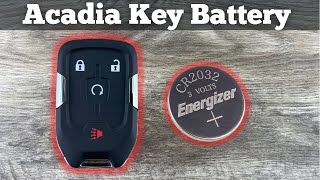
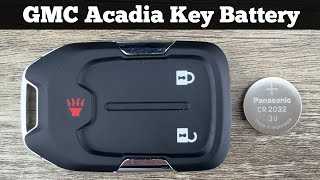
Typical fix: Replace the battery inside the key fob (typically a CR2032 coin cell). 🎬 Watch: How to replace the battery in your 2023 Acadia fob.
Est. part cost: $2-$10 - Faulty Key Fob/Transponder 🟡 Medium Probability → Shop Keyless Entry Transmitter The internal transponder chip can fail over time due to drops or electronic failure.
How to confirm: If replacing the battery does not work, and the second key fob works perfectly, the internal transponder chip in the first key has likely failed. A locksmith or dealer can test the fob's signal.
Typical fix: The key fob must be replaced and programmed to the vehicle by a dealer or qualified automotive locksmith.
Est. part cost: $150-$400 - Body Control Module (BCM) Software Glitch ⚪ Low Probability → Shop Body Control Module Software anomalies can cause the BCM to fail to read the immobilizer information correctly. A TSB for other GM models suggests a software update can fix this issue when it appears with code B2955.
How to confirm: This requires a professional scan tool to check the current BCM software calibration version against the latest version available from GM's Service Programming System (SPS).
Typical fix: Reprogram the BCM with the latest software. This is a labor-only charge if no parts are replaced.
Est. part cost: $0 (labor cost only)
Rare But Worth Checking
- Faulty Body Control Module (BCM): → Shop Body Control Module While rare, the module responsible for reading the key can fail internally. This should only be considered after all other possibilities, especially RFI and key fob issues, have been exhausted, as warned in TSB PIC5650L. [Bulletin #PIC5650L]
- Wiring Harness Issue: A damaged wire or loose connection between the immobilizer antenna (exciter coil) and the control module can prevent the key from being read correctly. This can happen from previous dash work or rodent damage.
Diagnosis Steps
- Check the dashboard for an illuminated security light. This confirms a theft deterrent system issue. 🎬 Watch: Troubleshooting a GMC Acadia that won't crank with the security light on.
- Remove ALL items from the key ring except for the single vehicle key fob. Remove any aftermarket phone chargers, dash cams, LED lights, or other electronic devices from the vehicle's power outlets.
- Attempt to start the vehicle. If it starts, you have identified an RFI issue.
- If the vehicle still does not start, try using the second key fob. If the second fob works, the problem is with the first key fob (battery or internal fault).
- Replace the battery in the non-working key fob and re-test.
- If RFI and key issues are ruled out, attempt the 30-minute key relearn procedure. Turn the key to the 'ON' position (do not start) and wait 10 minutes until the security light turns off. Turn the key off for 5 seconds. Repeat this cycle two more times for a total of three 10-minute cycles. After the third cycle, turn the key off and then try to start the engine.
- If the vehicle still fails to start, it needs to be scanned with a high-end tool that can read GM-specific body codes to confirm B3935 and check for other related DTCs.
- A professional may use a tool like the EL-52545 to scan for stray RFI signals inside the cabin to pinpoint an interfering device.
- If codes are present, follow the specific diagnostic procedures for those codes. This may involve checking wiring, testing module communication, or reprogramming/replacing the BCM, which is best left to a professional.
Parts You'll Likely Need
- Key Fob Battery
(OEM #CR2032)— This is the simplest and most common failure point for a key fob that causes authentication errors.
Trusted brands: Energizer, Duracell
OEM price range: $5-$10
Aftermarket price range: $2-$5 - Keyless Entry Transmitter (Key Fob)
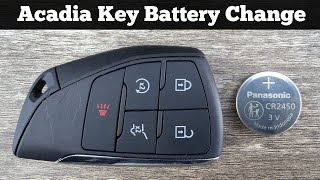
(OEM #2023: 13522895 (FCC ID: HYQ1ES) | 2024-2025: 13560218 (FCC ID: YG0G21TB2))— If the internal transponder fails, the entire key fob assembly must be replaced and programmed to the vehicle. Part numbers differ by generation. 🎬 See this battery replacement guide for 2024-2025 Acadia key fobs.
Trusted brands: ACDelco (OEM)
OEM price range: $150-$300
Aftermarket price range: $70-$150
Related Codes That Often Appear With This One
- B3055 — This code relates to a problem with the key transponder itself. It is often set alongside B3935 as part of the same security system fault event. [Bulletin #PIC5650M]
- B3060 — This code indicates an issue with the transponder antenna (exciter) circuit. It points to a problem in the communication path between the key and the vehicle. [Bulletin #PIC5650M]
- B2955 — Indicates a security sensor data circuit malfunction. A GM TSB notes that when B3935 and B2955 appear together, a BCM software update is often the required fix.
Technical Service Bulletins (TSBs) & Recalls
- PIC5650M: Notes that B3935 can appear with an intermittent no crank, no start, or start/stall concern along with the security light. [Bulletin #PIC5650M]
- PIC5650L: Advises technicians not to replace parts for this concern and to investigate Radio Frequency Identification (RFI) interference as a potential cause. [Bulletin #PIC5650L]
- PIC5650C / PIC5650K: Later revisions that provide an extensive list of potential RFI sources, including aftermarket LED lighting, various chargers, and access cards. Also mentions specific tools (EL-52545) for RFI detection.
Platform-Specific Known Issues
- A known sensitivity to Radio Frequency Interference (RFI) can cause intermittent no-start conditions, as documented in GM TSBs PIC5650M and PIC5650L. Owners are advised to check for aftermarket electronics (phone chargers, LED lights) or other RFID devices (toll passes, work badges) as a first step.
Mechanic-Grade Diagnostic Values
- Passkey III+ Immobilizer Exciter Coil Resistance — expected: 7-10 Ohms. Failure: An open circuit (infinite resistance) or a reading outside the specified range indicates a faulty coil.
- System Voltage During Key-On — expected: Above 12.0V. Failure: A drop below 10V during the key-on sequence can cause various modules, including the BCM, to malfunction and incorrectly set security codes.
Hidden / Shadow Codes Worth Checking
- B3935 03: No Response From Transponder. This indicates the BCM sent a challenge but received no signal back from the key. (see via GM GDS2 (Global Diagnostic System 2) or equivalent high-end scan tool with manufacturer-specific data.)
- B3935 07: Invalid Transponder Key Data. This indicates the key sent a response, but the data was corrupt or did not match the expected value. (see via GM GDS2 (Global Diagnostic System 2) or equivalent high-end scan tool.)
- B3935 57: Transponder Authentication Error. This is a general symptom byte indicating the challenge/response calculation failed. (see via GM GDS2 (Global Diagnostic System 2) or equivalent high-end scan tool.)
Scan Tool Commands That Help
- GDS2: Immobilizer Learn — Used to program new or additional keys to the vehicle. This function is required when a key or the BCM is replaced.
- GDS2: Clear All Transponder Keys — Used to erase all currently learned keys from the BCM's memory. This is a critical security step if a key is lost or stolen, before learning the remaining/new keys.
- GDS2: Module Diagnostics > BCM > Data Display > Immobilizer Data — To view live data such as 'Learned Key in Ignition' (Yes/No), 'Number of Keys Learned', and 'Immobilizer Environment ID' to see what the BCM is detecting in real-time.
Wiring & Ground Locations
- BCM (Body Control Module) — Typically located inside the passenger cabin, behind the lower dashboard panel on the driver's side, often integrated with or near the interior fuse block.. The BCM is the control unit that manages the Passkey/immobilizer system. All key authentication signals are processed here.
- G218 — A common BCM ground point located on the left-hand side of the instrument panel support structure, near the A-pillar.. A poor or corroded ground at this location can cause intermittent BCM malfunctions, leading to a variety of electrical issues, including setting false security codes like B3935.
- Immobilizer Exciter Coil — A ring-shaped antenna integrated into the push-to-start button assembly or surrounding the ignition lock cylinder on keyed models.. This coil energizes the key's transponder and receives its signal. A break in its wiring or an internal failure will prevent any communication with the key, directly causing codes B3060 and B3935.
Real Owner Repair Stories
- GM truck forum user (2021 Chevrolet Traverse (sister vehicle)) — Intermittent no-start with security light on and code B3935. The vehicle would sometimes start after multiple attempts.
❌ Tried (didn't work) Replacing the key fob battery., Performing the 30-minute key relearn procedure., Clearing codes with a basic OBD-II scanner.
✅ What actually fixed it The owner had recently installed an aftermarket remote start system. After recalling the TSB about RFI, they disconnected the power to the aftermarket module. The B3935 code did not return and the no-start issue was permanently resolved. The aftermarket module was interfering with the factory immobilizer communication. - Acadia forum user (2019 GMC Acadia) — Vehicle would not start only when parked in a specific company parking garage. "No Fob Detected" message and B3935 were present when scanned.
❌ Tried (didn't work) Getting a jump start., Trying the second key fob.
✅ What actually fixed it The owner realized their RFID-based work access card, which they left on the passenger seat, was the source of the interference. Removing the access card from the vehicle allowed it to start immediately. This confirmed an RFI issue specific to that environment and RFID card.
OEM Part Supersession History
Varies by VIN→Varies by VIN— Software updates and hardware revisions.
Heads up: When replacing a Body Control Module (BCM) on these vehicles, it is critical to order the part by VIN. The replacement part is often a supersession. It is not plug-and-play and MUST be programmed online using GM's Service Programming System (SPS2) to load the correct software and security information for the vehicle.
Model Year Variations Within This Range
- 2024-2025: These models use GM's Vehicle Intelligence Platform (VIP) electrical architecture. This system is more complex, uses different communication protocols (CAN and Ethernet buses), and is more sensitive to programming procedures. Module programming requires specific tools (MDI 2) and adherence to procedures like having the ignition OFF for certain steps to avoid errors.
- 2023: This model year uses the older Global A electrical architecture. While still complex, its programming procedures and network topology are different from the newer VIP system. The key fobs and BCM are not interchangeable with 2024+ models.
Helpful Videos
We Have This Part in Stock

The information in this article is provided for general reference and educational purposes only. Vehicle specifications, procedures, and part compatibility can vary by production date, trim level, and region. Always consult your vehicle's factory service manual and verify part numbers before purchasing or performing repairs. Safety-critical components such as airbags, seat belts, and braking systems should be installed by a qualified professional.
- Gmc ACADIA:
- 🧭 Diagnostic Flowchart
- 🎬 Helpful Videos
- 🛍️ Shop This Part
- What's Unique About the 2023-2025 Gmc ACADIA
- Symptoms You May Notice
- Most Likely Causes
- Rare But Worth Checking
- Diagnosis Steps
- Parts You'll Likely Need
- Related Codes That Often Appear With This One
- Technical Service Bulletins (TSBs) & Recalls
- Platform-Specific Known Issues
- Mechanic-Grade Diagnostic Values
- Hidden / Shadow Codes Worth Checking
- Scan Tool Commands That Help
- Wiring & Ground Locations
- Real Owner Repair Stories
- OEM Part Supersession History
- Model Year Variations Within This Range
- 🎟️ Get 5% Off