

B3935 on 2007-2012 GMC Canyon: No-Start Causes and Fixes
Code B3935 on a 2007-2012 GMC Canyon almost always indicates a 'Transponder Authentication Error' due to Radio Frequency Interference (RFI). Before replacing any parts, remove all other RFID cards (office key cards, gas station fobs) from your keychain. This is a zero-cost fix that often resolves the issue. If that fails, the ignition lock housing containing the Passlock sensor is the next most likely culprit.
- B3935 is an anti-theft code, not a mechanical failure. The truck is preventing itself from starting.
- The most likely cause is interference from other electronic fobs or cards on your keychain. Separate your truck key and try again.
- Do NOT replace expensive parts like the BCM or starter before ruling out RFI and trying the 30-minute (3-cycle) key relearn procedure.
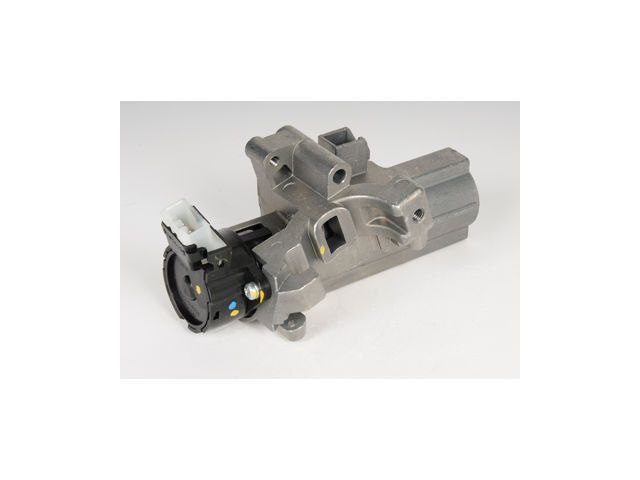
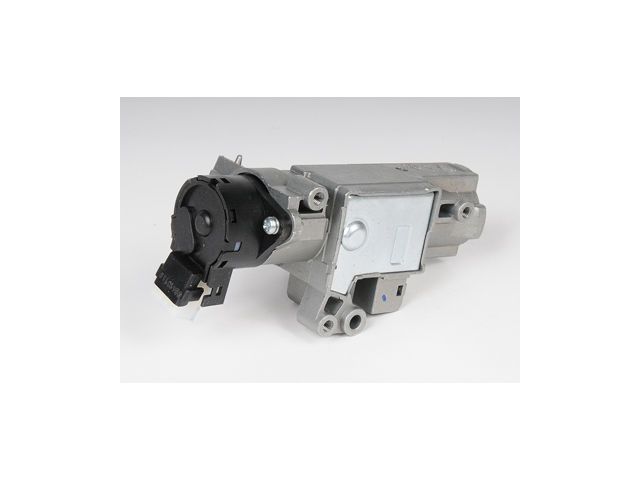
- If a hardware fix is needed, the most common part is the ignition lock housing (ACDelco D1493F), not the entire ignition switch.
What's Unique About the 2007-2012 Gmc CANYON
The first-generation GMC Canyon and its siblings (Chevy Colorado, Hummer H3) use a Passlock II anti-theft system that is notoriously sensitive. As documented extensively in GM's own Technical Service Bulletins (TSBs), the system is highly susceptible to Radio Frequency Interference (RFI) from other electronic devices on a keychain. Unlike many vehicles where a no-start condition points to a failed component, on these trucks, the most common cause is external interference. The system does not prevent the engine from cranking; instead, it allows it to start for a second and then shuts off the fuel injectors. This leads to a unique diagnostic process that must start with the driver's keychain before any parts are considered for replacement.
Diagnostic Flowchart
Tap your situation to follow the diagnostic path that matches what you're seeing on this vehicle.
Symptoms You May Notice
- Intermittent no-crank, no-start condition.
- Engine starts briefly and then immediately stalls (the most common symptom).
- Security indicator light is on or flashing on the dashboard.
- Vehicle requires a 10-minute wait before it can be restarted (this is the Passlock system resetting).
- Problem is more frequent in cold weather (anecdotal owner reports).
- Turning the key to 'ON' for a few seconds before cranking seems to prevent the issue for some owners.
- Replacing the starter motor. The starter is usually not the problem, as the anti-theft system is what prevents the engine from running, not cranking.
- Replacing the battery. While a weak battery can cause various electrical issues, it won't typically set the B3935 code on its own.
- Replacing the Body Control Module (BCM) or Engine Control Module (ECM). TSB #PIC5650L and its successors explicitly warn technicians *not* to replace any parts for this concern until RFI is ruled out. This is an expensive and often unnecessary repair.
Most Likely Causes
- Radio Frequency Interference (RFI) 🔴 High Probability The Passlock system's exciter coil in the ignition is sensitive and can be disrupted by other RFID-enabled devices like office key cards, gas station fobs, or even another vehicle's key fob on the same ring.
How to confirm: Remove all other keys, key fobs, office access cards, and gas station payment tags from the ignition key ring. Try to start the vehicle with the single, isolated GMC key. If the vehicle starts reliably over multiple attempts, RFI was the cause.
Typical fix: Keep the vehicle key separate from other RFID-emitting devices. This is a behavioral change, not a parts replacement.
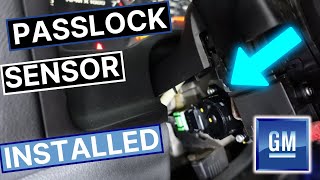
Est. part cost: $0 - Worn or Failing Ignition Switch / Passlock Sensor 🟡 Medium Probability → Shop Ignition Switch The Passlock sensor is integrated into the ignition lock cylinder housing. Over time, the internal contacts and Hall effect sensor can wear out or fail, leading to an incorrect or missing signal being sent to the TDM.
How to confirm: If the RFI check does not solve the problem, and the 10-minute relearn procedure works but the problem reoccurs intermittently, the sensor is the likely failure point. A technician can monitor the sensor data with a scan tool, but failure is often too intermittent to catch.
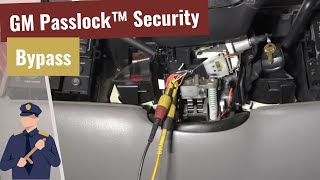
Typical fix: Replace the ignition lock cylinder housing which contains the Passlock sensor. A key relearn procedure is required after replacement. 🎬 See how to replace the sensor without removing the cylinder. Some owners opt for a permanent bypass by cutting and splicing a specific wire in the steering column while the engine is running, though this disables the system. 🎬 Watch: How to perform a permanent Passlock bypass.
Est. part cost: $50-$150 - Failing or Damaged Key Transponder ⚪ Low Probability
How to confirm: Try using a spare key. If the spare key works consistently and the primary key does not (with no RFI sources present), the transponder chip in the primary key is likely faulty.
Typical fix: Have a new key cut and programmed by a dealership or a qualified automotive locksmith.
Est. part cost: $75-$200
Rare But Worth Checking
- Body Control Module (BCM) Software Glitch: → Shop Body Control Module In some cases, particularly when seen with code B2955, GM has issued software updates for the BCM to address no-start conditions. This requires a dealer or a shop with SPS programming capabilities.
- Aftermarket LED Lighting: TSB PIC5650K and PIC5650C specifically warn that aftermarket LED lights (especially dome lights) can emit RFI that interferes with the anti-theft system, causing this code and a no-start condition. The interference occurs when the lights are powered on.
Diagnosis Steps
- Check for the security light on the dashboard. Is it on solid or flashing? A flashing light indicates an active anti-theft event.
- Remove the ignition key from your keychain. Ensure it is completely isolated from any other keys, fobs, or access cards.
- Re-insert the single key into the ignition and attempt to start the vehicle. If it starts, the problem is RFI.
- If the vehicle does not start, turn the key to the 'ON' position (without starting) and leave it. Wait for the security light to stop flashing and turn off or go solid, which typically takes about 10 minutes.
- Once the light changes state, turn the key to 'OFF' for 10-20 seconds, then try to start the engine. This completes one cycle of the relearn procedure.
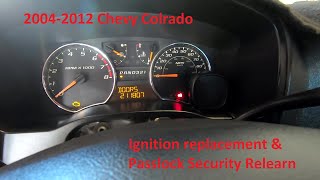
- If the vehicle still doesn't start, repeat the 10-minute 'ON' / 10-second 'OFF' cycle two more times (for a total of three cycles / ~30 minutes). 🎬 Watch: A step-by-step walkthrough of the Passlock security relearn. This is often required.
- If the issue persists after a full relearn, try a spare key to rule out a faulty key transponder.
- If a spare key also fails, the issue is most likely a worn ignition lock cylinder/Passlock sensor. Professional diagnosis is recommended, but replacement is the common fix.
Parts You'll Likely Need
- Ignition Lock Housing
(OEM #15822350, 25832354 (Superseded by ACDelco D1493F))— This part contains the Passlock sensor that fails. It is the most common hardware failure after RFI is ruled out.
Trusted brands: ACDelco (OEM), Dorman (e.g., 924-719)
OEM price range: $100-$150
Aftermarket price range: $50-$90
Related Codes That Often Appear With This One
- B3055 — Relates to the key transponder signal not being received. Often set alongside B3935 as part of the same anti-theft event.
- B3060 — Indicates an issue with the transponder antenna circuit. This is also part of the Passlock system and can be triggered by the same RFI or hardware faults.
Technical Service Bulletins (TSBs) & Recalls
- PIC5650M: Addresses intermittent no crank/no start with security light on and DTCs B3055, B3060, B3935. Mentions RFI as a primary possible cause and lists numerous interfering devices.
- PIC5650L: Explicitly states 'Technician should not replace any parts for this concern' and instructs to ask the customer about Radio Frequency Identification devices on their keychain.
- PIC5650C / PIC5650K: Later versions of the same bulletin which add more examples of RFI sources, including aftermarket LED lighting and USB phone chargers, and advise dealers to direct customers to the owner's manual section on RF statements.
- PIE0232: An engineering information bulletin from 2012 where GM was actively gathering data on low-mileage trucks with codes B3055, B3060, or B3935 to determine the root cause.
Platform-Specific Known Issues
- Widespread Passlock Frustration: The Passlock anti-theft system is a well-documented weak point on the 2004-2012 Canyon/Colorado platform, with numerous owner complaints about being stranded. A typical owner experience from ChevroletForum.com reads: 'I try to start it, the engine turns over, but never starts. The lock symbol on the dash flashes. I wait 10 minutes... Turn the key the rest of the way and it cranks right up. It does this randomly. Sometimes it will go months with no problems. Sometimes it does it every time I try to go somewhere for two weeks.'
- GM Acknowledges RFI as Primary Cause: GM Technical Service Bulletin #PIC5650M (and its many predecessors/successors) directly addresses the intermittent no-crank/no-start with code B3935 and warns against replacing parts before investigating RFI from devices on the customer's keychain.
Mechanic-Grade Diagnostic Values
- Passlock Sensor Signal Voltage (Yellow Wire) — expected: Approx. 5.0V with key out of ignition. Drops to a specific learned voltage when key is turned to ON/RUN.. Failure: Voltage does not drop, drops to 0V, or is erratic when the key is turned. The specific 'learned' voltage varies but the drop from 5V should be consistent.
- Passlock Sensor Power Supply Voltage (White Wire) — expected: Over 10.0V (typically battery voltage, ~12V) when the key is in the ACC or ON position.. Failure: Voltage is below 10.0V or is absent. This indicates a problem with the power feed from the Body Control Module (BCM).
- Passlock Sensor Resistance (for bypass/testing) — expected: Between 500 and 10,000 Ohms. A common value for many GM vehicles is around 2.2k Ohms.. Failure: This is not a failure test, but a measurement used for a diagnostic bypass. The resistance is measured between the yellow signal wire and the black ground wire with the key in the RUN position to find the vehicle's specific value.
Hidden / Shadow Codes Worth Checking
- B3935 57: The '57' is a symptom byte or sub-code that specifies 'Transponder Authentication Error'. Seeing this confirms the TDM and key transponder failed their challenge-response calculation after the key was successfully identified. (see via A professional scan tool like the GM Tech2 or an equivalent high-end scanner capable of reading manufacturer-specific body codes.)
Scan Tool Commands That Help
- GM Tech2 / GDS2: VTD (Vehicle Theft Deterrent) Reflash / BCM Reprogram — Used after replacing a Theft Deterrent Module (TDM) or Body Control Module (BCM). It loads the correct VIN and software into the new module, which is a required step before a key relearn can be performed.
- Professional Scan Tool (various): Immobilizer/Theft Key Relearn — This is a faster alternative to the 30-minute manual relearn procedure. It electronically prompts the BCM/TDM to learn new keys in about 10 minutes and provides on-screen confirmation of success or failure.
Wiring & Ground Locations
- Passlock Sensor Wires — In a small harness coming from the ignition lock cylinder housing inside the steering column.. These three wires are the core of the system. Yellow is the signal wire carrying the security data, White is the power feed from the BCM, and Black is the ground reference. Testing voltage and signal on these wires is the primary electrical diagnostic step.
- Splice Pack SP-105 — Under the hood on the driver's side, near the battery and ABS module. The factory ground point is a bolt on the fender well.. This ground splice pack is a known failure point due to corrosion. It provides the ground path for critical components including the Run/Crank relay and other ignition circuits. A poor ground here can cause intermittent no-starts and anti-theft issues that mimic a failed Passlock sensor.
- Splice Pack SP-106 — Under the hood on the passenger side, behind the engine airbox.. This ground splice pack grounds the HVAC control module and Data Link Connector (DLC). While less directly related to a no-start, a poor ground here can cause bizarre electrical issues and prevent proper communication when trying to diagnose the B3935 code with a scan tool.
- BCM Ground Connection — Often a ring terminal on the cowl, potentially labeled G103 above the brake booster, or routed through an instrument panel junction block.. The BCM powers and reads the Passlock sensor. A poor ground for the BCM itself can cause it to misinterpret signals and set false anti-theft codes. GM warns that disconnecting a BCM ground while the battery is connected can permanently damage the module.
Real Owner Repair Stories
- YouTube user 'Philos Garage' (1st Generation Chevrolet Colorado (same platform)) — Intermittent issues with blower motor, door locks, fuel gauge, and anti-theft system, which were worse on hot days or after long drives.
❌ Tried (didn't work) The user notes that people often chase individual components (like the blower motor resistor or anti-theft module) without success.
✅ What actually fixed it The owner identified the under-hood ground splice packs (SP-105 and SP-106) as the root cause. The fix involved disassembling the corroded splice packs, soldering the wires together for a solid connection, cleaning the chassis ground point, and re-securing the connection with a star washer to ensure a good bite into the metal.
"I Checked Everything" — The Actual Cause
- While not a smoke test issue, a similar pattern exists for this code: A user may replace the ignition switch/Passlock sensor (the most common hardware fix) and even the TDM, yet the intermittent no-start with code B3935 persists. The actual cause is often a high-resistance or intermittent connection at the main under-hood ground splice packs (SP-105), which corrode over time. Standard diagnostics for the anti-theft system do not typically include a voltage drop test on these remote ground points, so the root cause is frequently missed.
Model Year Variations Within This Range
- 2007-2012: No significant variations in the Passlock II system, its components, or its common failure modes have been identified within this specific model year range for the GMC Canyon. The primary causes (RFI, ignition switch failure, ground issues) and solutions are consistent across these years.
Helpful Videos

We Have This Part in Stock

The information in this article is provided for general reference and educational purposes only. Vehicle specifications, procedures, and part compatibility can vary by production date, trim level, and region. Always consult your vehicle's factory service manual and verify part numbers before purchasing or performing repairs. Safety-critical components such as airbags, seat belts, and braking systems should be installed by a qualified professional.
- Gmc CANYON:
- 🧭 Diagnostic Flowchart
- 🎬 Helpful Videos
- 🛍️ Shop This Part
- What's Unique About the 2007-2012 Gmc CANYON
- Symptoms You May Notice
- Most Likely Causes
- Rare But Worth Checking
- Diagnosis Steps
- Parts You'll Likely Need
- Related Codes That Often Appear With This One
- Technical Service Bulletins (TSBs) & Recalls
- Platform-Specific Known Issues
- Mechanic-Grade Diagnostic Values
- Hidden / Shadow Codes Worth Checking
- Scan Tool Commands That Help
- Wiring & Ground Locations
- Real Owner Repair Stories
- "I Checked Everything" — The Actual Cause
- Model Year Variations Within This Range
- 🎟️ Get 5% Off