

B3935 on 2015-2022 GMC Sierra 1500: No-Start Causes and Fixes
Code B3935 on a GMC Sierra almost always means there's a security system issue preventing the truck from starting. The most common cause is radio frequency (RF) interference from other keys or electronics near the ignition. The fix is often free: remove all other fobs and devices from your keychain and try starting again.
- Before panicking, remove everything from your keychain and move all electronics away from the ignition area. This free step solves the problem for many owners.
- Do not replace expensive parts like the BCM or starter unless RF interference has been completely ruled out.
- If you have a 2014-2015 model with both B3935 and B2955, the most likely fix is a BCM software update from a GM dealer.
- Trying your spare key is a crucial diagnostic step to determine if the problem is with the key or the vehicle.
- A theft system relearn procedure (the '10-minute key-on' method) can sometimes resolve the issue after a battery disconnect or other glitch.
What's Unique About the 2015-2022 Gmc SIERRA 1500
On these specific Sierra trucks, the immobilizer system can be sensitive. General Motors has issued multiple Technical Service Bulletins (TSBs) acknowledging that intermittent no-start conditions with code B3935 are often caused by external radio frequency (RF) interference, not a faulty part. One TSB, PIC5650, explicitly advises technicians *not* to replace any parts until RF interference has been ruled out by questioning the driver about aftermarket devices and separating other fobs from the key ring. This is different from many other vehicles where a similar code might immediately point to a bad key or immobilizer module.
Diagnostic Flowchart
Tap your situation to follow the diagnostic path that matches what you're seeing on this vehicle.
Generation note: This year range covers the end of the third generation (K2XX, 2014-2019) and the beginning of the fourth generation (T1XX, 2019-2022) Sierra 1500. The issues described in GM's technical service bulletins regarding RF interference and potential BCM software updates apply to vehicles in both generations.
Symptoms You May Notice
- Intermittent no-crank, no-start condition. [⭐ MANUFACTURER TSB #PIC5650M, ⭐ MANUFACTURER TSB #PIC5650L, 38]
- Engine stalls immediately after starting. [⭐ MANUFACTURER TSB #PIC5650M, 38]
- Security indicator light is on or flashing on the dashboard. [⭐ MANUFACTURER TSB #PIC5650M, 27]
- "Service Theft Deterrent System" message on the driver information center.
- On push-to-start models, a "No Fob Detected" message may appear, but the vehicle will start if the fob is placed in the designated pocket/transmitter slot.
- Replacing the starter motor
- Replacing the battery without addressing the underlying security system fault
- Replacing the Body Control Module (BCM) before ruling out RF interference or performing software updates
Most Likely Causes
- Radio Frequency (RF) Interference 🔴 High Probability As noted in multiple versions of TSB PIC5650, the immobilizer system on these trucks is sensitive to external radio signals operating near 125-135 kHz. GM explicitly lists items like other vehicle keys, building access cards, toll passes, and even some aftermarket phone chargers or LED lights as potential sources of interference.
How to confirm: Remove all other key fobs, access cards, and electronic devices (like aftermarket phone chargers) from the keychain and from the area around the ignition or push-start button. Try to start the vehicle with only the single, original key present. If it starts, RF interference was the cause.
Typical fix: Isolate the vehicle's key fob from other devices. Do not keep multiple transponder keys or RFID cards on the same ring. If an aftermarket device is the cause, remove it.
Est. part cost: $0 - Body Control Module (BCM) Software Glitch 🟡 Medium Probability → Shop Body Control Module TSB PI1180A specifically addresses a no-start condition with codes B3935 and B2955 on 2014-2015 models, which can be resolved with a software update. This bulletin was created to address cases where the BCM fails to correctly read the immobilizer information.
How to confirm: A GM dealer or qualified shop with access to the Service Programming System (SPS) can check if your vehicle's BCM has the latest calibration. This issue is specific to a "No Click, No Crank, No Start" condition with both B3935 and B2955 present.
Typical fix: Reprogram the BCM with the updated software calibration available on TIS2WEB. This must be done by a professional and takes approximately 0.5 labor hours.
Est. part cost: $0 (software only) - Weak or Defective Key Fob ⚪ Low Probability → Shop Keyless Entry Transmitter
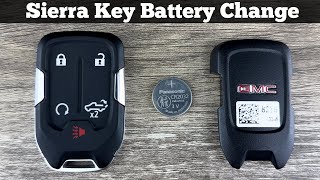
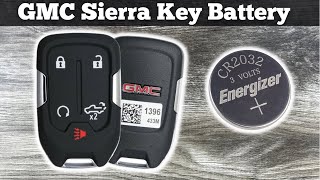
How to confirm: First, try replacing the battery in the key fob (typically a CR2032). If that doesn't work, try starting the vehicle with your second/spare key. If the spare key works consistently, the primary key is likely faulty.
Typical fix: Replace the key fob battery. If the fob itself has failed, a new key must be purchased and programmed to the vehicle by a dealer or automotive locksmith.
Est. part cost: $5-$15 for a battery, $150-$400 for a new programmed key fob.
Rare But Worth Checking
- Faulty Body Control Module (BCM): → Shop Body Control Module This is rare and should only be considered after all other causes, especially RF interference and software updates, have been ruled out. TSB PIC5650L specifically advises against replacing parts unnecessarily. In some cases, a BCM can fail due to internal shorts or water intrusion, identifiable by burnt traces on the circuit board. Replacement requires programming to the vehicle.
- Damaged Immobilizer Antenna/Exciter Coil: → Shop Antenna The coil around the ignition lock cylinder (or in the console for push-to-start) energizes the key transponder. Damage to this component or its wiring is uncommon but can prevent key detection, leading to code B3935.
- Poor Ground Connection: A user on a Good Sam Community forum with a 2009 Sierra HD experiencing multiple electrical issues, including shifting problems and warning lights, was advised to check ground wires, particularly on the engine block, as a potential cause for widespread module communication failures. 🎬 Watch: How to fix the G218 ground connection issue. While not specific to B3935 alone, a bad BCM or chassis ground can cause a variety of unpredictable electrical faults.
Diagnosis Steps
- Scan for all DTCs in all modules. Note any other codes present, especially B3055, B3060, and B2955.
- Question the driver: Do you have other keys, fobs, or RFID access cards on your keychain? Have you recently added any new electronic devices like a phone charger or dash cam? [⭐ MANUFACTURER TSB #PIC5650L, 37]
- Remove ALL other keys, fobs, cards, and electronics from the vehicle. Attempt to start the engine with only the Sierra's key present. This is the primary fix recommended by GM.
- If the vehicle still doesn't start, try the spare key fob.
- Replace the battery in the key fob(s) (typically CR2032) as a low-cost diagnostic step.
- If the issue persists, perform a Theft Deterrent System Relearn procedure. This typically involves turning the key to the 'ON' position for 10-11 minutes until the security light turns off, then turning the key off for 30 seconds, and repeating the cycle two more times for a total of ~30 minutes.
- If the vehicle is a 2014-2015 model and code B2955 is also present, consult a dealer about performing the BCM software update outlined in TSB PI1180A.
- If all else fails, a professional diagnosis of the BCM, immobilizer antenna, and associated wiring will be necessary using a dealer-level scan tool.
Parts You'll Likely Need
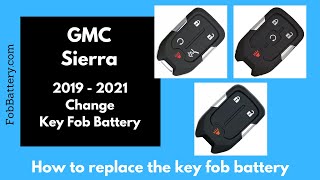
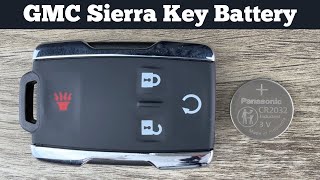
- Key Fob Battery
(OEM #CR2032)— A weak battery can cause intermittent communication, leading to an authentication error. It's the cheapest and easiest first part to replace.
Trusted brands: Energizer, Duracell
OEM price range: $5-$15
Aftermarket price range: $5-$10 - Key Fob / Transponder Key
(OEM #13577771 (2015-18 K2XX), 13591396 (2019-22 T1XX))— If the internal transponder chip in the key fails, it will need to be replaced and programmed. This is only necessary if the spare key works and the primary key does not, even with a new battery.
Trusted brands: ACDelco (OEM)
OEM price range: $100-$250
Aftermarket price range: $70-$150
Related Codes That Often Appear With This One
- B3055 — Related to a key transponder problem, often appears with B3935 during a security system fault. [⭐ MANUFACTURER TSB #PIC5650M, 12]
- B3060 — Another code indicating an issue with the key transponder system, often logged alongside B3935. [⭐ MANUFACTURER TSB #PIC5650M, 12] 🎬 Watch: A step-by-step resolution for B3055 and B3935 codes.
- B2955 — This code, related to the security sensor data circuit, is specifically mentioned in TSB PI1180A along with B3935 as being caused by a BCM software issue on 2014-2015 models.
- C0750, C0755, C0760, C0765, C0775 — These codes are related to tire pressure monitor sensors but are mentioned in TSB PIC5650M as potentially appearing alongside B3935 during certain security-related electrical faults, likely due to shared RF receivers or modules. [⭐ MANUFACTURER TSB #PIC5650M, 38]
Technical Service Bulletins (TSBs) & Recalls
- PIC5650M: Mentions B3935 in the context of an intermittent no-crank/no-start or stall with the security light on.
- PIC5650L: Explicitly warns against replacing parts for B3935 and points to Radio Frequency Identification interference as a likely cause.
- PIC5650K/G: Later versions of the PIC5650 bulletin that provide an extensive list of potential RFI sources, including aftermarket LED light
Platform-Specific Known Issues
- A known software issue in the Body Control Module (BCM) on 2014-2015 models can cause B3935 and B2955, requiring a dealer to reprogram the module per TSB PI1180A.
- The platform is documented by GM as being highly sensitive to Radio Frequency (RF) interference, which can mimic a component failure. TSB PIC5650 lists numerous potential sources, including other car keys, toll passes, and aftermarket LED lighting. [37, 38, ⭐ MANUFACTURER TSB #PIC5650L]
Hidden / Shadow Codes Worth Checking
- B3935 57: The '57' is a standard GM symptom byte indicating 'Transponder Authentication Error'. It specifies that the TDM recognized a valid key value but the cryptographic challenge/response calculation between the key's transponder and the module failed. (see via A professional scan tool like the GM GDS2 or Tech2 will display the code with its symptom byte.)
Scan Tool Commands That Help
- GDS2 (GM Global Diagnostic System 2): Module Diagnostics > Body Control Module > Immobilizer Learn — Used to program new or all keys to the vehicle. This is required when a key or the BCM is replaced. The process typically involves a 10-12 minute security wait time per key or for the whole system.
- GDS2 (GM Global Diagnostic System 2): Module Diagnostics > Remote Control Door Lock Receiver > Add/Replace Key Fobs — This function is used to program the remote functions (lock/unlock) of the key fob after the immobilizer portion has been learned.
- SPS (Service Programming System): BCM Programming and Setup — This is used to update the BCM's software. It is the specific fix for the issue on 2014-2015 models described in TSB PI1180A, where codes B3935 and B2955 are set together.
Wiring & Ground Locations
- G218 — On K2XX models (2015-2018), located inside the cabin, behind the driver's side kick panel, under the dash.. This is a major ground point for the instrument panel and Body Control Module. A loose or corroded G218 ground is a known cause of numerous, intermittent electrical issues, including no-start conditions and false security system activation. The insulation can sometimes get caught under the ground nut from the factory, causing a poor connection.
- G110 / G114 — On T1XX models (2019-2022), G110 is a body harness ground and G114 is an engine harness ground, both in the engine bay. G110 is on the lower left of the radiator core support.. GM issued a bulletin (PIE0548) to gather information on loose connections at these specific grounds on 2019-2020 trucks, indicating they are a potential source of various electrical problems that could affect module communication.
- BCM Connectors (X1-X7) — The Body Control Module is located behind the lower dashboard panel on the driver's side, often near the interior fuse block.. All power, ground, and communication signals for the theft deterrent system run through these connectors. A visual inspection for corrosion or backed-out pins is a valid diagnostic step if module failure is suspected.
Real Owner Repair Stories
- Camaro5 Forum User (Chevrolet Camaro (similar Passkey III+ system)) — No-crank, no-start condition with security light on. Scan tool revealed DTC B3935, Transponder Authentication Error.
❌ Tried (didn't work) Initial diagnosis pointed towards a key failure.
✅ What actually fixed it The owner had a new, inexpensive standard (non-remote) key cut. They then performed the 30-minute key relearn procedure (Key ON for 10 min until security light goes out, OFF, repeat 3 times). This successfully programmed the new key and allowed the car to start, confirming the original key's transponder had failed.
Model Year Variations Within This Range
- 2015-2018 (K2XX Platform): These models are susceptible to a poor connection at ground G218 behind the driver's side kick panel. Additionally, 2015 models may be eligible for a BCM software update per TSB PI1180A if code B2955 is also present.
- 2019-2022 (T1XX Platform): These models have different potential weak points for grounds, specifically G110 and G114 in the engine bay, as noted in GM bulletin PIE0548. They also use a different key fob (P/N 13591396) than the earlier generation.
Helpful Videos

We Have This Part in Stock


The information in this article is provided for general reference and educational purposes only. Vehicle specifications, procedures, and part compatibility can vary by production date, trim level, and region. Always consult your vehicle's factory service manual and verify part numbers before purchasing or performing repairs. Safety-critical components such as airbags, seat belts, and braking systems should be installed by a qualified professional.
- Gmc SIERRA 1500:
- 🧭 Diagnostic Flowchart
- 🎬 Helpful Videos
- 🛍️ Shop This Part
- What's Unique About the 2015-2022 Gmc SIERRA 1500
- Symptoms You May Notice
- Most Likely Causes
- Rare But Worth Checking
- Diagnosis Steps
- Parts You'll Likely Need
- Related Codes That Often Appear With This One
- Technical Service Bulletins (TSBs) & Recalls
- Platform-Specific Known Issues
- Hidden / Shadow Codes Worth Checking
- Scan Tool Commands That Help
- Wiring & Ground Locations
- Real Owner Repair Stories
- Model Year Variations Within This Range
- 🎟️ Get 5% Off