

B3935 on 2007-2010 GMC Sierra 2500: Security Error, No Start Causes and Fixes
Code B3935 on a GMC Sierra means the truck's security system failed to authenticate the ignition key, causing a no-start or start-and-stall condition. The most common fix is removing other RFID devices from your keychain. If that fails, a 30-minute key relearn procedure often resolves the issue for free. If these simple fixes don't work, the issue may be a faulty key or ignition lock cylinder.
- B3935 means your truck's security system doesn't recognize your key, preventing it from starting.
- Before spending any money, try the simplest fixes: remove all other fobs/cards from your keychain and try a spare key.
- The 30-minute key relearn procedure is a free DIY step that can often resolve the problem without any tools.
- Do not immediately assume the starter, battery, or fuel pump is bad. The security light is the key indicator of the true problem.
- If simple fixes fail, the issue is likely a bad key or a faulty ignition lock cylinder, which will require professional service for programming.
What's Unique About the 2007-2010 Gmc SIERRA 2500
The GM Pass-Key III+ system used in this generation of Sierra (and its platform mates) is a rolling code system that is highly effective but notoriously sensitive to radio frequency (RF) interference. GM issued multiple, evolving service bulletins (PIC5650 series) specifically warning technicians to ask customers about other devices on their keychains before replacing any parts. These devices, such as other car fobs, building access cards, or even some cell phone chargers, can operate near the 125 kHz frequency of the immobilizer system and corrupt the signal between the key and the TDM. This sensitivity is the most unique aspect of this code on this platform and is often the root cause of an otherwise healthy system throwing a fault.
Diagnostic Flowchart
Tap your situation to follow the diagnostic path that matches what you're seeing on this vehicle.
Symptoms You May Notice
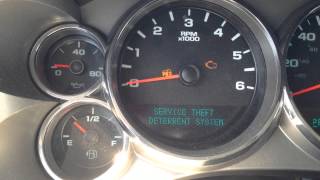
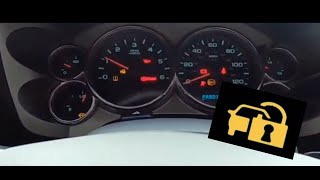
- Engine will not crank (no-crank, no-start). 🎬 Watch this quick fix for a no-crank service theft deterrent issue.
- Engine starts and immediately shuts off (start-stall).
- Security indicator light is illuminated or flashing on the dashboard.
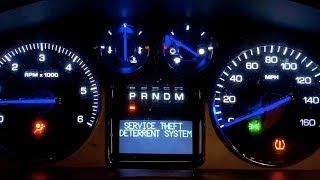
- A 'Service Theft Deterrent System' message may appear on the driver information center.
- Replacing the starter motor when the engine doesn't crank.
- Replacing the battery without confirming it's weak, as the symptoms can be similar to a dead battery.
- Replacing the fuel pump when the engine starts and stalls.
- Replacing the Engine Control Module (ECM) unnecessarily.
Most Likely Causes
- Radio Frequency (RF) Interference 🔴 High Probability The system's design is sensitive to external radio signals operating near its 125 kHz frequency. A series of Technical Service Bulletins (PIC5650K, PIC5650M, etc.) specifically highlights this issue, listing everything from toll passes and building access cards to aftermarket LED lights and phone chargers as potential sources of interference.
How to confirm: Remove all other keys, key fobs, and RFID-enabled cards (like office access cards, gas station speed passes) from the keychain. Attempt to start the vehicle with only the single ignition key. If the vehicle starts, the interference was the cause.
Typical fix: Keep the ignition key isolated from other electronic devices. Instruct the vehicle owner to not keep other fobs or access cards on the same ring as the ignition key.
Est. part cost: $0 - Defective or Damaged Ignition Key 🟡 Medium Probability → Shop Ignition Switch The transponder chip embedded in the plastic head of the key can be damaged from drops or wear and tear, or simply fail internally.
How to confirm: Attempt to start the vehicle with a known-good spare key. If the vehicle starts and runs with the spare, the primary key is faulty. This is a common experience shared by owners in forums.
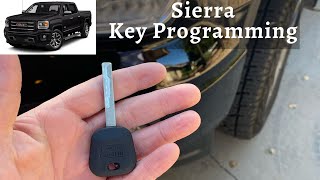
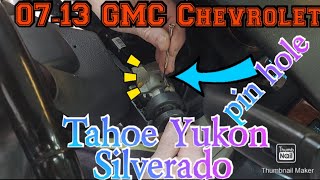
Typical fix: Replace the faulty key. A new key must be mechanically cut and electronically programmed to the vehicle using either a scan tool or the 30-minute relearn procedure. 🎬 See a step-by-step walkthrough of the 30-minute key relearn process.
Est. part cost: $50-$150 - Security System Communication Glitch 🟡 Medium Probability Sometimes the key and Theft Deterrent Module lose synchronization after events like a battery change or a jump start. A system reset can often restore communication.
How to confirm: Perform the '30-Minute Key Relearn Procedure.' If the procedure works and the vehicle starts, a communication glitch was the cause. Success with this method is widely reported in owner forums.
Typical fix: Perform the 30-Minute Key Relearn Procedure: 1. Turn the key to ON (run position) and try to start. 2. Leave the key in the ON position for 10 minutes until the security light stops flashing and goes out. 3. Turn the key OFF for 5-10 seconds. 4. Repeat steps 1-3 two more times for a total of three 10-minute cycles. On the final cycle, the vehicle should start. Ensure a battery charger is connected during this process.
Est. part cost: $0 - Faulty Ignition Lock Cylinder / Exciter Coil ⚪ Low Probability → Shop Ignition Switch The exciter coil, which powers the key's transponder, is housed with the ignition lock cylinder and can fail over time, preventing any key from being read.
How to confirm: If different keys and the relearn procedure fail, the coil is suspect. A technician can test the circuit for continuity and proper resistance. This is the next logical step before suspecting the BCM.
Typical fix: Replace the ignition lock cylinder assembly. This part will need to be programmed to the vehicle's existing keys, often requiring the 30-minute relearn procedure.
Est. part cost: $100-$250
Rare But Worth Checking
- Body Control Module (BCM) Fault: → Shop Body Control Module While rare, the BCM (which incorporates the Theft Deterrent Module) can fail internally or have a software glitch. A TSB for newer models (PI1180A) notes that a software update can fix this code when it appears with B2955, suggesting it's a possibility. This is typically the last item to suspect after all other causes are ruled out.
- Wiring Harness Damage: Damage to the wiring between the ignition lock cylinder and the BCM can interrupt the signal, causing this code. This is uncommon but possible if other work has been performed under the dash. A YouTube video on a similar GM truck showed a no-crank condition caused by a shorted serial data network, which could present similarly.
- Low Battery Voltage: → Shop Vehicle Battery While not a direct cause of B3935, low system voltage during cranking can cause various electronic modules, including the TDM/BCM, to behave erratically and fail the key handshake. It's crucial to ensure the battery is fully charged (>12V) before beginning diagnostics.
Diagnosis Steps
- Check the dashboard for a flashing or solid security light. This confirms an anti-theft issue.
- Verify battery voltage is above 12V. A weak battery can cause unpredictable electronic issues.
- Remove all other keys, fobs, and RFID cards from the ignition key ring and try to start the engine again. This is the primary recommendation of multiple GM TSBs.
- Try starting the vehicle with a known-good spare key. If it works, the original key is bad.
- If the vehicle still won't start, perform the 30-minute key relearn procedure. Connect a battery charger first.
- Check the anti-theft system fuse (Fuse #35 in the under-hood fuse block) to ensure it's not blown.
- If the above steps fail, use a professional scan tool to read live data from the Theft Deterrent Module to see how it's interacting with the key.
- Inspect the wiring and connector at the ignition lock cylinder for any visible damage or looseness.
- If all other components are verified to be good, suspect a faulty Body Control Module (BCM).
Parts You'll Likely Need
- Ignition Key — The transponder chip inside the key is often the point of failure. If a spare key works, the original key is bad.
Trusted brands: ACDelco
OEM price range: $70-$120
Aftermarket price range: $40-$80 - Ignition Lock Cylinder
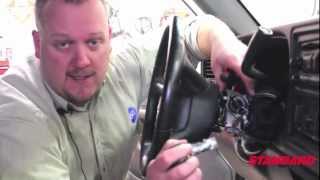
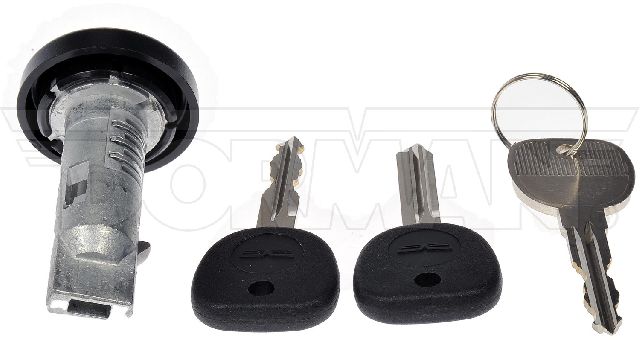
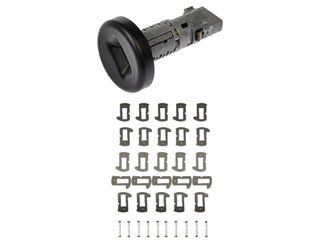
(OEM #ACDelco D1414B (or GM Genuine Parts equivalent))— This assembly contains the exciter coil that reads the key's transponder. If the coil fails, no key will work, and the cylinder must be replaced. The part requires programming upon installation. 🎬 Watch this guide on how to replace the ignition lock cylinder.
Trusted brands: ACDelco, Standard Motor Products
OEM price range: $150-$250
Aftermarket price range: $80-$150
Related Codes That Often Appear With This One
- B3055 — B3055 means 'No Transponder Modulation,' indicating the system received no signal from the key at all. It's often caused by the same issues as B3935, such as RF interference or a bad exciter coil, and they frequently appear together as noted in TSB PIC5650M.
- B3060 — This code points to a fault in the exciter coil circuit itself. It often accompanies B3055 and B3935, helping to pinpoint the issue to the ignition lock cylinder area.
Technical Service Bulletins (TSBs) & Recalls
- PIC5650M: Addresses an intermittent no crank, no start, or start stall concern with the s
Platform-Specific Known Issues
- This platform is subject to TSB #PIC5650M and #PIC5650K, which describe an intermittent no-crank or start-stall condition with the security light on, potentially setting code B3935.
- TSB #PIC5650K specifically advises against replacing parts and instead directs technicians to investigate Radio Frequency Identification (RFID) interference from devices on the customer's keychain as a primary cause. Later versions like PIC5650C expand the list of interfering devices to include aftermarket LED lighting and USB chargers.
- TSB PIE0232 was an engineering information request for low-mileage 2013 models with this code, indicating GM was actively investigating the root cause of this issue even in later model years.
Mechanic-Grade Diagnostic Values
- TDM/BCM Ground Circuit Resistance — expected: Close to 0 Ohms. Failure: A reading higher than a few ohms indicates a poor ground connection, which can cause intermittent or total failure of the module.
- TDM/BCM Power Supply Voltage — expected: Approximately battery voltage (12V+). Failure: No voltage or significantly low voltage indicates a problem with the power supply circuit, fuse, or wiring, not necessarily the module itself.
Hidden / Shadow Codes Worth Checking
- B3935 57: Transponder Authentication Error. The '57' is a GM-specific symptom code that may be displayed on dealer-level scan tools like the Tech 2, providing more specific context to the generic B-code. (see via GM Tech 2 or equivalent professional scan tool.)
Scan Tool Commands That Help
- Tech 2 / GDS2: VTD Re-Learn / Theft Module Re-Learn — This function is required after replacing the Body Control Module (BCM) or Theft Deterrent Module (TDM). It allows the new module to learn the vehicle's specific password. This is different from the 30-minute procedure used only for learning new keys.
- Tech 2 / GDS2: Immobilizer Data / Security Data Display — Use this to view live data parameters from the theft deterrent system. A technician can see the status of the key, whether a valid transponder is detected, and the reason for the last security event, which is critical for diagnosing if the issue is the key, exciter coil, or module logic.
Wiring & Ground Locations
- BCM (Body Control Module) — Under the driver's side of the dashboard, to the left of the steering column.. The BCM is the central module for the Pass-Key III+ system. All related signals are processed here. A poor connection or a fault within this module is a potential cause for code B3935.
- TDM (Theft Deterrent Module) — Located on the steering column, integrated with the ignition lock cylinder housing. It is the ring that surrounds the key cylinder.. This module contains the exciter coil that powers the key's transponder chip and receives its signal. A failure here is a direct cause of codes B3935, B3055, and B3060.
- G201 — A primary instrument panel ground located in the upper left corner of the dash structure, near the driver's side A-pillar.. The BCM and other interior modules rely on this ground. A loose or corroded G201 can cause a wide range of bizarre electrical issues, including intermittent no-start conditions and communication errors that could trigger a B3935 code.
- Anti-Theft Fuse — Fuse #35 in the under-hood fuse block.. This fuse supplies power to the anti-theft system. If it is blown, the system will be inoperative, leading to a no-start condition.
- BCM Ground Path — For 2007 models, the BCM ground path runs through the Left Instrument Panel Junction Block.. GM issued a bulletin warning that disconnecting this junction block without first disconnecting the negative battery terminal can damage the BCM internally.
Real Owner Repair Stories
- DuramaxDiesels.com forum user (GMC Sierra (year not specified, but GMT800/900 platform)) — Intermittent no crank, no start, loss of communication with TCM, gear selector indicator loss.
❌ Tried (didn't work) Replacing batteries, Replacing ignition switch, Replacing Neutral Back-Up (NSBU) switch, Replacing and reprogramming the BCM, Replacing and reprogramming the TCM, Replacing and reprogramming the ECM
✅ What actually fixed it The problem was twofold: 1) A loose power wire connection at a white connector located under the main under-hood fuse box. 2) The ECM was also faulty due to bad memory modules and was replaced with a used, reprogrammed unit. The loose wire was the primary cause of the power-related communication issues.
OEM Part Supersession History
ACDelco D1414B→Still current— N/A
Heads up: Aftermarket cross-references include Dorman 924-791 and Standard Motor Products US117L.
Model Year Variations Within This Range
- 2007-2010: The BCM connectors used during this production run were sourced from different manufacturers (e.g., JST and TNE). While they look identical, the internal terminals and Terminal Position Assurance (TPA) locks are different. This means the procedure for de-pinning a wire from a connector (using a pick tool) varies depending on which brand of connector is present in the specific vehicle.
Helpful Videos
We Have This Part in Stock

The information in this article is provided for general reference and educational purposes only. Vehicle specifications, procedures, and part compatibility can vary by production date, trim level, and region. Always consult your vehicle's factory service manual and verify part numbers before purchasing or performing repairs. Safety-critical components such as airbags, seat belts, and braking systems should be installed by a qualified professional.
- Gmc SIERRA 2500:
- 🧭 Diagnostic Flowchart
- 🎬 Helpful Videos
- 🛍️ Shop This Part
- What's Unique About the 2007-2010 Gmc SIERRA 2500
- Symptoms You May Notice
- Most Likely Causes
- Rare But Worth Checking
- Diagnosis Steps
- Parts You'll Likely Need
- Related Codes That Often Appear With This One
- Technical Service Bulletins (TSBs) & Recalls
- Platform-Specific Known Issues
- Mechanic-Grade Diagnostic Values
- Hidden / Shadow Codes Worth Checking
- Scan Tool Commands That Help
- Wiring & Ground Locations
- Real Owner Repair Stories
- OEM Part Supersession History
- Model Year Variations Within This Range
- 🎟️ Get 5% Off