

B3935 on 2007-2014 GMC Yukon: Immobilizer Fault, No-Start Causes and Fixes
Code B3935 on a 2007-2014 GMC Yukon means the anti-theft system has an authentication error, usually causing a no-start. The most common cause, cited in GM bulletins, is radio frequency (RF) interference from other devices on your keychain. Before replacing parts, remove all other keys and RFID cards and try starting the vehicle again.
- B3935 means your Yukon's anti-theft system is preventing it from starting.
- The most likely cause is not a broken part, but interference from other keys or cards on your keychain. Always test with a single, isolated key first.
- If a spare key works, your primary key has failed and needs to be replaced and programmed.
- Do not replace the starter, battery, or BCM without first ruling out RF interference and faulty keys.
- On 2014 models, a BCM software update may be required if code B2955 is also present.
What's Unique About the 2007-2014 Gmc YUKON
The GMT900 platform, which includes the 2007-2014 Yukon, is known for having a sensitive immobilizer system that operates at 125 kHz. General Motors issued multiple Technical Service Bulletins (TSBs) specifically addressing intermittent no-start conditions related to this code. A key finding is that the system is highly susceptible to radio frequency (RF) interference, leading GM to explicitly advise technicians *not* to replace any parts until external interference is ruled out. [Bulletin #PIC5650L]
Diagnostic Flowchart
Tap your situation to follow the diagnostic path that matches what you're seeing on this vehicle.
Symptoms You May Notice
- Intermittent no-crank, no-start condition. [Bulletin #PIC5650M, Bulletin #PIC5650L]
- Engine starts and immediately stalls.
- Security light on the instrument cluster is on or flashing. [Bulletin #PIC5650M, Bulletin #PIC5650L, 3, 4]
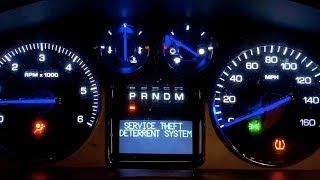
- "Service Theft Deterrent System" message on the driver information center.
- Replacing the battery or starter motor without checking for security codes. A flashing security light is a key indicator that the starting issue is related to the anti-theft system, not the primary starting components.
- Replacing the ignition switch. While related, the electrical portion of the ignition switch is a separate component from the immobilizer's exciter ring and is less likely to cause this specific code.
Most Likely Causes
- Radio Frequency (RF) Interference 🔴 High Probability As documented in GM Technical Service Bulletin #PIC5650L, the immobilizer system in these trucks is sensitive to external radio signals. Other keys with transponders, office key cards, or gas station payment cards on the same keychain can disrupt the 125 kHz signal between the ignition key and the vehicle.
How to confirm: Remove the ignition key from the keychain. Ensure no other keys, fobs, or RFID cards are near the ignition switch. Attempt to start the vehicle with only the single Yukon key. If the vehicle starts, the interference was the cause.
Typical fix: Isolate the ignition key from other RF-emitting devices. This is a no-cost fix.
Est. part cost: $0 - Defective Ignition Key Transponder 🟡 Medium Probability → Shop Ignition Switch The transponder chip embedded in the key head can fail internally or be damaged from being dropped. This prevents it from correctly responding to the vehicle's security challenge. This is a known failure point, as seen in owner forums.
How to confirm: Try starting the vehicle with a spare key. If the spare key works reliably, the primary key is faulty.
Typical fix: Replace the faulty key. A new key must be cut to match the ignition and programmed to the vehicle's immobilizer system by a locksmith or dealership. A 30-minute relearn procedure can often be performed by the owner.
Est. part cost: $50-$150 - Body Control Module (BCM) Software Glitch ⚪ Low Probability → Shop Body Control Module For the 2014 model year specifically (and some 2015 models), GM released a service bulletin (PI1180A) for a BCM software issue that could cause a 'No Click, No Crank, No Start' condition with B3935.
How to confirm: This requires a professional diagnosis at a dealership or qualified shop. If the vehicle is a 2014 model and also has code B2955 set, this is the likely cause.
Typical fix: Reprogram the Body Control Module (BCM) with the latest updated software calibration. This must be done by a service center with access to GM's Service Programming System (SPS). The labor time is estimated at 0.5 hours under warranty.
Est. part cost: $0 (software only)
Rare But Worth Checking
- Faulty Theft Deterrent Module (TDM) or Exciter Ring: → Shop Anti-Theft Control Module The module itself or the antenna ring around the ignition cylinder can fail, but this is less common than key or interference issues. Diagnosis involves checking for power and ground at the module and may require a scan tool to monitor data. Replacing the TDM is typically the last step after a new key also fails to solve the problem.
- Wiring Harness Damage: Damage to the wiring between the exciter ring, TDM, and BCM can cause a loss of communication. This is rare but possible, especially if other electrical work has been performed under the dash. One owner on a forum found that a wiring harness loom near the transmission had melted on the exhaust heat shield, causing numerous random electrical faults and codes.
Diagnosis Steps
- Observe the dashboard for a flashing or solid 'Security' light when the no-start condition occurs. This confirms an anti-theft issue.
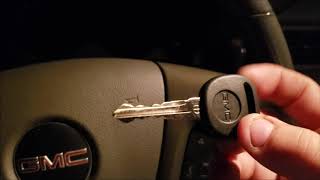
- Remove the GMC key from your keychain. Separate it from all other keys, fobs, and RFID cards (e.g., work badges, credit cards).
- Attempt to start the engine using only the isolated GMC key. If it starts, the problem is RF interference.
- If the issue persists, try a known-good spare key. If the spare key works, the original key is faulty.
- If neither key works and interference is ruled out, a 30-minute security relearn procedure can be attempted. This involves turning the key to 'ON' for 10-11 minutes until the security light goes out, turning it off for 30 seconds, and repeating this two more times for a total of three cycles.
- If the relearn fails, check the battery voltage to ensure it is above 12.4V, as low voltage can disrupt security system functions.
- If a repair was performed but codes cannot be cleared, TSB 14-08-117-001 suggests disconnecting the negative battery cable for 30 seconds to reset the BCM, then attempting to clear the codes again.
- If all else fails, the vehicle needs to be scanned with a tool capable of reading Body Control Module codes to diagnose the TDM, BCM, and related wiring.
Parts You'll Likely Need
- Transponder Ignition Key
(OEM #23372322 (replaces 15824471, among others))— The chip inside the original key is the most likely hardware component to fail, after ruling out RF interference. This is the 'Circle Plus' key with a Philips ID 46 chip.
Trusted brands: ACDelco, Strattec (5903089)
OEM price range: $70-$120
Aftermarket price range: $40-$80
Related Codes That Often Appear With This One
- B3055 — This code relates to 'No Transponder Modulation or No Transponder,' meaning the theft module received no signal from the key at all. It often appears with B3935 during intermittent no-start events, frequently caused by RF interference. [Bulletin #PIC5650M, Bulletin #PIC5650L]
- B3060 — This code means 'Unprogrammed Transponder,' indicating the key's value is not learned by the module. It can also be triggered by RF interference or a failing key. [Bulletin #PIC5650M, Bulletin #PIC5650L]
- B2955 — On 2014 and 2015 models, this code often accompanies B3935 and points towards a BCM software issue that requires a dealer re-flash, as per TSB PI1180A.
Technical Service Bulletins (TSBs) & Recalls
- PIC5650M: Mentions B3935 in the context of an intermittent no-crank/no-start or stall with the security light on.
- PIC5650L: Explicitly warns not to replace parts for B3935 and to first investigate Radio Frequency Identification interference from other devices on the customer's keychain.
- PI1180A: Addresses an intermittent no-start with B3935 and B2955 on 2014-2015 models, fixed by a BCM software update.
- PIE0232: An engineering information request to gather data on no-start conditions with code B3935 on 2013 models, pointing to RF interference as a suspected cause.
- 14-08-117-001: Provides a procedure to reset the BCM by disconnecting the battery if DTCs cannot be cleared after a repair.
Platform-Specific Known Issues
- A known issue, documented in TSB #PIC5650L, is an intermittent no-start caused by RF interference. The bulletin specifically warns against replacing parts for this concern until interference is ruled out.
- For 2013 models, GM issued bulletin #PIE0232 to gather more information from the field about the root cause of B3935, B3055, and B3060, again highlighting RF interference as a primary suspect, especially on low-mileage vehicles.
- For 2014 models (and some 2015s), TSB #PI1180A identifies a software problem in the BCM that can cause a no-start with codes B3935 and B2955, which is resolved by reprogramming the module.
Hidden / Shadow Codes Worth Checking
- B3935 57: The '57' is a symptom byte meaning the transponder's calculation to the challenge from the TDM does not match the TDM's calculation. This confirms an authentication failure rather than a 'key not found' issue. (see via A professional scan tool like the GM Tech2 or GDS2 is required to view symptom bytes.)
Scan Tool Commands That Help
- GDS2/Tech2: Immobilizer Learn — Used after replacing a key, the BCM, or the ECM to teach the modules the new component's security information. This function is found under the 'Service Programming System' (SPS).
- GDS2: BCM Programming and Setup — When installing a new BCM, this function is required to write the vehicle's VIN, configure RPO codes for options, and perform the security relearn procedures.
- GDS2/Tech2: Data Display: 'Invalid Key' / 'Transponder Key Not Present' — In the TDM or BCM data list, observing these parameters can help determine if the issue is intermittent. A technician noted that the status would flip between 'present' and 'not present' during a no-start event, pointing towards a communication breakdown.
Wiring & Ground Locations
- BCM (Body Control Module) — Inside the passenger cabin, behind the lower dashboard panel on the driver's side, near the interior fuse block.. The BCM is the central computer for the body and security systems. All theft-deterrent signals are processed here. A poor connection or water intrusion (from a clogged HVAC drain) can cause this code.
- BCM Ground — A primary ground for the BCM is located inside the cab, near the front left speaker, requiring removal of the A-pillar trim and dash trim to access.. A loose or corroded BCM ground can cause a host of intermittent electrical issues, including no-start conditions and false security codes, mimicking a module failure.
- Underhood Fuse Block — On the driver's side of the engine bay.. Contains the fuse for the anti-theft system (typically a 2-amp fuse labeled 'ALARM' or similar, fuse #35 in some layouts), which should be checked before diagnosing modules.
Real Owner Repair Stories
- Tahoe Yukon Forum (2009 GMC Yukon) — Dash lights, gauges, and door locks would 'freak out' intermittently. The engine cut off on one occasion. The condition would only last a few seconds.
❌ Tried (didn't work) Replaced both battery cables and the main fuse., Added an extra ground cable from the alternator bracket to the firewall.
✅ What actually fixed it The user later found and tightened loose terminals on the battery, which resolved all the erratic electrical symptoms that were mimicking a BCM or ground fault.
OEM Part Supersession History
15824471→23372322— Standard part evolution and consolidation by GM over the model years.
Heads up: Part number 23372322 is an uncoded key blank that replaces a long list of previous part numbers, including 15824471, 15940307, and 20985619. It must be cut and programmed to the vehicle.15943678 (Example 2007 BCM)→25835966 (Example)— Hardware and software revisions.
Heads up: A used BCM, even with a matching part number, will not work without being reprogrammed with the new vehicle's VIN and RPO codes using a Tech-2 or GDS2 scan tool. The colored squares on the module label correspond to the connector positions, not vehicle compatibility.
Model Year Variations Within This Range
- 2007-2011: These earlier models often use BCM part numbers like 22860591. Replacement requires VIN programming and security relearn, but they are not subject to the specific software glitch found in 2014 models.
- 2014: This model year is specifically called out in TSB PI1180A for a software issue causing B3935 with B2955, fixed by a BCM reflash. This TSB was later expanded to include some 2015 models.
Helpful Videos
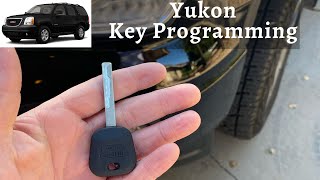

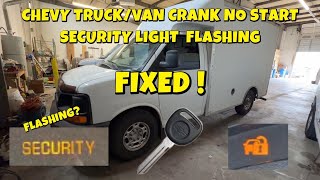


The information in this article is provided for general reference and educational purposes only. Vehicle specifications, procedures, and part compatibility can vary by production date, trim level, and region. Always consult your vehicle's factory service manual and verify part numbers before purchasing or performing repairs. Safety-critical components such as airbags, seat belts, and braking systems should be installed by a qualified professional.
- Gmc YUKON:
- 🧭 Diagnostic Flowchart
- 🎬 Helpful Videos
- What's Unique About the 2007-2014 Gmc YUKON
- Symptoms You May Notice
- Most Likely Causes
- Rare But Worth Checking
- Diagnosis Steps
- Parts You'll Likely Need
- Related Codes That Often Appear With This One
- Technical Service Bulletins (TSBs) & Recalls
- Platform-Specific Known Issues
- Hidden / Shadow Codes Worth Checking
- Scan Tool Commands That Help
- Wiring & Ground Locations
- Real Owner Repair Stories
- OEM Part Supersession History
- Model Year Variations Within This Range
- 🎟️ Get 5% Off