

B3935 on 2012-2016 GMC Yukon Denali: Security Light and No-Start Causes
Code B3935 on a 2012-2016 Yukon Denali almost always signals a security system issue causing a no-start condition. It's often triggered by radio frequency (RF) interference from other devices on your keychain. Before replacing parts, remove all other fobs and devices from the vehicle's key and try again; this is a no-cost fix. For 2015 models, a known BCM software glitch is also a common cause, requiring a dealer update.
- B3935 means your truck's security system doesn't recognize your key.
- The most likely cause is NOT a broken part, but interference from other electronic items on your keychain. Isolate your car key and try again.
- Do not replace the BCM or other expensive modules until you have ruled out RF interference and, for 2015 models, the need for a software update.
- If you need a new key, it must be professionally programmed to your vehicle.
What's Unique About the 2012-2016 Gmc YUKON DENALI
On this generation of Yukon, the immobilizer system can be particularly sensitive. GM has issued multiple Technical Service Bulletins (TSBs) acknowledging that intermittent no-start conditions with a security light and code B3935 can be caused by simple radio frequency interference from devices operating in the 125 kHz range. Another TSB points to a software glitch in the BCM on 2015 models that can cause this code, which requires a dealer-installed update to fix. This means external factors or software issues are more likely culprits than a failed part.
Diagnostic Flowchart
Tap your situation to follow the diagnostic path that matches what you're seeing on this vehicle.
Generation note: This year range covers two generations of the Yukon Denali: the end of the GMT900 platform (2012-2014) and the beginning of the K2XX platform (2015-2016). While the underlying issue is similar, a specific TSB for a BCM software update applies only to the 2015 models. The RF interference issue, however, is noted in bulletins covering both generations.
Symptoms You May Notice
- Intermittent no-crank, no-start condition.
- Engine starts and immediately stalls.
- Security or anti-theft system warning light is illuminated or flashing on the dashboard.
- "Service Theft Deterrent System" message on the Driver Information Center (DIC).
- Replacing the Body Control Module (BCM) or Theft Deterrent Module (TDM) unnecessarily.
- Replacing the ignition switch.
- Replacing the battery or starter.
- Replacing the key without first checking for RF interference or trying a spare key.
Most Likely Causes
- Radio Frequency (RF) Interference 🔴 High Probability As noted in manufacturer TSBs PIC5650J, PIC5650M, and PIE0232, the immobilizer system is sensitive to external radio signals from devices on the same keychain, such as other vehicle fobs, office access cards, or gas station payment fobs. This is the most common and overlooked cause.
How to confirm: Remove all other key fobs, access cards, and electronic devices from the keychain with the vehicle key. Try starting the vehicle with the key isolated. If it starts consistently, RF interference was the cause.
Typical fix: Keep other RF-emitting devices separate from the vehicle key. No parts are required.
Est. part cost: $0 - Body Control Module (BCM) Software Glitch 🟡 Medium Probability → Shop Body Control Module A specific TSB (PI1180A) was issued for 2015 models where a software error in the BCM prevents it from correctly reading the immobilizer information, specifically causing a 'No Click, No Crank, No Start' condition.
How to confirm: This issue is specific to 2015 models and is typically diagnosed by a GM dealer who can check the current software calibration of the BCM. It is almost always accompanied by code B2955.
Typical fix: Reprogramming the BCM with the updated software calibration available through the GM Service Programming System (SPS). This is a labor-only fix.
Est. part cost: $0 (parts), $100-$200 (labor for reprogramming) - Weak or Defective Key Transponder ⚪ Low Probability
How to confirm: Try starting the vehicle with a spare key. If the spare key works reliably, the primary key's internal transponder chip is likely faulty. A weak key fob battery is less likely to cause this specific code but is an easy check.
Typical fix: Replace the key fob battery first. If that fails, the key itself will need to be replaced and programmed to the vehicle.
Est. part cost: $5-$15 (battery), $150-$400 (new key and programming)
Rare But Worth Checking
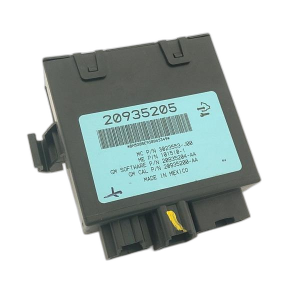
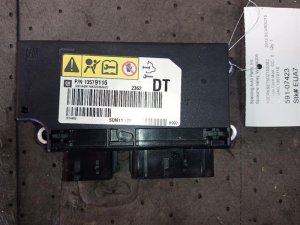
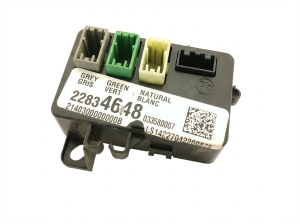
- Faulty Theft Deterrent Module (TDM) / Body Control Module (BCM): → Shop Anti-Theft Control Module This is rare. The TSBs specifically warn against replacing modules before ruling out RF interference and software issues. A hardware failure should only be considered after all other, more common causes have been eliminated. In some forum-documented cases, water intrusion into the cabin has been suspected of damaging the BCM over time. Replacement can be costly, with dealer quotes around $700, while mail-in cloning services offer a more affordable plug-and-play option for around $250.
- Damaged Wiring or Connectors: Damage to the wiring for the ignition lock cylinder, BCM, or main ground connections can interrupt the signal from the key. This is unlikely without prior physical damage or repairs. On K2XX platforms, poor battery cable connections or a poor BCM ground at G218 have been reported to cause a variety of electrical issues, including no-start and security light illumination.
Diagnosis Steps
- Check for TSBs: Review TSBs PIC5650M, PIC5650J, PI1180A, and PIE0232 to see if the symptoms match the known issues.
- Isolate the Key: Remove the ignition key from your keychain. Ensure no other car fobs, office access cards, or other electronic devices are nearby. Attempt to start the vehicle. If it starts, you have found the issue.
- Try the Spare Key: If isolating the key doesn't work, try starting the vehicle with a known-good spare key. If the spare works, the original key is faulty.
- Check Key Fob Battery: If you don't have a spare, replace the battery in the suspect key fob as a low-cost diagnostic step. A CR2032 battery is commonly used.
- Attempt 10-Minute Relearn Procedure: Insert the key and turn it to the 'ON' position (without starting). Leave it on for 10 minutes until the security light stops flashing and turns off. Turn the key off for 5 seconds, then try to start the vehicle. This may need to be repeated up to three times. This can sometimes reset the security system.
- Scan for Other Codes: Use an advanced scan tool to check for other related codes like B3055, B3060, or B2955, which can help pinpoint the problem.
- Professional Diagnosis: If none of the above steps resolve the issue, professional diagnosis is required. For 2015 models, this involves checking the BCM software version. For other years, it may involve testing the circuitry of the Theft Deterrent System.
Parts You'll Likely Need
- No parts needed — The most common cause is RF interference, which is resolved by removing other devices from the keychain and requires no new parts.
OEM price range: $0
Aftermarket price range: $0 - Ignition Key / Fob (GMT900)
(OEM #ACDelco 22936098 (4-Button w/ Remote Start))— If the internal transponder chip in the key has failed, the entire key assembly must be replaced and programmed. This part number is for the 2012-2014 models.
Trusted brands: ACDelco (OEM)
OEM price range: $110-$175
Aftermarket price range: $75-$150 - Body Control Module (BCM) (K2XX)
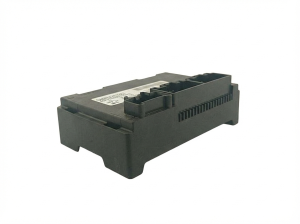
(OEM #13594692, 13587704, 13594764)— In rare cases of hardware failure or if the software update doesn't work on a 2015 model, the BCM itself may need replacement. These are some of the part numbers for the 2015 Yukon. It requires programming, which can be done by a dealer or by a mail-in cloning service.
Trusted brands: ACDelco (OEM)
OEM price range: $300-$550
Aftermarket price range: $250 (cloned/programmed)
Related Codes That Often Appear With This One
- B3055 — Relates to a problem with the key transponder itself. Often set alongside B3935 during a security system fault.
- B3060 — Indicates a failure in the transponder antenna circuit (the ring around the ignition cylinder). It's part of the same system and can be triggered by similar interference or faults.
- B2955 — Specifically seen with the BCM software issue on 2015 models that also causes B3935. TSB PI1180A directly addresses this code combination.
Technical Service Bulletins (TSBs) & Recalls
- PIC5650M: Mentions B3935 in the context of an intermittent no-crank/no-start or stall with the security light on.
- PIC5650J: Warns against replacing parts for B3935 and points to Radio Frequency Identification interference as a likely cause.
- PI1180A: Addresses a 'No Click, No Crank, No Start' condition with codes B3935 and B2955 on 2015 Yukon models, fixed by a BCM software update.
- PIE0232: An early engineering request from 2012 seeking information on low-mileage vehicles with B3935 to determine the root cause, specifically asking technicians to check for RF interference before proceeding with any repairs.
Platform-Specific Known Issues
- A GM Technical Service Bulletin (#PIC5650J) explicitly states that for intermittent no-start conditions with code B3935, technicians should not replace any parts and should instead ask the customer about Radio Frequency Identification devices on their keychain.
- For 2015 models specifically, TSB #PI1180A identifies a software problem in the Body Control Module (BCM) that can cause a no-start condition with codes B3935 and B2955. The fix is a software update, not a part replacement.
- An owner on tahoeyukonforum.com with a 2015 model experiencing a no-start after rain found multiple communication codes including B3935, leading to suspicion of a water-damaged BCM or related wiring.
Mechanic-Grade Diagnostic Values
- Voltage drop on positive battery cable — expected: Less than 100 mV. Failure: A reading above 100 mV indicates high resistance in the cable or connections.
- Voltage drop on negative battery cable — expected: Less than 200 mV. Failure: A reading above 200 mV indicates high resistance in the cable or connections.
- Control module ground circuit resistance — expected: Less than 5 Ω. Failure: Resistance greater than 5 Ω indicates a poor ground connection.
Scan Tool Commands That Help
- GM Service Programming System (SPS): Body Control Module Reprogramming — For 2015 models only, when a 'No Click, No Crank, No Start' condition is present and DTCs B3935 and B2955 are both set. This updates the BCM with a software calibration to fix a known glitch. Use Labor Operation 2880218.
- Immobilizer Coil Tester (LED type): Exciter Coil Field Test — As a quick preliminary check. Hold the simple LED tester loop near the ignition cylinder and turn the key to 'ON'. If the LED flashes, it confirms the BCM/TDM is energizing the exciter coil, helping to rule out a faulty coil or module output.
Wiring & Ground Locations
- G218 — For K2XX (2015-2016) platforms, this BCM ground is located behind the driver's side A-pillar/kick panel area.. A TSB identifies a poor connection at G218 as a potential cause for various electrical issues, including battery drain, which can create erroneous BCM behavior and codes.
- BCM Connector C2280C — At the Body Control Module.. Pins 6, 7, and 10 of this connector are ground circuits designated GD233, terminating at the left A-pillar. A fault at this connector or its ground point can directly impact BCM function and cause authentication errors.
- G201 — For GMT900 (2012-2014) platforms, located in the upper left corner of the instrument panel, near the A-pillar.. This is a primary instrument panel ground. Since the Theft Deterrent Module and related components are in this area, a poor connection here can cause intermittent security system faults.
- Underhood Fuse #35 — In the underhood fuse block on GMT900 (2012-2014) models.. This 2-amp fuse is specifically for the alarm system and should be checked early in the diagnostic process.
Real Owner Repair Stories
- Camaro5 Forum user 'RedTexasSS' (2012 Chevrolet Camaro SS (similar GM security system)) — No crank, 'Service Theft Deterrent System' message on DIC, code B3935 present.
❌ Tried (didn't work) Disconnecting and reconnecting the battery., Performing the 30-minute key relearn procedure with the original, faulty key.
✅ What actually fixed it The internal transponder of the original key had failed. A new key was cut by a locksmith, and the 30-minute (3x10 min) relearn procedure was then successfully performed with the new key, which resolved the no-start condition.
Model Year Variations Within This Range
- 2015 only: A specific BCM software glitch causing B3935 and B2955 is unique to this model year and is addressed by TSB PI1180A, requiring a dealer reprogram.
- 2012-2014 (GMT900): The physical locations of grounds and some modules differ from the 2015-2016 K2XX platform. For example, ground G201 is a key instrument panel ground on these models. The anti-theft fuse is identified as #35 in the underhood block.
- 2013: GM issued a specific engineering TSB (PIE0232) for this model year to investigate the root cause of B3935 on low-mileage vehicles, underscoring how prevalent the issue was even on new trucks.
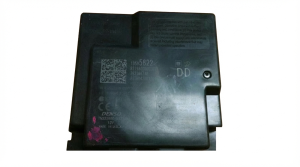
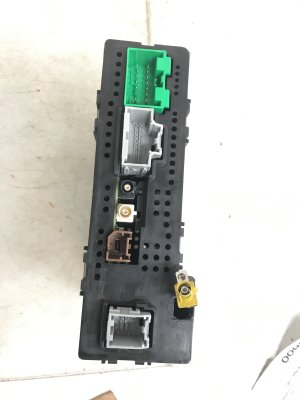
We Have This Part in Stock

The information in this article is provided for general reference and educational purposes only. Vehicle specifications, procedures, and part compatibility can vary by production date, trim level, and region. Always consult your vehicle's factory service manual and verify part numbers before purchasing or performing repairs. Safety-critical components such as airbags, seat belts, and braking systems should be installed by a qualified professional.
- Gmc YUKON DENALI:
- 🧭 Diagnostic Flowchart
- 🛍️ Shop This Part
- What's Unique About the 2012-2016 Gmc YUKON DENALI
- Symptoms You May Notice
- Most Likely Causes
- Rare But Worth Checking
- Diagnosis Steps
- Parts You'll Likely Need
- Related Codes That Often Appear With This One
- Technical Service Bulletins (TSBs) & Recalls
- Platform-Specific Known Issues
- Mechanic-Grade Diagnostic Values
- Scan Tool Commands That Help
- Wiring & Ground Locations
- Real Owner Repair Stories
- Model Year Variations Within This Range
- 🎟️ Get 5% Off