

B3935 on 2007-2014 GMC Yukon XL: Transponder Error, No Start Causes & Fixes
Code B3935 on a 2007-2014 Yukon XL means the engine immobilizer failed to authenticate the key, causing a no-start. This is often due to radio frequency interference. Before replacing parts, remove all other keys and electronic devices from your keychain and try starting again.
- B3935 means your truck's security system is preventing it from starting.
- The most common cause is not a broken part, but interference from other items on your keychain. Always try starting with just the single ignition key first.
- If isolating the key doesn't work, try your spare key next to see if the primary key has failed.
- Do not replace the battery, starter, or BCM without first performing these simple diagnostic steps, as advised by GM's own service bulletins.
What's Unique About the 2007-2014 Gmc YUKON XL
On the GMT900 platform, which includes the 2007-2014 Yukon XL, General Motors has issued multiple Technical Service Bulletins (TSBs) about this code. Unusually, the primary advice is to *not* immediately replace parts. The system is known to be sensitive to Radio Frequency Interference (RFI) from devices operating in the 125 kHz range, which can mimic a component failure. This makes proper diagnosis, starting with isolating the key from other fobs and electronics, especially important on these trucks to avoid unnecessary expense.
Diagnostic Flowchart
Tap your situation to follow the diagnostic path that matches what you're seeing on this vehicle.
Symptoms You May Notice
- Engine does not crank (no-crank, no-start)
- Engine starts and immediately shuts off (start-stall)
- Security indicator light is illuminated or flashing on the dashboard.
- Message on the driver information center like "Service Theft Deterrent System".
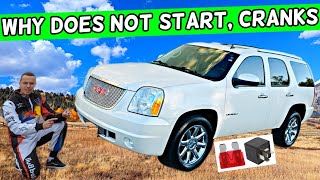
- Replacing the battery, starter, or fuel pump. 🎬 Watch: Why your Yukon cranks but won't start A no-start caused by the security system will not be fixed by replacing these components. The presence of the security light and code B3935 points directly to the immobilizer system.
Most Likely Causes
- Radio Frequency Interference (RFI) 🔴 High Probability GM has issued multiple TSBs (PIC5650J, PIE0232, PIC5650M) warning that other devices can interfere with the key's signal. The low-power signal from the key's transponder operates at 125 kHz and is easily disrupted by other key fobs, access cards, or even some aftermarket phone chargers.
How to confirm: Remove the ignition key from your keychain. Take away all other keys, fobs, and RFID cards (like office access cards). Unplug any aftermarket chargers or dash cams. Try starting the vehicle with only the single ignition key present. If it starts, RFI was the cause. If the issue is intermittent, you may need to check all keychains used with the vehicle.
Typical fix: Keep the ignition key isolated from other electronic devices or keys with transponders. Do not 'flip' the key blade out while cranking, as this can also cause issues per TSB PIT5030.
Est. part cost: $0 - Worn or Damaged Ignition Key 🟡 Medium Probability → Shop Ignition Switch The transponder chip embedded in the plastic head of the key can be damaged from drops or simply fail over time. The internal electronics are sensitive.
How to confirm: Try starting the vehicle with your spare key. If the spare key works reliably and the primary key does not, the primary key's transponder has failed. This is the most definitive test.
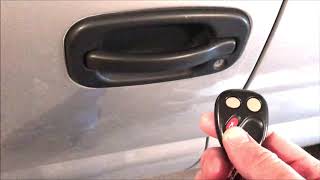
Typical fix: The faulty key must be replaced and the new key must be programmed to the vehicle by a dealer or automotive locksmith. 🎬 See how to perform the GM Passkey relearn procedure The OEM key part number is often a circle-plus (+) key blank.
Est. part cost: $70-$150 - Body Control Module (BCM) Software Glitch ⚪ Low Probability → Shop Body Control Module For the 2014 model year specifically, GM released a software update to fix a no-start condition that sets B3935. This issue was later expanded to include some 2015 models as well.
How to confirm: This issue is specific to a 'No Click, No Crank, No Start' condition where both B3935 and B2955 are set. A GM dealer or a shop with a subscription to GM's Service Programming System (SPS) can check if the update (per TSB PI1180A) applies to your VIN and has been performed.
Typical fix: Reprogram the BCM with the updated software calibration. This is a dealer or qualified shop-level repair.
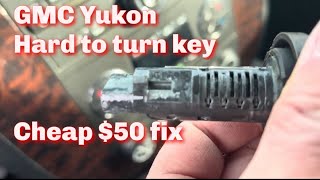
Est. part cost: $0 (if covered), otherwise labor cost for reprogramming (approx. 0.5 hours). - Faulty Ignition Lock Cylinder or Exciter Coil ⚪ Low Probability → Shop Ignition Switch The exciter coil is an antenna that powers the key's transponder and reads its signal. A break in its wiring or an internal failure can prevent communication. While less common than key or RFI issues, it does happen.
How to confirm: This requires advanced diagnostics after ruling out the key and RFI. A technician would test the circuit between the BCM and the exciter coil for continuity and proper resistance. In some cases, a user on a forum reported a bypass was attempted by a shop, indicating a known failure point.
Typical fix: Replacement of the ignition lock cylinder assembly, which includes the exciter coil. 🎬 Watch: How to replace and program a new ignition cylinder This part often requires programming or re-keying.
Est. part cost: $100-$250
Rare But Worth Checking
- Failing Body Control Module (BCM): → Shop Body Control Module While possible, the BCM itself is rarely the cause of the failure. Service information suggests replacing the TDM/BCM only after a known-good replacement key also fails to start the vehicle. It should only be considered for replacement after all other possibilities, including wiring, grounds, and software, have been thoroughly exhausted.
- Poor BCM/Fuse Block Connection or Ground: In some cases, a no-start condition with multiple BCM communication faults can be caused by a loose connector at the fuse panel or a corroded ground connection under the passenger seat area. One owner of a 2011 PPV (Police Pursuit Vehicle) Tahoe traced a no-start to a disconnected plug at the driver's side fuse panel.
Diagnosis Steps
- Check for the security light on the dash. Its presence is a key indicator of an immobilizer issue.
- Isolate the ignition key. Remove it from the keychain and move all other keys, fobs, and electronics (especially office access cards) away from the ignition area. Attempt to start the vehicle. This is the most important first step.
- Attempt to start the vehicle with a known-good spare key. If it starts reliably, the original key is faulty and needs replacement.
- Scan the Body Control Module (BCM) for codes. Note if B3935 is present with B3055, B3060, or B2955, as this can help pinpoint the issue.
- If a 2014 model, check with a dealer if TSB PI1180A applies to your VIN for a BCM software update, especially if code B2955 is also present.
- If keys and RFI have been ruled out, inspect the wiring and connector at the ignition lock cylinder for any signs of damage or looseness.
- If the problem persists, professional diagnosis of the ignition lock cylinder's exciter coil and the BCM itself is required. Service information directs technicians to replace the TDM/BCM if a brand new, properly programmed key still results in a B3935 code.
Parts You'll Likely Need
- Ignition Key
(OEM #GM 25832354 (supersedes 12458191, 15822350))— If the transponder chip in the original key has failed, a new key is the only solution. This is confirmed by testing with a spare key.
Trusted brands: ACDelco
OEM price range: $70-$120
Aftermarket price range: $40-$80 - Ignition Lock Cylinder
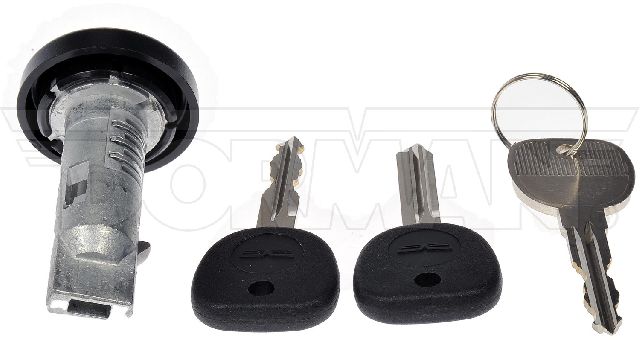
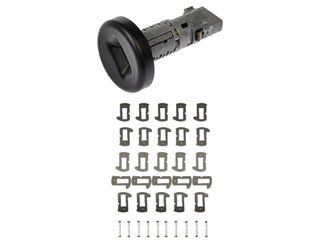
(OEM #ACDelco D1493F (also associated with GM 25832354))— If the exciter coil (antenna) that reads the key has failed, the lock cylinder assembly must be replaced. This is diagnosed after ruling out the key and RFI. Note: Fitment for D1493F appears to be for older GM cars, not the GMT900 trucks, causing confusion. The correct part for the truck is typically sold as a complete assembly. Always verify with VIN.
Trusted brands: ACDelco, Standard Motor Products
OEM price range: $150-$250
Aftermarket price range: $80-$150
Related Codes That Often Appear With This One
- B3055 — B3055 means 'No Transponder...Received'. It indicates the security module received no signal from the key at all, often due to severe RFI, a completely dead key transponder, or a faulty exciter coil.
- B3060 — B3060 means 'Unprogrammed Transponder...Received'. This means the system received a signal from a key that is not learned to the vehicle, such as a new, unprogrammed key.
- B2955 — This code is seen alongside B3935 in a specific scenario for 2014 models that is addressed by a BCM software update (TSB PI1180A).
Technical Service Bulletins (TSBs) & Recalls
- PIC5650M / PIC5650J / PIC5650B: Links B3935, B3055, and B3060 to intermittent no-start/stall with security light, and warns against unnecessary parts replacement, pointing to RFI as a primary cause.
- PI1180A: Advises of a BCM software update for 2014-2015 models experiencing a no-crank with codes B3935 and B2955.
- PIE0232: An engineering bulletin seeking information on no-start conditions with B3935, B3055, or B3060 on low-mileage 2013 models, specifically asking technicians to first verify no RFI is present.
Platform-Specific Known Issues
- A high sensitivity to Radio Frequency Interference (RFI) is a well-documented issue, as noted in GM TSBs PIC5650J and PIE0232.
- For 2014 models, a specific BCM software glitch can cause a no-start with B3935 and B2955, which is resolved by a dealer-installed software update per TSB PI1180A.
- Cracked dashboards and broken interior door handles are common cosmetic complaints on this platform that are unrelated to this code but good for owners to be aware of.
Hidden / Shadow Codes Worth Checking
- B3935 57: The '57' is a symptom byte that may be displayed on a professional scan tool like the Tech2 or GDS2. It specifically indicates 'Transponder Authentication Error', confirming the issue is with the key's challenge/response calculation and not a simple failure to read the key. (see via GM Tech2 or GDS2 scan tool, in the BCM/TDM data display.)
Scan Tool Commands That Help
- GDS2 / Tech2: Module Diagnostics -> BCM -> Data Display -> Immobilizer Data — Use this function to view live data parameters related to the theft deterrent system. A technician can see the 'Key Status', 'Transponder State', and the number of learned keys. This helps determine if the BCM is seeing the key, if it's a learned key, and where in the authentication process the failure is occurring.
- GDS2 / Tech2 with SPS: Service Programming System (SPS) -> BCM Reprogramming — This is used specifically for the 2014 model year issue where codes B3935 and B2955 are set together. It updates the BCM software to correct the logic error causing the no-start. This requires an online subscription to GM's TIS2Web.
- GDS2 / Tech2: BCM -> Configure/Reset Functions -> Add/Replace Keys — This function is required after replacing a faulty ignition key or the BCM itself. It guides the technician through the 10-minute or 30-minute key relearn procedure to program the new component to the vehicle.
Wiring & Ground Locations
- BCM (Body Control Module) — Inside the passenger cabin, mounted to the left of the steering column behind the lower driver-side dashboard panel.. The BCM is the central module for the theft deterrent system on this platform. All key data, exciter coil signals, and communication with the ECM are processed here. A poor connection or a fault in the module itself can cause B3935.
- G218 — On the driver's side (left) A-pillar, behind the trim panel.. This is a major interior ground point. A loose or corroded G218 can cause a host of intermittent electrical issues, including problems with BCM operation and communication, potentially leading to immobilizer faults.
- BCM Ground Path — The BCM ground path runs through the left instrument panel junction block (the interior fuse panel).. GM issued a specific bulletin (07-08-47-004D) warning technicians that removing the BCM ground path (e.g., by unplugging the junction block) while the battery is connected can cause internal damage to the BCM. The negative battery cable MUST be disconnected first.
- TDM Fuse — In the underhood fuse block, fuse #35 (2 Amp) is often cited as related to the alarm/theft system. Fuse #12 (IGN SW) is also critical as it powers the ignition switch components.. While a blown fuse is not a common cause for B3935 (which implies power is present but authentication fails), checking these fuses is a fundamental step in diagnosing any no-start condition.
Real Owner Repair Stories
- YouTube channel 'Tio's Auto Diagnostics' (2015 Chevrolet Silverado 1500 (Similar K2XX platform with related architecture)) — No crank, no start, no communication with several key modules including ECM, TCM, and BCM.
❌ Tried (didn't work) Scanning for codes initially showed no communication., Unplugging the ABS module allowed some communication to be restored, pointing to a CAN bus issue., Checking the terminating resistor at the rear of the vehicle, which was found to be good.
✅ What actually fixed it A corroded wire in the high-speed CAN bus harness was found and repaired. The corrosion interrupted communication between the essential modules, preventing the immobilizer handshake and causing a no-start. Soldering the broken wire restored full communication and fixed the starting issue.
OEM Part Supersession History
12458191, 15822350→25832354— Standard part evolution and consolidation.
Heads up: Crucially, part number 25832354 (and its associated ACDelco number D1493F) is for older GM passenger cars like the 1997-2005 Impala, Malibu, and Grand Am. It is NOT compatible with the 2007-2014 GMC Yukon XL, despite being a GM ignition lock cylinder with a transponder reader. Using this part number will lead to a failed repair.
Model Year Variations Within This Range
- 2014: A specific BCM software calibration issue exists for this model year (and some early 2015 models) that can cause a no-start with codes B3935 and B2955 set together. The fix is a software update (TSB PI1180A) performed by a dealer, not a parts replacement.
- 2013: GM issued a specific Preliminary Information bulletin (PIE0232) for 2013 models with low mileage that set B3935, B3055, or B3060. It requested technicians to gather data for engineering analysis, highlighting a known sensitivity and focus on RFI for this model year.
Helpful Videos
We Have This Part in Stock

The information in this article is provided for general reference and educational purposes only. Vehicle specifications, procedures, and part compatibility can vary by production date, trim level, and region. Always consult your vehicle's factory service manual and verify part numbers before purchasing or performing repairs. Safety-critical components such as airbags, seat belts, and braking systems should be installed by a qualified professional.
- Gmc YUKON XL:
- 🧭 Diagnostic Flowchart
- 🎬 Helpful Videos
- 🛍️ Shop This Part
- What's Unique About the 2007-2014 Gmc YUKON XL
- Symptoms You May Notice
- Most Likely Causes
- Rare But Worth Checking
- Diagnosis Steps
- Parts You'll Likely Need
- Related Codes That Often Appear With This One
- Technical Service Bulletins (TSBs) & Recalls
- Platform-Specific Known Issues
- Hidden / Shadow Codes Worth Checking
- Scan Tool Commands That Help
- Wiring & Ground Locations
- Real Owner Repair Stories
- OEM Part Supersession History
- Model Year Variations Within This Range
- 🎟️ Get 5% Off