

Saab 9-3 B3935 Code: No-Start, Security Light, and RF Interference Fixes (2007-2011)
B3935 on a 2007-2011 Saab 9-3 almost always means radio frequency (RF) interference is preventing your key from being authenticated, causing a no-start and security light. The fix is usually free: remove all other electronic keys, fobs, and access cards from your keychain and try starting the car with the Saab key alone. Do not replace any parts until this is ruled out, as explicitly warned in Saab TSBs.
- B3935 is a security code indicating a key authentication failure, which will prevent the car from starting.
- The number one cause is Radio Frequency Interference (RFI) from other electronic items on your keychain or in the car.
- ALWAYS rule out RFI by isolating the Saab key before attempting any repairs or replacing any parts. This is a free and easy check.
- If RFI is not the cause, try a spare key to determine if the primary key fob has failed.
- Only after ruling out RFI and key issues should you suspect a hardware failure of the Ignition Switch Module (ISM) or Column Integration Module (CIM), which requires professional diagnosis with a Tech 2 tool.
What's Unique About the 2007-2011 Saab 9-3
The Saab 9-3's security system from this era is notoriously sensitive to external radio frequencies operating on the 125 kHz, 315 MHz, and 433 MHz bands. The issue became so common that the manufacturer issued Technical Service Bulletins (TSBs), specifically PIC5650J and PIC5650M, warning technicians *not* to replace expensive components like the ignition switch or CIM module for this code. Instead, the bulletins direct technicians to first investigate RF interference from other devices the customer may have, such as other car keys, toll passes, building access cards, and even aftermarket phone chargers or LED lights. This is a unique and crucial first step for this platform.
Diagnostic Flowchart
Tap your situation to follow the diagnostic path that matches what you're seeing on this vehicle.
Symptoms You May Notice
- Intermittent no-crank or no-start condition
- Engine starts and then immediately stalls
- Security indicator light is illuminated on the instrument cluster
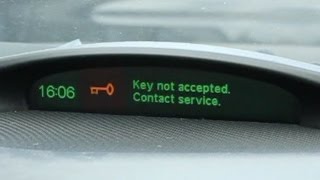
- A message may appear on the driver information display, such as 'Key Not Accepted' or a similar security warning
- Replacing the Column Integration Module (CIM) or Ignition Switch Module (ISM) before ruling out RF interference, as explicitly warned against in TSB PIC5650J.
- Replacing the starter motor. A starter failure will not set a security code like B3935.
- Replacing the main vehicle battery without first checking for RFI or trying a spare key.
Most Likely Causes
- Radio Frequency Interference (RFI) 🔴 High Probability As stated in manufacturer TSBs PIC5650J and PIC5650M, the vehicle's security system is sensitive to external RF signals that can disrupt the 125 kHz key authentication process. Common culprits include other vehicle key fobs, building access cards, toll passes, and even aftermarket USB chargers or LED lights.
How to confirm: Remove all other keys (especially modern ones with their own fobs), access cards, and electronic devices from the keychain. Unplug any aftermarket devices from the car's power outlets. Hold the Saab key by itself and attempt to start the vehicle. If it starts, RFI is the cause.
Typical fix: Isolate the Saab key from other electronic items. Keep other car fobs, office access cards, and other transponders in a separate pocket or away from the ignition switch when starting the car. No parts are needed.
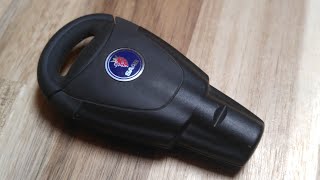
Est. part cost: $0 - Weak or Defective Key Fob 🟡 Medium Probability → Shop Keyless Entry Transmitter The transponder chip in the key can fail over time from being dropped or from internal circuit board failure. The rubber casing is also known to degrade and fall apart, potentially damaging the internals. A weak internal battery can also cause inconsistent signals.
How to confirm: After ruling out RFI, try starting the car with your spare key. If the spare key works consistently, the problem is with your primary key. Even if the remote lock/unlock buttons work, the transponder chip for starting the car can fail independently.
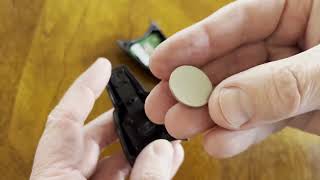
Typical fix: First, replace the battery in the non-working key fob (a CR2032). If that doesn't work, the key itself may be faulty and need replacement and programming by a dealer or specialist with a Tech 2 scan tool.
Est. part cost: $1-$10 for a battery, $150-$400 for a new key and programming. - Failing Ignition Switch Module (ISM) or Column Integration Module (CIM) ⚪ Low Probability → Shop Steering Column Switch Fuse While less common for this specific code, the ISM and CIM are known electrical failure points on the Saab 9-3 that can cause a variety of starting and security issues. The ISM contains the contacts that read the key 🎬 Watch: Step-by-step guide to replacing the Ignition Switch Module., and the CIM is the central module for security. A failure in either can prevent authentication.
How to confirm: This requires professional diagnosis with a Saab-specific Tech 2 scan tool to monitor communication between the key, ISM, and CIM. This step should only be taken after definitively ruling out RFI and key issues, as warned in TSBs.
Typical fix: Replacement of the faulty module (ISM or CIM), which must be programmed to the vehicle using a Tech 2 scanner with security access. Using an incorrect part number for the CIM 🎬 Watch: Professional walkthrough of a Saab CIM module replacement. will result in programming failure.
Est. part cost: $150-$700
Rare But Worth Checking
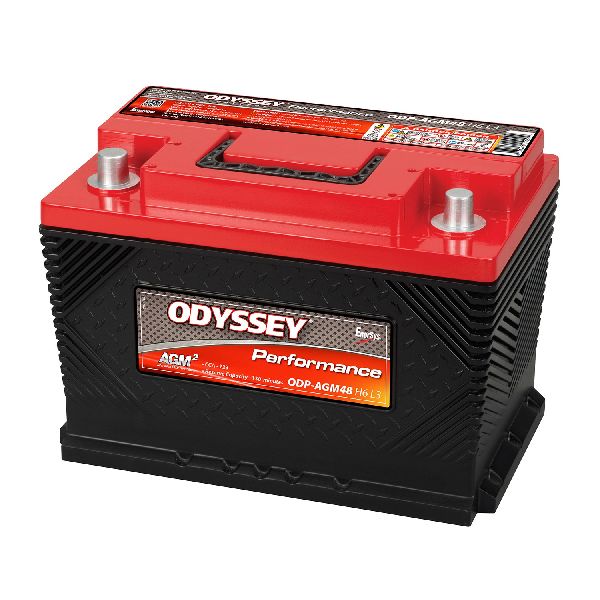
- Low Vehicle Battery Voltage: → Shop Vehicle Battery While not a direct cause of a key authentication *failure*, low system voltage can cause unpredictable behavior in various electronic modules, including the CIM, potentially leading to this code or a no-start condition that can be misdiagnosed.
- Aftermarket Electronics: Poorly installed aftermarket remote starters, alarms, or even certain types of LED interior/exterior lights and USB chargers plugged into the accessory outlet can introduce electrical noise or RF interference that disrupts the immobilizer system.
Diagnosis Steps
- Verify that the security light is on and the car fails to start, as described in the symptoms.
- Crucial First Step: Remove the Saab key from your keychain. Ensure no other car fobs, house keys with electronic chips, or office access cards are nearby. Unplug any aftermarket phone chargers or accessories.
- Attempt to start the car with the isolated Saab key. If it starts, you have confirmed Radio Frequency Interference (RFI) is the cause.
- If the car still does not start, try your spare Saab key. If the spare key works, your primary key is likely faulty.
- If the primary key is suspected, replace its internal battery (CR2032) 🎬 See how to quickly swap your key fob battery. and try again. This is a cheap and easy step.
- If neither key works and RFI has been ruled out, check the main vehicle battery to ensure it has a full charge (above 12.4V), as low voltage can cause various electronic issues.
- If all the above steps fail, the issue may be with the car's hardware (ISM or CIM). This requires diagnosis by a professional with a Saab Tech 2 scan tool to read live data from the security modules and check for communication errors.
Parts You'll Likely Need
- No Parts Needed — The most common cause is RF interference, which is resolved by removing other electronic devices from the keychain, requiring no new parts.
OEM price range: $0
Aftermarket price range: $0 - Key Fob Battery
(OEM #CR2032)— If the key fob's battery is weak, it can cause an intermittent signal, leading to authentication failure. This is a cheap and easy item to replace as a diagnostic step.
Trusted brands: Energizer, Duracell, Panasonic
OEM price range: $5-$10
Aftermarket price range: $1-$5 - Ignition Switch Module (ISM)
(OEM #32021815 (Kit), 12801010)— If RFI and key issues are ruled out, the ISM is a potential hardware failure point. It contains the contacts and antenna ring for reading the key.
Trusted brands: Genuine SAAB
OEM price range: $250-$350
Aftermarket price range: $150-$250 - Column Integration Module (CIM)
(OEM #12769673, 32021812 (Repair Kit))— This is the main security module. It is a less common but possible point of failure that would require replacement and programming with a Tech 2 tool.
Trusted brands: Genuine SAAB
OEM price range: $400-$700
Aftermarket price range: $200-$400 (Used/Reman)
Related Codes That Often Appear With This One
- B3055 — This code means 'No Transponder Signal Detected'. It can be set along with B3935 when RF interference completely blocks the key's signal from being read, as noted in TSB PIC5650J.
- B3060 — This code means 'Unprogrammed Transponder'. It can appear with B3935 if the security challenge fails in a way that makes the system think the key is not programmed to the car, also mentioned in TSB PIC5650J.
Technical Service Bulletins (TSBs) & Recalls
- PIC5650J: Warns of intermittent no-start with codes B3055, B3060, and/or B3935 and advises against replacing parts, pointing to Radio Frequency Identification interference from sources like other keys, toll passes, and aftermarket electronics.
- PIC5650M: Broadens the list of associated codes for the same no-start/stall concern, including B3935, and again points towards an intermittent, non-parts-related issue caused by RFI.
Platform-Specific Known Issues
- This platform's sensitivity to Radio Frequency Interference is the most significant vehicle-specific issue, as documented by Saab in TSBs #PIC5650J and #PIC5650M.
- The rubber coating on the factory key fobs is known to degrade, becoming sticky and falling apart over time, which can lead to damage of the internal electronics.
- Failure of the CIM or ISM modules are known, albeit less common, electrical issues on the 9-3 platform that can cause a range of security and starting problems.
Mechanic-Grade Diagnostic Values
- CIM Module Power Supply & Ground — expected: 12V at power supply pins and less than 1 ohm resistance to ground on ground pins.. Failure: Voltage below 12V or high resistance on a ground connection indicates a wiring or power supply issue, not necessarily a faulty CIM.
- Ignition Switch (ISM) Torque Test (Early Models) — expected: A special tool (16-84 71 211) is designed to detach at 2.8-3.0 Nm. The ignition should not turn from OFF to ON before the tool detaches.. Failure: If the ignition can be turned to ON without the tool detaching, the ISM is faulty and must be replaced.
Scan Tool Commands That Help
- Tech 2: Add/Remove > Control Modules > CIM > Add — This function is required after physically replacing the Column Integration Module (CIM). It marries the new module to the car's other electronic systems and requires security access via TIS (Technical Information System).
- Tech 2: Add/Remove > Keys > Add Keys — Used after installing a new CIM to program all existing and new keys to the new module. All keys must be present and programmed in a single sequence.
- Tech 2: Steering Angle Sensor Calibration — This is a mandatory step automatically prompted by the Tech 2 after a successful CIM replacement and programming. Failure to calibrate can result in stability control errors.
Wiring & Ground Locations
- G2 — On the side of the left-hand structural member by the connector bracket in the engine bay.. This is a primary battery ground point. A poor connection here can cause widespread, intermittent electrical issues across multiple modules, including the CIM.
- G3 — In the luggage compartment below the left light cluster.. This grounds the Rear Electrical Centre (REC), which communicates on the bus system with the CIM. A fault here can cause communication errors.
- G4 — On the center tunnel, behind the airbag control module.. This ground is located in the central part of the car's electronics network, and its integrity is important for modules communicating on the I-bus and P-bus.
- CIM Connector — On the Column Integration Module itself, behind the steering wheel.. This is the main electrical connector for the CIM. Checking for power and ground at this connector's pins is a key step in diagnosing a faulty CIM versus a wiring problem.
Real Owner Repair Stories
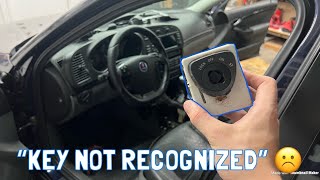
- OGS Mechanics YouTube Channel (2003-2011 Saab 9-3 (specific year not mentioned, but applies to range)) — Car displays 'Key not accepted. Contact Service' on the information display. The key does not unlock the steering column and the engine will not crank.
❌ Tried (didn't work) Vehicle-side diagnostic checks showed no faults with the car's modules.
✅ What actually fixed it The internal electronics of the key fob itself had failed. A new genuine key was programmed to the vehicle, which resolved the issue. The repair involved extracting security information from the engine ECU and other modules to program the new key. - Reddit user on r/saab (Saab 9-3 (year not specified)) — Remote lock/unlock functions stopped working on both key fobs, but the keys could still start the car. The SID displayed 'Remote control battery low. Replace battery' even with a new battery.
❌ Tried (didn't work) Replacing the CR2032 battery in the key fob.
✅ What actually fixed it The internal ground terminal on the key fob's circuit board had a broken solder joint. The user wedged a small piece of aluminum foil to bridge the broken connection between the battery and the ground terminal on the board, restoring full functionality.
OEM Part Supersession History
12801010→32021815 (Repair Kit)— The original complete ISM assembly was replaced by a repair kit. The new kit requires reusing the black lower housing and internal sliding mechanism from the old switch.
Heads up: The repair kit (32021815) is not a direct swap. The old ISM must be carefully disassembled, and its lower housing and contacts must be cleaned and reused. Failure to properly transfer the old parts will result in a non-functional repair.12769673 (and others)→32021812 (Repair Kit)— Similar to the ISM, the complete CIM assembly was replaced by a repair kit containing the internal electronics. This kit supersedes numerous previous part numbers including 12761345, 12777263, 12842078, and 12847563.
Heads up: The repair kit requires reusing the original plastic housing of the CIM. Programming with a Tech 2 and security access is mandatory after installation.
Model Year Variations Within This Range
- 2003: Early production 2003 models within VIN range 31000001 - 31007202 were subject to a service campaign (383-2384) for a potentially defective Ignition Switch Module (ISM) where an internal lug could break.
Helpful Videos
We Have This Part in Stock


The information in this article is provided for general reference and educational purposes only. Vehicle specifications, procedures, and part compatibility can vary by production date, trim level, and region. Always consult your vehicle's factory service manual and verify part numbers before purchasing or performing repairs. Safety-critical components such as airbags, seat belts, and braking systems should be installed by a qualified professional.
- Saab 9-3:
- 🧭 Diagnostic Flowchart
- 🎬 Helpful Videos
- 🛍️ Shop This Part
- What's Unique About the 2007-2011 Saab 9-3
- Symptoms You May Notice
- Most Likely Causes
- Rare But Worth Checking
- Diagnosis Steps
- Parts You'll Likely Need
- Related Codes That Often Appear With This One
- Technical Service Bulletins (TSBs) & Recalls
- Platform-Specific Known Issues
- Mechanic-Grade Diagnostic Values
- Scan Tool Commands That Help
- Wiring & Ground Locations
- Real Owner Repair Stories
- OEM Part Supersession History
- Model Year Variations Within This Range
- 🎟️ Get 5% Off