

OBD-II Code B3948: Left Front Turn Signal Circuit Fault
What B3948 means, why it triggers, and how to fix it
- Code B3948 indicates an electrical fault in the left front turn signal circuit, prompting the Body Control Module (BCM) to shut down power to prevent damage.
- On 2014-2020 GM trucks and SUVs, a shorted wiring harness chafing against the front bumper frame (TSB #PIT5487F) causes over 80% of these faults.
- Always swap the left and right turn signal bulbs first to rule out a simple $10 burned-out filament before paying for advanced electrical diagnostics.
- After repairing a shorted wire, you must disconnect the negative battery terminal for 15 minutes to perform a 'hard reset' and force the BCM to restore power to the circuit.
What Does B3948 Mean?
Code B3948 means the Body Control Module (BCM) detects an electrical fault in the left front turn signal circuit. The BCM sends pulsating voltage to the bulb; this code sets when it sees incorrect voltage, no voltage, or abnormal current. The BCM shuts down power to the circuit to prevent internal damage.
Technical definition: The SAE/OBD-II definition for code B3948 is "Left Front Turn Signal Circuit." This is accompanied by a two-digit failure code, such as 01 for a short to voltage, 02 for a short to ground, or 04/05 for an open circuit.
Can I Drive With B3948?
Yes, But With Caution. Yes, but a non-functional turn signal dramatically increases collision risk. Failure to use turn signals contributes to 2 million accidents annually. Driving with a broken signal is a traffic violation resulting in fines up to $150 and license points. Repair immediately.
Common Causes
- Burned-Out Turn Signal Bulb (Very Common) — A broken filament inside the bulb creates an open circuit. This is the most frequent and easiest failure to fix.
- Shorted Front Bumper Wiring Harness (Very Common) — On 2014-2020 GM trucks and SUVs, the front bumper wiring harness chafes against the frame, causing a short to ground. This is a well-documented factory defect (TSB #PIT5487F).
- Corroded Bulb Socket or Connector (Common) — Moisture intrusion rusts the metal contacts or melts the plastic connector, preventing electricity from reaching the bulb.
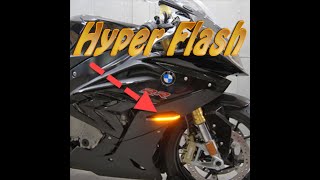
- Aftermarket LED Bulbs (Common) — LEDs draw significantly less power than halogen bulbs. The BCM misinterprets this low current as a burned-out bulb, triggering code B3948 04/05 and hyper-flashing. 🎬 See how to fix LED error codes with resistors.
- Poor BCM Ground (Less Common) — On GM vehicles, sound-deadening material trapped under the main BCM ground terminal (G218) creates high resistance, causing erratic electrical faults (TSB #PIT5405C).
- Broken or Open Wire (Less Common) — Physical stress or previous improper repairs break the circuit wire, creating an open circuit identical to a burned-out bulb.
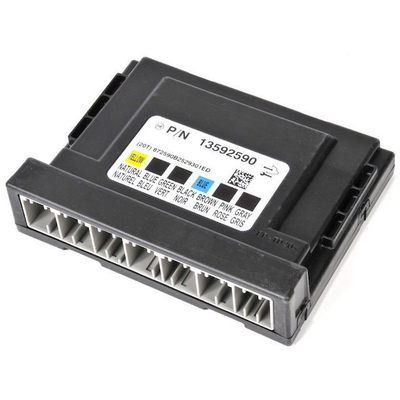
- Failed Body Control Module (BCM) (Rare) — The internal driver circuit for the turn signal fails. Only consider this after ruling out the bulb, socket, and wiring.
Symptoms
- Left front turn signal does not work — The bulb at the front of the car does not light up when activated.
- Rapidly flashing turn signal indicator (Hyper-flash) — The dashboard arrow blinks much faster than normal, warning of a circuit problem.
- Left front turn signal stays on constantly — The bulb remains lit continuously, indicating a short to voltage.
- Warning message on the instrument cluster — The dashboard displays "Service Lighting System" or "Check Left Front Turn Lamp".
- Blown lighting system fuse — A short circuit blows protective fuses like F10DL or F19DR in the underhood fuse block.
Diagnostic Flowchart
Tap your situation to follow the diagnostic path that matches what you're seeing on this code.
Common Fixes & Costs
- Replace Turn Signal Bulb — Parts: $5-$20, Labor: $0-$50, ~0.5 hr book time (DIY)
- Repair Damaged Front Fascia Wiring Harness — Parts: $5-$20, Labor: $125-$550, ~2.5 hr book time (Professional)
- Replace Turn Signal Bulb Socket/Pigtail — Parts: $15-$60, Labor: $75-$150, ~1 hr book time (Intermediate)
- Install LED Load Resistors — Parts: $10-$25, Labor: $0-$50, ~0.5 hr book time (DIY)
- Repair BCM Ground (G218) — Parts: $0-$5, Labor: $75-$150, ~1 hr book time (Intermediate)
- Replace Body Control Module (BCM) — Parts: $300-$600, Labor: $150-$300, ~2 hr book time (Professional)
Used vs. New Parts: Buying Guide
When a used part is worth it: A used front fascia wiring harness from a reputable salvage yard is a good value if it comes from a vehicle with no front-end damage.
Donor-vehicle mileage cap: roughly under 100000 miles for the part to have meaningful remaining life.
Donor quality checklist:
- Verify the donor vehicle was not in a front-end collision.
- Inspect the harness for any signs of cracking, melting, corrosion, or previous repairs.
- Match the part number exactly, as harnesses vary based on vehicle options.
Decision logic:
- If The fault is a simple bulb or socket → Always buy new; the cost is minimal.
- If The fault is a damaged wiring harness and a new OEM harness is over $400 → A used OEM harness from a trusted seller with a warranty is a viable, cost-effective option.
- If The fault is the Body Control Module (BCM) → Favor a new OEM part. Used BCMs require expensive programming and carry high failure risks.
Warranty tradeoff: Used parts typically have a 30-90 day warranty. New aftermarket parts have a 1-year to limited lifetime warranty. New OEM parts carry a 1-2 year warranty.
Worst-case if a used part fails: $200-$600 if a used wiring harness fails after installation, requiring repeat labor.
What Happens If You Wait — Timeline
- Immediate: Code B3948 sets. The left front turn signal stops working, hyper-flashes, or stays on. The vehicle is an immediate safety risk. (MPG impact: 0%% · Added cost: $0)
- 0-2 months: Continued operation poses a daily accident risk. You are liable to receive a moving violation for an equipment failure. (MPG impact: 0%% · Added cost: $150-$250 in potential fines)
- 2-6 months: The vehicle automatically fails state-mandated safety inspections. Continued vibration causes an intermittent short to break completely. (MPG impact: 0%% · Added cost: $300+ (fines plus failed inspection fees))
- 6+ months: A persistent, cycling short stresses the BCM's internal driver, leading to permanent module failure. (MPG impact: 0%% · Added cost: $800-$1500 (cost if the BCM requires replacement))
Cost of Not Fixing It
- Immediate: Significantly increased risk of an accident when turning or changing lanes. (Added cost: Potential for thousands in accident-related damages, medical bills, or insurance increases.)
- 0-1 month: Risk of receiving a traffic ticket for an equipment violation. (Added cost: $150-$350+)
- 1-6+ months: An intermittent short damages the output driver in the Body Control Module, turning a simple wiring repair into an expensive module replacement. (Added cost: $800-$1500)
Diagnosis Steps
- Inspect and Swap the Bulb
Turn on the left signal to confirm the failure. Remove the bulb and swap it with the working right-side bulb. If the problem moves, the bulb is bad.
Tools: Gloves, trim removal tool (Beginner) - Inspect the Bulb Socket
Look inside the socket for green corrosion, black burn marks, or melted plastic. Wiggle the connector to check for loose wires.
Tools: Flashlight (Beginner) - Inspect the Front Wiring Harness
Trace the wiring from the headlight assembly. Look for chafing against the metal frame or bumper support, especially on GM trucks.
Tools: Flashlight, inspection mirror (Intermediate) - Test Ground Circuit Integrity
Disconnect the lamp connector. Use a multimeter set to Ohms to measure between the ground terminal and a clean chassis ground. Readings over 5 ohms indicate a bad ground.
Tools: Multimeter (Intermediate) - Test for Power at the Socket
Have a helper activate the turn signal. Probe the power and ground contacts inside the socket. A pulsating voltage confirms the BCM and wiring are good.
Tools: Multimeter or 12V test light (Intermediate) - Perform Advanced Circuit Integrity Test
Test the control wire for steady battery voltage (Short to Voltage) or continuity to ground (Short to Ground). No voltage and no ground indicates an Open Circuit.
Tools: Multimeter, wiring diagram (Advanced) - Command Circuit with Scan Tool
Use a bi-directional scanner to command the left turn signal ON. If a test light at the socket flashes, the wiring is good. If not, the BCM is likely faulty.
Tools: Bi-directional scan tool, test light (Professional) - Perform a BCM Hard Reset
If you repaired a short circuit, the BCM keeps the circuit disabled for protection. Disconnect the negative battery terminal for 15 minutes to restore function.
Tools: 10mm wrench (Intermediate)
When This Code Triggers (Freeze-Frame Conditions)
- BCM Voltage: 11.5-14.5V (The code sets when the BCM is powered and attempts to activate the turn signal circuit.)
- Ignition Status: ON / RUN (The BCM runs circuit checks when the ignition is on.)
- Left Turn Signal Command: ON (The fault logs the instant the BCM commands the circuit on and detects an incorrect current reading.)
- Fault Frequency Counter: 1+ (The freeze frame shows how many times the fault has been detected during different driving cycles.)
Related Codes
- B3949 — The identical code for the Right Front Turn Signal Circuit. If both are present, it strongly suggests a common wiring harness chafe or a faulty BCM.
- B3948 01 — Indicates a 'Short to Voltage'. The control wire is receiving power when it shouldn't, resulting in the turn signal lamp staying on continuously.
- B3948 02 — Indicates a 'Short to Ground'. This is the most common variant when a wire chafes through and touches the metal frame.
- B3948 04 / B3948 05 — Indicates an 'Open Circuit'. Typically caused by a burned-out bulb filament, a broken wire, or a bad ground.
- U0075, U026A, B2575, B2699 — If present with B3948, it strongly points to the front fascia wiring harness being shorted, disrupting communication across the vehicle.
Climate & Environmental Factors
- High Humidity and Rain: Moisture seeps into the bulb socket or breached wiring insulation, causing corrosion on metal contacts and short circuits.
- Road Salt (Winter Climates): Saltwater penetrates a chafed harness and rapidly corrodes copper wires, leading to a B3948 02 (short to ground) or B3948 04 (open circuit) fault.
- Extreme Cold: Extreme cold causes older wiring insulation to become brittle and crack, exposing wires to moisture and chafing.
How to Talk to a Mechanic About This Code
Say this: "I have a B3948 code for the left front turn signal. I've already checked the bulb and it's good. On my vehicle, I know wiring harness chafing is a common issue (TSB PIT5487F). I'd like a diagnostic to confirm if it's a wiring short, a bad socket, or the BCM."
This shows you've done basic troubleshooting and directs the technician to the most likely cause, saving diagnostic time. Mentioning the TSB is key for affected GM vehicles.
Avoid saying:
- 'My blinker is broken.'
- 'Just fix the light.'
- 'I think it's the computer.'
Questions to ask before authorizing the repair:
- What was the specific point of failure? Can you show me the damaged wire or corroded socket?
- If the wiring is shorted, how will you protect the repair to ensure it doesn't happen again?
- Does the estimate include diagnosing, repairing the wire, and clearing the BCM code?
- What is the warranty on the repair, both for parts and labor?
Where to Take It: Dealer vs Independent vs Chain
- Dealer:
Recommended if the vehicle is under warranty. For out-of-warranty GM vehicles, an independent shop is more cost-effective.
Best for: Vehicles still under the original bumper-to-bumper warranty., Complex cases where a BCM replacement and programming are confirmed necessary.
Downsides: Highest labor rates., Prefers to replace an entire wiring harness rather than repair a single chafed wire. (Typical cost: +50% vs. baseline) - Independent Shop:
Best fit for most scenarios, especially the common wiring and socket faults.
Best for: Out-of-warranty vehicles., Diagnosing and repairing the common wiring harness chafing issue., Bulb and socket replacements.
Downsides: Quality varies greatly; seek out shops that specialize in electrical diagnostics., Lacks the expensive tools to program a new BCM if that's the ultimate failure. (Typical cost: +0% vs. baseline) - Chain Shop:
Acceptable ONLY if you have confirmed the bulb is the only problem. AVOID for any diagnosis beyond a bulb swap.
Best for: Simple, confirmed burned-out bulb replacement.
Downsides: Technicians lack the advanced electrical diagnostic skills to trace wiring faults or diagnose a BCM., High pressure to upsell leads to unnecessary recommendations. (Typical cost: -10% vs. baseline)
When to Walk Away From the Repair
If the estimated repair cost exceeds 40-50% of the car's private-party value, question the investment. However, since a working turn signal is a critical safety requirement, this repair is rarely optional.
- Car worth $4000, fix is $500: Fix it. This is a critical safety repair and the cost is reasonable relative to the car's value.
- Car worth $2500, fix is $1200: Borderline. This implies a BCM replacement or a full harness replacement. Get a second opinion from an independent specialist before proceeding.
What Scan Tool You Need for This Code
Minimum: A scanner that reads and clears Body Control Module (BCM) codes. Basic engine-only (P-code) readers will NOT see the B3948 code.
A $20 code reader from a parts store only reads powertrain codes and cannot communicate with the BCM. You will mistakenly think there are no codes stored.
Budget: BlueDriver Pro (~$100) — Reads and clears BCM codes like B3948, provides freeze-frame data, and offers a database of reported fixes. Sufficient for confirming the code and resetting it after a simple repair.
Mid-range: Foxwell NT510 Elite / NT624 Elite (~$150) — Offers bi-directional control. This allows you to command the turn signal ON/OFF directly from the scanner, isolating the fault to the BCM itself.
Professional: Autel MaxiCOM MK808 / XTOOL D7 (~$450-600) — Full bi-directional control, live data graphing, and BCM programming/coding capabilities required if the BCM needs replacement.
Rent vs buy: Most auto parts stores do NOT rent scanners capable of reading BCM codes. Buying a capable scanner like the BlueDriver is a worthwhile investment.
How to Clear the Code After You Fix It
- Use an OBD-II scan tool capable of accessing the BCM to clear the trouble code.
- If the fault was a short circuit, perform a 'hard reset' by disconnecting the negative battery terminal for 15-30 minutes to allow the BCM's protective circuit to reset.
- Cycle the ignition and test the turn signal function multiple times to ensure the repair was successful.
Drive cycle (~5 minutes): A traditional engine 'drive cycle' is not required. After clearing the code and performing a hard reset, start the vehicle and operate the left turn signal. If the repair is successful, the code will not return.
Readiness monitors affected: None
Watch out for:
- Forgetting to perform a hard reset after fixing a short circuit, leading to the mistaken belief that the BCM is bad.
- Using a basic OBD-II scanner that only reads engine codes (P-codes) and cannot communicate with the Body Control Module.
Will This Fail Emissions / State Inspection?
No — by itself this code doesn't fail OBD inspection (but it can keep readiness monitors from setting, which causes a separate fail).
- California: This code does not cause a smog check failure, but a non-functional turn signal is an equipment violation resulting in a $238 fine.
- New York: A non-working turn signal is an automatic failure of the mandatory NYS safety inspection.
- Texas: In counties that require a safety inspection, a broken turn signal is an instant failure.
Most Commonly Affected Vehicles
- Cadillac Escalade / Escalade ESV (2015-2020) — Highly prone to front fascia wiring harness chafing on the frame (TSB #PIT5487F).
- Chevrolet Silverado 1500 (2014-2018) — Shares the K2XX platform and is highly susceptible to the wiring harness short circuit issue.
- GMC Sierra 1500 (2014-2018) — Experiences the common issue of the front bumper harness rubbing through on the frame.
- Chevrolet Tahoe / Suburban (2015-2020) — Affected by the identical front fascia wiring harness chafing issue and potential G218 ground faults.
- GMC Yukon / Yukon XL (2015-2020) — Highly susceptible to the front fascia wiring harness shorting against the frame.
- Chevrolet Corvette (2006-2013) — Service manuals list B3948 specifically for left front turn signal open circuits or shorts.
- Chevrolet Camaro (2010-2015) — Details B3948 for shorts to ground, shorts to battery, or open circuits in the control circuit.
- Chevrolet Malibu (2005-2009) — Typically caused by standard bulb, socket, or wiring faults.
- Saab 9-5 (2010-2011) — Lists B3948 for open circuits or shorts to ground in the left front turn signal circuit.
- Opel/Vauxhall Insignia (2013-2017) — Shows B3948 as a defined fault for the left front turn signal circuit.
Manufacturer-Specific Notes
- General Motors (Chevrolet, GMC, Cadillac): TSB #PIT5487F identifies the front fascia wiring harness shorting out against the sharp edge of the frame rail as the primary cause for this code on K2XX platform trucks.
- General Motors: After a short circuit is repaired, the BCM keeps the circuit deactivated for protection. A 'hard reset' by disconnecting the battery for 15 minutes is required to re-power the circuit.
- General Motors: Per TSB #PIT5405C, a poor BCM ground at terminal G218 causes a multitude of electrical faults, including B3948. Sound insulation material is often trapped under the ground terminal.
- Saab: On 2004-2008 9-3 models, code B3948 00 relates to a 'Steering Lock System, Critical Failure', which prevents the engine from starting. This is entirely unrelated to the lighting system.
Real Owner Stories
2015 GMC Yukon Denali at 110K miles
Owner received a 'Left Front Turn Lamp Failure' message and the left turn signal was hyper-flashing.
What they tried:
- Replaced the turn signal bulb, but the problem persisted.
- Swapped the bulb with the working right-side bulb, problem remained on the left side.
Outcome: Following forum advice about TSB #PIT5487F, the owner inspected the wiring harness near the front bumper. They found a spot where the harness rubbed through on the metal frame. The owner repaired the broken wire with a butt connector and heat shrink, fixing the issue.
Lesson: On GM K2XX platform vehicles, always suspect the front wiring harness chafing issue before assuming a complex fault. A visual inspection saves a costly trip to the mechanic.
2007 Chevrolet Corvette at 75K miles
The left front turn signal stopped working, and the scanner showed code B3948 05 (Open Circuit).
What they tried:
- Replaced the bulb, which did not solve the problem.
- Used a multimeter to check for power at the socket, but found none.
Outcome: The owner traced the wire from the socket back and discovered a poorly done previous repair. The connection had corroded and failed. The owner properly spliced and soldered the wire, restoring function.
Lesson: If you find no power at the socket, trace the wiring and look for signs of previous repairs. A failed splice is a common point of failure for an open circuit.
2016 Chevrolet Silverado 1500
Intermittent 'Check Left Front Turn Lamp' message. The code was B3948.
What they tried:
- The dealership initially couldn't replicate the problem.
- On the second visit, the owner suggested checking the wiring harness.
- The technician found the harness was just beginning to rub on the frame, causing an intermittent short to ground over bumps.
Outcome: The dealership repaired the chafed wire and rerouted the harness to provide more clearance. The repair was covered under warranty.
Lesson: Intermittent electrical problems are caused by loose connections or wiring starting to fail. Pay close attention to when it happens and provide this information to your mechanic.
How to Prevent This Code From Triggering
- Inspect and Protect Vulnerable Wiring (Every 25,000 miles or during oil change) — On vehicles known for harness chafing, visually inspect the harness near the frame. Secure it with zip ties or add split loom tubing to prevent it from rubbing through.
- Apply Dielectric Grease to Bulb Sockets (Whenever a bulb is replaced) — Applying dielectric grease to the base of the bulb seals out moisture. This prevents corrosion that causes high resistance and socket failure.
- Clean Battery Terminals and Ground Connections (Annually, especially before winter) — Corrosion on battery terminals increases electrical resistance. Cleaning connections ensures the BCM has a stable power supply, preventing false codes.
- Secure Loose Connectors and Harnesses (During any under-hood maintenance) — Vibrations cause electrical connectors to become loose. Periodically check that major harness connectors are fully seated and not rubbing against moving parts.
Frequently Asked Questions
My scanner shows 'B3948 02'. What does the '02' mean?
The two digits are a symptom byte providing specific fault data. '01' means short to battery, '02' means short to ground, and '04/05' means open circuit. This narrows down your diagnosis immediately.
I installed LED bulbs and now I have a B3948 code. Why?
LED bulbs draw significantly less current than standard halogen bulbs. The BCM misinterprets this low draw as a burned-out bulb, triggering an open circuit code and hyper-flashing. Install a 50-watt load resistor in parallel to fix this.
Can a bad ground cause code B3948?
Yes. The turn signal requires a complete circuit to ground. A corroded or broken ground wire creates an open circuit, preventing the bulb from lighting and triggering the code.
Why did my turn signal stop working after I fixed the shorted wire?
The BCM cuts power to shorted circuits to prevent internal damage. It keeps the circuit disabled even after the physical repair is made. Disconnect the negative battery terminal for 15 minutes to perform a hard reset and restore power.
Can I just clear the code?
You can clear it with a scan tool, but it returns immediately if the electrical fault remains. The BCM continuously monitors the circuit. You must fix the underlying issue first.
Why is my turn signal blinking fast?
This is called 'hyper-flashing'. It is an intentional warning that a bulb is burned out or the circuit has failed. The BCM changes the flash speed when it detects incorrect electrical resistance.
Is it expensive to fix code B3948?
Costs range from $10 for a simple bulb to $550 for a shop to trace and repair a shorted wiring harness. Replacing a damaged BCM is the most expensive scenario, often exceeding $800 with programming.
Key Takeaways
- Code B3948 indicates an electrical fault in the left front turn signal circuit, prompting the Body Control Module (BCM) to shut down power to prevent damage.
- On 2014-2020 GM trucks and SUVs, a shorted wiring harness chafing against the front bumper frame (TSB #PIT5487F) causes over 80% of these faults.
- Always swap the left and right turn signal bulbs first to rule out a simple $10 burned-out filament before paying for advanced electrical diagnostics.
- After repairing a shorted wire, you must disconnect the negative battery terminal for 15 minutes to perform a 'hard reset' and force the BCM to restore power to the circuit.
Helpful Videos
Shop the Parts Behind B3948
Below are the parts most often responsible for code B3948, ranked by how frequently each one is the actual culprit (per the diagnosis above). Tap any to see what we have for your vehicle.





The information in this article is provided for general reference and educational purposes only. Vehicle specifications, procedures, and part compatibility can vary by production date, trim level, and region. Always consult your vehicle's factory service manual and verify part numbers before purchasing or performing repairs. Safety-critical components such as airbags, seat belts, and braking systems should be installed by a qualified professional.
- 🧭 Diagnostic Flowchart
- 🎬 Helpful Videos
- 🛍️ Shop This Part
- What Does B3948 Mean?
- Can I Drive With B3948?
- Common Causes
- Symptoms
- Common Fixes & Costs
- Used vs. New Parts: Buying Guide
- What Happens If You Wait — Timeline
- Cost of Not Fixing It
- Diagnosis Steps
- When This Code Triggers (Freeze-Frame Conditions)
- Related Codes
- Climate & Environmental Factors
- How to Talk to a Mechanic About This Code
- Where to Take It: Dealer vs Independent vs Chain
- When to Walk Away From the Repair
- What Scan Tool You Need for This Code
- How to Clear the Code After You Fix It
- Will This Fail Emissions / State Inspection?
- Most Commonly Affected Vehicles
- Manufacturer-Specific Notes
- Real Owner Stories
- 2015 GMC Yukon Denali at 110K miles
- 2007 Chevrolet Corvette at 75K miles
- 2016 Chevrolet Silverado 1500
- How to Prevent This Code From Triggering
- Frequently Asked Questions
- My scanner shows 'B3948 02'. What does the '02' mean?
- I installed LED bulbs and now I have a B3948 code. Why?
- Can a bad ground cause code B3948?
- Why did my turn signal stop working after I fixed the shorted wire?
- Can I just clear the code?
- Why is my turn signal blinking fast?
- Is it expensive to fix code B3948?
- Key Takeaways
- 🎟️ Get 5% Off