

OBD-II Code B3979: Incorrect Environmental Identifier Received From HVAC Control Module
What B3979 means, why it triggers, and how to fix the real problem
- Code B3979 on 2017+ GM vehicles is almost exclusively caused by a poorly sealed A/C drain hose leaking water directly onto the Body Control Module (BCM).
- Ignore the "HVAC" in the code definition; 90% of the time, the true symptoms are a wet passenger floorboard, erratic power locks, or a no-start condition.
- Perform a physical inspection of the BCM in the passenger footwell for green or white corrosion before spending $150+ on diagnostic fees or parts.
- Fixing this permanently requires replacing the water-damaged BCM (typically $450–$1000) and securing the A/C drain hose with a zip tie to prevent repeat failures.
What Does B3979 Mean?
Code B3979 indicates the Body Control Module (BCM) received an invalid security 'handshake' message from the climate control (HVAC) system. However, this almost always points to a failing BCM, not a faulty climate control module. The BCM's communication is corrupted, most often by water damage from a known GM design flaw or a software glitch caused by low battery voltage.
Technical definition: The formal SAE/OBD-II definition for code B3979 is "Incorrect Environmental Identifier Received From HVAC Control Module". The Body Control Module (BCM) sets this code when the unique identification signal it receives from the HVAC module during a startup security network 'handshake' is invalid. While the definition names the HVAC module, the BCM is the component logging the code and the one actually malfunctioning.
Can I Drive With B3979?
Yes, But With Caution. You can drive, but it carries high risk. The security system activates unpredictably, preventing the car from starting and leaving you stranded. Unpredictable electrical issues—like the horn blaring or headlights failing—create severe safety hazards. Continued driving also allows the underlying water leak to destroy other expensive electronics.
Common Causes
- Water Leaking on the Body Control Module (BCM) (Very Common) — On many modern GM vehicles, the air conditioner drain hose is poorly sealed and leaks water directly onto the BCM. This causes corrosion and short circuits on the BCM's connectors and internal circuit board, triggering code B3979. This is a well-known design flaw documented in GM Technical Service Bulletin #21-NA-183.
- Low Battery Voltage or Improper Jump-Start (Common) — A dying battery, a recent battery replacement, or an incorrect jump-start procedure causes a sudden voltage drop. This corrupts the memory of the BCM, causing it to 'forget' its unique security information and fail handshakes with other modules. GM TSB #21-NA-277 addresses this scenario, which requires a special reprogramming procedure rather than parts replacement.
- Improper Module Programming or Replacement (Less Common) — If the BCM or a related module (like the instrument cluster or radio) was recently replaced or programmed incorrectly, it causes a mismatch in the vehicle's security data. This failed 'handshake' triggers B3979 and often leads to a no-start condition.
- Damaged Wiring Harness or Connectors (Less Common) — A wire in the harness connecting the BCM to the HVAC module can chafe, pinch, or corrode. This damage disrupts the signal between the two modules. This also happens at major harness connectors like the X200 or X201 if they suffer water intrusion.
- Clogged Sunroof Drains or Other Body Leaks (Less Common) — If sunroof drains clog, water backs up and leaks inside the cabin, reaching the BCM. Poorly sealed body seams in the roof or cowl area, noted in TSBs 19-NA-167 and 52990, also allow water into the cabin to cause electrical failures.
- Aftermarket Accessory Interference (Rare) — Improperly installed aftermarket devices, such as remote starters or telematics trackers that tap into the vehicle's CAN bus wiring, disrupt communication between modules and inadvertently trigger B3979.
- Poor BCM Ground Connection (Rare) — The BCM relies on a solid ground connection. A loose or corroded ground point (such as G218 on some GM models) creates a floating voltage potential, leading to erratic communication codes that mimic a failed BCM.
Symptoms
- Wet Carpet in Passenger Footwell — The carpet near the center console on the passenger's side is damp. This is the most critical diagnostic sign of an A/C drain leak destroying the BCM.
- Car Won't Start (Immobilizer Active) — The vehicle's anti-theft system fails to recognize your key, preventing the engine from starting or causing it to start and immediately stall.
- Power Door Locks Not Working or Erratic — The door locks work intermittently or stop working completely. This is a primary symptom listed in GM's water intrusion service bulletin.
- Horn, Lights, or Wipers Activate Randomly — The horn blares, hazard lights flash, or wipers turn on by themselves while the car is off. This is a classic sign of a short-circuiting BCM.
- Key Fob Inoperative — The keyless entry system stops working, preventing you from locking or unlocking the doors remotely.
- Various Warning Lights on Dash — Unrelated warning lights for the 'Theft Deterrent System', airbags, or ABS illuminate as the BCM loses communication with other modules.
- Multiple 'U' (Communication) Codes Stored (scan-tool only — no driver-felt sign) — A scan tool reveals multiple U-codes, such as U0140 (Lost Communication With BCM), proving a network-wide problem centered on the BCM.
Diagnostic Flowchart
Tap your situation to follow the diagnostic path that matches what you're seeing on this code.
Common Fixes & Costs
- Replace and Program Body Control Module (BCM)
— Parts: $250-$500, Labor: $200-$500, ~2.5 hr book time
(Professional)
Cadillac XT5 (2017-2022): OEM
GMC Acadia (2017-2022): OEM
Chevrolet Traverse (2018-2022): OEM - Secure HVAC Drain Hose — Parts: $0-$5, Labor: $50-$150, ~0.8 hr book time (DIY)
- Reprogram Body Control Module (BCM) — Parts: $0, Labor: $150-$300, ~1.5 hr book time (Professional)
- Clean BCM Connectors — Parts: $10-$20, Labor: $100-$200, ~1.2 hr book time (Intermediate)
- Repair Damaged Wiring or Grounds — Parts: $5-$50, Labor: $150-$500, ~2.0 hr book time (Professional)
Used vs. New Parts: Buying Guide
When a used part is worth it: A used Body Control Module (BCM) is almost never a good idea for a DIY repair. BCMs are security components locked to the original vehicle's VIN. It only makes sense if you work with a specialist who has proven tools to 'virginize' GM BCMs.
Donor-vehicle mileage cap: roughly under 20000 miles for the part to have meaningful remaining life.
Donor quality checklist:
- Part number must be an exact match.
- Verify the donor vehicle was not scrapped due to electrical or flood damage.
- The part must be guaranteed to be 'unlocked' or 'virginized'.
Decision logic:
- If You are a DIYer or using a standard repair shop/dealer → Buy a new OEM BCM. The risks and programming complexities of a used module are too high.
- If The vehicle is very old and the part is no longer available new → A used BCM from a specialist who clones your original module's data is the only option.
- If You have access to advanced module programming and cloning tools → A used BCM is a calculated risk to save money, but failure is common.
Warranty tradeoff: Used BCMs from salvage yards typically have a 30-day warranty covering the part only, not the expensive labor or programming costs. A new OEM part installed by a dealer comes with a 12-month or longer warranty on parts and labor.
Worst-case if a used part fails: $500-$1000 if a used BCM fails to program, requiring repeat labor, programming fees, and the purchase of a new BCM.
What Happens If You Wait — Timeline
- 0-2 months: Intermittent, minor electrical glitches appear. Power door locks occasionally fail. A single code, B3979, is stored. Water slowly seeps and causes initial corrosion on BCM connector pins. (Added cost: $0. Applying the zip-tie fix prevents further damage if the module is dried and cleaned.)
- 2-6 months: Symptoms become frequent. Horn or lights activate randomly. Multiple codes appear (B3979, B3980, B3125). Corrosion is established on BCM connectors and wicks into the wiring harness. (Added cost: $200-$500. The BCM is internally damaged beyond cleaning. The wiring harness connector needs replacement.)
- 6-12 months: Catastrophic BCM failure. The vehicle does not start, or starts and immediately stalls. Multiple warning lights illuminate. The BCM sends garbage data across the CAN network. (Added cost: $800-$1500. The BCM and its connector are ruined. High probability of corrosion damage to the main cabin wiring harness, requiring hours of labor to repair.)
- 12+ months: Widespread electronic failure. Severe corrosion spreads from the BCM area to other connectors. Constant voltage fluctuations from the failing BCM damage other expensive electronic modules. (Added cost: $2000-$4000+. Repair includes a new BCM, extensive wiring harness repair, and replacement of other electronic modules damaged by the cascading failure.)
Cost of Not Fixing It
- 0-1 month: Intermittent electrical annoyances (door locks, horn). Increasing risk of being stranded due to immobilizer activation. Continued water intrusion causes permanent corrosion on BCM connectors. (Added cost: 0)
- 1-6 months: BCM failure becomes frequent. Corrosion spreads from BCM connectors to the wiring harness, requiring extensive wire repair. Increased chance of cascading failures to other modules. (Added cost: $300-$800)
- 6+ months: Catastrophic BCM failure. The vehicle is completely inoperable. Severe corrosion damages the wiring harness beyond simple repair, requiring a complete harness replacement. (Added cost: $1500-$4000+)
Diagnosis Steps
- Check for Water Intrusion (The Most Critical Step)
Pull back the carpet in the front passenger footwell, right next to the center console. Feel the carpet and the padding underneath for any signs of dampness. This is the smoking gun for the most common cause.
Tools: Flashlight (Beginner) - Visually Inspect the Body Control Module (BCM)
Remove the passenger side kick panel or console extension panel to view the BCM. Using a flashlight, inspect the BCM and its electrical connectors (especially the X4 connector) for water stains, white or green crust (corrosion), or moisture.
Tools: Flashlight, Trim removal tools (Beginner) - Confirm the A/C Drain Leak (Active Test)
Start the engine, turn the air conditioning to its coldest temperature, and set the fan blower to high. Let it run for 10 minutes. Watch the HVAC drain hose connection inside the cabin to see if water drips onto the BCM area.
Tools: Flashlight (Beginner) - Check Battery and Charging System Health
Use a multimeter to check the battery's state of charge. A healthy battery reads around 12.6 volts with the engine off. Start the engine; the charging voltage must be between 13.7 and 14.7 volts. A low voltage event is a known cause for this code per TSB 21-NA-277.
Tools: Multimeter or Battery Tester (Intermediate) - Scan for All Trouble Codes (Full System Scan)
Use an OBD-II scanner that reads Body (B), Chassis (C), and Communication (U) codes. Note all codes present. Codes like B3125, B3130, B3980, or multiple U-codes strongly point to a central BCM failure. If three or more 'Environment ID' codes are present, TSB 21-NA-277 applies.
Tools: OBD-II Scanner (full system) (Intermediate) - Pro Tip: Inspect BCM Connectors and Internal Board
Disconnect the negative battery terminal. Unplug the electrical connectors from the BCM. Inspect the pins in the connectors and on the BCM itself for green or blue corrosion. Per TSB 21-NA-183, technicians open the BCM case to check for internal corrosion on the circuit board, which mandates replacement.
Tools: Socket set, Electrical contact cleaner, Small brush, Magnifying lens (Advanced) - Pro Tip: Test BCM Ground Circuit Voltage Drop
Using a multimeter set to DC volts, test the BCM's ground integrity. Connect the negative meter lead to the negative battery post. With the key on and engine off, back-probe the BCM's main ground wire with the positive lead. A reading higher than 0.2V indicates a poor ground connection that causes erratic module behavior.
Tools: Multimeter, Wiring diagram, Back-probe kit (Advanced) - Check CAN Bus Resistance
With the battery disconnected, measure the resistance between CAN High (Pin 6) and CAN Low (Pin 14) at the OBD-II port. A healthy high-speed CAN network reads approximately 60 ohms. A reading of 120 ohms suggests a terminating resistor (often in the BCM) is offline.
Tools: Multimeter, OBD-II port pinout diagram (Advanced) - Monitor BCM Live Data PIDs
Using an advanced scan tool, monitor live data PIDs related to the BCM. The BCM voltage input must be stable and match charging system voltage. Monitor security-related PIDs; frequent changes or 'Unknown' status indicates the BCM is losing its configuration.
Tools: Advanced OBD-II Scanner (Live Data) (Advanced)
When This Code Triggers (Freeze-Frame Conditions)
- Module Voltage: 11.5-12.5V (Key On, Engine Off)
- Ignition Status: RUN (Code is often set during the module 'handshake' at startup)
- Odometer: Varies (Indicates vehicle mileage when the fault was logged)
- Ignition Cycles: Varies (Shows how many key cycles have occurred since the fault was first detected)
Related Codes
- B3980 — This code is for 'Incorrect Environmental Identifier Received From Instrument Cluster'. When B3979 and B3980 appear together, it proves the BCM is failing its security check with multiple modules simultaneously, ruling out a single faulty module.
- B3125 / B3130 / B3135 — These codes relate to door lock circuits. They are explicitly listed alongside B3979 in TSB 21-NA-183 as direct symptoms of a water-damaged BCM.
- U-Codes (e.g., U0140, U0155) — U-codes indicate a loss of communication. U0140 ('Lost Communication with BCM') is set by other modules when the BCM goes offline, confirming the BCM is the epicenter of the network failure.
- B389A / B3925 / B3978 — This is a family of 'Incorrect Environmental Identifier' codes from various modules. Seeing a cluster of these strongly suggests a low-voltage spike or BCM software corruption caused a system-wide loss of configuration data.
Climate & Environmental Factors
- High Humidity and Heat: Hot, humid climates cause the air conditioning system to run more frequently and produce a larger volume of condensation. This increases the likelihood that the poorly sealed drain hose leaks onto the BCM.
- Cold Weather: Cold weather is not a direct cause. However, problems become apparent when switching between heating and defrost modes, which cycles the A/C compressor for dehumidification.
- Altitude: Altitude has no direct, documented effect on the triggering of this specific failure mode.
How to Talk to a Mechanic About This Code
Say this: "I have a B3979 code and other electrical issues like erratic door locks. I suspect it's the common BCM water leak from the A/C drain described in GM TSB 21-NA-183. I'd like you to start by inspecting the BCM in the passenger footwell for water damage before diagnosing other parts."
This immediately shows you've done your research and points the technician to the most likely cause. It prevents them from wasting time on misdiagnoses like replacing the HVAC module and establishes that you are aware of the specific technical service bulletin.
Avoid saying:
- 'My car is acting weird, can you fix it?'
- 'I have a climate control code, I think my A/C is broken.'
- 'Just replace whatever is needed to fix the code.'
Questions to ask before authorizing the repair:
- Did you find physical evidence of water or corrosion on the BCM or its connectors?
- If the BCM needs replacement, does your quote include programming the new module to my VIN?
- Will you be performing the preventative zip tie fix on the A/C drain hose as described in the TSB?
- If the problem was a low-voltage event, can you perform the reprogramming procedure from TSB 21-NA-277 instead of replacing the BCM?
Where to Take It: Dealer vs Independent vs Chain
- Dealer:
A strong choice, especially for the software-related fix. They are guaranteed to have the correct programming tools (GM MDI with Techline Connect) and are most familiar with the TSBs.
Best for: Vehicles still under the original bumper-to-bumper warranty., Cases where the cause is a low-voltage software glitch requiring the specific reprogramming procedure from TSB 21-NA-277., If you prefer an OEM part and a warranty on the repair.
Downsides: Highest labor rates, typically 1.5-2x more than an independent shop., Less willing to install customer-supplied or aftermarket parts. (Typical cost: +50% vs. baseline) - Independent Shop:
Best overall fit if you find the right shop. An experienced independent technician aware of the GM TSBs performs the same repair as the dealer for significantly less cost. Ask specifically if they can program a new BCM for your model year.
Best for: Out-of-warranty vehicles where cost is a major factor., Shops that specialize in GM vehicles or automotive electronics.
Downsides: You must verify they have the proper tools and subscriptions to program a new GM BCM., Quality and experience vary widely. (Typical cost: +0% vs. baseline) - Chain Shop:
AVOID for the final repair. They are not equipped for module programming, which is a required step for the most common fix. Use them only for an initial code scan or battery check.
Best for: Basic diagnosis to confirm the trouble codes., Battery testing and replacement.
Downsides: Unlikely to have the specialized equipment to program a new BCM., Technicians are more likely to misdiagnose the issue by following the code's misleading name. (Typical cost: -10% vs. baseline)
When to Walk Away From the Repair
If the estimated repair cost for the B3979 code exceeds 50% of your car's private-party value from a source like Kelley Blue Book, seriously consider selling or trading in the vehicle.
- Car worth $5000, fix is $2100: Borderline. The repair cost is significant relative to the car's value. Get a second opinion before proceeding.
- Car worth $15000, fix is $1500: Fix it. The repair cost is well within a reasonable limit to restore the vehicle to full function.
- Car worth $3000, fix is $1800: Walk away. The repair cost is over 50% of the car's value. It is not economically sensible to invest this much.
What Scan Tool You Need for This Code
Minimum: A scanner that reads manufacturer-specific Body (B), Chassis (C), and Communication (U) codes for GM vehicles. A basic engine-only (P-code) reader is not sufficient.
A $20 scanner will not see the B3979 code at all, as it is a Body code, not a standard powertrain code. You need a tool that communicates with the Body Control Module to properly diagnose the issue.
Budget: FOXWELL NT510 Elite for GM (~$90) — Reads and clears GM-specific BCM codes like B3979, views live data from BCM sensors, and performs basic resets. It is an excellent tool for confirming the codes and monitoring module data.
Mid-range: Autel MaxiCOM MK808S / THINKCAR Thinkscan 689BT (~$300-400) — Offers full system diagnostics to read/clear codes from all modules. Crucially, it provides bi-directional control, allowing you to command functions like door locks or lights to test the BCM's outputs directly.
Professional: Autel MaxiSys MS906 Pro / Foxwell NT909 (~$900-1200) — Provides OE-level diagnostics, including advanced functions like ECU coding and programming for some modules. These tools support modern protocols like CAN-FD required for newer GM vehicles.
Rent vs buy: For a one-time diagnosis, many auto parts stores scan your codes for free. Ensure their scanner reads Body codes. Given the complexity of this issue, buying a budget or midrange scanner is a wise investment to confirm the diagnosis before heading to a shop.
How to Clear the Code After You Fix It
- Perform physical repair (e.g., replace BCM, secure drain hose)
- Reconnect battery (negative terminal last)
- Use a professional scan tool to clear codes from ALL modules
- Perform security relearn procedure if BCM was replaced
Drive cycle (~30 minutes): For BCM-related codes, the 'drive cycle' verifies the repair, not emissions. After repair, perform the GM 30-minute relearn procedure if the BCM was replaced. This involves a series of 10-minute key-on cycles. Then, test all BCM-related functions (locks, windows, lights, key fobs).
Readiness monitors affected: None
Watch out for:
- Simply clearing the code will not fix the issue; it returns immediately if the physical fault is not resolved.
- Using a basic code reader that only clears powertrain (P) codes fails to clear the body (B) code from the BCM.
- Failing to perform the security relearn procedure after BCM replacement results in a no-start condition.
Will This Fail Emissions / State Inspection?
Yes — this code typically fails an OBD-II emissions inspection.
- California: While B3979 is a body code, if the fault causes the Check Engine Light to illuminate, it results in an automatic failure of the smog check. If the BCM fault prevents testing equipment from communicating with the powertrain computer, the test cannot be completed.
- New York: Any code that illuminates the Malfunction Indicator Lamp (MIL) is a failure. Even if the MIL is off, a BCM failure resulting in inoperable safety equipment (like headlights or wipers) causes a failure of the safety inspection.
- Texas: In the 17 Texas counties requiring emissions testing, an illuminated Check Engine Light is an automatic failure. This BCM code commands the light on, causing the vehicle to fail the I/M inspection.
Most Commonly Affected Vehicles
- Cadillac XT5 (2017-2022) — Highly prone to the HVAC drain hose leaking directly onto the BCM, as documented in TSB 21-NA-183. Also susceptible to the low-voltage software glitch.
- GMC Acadia (2017-2022) — Explicitly mentioned in TSB 21-NA-183 and frequently experiences B3979 due to the A/C drain leak design.
- Chevrolet Traverse (2018-2022) — Shares the same C1XX platform and design flaw as the Acadia and XT5, making it highly susceptible to BCM water intrusion.
- Chevrolet Blazer (2019-2022) — The BCM is located in the direct path of a potential leak from the HVAC drain hose, making this a well-documented failure per TSB 21-NA-183.
- Buick Enclave (2018-2022) — Built on the GM C1XX platform and suffers from the same A/C drain hose design vulnerability. TSB PIT5606H notes models built before Feb 14, 2019, used smaller body plugs that also allow water intrusion.
- Cadillac XT6 (2020-2022) — Built on the C1XX platform and explicitly mentioned as affected by the water leak issue in TSB 21-NA-183.
- Chevrolet Silverado 1500 (2016-2024) — Newer generations experience this code after BCM replacement or reprogramming attempts. Some model years had specific service updates for cowl water leaks.
- GMC Sierra 1500 (2016-2024) — Shares its platform with the Silverado and is susceptible to the same cowl water leaks and programming-related communication faults.
Manufacturer-Specific Notes
- General Motors (GM): For GM vehicles from 2017 onwards, this code is almost exclusively caused by a water leak from the HVAC drain hose onto the BCM or a software glitch from a low-voltage event. GM issued TSB 21-NA-183 for the water leak and 21-NA-277 for the low-voltage reprogramming.
- General Motors (GM): The name of the code, pointing to the HVAC module, is highly misleading. The BCM is the component logging the fault and is almost always the source of the problem. Do not replace the HVAC control module.
- General Motors (GM): A simple zip tie is the official GM-sanctioned preventative repair for the common water leak. TSB 21-NA-183 instructs technicians to install a cable tie around the drain hose to secure its connection to the HVAC module case.
- General Motors (GM): There are no active safety recalls for the BCM water intrusion issue described in TSB 21-NA-183. Repairs are covered only under the vehicle's original bumper-to-bumper warranty; otherwise, it is a customer-pay repair.
Real Owner Stories
2017 Cadillac XT5 with ~60k miles
Owner experienced a parasitic battery drain requiring 4 battery replacements in 4 years. Later, the HVAC control system stopped responding completely, accompanied by random alarm activations.
Outcome: The owner faced an expensive 'parts cannon' approach for a known design flaw. The evidence strongly pointed to a water-damaged BCM.
Lesson: If you have bizarre electrical issues (especially parasitic drain), the BCM water leak from the A/C drain is the prime suspect. Do not let a shop replace expensive parts until the BCM area is physically inspected for moisture.
2019 Chevy Silverado with low mileage
Immediately after a battery change, the truck would not start. The scan tool showed multiple 'Incorrect Environmental Identifier' codes, including B3979, B3980, and U0140.
Outcome: The correct fix was a special BCM reprogramming procedure performed by a dealer with GM's Techline Connect software. The TSB warns against replacing modules. The cost was for 1-2 hours of labor ($150-$300).
Lesson: If B3979 and communication codes appear immediately after a battery replacement or jump-start, DO NOT replace the BCM. The issue is a software glitch requiring a specific dealer reprogramming procedure per TSB 21-NA-277.
2018 GMC Acadia with ~100k miles
The vehicle exhibited classic water-damaged BCM symptoms: door locks not working, horn blaring randomly, and a no-start condition. The passenger side carpet was damp.
Outcome: A different shop aware of TSB 21-NA-183 confirmed water damage to the BCM. The repair involved replacing the BCM, programming it, and adding a zip tie to the A/C drain hose. Total cost was around $700.
Lesson: A damp passenger carpet is the 'smoking gun'. Do not waste money replacing the HVAC module. The fix requires replacing the BCM and securing the A/C drain hose to prevent the new module from being destroyed.
How to Prevent This Code From Triggering
- Proactively install a zip tie on the A/C drain hose (Once. Can be done during any service.) — This is the official GM-mandated preventative fix (per TSB 21-NA-183) to secure the poorly sealed A/C drain hose. It physically prevents the leak that causes BCM failure and code B3979.
- Regularly clean sunroof drains (Annually, or every 6 months if parked under trees.) — Clogged sunroof drains are a secondary cause of water entering the cabin. Clearing the drain tubes in the A-pillars prevents water from overflowing into areas with sensitive electronics.
- Use a battery maintainer during storage (Any time the vehicle sits for more than two weeks.) — Prevents the battery from discharging to a low voltage state, which corrupts BCM memory and triggers B3979 and communication codes, as described in TSB 21-NA-277.
- Ensure proper jump-starting and battery replacement procedures (During battery service.) — Voltage spikes are a known cause of BCM software corruption. Always connect the final ground connection to a designated chassis ground point, not the negative battery terminal, to prevent voltage surges.
Frequently Asked Questions
Can I just replace the BCM myself?
No, replacing the BCM is not a DIY job. A new BCM must be professionally programmed to your car's Vehicle Identification Number (VIN) using dealer-level software, otherwise the car will not start.
My climate control works fine. Why am I getting an HVAC code?
The code's name is misleading because it is a communication error reported *by* the Body Control Module (BCM) while monitoring the HVAC module. The BCM is the actual problem, causing the strange electrical symptoms and no-start conditions.
What are the most common misdiagnoses for B3979?
The most common mistake is replacing the HVAC control module based on the code's name. Another frequent error is replacing expensive components like key fobs or door lock actuators without inspecting the BCM for water damage.
Can I use a cheaper, used BCM to save money?
This is highly discouraged because a BCM is a security-critical component permanently 'locked' to its original vehicle's VIN. While specialized shops can sometimes 'virginize' a used BCM, the process frequently fails and leaves you with a car that won't start. Always use a new, professionally programmed OEM BCM for a reliable repair.
Will clearing the code fix the problem?
No. Clearing the code only makes it disappear temporarily. The code returns quickly because the underlying physical problem—water damage or a software glitch—has not been fixed.
How can a simple zip tie be a real fix?
The zip tie is the preventative fix that secures the A/C drain hose to its fitting, stopping the leak that causes the damage. If the BCM is already damaged, the zip tie prevents the new BCM from being destroyed.
Is it safe to keep driving with code B3979?
Driving is highly risky because the failing security system can lock you out and prevent the engine from starting at any time. A dying BCM also causes critical safety systems like headlights or turn signals to fail without warning. Continuing to drive allows the underlying water leak to destroy other expensive electronic modules.
How much does it really cost to fix code B3979?
If it is a software glitch, dealer reprogramming costs $150-$300. If the BCM is water-damaged, the total repair cost including diagnosis, a new BCM, and programming ranges from $450 to $1000.
Key Takeaways
- Code B3979 on 2017+ GM vehicles is almost exclusively caused by a poorly sealed A/C drain hose leaking water directly onto the Body Control Module (BCM).
- Ignore the "HVAC" in the code definition; 90% of the time, the true symptoms are a wet passenger floorboard, erratic power locks, or a no-start condition.
- Perform a physical inspection of the BCM in the passenger footwell for green or white corrosion before spending $150+ on diagnostic fees or parts.
- Fixing this permanently requires replacing the water-damaged BCM (typically $450–$1000) and securing the A/C drain hose with a zip tie to prevent repeat failures.
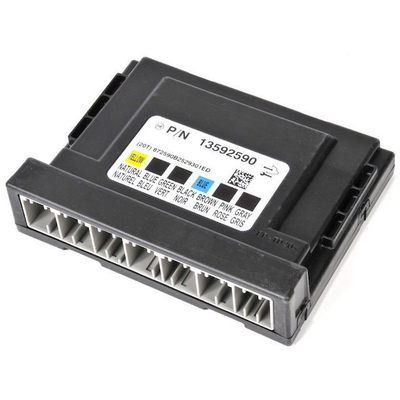
Shop the Parts Behind B3979
Below are the parts most often responsible for code B3979, ranked by how frequently each one is the actual culprit (per the diagnosis above). Tap any to see what we have for your vehicle.



The information in this article is provided for general reference and educational purposes only. Vehicle specifications, procedures, and part compatibility can vary by production date, trim level, and region. Always consult your vehicle's factory service manual and verify part numbers before purchasing or performing repairs. Safety-critical components such as airbags, seat belts, and braking systems should be installed by a qualified professional.
- 🧭 Diagnostic Flowchart
- 🛍️ Shop This Part
- What Does B3979 Mean?
- Can I Drive With B3979?
- Common Causes
- Symptoms
- Common Fixes & Costs
- Used vs. New Parts: Buying Guide
- What Happens If You Wait — Timeline
- Cost of Not Fixing It
- Diagnosis Steps
- When This Code Triggers (Freeze-Frame Conditions)
- Related Codes
- Climate & Environmental Factors
- How to Talk to a Mechanic About This Code
- Where to Take It: Dealer vs Independent vs Chain
- When to Walk Away From the Repair
- What Scan Tool You Need for This Code
- How to Clear the Code After You Fix It
- Will This Fail Emissions / State Inspection?
- Most Commonly Affected Vehicles
- Manufacturer-Specific Notes
- Real Owner Stories
- 2017 Cadillac XT5 with ~60k miles
- 2019 Chevy Silverado with low mileage
- 2018 GMC Acadia with ~100k miles
- How to Prevent This Code From Triggering
- Frequently Asked Questions
- Can I just replace the BCM myself?
- My climate control works fine. Why am I getting an HVAC code?
- What are the most common misdiagnoses for B3979?
- Can I use a cheaper, used BCM to save money?
- Will clearing the code fix the problem?
- How can a simple zip tie be a real fix?
- Is it safe to keep driving with code B3979?
- How much does it really cost to fix code B3979?
- Key Takeaways
- 🎟️ Get 5% Off