

B3980 on 2017-2020 Cadillac Escalade: Meaning, Causes, and Fixes
B3980 on a 2017-2020 Cadillac Escalade means the Body Control Module (BCM) lost communication with the Instrument Cluster. This often happens after a battery replacement or jump-start and causes symptoms like no turn signal sound and inoperative HVAC controls. The most common fix is reprogramming the BCM, which costs around $150-$400 at a dealer or qualified shop. If only sound is lost, the issue is likely a simple $30-$60 dash speaker replacement.
- B3980 is a communication and security code between the Body Control Module (BCM) and the Instrument Cluster.
- The most common symptoms are no audible turn signal 'click' and/or unresponsive climate controls.
- Before attempting complex repairs, check for the simplest cause: if only sound is missing, it may just be a failed $40 dash speaker.
- The most common cause for the code itself is a software glitch in the BCM, often after a battery change or jump-start. Reprogramming the BCM is the standard fix.
- Do not replace expensive modules like the BCM, HMI, or Cluster before having the BCM software checked and reprogrammed by a qualified shop.
What's Unique About the 2017-2020 Cadillac ESCALADE
On this generation of Escalade and its K2XX platform mates (Tahoe, Yukon, Suburban), many functions are networked through modules like the BCM. The audible 'click' for the turn signals isn't from a traditional flasher relay; it's a sound file played through a specific speaker in the driver's side dashboard, commanded by the Instrument Cluster. When the BCM sets code B3980 due to a communication error with the cluster, this sound is one of the first things to disappear. GM has issued several bulletins (like PIT5586G) related to module communication failures after low voltage events, indicating the sensitivity of the BCM and other modules to power fluctuations.
Diagnostic Flowchart
Tap your situation to follow the diagnostic path that matches what you're seeing on this vehicle.
Symptoms You May Notice
- No audible 'clicking' sound when turn signals are on (but lights flash normally)
- HVAC (climate) controls may be inoperative or unresponsive
- Other warning chimes (like door ajar or key in ignition) may be silent
- Check Engine Light or other warning messages on the dash
- In rare cases, a no-start or start-and-stall condition if multiple modules lose their configuration
- Radio or infotainment screen may be blank or unresponsive
- Replacing the HMI Module: The Human Machine Interface (HMI) module controls the main infotainment screen. While it's part of the network, code B3980 specifically relates to the BCM and Instrument Cluster. Replacing the HMI will not fix this code.
- Replacing the Turn Signal Stalk: The physical stalk sends a request to the BCM. The BCM then tells the lights to flash and the cluster to make the sound. Since the lights still flash, the stalk is working correctly.
Most Likely Causes
- Body Control Module (BCM) Software Corruption 🔴 High Probability → Shop Body Control Module GM technical documents and numerous owner experiences confirm that low voltage events from a weak battery, jump-starting, or battery replacement can corrupt the BCM's memory and its 'environmental identifiers' for other modules.
How to confirm: A technician using a GM-compatible scan tool can check for B3980 and other related 'environment ID' codes (like B3979, B3981) in the BCM. If these codes are present after a recent power event, software corruption is the most likely cause.
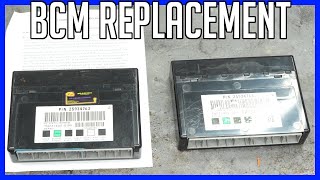
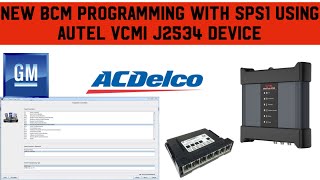
Typical fix: Reprogramming the Body Control Module (BCM) with the latest software using the GM Service Programming System (SPS). This restores the correct configuration data and is the most common confirmed fix in forums.
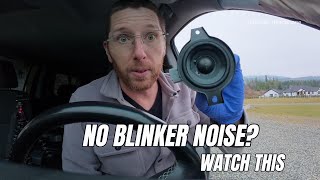
Est. part cost: $0 - Failed Driver-Side Dash Speaker 🟡 Medium Probability → Shop Speaker The audible chimes and turn signal clicks are played exclusively through a small Bose speaker in the driver's side of the dashboard. These speakers are known to fail due to a torn cone, causing a complete loss of all related sounds, which is often misdiagnosed as a module issue.
How to confirm: If the *only* symptom is the loss of turn signal sounds and chimes, but the HVAC and all other cluster functions work normally, the speaker is the primary suspect. The turn signal indicators will still flash on the dashboard.
Typical fix: Replace the driver-side front dash speaker. This is a relatively simple DIY job that takes under 30 minutes. Common part numbers include 23476093 and 84162298.
Est. part cost: $30-$60 - Failing or Weak Battery 🟡 Medium Probability → Shop Vehicle Battery Modern vehicles like the Escalade are highly sensitive to voltage. A battery that provides enough power to start the engine may still have low voltage during the cranking process, causing communication glitches between modules and triggering this code.
How to confirm: Test the battery with a digital multimeter or a professional battery tester. A healthy, resting battery should be at or above 12.4 volts. Also, check for corroded or loose battery terminals.
Typical fix: Replace the vehicle's 12V battery and clear all DTCs. A BCM reprogram may still be necessary if the configuration was lost during the low voltage event.
Est. part cost: $150-$350 - Faulty Body Control Module (BCM) ⚪ Low Probability → Shop Body Control Module While less common than software corruption, the BCM itself can fail internally. This is usually a last resort after reprogramming has failed and wiring has been checked.
How to confirm: If reprogramming the BCM does not resolve the code and symptoms, and all wiring has been checked, the module itself is likely faulty. A technician would perform advanced diagnostics to rule out other causes before condemning the BCM.
Typical fix: Replace the Body Control Module and program the new unit to the vehicle's VIN and options. This must be done by a dealer or a shop with GM programming capabilities.
Est. part cost: $250-$550
Rare But Worth Checking
- Faulty Instrument Panel Cluster (IPC): While the code points to a message *from* the cluster, it's more often an issue with the BCM *receiving* it. However, an internal failure in the cluster's communication circuit could also be the cause, though it is much less common.
- Wiring Harness Damage: Damage to the CAN bus wiring between the BCM and the Instrument Cluster could interrupt communication. TSB PIT5586 points to checking connector terminals at the Serial Data Gateway Module (SDGM) for being bent or loose. This is unlikely without other signs of damage or recent work being performed on the vehicle.
Diagnosis Steps
- Verify Symptoms: Confirm the primary symptoms, such as no audible turn signal click and/or inoperative HVAC controls. Note if the turn signal lights on the outside of the vehicle and on the dash display still work.
- Scan for Codes: Use a professional-grade OBD-II scanner capable of reading manufacturer-specific 'B' and 'U' codes from the Body Control Module (BCM). Generic scanners may not see B3980.
- Check Battery Health: Test the 12V battery's voltage and load capacity. A resting voltage below 12.4V indicates a weak battery. Clean and tighten the battery terminals. A low voltage event is the most common trigger for this code.
- Address the Easiest Fix First (No Sound Only): If the only symptom is no turn signal/chime audio, the driver-side dash speaker is the most likely cause. Inspect and replace it if necessary. Part numbers include 23476093 and 84162298.
- Inspect Grounds & Wiring: Per TSB PIT5586G, before reprogramming, inspect key ground connections (G110, G218, G305, G410) and check for loose or bent terminals at the Serial Data Gateway Module (SDGM) connectors.
- Reprogram BCM: If multiple symptoms are present and code B3980 is stored (especially with other 'environment ID' codes), the next step is to have a dealer or qualified shop reprogram the BCM with the latest GM software. This is the most common fix.
- Replace BCM: If all previous steps fail to resolve the issue, the BCM may have an internal hardware fault and require replacement. The new BCM must be programmed to the vehicle.
Parts You'll Likely Need
- Driver-Side Dash Speaker (Chime Speaker)
(OEM #23476093 or 84162298)— This speaker is solely responsible for the turn signal click and other warning chimes. It is a very common failure point and an easy fix if the only symptom is loss of sound.
Trusted brands: ACDelco, GM Genuine Parts - Body Control Module (BCM)
(OEM #VIN-Specific (e.g., 13595998))— The BCM is the module where the fault occurs. It most often needs reprogramming, but in rare cases, requires replacement if it has an internal hardware failure. The part number is specific to the vehicle's options.
Trusted brands: ACDelco, GM Genuine Parts
Related Codes That Often Appear With This One
- U0155 — This code means 'Lost Communication With Instrument Panel Cluster (IPC) Control Module'. It often appears with B3980 as it indicates a more general communication failure, while B3980 is a more specific configuration error.
- B3979 — 'Incorrect Environmental Identifier Received From HVAC Control Module'. Seeing this and other similar codes (B3978, B3981) together with B3980 strongly points to a systemic BCM software corruption issue caused by a low voltage event.
Technical Service Bulletins (TSBs) & Recalls
- Lists B3980 along with a large group of other communication codes, all pointing to a common electrical issue (often low voltage or bad grounds) that causes widespread symptoms like inoperative HVAC and no turn signal audio. Recommends checking grounds and connectors before replacing modules.
- Addresses multiple 'Environment ID' DTCs, including B3980, that appear after a low voltage event, jump start, or battery replacement. It explicitly warns *not* to replace the BCM but to follow specific diagnostic steps.
Platform-Specific Known Issues
- The symptoms of this code are directly mentioned in GM Technical Service Bulletins #PIT5586B and #PIT5586G, which describe a condition of 'Turn Signal no audible feedback, HVAC controls inoperative' associated with B3980 and other communication codes.
- GM Bulletin 21-NA-277 specifically addresses 'Environment ID' DTCs like B3980 occurring after low voltage conditions and advises reprogramming the BCM as the fix, explicitly stating n
Mechanic-Grade Diagnostic Values
- High-Speed GMLAN Bus Resistance — expected: 60 Ohms. Failure: A reading of 120 Ohms indicates an open in the bus or a missing terminating resistor. A reading near 0 Ohms indicates a short between the CAN High and Low wires.
- High-Speed GMLAN Voltage (Active) — expected: CAN-High (Pin 6) toggles near 3.5V; CAN-Low (Pin 14) toggles near 1.5V.. Failure: Voltages that are stuck high, low, or at 2.5V indicate a bus fault. If CAN-High voltage is lower than CAN-Low, the wires may be reversed.
- Low-Speed GMLAN Voltage (Active) — expected: Single wire (Pin 1 at DLC) toggles between ~0.2V and 4.0V+.. Failure: A voltage that is stuck high or low indicates a fault on the low-speed bus.
Hidden / Shadow Codes Worth Checking
- B3980:00: The ':00' is a symptom byte visible on the GDS2 scan tool. For this code, it typically means 'No Additional Information' but confirms the fault was logged with standard parameters. (see via GM GDS2/Tech2 dealer-level scan tool.)
Scan Tool Commands That Help
- GDS2 (GM Global Diagnostic System 2): BCM Programming / Setup — This function is required after physically replacing the BCM. It uses the Service Programming System (SPS) to download the correct software and RPO configurations for the vehicle's VIN.
- GDS2 (GM Global Diagnostic System 2): Immobilizer Learn / VTD Learn — This security procedure must be performed after BCM programming or replacement to sync the BCM with the vehicle's keys and powertrain control module, allowing the engine to start.
- GDS2 (GM Global Diagnostic System 2): Clear All DTCs — After any module programming or replacement, it is critical to perform a vehicle-wide DTC clear, as many modules will have stored 'loss of communication' codes during the repair process.
Wiring & Ground Locations
- G218 — Located inside the cabin, on the driver's side A-pillar, behind the kick panel and underneath the driver's side dash speaker.. This is a primary ground for the Body Control Module (BCM). A poor connection here can cause a multitude of electrical issues, including the communication faults that trigger B3980. GM TSB PIT5405C specifically notes this ground can be compromised by trapped dash insulation material.
- Serial Data Gateway Module (SDGM) — Located under the driver's side dash, often near the BCM. It is identifiable by its black and gray connectors.. The SDGM acts as a bridge between different CAN bus networks in the vehicle. The TSBs for this issue instruct technicians to check the pin terminals at the SDGM connectors for damage or a poor fit, which could interrupt the communication between the BCM and the Instrument Cluster.
- G110 — On the K2XX platform, this ground is typically located on the rear of the driver's side cylinder head.. This is a major engine/body ground point mentioned in TSB PIT5586G as a location to inspect. A poor connection here can introduce electrical noise and voltage instability that affects module communication.
Real Owner Repair Stories
- Reddit user and multiple YouTube videos (2015-2020 GM SUVs (Tahoe, Suburban, Escalade)) — Complete loss of turn signal 'clicking' sound and other warning chimes. Turn signal lights on the dash and exterior still function correctly. No other issues.
❌ Tried (didn't work) Checking fuses, Checking vehicle settings menu for chime volume
✅ What actually fixed it The driver-side dashboard speaker, which generates the chime sounds, had a torn cone. Replacing this small speaker (Part #22933869 or #23476093) restored all sounds. - Lakes Automotive Diagnostics on YouTube (2020 Chevrolet Equinox (different model, same code family)) — No crank, no start. Instrument cluster displayed 'Put foot on brake to start' but would not crank when brake was pressed. Codes B3980 and B3981 were stored in the BCM.
❌ Tried (didn't work) Initial diagnosis pointed towards brake switch or starter.
✅ What actually fixed it Reprogramming the Body Control Module (BCM) using the GM Service Programming System (SPS) resolved the issue and allowed the vehicle to start and run normally.
OEM Part Supersession History
Varies by VIN→Varies by VIN— Serial Data Gateway Module (SDGM) Programming
Heads up: Per GM Service Update N212353390, some SDGMs replaced in service may have been programmed incorrectly, preventing future Over-The-Air (OTA) updates. If the SDGM has been replaced, its programming should be verified by a dealer to ensure full functionality.
Model Year Variations Within This Range
- 2020 and newer: On 2017-2019 models, the main high-speed CAN bus is accessible at the OBD-II port (Pins 6 & 14), and resistance should measure 60 Ohms. On many 2020 and newer models, a secure Serial Data Gateway Module isolates the bus. Measuring resistance at the same pins on these vehicles may show 120 Ohms, which is a normal reading as you are only measuring the gateway's internal terminating resistor.
Helpful Videos
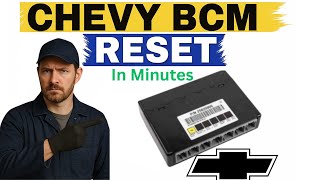
We Have This Part in Stock
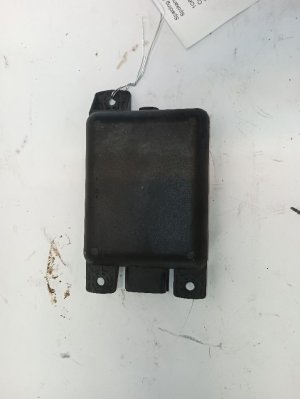
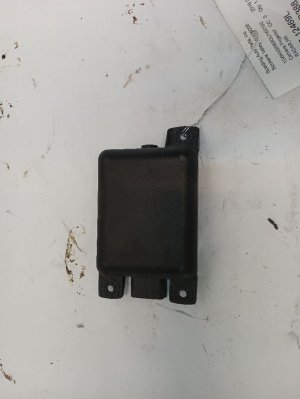
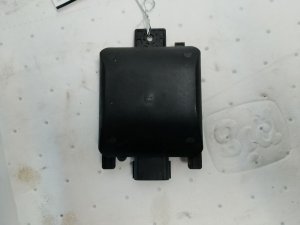

The information in this article is provided for general reference and educational purposes only. Vehicle specifications, procedures, and part compatibility can vary by production date, trim level, and region. Always consult your vehicle's factory service manual and verify part numbers before purchasing or performing repairs. Safety-critical components such as airbags, seat belts, and braking systems should be installed by a qualified professional.
- Cadillac ESCALADE:
- 🧭 Diagnostic Flowchart
- 🎬 Helpful Videos
- 🛍️ Shop This Part
- What's Unique About the 2017-2020 Cadillac ESCALADE
- Symptoms You May Notice
- Most Likely Causes
- Rare But Worth Checking
- Diagnosis Steps
- Parts You'll Likely Need
- Related Codes That Often Appear With This One
- Technical Service Bulletins (TSBs) & Recalls
- Platform-Specific Known Issues
- Mechanic-Grade Diagnostic Values
- Hidden / Shadow Codes Worth Checking
- Scan Tool Commands That Help
- Wiring & Ground Locations
- Real Owner Repair Stories
- OEM Part Supersession History
- Model Year Variations Within This Range
- 🎟️ Get 5% Off