

B3980 on 2017-2020 Chevrolet Tahoe: Meaning, Causes, and Fixes
Code B3980 on a 2017-2020 Tahoe indicates a communication error between the Body Control Module (BCM) and the Instrument Panel Cluster. This often causes a no-start condition, dead gauges, and HVAC failure. The most common fix is not a part replacement, but a software reset of the Serial Data Gateway Module (SDGM) or reprogramming the BCM, often triggered by a weak battery or jump-start.
- B3980 is a network communication code, not a simple part failure. It often appears with many other codes.
- Do not immediately replace parts. The cause is very often a software glitch that can be fixed with a module reset or reprogramming.
- Check for a history of recent battery replacement, jump-starts, or deep discharge, as this is the most common trigger.
- This is not a DIY-friendly repair. A trip to a dealer or a well-equipped independent shop is necessary for proper diagnosis and programming.
- The primary symptoms are severe: no-start, dead instrument cluster, and inoperative climate controls.
What's Unique About the 2017-2020 Chevrolet TAHOE
On this generation of Tahoe (and related GM K2XX trucks/SUVs), many electronic modules are tied together for security and functionality. A low voltage event—like a dying battery, a jump-start, or even just disconnecting the battery for service—can cause a 'logic lock' in the Serial Data Gateway Module (SDGM) or corrupt the configuration data in the BCM. The SDGM, a small hockey-puck-sized module located under the driver's side dash, acts as a central router for the CAN bus networks. When it locks up, it stops communicating on all channels, leading to a cascade of communication codes, including B3980, and symptoms that look like multiple major parts have failed simultaneously when the root cause is often just a software glitch.
Diagnostic Flowchart
Tap your situation to follow the diagnostic path that matches what you're seeing on this vehicle.
Symptoms You May Notice
- No crank or starts and immediately stalls.
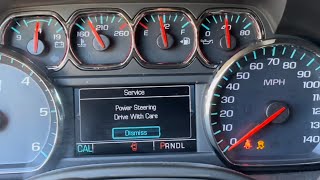
- Instrument panel cluster (IPC) gauges are inoperative or fluctuate wildly.
- Multiple service messages appear on the driver information center (e.g., 'Service Airbag', 'Service Suspension').
- HVAC controls are inoperative.
- No audible 'click' sound for the turn signals, even if exterior lights work.
- Radio display is blank or does not shut off when the door is opened.
- Theft deterrent system failure message or security light illuminated.
- Steering Wheel Controls (SWC) are not illuminated or are inoperative.
- Replacing the Instrument Panel Cluster (IPC). The code points to a communication problem *from* the cluster, but the cluster itself is rarely the cause.
- Replacing the battery without performing the necessary module reprogramming afterward. A new battery fixes the voltage issue but not the resulting data corruption.
- Attempting to perform an immobilizer relearn procedure. TSBs specifically warn against this, as it will not resolve the environmental ID mismatch and can complicate the repair.
- Replacing the SDGM. While it is central to the problem, the issue is most often a logic lock or connector fault, not an internal failure of the module itself. TSBs explicitly advise against replacement as a first step.
Most Likely Causes
- Serial Data Gateway Module (SDGM) Logic Lock-up 🔴 High Probability → Shop Telematics Interface Module As documented in GM TSBs PIT5586G and 20-NA-212, the SDGM microcontroller can enter an error state, often after a voltage fluctuation, where it stops communicating on the vehicle's CAN network. This is a known software anomaly on the K2XX platform.
How to confirm: A professional scan tool will show a loss of communication with multiple modules (many U-codes). The symptoms listed in TSB PIT5586G will be present.
Typical fix: Perform a hard reset of the SDGM. TSB PIT5586G advises pulling the SDGM fuse (F28DL for SUVs in the left-hand instrument panel fuse block), waiting one minute, and reinstalling it. If this is a recurring issue, TSB 20-NA-212 recommends reprogramming the SDGM with updated software. The TSB explicitly states 'Do not replace any parts for this condition' as the first step.
Est. part cost: $0 - Low Voltage Event / Discharged Battery 🔴 High Probability → Shop Vehicle Battery Modern GM vehicles are highly sensitive to voltage. A weak battery, jump-start, or battery replacement can corrupt the 'environmental identifier' data shared between modules, triggering this code. The complex startup sequence requires stable voltage to all modules for a proper security handshake.
How to confirm: The issue appeared immediately after a known battery event. The BCM will have multiple 'Environment ID' codes stored (B3978, B3979, B3980, etc.).
Typical fix: The Body Control Module (BCM) must be reprogrammed by a dealer or qualified shop using GM's SPS2 software. This restores the correct configuration data. Simply replacing the battery is not enough to fix the corrupted data.
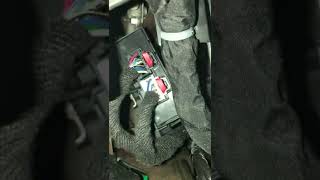
Est. part cost: $0 (Labor for reprogramming is separate, typically $150-$300) - Loose or Damaged SDGM Connector Terminals 🟡 Medium Probability → Shop HVAC Wiring Harness Connector Terminal Vibrations and time can lead to poor connections at the main data gateway. TSBs PIT5586G and 20-NA-212 point to bent, backed out, or loose terminals in the SDGM's gray X1 and black X2 connectors. 🎬 Watch: How to access and work with the SDGM connectors. The module is located in the driver's footwell and can be disturbed by feet or items under the dash.
How to confirm: Visually inspect the connectors and terminals on the Serial Data Gateway Module, located above the accelerator pedal. 🎬 See a professional diagnosis of these complex communication faults. A technician will perform a 'pin drag' test to check for proper terminal tension.
Typical fix: Repair or replace the affected connector terminal(s). If the connector housing is damaged, it will need to be replaced.
Est. part cost: $10-$50 - Failed Body Control Module (BCM) ⚪ Low Probability → Shop Body Control Module While less common than software or wiring issues, the BCM can fail internally, causing it to lose its programming or ability to communicate. This is often a diagnosis of exclusion after other steps fail.
How to confirm: This is a diagnosis of exclusion. If reprogramming fails and all wiring/connections to the BCM and SDGM are confirmed to be good, the BCM itself is suspect. A technician may see code B389A set in the BCM.
Typical fix: Replace the BCM and perform a full programming and setup procedure to sync it with the vehicle's other modules and immobilizer system.
Est. part cost: $300-$600
Rare But Worth Checking
- Poor Main Ground Connection:
Diagnosis Steps
- Verify the battery is fully charged and load-tested. Address any underlying voltage issues first. A voltage reading below 12.4V at rest can indicate a weak battery.
- Perform a vehicle-wide DTC scan with a professional tool (like GDS2) to capture all codes from all modules.
- Prioritize and diagnose any U-code (communication) DTCs first, as per GM service information.
- Locate the Serial Data Gateway Module (SDGM). It is a small black box mounted to a bracket above the accelerator pedal in the driver's footwell.
- Attempt an SDGM reset. Locate fuse F28DL in the fuse block on the left side of the instrument panel. Remove the fuse for at least 60 seconds, then reinstall it. Start the vehicle and check if symptoms are gone.
- If the reset works temporarily but the issue returns, or if the reset does not work, inspect the SDGM's gray (X1) and black (X2) connectors for any signs of damage, corrosion, or loose pins.
- If codes persist, especially after a recent low voltage event, the next step is to have a qualified technician reprogram the Body Control Module (BCM) using GM's SPS2 software. In some cases, the SDGM may also require reprogramming per TSB 20-NA-212.
- If reprogramming fails, further diagnostics on the BCM, IPC, and network wiring (including checking major ground points) are required before replacing any modules.
Parts You'll Likely Need
- Body Control Module (BCM) Reprogramming — This is the most common required fix when a simple module reset doesn't work, especially after a low battery event. It restores the correct security and configuration data.
OEM price range: $150-$300 (Labor)
Aftermarket price range: N/A - Body Control Module (BCM)
(OEM #13529592, 13508761, 13535147 (Part numbers vary by year and options, always verify with VIN))— Replaced only if it has failed internally and cannot be reprogrammed. Requires programming to the vehicle upon installation.
Trusted brands: ACDelco (OEM)
OEM price range: $300-$600
Aftermarket price range: $200-$450 (Remanufactured)
Related Codes That Often Appear With This One
- U0155 — Lost Communication With Instrument Panel Cluster (IPC) Control Module. This is a direct result of the network failure involving the IPC.
- B3978, B3979, B3981 — These are companion 'Incorrect Environmental Identifier' codes for the Airbag Module, HVAC Module, and Brake Control Module, respectively. They almost always appear in a group with B3980.
- B389A — Environment Identification. This code is set in the BCM when it detects a general mismatch with other modules on the network.
- U0100, U0101, U0140, U0164 — These are general loss-of-communication codes with the ECM, TCM, BCM, and HVAC modules, all pointing to the central network failure described in TSB PIT5586G and 20-NA-212.
Technical Service Bulletins (TSBs) & Recalls
- PIT5586G: Diagnostic tip that outlines symptoms of a network down event, pointing to SDGM logic lock or connector issues as the cause. It specifically recommends a fuse-pull reset (F28DL for SUVs) as the first step.
- 20-NA-212: A later TSB that supersedes parts of PIT5586G. It provides two main scenarios: one caused by an SDGM software error requiring a module reprogram, and a second caused by connector terminal issues. It lists B3980 as a key DTC for the second condition.
- PIT5586B: An earlier version of the TSB, also linking B3980 to a widespread network communication failure. [NHTSA Citation]
Platform-Specific Known Issues
- The K2XX platform (2015-2020 trucks/SUVs) is known for SDGM logic lock-ups, which GM has addressed with multiple technical service bulletins like PIT5586G and 20-NA-212.
- The SDGM is located in the driver's side footwell, above the pedals, making its connectors potentially vulnerable to being kicked or disturbed.
Mechanic-Grade Diagnostic Values
- High-Speed GMLAN Bus Resistance — expected: 60 Ohms (± 5 Ohms). Failure: A reading higher than 65 Ohms indicates an open or high resistance in the bus wires or a missing termination resistor. A reading lower than 55 Ohms indicates a short between the two bus wires.
- High-Speed GMLAN Bus Voltage (Key On) — expected: GMLAN-High (Pin 6) switches between 2.5V and 3.5V. GMLAN-Low (Pin 14) switches between 2.5V and 1.5V.. Failure: Voltages stuck high, low, or at 0V indicate a short to power, ground, or an open circuit. The two signals should mirror each other around the 2.5V center point.
Hidden / Shadow Codes Worth Checking
- B3978, B3979, B3980, B3981...: This is a family of 'Incorrect Environmental Identifier' codes. B3980 is for the Instrument Cluster, B3978 for the Airbag module, B3979 for HVAC, etc. They are not truly hidden, but seeing them grouped together on a GDS2 scan is a strong indicator that a low-voltage event corrupted the configuration data across multiple modules, rather than a single module failing. (see via A professional scan tool like GM's GDS2 is needed to perform a vehicle-wide DTC scan and see codes from all modules simultaneously.)
Scan Tool Commands That Help
- GDS2 (Global Diagnostic System 2): Vehicle Wide DTC Report — This is the first step when encountering a network communication issue. It scans all modules on the vehicle to identify which are offline and what codes are present, which is critical for diagnosing a network-wide failure like the one causing B3980.
- SPS2 (Service Programming System 2) via Techline Connect: BCM - Reprogram — This is the primary software fix for B3980 when caused by a low-voltage event. It re-flashes the Body Control Module with the correct vehicle configuration and security data (the 'environmental identifier'), resolving the mismatch with the instrument cluster and other modules.
- SPS2 (Service Programming System 2) via Techline Connect: SDGM - Reprogram — Used when the SDGM itself has a software glitch causing it to lock up, as recommended by TSB 20-NA-212. This updates the module's firmware to a newer version intended to prevent the logic lock condition from recurring.
Wiring & Ground Locations
- SDGM (Serial Data Gateway Module) — A small, black, hockey-puck-sized box mounted to a bracket above the accelerator pedal in the driver's footwell.. This is the central router for the vehicle's CAN bus networks. A logic lock-up or poor connection at this module is the most common cause of the network failure that sets B3980.
- SDGM Connectors X1 (Gray) and X2 (Black) — Plugged into the Serial Data Gateway Module (SDGM) above the accelerator pedal.. TSBs PIT5586G and 20-NA-212 specifically call out inspecting these connectors for bent, backed-out, or loose terminals as a primary cause of the communication failure.
- G218 Ground — Located under the driver's side A-pillar trim, near the floor and front of the dash. It is a stud with a nut securing one or more ground eyelets.. This is a critical ground point for the Body Control Module (BCM). A poor connection here can cause erratic BCM behavior and network communication faults. TSB PIT5405C notes this ground can be compromised by the dash insulator mat getting trapped underneath the eyelet.
- Rear Chassis Harness — The main harness that runs along the frame rail to the rear of the vehicle. A common chafe point is located above the spare tire where the harness can rub against the frame or body.. While not a direct cause of B3980, damage to this harness can cause widespread communication (U-prefix) codes by disrupting the network for rear-mounted modules (like suspension control). This can create symptoms that mimic the SDGM failure, making it a key inspection point if front-of-vehicle checks don't resolve the issue.
Real Owner Repair Stories
- Advanced Level Diagnostics YouTube Channel (2018 Chevrolet Silverado) — No communication with Airbag module, blank radio screen, multiple communication DTCs set across the vehicle.
❌ Tried (didn't work) The initial shop was unable to diagnose due to the network issue.
✅ What actually fixed it A 60-amp main fuse (F10) on the battery-mounted fuse block was physically missing. This single fuse supplied power to the entire right-side instrument panel fuse block, which powered the affected modules. Installing the missing fuse restored power and communication. - Brandon LSX YouTube Channel (2015-2019 Chevrolet Tahoe LTZ) — Service Suspension System and Service Stabilitrac messages, multiple communication error codes (U0139, B127B), unable to communicate with the suspension control module.
❌ Tried (didn't work) Initial scan showed a complete loss of communication, pointing towards a network failure.
✅ What actually fixed it The wiring harness that runs above the spare tire had chafed against the frame, breaking several wires. The fix was to drop the spare tire, access the harness, and repair the broken wires with butt connectors and heat shrink. This restored communication to the rear modules and cleared all codes. - RepairPal Forum User (2018 Chevrolet Tahoe) — Intermittent loss of all gauges, speedometer, and driver information center. Vehicle would sometimes not start. Disconnecting the battery would temporarily fix it.
❌ Tried (didn't work) Multiple dealer visits where they claimed to have fixed a 'loose terminal'.
✅ What actually fixed it The user's report ends with the problem recurring, highlighting the difficulty of diagnosing intermittent wiring or module lock-up issues even for dealerships. This reinforces that a 'fixed loose terminal' may not be the final answer if the underlying cause (e.g., software glitch, another poor connection) is not addressed.
"I Checked Everything" — The Actual Cause
- A network test focusing on the BCM and SDGM in the cabin would come back clean, but the actual cause was a broken wire in the rear chassis harness above the spare tire, which took down a different segment of the CAN bus.
- Diagnosing modules on the right-side instrument panel fuse block would show no power, but the fuse itself would be good. The actual cause was a missing 60-amp main fuse in the separate under-hood fuse block that supplied power to that entire interior panel.
OEM Part Supersession History
Varies by year/options→13529592— Standard part for later model years in this generation.
Heads up: Part number 13529592 is listed for 2019-2020 Tahoe, Suburban, Yukon, and Escalade models. While it may work on earlier years, it is critical to verify the correct part number by VIN. All replacements require programming with SPS2 to configure the BCM to the specific vehicle's options and security system.
Model Year Variations Within This Range
- 2017-2020: TSB #20-NA-212 (which supersedes earlier versions like PIT5586G) was progressively updated, adding 2017 and 2018 model years over time as the issue became more widely recognized by GM across the K2XX platform.
- 2017-2020 with IO5/IO6 Radios: When using certain aftermarket programming tools (like AutoSync), a special SDGM bypass harness is required on these specific models and years. This is because the SDGM blocks certain communication pathways needed by the tool. This highlights a specific hardware/software interaction unique to this period.
Helpful Videos

We Have This Part in Stock


The information in this article is provided for general reference and educational purposes only. Vehicle specifications, procedures, and part compatibility can vary by production date, trim level, and region. Always consult your vehicle's factory service manual and verify part numbers before purchasing or performing repairs. Safety-critical components such as airbags, seat belts, and braking systems should be installed by a qualified professional.
- Chevrolet TAHOE:
- 🧭 Diagnostic Flowchart
- 🎬 Helpful Videos
- 🛍️ Shop This Part
- What's Unique About the 2017-2020 Chevrolet TAHOE
- Symptoms You May Notice
- Most Likely Causes
- Rare But Worth Checking
- Diagnosis Steps
- Parts You'll Likely Need
- Related Codes That Often Appear With This One
- Technical Service Bulletins (TSBs) & Recalls
- Platform-Specific Known Issues
- Mechanic-Grade Diagnostic Values
- Hidden / Shadow Codes Worth Checking
- Scan Tool Commands That Help
- Wiring & Ground Locations
- Real Owner Repair Stories
- "I Checked Everything" — The Actual Cause
- OEM Part Supersession History
- Model Year Variations Within This Range
- 🎟️ Get 5% Off