

Ultimate Guide to OBD-II Code C0003: Traction Control System Valve Malfunction
The Definitive Resource for Diagnosing and Fixing TCS Control Channel B Valve 1 Faults
- Code C0003 disables your ABS and Traction Control systems due to an electrical fault in the TCS Control Channel 'B' Valve 1 circuit.
- Inspect the wiring harness and wheel speed sensors first, as broken wires or corroded reluctor rings cause 80% of C0003 codes, saving you from a $1,000+ module replacement.
- Always diagnose and repair any accompanying wheel speed sensor codes (C0035-C0050) before addressing C0003, as faulty sensor data frequently triggers false valve codes.
- Driving with an active C0003 code increases emergency stopping distances by up to 25% on wet or icy roads, requiring immediate repair to restore critical safety functions.
What Does C0003 Mean?
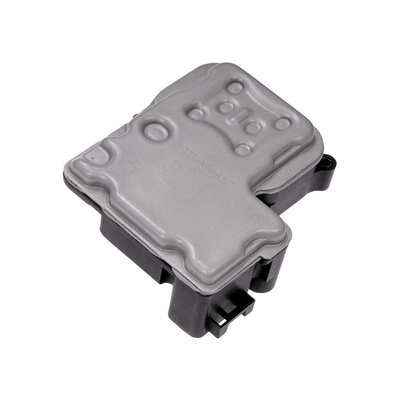
Code C0003 indicates the Electronic Brake Control Module (EBCM) detected an electrical fault in the 'TCS Control Channel B Valve 1' circuit. This solenoid valve, located inside the ABS hydraulic control unit, manages brake pressure to individual wheels to prevent spinning and maintain traction. When this circuit fails, the module disables the ABS and TCS systems as a fail-safe and illuminates the dashboard warning lights.
Technical definition: The official SAE/OBD-II definition is "TCS Control Channel 'B' Valve 1 (Subfault)". This indicates an open circuit, short to ground, or short to power in the solenoid valve designated as Valve 1 within hydraulic control channel 'B' of the integrated ABS/TCS module.
Can I Drive With C0003?
Yes, But With Caution. Yes, but exercise extreme caution. Code C0003 disables your anti-lock brakes (ABS) and traction control (TCS). In a panic stop or on slippery surfaces, your wheels will lock up, increasing stopping distances by 25% or more and causing potential loss of steering control. Repair this promptly to restore critical safety functions.
Common Causes
- Damaged, Corroded, or Shorted Wiring/Connectors (Very Common) — The wiring harness leading to the ABS control module is exposed to harsh undercarriage conditions. Wires break internally, rub through their insulation against the chassis, or suffer pin corrosion from moisture intrusion, causing a loss of signal or short in the valve circuit.
- Corroded or Cracked ABS Reluctor Ring (Common) — The toothed metal ring (reluctor) on the axle or wheel hub develops rust underneath, causing it to swell and crack. This generates an erratic signal from the wheel speed sensor. The ABS module misinterprets this as severe wheel slip and triggers a valve fault code after its attempts to intervene fail.
- Faulty ABS/TCS Control Module (EBCM) (Common) — The solenoid valve is an integral part of the ABS module. Internal failures of the valve's coil windings, cracked solder joints on the circuit board, or driver transistor failures require the entire ABS module to be professionally repaired or replaced.
- Low System Voltage / Poor Grounds (Less Common) — The ABS module requires a stable 11-14V supply and clean ground connections. A failing battery, faulty alternator, or corroded main ground strap causes unpredictable module behavior, setting false internal circuit codes like C0003.
- Contaminated Brake Fluid (Rare) — Old, moisture-contaminated brake fluid causes corrosion and sludge buildup inside the ABS hydraulic unit. This debris makes the fine mechanical parts of the solenoid valves stick, preventing correct operation when commanded by the computer.
Symptoms
- ABS and Traction Control Warning Lights Illuminated — The primary symptom. Because TCS and ABS share the same control module and hydraulic unit, a fault in one disables the other, illuminating both dashboard warning lights simultaneously.
- Loss of Traction and Stability Control — Wheels spin freely on slippery surfaces (ice, snow, rain) or during hard acceleration. The vehicle feels noticeably less stable during aggressive cornering.
- Cruise Control Inoperative — As a safety measure, the vehicle disables the cruise control system when an active fault in the brake control system is present.
- Spongy or Stiff Brake Pedal — If the ABS module has an internal hydraulic leak or a stuck valve, the brake pedal feels spongy, becomes harder to press, or requires excessive travel to stop the vehicle.
Diagnostic Flowchart
Tap your situation to follow the diagnostic path that matches what you're seeing on this code.
Common Fixes & Costs
- Repair Damaged Wiring or Connector — Parts: $10-$50, Labor: $150-$300, ~1.5 hr book time (Intermediate)
- Replace ABS Reluctor Ring
— Parts: $20-$60, Labor: $250-$500, ~3 hr book time
(Intermediate)
BMW 3-Series E90/E91/E92: OEM N/A (Part of driveshaft from dealer) (Alt: Dorman 917-537) - Remanufacture/Repair Existing ABS Module — Parts: $150-$450, Labor: $200-$350, ~2 hr book time (Professional)
- Replace ABS Control Module
— Parts: $700-$1500+, Labor: $250-$450, ~2.5 hr book time
(Professional)
Ford F-150 (2015-2018): OEM KL3Z-2C215-C (Alt: Cardone 12-4508F)
Chevrolet Silverado 1500 (2014-2018): OEM GM 84256781 (Alt: ACDelco 84778377) - Flush and Replace Brake Fluid — Parts: $20-$40, Labor: $120-$200, ~1 hr book time (DIY)
DIY vs Professional
- Repair Damaged Wiring or Connector — Beginner:
- Replace ABS Reluctor Ring — Beginner:
- Remanufacture/Repair Existing ABS Module — Beginner:
- Replace ABS Control Module — Beginner:
- Flush and Replace Brake Fluid — Beginner:
Used vs. New Parts: Buying Guide
When a used part is worth it: A used module makes sense for vehicles over 15 years old where a new OEM module exceeds the car's value, provided you purchase from a reputable yard with a warranty.
Donor-vehicle mileage cap: roughly under 100000 miles for the part to have meaningful remaining life.
Donor quality checklist:
- Verify the part number is an exact match to your original module.
- Inspect the part for physical damage, cracks, or green corrosion on the connector pins.
- Ensure the donor vehicle was not scrapped due to flood or fire damage.
Decision logic:
- If The vehicle is less than 10 years old and a new part is available for under $800 → Purchase a new or professionally remanufactured part for the longer warranty and reliability.
- If The vehicle is over 15 years old or the part is discontinued → A used part is likely your only option. Prioritize a source offering at least a 90-day warranty.
- If The repair requires dealer-level module programming → Factor in the $150-$300 programming cost. Sending your original module out for remanufacturing avoids this extra fee entirely.
Warranty tradeoff: Used parts offer a 30-90 day functional warranty. Remanufactured parts include a 1-year to lifetime warranty. New OEM parts carry a 1-2 year warranty.
Worst-case if a used part fails: $300-$600 (Cost of repeat labor and purchasing another part if the used module fails out of warranty).
What Happens If You Wait — Timeline
- 0-1 month: Code C0003 sets, illuminating the ABS/TCS warning lights. ABS and traction control are fully disabled. The vehicle's base brakes function normally. (MPG impact: 0%% · Added cost: $0)
- 1-6 months: Intermittent shorts cause momentary, unintended brake application, leading to uneven brake pad wear. The vehicle fails state safety inspections. (MPG impact: 0%% · Added cost: $50-$150 (Premature brake pad replacement))
- 6-12 months: Moisture intrusion in a connector spreads corrosion through the wiring. A simple wire repair escalates into needing a full harness pigtail replacement. (MPG impact: 0%% · Added cost: $200-$800 (Wiring harness replacement))
- 12+ months: Driving without ABS drastically increases the probability of an accident in bad weather. In specific recalled models, internal module shorts pose a fire risk. (MPG impact: 0%% · Added cost: $2000+ (Insurance deductible for a preventable collision))
Cost of Not Fixing It
- Immediate: Total loss of ABS and Traction Control. Increased risk of skidding and significantly longer stopping distances in emergency or slippery conditions. (Added cost: $0 (but severe safety risk))
- Short-Term (0-3 months): Intermittent shorts cause unintended, brief brake applications, leading to uneven brake pad wear and flat-spotting on tires. The vehicle fails mandatory state safety inspections. (Added cost: $150 - $400 (for premature brake pad replacement or inspection fees))
- Long-Term (6+ months): Moisture intrusion spreads through the wiring harness, turning a simple connector repair into a full harness replacement. In specific recalled models (Hyundai/Kia), internal module shorts pose a fire risk. (Added cost: $2000+ (Cost of a collision, fire damage, or full harness replacement))
Diagnosis Steps
- Read Fault Codes & Live Data
Use an advanced OBD-II scanner to confirm C0003 and check for wheel speed sensor codes. Monitor live data for all four wheel speed sensors while driving. If one sensor reads erratically or drops to zero, the root cause is in that sensor's circuit, not the ABS module. Normal readings match the vehicle's speedometer perfectly.
Tools: Advanced OBD-II Scanner (Beginner) - Inspect Wiring and Reluctor Rings
Locate the ABS module and inspect its main electrical connector for corrosion or pushed-out pins. Follow the wiring harness, looking for chafing or breaks. At each wheel, inspect the wheel speed sensor wiring and the reluctor ring on the axle for cracks or heavy rust buildup.
Tools: Flashlight, Inspection Mirror (Beginner) - Check Fuses and Brake Fluid
Verify the brake fluid is at the correct level and not dark or sludgy. Locate and test all fuses related to the ABS and traction control systems in the vehicle's under-hood and interior fuse boxes using a multimeter.
Tools: Flashlight, Multimeter (Beginner) - Perform a Harness Wiggle Test
With the ignition on and your scanner monitoring live data from the ABS module, systematically wiggle the wiring harness at the ABS module connector, along the frame, and near each wheel speed sensor. If the code status changes from 'Current' to 'History', you have pinpointed an intermittent break in the harness.
Tools: Advanced OBD-II Scanner (Intermediate) - Test Solenoid Resistance at the Module Connector
Disconnect the battery and unplug the ABS module connector. Using a wiring diagram, identify the two pins for 'TCS Control Channel B Valve 1'. Measure the resistance between these pins. Compare the reading to the manufacturer's specification (typically 4-20 Ohms). An infinite reading (O.L.) means an open circuit; a zero reading indicates a short circuit.
Tools: Multimeter, Vehicle-Specific Wiring Diagram (Intermediate) - Perform a Voltage Drop Test
With the ABS module unplugged, reconnect the battery and turn the ignition ON. Set your multimeter to DC Volts. Place the positive lead on the valve's ground pin in the harness and the negative lead on the battery negative terminal. A reading above 100mV indicates a poor ground. Repeat for the power side (battery positive to power supply pin). A reading above 200mV indicates excessive resistance in the power circuit.
Tools: Multimeter, Vehicle-Specific Wiring Diagram (Advanced) - Command the Valve with a Bidirectional Scanner
Use a bidirectional scan tool to command the specific TCS valve to activate. You must hear or feel a distinct 'click' from the ABS hydraulic unit. If it clicks, the module is functional and the problem is wiring-related. If it does not click, and all wiring tests from Steps 5 and 6 passed, the ABS module itself has failed and requires replacement.
Tools: Bidirectional Scan Tool (Advanced)
When This Code Triggers (Freeze-Frame Conditions)
- Vehicle Speed: 0 mph (at startup) or 15-70 mph (during driving) (The code sets during the initial key-on self-test or when the system detects a circuit drop during normal driving.)
- System Voltage: 11.5-14.5V (Normal operating voltage. A reading below 11V indicates a failing battery or alternator is the actual root cause.)
- ABS/TCS Status: Inactive or Active (The fault logs either when the system is dormant or during an active braking/traction control event.)
- Engine RPM: 0-3000 RPM (The fault is independent of engine speed and occurs even when the engine is off but the ignition is on.)
Related Codes
- C0035 - C0050 — These are wheel speed sensor (WSS) circuit codes. A faulty WSS or cracked reluctor ring sends nonsensical data to the ABS module, causing it to falsely flag the C0003 valve circuit. Always diagnose and repair WSS codes first.
- U0121 — 'Lost Communication With Anti-Lock Brake System'. Ignore C0003 if U0121 is present. This indicates a total communication failure, meaning you cannot trust any codes from the module. Start by checking the ABS module's main power and ground.
- C0004 — This code is for 'TCS Control Channel B Valve 2'. If C0003 and C0004 appear together, two separate valve circuits did not fail simultaneously. The root cause is a shared component: the main power feed, the main ground, or a catastrophic internal module failure.
- C0899 / C0550 — These indicate 'Device Voltage Low' or a general 'ECU Malfunction'. Low system voltage from a weak battery or failing alternator causes control modules to generate false internal fault codes like C0003. Stabilize the power supply before diagnosing further.
Climate & Environmental Factors
- Road Salt / High Humidity (Rust Belt): Saltwater spray acts as a powerful electrolyte, drastically accelerating corrosion on the ABS wiring harness, ground points, and reluctor rings. This moisture intrusion creates high resistance and short circuits, the primary triggers for C0003.
- Extreme Cold: In sub-zero temperatures, aging wire insulation becomes brittle and snaps when flexed by suspension movement, creating an open circuit. Trapped moisture inside connectors also freezes, pushing pins apart and breaking the connection.
How to Talk to a Mechanic About This Code
Say this: "I have an ABS light on with code C0003. Based on my research, the most common causes are wiring issues, a bad ground, or a wheel speed sensor fault, rather than the ABS module itself. Please start by thoroughly inspecting the wiring harness and connectors for the ABS system before quoting a module replacement."
This signals you are an informed customer. It directs the shop to follow a logical diagnostic path, starting with the cheapest fixes, preventing an immediate and potentially unnecessary $1,000 module quote.
Avoid saying:
- 'My ABS light is on, can you just fix it?'
- 'I think I need a new ABS module.'
- 'Just do whatever you think is necessary.'
Questions to ask before authorizing the repair:
- What specific electrical tests did you perform to condemn this part?
- Can you show me that the wiring, grounds, and wheel speed sensor signals all tested good?
- If the fault is a broken wire, do you solder and heat shrink the repair?
- What is the warranty on this specific repair, including parts and labor?
Where to Take It: Dealer vs Independent vs Chain
- Dealer:
Best for: Vehicles under warranty., Repairs requiring manufacturer-specific software programming for a new module.
Downsides: Highest labor rates, often 50-100% more than independent shops., Dealers default to replacing the entire expensive module rather than attempting a wiring repair. (Typical cost: +50% vs. baseline) - Independent Shop:
Best fit for most vehicles. A good independent shop effectively diagnoses a C0003 fault by finding a less expensive root cause like a wiring issue, saving you significant money compared to a dealer.
Best for: Out-of-warranty vehicles where cost is a factor., Diagnosing common electrical faults like wiring or sensor issues.
Downsides: Diagnostic capabilities vary; ensure they have an advanced bidirectional scanner. (Typical cost: +0% vs. baseline) - Chain Shop:
Avoid for diagnosing a C0003 code. They lack the specialized electrical testing equipment required to accurately find the root cause of an internal module circuit fault.
Best for: Simple, routine maintenance like oil changes and tire rotations.
Downsides: Ill-equipped for complex electrical diagnostics., Rely on a 'parts-cannon' approach, replacing parts until the light goes out. (Typical cost: -10% vs. baseline)
When to Walk Away From the Repair
If the estimated repair cost exceeds 40-50% of the car's private-party value, seriously consider selling or trading in the vehicle instead of repairing it.
- Car worth $4000, fix is $1800: Borderline. The repair is 45% of the car's value. Get a second opinion to confirm the diagnosis and cost before proceeding.
- Car worth $12000, fix is $450: Fix it. A wiring repair is well below the threshold and restores a critical safety feature.
- Car worth $2500, fix is $1600: Walk away. The repair cost is 64% of the car's value and is not economically sensible.
What Scan Tool You Need for This Code
Minimum: A scanner that reads and clears Anti-Lock Brake System (ABS) codes. A basic engine-only OBD-II reader cannot see 'C' chassis codes like C0003.
A $20 engine code reader cannot communicate with the ABS module. You need a tool that accesses the chassis control module and displays live data for all four wheel speed sensors.
Budget: BlueDriver Pro (~$100) — Reads and clears ABS codes for most major brands and displays live data for wheel speed sensors, essential for initial diagnosis.
Mid-range: Innova 5610 or Foxwell NT809TS (~$350) — Provides bidirectional control to test individual ABS components and performs the automated ABS bleed function required after replacing the hydraulic module.
Professional: Autel MaxiCOM MK808S (~$450) — Offers full bidirectional control to command specific valves, deep system diagnostics, and advanced functions like VIN programming for a replacement module.
Rent vs buy: Auto parts stores offer free rental scanners, but they are typically basic models that cannot read ABS codes. You must buy a capable scanner or pay for a professional diagnosis.
How to Clear the Code After You Fix It
- Perform the necessary physical repair (e.g., fix wiring, replace module).
- Reconnect the battery if it was disconnected.
- Use an advanced OBD-II scan tool to clear the chassis (C) fault codes.
- Perform the automated ABS bleed procedure with the scan tool if the hydraulic unit was replaced.
Drive cycle (~15 minutes): Start the vehicle and drive for 15 minutes, exceeding 25 mph. Include several complete stops and turns. The ABS light remains off if the repair was successful. The system continuously monitors itself, so a complex drive cycle is not required.
Readiness monitors affected: Not applicable. ABS codes do not affect emissions readiness monitors.
Watch out for:
- Using a basic $20 engine code reader that cannot access or clear ABS module faults.
- Failing to perform the scan tool-activated ABS bleed procedure after replacing a hydraulic unit, resulting in a dangerous, spongy brake pedal.
- Clearing the code without fixing the root cause, causing the light to return instantly upon startup.
Will This Fail Emissions / State Inspection?
No — by itself this code doesn't fail OBD inspection (but it can keep readiness monitors from setting, which causes a separate fail).
- California: An ABS light does NOT cause a failure of the California Smog Check, which only tests emissions systems.
- New York: An illuminated ABS warning light is NOT a cause for failing the NYS safety inspection, provided the standard service brakes function properly.
- Texas: An illuminated ABS warning light does NOT cause a failure of the Texas state safety inspection.
Most Commonly Affected Vehicles
- Ford Fusion, Escape, F-150 (2013-2019) — Wires frequently break or corrode inside the harness, typically 1-6 inches from a wheel speed sensor connector. Always inspect the harness thoroughly before condemning a sensor or module.
- Chevrolet / GMC Silverado 1500 / Sierra 1500 (2014-2018) — Prone to Electronic Brake Control Module (EBCM) failure and poor frame ground connections. Also subject to safety recall N192261050 regarding EBCM software.
- BMW 3-Series (E90/E91/E92), 1-Series (E81/E82) (2004-2014) — The primary cause is almost always a corroded rear ABS reluctor ring that swells and cracks, damaging the sensor and logging secondary valve codes like C0003.
- Kia / Hyundai Optima, Sonata, Elantra (2011-2017) — Subject to major safety recalls for internal ABS module (HECU) failure, where brake fluid leaks onto the circuit board, causing shorts and posing a fire risk.
- Toyota Camry, Highlander (2004-2011) — Known for internal ABS module failures due to cracked solder joints on the main circuit board. Remanufacturing the original module is the standard repair.
- Dodge / Ram 1500 / 2500 / 3500 (2012-2018) — The wiring harness chafes against the frame or suspension components, particularly near the rear wheel speed sensors. An ABS fault disables the cruise control and 4x4 systems.
- Volvo S60, V70, XC90 (2001-2009) — Classic failure of the ABS control module due to cracked solder joints. Symptoms are intermittent and worsen in hot weather.
- Jeep Grand Cherokee, Wrangler (2011-2018) — Failures trace back to bad wheel speed sensors or wiring damage from off-road debris. The ABS module is reliable but susceptible to voltage spikes from improper jump-starting.
Manufacturer-Specific Notes
- Ford: On Fusion and Escape platforms, the fault is almost always a corroded or broken wire hidden inside the protective conduit within 6 inches of the wheel speed sensor connector.
- BMW: For RWD models like the E90, rust jacking causes the rear ABS reluctor rings to expand and crack. This primary mechanical failure sets secondary valve codes and must be inspected first.
- General Motors (GM): On Silverado and Tahoe models, thoroughly clean the main EBCM ground connection on the driver's side frame rail before condemning the module. A corroded ground mimics a failed module perfectly.
- Dodge / Ram: An active ABS/TCS fault code hard-disables both the cruise control and the four-wheel drive (4x4) system as a safety precaution. You must fix the brake system fault to restore 4x4 functionality.
Real Owner Stories
2011 Ford F-150 with intermittent ABS light
ABS and traction control lights illuminated randomly, accompanied by a clunking sound from the suspension.
Outcome: A forum member suggested checking the ABS wire routing. The owner found the harness chafing against the upper control arm, wearing through the insulation and causing an intermittent short.
Lesson: Always perform a thorough visual inspection of the wiring harnesses near moving suspension components before assuming an expensive module failure.
2013 Toyota Camry Hybrid with ABS light after rain
ABS and Traction Control lights appeared immediately after driving in heavy rain and remained on.
Outcome: Forum members identified water intrusion into a wheel speed sensor connector. The owner disconnected the plug, dried it with compressed air, applied dielectric grease, and the code cleared permanently.
Lesson: If an ABS fault appears specifically with moisture, inspect, clean, and seal the wheel speed sensor electrical connectors before replacing parts.
2014 Chevy Silverado with multiple ABS codes
Dashboard lit up with ABS and traction control warnings. A scanner showed C0003 alongside several communication codes.
Outcome: Research revealed a common EBCM ground point on the frame rail susceptible to severe corrosion. The owner removed the ground nut, cleaned the frame to bare metal, re-secured it, and all codes vanished.
Lesson: Before replacing a GM EBCM, locate and thoroughly clean the main EBCM ground connection on the frame. A poor ground perfectly mimics a failed module.
How to Prevent This Code From Triggering
- Perform a complete brake fluid flush. (Every 2-3 years, regardless of mileage.) — Brake fluid absorbs moisture from the air. This moisture causes internal corrosion of sensitive ABS solenoid valves, leading to sticking and electrical failure.
- Apply dielectric grease to ABS connectors. (Whenever a connector is disconnected, or every 2-3 years in the Rust Belt.) — Dielectric grease on the connector seals prevents moisture and road salt from entering, stopping the corrosion that causes high resistance and intermittent signals.
- Wash the vehicle's undercarriage. (Several times during the winter in areas with road salt.) — Removing corrosive salt buildup prevents it from eating away at wiring insulation, sensor housings, and metal reluctor rings.
- Clean ABS reluctor rings. (When replacing brake pads or rotors.) — Rust and debris build up on the teeth of the reluctor rings, causing an erratic signal. Cleaning the rings with a wire brush ensures a clean signal to the ABS module.
Frequently Asked Questions
What is the most common misdiagnosis for a C0003 code?
The most expensive mistake is immediately replacing the ABS module without testing the circuits. The actual fault is usually a broken wire, a corroded ground connection, or a cracked ABS reluctor ring. Thoroughly testing the wiring prevents a costly misdiagnosis.
Can a bad wheel speed sensor cause a C0003 code?
Yes, indirectly. A faulty wheel speed sensor sends incorrect data, causing the ABS module to falsely command the C0003 valve. When the expected wheel speed change fails to occur, the module logs a secondary valve fault.
Why did my ABS light turn on in the rain?
This strongly indicates water intrusion into a cracked or poorly sealed wheel speed sensor connector. Water creates a short circuit, causing the ABS module to detect a fault. The issue often disappears when the components dry out.
What's the difference between an ABS reluctor ring and a wheel speed sensor?
The reluctor ring is a toothed metal ring that rotates with the wheel hub. The wheel speed sensor is a stationary magnetic pickup mounted next to it. The ring generates the signal as it spins, and the sensor reads that signal for the ABS module.
Can I fix code C0003 myself?
You can DIY the repair if the cause is a visibly broken wire or a dirty reluctor ring. However, replacing the ABS module requires a professional. It demands specialized scan tools to bleed the hydraulic system and program the new module to your VIN.
Will clearing the code make it go away?
No. C0003 indicates a 'hard' electrical fault. The control module performs a self-test on this circuit every time you turn the ignition on, so the code returns immediately until the physical damage is repaired.
How much does it cost to diagnose a C0003 code?
Most repair shops charge a standard diagnostic fee between $125 and $200. This covers the initial hour of labor to retrieve codes, analyze live data, and perform electrical testing to pinpoint the fault.
Is it safe to drive in the snow with code C0003?
No, it is highly dangerous. Without ABS and traction control, your vehicle will skid and spin out easily on snowy or icy roads. If you must drive, do so at very low speeds with greatly increased following distances.
Key Takeaways
- Code C0003 disables your ABS and Traction Control systems due to an electrical fault in the TCS Control Channel 'B' Valve 1 circuit.
- Inspect the wiring harness and wheel speed sensors first, as broken wires or corroded reluctor rings cause 80% of C0003 codes, saving you from a $1,000+ module replacement.
- Always diagnose and repair any accompanying wheel speed sensor codes (C0035-C0050) before addressing C0003, as faulty sensor data frequently triggers false valve codes.
- Driving with an active C0003 code increases emergency stopping distances by up to 25% on wet or icy roads, requiring immediate repair to restore critical safety functions.
Shop the Parts Behind C0003
Below are the parts most often responsible for code C0003, ranked by how frequently each one is the actual culprit (per the diagnosis above). Tap any to see what we have for your vehicle.


The information in this article is provided for general reference and educational purposes only. Vehicle specifications, procedures, and part compatibility can vary by production date, trim level, and region. Always consult your vehicle's factory service manual and verify part numbers before purchasing or performing repairs. Safety-critical components such as airbags, seat belts, and braking systems should be installed by a qualified professional.
- 🧭 Diagnostic Flowchart
- 🛍️ Shop This Part
- What Does C0003 Mean?
- Can I Drive With C0003?
- Common Causes
- Symptoms
- Common Fixes & Costs
- DIY vs Professional
- Used vs. New Parts: Buying Guide
- What Happens If You Wait — Timeline
- Cost of Not Fixing It
- Diagnosis Steps
- When This Code Triggers (Freeze-Frame Conditions)
- Related Codes
- Climate & Environmental Factors
- How to Talk to a Mechanic About This Code
- Where to Take It: Dealer vs Independent vs Chain
- When to Walk Away From the Repair
- What Scan Tool You Need for This Code
- How to Clear the Code After You Fix It
- Will This Fail Emissions / State Inspection?
- Most Commonly Affected Vehicles
- Manufacturer-Specific Notes
- Real Owner Stories
- 2011 Ford F-150 with intermittent ABS light
- 2013 Toyota Camry Hybrid with ABS light after rain
- 2014 Chevy Silverado with multiple ABS codes
- How to Prevent This Code From Triggering
- Frequently Asked Questions
- What is the most common misdiagnosis for a C0003 code?
- Can a bad wheel speed sensor cause a C0003 code?
- Why did my ABS light turn on in the rain?
- What's the difference between an ABS reluctor ring and a wheel speed sensor?
- Can I fix code C0003 myself?
- Will clearing the code make it go away?
- How much does it cost to diagnose a C0003 code?
- Is it safe to drive in the snow with code C0003?
- Key Takeaways
- 🎟️ Get 5% Off