

OBD-II Code C0020: ABS Pump Motor Control Fault
What C0020 means, why it triggers, and how to fix it
- Code C0020 disables your ABS and traction control due to an electrical fault in the anti-lock brake pump motor circuit.
- Over 50% of C0020 codes stem from simple electrical issues like corroded grounds or blown fuses, rather than a failed $1,000 ABS pump.
- Your standard hydraulic brakes remain fully functional, but emergency stopping distances increase significantly without ABS.
- Ford and Ram owners must check for manufacturer defects first, such as water-damaged fuse boxes (Ford TSB 23-2133) or recalled pump motors (NHTSA 24V-896).
What Does C0020 Mean?

Code C0020 means the ABS control module detected an electrical fault in the anti-lock brake pump motor circuit. This pump generates hydraulic pressure to rapidly pulse the brakes, preventing wheel lockup during hard braking. When triggered, the vehicle shuts down ABS and traction control as a safety measure.
Technical definition: The SAE/OBD-II definition is "ABS Pump Motor Control." The ABS module detected a fault in the pump motor's electrical circuit or operation. This includes the motor failing to run, drawing incorrect current, or experiencing an open/short circuit. The module performs a startup self-test by briefly running the pump and monitoring voltage and current; if feedback deviates from expected parameters (e.g., voltage drops below 11.5V), it sets the code.
Can I Drive With C0020?
Yes, But With Caution. You can drive, but exercise extreme caution. Standard hydraulic brakes remain functional, but ABS, traction control, and stability control are disabled. This increases the risk of skidding during hard stops. For 2020-2024 Ford Super Duty trucks, do not continue driving; the underlying water-damaged fuse box causes engine stalling or failure to shut off, leaving you stranded.
Common Causes

- Poor Electrical Connections (Wiring, Grounds, Fuses) (Very Common) — The wiring harness or connectors for the ABS pump frequently become loose, corroded, or damaged from moisture and vibration. A bad ground connection or blown fuse cuts power to the pump motor, triggering the code.
- Failed ABS Pump Motor / Hydraulic Control Unit (HCU) (Common) — The electric motor inside the ABS pump wears out, seizes, or develops an internal short circuit. A frequent failure point is the motor's internal carbon brushes getting stuck, creating an intermittent open circuit sensitive to vibration.
- Water Intrusion into Battery Junction Box (BJB) (Common) — On 2020-2024 Ford Super Duty trucks, a poorly sealed cover on the under-hood fuse box allows water to enter. This corrodes internal circuits supplying power to the ABS module, directly causing C0020, often alongside U3003.
- Faulty ABS Control Module (EBCM) (Less Common) — The electronic control module operating the pump motor fails internally, often due to a burnt driver transistor. This is a diagnosis of exclusion after proving the wiring and pump motor are functional.
- Low System Voltage (Less Common) — A weak battery or failing alternator drops the voltage supplied to the ABS module below 11.5 volts during the startup self-test, triggering a false pump motor fault code.
- Contaminated Brake Fluid (Rare) — Old, moisture-contaminated brake fluid degrades internal hydraulic unit seals, causing the pump motor to work harder or seize, leading to an electrical fault code.
- ABS Control Module Software Error (Rare) — Outdated software within the ABS module misinterprets data and falsely triggers C0020. On some Ford trucks, diagnostic software erroneously creates a C0020:64 code after an ABS module replacement, requiring specific recalibration.
Symptoms

- ABS Warning Light On — The ABS light on your dashboard illuminates steadily.
- Traction Control / Stability Control Light On — Because ABS is required for traction and stability control, these warning lights also illuminate.
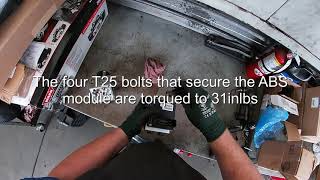
- Loss of ABS Function — During a panic stop or on slippery surfaces, wheels lock up and skid. The usual pulsing sensation in the brake pedal is absent. 🎬 See this guide on testing and fixing ABS pump failure
- Cruise Control Inoperative — The cruise control system disables as a safety precaution when an ABS fault is detected.
- Brake Pedal Feel Change — The brake pedal feels unusually firm or drops closer to the floor during a braking event right before the fault code triggers.
Diagnostic Flowchart
Tap your situation to follow the diagnostic path that matches what you're seeing on this code.
Common Fixes & Costs
- Clean or Repair Wiring/Grounds — Parts: $0-$50, Labor: $120-$240, ~1.5 hr book time (Intermediate)
- Replace Blown Fuse or Relay — Parts: $5-$30, Labor: $0-$60, ~0.1 hr book time (DIY)
- Replace Battery Junction Box (Fuse Box) — Parts: $300-$600, Labor: $300-$600, ~2.5 hr book time (Professional)
- Repair or Remanufacture ABS Module/Pump Assembly — Parts: $150-$600, Labor: $150-$300, ~1.5 hr book time (Professional)
- Replace ABS Pump/Module Assembly — Parts: $800-$1500, Labor: $250-$500, ~2 hr book time (Professional)
DIY vs Professional
- Replace Blown Fuse or Relay 🟢 Beginner
Tools: Fuse puller, pliers. - Clean or Repair Wiring/Grounds 🟢 Beginner
Tools: Socket set, wire brush, sandpaper, multimeter, electrical contact cleaner. - Replace Battery Junction Box (Ford Super Duty) 🟢 Beginner
Tools: Socket set, screwdrivers. - Replace ABS Pump/Module Assembly 🟢 Beginner
Tools: Socket set, flare nut wrenches, bi-directional scan tool, pressure bleeder.
Used vs. New Parts: Buying Guide
When a used part is worth it: A used ABS pump/module assembly is a cost-effective option for vehicles over 10 years old if a new part exceeds $1,000. Buy from a reputable supplier offering a warranty.
Donor-vehicle mileage cap: roughly under 100000 miles for the part to have meaningful remaining life.
Donor quality checklist:
- Match the part number exactly.
- Purchase from a seller providing a warranty (90+ days).
- Ensure the part was tested on the donor vehicle.
- Avoid parts from flood-damaged vehicles.
Decision logic:
- If The vehicle is a Ford, Ram, or Lincoln with a known TSB or recall → Use a new OEM part and follow the manufacturer's specific repair procedure.
- If The vehicle is less than 8 years old and the new part costs under $800 → Buy a new OEM or high-quality remanufactured part for better reliability.
- If The vehicle is over 10 years old and a new part is excessively expensive → A tested used part from a reputable salvage yard is a practical choice.
- If The failure is diagnosed as an internal electronic fault in the module → Use a mail-in repair service for your original module to avoid programming issues.
Warranty tradeoff: Used parts include a 30-90 day warranty. Remanufactured modules carry a 1-year to lifetime warranty. New OEM parts installed by a dealer have a 1-2 year warranty.
Worst-case if a used part fails: $400-$800 if a used part is defective or requires complex programming, including repeat labor.
What Happens If You Wait — Timeline
- 0-1 month: Code C0020 appears, ABS/Traction Control lights illuminate. The fault may be intermittent. Safety systems are disabled. (MPG impact: 0%% · Added cost: $0)
- 1-6 months: An intermittent electrical fault becomes a hard fault as corrosion worsens. The ABS light stays on permanently. (MPG impact: 0%% · Added cost: $0-$50 (Potential for a more difficult wiring repair).)
- 3-12 months: On Ford Super Duty trucks, continued water intrusion into the BJB causes the truck to fail to start or shut off, leaving you stranded. (MPG impact: 0%% · Added cost: $200-$700 (Towing and diagnosis of new symptoms).)
- 6+ months: A seized pump motor or shorted circuit draws excessive current, potentially damaging the main ABS control module (EBCM). (MPG impact: 0%% · Added cost: $500-$1500 (Cost difference between a wiring fix and full module replacement).)
Cost of Not Fixing It
- Immediate: Loss of ABS, traction control, and stability control functions. Increases the risk of wheel lock-up and skidding during emergency braking. (Added cost: Potential for accident-related costs.)
- 1-6 months: On Ford Super Duty trucks with a water-damaged fuse box (BJB), ignoring the issue leads to no-start conditions or the engine failing to shut off. (Added cost: $200-$500 (Towing and diagnosis of new symptoms).)
- 6+ months: Continued exposure of a faulty electrical circuit to moisture causes extensive corrosion. A seized pump motor draws high current, potentially damaging the control module. (Added cost: $300-$800 (Additional diagnostic time and wiring harness repair).)
Diagnosis Steps

- Read the Fault Codes
Use an ABS-capable OBD-II scanner to confirm C0020. Note any manufacturer-specific suffix codes (like :13, :71, or :1C), which provide critical details like circuit open vs. actuator stuck.
Tools: OBD-II Scanner (ABS capable) (Beginner) - Command the ABS Pump On
Use a bi-directional scanner to command the ABS pump motor on. Listen for the motor. If it runs, the problem is intermittent or in the control module. If it does not run, proceed to verify power delivery.
Tools: Bi-Directional Scan Tool (Advanced) - Check Fuses and Relays
Locate the fuses for the ABS module and pump in the under-hood and cabin fuse boxes. Visually inspect and replace blown fuses. Swap the ABS pump relay with an identical non-critical relay to test its function.
Tools: Owner's Manual, Fuse Puller or Pliers (Beginner) - Inspect Wiring and Connectors
Examine the wiring harness leading to the ABS module for corrosion (green/white powder), chafed wires, or loose pins. On Ford trucks, check the under-hood fuse box (BJB) for water damage.
Tools: Flashlight (Intermediate) - Inspect and Clean Main Ground Connections
Find the main ABS ground point on the frame rail. Disconnect the battery, unbolt the ground, and clean the terminal and frame to bare metal before re-fastening.
Tools: Socket Set, Wire Brush (Intermediate) - Perform a Voltage Drop Test
Test the power and ground circuits. Connect the multimeter positive lead to the battery positive and negative lead to the ABS module power pin with the key on. A reading above 0.5V indicates excessive resistance. Repeat for the ground side; readings over 0.2V indicate a poor ground.
Tools: Multimeter, Vehicle-Specific Wiring Diagram (Advanced) - Test for Power and Ground at the Module
Check for battery voltage at the ABS module connector pins while commanding the pump on. Voltage below 11.5V under load indicates a power supply problem requiring tracing.
Tools: Multimeter, Bi-Directional Scan Tool, Vehicle-Specific Wiring Diagram (Advanced) - Test Pump Motor Resistance
Disconnect the ABS module and measure resistance between the two large pump motor pins. A healthy motor shows under 5 Ohms. A reading of OL (infinite resistance) confirms an open circuit inside the motor.
Tools: Multimeter, Vehicle-Specific Wiring Diagram (Advanced) - Check Motor Current with an Amp Clamp
Place a DC amp clamp around the pump motor's main power wire and command the pump on. A healthy motor draws 4-20 Amps. Zero amps confirms an open circuit. Draws over 30A indicate a seized or shorted motor.
Tools: DC Amp Clamp, Bi-Directional Scan Tool (Professional)
When This Code Triggers (Freeze-Frame Conditions)
- Vehicle Speed: 0-10 mph (During startup self-test)
- System Voltage: < 11.5V (During pump motor activation)
- ABS Pump Motor Status: Commanded ON (During self-test or ABS event)
- Time Since Engine Start: 0-15 seconds (Code often sets immediately after startup)
Related Codes
- U3003:16 — Indicates 'Battery Voltage Below Threshold' and often appears with C0020 on Ford trucks, pointing to a water-damaged fuse box (BJB).
- C0020:13 / C0020:15 — Indicates 'Circuit Open' or 'Circuit Short to Battery'. Points directly to a wiring problem, corroded connector, or bad ground.
- C0020:71 — Indicates 'Actuator Stuck'. Sets when the module commands the pump motor to run but detects it is not spinning, suggesting a seized motor.
- C0020:01 — Indicates 'General Electrical Failure'. Commonly seen on 2017-2018 Ram trucks associated with widespread HCU/ABS pump motor failures.
Climate & Environmental Factors
- High Humidity & Moisture: Accelerates corrosion of electrical connectors and poorly sealed fuse boxes (BJB) on Ford Super Duty trucks.
- Cold Weather: Increases electrical resistance, causing marginal circuits or failing motors to fall out of expected operating parameters during the startup self-test.
- Road Salt (Winter Climates): Salt spray severely corrodes ABS module connectors and main chassis ground points.
How to Talk to a Mechanic About This Code
Say this: "I have an ABS light on and my scanner shows code C0020, pointing to the ABS pump motor circuit. Before quoting a new ABS module, please perform a thorough electrical diagnosis. Check for technical service bulletins, test the power and ground circuits for voltage drops, and inspect the main connectors and grounds for corrosion."
This directs the shop to perform a proper diagnostic sequence, starting with common and inexpensive issues (wiring, grounds, TSBs) before condemning the expensive ABS module. It prevents shotgun parts replacement.
Avoid saying:
- 'My ABS light is on, can you fix it?'
- 'Just replace the ABS pump.'
- 'Do whatever you think is necessary.'
Questions to ask before authorizing the repair:
- Did you find any Technical Service Bulletins (TSBs) for my vehicle related to code C0020?
- What were the results of the voltage drop test on the ABS module's power and ground wires?
- Did you command the ABS pump to turn on with a scan tool, and did it run?
- If recommending a new ABS module, can you confirm the pump motor's resistance reading was out of spec?
- What is the warranty on this specific repair, including parts and labor?
Where to Take It: Dealer vs Independent vs Chain
- Dealer:
Recommended for vehicles under warranty, those with known TSBs/recalls, or if a new module requires VIN-specific programming.
Best for: Vehicles under warranty or covered by a recall (e.g., 2017-2018 Ram trucks)., Newer vehicles with known TSBs (e.g., 2020+ Ford Super Duty, Explorer)., Repairs requiring module replacement and VIN-specific programming (PMI).
Downsides: Highest labor rates., Frequently defaults to replacing the entire expensive assembly rather than diagnosing simpler wiring faults. (Typical cost: +50% vs. baseline) - Independent Shop:
Best overall fit for out-of-warranty vehicles. Choose a reputable shop with strong electrical diagnostic skills to avoid unnecessary module replacements.
Best for: Out-of-warranty vehicles where cost is a major factor., Diagnosing and repairing common electrical faults like bad grounds or corroded wiring., Installing a remanufactured or mail-in-repaired ABS module.
Downsides: Diagnostic capabilities vary greatly., May lack dealer-level software required for programming new modules on modern cars. (Typical cost: +0% vs. baseline) - Chain Shop:
AVOID. The risk of misdiagnosis for complex electronic codes is high. They frequently recommend replacing the entire expensive assembly without proper electrical diagnosis.
Best for: Simple jobs like brake pad replacement or oil changes.
Downsides: Technicians lack specialized training for complex electronic diagnostics., High pressure to upsell leads to misdiagnosis and unnecessary component replacement. (Typical cost: -10% vs. baseline)
When to Walk Away From the Repair
If the estimated ABS repair cost exceeds 40-50% of your car's private-party market value, consider selling the car as-is.
- Car worth $3500, fix is $1800: Walk away. The repair cost is over 50% of the car's value. It is not financially sensible to proceed.
- Car worth $15000, fix is $1800: Fix it. The repair cost is 12% of the vehicle's value, restoring critical safety features and resale value.
- Car worth $8000, fix is $400: Fix it. A low-cost repair is well worth restoring ABS and clearing warning lights.
What Scan Tool You Need for This Code
Minimum: An OBD-II scanner that reads and clears codes from the Anti-lock Braking System (ABS) module. Basic engine-only readers will not see this code.
A $20 scanner only reads generic engine codes. Diagnosing C0020 requires accessing the ABS system to read specific suffix codes (e.g., :13, :71). A bi-directional tool is essential to command the ABS pump motor on and off.
Budget: BlueDriver Pro (~$100) — Reads and clears ABS codes on most major brands. Lacks bi-directional control to actively command the ABS pump.
Mid-range: Foxwell NT510 Elite / Innova 5610 (~$150) — Provides full-system diagnostics and reads ABS suffixes. Offers bi-directional control to perform an active test on the ABS pump motor. Performs the ABS bleed service function required after replacing a pump.
Professional: Autel MaxiCOM MK808S (~$359) — Offers robust bi-directional control to activate the ABS pump motor and individual solenoids. Features a dedicated automated brake bleed function required after replacing the hydraulic unit.
Rent vs buy: Auto parts stores offer free loaner tools, but they typically only read engine codes. Loaner tools lack bi-directional capability. Buying a mid-range scanner is highly recommended for DIY diagnosis.
How to Clear the Code After You Fix It
- Reconnect battery if disconnected for the repair.
- Use an ABS-capable OBD-II scan tool to clear the C0020 fault code.
- Perform several ignition cycles.
- Conduct a 10-15 minute test drive including smooth stops to allow the system to self-test.
Drive cycle (~15 minutes): Start the vehicle and idle for 1-2 minutes. Drive for 10-15 minutes in mixed conditions. The ABS light remains off if the repair was successful.
Readiness monitors affected: None. ABS faults do not affect emissions readiness monitors.
Watch out for:
- Disconnecting the battery does not clear hard fault codes from the ABS module memory.
- If the underlying electrical problem is not fixed, the code returns immediately upon the next self-test.
- Some vehicles require a specific recalibration procedure with a scan tool after replacing components.
Will This Fail Emissions / State Inspection?
No — by itself this code doesn't fail OBD inspection (but it can keep readiness monitors from setting, which causes a separate fail).
- California: An illuminated ABS light fails the safety portion of the inspection. The light must be off to pass the overall vehicle inspection.
- New York: An illuminated ABS warning light is grounds for failure of the annual safety inspection.
- Texas: An illuminated ABS light does NOT cause a vehicle to fail the Texas state safety inspection. The check is for the main red 'BRAKE' warning light only.
Most Commonly Affected Vehicles
- Ford F-250 / F-350 / F-450 Super Duty (2020-2024) — Prone to water intrusion into the under-hood Battery Junction Box (BJB), causing C0020 and U3003. Covered by Ford TSB 23-2133.
- Ford Explorer (2020-2021) — A poor ground connection at location G108 causes this code. Ford TSB 21-2030 advises cleaning the ground and replacing bolts.
- Lincoln Aviator (2020-2021) — Shares the same platform and ground issue as the Ford Explorer. TSB 21-2030 applies.
- Ram 2500 / 3500 / 4500 / 5500 (2017-2018) — The ABS pump motor fails internally due to stuck carbon brushes. Covered by NHTSA Safety Recall 24V-896.
- Mazda 3 (2008-2012) — Frequently reports C0020 due to internal failure of the ABS pump/module assembly.
- Chevrolet / GMC Silverado / Sierra (1999-2006) — Commonly affected by internal failure of the ABS control module (EBCM) and corroded ground wires on the frame rail.
- Ford Fusion (2006-2012) — Common problems with the ABS controller or pump lead to this code, often with suffix C0020:13 (Circuit Open).
- Jeep Grand Cherokee (2022) — Suffix code C0020:16 (Circuit Voltage Below Threshold) is reported, pointing towards a power supply issue.
Manufacturer-Specific Notes
- Ford: C0020 is frequently caused by external electrical issues. Always check TSB 23-2133 (water in BJB) and TSB 21-2030 (bad G108 ground) before replacing the ABS module.
- Ram (Chrysler/Dodge/Jeep): On 2017-2018 Ram HD trucks, the ABS pump motor is a high-failure item covered by NHTSA Safety Recall 24V-896.
- General Motors (GM): A faulty ABS module (EBCM) and corroded frame rail grounds are frequent culprits. Remanufacturing the original module avoids expensive reprogramming.
- Mazda: Often points directly to an internal failure of the ABS pump/module assembly. Reprogramming a used module to a different vehicle is difficult.
Real Owner Stories
2020 Ford F-350 with multiple electrical issues
ABS light illuminated, truck wouldn't shut off, and horn stayed on. Codes C0020 and U3003 were present.
Outcome: The cause was a water-damaged Battery Junction Box (BJB) due to a poorly sealed cover. Replacing the BJB and securing the new cover resolved all issues per Ford TSB 23-2133.
Lesson: On 2020-2024 Ford Super Duty trucks, C0020 accompanied by electrical chaos is almost always a bad BJB. Inspect the fuse box for water before replacing parts.
2017 Ram 5500 at 58k miles
ABS and traction control lights flashed intermittently when hitting bumps. Code C0020-01 was stored.
Outcome: Disassembling the ABS pump motor revealed internal carbon brushes stuck in their housing. Freeing the brushes resolved the intermittent connection.
Lesson: For intermittent C0020 faults on Ram trucks sensitive to vibration, internal pump motor brushes are a likely culprit.
2020 Ford Explorer XLT with ABS light
ABS and Pre-Collision Assist warning lights appeared. The dealership was unsure of the cause.
Outcome: The fix was performing TSB 21-2030, identifying a poor ground connection at point G108. Cleaning the ground surfaces and replacing the bolts solved the problem.
Lesson: Always check for TSBs. A known manufacturing defect like a bad ground mimics major component failure, and the correct fix is inexpensive.
Mazda 3 with intermittent C0020
The ABS light illuminated randomly. The owner received a high quote for a new ABS module.
Outcome: The service fixed the internal fault for a fraction of the cost. No expensive reprogramming was needed.
Lesson: For internal electronic faults in an ABS module, a mail-in repair service is highly cost-effective and avoids programming headaches.
How to Prevent This Code From Triggering
- Perform a brake fluid flush (Every 2-3 years or 30,000 miles) — Brake fluid absorbs moisture, which corrodes internal components of the ABS pump and hydraulic unit, leading to a seized pump.
- Inspect and clean critical chassis grounds (Once every 2-3 years, especially in winter climates) — Corrosion on the main ABS ground point causes C0020. Cleaning the contact surfaces prevents high resistance.
- Apply dielectric grease to key electrical connectors (Whenever connectors are disconnected for service) — Dielectric grease seals out moisture and prevents pin corrosion on the main ABS harness connector.
- Ensure under-hood fuse box covers are fully sealed (After any under-hood service) — An improperly latched fuse box cover causes water intrusion that destroys the BJB and triggers C0020.
- Activate the ABS system periodically (Once every 6 months) — Performing hard stops in a safe area engages the ABS, cycling the pump motor and preventing carbon brushes from seizing.
Frequently Asked Questions
Can I drive my car with a C0020 code?
Yes, but with significantly reduced safety. Your normal braking functions, but you lose anti-lock brakes (ABS) and traction control. This increases your stopping distance and risk of losing control in a panic stop.
What is the most common mistake when fixing C0020?
Replacing the expensive ABS pump/module assembly without checking for simpler electrical issues. Corroded ground wires, water damage in the fuse box, or faulty relays are much cheaper to fix and often the true cause.
Will C0020 clear itself?
If the fault was temporary, like low voltage from a weak battery, the code might clear after a few drive cycles. However, it usually indicates a persistent hardware problem requiring physical repair.
How much does it cost to fix a C0020 code?
A simple fix like a blown fuse or cleaning a ground wire costs under $100. Replacing the entire ABS pump and module assembly with a new OEM part exceeds $1,000. Mail-in repair services for your existing module cost between $150 and $600.
Can a weak battery cause a C0020 code?
Yes. If battery voltage drops below 11.5V during the ABS startup self-test, the module misinterprets the voltage drop as a pump circuit fault and sets the code.
Do I need a special scanner to diagnose this code?
An ABS-capable scanner is needed to read important suffix codes (like :13, :71). A bi-directional scanner is essential to command the ABS pump on, distinguishing a failed pump from a wiring problem.
What does the suffix code on C0020 mean?
The two-digit suffix code provides specific diagnostic information. For example, C0020:13 means 'Circuit Open' (wiring issue), while C0020:71 means 'Actuator Stuck' (failed motor). This detail is crucial for accurate diagnosis.
Key Takeaways
- Code C0020 disables your ABS and traction control due to an electrical fault in the anti-lock brake pump motor circuit.
- Over 50% of C0020 codes stem from simple electrical issues like corroded grounds or blown fuses, rather than a failed $1,000 ABS pump.
- Your standard hydraulic brakes remain fully functional, but emergency stopping distances increase significantly without ABS.
- Ford and Ram owners must check for manufacturer defects first, such as water-damaged fuse boxes (Ford TSB 23-2133) or recalled pump motors (NHTSA 24V-896).
Helpful Videos


Shop the Parts Behind C0020
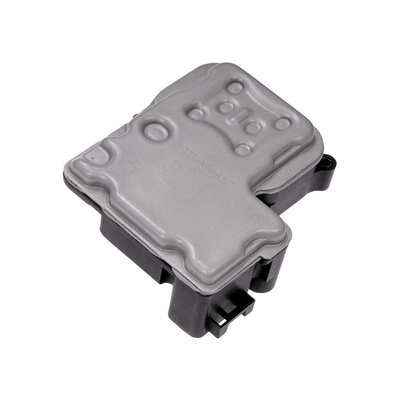
Below are the parts most often responsible for code C0020, ranked by how frequently each one is the actual culprit (per the diagnosis above). Tap any to see what we have for your vehicle.



The information in this article is provided for general reference and educational purposes only. Vehicle specifications, procedures, and part compatibility can vary by production date, trim level, and region. Always consult your vehicle's factory service manual and verify part numbers before purchasing or performing repairs. Safety-critical components such as airbags, seat belts, and braking systems should be installed by a qualified professional.
- 🧭 Diagnostic Flowchart
- 🎬 Helpful Videos
- 🛍️ Shop This Part
- What Does C0020 Mean?
- Can I Drive With C0020?
- Common Causes
- Symptoms
- Common Fixes & Costs
- DIY vs Professional
- Used vs. New Parts: Buying Guide
- What Happens If You Wait — Timeline
- Cost of Not Fixing It
- Diagnosis Steps
- When This Code Triggers (Freeze-Frame Conditions)
- Related Codes
- Climate & Environmental Factors
- How to Talk to a Mechanic About This Code
- Where to Take It: Dealer vs Independent vs Chain
- When to Walk Away From the Repair
- What Scan Tool You Need for This Code
- How to Clear the Code After You Fix It
- Will This Fail Emissions / State Inspection?
- Most Commonly Affected Vehicles
- Manufacturer-Specific Notes
- Real Owner Stories
- 2020 Ford F-350 with multiple electrical issues
- 2017 Ram 5500 at 58k miles
- 2020 Ford Explorer XLT with ABS light
- Mazda 3 with intermittent C0020
- How to Prevent This Code From Triggering
- Frequently Asked Questions
- Can I drive my car with a C0020 code?
- What is the most common mistake when fixing C0020?
- Will C0020 clear itself?
- How much does it cost to fix a C0020 code?
- Can a weak battery cause a C0020 code?
- Do I need a special scanner to diagnose this code?
- What does the suffix code on C0020 mean?
- Key Takeaways
- 🎟️ Get 5% Off