

OBD-II Code C0021: Brake Booster Performance
What C0021 means, why it triggers, and how to fix it
- Code C0021 indicates a critical power brake system failure, drastically increasing stopping distances and making the vehicle unsafe to drive.
- Inspect the vacuum hose and the $20 check valve for leaks before replacing the $500+ brake booster.
- On 2019-2022 GM 1500 trucks, C0021 paired with P0606 is a known software bug requiring a $150-$250 dealer reprogram, not hardware replacement.
- A distinct hissing noise from the driver's footwell when braking confirms a ruptured brake booster diaphragm requiring immediate replacement.
What Does C0021 Mean?

C0021 means the Brake System Control Module (BSCM) detects the power brake booster is not providing the expected level of assistance. The brake booster uses engine vacuum, a hydraulic pump, or an electric motor to multiply the force you apply to the brake pedal. When it fails, the module sets this code, illuminates the brake warning light, and disables systems like ABS and traction control.
Technical definition: The SAE/OBD-II definition for C0021 is "Brake Booster Performance." The Electronic Brake Control Module (EBCM) sets this code when it detects the booster is unable to achieve or maintain a target vacuum level (e.g., less than -2.90 psi) within a specified time (e.g., 2 minutes) after the engine starts.
Can I Drive With C0021?

No — Do Not Drive. This code indicates a serious problem with your power brakes. The brake pedal becomes extremely hard to press, and your stopping distance increases drastically, making the vehicle unsafe to drive. On newer vehicles, the system enters a 'limp mode' and limits your speed to 43 MPH as a safety precaution.
Common Causes

- Leaking or disconnected vacuum hose (Very Common) — The brake booster relies on engine vacuum. A crack or loose connection in the rubber or plastic hose running from the engine to the booster is the most frequent cause, preventing the booster from getting the vacuum it needs.
- Faulty brake booster check valve (Common) — A small, one-way valve where the hose enters the booster holds vacuum in the system. If this valve fails, it cannot maintain the vacuum needed for power assist, especially after the engine is turned off.
- Failed brake booster diaphragm (Common) — Inside the brake booster is a large rubber diaphragm. Over time, it tears or ruptures, causing a significant internal vacuum leak. This results in a hard brake pedal and a hissing sound when you press the brakes.
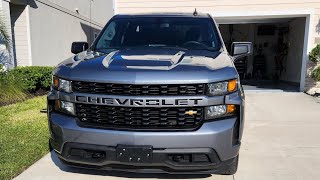
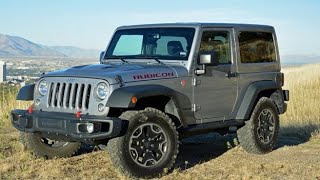
- Brake System Control Module (BSCM) software glitch (Common) — On 2019-2022 GM trucks, code C0021 is frequently triggered by a software error within the brake module, not a mechanical failure. This appears alongside code P0606 and requires a dealer reprogram. 🎬 See a quick fix for this common Chevy Silverado issue.
- Failed electric vacuum pump (Less Common) — Vehicles with hybrid, turbocharged, or diesel engines use an auxiliary electric pump to supply the booster. If this pump or its wiring fails, the booster loses its power source.
- Failed brake booster vacuum sensor (Less Common) — Modern vehicles use a sensor to monitor vacuum in the booster. If this sensor fails, it sends incorrect data to the computer, triggering C0021 even if the booster and vacuum supply are perfectly fine.
- Corroded vacuum lines from battery acid (Less Common) — On vehicles like the Lincoln MKT, plastic vacuum lines are routed near the battery. Vented acid fumes corrode and embrittle the plastic, causing hidden cracks and significant vacuum leaks.
- Oil contamination from a failed vacuum pump (Rare) — On GM trucks with engine-driven vacuum pumps, a failing pump leaks engine oil into the vacuum line. This oil contaminates and destroys the brake booster and check valve.
- Clogged vacuum nipple at the intake manifold (Rare) — The vacuum hose connects to a nipple on the engine's intake manifold. This small port becomes clogged with carbon buildup, restricting vacuum flow to the booster.
- Faulty Brake Master Cylinder Pressure Sensor (Rare) — On 2019-2024 Chevrolet Silverado HD trucks, GM TSB #20-NA-182 indicates a faulty brake master cylinder pressure sensor causes the C0021 code.
Symptoms

- Hard brake pedal — The brake pedal is suddenly very difficult to push down, requiring significantly more leg strength to stop the car.
- Increased stopping distance — The vehicle takes much longer to come to a complete stop due to the loss of power assist.
- Hissing noise when pressing the brake pedal — An audible whoosh or hissing sound comes from the driver's side footwell when the brake pedal is applied, indicating a vacuum leak from the booster diaphragm.
- Brake warning light is on — The red 'BRAKE' light, ABS light, traction control light, or a 'Service Brake System' message appears on the dashboard.
- Engine idle surges or stalls when braking — A large vacuum leak in the booster introduces unmetered air into the intake, causing the engine's idle speed to stumble or stall when the brakes are applied.
- Vehicle enters 'limp mode' — On newer GM vehicles, this code triggers a 'Brake System Failure' message and limits vehicle speed to 43 MPH as a safety precaution.
Diagnostic Flowchart
Tap your situation to follow the diagnostic path that matches what you're seeing on this code.
Common Fixes & Costs
- Replace brake booster vacuum hose/lines — Parts: $30-$150, Labor: $50-$125, ~0.8 hr book time (DIY)
- Replace brake booster check valve — Parts: $10-$30, Labor: $50-$100, ~0.3 hr book time (DIY)
- Reprogram Brake System Control Module (BSCM) — Parts: $0, Labor: $150-$250, ~1.2 hr book time (Professional)
- Replace brake booster — Parts: $150-$600, Labor: $200-$400, ~3 hr book time (Professional)
- Replace electric/mechanical vacuum pump — Parts: $150-$500, Labor: $100-$250, ~2 hr book time (Intermediate)
Used vs. New Parts: Buying Guide
When a used part is worth it: Buying a used brake booster is not recommended due to its unknown history and high labor replacement cost. A used part only makes sense for a very old vehicle where a new part is cost-prohibitive.
Donor-vehicle mileage cap: roughly under 60000 miles for the part to have meaningful remaining life.
Donor quality checklist:
- Verify the donor vehicle was in a collision and not scrapped for brake failure.
- Inspect the plastic rear hub and vacuum ports for cracks.
- Avoid parts from regions with heavy road salt usage.
- Match the part number exactly; internal valving differs.
Decision logic:
- If The fix is a software update → This guide does not apply; you must go to a dealer.
- If The vehicle is less than 10 years old → Buy a new OEM or high-quality remanufactured part. The safety risk outweighs the savings.
- If Budget is the absolute primary concern and you are doing the labor yourself → A remanufactured part with a lifetime warranty is a much safer bet than a used part for a similar price.
Warranty tradeoff: Used parts offer a 30-90 day warranty. Remanufactured parts come with a one-year to limited lifetime warranty. New OEM parts carry a 1-2 year warranty.
Worst-case if a used part fails: $400-$800. If a used booster fails, you pay for the part again plus 2-4 hours of labor to replace it a second time.
What Happens If You Wait — Timeline
- Immediate (First drive): Code C0021 sets, the red 'BRAKE' warning light illuminates, and power assist is lost. The brake pedal becomes extremely hard to press, and stopping distances increase dramatically. The vehicle is unsafe to drive. (MPG impact: 0%% · Added cost: $0, but the risk of an accident is extremely high.)
- 1-7 days (If root cause is a vacuum leak): The underlying vacuum leak introduces unmetered air into the engine, causing a rough idle, engine stalling, and poor fuel economy. (MPG impact: 5-15%% · Added cost: $20-$100 in wasted fuel.)
- 1-3 months (If root cause is a vacuum leak): Driving with a persistent vacuum leak forces the engine to run lean, increasing combustion temperatures. This causes premature wear on spark plugs and damages exhaust valves or the catalytic converter. (MPG impact: 10-20%% · Added cost: $200-$1500+ for catalytic converter or engine repairs.)
- Ongoing (If root cause is a leaking master cylinder): If the master cylinder leaks brake fluid into the booster, the fluid is sucked into the engine through the vacuum hose, causing exhaust smoke and potential hydro-lock. (MPG impact: N/A% · Added cost: $3000-$8000+ for engine replacement.)
Cost of Not Fixing It
- Immediate: Extreme safety risk. The vehicle has severely reduced braking ability and a much longer stopping distance, easily leading to an accident. (Added cost: Potential for total loss of vehicle and severe liability costs.)
- Short-Term (days to weeks): If caused by a large vacuum leak, it leads to a lean running condition, rough idle, stalling, and poor fuel economy. (Added cost: $50-$200 in wasted fuel and diagnostic fees for engine performance issues.)
- Long-Term (months): If a leaking master cylinder fills the booster with brake fluid, the fluid is sucked into the engine, causing catastrophic engine damage. (Added cost: $3000-$8000+ for engine repair or replacement.)
Diagnosis Steps

- Check for Module Software Updates (TSBs)
If you have a newer GM or Ford vehicle and the code is paired with P0606, immediately check for Technical Service Bulletins (TSBs). Many issues are caused by software glitches requiring a dealer to reprogram the Brake System Control Module (BSCM).
Tools: OBD-II Scanner, Smartphone/Computer (Beginner) - Perform a Basic Booster Function Test 🎬 Watch: Three simple tests to check your brake booster.
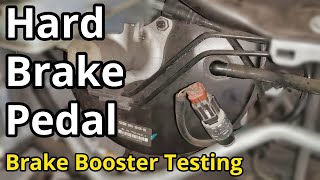
With the engine off, pump the brake pedal 5-7 times to bleed off stored vacuum; the pedal should get firm. Hold firm pressure on the pedal and start the engine. The pedal should drop slightly (about an inch) as vacuum builds. If it doesn't drop, there is no power assist.
Tools: None (Beginner) - Visually Inspect the Vacuum System
Inspect the entire vacuum hose assembly from the engine intake manifold to the brake booster. Look for cracks, swelling, collapsed sections, or loose connections. Pay close attention to plastic lines routed near the battery for acid damage.
Tools: Flashlight (Beginner) - Listen for Vacuum Leaks
With the engine running, listen around the brake booster, vacuum hose, and intake manifold for a hissing sound. A leak is often loudest when an assistant presses the brake pedal.
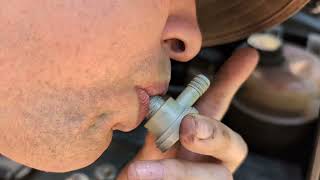
Tools: Mechanic's Stethoscope or spare hose (Beginner) - Test the Brake Booster Check Valve 🎬 Watch: How to test and replace a faulty check valve.
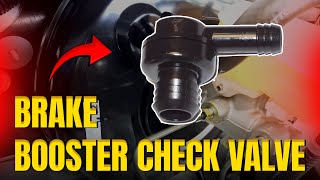
Remove the check valve from the booster. You should be able to blow air through it from the booster side to the hose side, but not the other way. If air passes in both directions, the valve is bad and must be replaced.
Tools: Pliers (Intermediate) - Test for Engine Vacuum at the Booster
Disconnect the vacuum hose from the booster and connect a vacuum gauge. Start the engine. A healthy engine produces a steady 18-21 inHg of vacuum at idle. If vacuum is low, the problem is the engine's vacuum supply, not the booster.
Tools: Vacuum Gauge (Intermediate) - Perform a Booster Leak-Down Test
Disconnect the vacuum hose and connect a hand vacuum pump directly to the booster's inlet port. Pump it to 20 inHg. The booster should hold this vacuum with minimal loss. If it drops quickly, there is an internal leak in the diaphragm.
Tools: Hand Vacuum Pump with Gauge (Advanced) - Test the Brake Booster Vacuum Sensor
With the ignition on and engine off, back-probe the signal wire at the sensor's connector. Apply vacuum with a hand pump. The voltage should change smoothly (e.g., ~4.5V at 0 inHg, dropping to ~0.5V at 20 inHg). A static reading indicates a failed sensor.
Tools: Multimeter, Hand Vacuum Pump (Advanced) - Inspect for Oil Contamination
On vehicles with an engine-driven vacuum pump, disconnect the vacuum hose from the booster. Look inside the hose and booster inlet for engine oil. Oil presence confirms the vacuum pump is failing and contaminating the system.
Tools: Flashlight, Borescope (optional) (Advanced) - Analyze Scan Tool Live Data
Connect a professional scan tool and monitor the 'Brake Booster Vacuum Sensor' PID. At idle, the value should be stable and close to engine vacuum (16-20 inHg). If the reading is erratic or stuck at 0, the sensor or circuit is faulty.
Tools: Professional OBD-II Scan Tool (Advanced)
When This Code Triggers (Freeze-Frame Conditions)
- Time Since Engine Start: 3-5 Minutes (The code sets after the initial cold-start phase when the system expects vacuum to have stabilized.)
- Engine RPM: 600-1500 RPM (The fault is monitored above idle speed, during city or light-throttle driving.)
- Brake Booster Vacuum: < -2.90 PSI (The code triggers if the measured vacuum is insufficient for a sustained period (e.g., 2 minutes).)
- Vehicle Speed: 0-45 mph (Occurs at lower speeds or when coming to a stop, as frequent brake applications demand booster vacuum.)
Related Codes
- P0606 — This 'Control Module Processor Performance' code frequently appears with C0021 on newer GM vehicles, indicating a software problem in the Brake System Control Module requiring a dealer update.
- C1252 — Specific to vehicles with auxiliary vacuum pumps like the Jeep Wrangler, this indicates the problem lies with the electric vacuum pump or its circuit, rather than the booster.
- C0021:77 — A Ford-specific suffix meaning 'Commanded Position is Not Reachable', often setting in very cold temperatures. Ford states this is informational and can be disregarded if no other warnings are present.
- P25A2 — A secondary code meaning the brake module requested the main engine computer to turn on the check engine light. Diagnosing the C0021 resolves this code.
Climate & Environmental Factors
- Cold Weather: On Ford hybrids, very cold temperatures slow the booster's reaction time, setting an informational code like C0021:77 ('Commanded Position Not Reachable') without a true mechanical fault.
- High Altitude: Naturally-aspirated engines produce less vacuum at higher altitudes. A pre-existing small vacuum leak unnoticeable at sea level becomes significant enough at high altitude to trigger C0021.
How to Talk to a Mechanic About This Code
Say this: "I have a C0021 code and a hard brake pedal. I'd like to schedule a diagnostic. If it's a GM truck with a P0606, please check TSBs for a software update first. For other vehicles, please start by testing for vacuum leaks at the hose and check valve before quoting a new booster."
This directs the shop to perform the cheapest diagnostic steps first, protecting you from an immediate quote for a full booster replacement. Mentioning the GM TSB saves over $1,000.
Avoid saying:
- 'My brakes feel weird.'
- 'The brake light is on, can you just fix it?'
- 'Do whatever you think is best.'
Questions to ask before authorizing the repair:
- Did you find a vacuum leak? If so, where?
- What was the vacuum reading at the booster hose?
- Did you test the check valve?
- If you are recommending a brake booster, how did you rule out a vacuum supply issue or a software problem?
- Is there a TSB for this code on my vehicle?
Where to Take It: Dealer vs Independent vs Chain
- Dealer:
REQUIRED for the common GM software bug. Recommended for other vehicles only if an independent shop cannot find the fault.
Best for: 2019+ GM trucks (Silverado/Sierra) with codes C0021 and P0606 requiring a software update., Vehicles still under warranty., Complex electrical or e-booster diagnostics.
Downsides: Highest labor rates., Defaults to expensive part replacement if not guided by an informed customer. (Typical cost: +50% vs. baseline) - Independent Shop:
Best choice for most non-GM vehicles. They are well-equipped to handle common mechanical failures.
Best for: Diagnosing common mechanical causes like vacuum hoses, check valves, and standard booster replacements., Out-of-warranty vehicles where the cause is not a software bug., Owners looking for better value on labor and parts.
Downsides: Quality varies; choose a shop with ASE-certified technicians., Lacks proprietary software needed for module reprogramming. (Typical cost: +0% vs. baseline) - Chain Shop:
AVOID. This is a safety-critical diagnostic not suited for the chain shop environment.
Best for: Simple maintenance like oil changes or new tires.
Downsides: Technicians lack advanced diagnostic experience for complex brake system faults., High pressure to upsell leads to unnecessary replacement of expensive parts. (Typical cost: -10% vs. baseline)
When to Walk Away From the Repair
If the estimated repair cost exceeds 50% of the car's private-party value, consider your options. Because this code makes the car unsafe to drive, its 'as-is' value is near scrap value.
- Car worth $5000, fix is $400: Fix it. This is a relatively inexpensive repair that restores the full value and safety of the vehicle.
- Car worth $4000, fix is $2200: Walk away. The repair costs more than half the car's value. It's not economically sensible to proceed.
- Car worth $15000, fix is $1800: Fix it. The repair cost is well below the 50% threshold and is a necessary investment.
What Scan Tool You Need for This Code
Minimum: An OBD-II reader that reads Chassis (C) and Anti-lock Braking System (ABS) codes. A basic $20 engine-only code reader will NOT see the C0021 code.
To properly diagnose C0021, you need to view live data from the brake system, such as the brake booster vacuum sensor reading, to determine if the fault is with a sensor, vacuum supply, or the booster.
Budget: BlueDriver Pro or OBDLink CX/LX (~$80) — These Bluetooth scanners connect to a smartphone app and read ABS codes like C0021, clear them, and view live data PIDs essential for diagnosis.
Mid-range: Innova 5610 or Foxwell NT630 Plus (~$150) — These handheld scanners offer robust ABS capabilities, including reading codes, live data, and performing system-specific tests like ABS brake bleeding.
Professional: Autel MaxiCOM MK808 / Kingbolen K8 Pro (~$500-900) — Provides full bidirectional control to test components and performs advanced functions like module programming (required for the GM software fix).
Rent vs buy: Auto parts stores offer free code reading, but their tools may not read ABS codes. Buying at least a budget-level ABS-capable scanner is highly recommended for DIY diagnosis.
How to Clear the Code After You Fix It
- Fix the underlying mechanical or software fault.
- Use an OBD-II scan tool to clear the code from the Brake System Control Module (BSCM/EBCM).
- Perform a basic function test (pumping the pedal engine-off, then starting the engine) to confirm assist has returned.
Drive cycle (~20 minutes): Start the engine and idle for 2 minutes. Drive the vehicle with several normal stops from speeds above 25 mph. For software-related issues, an ignition off/on cycle confirms the fix.
Readiness monitors affected: This is a chassis (C-code) and does not directly affect emissions readiness monitors., If the cause is a large engine vacuum leak, it affects Fuel System, Misfire, and O2 sensor monitors.
Before emissions retest: drive at least 50 miles to fully set monitors.
Watch out for:
- Clearing the code without fixing the root cause results in the code returning immediately.
- Disconnecting the battery erases all emissions readiness monitors, guaranteeing an emissions test failure.
Will This Fail Emissions / State Inspection?
Yes — this code typically fails an OBD-II emissions inspection.
- California: An illuminated red brake warning light is an automatic failure of the state's safety inspection. If the Check Engine Light is also on, it fails the smog check.
- New York: The annual safety inspection explicitly checks for proper power brake unit operation; this code causes an automatic failure.
- Texas: For commercial vehicles requiring a full safety inspection, an illuminated brake warning lamp is a failure. Non-commercial vehicles can still be ticketed for driving with a safety defect.
Most Commonly Affected Vehicles
- Chevrolet Silverado 1500 (2019-2022) — Extremely prone to a software glitch in the BSCM causing C0021 and P0606. GM issued TSBs #PIT5728D and #20-NA-073 to reprogram the module. Check this first.
- GMC Sierra 1500 (2019-2022) — Shares the same platform and BSCM software issue as the Silverado 1500. The fix is a dealer software update. Hardware replacement is rarely correct.
- Ford Escape Hybrid (2010-2012) — Sets C0021 due to slow booster reaction in cold weather or air trapped in the hydraulic system after brake service. A scanner-activated ABS bleed is often required.
- Ford Fusion Hybrid (2010-2012) — Similar to the Escape Hybrid, logs C0021 due to regenerative braking system issues, cold temperatures, or incomplete brake bleeding procedures.
- Lincoln MKT (2013-2016) — Known for cracked plastic vacuum lines routed near the battery. Leaking battery acid fumes embrittle the plastic, causing hard-to-find vacuum leaks.
- Jeep Wrangler (JK) (2007-2018) — Sets C0021 along with C1252 (Vacuum Pump Control Circuit), pointing to a failed auxiliary vacuum pump or a broken plastic 'T' fitting in the vacuum lines.
- Toyota 4Runner (2001-2002) — Uses a hydro-boost system integrated with the master cylinder, known to be very expensive to replace, with repair costs often exceeding $1,500.
- Chevrolet Silverado HD (4500/5500/6500) (2019-2024) — Unlike the 1500 models, C0021 on these heavy-duty trucks is often caused by a faulty brake master cylinder pressure sensor, per GM TSB #20-NA-182 and recall #N242482680.
Manufacturer-Specific Notes
- General Motors (Chevrolet/GMC): On 2019-2022 Silverado/Sierra 1500 trucks, C0021 paired with P0606 is almost always a software bug. The only solution is a dealer reprogramming the BSCM per TSB #20-NA-073. Do not replace hardware.
- Subaru: For Subaru models, C0021 does NOT refer to the brake booster. It indicates a fault in the 'Front Right ABS Sensor Circuit', requiring diagnosis of the wheel speed sensor and wiring.
- Ford: On hybrid models, C0021 suffixes (:21, :66, :77) point to regenerative braking issues or air in the lines. A thorough, scanner-activated ABS bleed procedure is critical after hydraulic service.
- Jeep: On Wrangler (JK) models, C0021 accompanied by C1252 points directly to a failure of the auxiliary electric vacuum pump or a broken plastic 'T' fitting in the vacuum line assembly.
Real Owner Stories
2019 Chevrolet Silverado 1500
Owner reported a 'Brake System Failure' warning, and the truck went into a 43 MPH limp mode. Codes C0021 and P0606 were present after a battery replacement.
Outcome: The dealership confirmed a known software glitch. They reprogrammed the Brake System Control Module (BSCM) per GM TSB #PIT5728D, resolving the issue without replacing parts.
Lesson: On 2019+ GM trucks, C0021 with P0606 is almost certainly a software issue. Do not replace the expensive brake booster; insist the dealer performs the software update first.
2014 Lincoln MKT
The vehicle had a hard brake pedal and stored code C0021-92. There were no other engine performance issues.
Outcome: The technician replaced the cracked plastic sections with rubber hose, immediately restoring normal brake feel. The permanent fix was installing a new OEM hose assembly.
Lesson: Always perform a physical inspection of all vacuum lines before condemning the brake booster. Check lines routed near the battery for acid damage.
2017 Jeep Wrangler JK
The vehicle displayed ABS and traction control lights with codes C0021 and C1252 (Vacuum Pump Control Circuit). The issue was intermittent.
Outcome: The owner replaced the brake booster itself. The pedal feel improved, and the codes did not return, proving an intermittent internal failure a static smoke test could not detect.
Lesson: Even if individual parts seem fine and a smoke test passes, the booster can have an intermittent internal fault. On a Jeep JK, C0021 and C1252 require careful diagnosis between the pump, lines, and booster.
How to Prevent This Code From Triggering
- Flush brake fluid every 2-3 years. (Every 2-3 years) — Brake fluid absorbs moisture, leading to internal corrosion. Maintaining the hydraulic side prevents secondary brake system failures.
- Perform regular brake system inspections. (Every 10,000-15,000 miles) — Technicians spot early signs of trouble, like deteriorating vacuum hoses or fluid leaks from the master cylinder, before they cause a C0021 code.
- Periodically inspect vacuum hoses. (Annually) — Visually check the brake booster vacuum hose for cracking, swelling, or softness, especially on older vehicles where rubber becomes brittle.
- Address engine oil and battery leaks promptly. (As needed) — Leaking engine oil degrades rubber vacuum hoses. Leaking battery acid corrodes nearby plastic vacuum lines, leading to booster failure.
Frequently Asked Questions
Is it safe to drive with code C0021?
No, it is not safe. This code means your power brakes have failed, requiring extreme force on the pedal to stop the vehicle and dangerously increasing stopping distance. Tow the vehicle to a repair shop immediately.
What is the most common misdiagnosis for C0021?
On modern GM trucks, the biggest mistake is replacing the $1,000+ brake booster for a software issue that requires a $200 dealer reprogram. On other vehicles, shops often replace the booster when the fault is actually a cheap vacuum hose or a $20 check valve. Always test the vacuum supply and check for TSBs first.
I replaced the brake booster and the code is still there. What now?
If you replaced the booster and still have a C0021 code, the problem was misdiagnosed. Meticulously check the vacuum supply hoses, check valve, and intake manifold port for blockages. Confirm if your vehicle requires a software update or a scanner-activated ABS bleed procedure.
Can a bad battery cause code C0021?
Yes, indirectly. Voltage spikes during a battery change trigger software faults in sensitive modules, especially on newer GM vehicles. Additionally, leaking battery acid corrodes nearby plastic vacuum lines, causing leaks that trigger the code.
What does the hissing sound mean when I press the brakes?
A hissing sound when you press the brake pedal indicates a severe vacuum leak. This is usually caused by a ruptured diaphragm inside the brake booster or a cracked vacuum hose leading to it. The booster or hose requires immediate replacement.
Can I just reset the 'Brake System Failure' light?
Disconnecting the battery temporarily clears the light, but the warning returns immediately because the physical or software fault remains. This is a critical safety warning requiring proper diagnosis and repair. Do not ignore it.
What is the difference between C0021 on a Subaru vs. a Chevy?
They mean completely different things. On a Chevrolet, C0021 means Brake Booster Performance. On a Subaru, it means 'Front Right ABS Sensor Circuit' failure, requiring a completely different diagnostic approach.
How much does it cost to fix code C0021?
A simple vacuum hose or check valve replacement costs under $150. A dealer software reprogram runs $150-$250. Replacing a failed brake booster or auxiliary vacuum pump costs $400 to over $1,000 depending on the vehicle.
Key Takeaways
- Code C0021 indicates a critical power brake system failure, drastically increasing stopping distances and making the vehicle unsafe to drive.
- Inspect the vacuum hose and the $20 check valve for leaks before replacing the $500+ brake booster.
- On 2019-2022 GM 1500 trucks, C0021 paired with P0606 is a known software bug requiring a $150-$250 dealer reprogram, not hardware replacement.
- A distinct hissing noise from the driver's footwell when braking confirms a ruptured brake booster diaphragm requiring immediate replacement.
Helpful Videos

Shop the Parts Behind C0021
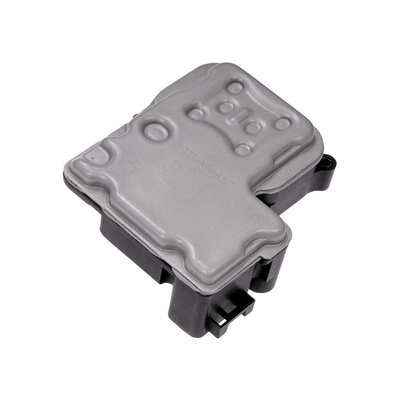
Below are the parts most often responsible for code C0021, ranked by how frequently each one is the actual culprit (per the diagnosis above). Tap any to see what we have for your vehicle.




The information in this article is provided for general reference and educational purposes only. Vehicle specifications, procedures, and part compatibility can vary by production date, trim level, and region. Always consult your vehicle's factory service manual and verify part numbers before purchasing or performing repairs. Safety-critical components such as airbags, seat belts, and braking systems should be installed by a qualified professional.
- 🧭 Diagnostic Flowchart
- 🎬 Helpful Videos
- 🛍️ Shop This Part
- What Does C0021 Mean?
- Can I Drive With C0021?
- Common Causes
- Symptoms
- Common Fixes & Costs
- Used vs. New Parts: Buying Guide
- What Happens If You Wait — Timeline
- Cost of Not Fixing It
- Diagnosis Steps
- When This Code Triggers (Freeze-Frame Conditions)
- Related Codes
- Climate & Environmental Factors
- How to Talk to a Mechanic About This Code
- Where to Take It: Dealer vs Independent vs Chain
- When to Walk Away From the Repair
- What Scan Tool You Need for This Code
- How to Clear the Code After You Fix It
- Will This Fail Emissions / State Inspection?
- Most Commonly Affected Vehicles
- Manufacturer-Specific Notes
- Real Owner Stories
- 2019 Chevrolet Silverado 1500
- 2014 Lincoln MKT
- 2017 Jeep Wrangler JK
- How to Prevent This Code From Triggering
- Frequently Asked Questions
- Is it safe to drive with code C0021?
- What is the most common misdiagnosis for C0021?
- I replaced the brake booster and the code is still there. What now?
- Can a bad battery cause code C0021?
- What does the hissing sound mean when I press the brakes?
- Can I just reset the 'Brake System Failure' light?
- What is the difference between C0021 on a Subaru vs. a Chevy?
- How much does it cost to fix code C0021?
- Key Takeaways
- 🎟️ Get 5% Off