

OBD-II Code C0022: Brake Booster Solenoid Circuit
What C0022 means, why it triggers, and how to fix it
- Code C0022 disables power braking, requiring upwards of 40 pounds of leg force to stop the vehicle safely.
- Test the battery voltage first; a reading below 12.4V frequently triggers false C0022 codes during the ABS module's startup self-test.
- Do not replace the $600+ ABS module without first testing the brake booster solenoid's resistance, which should typically read between 1 and 3 ohms.
- On 2008-2014 Subaru models, code C0022 indicates a 'Front Right ABS Sensor Signal' failure, not a brake booster issue.
What Does C0022 Mean?
Code C0022 means the vehicle's Anti-lock Brake System (ABS) module detects an electrical problem with the brake booster solenoid or its circuit. This solenoid controls the power brake system, which uses engine vacuum or a dedicated pump to multiply your braking force. When this circuit fails, you lose power assistance, making the brake pedal extremely difficult to press.
Technical definition: The SAE/ISO definition is "Brake Booster Solenoid (Subfault)". This indicates the ABS module detects an open circuit, a short to ground, a short to power, or an out-of-range current reading in the brake booster solenoid circuit. Manufacturer-specific DTCs often include a suffix (e.g., Ford's C0022-1D) to specify the exact fault type, such as 'Circuit Current Out of Range'.
Can I Drive With C0022?
No — Do Not Drive. You should only drive the vehicle directly to a repair shop, or have it towed. A C0022 code means power brake assistance has failed. Your vehicle requires two to three times the normal foot pressure to stop, potentially doubling your stopping distance. This creates a severe safety risk in panic stops or wet conditions.
Common Causes
- Damaged Wiring or Corroded Connectors (Very Common) — Exposed to engine heat, vibration, and road salt, the wiring harness leading to the brake booster solenoid frequently chafes or corrodes. This breaks the electrical connection and is the most common trigger.
- Failed Brake Booster Solenoid (Common) — The solenoid's internal electromagnetic coil windings short out or break, or its mechanical plunger sticks due to debris, preventing operation.
- Faulty ABS Control Module (Common) — The ABS module controls the solenoid. It fails internally due to software corruption, degraded solder joints, or electronic component failure, causing it to falsely report a C0022 code.
- Low Battery Voltage or Poor Ground (Less Common) — A weak battery or a corroded main ground strap causes intermittent voltage drops. The voltage-sensitive ABS module interprets this drop in the solenoid circuit as a fault.
- Blown Fuses or Bad Relays (Less Common) — A blown fuse or a faulty relay cuts power directly to the solenoid circuit.
- Vacuum Leaks (Rare) — While C0022 is an electrical code, a massive vacuum leak in the brake booster forces the solenoid to operate outside expected parameters, triggering a secondary electrical fault code.
Symptoms
- Hard Brake Pedal — The brake pedal feels stiff and requires 40+ lbs of leg force to press, compared to the normal 20-30 lbs.
- Increased Stopping Distance — Without power assist, the vehicle takes significantly longer to come to a complete stop, creating a major safety hazard.
- ABS, Brake, or Traction Control Warning Light On — The dashboard illuminates the ABS, Brake, or ESC/VSC warning lights immediately upon fault detection.
- Hissing Noise From Pedal Area — If the fault stems from a vacuum leak, a distinct hissing sound emits from under the dashboard when pressing the brake.
- Delayed Pedal Return — The brake pedal feels spongy or returns to its resting position slower than usual, especially in cold weather.
Diagnostic Flowchart
Tap your situation to follow the diagnostic path that matches what you're seeing on this code.
Common Fixes & Costs
- Repairing Damaged Wiring or Connectors — Parts: $10-$50, Labor: $120-$350, ~1.5 hr book time (Intermediate)
- Replacing the Brake Booster (with internal solenoid)
— Parts: $200-$700, Labor: $200-$450, ~2.5 hr book time
(Professional)
2011-2014 Jeep Grand Cherokee: OEM CBXNP141AA, 68053596AA (Alt: Cardone 54-77200, Wearever 54-77200)
2010-2012 Ford Fusion Hybrid: OEM BE5Z-2005-A (Alt: Cardone 54-77122, Duralast 54-77122) - Replacing the ABS Control Module
— Parts: $600-$1500, Labor: $150-$300, ~1.8 hr book time
(Professional)
2011-2014 Jeep Grand Cherokee: OEM 68225501AC, 68199249AC (Alt: Dorman 599-866) - Repairing/Remanufacturing the ABS Control Module — Parts: $150-$400, Labor: $150-$250, ~1.5 hr book time (Intermediate)
- Replacing a Blown Fuse — Parts: $1-$10, Labor: $0-$50, ~0.1 hr book time (Beginner)
DIY vs Professional
- Repairing Damaged Wiring or Connectors — Beginner: No
Tools: Multimeter, wire strippers, crimpers, heat shrink tubing, soldering iron. - Replacing a Blown Fuse — Beginner: Yes
Tools: Fuse puller or small pliers. - Replacing the Brake Booster — Beginner: No
Tools: Full socket set, torque wrench, flare nut wrenches, vacuum pump, brake bleeding equipment. - Replacing the ABS Control Module — Beginner: No
Tools: Socket set, torque wrench, bi-directional scan tool for bleeding procedures.
Used vs. New Parts: Buying Guide
When a used part is worth it: For the ABS Control Module, a used or remanufactured unit is a cost-effective repair, especially for older vehicles where a new module exceeds the car's value. For the Brake Booster, a used part is viable if sourced from a low-mileage, non-accident vehicle.
Donor-vehicle mileage cap: roughly under 80000 miles for the part to have meaningful remaining life.
Donor quality checklist:
- For ABS modules, match the part number exactly. Many modules are VIN-programmed and require reprogramming by a dealer.
- For brake boosters, visually inspect for rust, damage, and ensure the rear pushrod is straight.
- Buy from a reputable salvage yard offering a 30-90 day warranty.
Decision logic:
- If The fix is the ABS module and a remanufacturing service is available for your specific unit → Send your original module for repair to avoid VIN programming issues.
- If Vehicle is >10 years old and budget is the main concern → A used ABS module or brake booster from a reputable seller is a reasonable choice.
- If The part is for a newer vehicle (<5 years old) or you prioritize reliability → Buy a new OEM part for the longer warranty and guaranteed compatibility.
Warranty tradeoff: Used parts typically have a 30-90 day warranty. Remanufactured parts often come with a 1-year to limited lifetime warranty. New OEM parts carry a 1-2 year warranty.
Worst-case if a used part fails: $300-$600 if a used part fails after installation, primarily due to repeated labor costs.
What Happens If You Wait — Timeline
- Immediately: ABS/Brake warning lights illuminate. Power brake assist is lost. The brake pedal becomes extremely hard to press, requiring 2-3 times the normal effort. (MPG impact: 0%% · Added cost: $0)
- 0-1 week: The immediate safety hazard of increased stopping distance is the primary consequence. The risk of a collision, especially in panic stops or adverse weather, is dangerously high. (MPG impact: 0%% · Added cost: Variable, from $500 (minor collision deductible) to catastrophic costs related to a major accident.)
- 1-3 months: The safety risk remains constant and unacceptable. The ABS module experiences additional stress as it continuously attempts to command a faulty circuit. (MPG impact: 0%% · Added cost: The primary cost remains the immense and ongoing safety liability.)
- 3+ months: The system fails into a manual braking mode. Ignoring C0022 does not typically cause a chain reaction of expensive part failures. The single greatest cost is the ever-present risk of an accident. (MPG impact: 0%% · Added cost: N/A - The cost is entirely measured in safety risk, not progressive mechanical damage.)
Cost of Not Fixing It
- Immediately: Significantly increased stopping distance and high potential for a collision due to loss of power brake assist. (Added cost: Variable, from minor accident damage to total loss of vehicle.)
- 1-3 months: Continued driving places extreme stress on the driver to apply sufficient braking force. The ABS module experiences additional stress as it continuously attempts to command a faulty circuit. (Added cost: $0 - $500)
- 3+ months: The system fails into a 'manual' braking mode. The greatest cost is the ongoing and unacceptable safety risk of driving without power brakes. (Added cost: N/A - Primary cost is safety risk.)
Diagnosis Steps
- Read Codes & Analyze Freeze Frame Data
Use an ABS-capable OBD-II scanner to confirm C0022. Record freeze frame data (speed, temperature) to catch intermittent issues, and note any accompanying codes.
Tools: ABS-capable OBD-II Scanner (Beginner) - Test Battery and System Voltage
Use a multimeter to verify battery voltage exceeds 12.4V with the engine off. A weak battery triggers false ABS codes during startup.
Tools: Multimeter (Beginner) - Check Fuses and Relays
Locate the fuse box and inspect all fuses related to the ABS, VSC, and brake system. Replace any blown fuses.
Tools: Owner's Manual, Fuse Puller or Pliers (Beginner) - Thorough Visual Inspection
Inspect the wiring harness and connectors between the ABS module and brake booster. Look for chafed wires, melted insulation, or green/white corrosion on pins.
Tools: Flashlight, Inspection Mirror (Beginner) - Test Solenoid Resistance
Disconnect the solenoid and measure resistance between its power and ground pins using a multimeter. Compare to manufacturer specs (e.g., 1-3 ohms for Ford). Infinity means an open circuit; near-zero means a short.
Tools: Multimeter, Vehicle-specific Repair Manual (Advanced) - Check Ground Path Integrity
Disconnect the solenoid and module connectors. Measure continuity of the ground wire from the solenoid connector to the chassis ground. Resistance must be 0.1 ohms or less.
Tools: Multimeter, Vehicle-specific Wiring Diagram (Intermediate) - Check for Shorts to Ground/Power
Measure resistance between each solenoid circuit wire and chassis ground (must be >10,000 ohms). With ignition on, measure voltage between each wire and ground (must be 0V).
Tools: Multimeter, Vehicle-specific Wiring Diagram (Advanced) - Active Solenoid Test & Waveform Analysis
Command the solenoid on/off using a bi-directional scan tool. Listen for a click. Back-probe the control wire with an oscilloscope to verify the ABS module sends a clear PWM square wave.
Tools: Bi-directional Scan Tool, Oscilloscope, Back-probe Kit (Professional) - Check TSBs and Recalls
Search manufacturer TSBs or NHTSA recalls for your VIN. For example, 2011-2014 Jeep Grand Cherokees have a major recall (14V-154) for brake boosters causing this code.
Tools: Smartphone or Computer (Beginner)
When This Code Triggers (Freeze-Frame Conditions)
- Vehicle Speed: 0 mph (During power-on self-test (Key On, Engine Off))
- System Voltage: < 11.8V or > 15.0V (Low battery during startup or voltage spike)
- Brake Pedal Status: Applied (During initial brake application after starting)
- Ambient Temperature: < 32°F (0°C) (Cold weather, especially on susceptible models (e.g., Ford Hybrids))
Related Codes
- C0021 — C0021 ('Brake Booster Performance') indicates a mechanical problem, while C0022 indicates an electrical circuit problem. An electrical fault (C0022) almost always causes a performance fault (C0021). Fix the electrical issue first.
- U3000 — This code for 'Control Module: Internal Electronic Failure' strongly indicates the ABS module itself has failed. If you see U3000 alongside C0022, the ABS module is the primary suspect.
- C0040 — This code for 'Brake Pedal Switch 'A' Circuit' triggers alongside C0022 if the ABS module is failing or if there are widespread wiring issues. Inspect shared wiring and grounds first.
- U0415 — This code means 'Invalid Data Received From Anti-Lock Brake System (ABS) Control Module'. If other modules log this code while the ABS module logs C0022, it points to an internal failure within the ABS module.
Climate & Environmental Factors
- Cold Weather: Extremely common trigger for C0022 on Ford Hybrid models. Cold temperatures cause failing electronic components or solder joints inside the ABS module to contract and lose connection.
- Water Intrusion / High Humidity: A primary cause of failure for 2011-2014 Jeep Grand Cherokees. Water seeps into the brake booster, causing internal corrosion and freezing.
- Road Salt: In regions with harsh winters, road salt spray accelerates the corrosion of wiring harnesses, connectors, and ground points under the vehicle.
How to Talk to a Mechanic About This Code
Say this: "I have an ABS light on and my scanner shows code C0022. My brake pedal is also very hard to press. I'd like to book a diagnostic appointment. Can you please start by checking the wiring, ground, and connector for the brake booster solenoid circuit before quoting a major component?"
This signals to the shop that you want a logical, cost-effective diagnosis. It prevents them from immediately jumping to a quote for an expensive ABS module or brake booster, directing them to check the most common and cheapest-to-fix causes first.
Avoid saying:
- 'My ABS light is on, can you fix it?' (This is too vague and invites a high quote for a worst-case scenario.)
- 'I think I need a new ABS module.' (Never diagnose the car for the mechanic; you anchor them on an expensive and incorrect repair.)
- 'Just do whatever it takes to fix it.' (This gives the shop a blank check and removes your ability to control costs.)
Questions to ask before authorizing the repair:
- What were the specific results of the electrical tests? (e.g., 'What was the solenoid's resistance reading?', 'Was there voltage at the connector?')
- Did you check for any Technical Service Bulletins (TSBs) or recalls for my vehicle related to this code?
- If the ABS module needs to be replaced, is a remanufactured unit an option, and does it require programming?
- What is the warranty on the proposed parts and labor?
Where to Take It: Dealer vs Independent vs Chain
- Dealer:
Recommended if the vehicle is under warranty, has a known recall, or if a confirmed faulty ABS module requires dealer-specific programming. Otherwise, it is a costly option.
Best for: Vehicles under warranty or covered by a specific recall (like the 2011-2014 Jeep Grand Cherokee)., Complex manufacturer-specific issues (like the Subaru misinterpretation of C0022)., Repairs that require proprietary software for module programming and calibration.
Downsides: Significantly higher labor rates and parts costs (40-70% premium)., More likely to replace an entire assembly rather than attempting a smaller repair. (Typical cost: +50% vs. baseline) - Independent Shop:
Best fit for most out-of-warranty vehicles. An experienced independent technician performs the necessary electrical diagnostics to pinpoint the fault, saving you money compared to a dealer.
Best for: Out-of-warranty vehicles where cost is a major factor., Diagnosing and repairing common electrical faults like wiring, connectors, or grounds., Installing used or remanufactured parts to save money.
Downsides: Shop quality and diagnostic skill vary widely; look for ASE certifications and good reviews., May lack expensive, dealer-specific programming tools for the newest models. (Typical cost: +0% vs. baseline) - Chain Shop:
AVOID for diagnosis. They are generally not equipped for the in-depth electrical circuit testing required for C0022 and are likely to misdiagnose the issue or recommend replacing multiple expensive parts unnecessarily.
Best for: Simple, routine maintenance like oil changes or standard brake pad replacements.
Downsides: Technicians lack the advanced diagnostic training needed for complex electrical codes like C0022., High pressure to upsell services and parts leads to unnecessary repairs. (Typical cost: -10% vs. baseline)
When to Walk Away From the Repair
If the total estimated repair cost for C0022 exceeds 50% of your car's current private-party value, you should seriously consider not fixing it and instead selling it or trading it in.
- Car worth $5000, fix is $2200: Borderline. The repair is 44% of the car's value. Get a second opinion and explore cost-saving options like a used ABS module before proceeding.
- Car worth $15000, fix is $850: Fix it. The repair cost is a small fraction of the vehicle's value and is necessary for safety.
- Car worth $3500, fix is $2500: Walk away. The repair cost is over 70% of the car's value. The car is not worth the investment.
What Scan Tool You Need for This Code
Minimum: A scanner that reads and clears Anti-Lock Brake System (ABS) codes. A standard engine-only code reader will not work for C0022.
A basic $20 scanner only reads powertrain (P-codes) from the engine computer. C0022 is a chassis (C-code) stored in the ABS module. A basic reader shows 'No Codes Found' even with the ABS light on.
Budget: Autel AutoLink AL619 / Foxwell NT630 Plus (~$90) — Reads and clears codes from the ABS, SRS (airbag), and engine modules. It allows you to confirm the C0022 code and view live data from wheel speed sensors.
Mid-range: Innova 5610 / Autel MaxiCOM MK808S (~$350) — Provides bi-directional control. This lets you command the brake booster solenoid on and off directly from the tool to test its function. It also performs an ABS bleed after hydraulic parts are replaced.
Professional: Autel MaxiSys MS906BT / XTOOL D8S (~$600-1200) — Offers full professional-level diagnostics, including bi-directional control, ECU coding for module replacement, and the ability to view advanced wiring diagrams directly on the tool.
How to Clear the Code After You Fix It
- Use an ABS-capable OBD-II scan tool to clear the C0022 code from the ABS module.
- Perform the brake system bleeding procedure if any hydraulic components were disconnected.
- Initialize the solenoid or module using a scan tool if required by the manufacturer.
Drive cycle (~15 minutes): After clearing the code, start the vehicle and let it idle for 2 minutes. Drive the vehicle, making several stops using light to moderate brake pressure. The system self-tests upon startup; if the ABS light remains off, the repair is successful.
Readiness monitors affected: This is a chassis code and does not directly affect emissions readiness monitors.
Watch out for:
- Disconnecting the battery does not clear the code from the ABS module's memory on modern vehicles.
- The code returns immediately upon the next key cycle if the underlying electrical fault remains.
- Generic OBD-II scanners cannot communicate with or clear codes from the ABS module.
Will This Fail Emissions / State Inspection?
No — by itself this code doesn't fail OBD inspection (but it can keep readiness monitors from setting, which causes a separate fail).
- California: A C0022 code will NOT cause a failure of the emissions (smog) test itself. The smog check only concerns emissions-related systems and the Check Engine Light.
- New York: An illuminated ABS warning light is grounds for immediate failure of the annual safety inspection.
- Texas: As of 2025, annual safety inspections are no longer required for most non-commercial vehicles. An ABS light will not cause an emissions failure.
Most Commonly Affected Vehicles
- Ford Fusion Hybrid (2010-2012) — Extremely common for internal ABS module failure to cause C0022, often accompanied by C0021. The issue is frequently triggered by cold weather. The solenoid is internal to the booster.
- Ford Escape Hybrid / Mercury Mariner Hybrid (2009-2012) — These models share a well-documented issue where an internal ABS module failure triggers C0022. The solenoid is part of the non-serviceable brake booster assembly.
- Jeep Grand Cherokee (2011-2014) — Subject to safety recall P14 (NHTSA 14V-154) for brake booster corrosion due to water intrusion. The fix involves installing a water shield and potentially replacing the booster.
- Chevrolet / GMC Silverado 1500 / Sierra 1500 (2019-2022) — A C0022 code is an early sign of Electronic Brake Control Module (EBCM) failure. Check for Recall N192268090 (NHTSA 19V889000) requiring a software reprogram.
- Toyota Camry (2007-2009) — Known for problems with the ABS actuator/module assembly failing and triggering C0022. Toyota issued a Warranty Enhancement Program (ZEG) extending coverage for some models.
- Subaru Outback / Forester / Impreza (2008-2014) — CRITICAL: On many Subaru models, C0022 does NOT refer to the brake booster. It means 'Front Right ABS Sensor Signal' or 'Lost Communication With Entertainment Control Module - Rear'.
- Volkswagen Golf / Jetta (2010-2015) — C0022 is triggered by wiring corrosion near the ABS module, a faulty vacuum pump, or an internal failure of the ABS module.
- Nissan Rogue / Leaf (2013-2019) — Issues with the ABS actuator and electric brake booster systems lead to this code. On the Leaf, the fault relates to the dedicated electric vacuum pump.
Manufacturer-Specific Notes
- Ford: On many Ford hybrid models (Fusion, Escape), the brake booster solenoid is internal to the brake booster and is not sold separately. If the solenoid fails, the entire brake booster assembly must be replaced.
- Subaru: C0022 on many Subaru models does NOT refer to the brake booster. It means 'Front Right ABS Sensor Signal' or 'Lost Communication With Entertainment Control Module - Rear'. This requires a high-quality scan tool with manufacturer-specific definitions.
- General Motors (Chevy/GMC): On 2019+ trucks, a C0022 code is often the first sign of a failing Electronic Brake Control Module (EBCM). Check for recall N192268090 (NHTSA 19V889000), which addresses a software error requiring a reprogram.
- Jeep: On 2011-2014 Grand Cherokees, always check for the completion of safety recall P14 (NHTSA 14V-154). The brake booster is prone to water intrusion, and a shield should have been installed by a dealer.
- Toyota: For some 2007-2011 Camry Hybrid models, Toyota issued a Warranty Enhancement Program (ZEG) for the ABS Actuator Assembly. Owners should check with a dealer to see if their VIN is covered.
Real Owner Stories
2011 Ford Fusion Hybrid at 100k miles
While driving to work, the ABS and traction control lights started flashing, the brake pedal became very difficult to press, and the dash displayed a 'Service Brakes' message.
Outcome: The owner was quoted $2,800 for parts and labor to replace the ABS controller and brake booster and to flash the ECU. This is a common failure on these models, often requiring replacement of the entire ABS assembly as a used part, since new ones are often discontinued.
Lesson: On Ford Hybrids, C0022 accompanied by a hard pedal is a classic sign of ABS module/booster assembly failure. Due to parts availability, a used assembly is often the only option, which requires programming.
2014 Jeep Grand Cherokee with hard brake pedal
Owner experienced a very stiff brake pedal, especially on a cold start, making the vehicle hard to stop.
Outcome: The cause was water intrusion into the brake booster, leading to internal corrosion, a known issue covered by recall P14 / NHTSA 14V-154. The fix involves installing a water shield and replacing the booster.
Lesson: If you own a 2011-2014 Grand Cherokee and experience a hard brake pedal or C0022, your first step should be to check if the brake booster recall work has been performed by a dealer.
2000 Chevrolet Silverado with intermittent ABS light
The ABS and brake warning lights came on intermittently. Scanning revealed a code related to the EBCM (ABS module) relay circuit.
Outcome: Re-soldering the connections on the EBCM fixed the problem, and the ABS lights did not return.
Lesson: On many GM trucks, intermittent ABS faults are caused by failed solder joints inside the EBCM, not a complete component failure. A DIY repair by re-soldering the board or using a professional rebuild service saves over $1000.
2009 Subaru Outback with C0022 code
ABS, Traction Control, and other warning lights appeared after replacing the right front wheel speed sensor and bearing. The code C0022 was present.
Outcome: On Subaru vehicles, C0022 refers to 'Front Right ABS Sensor Signal'. The actual problem was in the wheel speed sensor circuit wiring.
Lesson: CRITICAL: Do not assume a code's meaning is universal. On a Subaru, C0022 leads to a complete misdiagnosis if you assume it relates to the brake booster. Always use a scanner with manufacturer-specific definitions.
How to Prevent This Code From Triggering
- Flush brake fluid every 2-3 years (Every 2-3 years) — Brake fluid absorbs moisture. This moisture corrodes sensitive internal components of the ABS module and hydraulic unit, leading to seized valves or electronic failure.
- Periodically clean and protect electrical connectors (Every 1-2 years or during other maintenance) — Cleaning connectors near the ABS module and applying dielectric grease prevents moisture and road salt from causing corrosion, which leads to high resistance or open circuits.
- Maintain battery health and clean ground connections (Annually) — A weak battery or corroded ground straps cause low voltage conditions that trigger false ABS codes. Ensuring the battery tests well prevents these electrical gremlins.
- Regularly wash the vehicle's undercarriage (Seasonally, especially after winter) — Washing away road salt and grime reduces the risk of accelerated corrosion on the wiring harnesses, brake lines, and the ABS module/booster assembly itself.
- Address any water leaks into the cabin or engine bay (As needed) — On vehicles like the Jeep Grand Cherokee, water intrusion is a direct cause of brake booster failure. Ensuring cowls, drains, and seals are clear prevents water from reaching critical brake components.
Frequently Asked Questions
What are the most common misdiagnosis mistakes for C0022?
The most common mistake is replacing the expensive ABS module without testing the wiring, grounds, and solenoid first. A simple broken wire or corroded ground is a frequent culprit. Additionally, using a generic scanner on brands like Subaru misdirects diagnosis, as C0022 refers to a wheel speed sensor on those vehicles.
My brakes failed in very cold weather. Is that related to C0022?
Yes. On certain vehicles, particularly Ford Hybrids, the internal electronics of the ABS module fail when exposed to extreme cold. This triggers a C0022 code and causes a sudden loss of power brakes, though the fault sometimes disappears when the car warms up.
Is it safe to drive with a C0022 code?
No. While the brakes still function mechanically, the lack of power assist significantly increases stopping distance. This poses a severe safety risk in an emergency, so the vehicle should only be driven directly to a repair shop.
How do I know if it's the solenoid or the ABS module?
A technician isolates the fault by measuring the solenoid's resistance (typically 1-3 ohms) and checking for proper voltage at its connector. If the solenoid and wiring test perfectly but a bi-directional scan tool cannot activate the solenoid, the ABS module has failed.
Why shouldn't I just disconnect the battery to clear the code?
Disconnecting the battery only temporarily turns off the light; the code returns immediately when the ABS module runs its next self-test. Furthermore, disconnecting the battery erases learned values for the engine and transmission, causing poor performance.
Can a bad battery cause a C0022 code?
Yes. A weak battery causes low voltage throughout the car's electrical system. The voltage-sensitive ABS module interprets this drop in the solenoid's circuit as a fault, triggering the code even if all brake components are perfectly fine.
What does the suffix on my Ford code C0022-1D or C0022-49 mean?
Suffixes provide specific fault data to speed up diagnosis. For example, C0022-1D means 'Circuit Current Out of Range' (pointing to wiring), while C0022-49 means 'Internal Electronic Failure' (pointing directly to the ABS module).
Key Takeaways
- Code C0022 disables power braking, requiring upwards of 40 pounds of leg force to stop the vehicle safely.
- Test the battery voltage first; a reading below 12.4V frequently triggers false C0022 codes during the ABS module's startup self-test.
- Do not replace the $600+ ABS module without first testing the brake booster solenoid's resistance, which should typically read between 1 and 3 ohms.
- On 2008-2014 Subaru models, code C0022 indicates a 'Front Right ABS Sensor Signal' failure, not a brake booster issue.
Helpful Videos
Shop the Parts Behind C0022
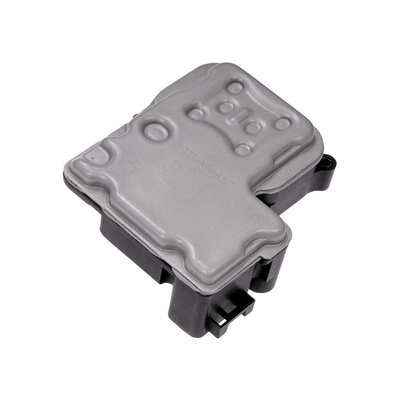
Below are the parts most often responsible for code C0022, ranked by how frequently each one is the actual culprit (per the diagnosis above). Tap any to see what we have for your vehicle.



The information in this article is provided for general reference and educational purposes only. Vehicle specifications, procedures, and part compatibility can vary by production date, trim level, and region. Always consult your vehicle's factory service manual and verify part numbers before purchasing or performing repairs. Safety-critical components such as airbags, seat belts, and braking systems should be installed by a qualified professional.
- 🧭 Diagnostic Flowchart
- 🎬 Helpful Videos
- 🛍️ Shop This Part
- What Does C0022 Mean?
- Can I Drive With C0022?
- Common Causes
- Symptoms
- Common Fixes & Costs
- DIY vs Professional
- Used vs. New Parts: Buying Guide
- What Happens If You Wait — Timeline
- Cost of Not Fixing It
- Diagnosis Steps
- When This Code Triggers (Freeze-Frame Conditions)
- Related Codes
- Climate & Environmental Factors
- How to Talk to a Mechanic About This Code
- Where to Take It: Dealer vs Independent vs Chain
- When to Walk Away From the Repair
- What Scan Tool You Need for This Code
- How to Clear the Code After You Fix It
- Will This Fail Emissions / State Inspection?
- Most Commonly Affected Vehicles
- Manufacturer-Specific Notes
- Real Owner Stories
- 2011 Ford Fusion Hybrid at 100k miles
- 2014 Jeep Grand Cherokee with hard brake pedal
- 2000 Chevrolet Silverado with intermittent ABS light
- 2009 Subaru Outback with C0022 code
- How to Prevent This Code From Triggering
- Frequently Asked Questions
- What are the most common misdiagnosis mistakes for C0022?
- My brakes failed in very cold weather. Is that related to C0022?
- Is it safe to drive with a C0022 code?
- How do I know if it's the solenoid or the ABS module?
- Why shouldn't I just disconnect the battery to clear the code?
- Can a bad battery cause a C0022 code?
- What does the suffix on my Ford code C0022-1D or C0022-49 mean?
- Key Takeaways
- 🎟️ Get 5% Off