

OBD-II Code C0031: Left Front Wheel Speed Sensor Circuit Fault
The Ultimate Guide to Diagnosing and Fixing C0031
- Code C0031 disables your ABS and traction control systems, increasing emergency stopping distances by up to 45% on wet surfaces.
- Damaged wiring in the wheel well causes over 60% of C0031 faults, making a harness inspection more critical than immediately replacing the sensor.
- A professional diagnosis costs $80 to $150 and requires an ABS-capable scanner to read manufacturer-specific sub-codes and monitor live wheel speed data.
- On modern Ford, GM, and Dodge trucks, a C0031 fault triggers a cascade of secondary dashboard warnings like 'Service AdvanceTrac' or 'Hill Start Assist Unavailable.'
- Sub-code C0031:76 on Ford F-150s specifically indicates a failing wheel bearing assembly, requiring a $400 to $900 hub replacement rather than a $60 sensor.
What Does C0031 Mean?

Code C0031 signifies the Anti-lock Brake System (ABS) control module detected a critical electrical circuit fault for the left front wheel speed sensor. This sensor reports the left front wheel's rotational speed. When this signal is lost or erratic, the module intentionally disables ABS, TCS, and ESC to prevent unpredictable braking, logging C0031 and illuminating dashboard warning lights.
Technical definition: The SAE J2012/ISO 15031-6 standard defines C0031 as "Left Front Wheel Speed Sensor Circuit Malfunction." This indicates the ABS module registered a signal loss, abnormal pattern, or electrical anomaly (short or open circuit). 🎬 Watch: Why using an oscilloscope is critical for C0031 diagnosis. Manufacturers often append sub-codes—like C0031:27 (Signal Rate of Change Above Threshold) or C0031:14 (Circuit Short to Ground)—which pinpoint the exact failure.
Can I Drive With C0031?
Yes, But With Caution. Yes, but drive with extreme caution. Your primary safety systems—Anti-lock Brakes (ABS), Traction Control (TCS), and Electronic Stability Control (ESC)—are disabled. This compromises vehicle stability in emergency maneuvers and increases stopping distances by up to 45% on wet or slippery surfaces. Drive directly to a repair facility and avoid high speeds.
Common Causes

- Damaged, Corroded, or Frayed Wiring Harness (Very Common) — Exposed to road debris, water, and suspension movement, wires chafe, break internally, or corrode at the connector. This creates an open or short circuit and is the most frequent cause of C0031.
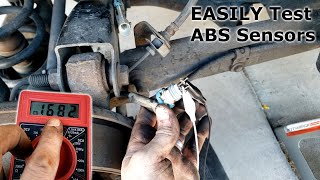
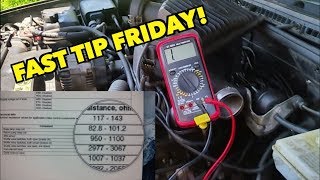
- Faulty Left Front Wheel Speed Sensor (Very Common) — The sensor fails due to heat cycles, internal vibration, or age-related degradation 🎬 Learn how to test sensor resistance and AC voltage output. of its magnetic coil or Hall effect chip.
- Failing Wheel Bearing or Hub Assembly (Common) — A worn wheel bearing introduces excessive wobble, altering the critical air gap between the sensor and the tone ring. This causes the signal to drop out. The tone ring is integrated into modern hub assemblies.
- Damaged Tone Ring or Debris on Sensor Tip (Common) — A cracked tone ring, missing teeth, heavy rust scale, or metallic debris stuck to the magnetic sensor tip distorts the magnetic field, corrupting the speed signal.
- Incorrect or Low-Quality Aftermarket Sensor (Less Common) — Modern ABS systems are highly sensitive. Low-quality aftermarket sensors failing to meet precise OEM electrical specifications trigger 'incorrect component' sub-codes.
- Faulty or Uncalibrated ABS Control Module (Rare) — The module's internal processing circuits fail, or the module loses calibration after a software update. Consider this only after proving the sensor, wiring, and tone ring are fully functional.
Symptoms

- ABS and Traction Control Lights Illuminated — The amber 'ABS' light and the Traction Control/Stability Control light illuminate and remain on continuously.
- ABS and Traction Control Disabled — Wheels lock up and skid during hard braking. Wheels spin without intervention when accelerating on slippery surfaces.
- Cascade of Other Warning Lights — On domestic trucks and SUVs (Ford/GM/Dodge), C0031 triggers secondary warnings like 'Service AdvanceTrac' or 'Hill Start Assist Not Available'.
- Unusual Brake Pedal Pulsing at Low Speeds — Before failing completely, an erratic signal causes the ABS pump to activate unnecessarily under 5 mph, resulting in a grinding sensation in the brake pedal.
- Speedometer Malfunction — If the vehicle uses the left front sensor for vehicle speed calculation, the speedometer behaves erratically or drops to zero.
Diagnostic Flowchart

Tap your situation to follow the diagnostic path that matches what you're seeing on this code.
Common Fixes & Costs
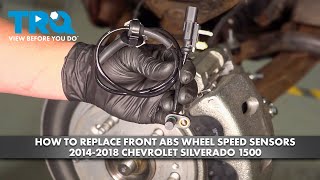
- Replace Left Front Wheel Speed Sensor — Parts: $50 - $150, Labor: $100 - $200, ~1.2 hr book time (DIY)
- Repair Damaged Wiring or Connector — Parts: $10 - $50, Labor: $150 - $300, ~1.5 hr book time (Intermediate)
- Replace Left Front Wheel Bearing/Hub Assembly — Parts: $150 - $400, Labor: $200 - $400, ~2.5 hr book time (Professional)
- Clean Sensor Tip and Tone Ring — Parts: $5 - $15, Labor: $80 - $150, ~1 hr book time (DIY)
- Replace ABS Control Module — Parts: $500 - $1500, Labor: $150 - $300, ~2 hr book time (Professional)
Used vs. New Parts: Buying Guide
When a used part is worth it: Buying used wheel speed sensors or hub assemblies is strongly discouraged. These are wear-and-tear components with unknown lifespans. The labor cost to replace them makes installing a used part financially risky.
Donor-vehicle mileage cap: roughly under 10000 miles for the part to have meaningful remaining life.
Donor quality checklist:
- Match the part number exactly, especially for sensitive systems (Dodge, Ford).
- Avoid parts from Rust Belt vehicles due to corrosion.
- Never buy a used hub assembly; internal bearing condition cannot be inspected.
Decision logic:
- If The repair is a wheel speed sensor → Buy a new OEM or high-quality aftermarket sensor. Cheap sensors cause repeat failures.
- If The repair is a wheel hub assembly → Buy a new, quality brand (Timken, MOOG, SKF, OEM). A used hub is a safety hazard.
- If Budget is the absolute primary concern → A used sensor from a very low-mileage wreck is acceptable, but avoid used hub assemblies entirely.
Warranty tradeoff: Salvage yard parts offer 30-90 day warranties covering only the part. New aftermarket parts carry 1-year to lifetime warranties. New OEM parts carry 1-2 year warranties.
Worst-case if a used part fails: $300-600 if a used part fails, requiring a new part and duplicate labor costs.
What Happens If You Wait — Timeline
- Immediate: Code C0031 sets. ABS, Traction Control, and Stability Control warning lights illuminate and systems disable. Safety is compromised. (MPG impact: 0%% · Added cost: $0)
- 1-4 weeks (If root cause is a failing wheel bearing): A low hum or growl begins at highway speeds. Bearing wear is minimal but generating noise. (MPG impact: 0-1%% · Added cost: $0, but a $400-$900 hub replacement is imminent.)
- 1-3 months (If root cause is a failing wheel bearing): The grinding noise becomes louder at lower speeds. Steering feels loose, and bearing play causes uneven tire wear. (MPG impact: 1-3%% · Added cost: $50-$150 in premature tire wear.)
- 3+ months (If root cause is a failing wheel bearing): Severe internal bearing damage occurs. The wheel wobbles. Excessive heat destroys the hub and spindle, risking catastrophic wheel separation. (MPG impact: 3-5%% · Added cost: $800 - $2000. Complete failure destroys the hub, spindle, and brake components.)
Cost of Not Fixing It
- Immediate: ABS, Traction Control, and Stability Control are disabled. The risk of losing control during emergency braking or on slippery surfaces increases significantly. (Added cost: Potentially infinite (cost of an accident).)
- 0-3 months: Continued driving with disabled safety systems. Secondary systems relying on wheel speed data, such as the speedometer, cruise control, or All-Wheel Drive (AWD), malfunction. (Added cost: Negligible direct cost, but secondary system malfunctions occur.)
- 3+ months: If a failing wheel bearing is the root cause, ignoring it leads to catastrophic failure of the wheel assembly, potentially causing the wheel to detach while driving. (Added cost: $600 - $2000 if a failing wheel bearing destroys the spindle and brake components.)
Diagnosis Steps

- Read Codes and Sub-Codes
Use an ABS-capable OBD-II scanner. Confirm C0031 is active and document any sub-codes (e.g., :14 for short circuit, :76 for wrong mounting position). Sub-codes dictate the entire diagnostic path.
Tools: ABS-Capable OBD-II Scanner (Beginner) - Visual Inspection of Harness and Connector
Safely raise the vehicle. Trace the wiring harness from the left front wheel hub into the chassis. Look for chafing, melting, or stretched wires. Unplug the sensor and inspect connector pins for green/white corrosion.
Tools: Jack, Jack Stands, Flashlight (Beginner) - Monitor Live Data
View the live data stream for all four wheel speed sensors on your scanner. Spin the left front wheel by hand. A reading that stays at zero, jumps erratically, or doesn't match the other side confirms a circuit fault.
Tools: ABS-Capable OBD-II Scanner, Jack, Jack Stands (Intermediate) - Perform a Harness 'Wiggle Test'
While monitoring live data, have a helper aggressively wiggle and flex the wiring harness near the connector and suspension flex points. If the speed reading flickers or drops out, you found an internal wire break.
Tools: ABS-Capable OBD-II Scanner, Assistant (Intermediate) - Inspect the Tone Ring and Sensor Tip
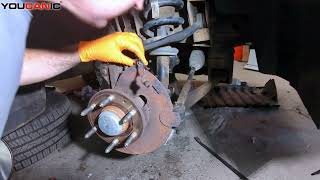
Remove the sensor. Clean metallic 'fuzz' off the magnetic tip. Inspect the tone ring inside the hub for cracked teeth, heavy rust, or physical damage.
Tools: Socket Set, Flashlight, Brake Cleaner, Rag (Intermediate) - Test Wiring Harness Integrity (Ohms)
Disconnect the sensor and ABS module connectors. Use a multimeter to check continuity on both wires from the sensor to the module. A reading of 'OL' indicates a broken wire. Check continuity to ground to find shorts.
Tools: Multimeter, Vehicle-Specific Wiring Diagram (Advanced) - Test Sensor Output (Multimeter or Oscilloscope)
For active sensors (modern cars), backprobe the signal wire with the ignition ON. A multimeter should show rapid voltage switching (e.g., 0.7V to 1.4V) as the wheel turns. An oscilloscope provides the definitive test, displaying a crisp digital square wave. Distorted waves indicate sensor or tone ring failure.
Tools: Multimeter with backprobe pins OR Oscilloscope (Professional)
When This Code Triggers (Freeze-Frame Conditions)
- Vehicle Speed: 10 - 65 mph (Any speed above the ABS self-test threshold (typically >5 mph).)
- System Voltage: 12.0 - 14.8V (Normal operating voltage. Low system voltage triggers unrelated module faults.)
- Fault Status: Present/Active (Logged the moment the ABS module detects an invalid or missing signal from the left front sensor while in motion.)
- Other Wheel Speeds: Showing valid speed (Triggers when the ABS module sees three wheels reporting speed and the left front reporting zero or an erratic signal.)
Related Codes
- C0034 — Identical fault for the Right Front wheel speed sensor. If both codes appear together, suspect a common issue like a TSB affecting both sides or a faulty ABS module.
- C0037 / C003A — Correspond to the Left Rear and Right Rear sensors. Multiple codes from different axles point toward a central problem, such as a failing ABS module or systemic power issue.
- U-codes (e.g., U0121, U0415) — Communication network codes (e.g., 'Lost Communication With ABS Module'). These are symptoms of C0031. Fixing the C0031 fault restores data broadcasting and resolves these U-codes.
- C0051 — Relates to the Steering Wheel Angle Sensor. The stability control system uses both wheel speed and steering angle; a fault in the wheel speed harness triggers related input faults.
Climate & Environmental Factors
- High Humidity / Rain / Snow: Moisture penetrates non-sealed connectors and nicks in wiring insulation, causing corrosion that increases resistance or creates short circuits. This triggers intermittent faults in wet weather.
- Cold Weather / Road Salt (Rust Belt): Road salt dramatically accelerates the degradation of wiring harnesses and connector pins. Cold temperatures make wire insulation brittle, causing it to crack and expose copper wire.
- Altitude: Altitude has no direct impact on the sensor. However, mountainous regions combine cold, snow, and road treatments, which accelerate corrosion.
How to Talk to a Mechanic About This Code
Say this: "I have an ABS light on and my scanner shows code C0031 for the left front wheel speed sensor circuit. I'd like to schedule a diagnostic to test the full circuit—the sensor, the wiring harness, and the tone ring—before any parts are replaced."
This signals you understand the code points to a circuit fault, preventing a shop from blindly replacing the sensor or hub assembly without confirming the root cause.
Avoid saying:
- 'My ABS light is on, can you fix it?'
- 'Just replace the front left ABS sensor.'
- 'Do whatever you think is best.'
Questions to ask before authorizing the repair:
- What were the results of the live data test when spinning the wheel?
- Did you perform a 'wiggle test' on the wiring harness? Did the signal drop out?
- Did you find any specific sub-codes, like for an open circuit or wrong mounting position?
- If you recommend a hub assembly, what evidence points to the wheel bearing being the cause?
- What is the warranty on the parts and labor for this repair?
Where to Take It: Dealer vs Independent vs Chain
- Dealer:
Recommended if your vehicle is picky about sensors or has a related TSB. Otherwise, an independent shop is more cost-effective.
Best for: Vehicles under warranty, Vehicles with known TSBs for this issue, Complex electrical issues on newer Dodge or Ford models
Downsides: Highest labor rates, Defaults to replacing larger assemblies instead of performing detailed wiring repairs (Typical cost: +50% vs. baseline) - Independent Shop:
Best fit for most situations. A reputable independent shop diagnoses and repairs C0031 faults effectively and affordably.
Best for: Out-of-warranty vehicles where cost is a factor, Shops with strong reviews for electrical and brake diagnostics
Downsides: Diagnostic capabilities vary; ensure they have modern scan tools and ABS experience. (Typical cost: +0% vs. baseline) - Chain Shop:
Use with caution. Acceptable if you are certain the sensor is the only problem. Avoid for initial diagnosis.
Best for: Simple sensor replacements if you already diagnosed the issue yourself.
Downsides: Diagnostic skill varies widely, Lacks advanced tools for complex wiring issues, High likelihood of recommending unnecessary part replacements (Typical cost: -10% vs. baseline)
When to Walk Away From the Repair
If the estimated repair cost exceeds 50% of the car's private-party value, seriously consider selling or trading it in.
- Car worth $4000, fix is $900: Fix it. The repair cost is significant but well below the 50% threshold, and it restores a critical safety system.
- Car worth $3000, fix is $1600: Walk away. The repair cost for a new ABS module exceeds half the car's value. Sell it as a 'mechanic special'.
- Car worth $8000, fix is $450: Fix it. This is a relatively low-cost repair essential for safety.
What Scan Tool You Need for This Code
Minimum: A scanner that reads and clears Chassis (C) codes and displays live data from the ABS module.
A basic $20 engine code reader cannot see 'C' codes. You must view live wheel speed data from all four sensors to pinpoint the failing circuit.
Budget: Autel AL619 / Topdon TopScan Lite (~$70) — Reads and clears ABS codes and displays live data streams for all four wheel speed sensors.
Mid-range: Foxwell NT630 Plus / Autel MaxiCheck MX808S (~$150) — Provides robust ABS diagnostics, graphs live data for easier comparison, and offers bidirectional controls to test the ABS pump.
Professional: Autel MaxiCOM MK900-BT / Launch X431 Series (~$500-1200) — Offers dealership-level diagnostics, advanced bidirectional controls, and built-in wiring diagrams to test the circuit professionally.
Rent vs buy: Many auto parts stores loan tools capable of reading ABS codes. For a one-time fix, use their free service. Buy a scanner only if you perform regular diagnostics.
How to Clear the Code After You Fix It
- Use an ABS-capable OBD-II scan tool to erase the C-prefix trouble codes.
- Start the vehicle and drive above 10 mph.
- The ABS light remains off if the repair was successful.
Drive cycle (~5 minutes): ABS systems do not require complex drive cycles. After clearing the code, drive the vehicle above 10 mph. The ABS module performs a self-test; if the repair was successful, the light stays off. If the fault persists, the light illuminates immediately.
Watch out for:
- Using a basic scanner that cannot read or clear Chassis (C) codes fails to clear the light.
- Disconnecting the battery does not clear the code from the ABS module's non-volatile memory.
- If the light returns immediately upon driving, the root cause remains unfixed.
Will This Fail Emissions / State Inspection?
No — by itself this code doesn't fail OBD inspection (but it can keep readiness monitors from setting, which causes a separate fail).
- California: An illuminated ABS light does NOT cause a California Smog Check failure, which focuses strictly on emissions.
- New York: An illuminated ABS light is currently an advisory and does NOT fail the NYS safety inspection, though proposed legislation aims to change this.
- Texas: An illuminated amber ABS warning light is explicitly listed as NOT a cause for rejection in the Texas annual safety inspection. A red 'Brake' warning light is an automatic failure.
Most Commonly Affected Vehicles
- Ford F-150 (2010-2020) — C0031 causes a cascade of dashboard warnings. Sub-code C0031:76 ('Wrong Mounting Position') indicates a failing wheel bearing assembly causing sensor misalignment.
- Chevrolet / GMC Silverado / Sierra (2007-2018) — The wiring harness running along the frame to the front hubs breaks internally near flex points. A 'wiggle test' with live scanner data is the most effective diagnostic method.
- Dodge / Ram Charger / Challenger / Ram 1500 (2015-2022) — Highly sensitive to sensor quality. Non-OEM sensors trigger a C0031-4A ('Incorrect Component Installed') code. Use only Mopar-branded sensors.
- Ford Fusion / Lincoln MKZ (2013-2014) — Ford SSM 44504 documents water intrusion and corrosion within the wiring harness pigtail. Repair requires splicing in a new pigtail connector.
- Ford Escape / Lincoln Corsair (2020-2021) — TSB 20-2323 covers vehicles prone to the wheel speed sensor harness rubbing against front wheels, causing short circuits. Requires a new pigtail and zip tie.
- Subaru Outback / Forester / Crosstrek (2010-2018) — Corrosion at the sensor connector and internal wire breaks illuminate the ABS, traction control, and Hill Assist warning lights simultaneously.
- Honda Civic / Accord / CR-V (2013-2018) — Frequently experiences broken wires near the sensor connector, presenting with sub-code C0031-14 (Circuit Short to Ground or Open).
- Mazda 6 (2008-2012) — Uses a magnetic encoder ring integrated into the wheel bearing seal. Scratches during brake service distort the signal, triggering C0031:27 (Signal Rate of Change).
Manufacturer-Specific Notes
- Ford: Heavily utilizes sub-codes. C0031:76 on an F-150 means the wheel bearing is failing. TSBs are common for wiring issues, such as harness chafing on 2020 Escapes.
- General Motors: The primary suspect is the wiring harness between the frame and the hub. The wire breaks internally from repeated flexing, requiring a 'wiggle test' to pinpoint.
- Dodge / Chrysler / Jeep: ABS modules reject aftermarket sensors, returning code C0031-4A ('Incorrect Component Installed'). Using OEM Mopar sensors is mandatory to prevent comebacks.
- Mazda: Uses a sensitive magnetic encoder ring on the wheel bearing. Magnetizing or scratching the ring with a tool causes a C0031:27 fault, requiring a new wheel bearing.
Real Owner Stories
2015 Ram 1500 - The Misdiagnosis
ABS light illuminated. A shop replaced the front left wheel hub assembly, but code C0031-1D ('Circuit Current Out Of Range') returned the next day.
Outcome: The technician found a broken wire inside the harness loom. Repairing the wire with a solder joint and heat shrink permanently cleared the code. The new hub assembly was unnecessary.
Lesson: Do not assume a new part is the fix. An intermittent wiring fault is the most common cause. A 'wiggle test' saves you from replacing good parts.
2015 Ford F-150 - The 'Wrong Mounting Position' Story
A cascade of warnings appeared: 'Service AdvanceTrac,' 'Hill Start Assist Fault.' A scan revealed code C0031:76 ('Wrong Mounting Position').
Outcome: The root cause was a failing wheel bearing with excessive play, causing the integrated magnetic ring to wobble. Replacing the wheel hub assembly resolved all warning lights.
Lesson: Pay close attention to sub-codes. Code :76 on a Ford truck indicates a failing wheel bearing, not an electrical sensor fault.
2017 Dodge Charger RT - The Aftermarket Parts Trap
ABS and stability control lights illuminated with code C0031-4A ('Incorrect Component Installed').
Outcome: The owner purchased an OEM Mopar sensor from the dealership. After installation, the code cleared permanently.
Lesson: Dodge, Chrysler, and Ford ABS modules are extremely sensitive to sensor electrical characteristics. Always use OEM sensors to avoid repeat failures.
How to Prevent This Code From Triggering
- Apply Dielectric Grease to Connectors (Whenever the sensor is unplugged) — Seals out moisture and oxygen, preventing pin corrosion that causes high-resistance faults in wet climates.
- Inspect and Secure the Wiring Harness (During every tire rotation or brake inspection) — Ensures the harness is secured in its clips and not chafing against suspension components. Adding split loom prevents future damage.
- Clean the Hub Area During Brake Service (Anytime brake pads or rotors are replaced) — Prevents rust and debris buildup that damages the sensor or obstructs the tone ring.
- Address Wheel Bearing Noise Immediately (As soon as a humming/grinding noise is heard) — Prompt replacement prevents excessive play that triggers C0031 and stops metallic debris from contaminating the sensor's magnetic tip.
Frequently Asked Questions
Can I fix code C0031 myself?
If the cause is a bad sensor, replacement is a DIY-friendly job requiring basic hand tools. However, blindly replacing the sensor without diagnosing the wiring often fails to fix the issue. If the problem is wiring, a bad hub, or the ABS module, the repair requires advanced diagnostic skills.
How much does it cost to fix code C0031?
A professional diagnosis typically costs $80-$150. A simple sensor replacement or wiring repair ranges from $150-$350 for parts and labor. Replacing a wheel bearing/hub assembly costs $400-$900, while a rare ABS module replacement exceeds $1,500.
What is the most common mistake when fixing C0031?
The number one mistake is replacing the wheel speed sensor without testing the wiring harness, which is the most common failure point. Another major error is using cheap aftermarket sensors on sensitive systems (especially Dodge/Ford), causing the code to return immediately. Finally, ignoring manufacturer sub-codes leads to replacing the wrong parts entirely.
Why did the ABS light come back on after replacing the sensor?
This almost always means the sensor was not the root cause. The actual problem is an intermittent break in the wiring harness, a damaged tone ring, excessive play in the wheel bearing, or an incompatible aftermarket sensor.
Will clearing the code fix the problem?
No. Clearing the code temporarily extinguishes the light, but the ABS module performs a self-test as soon as the vehicle reaches 5-10 mph. It immediately detects the hardware fault, and the warning lights return.
Is a wheel speed sensor the same as an ABS sensor?
Yes, the terms 'wheel speed sensor' and 'ABS sensor' are used interchangeably. They refer to the exact same component.
What happens if I ignore code C0031?
Ignoring the code disables your most critical active safety features. Your risk of skidding and losing control during an emergency stop or on a slippery road increases drastically. It represents a severe safety risk to you and others.
Why is my speedometer acting weird with an ABS code?
Many vehicles use the input from the left front wheel speed sensor to calculate vehicle speed for the dashboard display. If this sensor fails, the speedometer reads erratically, inaccurately, or drops to zero.
What's the difference between a passive and active wheel speed sensor?
Passive sensors are simple magnetic pickups that generate their own weak AC voltage and are common on older cars. Active sensors require a 5V or 12V power source to produce a clean, digital DC signal. Active sensors are more accurate at low speeds and are standard on modern vehicles.
Key Takeaways
- Code C0031 disables your ABS and traction control systems, increasing emergency stopping distances by up to 45% on wet surfaces.
- Damaged wiring in the wheel well causes over 60% of C0031 faults, making a harness inspection more critical than immediately replacing the sensor.
- A professional diagnosis costs $80 to $150 and requires an ABS-capable scanner to read manufacturer-specific sub-codes and monitor live wheel speed data.
- On modern Ford, GM, and Dodge trucks, a C0031 fault triggers a cascade of secondary dashboard warnings like 'Service AdvanceTrac' or 'Hill Start Assist Unavailable.'
- Sub-code C0031:76 on Ford F-150s specifically indicates a failing wheel bearing assembly, requiring a $400 to $900 hub replacement rather than a $60 sensor.
Helpful Videos
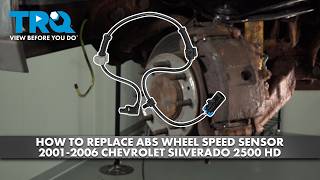
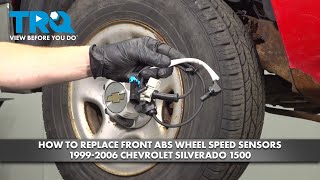
Shop the Parts Behind C0031
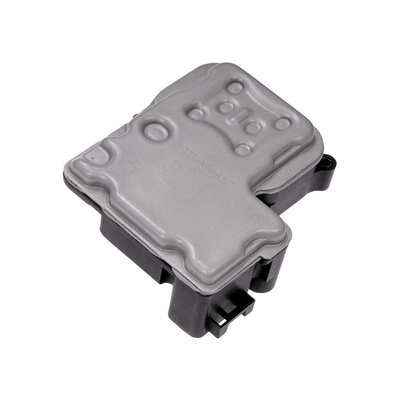
Below are the parts most often responsible for code C0031, ranked by how frequently each one is the actual culprit (per the diagnosis above). Tap any to see what we have for your vehicle.




The information in this article is provided for general reference and educational purposes only. Vehicle specifications, procedures, and part compatibility can vary by production date, trim level, and region. Always consult your vehicle's factory service manual and verify part numbers before purchasing or performing repairs. Safety-critical components such as airbags, seat belts, and braking systems should be installed by a qualified professional.
- 🧭 Diagnostic Flowchart
- 🎬 Helpful Videos
- 🛍️ Shop This Part
- What Does C0031 Mean?
- Can I Drive With C0031?
- Common Causes
- Symptoms
- Common Fixes & Costs
- Used vs. New Parts: Buying Guide
- What Happens If You Wait — Timeline
- Cost of Not Fixing It
- Diagnosis Steps
- When This Code Triggers (Freeze-Frame Conditions)
- Related Codes
- Climate & Environmental Factors
- How to Talk to a Mechanic About This Code
- Where to Take It: Dealer vs Independent vs Chain
- When to Walk Away From the Repair
- What Scan Tool You Need for This Code
- How to Clear the Code After You Fix It
- Will This Fail Emissions / State Inspection?
- Most Commonly Affected Vehicles
- Manufacturer-Specific Notes
- Real Owner Stories
- 2015 Ram 1500 - The Misdiagnosis
- 2015 Ford F-150 - The 'Wrong Mounting Position' Story
- 2017 Dodge Charger RT - The Aftermarket Parts Trap
- How to Prevent This Code From Triggering
- Frequently Asked Questions
- Can I fix code C0031 myself?
- How much does it cost to fix code C0031?
- What is the most common mistake when fixing C0031?
- Why did the ABS light come back on after replacing the sensor?
- Will clearing the code fix the problem?
- Is a wheel speed sensor the same as an ABS sensor?
- What happens if I ignore code C0031?
- Why is my speedometer acting weird with an ABS code?
- What's the difference between a passive and active wheel speed sensor?
- Key Takeaways
- 🎟️ Get 5% Off