

C0035 on 2017-2023 Audi A4: Front Wheel Speed Sensor Fault Guide
Code C0035 on a 2017-2023 Audi A4 indicates a fault with the front wheel speed sensor circuit. While the generic OBD-II definition points to the left front, some manufacturers use it for the right front. For Audi, it is crucial to use a VAG-specific scanner (like VCDS or OBDeleven) to confirm the exact location, as generic tools can be misleading. The most common fix is replacing the faulty sensor, which costs about $60-$150 for the part.
- C0035 means there's a problem with a front wheel speed sensor circuit, but you need a good scan tool to know if it's the left or right side.
- Driving is possible, but your ABS and stability control will be disabled, making the car less safe in emergency maneuvers.
- The most common fix is a new sensor, but always check for wiring damage and debris on the sensor/bearing first, as per Audi's own service bulletin.
- Always use a VAG-specific scan tool for diagnosis to avoid replacing the wrong part.
What's Unique About the 2017-2023 Audi A4
For the B9 generation Audi A4 (2017-2023), the front wheel speed sensors for the left and right sides are often the same physical part, using part number 4M0927803C. The critical issue is that while generic code readers show C0035, they often lack the specific text to identify which side is failing. An Audi-specific TSB (2072304/1), which applies to all 2010-2024 Audi models, notes that an 'implausible signal' can sometimes be caused by metallic debris, grease, or dirt on the sensor or the magnetic ring on the wheel bearing, so cleaning should be attempted before replacement. The sensor reads a magnetic encoder ring that is integrated into the wheel bearing assembly, so damage to the bearing can also cause this fault.
Symptoms You May Notice
- ABS warning light is on
- Electronic Stability Control (ESC) or Traction Control (ASR) warning light is on
- Audi 'Pre Sense' system warning or restricted functionality
- Electronic parking brake warning light may appear
- TPMS (Tire Pressure Monitoring System) warning light may appear, as the indirect TPMS uses ABS sensors to detect wheel speed differences.
- Cruise control may be disabled
- A grinding or pulsing feeling from the brakes at low speeds if the system falsely activates due to an erratic signal
- Replacing the wrong side wheel speed sensor. Since the code C0035 itself can be ambiguous on generic scanners, it's easy to replace the left sensor when the fault is on the right 🎬 Watch: Understanding C0035 causes and how to fix them, or vice-versa. Always confirm with live data from a VAG-specific tool.
- Replacing the sensor when the actual fault is a damaged wire further up the harness or a contaminated/damaged wheel bearing encoder ring.
Most Likely Causes
- Faulty Front Wheel Speed Sensor 🔴 High Probability → Shop ABS Wheel Speed Sensor Wheel speed sensors are exposed to harsh conditions (water, road salt, debris, heat) which leads to eventual failure. They are magnetic and can become contaminated with metallic brake dust.
How to confirm: Use a scan tool with live data capability (VCDS, OBDeleven) to monitor the wheel speed from all four sensors while driving. The faulty sensor will show an erratic, incorrect, or 0 MPH reading compared to the others.
Typical fix: Replace the failed wheel speed sensor. 🎬 See this step-by-step Audi A4 sensor replacement walkthrough The sensor is held in the wheel hub/steering knuckle by a single M6 hex bolt (5mm hex key). Applying grease to the body of the new sensor can aid future removal.
Est. part cost: $60-$150 - Damaged Wiring or Corroded Connector 🟡 Medium Probability The wiring harness runs down the suspension and is susceptible to damage from road debris, improper jacking, or corrosion from moisture, especially at the connector plug in the wheel well.
How to confirm: Visually inspect the entire length of the sensor's wiring harness from the wheel well to the connector. Look for chafed wires, cracks, or green/white corrosion inside the connector plug. Perform a 'wiggle test' on the harness while monitoring live data to see if the signal cuts out.
Typical fix: Repair the broken section of wire or clean the connector terminals. If corrosion is severe, the connector pigtail may need to be replaced.
Est. part cost: $15-$40 for a pigtail - Debris on Sensor or Magnetic Ring ⚪ Low Probability Metallic debris from brake wear or road grime can accumulate on the magnetic tip of the sensor or the wheel bearing's encoder ring, disrupting the signal. Audi has a TSB for this issue.
How to confirm: Remove the wheel speed sensor and inspect its magnetic tip for metal shavings or heavy grime. Inspect the wheel bearing's surface where the sensor reads.
Typical fix: Clean the sensor tip and the mounting area thoroughly with a brake cleaner and a soft brush. Reinstall and clear codes.
Est. part cost: $0-$10 for cleaning supplies
Rare But Worth Checking
- Failed Wheel Bearing Assembly: The magnetic encoder ring used by the ABS sensor is integrated into the wheel bearing seal. If the bearing fails, develops excessive play, or if the seal is damaged during installation, it can corrupt the signal, causing a C0035 code even with a good sensor.
- Faulty ABS Control Module: → Shop ABS Control Module This is very rare. Before condemning the expensive ABS module, all other possibilities (sensor, wiring, bearing) must be exhaustively ruled out through professional diagnosis. A failing module can sometimes be identified by its inability to communicate with a scan tool or by setting multiple, seemingly unrelated sensor faults.
Diagnosis Steps
- Connect a VAG-specific scanner (VCDS, OBDeleven) or a high-end professional scan tool. Confirm C0035 is present and read the manufacturer-specific description to identify the exact wheel (e.g., 'Right Front Wheel Speed Sensor - Implausible Signal'). Note any sub-fault codes like 'Electrical Fault in Circuit' or 'Mechanical Failure'.
- Access the live data stream for all four wheel speed sensors in the ABS control module (Address 03 in VCDS).
- Safely drive the vehicle slowly (or have an assistant spin the wheels with the car securely on jack stands) and observe the speed readings. The sensor that reports 0 km/h or a reading that doesn't match the others is the faulty one.
- Once the affected wheel is identified, raise and secure the vehicle and remove the wheel.
- Locate the ABS sensor on the steering knuckle. It is held by a single 5mm hex bolt. The connector is typically located in the wheel liner area.
- Visually inspect the sensor's wiring harness for any signs of damage, chafing, or corrosion. Pay close attention to the connector plug.
- Disconnect the sensor and inspect the connector pins for corrosion or moisture. The B9 A4 uses an active Hall-effect sensor; with the ignition on, you can test for supply voltage (should be close to battery voltage, at least 10.5V) at the connector harness.
- Remove the sensor bolt. The sensor can become seized in the knuckle. Gently twist and pull. If stuck, use penetrating oil and patience. Avoid breaking it, as drilling it out is a difficult process.
- Inspect the sensor tip and the mounting hole for metallic debris or heavy grime. Look at the surface of the wheel bearing for the magnetic encoder ring and check for damage or rust buildup. Clean as necessary per TSB 2072304/1.
- If no wiring damage or debris is found, and power is present at the harness, the sensor itself is the most likely culprit. Replace the sensor.
- Before installing the new sensor, clean the mounting hole thoroughly with a wire brush. Apply a thin layer of non-conductive grease 🎬 Watch: How to change an ABS wheel speed sensor (e.g., silicone or brake grease) to the body of the sensor to prevent seizing.
- After replacement, clear the fault codes with the scan tool and perform a test drive to ensure the warning lights do not return.
Parts You'll Likely Need
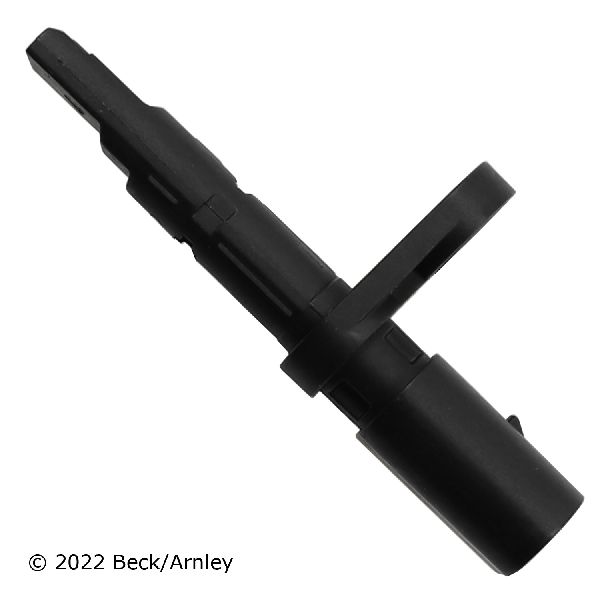
- Front ABS Wheel Speed Sensor
(OEM #4M0927803C)— This is the most common failure point for a C0035 code. The sensor itself fails internally from age and exposure.
Trusted brands: Bosch, ATE, Delphi, Vemo, NTK
OEM price range: $120-$180
Aftermarket price range: $60-$110
Technical Service Bulletins (TSBs) & Recalls
- TSB 2072304/1: Dated Dec 13, 2023, for all 2010-2024 Audi models. Addresses DTCs for implausible speed sensor signals caused by dirt, foreign objects, or grease on the sensor or sensor ring. Recommends careful cleaning before further diagnosis.
Platform-Specific Known Issues
- Per Audi TSB 2072304/1, an 'implausible signal' from a wheel speed sensor can be caused by an accumulation of dirt, grease, or metallic debris on the sensor tip or the wheel bearing's magnetic ring. Cleaning the area is a recommended first step before part replacement.
- The sensor is held in by a single hex bolt which can be difficult to remove if corroded. The sensor body itself can also seize in the aluminum steering knuckle, sometimes requiring careful extraction to avoid breaking it off inside the knuckle.
Mechanic-Grade Diagnostic Values
- Sensor supply voltage at connector (harness side) — expected: At least 10.5V, typically close to battery voltage (12V) with ignition on.. Failure: No voltage or significantly low voltage points to a wiring or ABS module issue, not a sensor failure.
- Sensor signal output (Live Data) — expected: Signal should increase smoothly and linearly with wheel rotation, matching other wheels.. Failure: A reading of 0 km/h, erratic jumps, or a signal that doesn't change with wheel rotation indicates a fault in the sensor, wiring, or bearing encoder ring.
Hidden / Shadow Codes Worth Checking
- VAG Fault Code for G47 (Front Left Wheel Speed Sensor): When scanned with a VAG-specific tool like VCDS, a generic C0035 code will be accompanied by a more descriptive fault, such as '00283 - ABS Wheel Speed Sensor; Front Left (G47)' along with a sub-fault like '012 - Electrical Fault in Circuit', '008 - Implausible Signal', or '003 - Mechanical Failure'. These provide much more specific diagnostic direction. (see via VCDS, OBDeleven, or other professional VAG diagnostic tools.)
Scan Tool Commands That Help
- VCDS or ODIS: ABS Module Coding / Basic Settings — This is not typically required for a simple sensor replacement. However, if the ABS control module itself is replaced, it must be coded to the vehicle's specific configuration (engine, transmission, brake options). After coding, a basic setting procedure, which may include a specific driving test, is required to calibrate the steering angle sensor and other related systems.
Wiring & Ground Locations
- T46 Connector, Pin 24 — This is the main 46-pin connector at the ABS control module (-J104-). Pin 24 is the input for the front left speed sensor (-G47-).. If a new sensor and visible wiring check out, a continuity test from the sensor connector to Pin 24 of the ABS module connector can identify a break in the harness deep within the vehicle.
- Ground Point 602 — Located in the front left footwell area.. While not the direct cause of a single sensor fault, a corroded or loose main ground for the ABS system can cause various implausible signals and communication errors, including what might present as a C0035.
- ABS Control Module (-J104-) — In the engine bay, attached to the hydraulic ABS pump assembly.. This is the destination for all wheel speed sensor wiring and the location of the T46 connector. Proximity to exhaust components can contribute to heat-related failures over time.
Real Owner Repair Stories
- AudiWorld Forums user 'Veikra' (Audi A8L (similar ABS system architecture)) — ABS light, headlight range defective warning.
❌ Tried (didn't work) Replacing the wheel speed sensor., Replacing the sensor connector pigtail.
✅ What actually fixed it The user found a broken wire and several other wires with degraded insulation further up the main wiring harness, away from the sensor itself. After unwrapping the harness, they found more damaged sections, repaired them, and the code was resolved.
OEM Part Supersession History
4M0927803B→4M0927803C— Standard part revision, likely for improved durability or manufacturing consistency. The parts are interchangeable.
Model Year Variations Within This Range
- 2017-2023: The B9 platform (pre-facelift 2017-2019) and B9.5 platform (facelift 2020-2023) use the same fundamental ABS system and sensor part number (4M0927803C). No significant variations related to this specific fault code have been identified between these model years. The B9 was the first A4 to use aluminum wiring in certain harnesses to save weight, which can be less tolerant of repeated flexing than copper.
Diagnostic Flowchart
Other Known Issues on This Vehicle
Issues unrelated to this code that are worth knowing about as an owner of this generation:
- Water Pump & Thermostat Housing Leaks 🔴 High — Commonly occurs between 40,000 and 80,000 miles. The plastic housing can crack or the pump itself can fail, leading to coolant loss and potential overheating. (Ref: A recall was issued for some early 2.0T models for coolant pump issues, but leaks remain a common non-recall repair.)
- Rocker Arm Failure (EA839 3.0T V6) 🔴 High — Primarily affects 2017-2018 and early 2019 S4 models (with the 3.0T V6 engine). Needle bearings in the rocker arms can fail, sending debris through the engine, potentially leading to catastrophic engine failure. Audi updated the part in mid-2018.
- S-Tronic Transmission Jerkiness 🟠 Medium — Some owners report jerky gear changes or delayed engagement, particularly between 60,000 and 100,000 km, especially on diesel models. Often requires mechatronics unit repair or replacement.
- Leaking Engine Mounts 🟡 Low — The hydraulic-filled engine mounts can leak over time, leading to increased vibration at idle. More common on earlier B9 models due to age.
Used vs. New Parts: Buying Guide for This Vehicle
When a used part is the smart pick: For this repair, a used part is only recommended for the wiring harness connector pigtail if the original is damaged. A used ABS control module can be a cost-effective option versus new, but it is critical to get an identical part number and understand it will require professional coding to your car's VIN.
Donor-vehicle mileage cap: roughly under 50000 miles for the part to have meaningful remaining life.
What to inspect on the donor part:
- For a wiring pigtail: Ensure there is at least 6 inches of clean, un-corroded wire attached.
- For a used ABS module: Visually inspect the connector pins for any corrosion or damage. Confirm the part number is an exact match.
OEM-only on this vehicle (don't cheap out):
- While not strictly OEM-only, the ABS Control Module is a high-risk part to buy from unknown aftermarket sources. A coded, used OEM module or a new OEM module is the safest path.
Aftermarket brands forum-validated for this vehicle:
- Bosch (often the original OEM supplier)
- ATE
Brands owners have reported issues with on this vehicle:
- Unnamed, low-cost 'white box' sensors from online marketplaces. These often have a high failure rate, poor fitment, or incorrect signal output, leading to the code returning immediately.
Real Owner Stories
Aggregated from forums and TSBs cited above. Mileages and costs reflect what owners reported in those sources.
2017 Audi A4 Allroad
Symptoms: Multiple warning lights appeared including ABS, traction control, and the check engine light.
What fixed it: Replacement of the failed ABS sensor (first on the left front, and later on the left rear).
Source hint: AudiWorld Forums
Audi A4 (B8 Platform)
Symptoms: Multiple warning lights including TPMS, Headlight, Parking Brake, and ESC/ABS. A new sensor was installed but the lights remained.
What fixed it: Further diagnosis revealed the root cause was the wheel bearing (magnetic encoder ring) rather than the sensor itself.
Source hint: AudiWorld Forums (B8 Platform)
Related OBD-II Codes
Frequently Asked Questions
Does Audi TSB 2072304/1 apply to my 2017-2023 A4 regarding the C0035 code?
Why is my Audi A4 showing a TPMS warning alongside the ABS light for code C0035?
Can I use a generic OBD-II scanner to diagnose this on my A4?
Is it common for the sensor to get stuck in the steering knuckle during replacement?
Will a faulty wheel speed sensor affect my Audi 'Pre Sense' system?
What is the estimated part cost for a front wheel speed sensor on this vehicle?
Helpful Videos
We Have This Part in Stock


The information in this article is provided for general reference and educational purposes only. Vehicle specifications, procedures, and part compatibility can vary by production date, trim level, and region. Always consult your vehicle's factory service manual and verify part numbers before purchasing or performing repairs. Safety-critical components such as airbags, seat belts, and braking systems should be installed by a qualified professional.
- Audi A4:
- 🧭 Diagnostic Flowchart
- 🎬 Helpful Videos
- 🛍️ Shop This Part
- What's Unique About the 2017-2023 Audi A4
- Symptoms You May Notice
- Most Likely Causes
- Rare But Worth Checking
- Diagnosis Steps
- Parts You'll Likely Need
- Technical Service Bulletins (TSBs) & Recalls
- Platform-Specific Known Issues
- Mechanic-Grade Diagnostic Values
- Hidden / Shadow Codes Worth Checking
- Scan Tool Commands That Help
- Wiring & Ground Locations
- Real Owner Repair Stories
- OEM Part Supersession History
- Model Year Variations Within This Range
- Other Known Issues on This Vehicle
- Used vs. New Parts: Buying Guide for This Vehicle
- Real Owner Stories
- 2017 Audi A4 Allroad
- Audi A4 (B8 Platform)
- Related OBD-II Codes
- Frequently Asked Questions
- 🎟️ Get 5% Off