

C0035 on 2010-2017 BMW 5-Series: Left Front Wheel Speed Sensor Fault Causes and Fixes
Code C0035 on a 2010-2017 BMW 5-Series almost always means the left front wheel speed sensor has failed. This triggers ABS and DSC warning lights. Replacing the sensor is a common DIY fix, with parts costing between $40 for aftermarket and $150 for an OEM supplier part.
- C0035 on your 5-Series means there's a problem with the left front wheel speed sensor circuit.
- The most likely fix is replacing the left front wheel speed sensor, which is a manageable DIY job for many.
- Before buying parts, use a scanner with live data to confirm the left front wheel is not reporting speed correctly.
- Always inspect the sensor's wiring for damage before replacing the sensor itself.
- Driving with this fault is possible, but your ABS and stability control will not work, so exercise increased caution.
What's Unique About the 2010-2017 BMW 5-Series
For the F10/F11/F07 generation of the 5-Series, this code is a very common and straightforward issue. While the root cause is typically the sensor itself, these vehicles' wiring is routed through the busy wheel well, making it susceptible to damage from road debris or improper routing. A unique symptom reported by some BMW owners is a noticeable juddering or hesitation when turning, as the DSC module incorrectly interprets the faulty signal and tries to cut engine power or apply the brakes to prevent a non-existent skid. This can also manifest as a cascade of other warnings, including 'Chassis Stabilization' and 'Frontal Collision Warning Malfunction,' as these systems rely on accurate wheel speed data.
Generation note: The 2010-2017 year range covers the F10 (Sedan), F11 (Touring/Wagon), and F07 (Gran Turismo) generation of the BMW 5-Series. The causes, symptoms, and repair process for code C0035 are consistent across these chassis types, with minor differences in part numbers between Rear-Wheel Drive (RWD) and xDrive (AWD) models.
Symptoms You May Notice
- ABS warning light illuminated on the dashboard
- DSC or Traction Control warning light illuminated
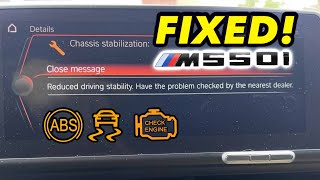
- "Chassis Stabilization: Proceed Carefully" message on iDrive 🎬 Watch this video to see how to clear the Chassis Stabilization warning.
- Loss of Anti-lock Braking (ABS) functionality
- Traction and Stability Control systems are disabled
- A juddering or hesitation from the engine/brakes, especially during turns
- Inoperative cruise control
- Frontal Collision Warning and Pedestrian Warning systems may be disabled
- Heavy or difficult steering if the Electric Power Steering (EPS) system enters a fault mode
- Replacing the ABS/DSC module before thoroughly checking the sensor, wiring, and tone ring.
- Replacing the wrong wheel speed sensor. Always confirm the location (Left Front) with a proper BMW-specific scan tool, as generic tools may mislabel the location.
- Replacing the wheel bearing/hub assembly when only the sensor itself is faulty.
Most Likely Causes
- Failed Left Front Wheel Speed Sensor 🔴 High Probability → Shop ABS Wheel Speed Sensor The sensor is an exposed electronic component that operates in a harsh environment subject to water, road salt, brake dust, and extreme temperatures. Internal electronics, which are essentially a magnet and coil, can fail over time.
How to confirm: Use an ABS-capable scan tool to monitor live data from all four wheel speed sensors while driving. The left front sensor will show a speed of 0 MPH or an erratic reading compared to the other three wheels. A multimeter can also be used to check for resistance (typically 800-2000 ohms) or an AC voltage signal while spinning the wheel, though live data is more definitive.
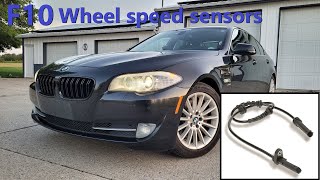
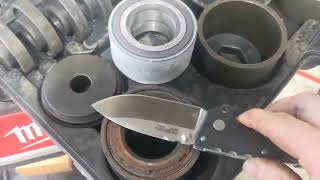
Typical fix: Replace the left front wheel speed sensor. The sensor is held into the steering knuckle by a single 5mm Allen or T30 Torx bolt. 🎬 Watch a mechanic perform a complete 535i wheel speed sensor replacement. It often seizes in the knuckle and may require careful prying or even destruction to remove.
Est. part cost: $40-$160 - Damaged Wiring or Connector 🟡 Medium Probability The sensor's wire is routed along suspension components and can be damaged by road debris, improper routing after previous repairs, or chafing against the plastic wheel well liner. The connector plug, located in a small junction box in the wheel arch, can also corrode from moisture ingress.
How to confirm: Visually inspect the entire length of the wire from the sensor to its connection point in the wheel arch. Look for breaks, chafing, or green corrosion on the connector pins. Perform a continuity check from the sensor connector back to the DSC module plug if a visual fault isn't found.
Typical fix: Repair the damaged section of wire with solder and heat-shrink tubing or replace the connector pigtail. In severe cases, the entire sensor and wire assembly must be replaced.
Est. part cost: $10-$50 - Contaminated or Damaged Tone Ring ⚪ Low Probability On the F10 platform, the magnetic tone ring is integrated into the wheel bearing's dust seal. This seal can become contaminated with metallic debris from brake wear or grease from a torn CV axle boot, which obstructs the sensor's reading. Rust buildup between the bearing and knuckle can also push the ring out of alignment.
How to confirm: After removing the wheel speed sensor, use a flashlight to inspect the tone ring inside the hub for debris, heavy rust buildup, or physical damage. The ring should be clean and have a uniform surface.
Typical fix: Clean the tone ring thoroughly with brake cleaner and a non-metallic brush. If the ring is physically damaged or the source of contamination is a failed wheel bearing, the entire wheel hub/bearing assembly must be replaced.
Est. part cost: $5-$250
Rare But Worth Checking
- Faulty ABS/DSC Control Module: → Shop ABS Control Module If a new sensor and verified wiring do not resolve the code, the module itself may have an internal fault. This is rare and should be the last item to check. A professional diagnosis is recommended as module replacement requires coding to the vehicle.
- Blown Fuse for DSC Module: A forum user reported that a single blown 5-amp fuse for the DSC module caused multiple wheel speed sensor codes to appear simultaneously. Always check relevant fuses in the front and rear fuse boxes before replacing expensive components.
- Failing Alternator / Over-voltage: In a rare case, a failing alternator produced excessive voltage (17V+), causing widespread electronic faults, including open circuit codes for all wheel speed sensors. This would be accompanied by many other seemingly unrelated error messages.
- Low Battery Voltage: A weak or dying battery can cause a cascade of seemingly unrelated electrical faults on modern BMWs. Multiple chassis and brake system errors appearing at once, especially on startup, can sometimes be traced back to a battery that has failed a load test.
Diagnosis Steps
- Connect an ABS/DSC-capable OBD-II scanner to the vehicle.
- Confirm C0035 is the primary code stored in the DSC module. Note any other related codes.
- Access the live data stream on the scanner.
- Monitor the speed readings from all four wheels while driving slowly (5-15 MPH).
- Confirm that the Left Front wheel speed sensor reads 0 MPH or shows erratic/jumping values while the other three sensors show a steady speed.
- If the reading is faulty, raise and secure the front of the vehicle and remove the left front wheel.
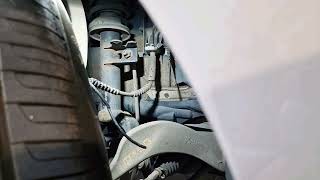
- Visually inspect the wheel speed sensor wire for any signs of damage, chafing, or melting. Check that it is secured in all its plastic clips along the control arm.
- Trace the wire to its connector inside the small black plastic box in the wheel arch. Open the box, disconnect the sensor, and check for corrosion or damage to the pins.
- If the wiring looks good, remove the single 5mm Allen or T30 Torx bolt holding the sensor in the steering knuckle.
- Carefully pry the sensor out. It is often seized with rust and may require significant persuasion with a pry bar or screwdriver. Be patient to avoid breaking it off in the knuckle.
- Once the sensor is out, inspect the mounting hole and the magnetic tone ring on the wheel bearing for heavy rust or debris. Clean as necessary with brake cleaner and a brush.
- Apply a thin coat of anti-seize compound to the body of the new sensor to aid future removal.
- Install the new sensor, ensuring it is fully seated. Torque the retaining bolt to 8 Nm (a very light torque value).
- Route the wire correctly in its clips, and reconnect the plug inside the junction box.
- Reinstall the wheel, lower the vehicle, and clear the fault code with the scanner.
- Perform a test drive to ensure the warning lights do not return. The lights should go out on their own after driving a short distance as the DSC module confirms a good signal.
Parts You'll Likely Need
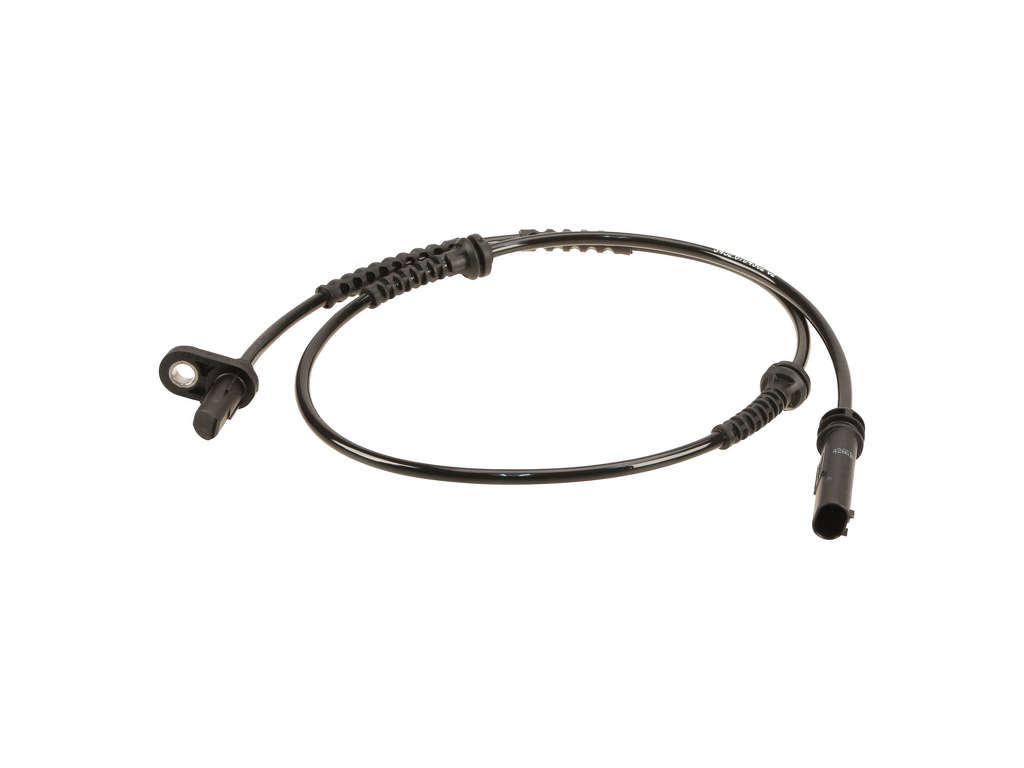
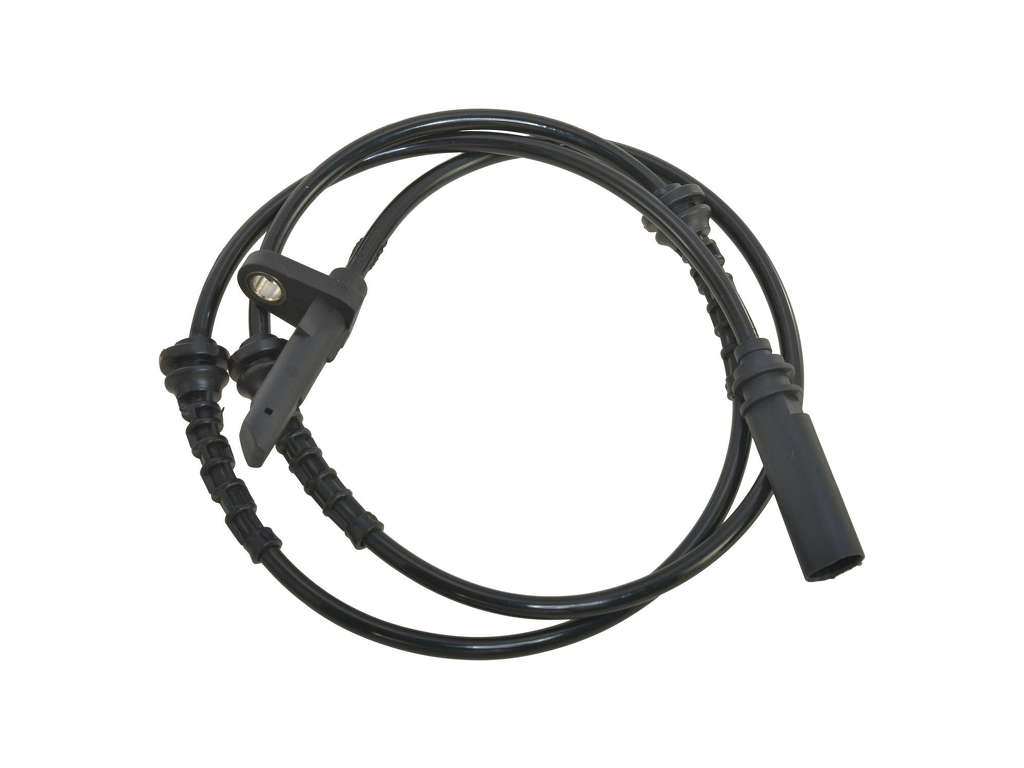
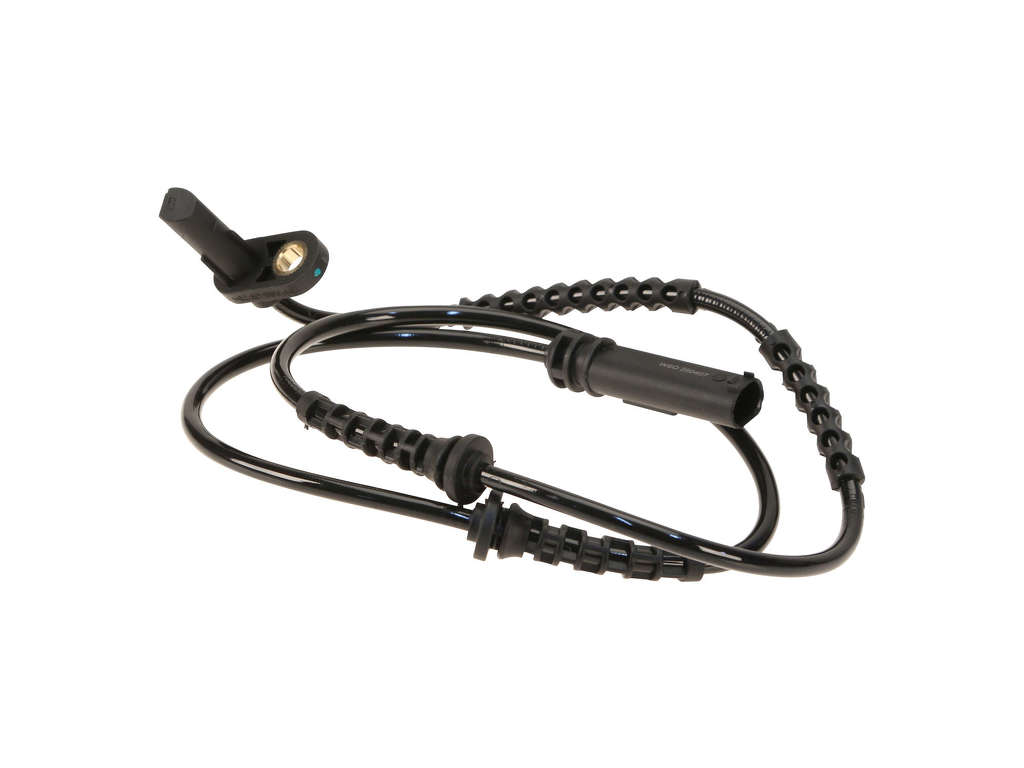
- Front Wheel Speed Sensor (ABS Sensor)
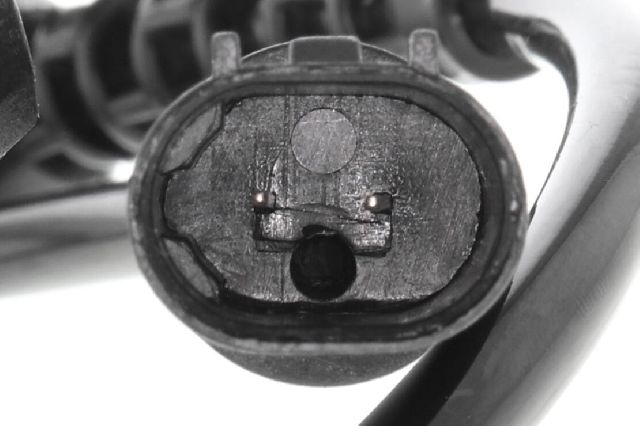
(OEM #34526869292)— This is the electronic sensor that fails in the vast majority of C0035 cases. Part number 34526869292 is commonly used for xDrive (AWD) models and may also fit some RWD models. Part number 34526853859 is often listed for RWD models. Always verify the correct part number with the vehicle's VIN before purchasing.
Trusted brands: BMW (Genuine OEM), ATE (OEM Supplier), Bosch (OEM Supplier), VDO, Delphi
OEM price range: $140-$195
Aftermarket price range: $40-$90
Related Codes That Often Appear With This One
- CD944D - Signal (actual wheel speed) invalid, transmitter DSC
- 1B0A21 - Rough Road detection: no wheel speed signal received
- 1B0A65 - Driving speed wheel sensor front/left signal change Not plausible
Platform-Specific Known Issues
- Seized Sensor Removal: A very common complaint on forums is the difficulty of removing the old sensor from the steering knuckle due to rust and corrosion. Owners report having to use significant force with pry bars, and sometimes breaking the plastic sensor, requiring them to drill out the remaining piece. Soaking the sensor with penetrating oil beforehand is highly recommended.
Mechanic-Grade Diagnostic Values
- Active Wheel Speed Sensor Signal Voltage (Key-On) — expected: A digital square wave signal that toggles. On many modern BMWs, this is a small voltage drop from a baseline, for example, from 12.0V down to 11.7V as the wheel rotates.. Failure: A flat line (no signal) or a noisy, inconsistent signal when viewing on an oscilloscope. A simple multimeter test is not sufficient for active sensors.
- Passive Wheel Speed Sensor Resistance — expected: 800 - 2,000 Ohms. Note: F10-generation vehicles primarily use active sensors, making this test less applicable.. Failure: A reading of 'OL' (Open Loop/infinite resistance) or near 0 Ohms indicates a failed sensor.
- Passive Wheel Speed Sensor AC Voltage (while spinning wheel) — expected: Greater than 100 millivolts (0.1V) AC, with voltage increasing as the wheel spins faster. Note: F10-generation vehicles primarily use active sensors.. Failure: No AC voltage is generated, or the voltage is extremely low despite spinning the wheel.
Scan Tool Commands That Help
- ISTA (Rheingold): Vehicle Test / Call up ECU functions > DSC (Dynamic Stability Control) > Diagnosis Scan > Wheel-speed sensors — This is the dealer-level procedure to read out specific fault details from the DSC module. It can provide more granular information than a generic C-code, sometimes pointing directly to signal plausibility issues or open circuits. It will also guide the technician through a test plan.
- ISTA (Rheingold): Service Functions > Chassis and suspension > Dynamic stability control > Brake line mix-up test — This function is used after replacing the DSC hydraulic unit to ensure brake lines are connected to the correct ports. While not directly for a sensor fault, it's a critical step if the diagnosis leads to module replacement.
Wiring & Ground Locations
- DSC Control Module — Underneath the vehicle, behind the driver's side front wheel. It is necessary to remove the large underbody panel to gain access.. This is the computer that receives the signal from the left front wheel speed sensor. All wiring for the sensor ultimately terminates here, making it a key location for advanced continuity and voltage checks if the wiring is suspected to be faulty between the wheel well and the module.
- Sensor Connector Junction Box — A small black plastic box located in the front of the left wheel arch. The wheel arch liner must be partially removed to access it.. This is the connection point between the wheel speed sensor pigtail and the main body harness. It's a common point for corrosion or loose connections, and the first place to check after the sensor itself.
- Main Engine-to-Chassis Ground Strap — On N55 (and similar) RWD models, this strap is located at the rear of the transmission, connecting the transmission case to the chassis transmission tunnel. It is accessible from underneath without removing major panels.. A corroded or broken main ground strap can cause a myriad of bizarre electrical issues and floating voltages across the vehicle. While not a direct cause of a single sensor failure, it can contribute to intermittent and difficult-to-diagnose electrical faults in the DSC and other modules.
- Main Body Ground Point (Rear) — In the trunk, near the battery negative terminal. A brown wire connects from the negative terminal directly to a grounding stud on the chassis.. This is the primary ground point for the entire vehicle body. Corrosion or a loose connection here can affect all electronic systems, including the DSC module.
Real Owner Repair Stories
- YouTube user 'Jon's Garage' (2013 BMW F10 550i) — Multiple warning lights including chassis stabilization, and a code scan (using Carly) pointed to the left front wheel speed sensor.
❌ Tried (didn't work) Initially assumed the sensor itself had failed.
✅ What actually fixed it Upon removing the sensor and inspecting the wiring, the owner found a section of the wire had been crushed and was corroded internally. He cut out the bad section, soldered in new wire, and sealed it with heat shrink. This resolved all fault codes without replacing the sensor itself. - Bimmerpost user (2011 535ix (xDrive)) — A sudden onset of multiple DSC communication and wheel speed related fault codes.
❌ Tried (didn't work) Checking battery and fuses, which were all good.
✅ What actually fixed it The root cause was a torn front CV axle boot. Grease from the boot had flung out and contaminated the wheel hub area, interfering with the wheel speed sensor's reading. The fix required replacing the CV axle (or boot) and thoroughly cleaning the hub and sensor area. - NHTSA ODI #10287028 — An owner reported replacing both the wheel hub and the ABS sensor to address a C0035 code, though the problem persisted, highlighting that even new parts may not immediately clear the fault if underlying circuit issues remain.
Documented NHTSA Reports
- NHTSA ODI #10440851 describes a situation where the ABS and brake lights illuminated simultaneously, with diagnostic codes C0035 and C0040 indicating a left front wheel speed sensor circuit malfunction.
- NHTSA ODI #10442197 notes that a dealer diagnosis for C0035 and C0220 (left front in release too long) resulted in a recommendation to replace both the sensor and the wheel hub assembly.
- NHTSA ODI #11228687 highlights a case where C0035 appeared alongside a large cluster of other communication and sensor codes (U0126, U0415, etc.), suggesting that a single sensor failure can sometimes be part of a broader electronic stability system fault.
- NHTSA ODI #10273914 references a manufacturer bulletin (#PIT3460N) regarding the ABS light illuminating with EBCM DTCs C0035 and C0040, noting the symptom of the ABS engaging intermittently while driving.
OEM Part Supersession History
34526788644→34526855049, then 34526869292— Standard part evolution for improved reliability or manufacturing process changes.
Heads up: These part numbers are typically for xDrive models. While they may physically fit a RWD car, the electronic output might differ. Always use a VIN-specific part number.
Model Year Variations Within This Range
- 2014-2017 (LCI): The Life Cycle Impulse (LCI) or facelift occurred for the 2014 model year. While the fundamental operation of the wheel speed sensors remained the same, some modules like the DSC unit received hardware and software updates. For example, a DSC module from a 2011 car may have a different part number (e.g., 6799712) than one from a 2015 LCI car (e.g., 6876908). This is critical to know if diagnosing a rare module failure, as the replacement must be compatible.
Diagnostic Flowchart
Other Known Issues on This Vehicle
Issues unrelated to this code that are worth knowing about as an owner of this generation:
- N20 Engine Timing Chain Failure 🔴 High — Common on models produced before 2015. The plastic timing chain guides become brittle and break, leading to chain slack or breakage, often causing catastrophic engine failure. A whining noise from the front of the engine is a key warning sign. (Ref: BMW issued a TSB and a warranty extension for this issue on vehicles produced before March 2013.)
- N55/N52 Electric Water Pump Failure 🔴 High — A very common failure item, typically occurring between 50,000 and 80,000 miles. Failure is often sudden and will cause the engine to overheat quickly, leaving the driver stranded. A failing ground bolt for the pump is also a known issue on the N55. (Ref: A class-action lawsuit resulted in a settlement and warranty extension for this part on many models.)
- N55/N52 Oil Filter Housing Gasket (OFHG) Leak 🟠 Medium — Extremely common. The gaskets that seal the oil filter housing to the engine block degrade over time, causing a significant oil leak onto the serpentine belt. If not addressed, the oil-soaked belt can slip off and be ingested into the engine through the front main seal, causing catastrophic engine failure.
- N63 V8 Engine Issues (Pre-LCI 550i) 🔴 High — Early (2010-2013) N63 engines are known for a wide range of serious problems, including excessive oil consumption, timing chain failures, and issues with injectors and fuel pumps. BMW offered a "Customer Care Package" to address some of these issues, but reliability remains a major concern. (Ref: SIB 11 06 14)
- Trunk Water Leaks 🟠 Medium — Water can leak into the trunk area, specifically the battery compartment, due to failing taillight seals or clogged sunroof drains. This can damage numerous electronic modules located in that area, including the battery management system and fuel pump controller, potentially leaving the car unable to start.
Used vs. New Parts: Buying Guide for This Vehicle
When a used part is the smart pick: A used wheel speed sensor is generally not recommended. It is a relatively low-cost electronic wear item, and a used part from a junkyard has unknown remaining life and may have been damaged during removal. It is only a viable option for a quick, temporary test to see if a code moves from one side of the car to the other.
Donor-vehicle mileage cap: roughly under 40000 miles for the part to have meaningful remaining life.
What to inspect on the donor part:
- Ensure the wiring pigtail is not brittle, cracked, or repaired.
- Check that the plastic sensor body has no cracks or signs of being forcefully pried out.
- Verify the connector pins are clean, straight, and free of any green or white corrosion.
OEM-only on this vehicle (don't cheap out):
- ABS/DSC Control Module: Due to the need for vehicle-specific coding and programming (VIN-locking), a new or professionally refurbished and decoded module is essential. A used module from another car will not work without specialized tools to virginize and recode it.
Aftermarket brands forum-validated for this vehicle:
- ATE (often the OEM supplier)
- Bosch (often the OEM supplier)
- VDO
- Delphi
Brands owners have reported issues with on this vehicle:
- Unnamed, no-brand sensors from online marketplaces. Forum users frequently report these failing prematurely or being dead-on-arrival, causing the diagnostic process to be repeated.
Real Owner Stories
Aggregated from forums and TSBs cited above. Mileages and costs reflect what owners reported in those sources.
2013 BMW 535i (F10)
Symptoms: A cascade of warning lights including 'Chassis stabilization', 'ABS error', and 'Electric Steering failure'.
What fixed it: Replacement of the front wheel speed sensor as demonstrated in the Auto Dad repair guide.
Source hint: YouTube Repair Video - Auto Dad and Bimmerpost F30 Forum - Code Cascade Discussion
BMW 5-Series (F10)
Symptoms: The old sensor was seized in the steering knuckle due to rust and corrosion, requiring significant force with pry bars to remove.
What fixed it: The sensor had to be pried out (and sometimes broken/drilled) and replaced with a new unit after cleaning the mounting hole.
Source hint: vehicle_specific_issues: Seized Sensor Removal
BMW 5-Series (F10)
Symptoms: Juddering or hesitation from the engine/brakes, especially during turns, accompanied by ABS and DSC warning lights.
What fixed it: Replacing the Left Front Wheel Speed Sensor and clearing the DSC module codes.
Source hint: Bimmerpost F10 Forum - General Discussion
Related OBD-II Codes
Frequently Asked Questions
Why is my 5-Series steering suddenly heavy and difficult to turn along with the ABS light?
My iDrive is displaying 'Chassis Stabilization: Proceed Carefully.' Is this related to code C0035?
Can a bad wheel bearing cause a C0035 code on my 2010-2017 5-Series?
I'm trying to replace the sensor on my F10 535i but it won't budge. Is this common?
Will a C0035 code affect my Frontal Collision Warning or cruise control?
What size bolt holds the left front wheel speed sensor on the 5-Series?
Helpful Videos
We Have This Part in Stock


The information in this article is provided for general reference and educational purposes only. Vehicle specifications, procedures, and part compatibility can vary by production date, trim level, and region. Always consult your vehicle's factory service manual and verify part numbers before purchasing or performing repairs. Safety-critical components such as airbags, seat belts, and braking systems should be installed by a qualified professional.
- BMW 5-Series:
- 🧭 Diagnostic Flowchart
- 🎬 Helpful Videos
- 🛍️ Shop This Part
- What's Unique About the 2010-2017 BMW 5-Series
- Symptoms You May Notice
- Most Likely Causes
- Rare But Worth Checking
- Diagnosis Steps
- Parts You'll Likely Need
- Related Codes That Often Appear With This One
- Platform-Specific Known Issues
- Mechanic-Grade Diagnostic Values
- Scan Tool Commands That Help
- Wiring & Ground Locations
- Real Owner Repair Stories
- Documented NHTSA Reports
- OEM Part Supersession History
- Model Year Variations Within This Range
- Other Known Issues on This Vehicle
- Used vs. New Parts: Buying Guide for This Vehicle
- Real Owner Stories
- 2013 BMW 535i (F10)
- BMW 5-Series (F10)
- BMW 5-Series (F10)
- Related OBD-II Codes
- Frequently Asked Questions
- 🎟️ Get 5% Off