

C0035 on 2011 Buick Lucerne: Causes and Fixes for Wheel Speed Sensor Faults
On a 2011 Buick Lucerne, code C0035 almost always points to a problem with the right front wheel speed sensor circuit. Because the sensor and its magnetic encoder ring are integrated into the wheel hub assembly, the most common fix is replacing the entire right front hub. Before replacement, inspect the wiring harness for breaks near the control arm. Expect to pay between $100-$250 for the part.
- Code C0035 on a 2011 Buick Lucerne means the right front wheel speed sensor circuit is faulty, which disables the ABS and StabiliTrak safety systems.
- The most common cause is a failed sensor, which is built into the wheel hub. Therefore, the most common repair is replacing the entire right front wheel hub assembly.
- Before replacing the expensive hub, always inspect the wiring harness for corrosion or hidden internal breaks, a frequent and cheaper-to-fix issue on this platform.
- A scan tool that can read live ABS data is crucial to confirm which wheel is at fault before starting repairs.
What's Unique About the 2011-2011 Buick LUCERNE
For the 2006-2011 Buick Lucerne, which is built on the GM W-body platform, the front wheel speed sensor is not a separately serviceable part. Instead, it is integrated directly into the wheel bearing and hub assembly. This design includes a magnetic encoder ring on the hub that the sensor reads. Failure of the sensor, contamination of the encoder ring with metallic debris, or mechanical wear in the bearing itself necessitates the replacement of the entire hub assembly, a more involved and expensive repair than a simple bolt-in sensor.
Diagnostic Flowchart
Tap your situation to follow the diagnostic path that matches what you're seeing on this vehicle.
Symptoms You May Notice
- ABS warning light is on
- StabiliTrak or Traction Control System (TCS) warning light is on
- "Service StabiliTrak" or "Service Brake Assist" message on the driver information center
- ABS and traction control systems are disabled
- Brake pedal may pulse or feel strange at low speeds as the system tries to engage incorrectly.
- An intermittent issue where the lights come on and go off randomly, often triggered by turns.
- Replacing the EBCM before thoroughly testing the wiring and wheel hub assembly.
- Replacing the wheel hub assembly without first checking for a much cheaper wiring fault. A simple 'pull test' on the wires can often reveal a hidden break.
Most Likely Causes
- Faulty Right Front Wheel Hub and Bearing Assembly 🔴 High Probability → Shop Hub Assembly The wheel speed sensor and its magnetic encoder ring are integrated into the hub assembly, making them susceptible to failure from bearing wear, heat, and contamination. TSB #PIC5428G specifically notes that ferrous metallic debris stuck to the magnetic encoder ring is a primary cause for this code family (C0035-C0050). Rust buildup under the sensor mounting point can also push the sensor away from the ring, causing a poor signal.
How to confirm: Using a scan tool that can read ABS live data, monitor all four wheel speeds while driving. If the right front wheel speed reads 0 mph or is erratic while the others read correctly, and the wiring is confirmed to be good, the hub assembly is faulty. A physical inspection may reveal play or roughness in the bearing when the wheel is spun by hand.
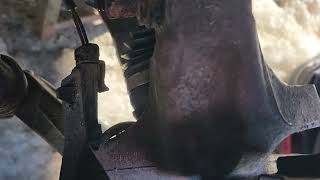
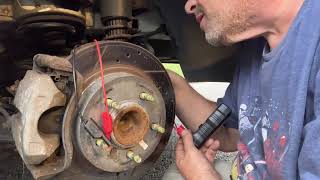
Typical fix: Replace the entire right front wheel hub and bearing assembly. 🎬 Watch this step-by-step walkthrough of the wheel bearing replacement. Before replacement, it is worth cleaning the magnetic encoder ring and the sensor mounting surface to see if the issue is resolved.
Est. part cost: $100-$250 - Damaged or Corroded Wiring Harness/Connector 🟡 Medium Probability The wiring harness leading to the wheel hub is subject to constant flexing with suspension travel and steering. Wires can break internally, often with no visible damage to the outer insulation, particularly where the harness is routed along the control arm. The connector is also exposed to water and road salt, leading to corrosion.
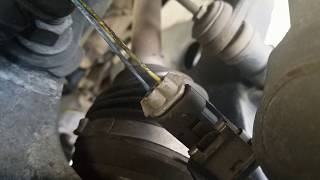
How to confirm: Visually inspect the harness for chafing, melting, or corrosion. A common failure point is an internal wire break. Gently pull on the wires near the connector; if the insulation stretches or feels mushy, the copper wire inside is likely broken. Use a multimeter to test for continuity between the hub connector and the EBCM connector, wiggling the harness during the test to expose intermittent breaks.
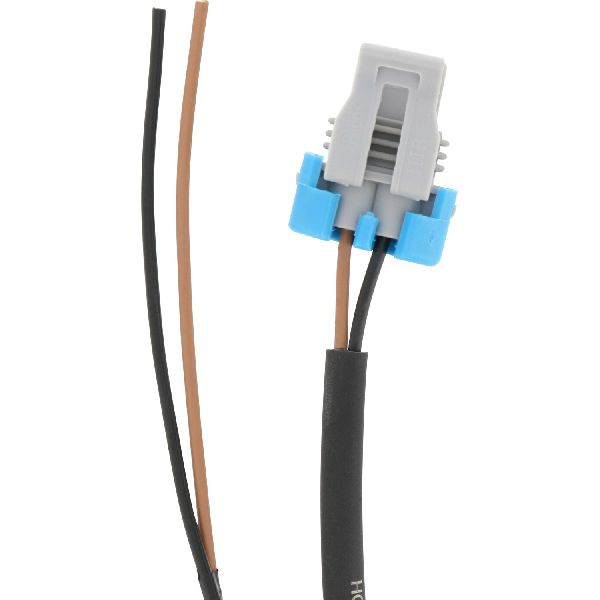
Typical fix: Repair the damaged section of wire or replace the pigtail connector. GM offers a repair harness for this issue. A common aftermarket pigtail is Dorman part number 695-203.
Est. part cost: $20-$80 - Failed Electronic Brake Control Module (EBCM) ⚪ Low Probability → Shop ABS Control Module
How to confirm: This should only be considered after the wheel hub assembly and wiring have been definitively ruled out. This is the least likely cause. A professional shop may need to perform advanced diagnostics to confirm an internal EBCM fault.
Typical fix: Replace and program the Electronic Brake Control Module.
Est. part cost: $200-$600
Rare But Worth Checking
- Contaminated or Damaged Magnetic Encoder Ring:
Diagnosis Steps
- Connect an OBD-II scanner capable of reading ABS codes to confirm C0035 is present. Note any symptom bytes (e.g., 0F, 5A, 18) as they can help pinpoint the issue (erratic signal vs. open circuit).
- Use the scanner's live data feature to monitor the speed of all four wheels while driving slowly in a straight line. Confirm that the Right Front wheel speed sensor is reading incorrectly (e.g., 0 mph or erratically) compared to the other three.
- Raise and secure the front of the vehicle. Remove the right front wheel.
- Thoroughly inspect the wiring harness leading to the wheel hub. Look for any signs of physical damage, chafing, melting, or corrosion at the connector. Pay close attention to the area where the harness flexes with the suspension.
- Perform a 'pull test' on the wires near the connector. If the insulation stretches, the wire is broken internally.
- Disconnect the sensor. Inspect the magnetic encoder ring on the hub for metallic debris or damage. Clean if necessary.
- If the wiring looks good, use a multimeter to check for voltage/ground from the vehicle side of the harness. A quick test on this GM platform involves shorting the two pins on the harness side with a jumper wire; a chime from the dashboard indicates the wiring to the EBCM is likely intact.
- If the wiring and connector are confirmed to be good, and cleaning the encoder ring does not help, the fault lies within the integrated sensor in the wheel hub assembly.
- Replace the right front wheel hub and bearing assembly.
- Clear the trouble codes and perform a test drive, re-checking the live data to ensure the new sensor is reading correctly and all warning lights are off.
Parts You'll Likely Need
- Front Wheel Hub and Bearing Assembly
(OEM #84641365 (Replaces 19433930))— This is the most common failure. The wheel speed sensor is integrated into this assembly for the 2011 Lucerne, so a sensor failure requires replacing the entire unit.
Trusted brands: ACDelco, Timken, MOOG, SKF, TRQ
OEM price range: $180-$250
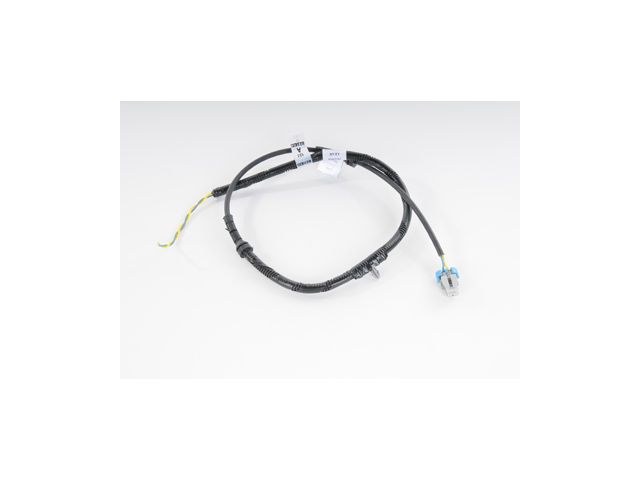
Aftermarket price range: $100-$180 - ABS Wheel Speed Sensor Wiring Harness
(OEM #10340314)— If the wiring is found to be damaged from flexing or corrosion, replacing the harness pigtail is a common repair. Internal wire breaks are frequent.
Trusted brands: ACDelco (GM Genuine), Dorman, Standard Motor Products (SMP)
OEM price range: $60-$90
Aftermarket price range: $20-$50
Related Codes That Often Appear With This One
- C0040 — C0040 is the code for the Left Front Wheel Speed Sensor. If both appear, it may indicate a common wiring issue (e.g., damage to the main harness), a problem with the EBCM, or the rare coincidence of simultaneous hub failures.
- C0045 — This code relates to the Left Rear Wheel Speed Sensor. Seeing multiple wheel speed sensor codes from different corners of the car makes a wiring harness or EBCM issue more likely than multiple simultaneous hub failures.
- C0050 — This code relates to the Right Rear Wheel Speed Sensor. As with other wheel speed codes, its presence alongside C0035 points towards a more systemic issue.
Technical Service Bulletins (TSBs) & Recalls
- PIC5428G: Addresses Service Brakes, Electric, and/or Service Stabilitrak lights with DTCs C0035-C0050. It points to ferrous metallic debris on the wheel bearing's magnetic encoder ring as a primary cause and advises cleaning before replacement.
Platform-Specific Known Issues
- The provided TSB #PIC5428G confirms that codes in the range C0035-C0050 are common and relate to the wheel bearings, instructing technicians to inspect the relevant wheel bearing's magnetic encoder ring for ferrous debris before replacing parts.
- A common failure point is an internal break in the sensor wires inside the insulation, where the harness flexes with steering and suspension movement. This can be diagnosed by pulling on the wires to see if the insulation stretches.
Mechanic-Grade Diagnostic Values
- Wheel Speed Sensor Resistance — expected: Approximately 1,000 - 1,100 Ohms (1.0-1.1 kOhms). Failure: An open circuit (infinite resistance) or a reading significantly outside the expected range indicates a failed sensor.
- Wheel Speed Sensor AC Voltage Generation — expected: Greater than 100-200 millivolts (0.1-0.2 VAC) when spinning the wheel by hand.. Failure: No AC voltage generated while the wheel is spinning points to a failed sensor or a problem with the magnetic encoder ring.
- Harness-Side Voltage Pulse (Key-On) — expected: A brief 12V pulse from the EBCM to the sensor connector immediately after turning the ignition on.. Failure: Absence of this pulse may indicate a problem with the EBCM or the wiring to it, but be aware the EBCM will cut voltage if a fault is stored.
Hidden / Shadow Codes Worth Checking
- C0035 with symptom byte 18: Indicates 'Low Signal Amplitude' or an open/shorted circuit. This points strongly toward a broken wire, a disconnected plug, or a completely dead sensor. (see via A professional scan tool like a GM Tech2/GDS2 or a high-end aftermarket scanner capable of reading manufacturer-specific symptom bytes.)
- C0035 with symptom byte 5A: Indicates a 'Signal Plausibility Failure'. The EBCM is receiving a signal, but it's illogical compared to other sensors. This is often caused by a contaminated/damaged magnetic encoder ring or a failing bearing causing excessive movement. (see via A professional scan tool like a GM Tech2/GDS2 or a high-end aftermarket scanner capable of reading manufacturer-specific symptom bytes.)
- C0035 with symptom byte 0F: Indicates an 'Erratic Signal'. The signal is present but unstable, dropping in and out. This is very similar to 5A and is a classic symptom of metallic debris on the magnetic encoder ring. (see via A professional scan tool like a GM Tech2/GDS2 or a high-end aftermarket scanner capable of reading manufacturer-specific symptom bytes.)
Wiring & Ground Locations
- EBCM Connector X1 — The Electronic Brake Control Module (EBCM) is located near the brake master cylinder in the engine compartment.. This is the main connector where the wheel speed sensor harness terminates. Testing for continuity and voltage should be done at this connector to isolate the fault between the sensor, wiring, and module.
- EBCM Connector X1 - Pins 29 & 30 — Within the 38-pin EBCM connector.. For the Right Front Wheel Speed Sensor, Pin 29 is the Low Reference (ground) wire (typically Yellow/Violet) and Pin 30 is the Signal wire (typically Yellow). These are the specific pins to test for continuity back to the wheel hub connector.
- G101 — Located on the left front corner of the engine compartment.. This is a primary ground point for the EBCM. A corroded or loose G101 can cause various ABS faults, including C0035, due to an unstable ground reference for the module.
Real Owner Repair Stories
- YouTube channel 'FrugalPrepper's Garage and Garden' (2006 Buick Lucerne (same platform and system)) — ABS and Stabilitrak lights on, with a C0045 code (Left Rear, but same diagnostic principle).
❌ Tried (didn't work) Initial visual inspection showed no obvious damage.
✅ What actually fixed it The technician performed a resistance test on the wheel hub sensor and found it was an open circuit (infinite resistance), confirming the sensor inside the hub had failed. The fix was to replace the entire wheel hub assembly. The video also demonstrated a 'quick and dirty' wiring check by shorting the two pins on the harness-side connector with a jumper wire, which should trigger a chime if the wiring to the EBCM is good.
Helpful Videos

We Have This Part in Stock


The information in this article is provided for general reference and educational purposes only. Vehicle specifications, procedures, and part compatibility can vary by production date, trim level, and region. Always consult your vehicle's factory service manual and verify part numbers before purchasing or performing repairs. Safety-critical components such as airbags, seat belts, and braking systems should be installed by a qualified professional.
- Buick LUCERNE:
- 🧭 Diagnostic Flowchart
- 🎬 Helpful Videos
- 🛍️ Shop This Part
- What's Unique About the 2011-2011 Buick LUCERNE
- Symptoms You May Notice
- Most Likely Causes
- Rare But Worth Checking
- Diagnosis Steps
- Parts You'll Likely Need
- Related Codes That Often Appear With This One
- Technical Service Bulletins (TSBs) & Recalls
- Platform-Specific Known Issues
- Mechanic-Grade Diagnostic Values
- Hidden / Shadow Codes Worth Checking
- Wiring & Ground Locations
- Real Owner Repair Stories
- 🎟️ Get 5% Off