

C0035 on 2004-2007 Buick Rainier: ABS Wheel Speed Sensor Fault Causes and Fixes
Code C0035 on a 2004-2007 Buick Rainier typically points to a fault in a front wheel speed sensor circuit. The most common fix is replacing the entire front wheel hub assembly, as the sensor is integrated into it. A damaged wiring harness is the second most likely cause, often due to chafing or corrosion. A poor EBCM ground connection is a less common but notable cause on this platform.
- C0035 disables your ABS and stability control. Drive with caution.
- The code's definition is ambiguous on GM vehicles; use a scan tool with live data to confirm which wheel sensor is at fault before buying parts.
- The most common fix is replacing the entire front wheel hub assembly, which contains the non-serviceable sensor.
- Always inspect the wiring harness for damage, as it's a frequent and cheaper-to-fix cause of this code.
- If the hub and wiring are good, check the EBCM ground on the frame under the driver's door for corrosion.
What's Unique About the 2004-2007 Buick Rainier
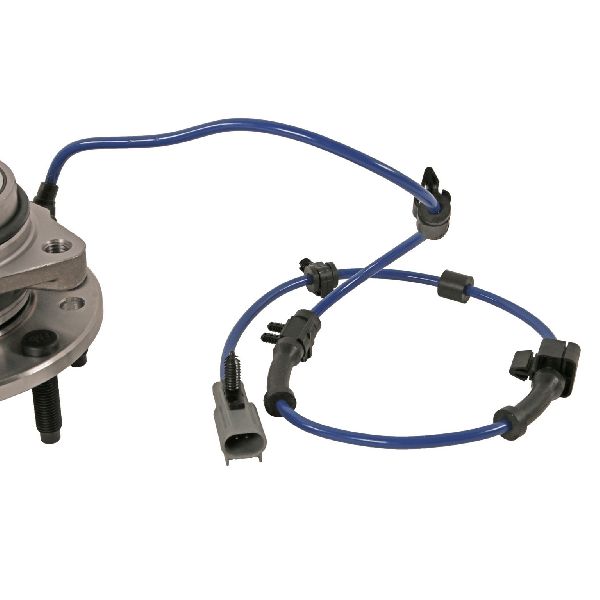
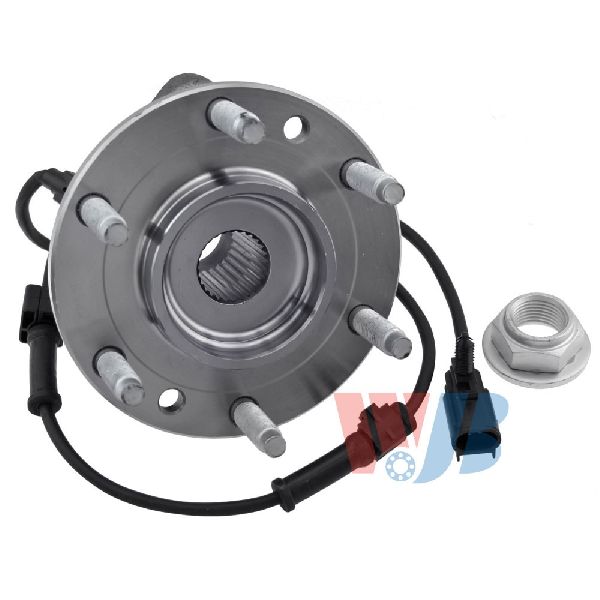
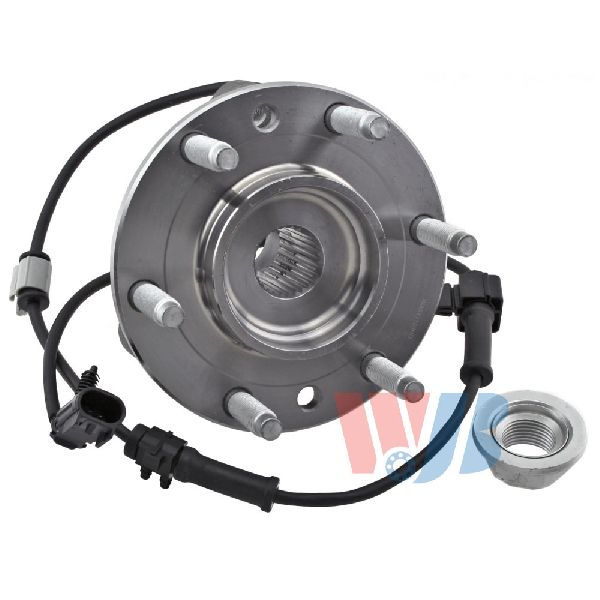
The Buick Rainier and its GMT360 platform siblings (like the Chevy Trailblazer and GMC Envoy) do not have a standalone front wheel speed sensor that can be replaced individually. The sensor and its magnetic tone ring are built directly into the sealed front wheel hub and bearing assembly. Therefore, a failed sensor, or a wheel bearing that has developed excessive play and damaged the internal magnetic encoder, requires the replacement of the entire hub assembly. This is the most common and definitive repair for this code.
Symptoms You May Notice
- ABS warning light is on
- StabiliTrak / Traction Control warning light is on
- "Service Brake System" message on the Driver Information Center (DIC)
- ABS system is disabled
- Stability and traction control systems are disabled
- Unwanted, grinding ABS activation at very low speeds (under 5 MPH) just before a stop
- Cruise control may be disabled
- Replacing only the ABS sensor, which is not possible on the front of this vehicle as it is integrated into the hub.
- Replacing the EBCM before thoroughly testing the wheel hub, wiring harness, and especially the EBCM ground connection, which are all far more common failure points.
- Guessing which side is faulty without using a scan tool to read live data, leading to replacement of the wrong wheel hub.
Most Likely Causes
- Failed Front Wheel Hub and Bearing Assembly 🔴 High Probability → Shop Hub Assembly The wheel speed sensor is integrated into the hub assembly, which is a wear-and-tear item. Rust buildup in the steering knuckle can push the sensor away from the tone ring, causing a weak signal at low speeds. Internal bearing wear can also damage the magnetic encoder ring, leading to an erratic or lost signal.
How to confirm: Use an ABS-capable scan tool to view live data. Drive the vehicle and observe the speed readings from all four wheels. The sensor that reads 0 MPH, has an erratic/jumpy signal, or drops out at low speed while the others read correctly corresponds to the failed hub.
Typical fix: Replace the entire front wheel hub and bearing assembly on the affected side. It is often recommended to use reputable brands like ACDelco, MOOG, or Timken for longevity.
Est. part cost: $100-$270 - Damaged Wheel Speed Sensor Wiring or Connector 🟡 Medium Probability → Shop ABS Wheel Speed Sensor The wiring harness is short and routed along the suspension, making it susceptible to damage. A common failure point is the harness rubbing against the CV axle shaft, wearing through the insulation and causing a short or open circuit. Wires can also break internally from repeated flexing during steering and suspension movement. The connector itself can also become unplugged or filled with corrosion.
How to confirm: Visually inspect the entire length of the wiring harness from the back of the wheel hub to the main connector on the frame. Look for chafed insulation, broken wires, or green corrosion inside the connector pins. Perform a 'wiggle test' on the harness while monitoring live data on a scan tool to see if the signal cuts in and out.
Typical fix: Repair the broken section of wire using solder and heat-shrink tubing. If the connector is damaged, replace it with a new pigtail connector (e.g., Dorman 645-207).
Est. part cost: $20-$50 for a pigtail - Failed or Corroded Electronic Brake Control Module (EBCM) Ground ⚪ Low Probability → Shop ABS Control Module A widely-known issue on the GMT360 platform is corrosion at the main EBCM ground point. This ground is a black wire bolted directly to the outside of the frame rail, located under the driver's side door area. A poor ground connection can cause a variety of strange ABS faults, including speed sensor codes.
How to confirm: This is typically diagnosed after ruling out the hub and wiring. Inspect the main EBCM ground connection on the frame for rust and tightness. Remove the bolt, clean the terminal and the frame surface to bare metal, apply dielectric grease, and re-secure it tightly.
Typical fix: Clean and secure the EBCM ground connection. If the module itself is proven to be faulty after checking the ground, it must be sent out for repair or replaced.
Est. part cost: $0 for cleaning, or $150-$300 for a repair service
Rare But Worth Checking
- Metallic Debris on Magnetic Encoder Ring: Excessive metallic brake dust or debris from a failing CV joint can stick to the magnetic tone ring inside the hub, disrupting the sensor's reading. This is less common but worth considering if the hub is being removed anyway. Cleaning the sensor mounting surface in the knuckle is also critical.
Diagnosis Steps
- Connect an ABS-capable scan tool. Confirm the presence of C0035 and check for any other codes. Note the specific definition provided by the tool (Left Front vs. Right Front).
- Access the live data stream for all four wheel speed sensors.
- Securely raise the vehicle or have an assistant drive slowly (under 10 MPH) while you monitor the speed readings. Identify which sensor is not reporting speed, is giving an erratic reading, or drops to zero at low speeds.
- Perform a thorough visual inspection of the wiring harness and connector for the identified wheel. Look for any signs of physical damage, chafing (especially near the CV axle), or corrosion.
- While monitoring the live data, gently wiggle the wiring harness at several points to see if the signal changes, which would indicate an internal wire break.
- If the wiring appears intact, the wheel hub assembly is the most likely cause of the failure.
- As a preventative measure during diagnosis, locate and clean the EBCM ground on the driver's side frame rail. Remove the bolt, sand the contact surfaces to bare metal, apply dielectric grease, and re-tighten.
- If replacing the wheel hub assembly does not resolve the code, re-inspect the wiring with a multimeter for continuity and shorts. If the wiring is confirmed to be good, the EBCM itself may be faulty.
Parts You'll Likely Need
- Front Wheel Hub and Bearing Assembly
(OEM #19303071)— This is the most common failure. The wheel speed sensor is integrated into this assembly for the 2004-2007 Rainier, so the entire unit must be replaced.
Trusted brands: ACDelco (Professional Grade), MOOG (e.g., 513188), Timken, SKP, Dorman
OEM price range: $200-$300
Aftermarket price range: $100-$180 - ABS Wheel Speed Sensor Connector Pigtail
(OEM #ACDelco PT2298)— If the wiring is found to be damaged at the connector, replacing the pigtail is the standard repair. The Dorman 645-207 is a common aftermarket equivalent.
Trusted brands: Dorman, ACDelco
OEM price range: $40-$60
Aftermarket price range: $20-$40
Related Codes That Often Appear With This One
- C0040 — This code is for the Right Front Wheel Speed Sensor circuit. It may appear with C0035 if there is a systemic issue (like a bad EBCM ground) or if the scan tool is misinterpreting the codes.
- C0265 — This code indicates an EBCM Relay Circuit fault. If you see this with C0035, it points more strongly towards a problem with the ABS module itself or its power/ground connections, as described in TSB 04-05-25-002B.
- C0245 — This code for 'Wheel Speed Sensor Frequency Error' can sometimes appear alongside C0035, indicating the signal received is irrational or doesn't match other inputs, further pointing to a failing sensor or wiring.
Technical Service Bulletins (TSBs) & Recalls
- 04-05-25-002B - This TSB directly addresses ABS light illumination and codes like C0265, C0201, or loss of communication with the EBCM. The prescribed fix is to relocate and clean the EBCM ground connection, which can also be a contributing factor for wheel speed sensor codes like C0035.
- NHTSA ID #10019241 (GM TSB #3832) - Mentions 'ABS, RED BRAKE, SVC AND 4WD LIGHT ON'. While not specific to C0
- Bulletin #16-NA-248 - Although issued for other Buick models, this bulletin notes that DTC C0035 can set due to wheel speed sensors becoming internally shorted due to moisture, resulting in Stabilitrak and Traction Disabled messages.
- Bulletin #PIC5428G - This bulletin describes a condition where the EBCM may set C0035 with symptom bytes 18, 5A, or 0F, requiring the technician to gain access to the wheel bearing for diagnosis.
Platform-Specific Known Issues
- A known issue on the GMT360 platform is corrosion at the main ground for the EBCM, located on the outside of the frame rail below the driver's door. Cleaning this ground should be a step in any advanced diagnosis of ABS faults.
- Rust buildup within the steering knuckle where the sensor portion of the hub assembly sits can physically push the sensor out over time, increasing the air gap to the tone ring and causing signal loss, especially at low speeds.
Mechanic-Grade Diagnostic Values
- Wheel Speed Sensor AC Voltage Output (Passive Sensor Test) — expected: >100mV AC, increasing with wheel speed. Some sources cite a range of 0.5-1.0 volts when spinning the wheel by hand.. Failure: No voltage or an erratic, inconsistent voltage reading indicates a failed sensor or tone ring issue.
- Wheel Speed Sensor Supply Voltage (Active Sensor Test) — expected: Approximately 11-12V DC at the sensor connector with the key on.. Failure: Low or no voltage points to a wiring issue between the EBCM and the sensor, or a fault within the EBCM itself.
- Wheel Speed Sensor Signal (Active Sensor) — expected: A digital DC square wave signal that toggles as the wheel is turned. The frequency increases with wheel speed.. Failure: A missing, flat-lined, or erratic square wave pattern when viewed on an oscilloscope indicates a failed sensor within the hub assembly.
- Hub Nut Torque Specification — expected: 177 ft-lbs. Failure: Improper torque can lead to premature bearing failure or unsafe conditions. The axle nut is a one-time use item and should be replaced.
- Hub Knuckle Bolt Torque Specification — expected: 133 ft-lbs. Failure: Incorrectly torqued bolts can lead to hub movement or failure.
Hidden / Shadow Codes Worth Checking
- C0035 0F: Signal Erratic. This indicates the EBCM sees an unstable or jumping signal, classic for a damaged internal tone ring, debris, or an intermittent wiring break. (see via Professional GM-capable scan tool (e.g., Tech2, GDS2) that can read manufacturer symptom bytes.)
- C0035 18: Low Signal Amplitude. The signal is present but too weak. This is a hallmark of an increased air gap due to rust jacking the sensor away from the tone ring, or metallic debris on the sensor head. (see via Professional GM-capable scan tool (e.g., Tech2, GDS2) that can read manufacturer symptom bytes.)
- C0035 5A: Signal Not Plausible. The sensor's reading doesn't make sense compared to the other three wheels. This often points to a severely damaged tone ring or an incompatible aftermarket hub assembly. (see via Professional GM-capable scan tool (e.g., Tech2, GDS2) that can read manufacturer symptom bytes.)
Scan Tool Commands That Help
- Tech2 / GDS2: Live Data - Wheel Speed Sensors — This is the primary diagnostic step. It allows you to view the speed reading from all four wheels simultaneously to identify which one is malfunctioning without guessing.
- Tech2 / GDS2: Module Self-Test — If wiring and the hub assembly are confirmed good but the code persists, an EBCM self-test can help confirm if the module itself has an internal failure, such as a bad voltage regulator.
Wiring & Ground Locations
- EBCM Ground — Bolted to the outside of the frame rail, directly under the driver's side door area. It is a single black, heavy (12-gauge) wire.. This is the main ground for the Electronic Brake Control Module. Corrosion at this point is a very common GMT360 platform issue that can cause a variety of ABS codes, including C0035, due to unstable power supply to the module and sensors. Cleaning this ground is a critical and easy first step in advanced diagnosis.
- Wheel Speed Sensor Connector — A 2-pin connector located in the wheel well, where the pigtail from the hub assembly connects to the main chassis harness.. This connector is a frequent failure point due to exposure to water, road salt, and debris. Corrosion (green crust) on the pins or internal wire breaks from suspension and steering movement can cause an open or short in the sensor circuit, directly triggering code C0035.
Real Owner Repair Stories
- GMTNation Forum Member (2005 4.2L GMT360 Vehicle) — ABS light on, code C0035.
❌ Tried (didn't work) Replacing the front wheel hub and bearing assembly.
✅ What actually fixed it The problem was a broken wire in the harness near the EBCM. The user ran new wires from the wheel speed sensor connector directly to the EBCM connector to bypass the break, which resolved the code. - TrailVoy Forum Member (2002 Chevrolet Trailblazer) — ABS and Brake light on, codes C0035 and C0040.
❌ Tried (didn't work) Replacing both front wheel hub assemblies.
✅ What actually fixed it The issue was the main EBCM ground on the frame under the driver's door. The user removed the bolt, cleaned the frame and the connector to bare metal with a wire brush, applied dielectric grease, and re-tightened it. This fixed the problem immediately.
Diagnostic Flowchart
Other Known Issues on This Vehicle
Issues unrelated to this code that are worth knowing about as an owner of this generation:
- Cracked Exhaust Manifold (4.2L I6) 🟠 Medium — Very common, often occurs between 80,000-150,000 miles. Results in a loud ticking noise, especially on cold starts, and potential exhaust fumes in the cabin. (Ref: Special Coverage Adjustment #11220A for 2008-2009 models (10yr/120k miles), but the issue affects all years.)
- Instrument Cluster Stepper Motor Failure 🟠 Medium — Extremely common across many GM models of this era. Gauges (speedometer, tachometer, fuel, etc.) become erratic, get stuck, or stop working entirely. Typically occurs after 80,000 miles. (Ref: A prior class-action lawsuit settlement existed but has since expired. Repair involves replacing all stepper motors (Switec X27.168) on the cluster's circuit board.)
- Failing Fan Clutch 🔴 High — Common failure item. A bad fan clutch can fail to engage, causing engine overheating, or seize, causing a loud roaring noise from the engine bay and reduced power/MPG.
- Faulty Ignition Switch 🔴 High — A common electrical issue where a failing ignition switch can cause stalling while driving, no-start conditions, or loss of power to accessories.
- Rear Air Suspension Failure 🟠 Medium — The Rainier features rear air springs that are prone to dry-rotting and leaking over time, causing the rear of the vehicle to sag. The air compressor can also fail from overuse. (Ref: TSB #SB-070417001D addresses noise from the rear suspension but not the leaks directly.)
Used vs. New Parts: Buying Guide for This Vehicle
When a used part is the smart pick: A used EBCM (ABS module) from a junkyard can be a cost-effective option, but ensure the part numbers match exactly. A used wiring harness pigtail is also a perfectly acceptable repair part. A used wheel hub assembly is NOT recommended.
Donor-vehicle mileage cap: roughly under 50000 miles for the part to have meaningful remaining life.
What to inspect on the donor part:
- For an EBCM: Check for a clean, corrosion-free unit from a vehicle that was not in a major front-end or flood accident. Match part numbers precisely.
- For a wiring pigtail: Ensure the connector pins are clean and straight, and that there is at least 6-8 inches of clean, un-nicked wire to work with.
OEM-only on this vehicle (don't cheap out):
- While not strictly 'OEM-only', the EBCM is a sensitive electronic component. A remanufactured unit from a reputable rebuilder (like Cardone, Dorman) or a known-good used OEM unit is preferable to a new, unbranded aftermarket module.
Aftermarket brands forum-validated for this vehicle:
- For Wheel Hub Assemblies: Timken, MOOG, SKF, and ACDelco (Professional or OE line) are consistently cited by mechanics and forum members as reliable, high-quality choices.
- For EBCM (Remanufactured): Cardone, Dorman.
Brands owners have reported issues with on this vehicle:
- Ultra-cheap, unbranded wheel hub assemblies sold on Amazon or eBay for a fraction of the price of reputable brands. Forum users frequently report these failing in less than a year, sometimes within a few months, due to poor quality bearings and seals.
Real Owner Stories
Aggregated from forums and TSBs cited above. Mileages and costs reflect what owners reported in those sources.
2005 Buick Rainier
Symptoms: ABS light is on and the vehicle threw code C0035.
What fixed it: The expert recommendation for this specific report was to address the Left Front sensor circuit.
Source hint: 2CarPros.com - 'ABS light is on, code c0035 - buick ranier'
2004-2007 Buick Rainier (GMT360 Platform)
Symptoms: Intermittent ABS dash light and code C0035. The owner noted the wiring harness is very short.
What fixed it: Inspection of the harness revealed it had rubbed through on the CV axle, a common failure point for this code.
Source hint: GMTNation.com - Thread 'Diagnosing an Intermittant ABS Dash Light: Code C0035'
2004-2007 Buick Rainier (GMT360 Platform)
Symptoms: Unwanted low-speed ABS activation and codes C0035 and C0245.
What fixed it: Replacement of the failing hub bearing/sensor assembly.
Source hint: GMTNation.com - Thread 'Trailblazer ABS codes C0035 and C0245'
Related OBD-II Codes
Frequently Asked Questions
My 2005 Buick Rainier has an ABS light and code C0035; which wheel is this referring to?
Does TSB 04-05-25-002B apply to my Rainier's ABS and StabiliTrak lights?
Why does my Rainier's ABS grind at low speeds just before I stop?
Can I just replace the sensor, or do I need the whole hub assembly?
Where is the EBCM ground located on the 2004-2007 Rainier?
Is the cracked exhaust manifold on my 4.2L Rainier covered by a special program?
We Have This Part in Stock


The information in this article is provided for general reference and educational purposes only. Vehicle specifications, procedures, and part compatibility can vary by production date, trim level, and region. Always consult your vehicle's factory service manual and verify part numbers before purchasing or performing repairs. Safety-critical components such as airbags, seat belts, and braking systems should be installed by a qualified professional.
- Buick Rainier:
- 🧭 Diagnostic Flowchart
- 🛍️ Shop This Part
- What's Unique About the 2004-2007 Buick Rainier
- Symptoms You May Notice
- Most Likely Causes
- Rare But Worth Checking
- Diagnosis Steps
- Parts You'll Likely Need
- Related Codes That Often Appear With This One
- Technical Service Bulletins (TSBs) & Recalls
- Platform-Specific Known Issues
- Mechanic-Grade Diagnostic Values
- Hidden / Shadow Codes Worth Checking
- Scan Tool Commands That Help
- Wiring & Ground Locations
- Real Owner Repair Stories
- Other Known Issues on This Vehicle
- Used vs. New Parts: Buying Guide for This Vehicle
- Real Owner Stories
- 2005 Buick Rainier
- 2004-2007 Buick Rainier (GMT360 Platform)
- 2004-2007 Buick Rainier (GMT360 Platform)
- Related OBD-II Codes
- Frequently Asked Questions
- 🎟️ Get 5% Off