

C0035 on 2012-2017 Buick Verano: ABS Wheel Speed Sensor Causes and Fixes
On a 2012-2017 Buick Verano, code C0035 almost always points to a faulty Left Front wheel speed sensor. The sensor is integrated into the wheel hub bearing assembly, so the fix is to replace the entire hub. Expect to pay $100-$200 for an aftermarket part and $200-$300 for an OEM part. Before replacing the hub, a careful inspection of the wiring harness for breaks or corrosion is essential.
- C0035 on a 2012-2017 Verano means there's a problem with the driver's side front wheel speed sensor circuit.
- The ABS and StabiliTrak systems will be disabled, so drive with caution until it's fixed.
- The most common cause is a failure of the sensor integrated into the front wheel hub bearing assembly.
- The fix is to replace the entire hub assembly, not just a small sensor.
- Always check the wiring harness for damage before buying a new hub assembly, as this is a cheaper potential fix.
What's Unique About the 2012-2017 Buick VERANO
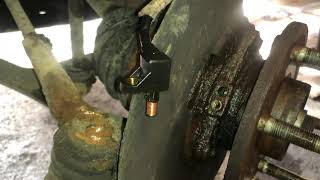
For the 2012-2017 Buick Verano and its platform mates (like the Chevy Cruze), the wheel speed sensor is not a small, separately replaceable part. It is integrated directly into the wheel hub and bearing assembly. This design means that a simple sensor failure requires the replacement of the entire hub, which is more expensive and labor-intensive than replacing a standalone sensor. A manufacturer Technical Service Bulletin (TSB) for this platform, #PIC5428G, directly links codes like C0035 to the wheel bearing assembly, confirming this integrated design is a common point of failure. In some cases, the issue can be caused by metallic debris accumulating on the magnetic encoder ring on the inboard side of the bearing hub, which can be cleaned.
Diagnostic Flowchart
Tap your situation to follow the diagnostic path that matches what you're seeing on this vehicle.
Symptoms You May Notice
- ABS warning light is on
- StabiliTrak or Traction Control warning light is on
- "Service StabiliTrak" message on the driver information center
- ABS and traction control systems are disabled
- In some cases, audible chimes and turn signal sounds may stop working as they are routed through the radio, which can be affected by chassis module faults.
- Replacing only a pigtail connector when the sensor inside the hub has failed.
- Replacing the EBCM before thoroughly testing the wheel hub assembly and its wiring.
- Replacing the ABS sensor pigtail when the internal wire break is further up the harness.
Most Likely Causes
- Failed Left Front Wheel Hub Bearing Assembly 🔴 High Probability → Shop Hub Assembly The wheel speed sensor is integrated into the hub assembly, and the internal sensor or its magnetic reluctor ring can fail from wear, corrosion, or moisture intrusion. TSB #PIC5428G directly points to this as a known issue. Seal failure is common, allowing water and contaminants to destroy the sensitive magnetic encoder ring inside.
How to confirm: Use a scan tool to monitor live data from all four wheel speed sensors 🎬 Watch: How to properly diagnose GM ABS codes using live data while driving. The Left Front sensor will show an erratic, incorrect, or 0 MPH reading compared to the others. A symptom byte of '5A' indicates a 'Signal Plausibility Failure', strongly suggesting the sensor inside the hub is failing rather than a broken wire.
Typical fix: Replace the entire left front wheel hub and bearing assembly. 🎬 See this step-by-step Buick Verano wheel bearing replacement walkthrough Ensure the new hub is torqued to manufacturer specifications to prevent premature failure.
Est. part cost: $100-$300 - Damaged Wiring or Connector 🟡 Medium Probability The wiring harness leading to the wheel hub is exposed to road debris, moisture, and constant suspension movement, which can cause wires to break, chafe, or corrode. The wires can break internally while the insulation remains intact, making visual diagnosis difficult. This is a known issue on many GM vehicles.
How to confirm: Visually inspect the wiring harness from the back of the hub up into the wheel well for any signs of damage, corrosion in the connector, or breaks. Gently pull on the individual wires at the connector; a broken wire may cause the insulation to stretch. Use a multimeter to check for continuity and proper voltage (typically a 5V reference and a switching 7mA/14mA signal) at the connector.
Typical fix: Repair the damaged section of the wiring harness or replace the pigtail connector. GM offers a replacement harness pigtail for this type of repair.
Est. part cost: $20-$60
Rare But Worth Checking
- Faulty Electronic Brake Control Module (EBCM): → Shop ABS Control Module This is rare. The EBCM is the computer that processes sensor data. It should only be suspected after the hub assembly and wiring have been proven to be good. A faulty EBCM will typically set multiple wheel speed sensor codes, not just one.
- Metallic Debris on Magnetic Encoder Ring: As mentioned in TSB PIC5428G, ferrous metallic debris can stick to the magnetic ring on the hub, disrupting the signal. In some cases, removing the hub and cleaning the ring can resolve the issue without part replacement, though if the seal has failed to let debris in, the bearing's lifespan is likely limited.
Diagnosis Steps
- Connect an OBD-II scanner capable of reading ABS codes to confirm C0035 is present. Note any symptom bytes (e.g., 5A).
- Use the scanner's live data function to view the output from all four wheel speed sensors.
- Safely drive the vehicle (or raise the front wheels and spin them by hand) and observe the speed readings. Confirm that the Left Front (LF) sensor reads 0 MPH or a value that doesn't match the other sensors.
- If the LF sensor reading is faulty, raise and secure the front of the vehicle and remove the driver's side front wheel.
- Disconnect the sensor connector. Visually inspect the wiring harness and connector pins for any chafing, breaks, green corrosion, or stretched insulation.
- If wiring damage is found, repair or replace the harness/pigtail connector first. Clear codes and re-test.
- If the wiring appears intact, the next step is to test the hub. While not always possible, inspect the back of the hub for the magnetic encoder ring. Clean any visible debris.
- If wiring and visual inspection check out, the most likely cause is a failed sensor within the wheel hub assembly. Proceed with replacement of the hub.
- After the repair (either wiring or hub replacement), clear the codes with the scan tool and perform a test drive to ensure the ABS and StabiliTrak lights stay off.
Parts You'll Likely Need
- Front Wheel Hub and Bearing Assembly
(OEM #13589508)— This assembly contains the integrated wheel speed sensor that is the primary cause of code C0035 on this vehicle. The original part 13589508 may be superseded but is the correct reference.
Trusted brands: ACDelco (GM Genuine, Part #FW431), Timken (Part #HA590483), MOOG (Part #513324), SKF
OEM price range: $200-$300
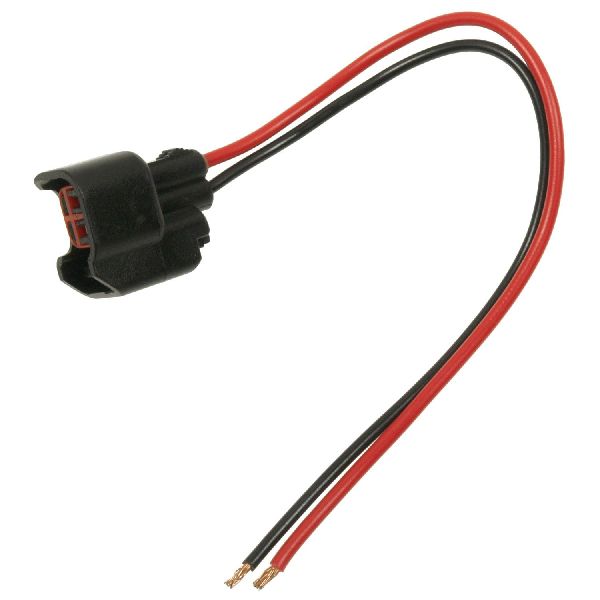
Aftermarket price range: $100-$200 - ABS Wheel Speed Sensor Wire Harness Connector
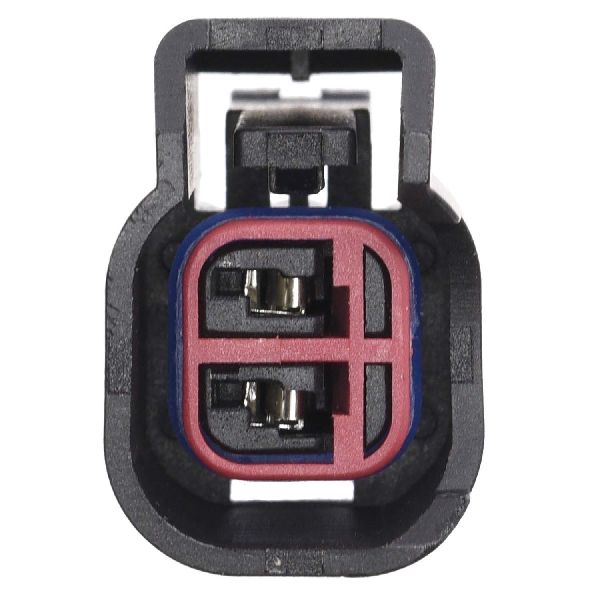
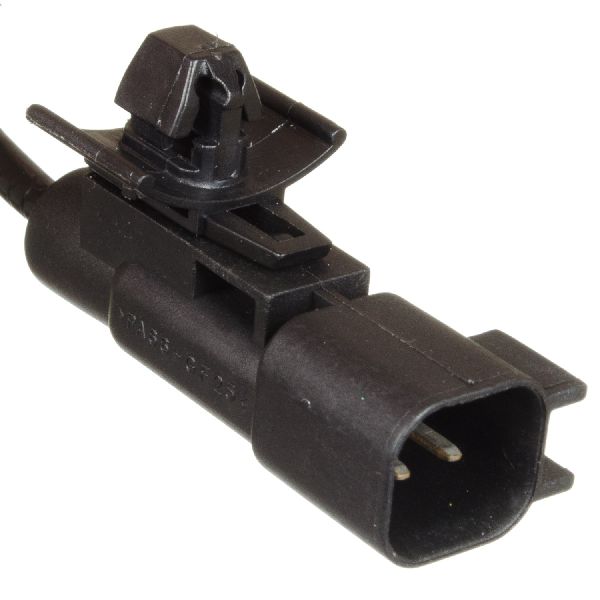
(OEM #10340314)— If inspection reveals the wiring or connector is damaged, this pigtail is used to repair the harness without replacing the entire engine harness.
Trusted brands: ACDelco, Dorman
OEM price range: $30-$50
Aftermarket price range: $15-$30
Related Codes That Often Appear With This One
- C0040 — This is the code for the Right Front Wheel Speed Sensor. Seeing both C0035 and C0040 could indicate a systemic issue like a wiring problem common to both sides, a failing EBCM, or simply that both front hubs are failing around the same time due to age and mileage.
- C0035 with symptom 18, 5A, or 0F — As noted in TSB #PIC5428G, these sub-codes provide more specific diagnostic information. For example, '5A' means the signal is 'not plausible,' which is common when the internal reluctor ring is damaged. A scan tool capable of reading these manufacturer-specific sub-codes can help pinpoint the exact nature of the fault.
Technical Service Bulletins (TSBs) & Recalls
- PIC5428G: Addresses scenarios where Service Stabilitrak lights are on and codes C0035-C0050 are present, pointing towards a fault related to the wheel bearing assembly. It specifically mentions symptom bytes 18, 5A, and 0F.
- 17-NA-047: This bulletin supersedes PIC5428G, updating model years and providing more detail on cleaning the magnetic encoder ring and the digital signal values (7mA and 14mA) for testing.
Platform-Specific Known Issues
- A known issue documented in Technical Service Bulletin #PIC5428G (later superseded by 17-NA-047) involves the Service Brakes, Service Stabilitrak lights illuminating with DTCs C0035 through C0050. The bulletin directs technicians to inspect the wheel bearing for debris on the magnetic encoder ring or for internal failure, confirming the hub assembly is the focal point of the diagnosis.
Mechanic-Grade Diagnostic Values
- Digital Wheel Speed Sensor Signal Current — expected: The sensor outputs a digital square wave that switches between 7mA (Low) and 14mA (High) DC current as the wheel rotates.. Failure: A signal that is stuck high, low, or is non-existent indicates a failure in the sensor or its wiring.
- Sensor Supply Voltage — expected: The sensor receives a reference voltage from the EBCM, typically battery voltage (12V).. Failure: No voltage at the sensor connector (harness side) points to a wiring or EBCM issue, not a sensor failure.
Hidden / Shadow Codes Worth Checking
- C0035 0F: Signal Erratic. The EBCM has detected an irregular or unstable signal, often caused by metallic debris on the magnetic encoder ring or a failing sensor. (see via A GM-specific scan tool like a Tech2 or GDS2, or a high-end professional scanner.)
- C0035 18: Low Signal Amplitude. The signal strength from the sensor is too weak. This can be caused by an excessive air gap between the sensor and the encoder ring, or an internal sensor failure. (see via A GM-specific scan tool like a Tech2 or GDS2, or a high-end professional scanner.)
- C0035 5A: Not Plausible. The signal from this sensor does not correlate with the signals from the other wheel speed sensors (e.g., reading 0 MPH while others read 30 MPH). This strongly points to a failed sensor/hub or a completely broken wire. (see via A GM-specific scan tool like a Tech2 or GDS2, or a high-end professional scanner.)
Wiring & Ground Locations
- G103 — Located on the cowl in the engine compartment, above/below the brake booster.. This is a major ground point for the Body Control Module (BCM) and other critical modules. While not the direct ground for the EBCM itself, a poor connection here can cause a wide range of communication errors and unusual electrical behavior that could potentially mimic sensor faults.
- EBCM Connector — The Electronic Brake Control Module is located on the driver's side of the engine bay, attached to the ABS hydraulic block.. This is the termination point for the wheel speed sensor circuits. All voltage and signal tests ultimately lead back to the pins on this connector to confirm if the fault is in the wiring, the sensor, or the module itself.
- WSS Pigtail Connector — In the driver's side front wheel well, connecting the sensor (which is part of the hub) to the main body harness.. This 2-pin connector is a common failure point due to exposure to moisture and physical stress. It is where initial voltage and continuity tests are performed.
Real Owner Repair Stories
- YouTube channel 'Flat Rate Mechanic' (GM Vehicle (specific model not stated, but common GM issue)) — ABS light on, code C0035 stored.
✅ What actually fixed it The clip holding the wheel speed sensor connector had broken, allowing the connector to come unplugged. Plugging the connector back in and securing it resolved the code. - YouTube channel 'JL's Auto Solution' (2016 Chevrolet Equinox (platform relative)) — ABS light comes on after driving, code C0035 with symptom 18 (Low Signal Amplitude).
❌ Tried (didn't work) The owner had already replaced the clock spring and steering angle sensor to no effect.
✅ What actually fixed it Diagnosis confirmed the signal was faulty. The technician concluded from experience that the issue was an internal failure of the wheel bearing/hub assembly, requiring replacement of the hub.
OEM Part Supersession History
13502789→13504971, then 13580489, then 13589508— Standard part evolution and design updates by the manufacturer.
Heads up: The latest part number, 13589508 (also sold as ACDelco FW431), is the correct replacement for the entire 2012-2017 Verano range. Using older, discontinued stock is not recommended.
Helpful Videos
We Have This Part in Stock


The information in this article is provided for general reference and educational purposes only. Vehicle specifications, procedures, and part compatibility can vary by production date, trim level, and region. Always consult your vehicle's factory service manual and verify part numbers before purchasing or performing repairs. Safety-critical components such as airbags, seat belts, and braking systems should be installed by a qualified professional.
- Buick VERANO:
- 🧭 Diagnostic Flowchart
- 🎬 Helpful Videos
- 🛍️ Shop This Part
- What's Unique About the 2012-2017 Buick VERANO
- Symptoms You May Notice
- Most Likely Causes
- Rare But Worth Checking
- Diagnosis Steps
- Parts You'll Likely Need
- Related Codes That Often Appear With This One
- Technical Service Bulletins (TSBs) & Recalls
- Platform-Specific Known Issues
- Mechanic-Grade Diagnostic Values
- Hidden / Shadow Codes Worth Checking
- Wiring & Ground Locations
- Real Owner Repair Stories
- OEM Part Supersession History
- 🎟️ Get 5% Off