

C0035 on 2013-2014 Cadillac ATS: Left Front Wheel Speed Sensor Fault Causes & Fixes
On a 2013-2014 Cadillac ATS, code C0035 almost always points to a problem with the left front wheel signal. The most common fix is replacing the entire left front wheel hub and bearing assembly, as the magnetic sensor ring is integrated into it and is prone to contamination by metallic debris. A damaged wiring harness is the second most likely cause.
- C0035 on a 2013-2014 ATS means there's a problem with the left front wheel speed sensor signal.
- Do not drive aggressively. Your ABS and stability control are offline, which affects vehicle safety in emergency situations.
- The most likely cause is a faulty wheel hub/bearing assembly, not just the sensor itself, due to an integrated magnetic ring.
- Always inspect the wiring harness for damage before replacing parts.
- For a lasting repair, it is often best to replace the entire left front wheel hub assembly.
What's Unique About the 2013-2014 Cadillac ATS
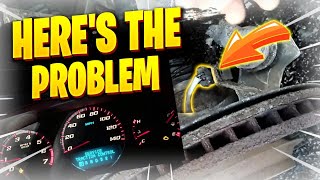
For the Cadillac ATS and its platform mates, this code is frequently linked to a known issue documented in General Motors Technical Service Bulletin #PIC5428G. The problem often isn't the wheel speed sensor itself, but the magnetic encoder ring it reads. 🎬 See how debris on the magnetic ring triggers this code. This ring is built directly into the wheel hub and bearing assembly. Over time, this ring can become contaminated with ferrous metallic debris, or fretting corrosion can develop between the bearing and knuckle, leading to an unreliable signal. As a result, replacing the entire wheel hub assembly is a very common and effective solution for this specific vehicle.
Diagnostic Flowchart
Tap your situation to follow the diagnostic path that matches what you're seeing on this vehicle.
Symptoms You May Notice
- ABS warning light is on
- Traction Control / StabiliTrak warning light is on
- "Service StabiliTrak" message appears on the dashboard
- "Service Brake System" message may appear on the DIC
- ABS system is inactive during hard braking (wheels may lock and skid)
- Traction control does not engage on slippery surfaces
- Cruise control is disabled
- Replacing only the wheel speed sensor when the actual fault is with the magnetic ring on the wheel hub assembly. This will not resolve the code and leads to wasted time and money.
- Replacing the hub assembly without thoroughly cleaning the mounting surface on the steering knuckle, which can lead to premature failure or a persistent false signal due to misalignment or fretting corrosion.
Most Likely Causes
- Faulty Left Front Wheel Hub and Bearing Assembly 🔴 High Probability → Shop Hub Assembly As documented in TSB #PIC5428G, the magnetic encoder ring integrated into the bearing is a common failure point. Contamination from metallic debris or rust jacking under the ring can corrupt the wheel speed signal. Bearing wear can also cause excessive play, altering the sensor air gap.
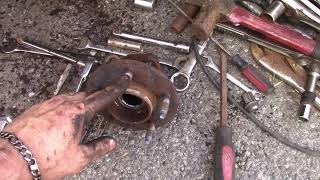
How to confirm: With the vehicle raised, check the left front wheel for any play or roughness when spun by hand. Use a scan tool to observe live data; if the left front wheel speed is zero or erratic while others read correctly, and the wiring is intact, the hub assembly is the likely cause. After removal, visually inspect the magnetic ring on the back of the hub for metallic shavings, rust, or physical damage.
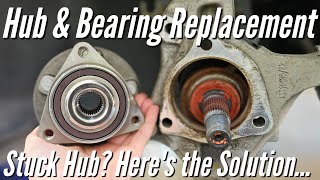
Typical fix: Replace the entire left front wheel hub and bearing assembly. 🎬 Watch: Step-by-step walkthrough of a Cadillac ATS hub replacement. This ensures a new bearing and a clean, undamaged magnetic encoder ring. It is best practice to clean the mounting surface on the knuckle thoroughly and apply anti-seize compound.
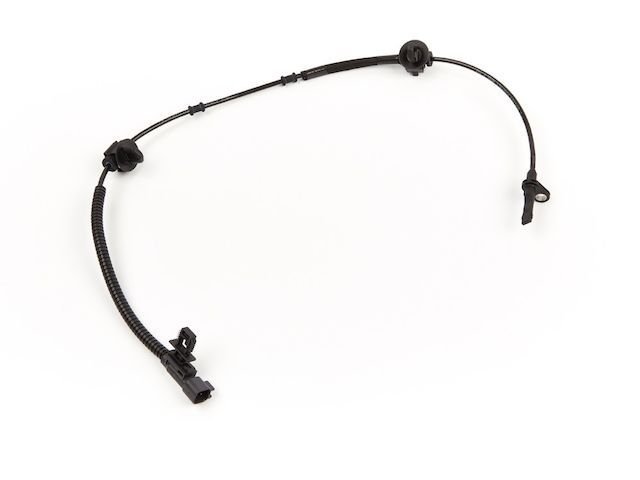
Est. part cost: $120-$250 - Damaged Wheel Speed Sensor Wiring or Connector 🟡 Medium Probability → Shop ABS Wheel Speed Sensor The wiring harness is located in the wheel well and is exposed to moisture, debris, and constant movement from steering and suspension travel, which can lead to chafing, corrosion, or internal wire breaks at flex points.
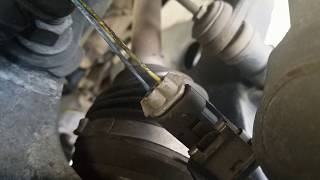
How to confirm: Perform a close visual inspection of the wiring harness from the sensor to the main loom. Check the connector for corrosion or pushed-out pins. With a multimeter, check for 5V reference and ground at the sensor connector. Perform a 'wiggle test' by moving the harness while monitoring the live wheel speed data or voltage; a signal drop-out indicates an internal break.
Typical fix: Repair the damaged section of wire or replace the pigtail connector if it is corroded. Ensure the harness is properly secured away from moving parts.
Est. part cost: $20-$50 - Failed Left Front Wheel Speed Sensor ⚪ Low Probability → Shop ABS Wheel Speed Sensor
How to confirm: After confirming the wiring and hub are good, the sensor is the remaining component. It can be tested with a multimeter for proper resistance (if specifications are known) or by swapping it with the right-side sensor to see if the fault code follows (if compatible).
Typical fix: Replace the left front wheel speed sensor.
Est. part cost: $40-$80
Rare But Worth Checking
- Faulty Electronic Brake Control Module (EBCM): → Shop ABS Control Module This is rare and should only be considered after all other possibilities (hub, sensor, wiring) have been definitively ruled out. An EBCM failure will typically present other codes as well or fail a module self-test on a professional scan tool.
Diagnosis Steps
- Connect an OBD-II scanner capable of reading ABS/chassis codes to confirm C0035 is present. Note any symptom bytes, as they provide crucial diagnostic clues:
-
18: Low Signal Amplitude - Points to a large air gap or heavy debris on the magnetic ring. -5A: Signal Plausibility Failure - The signal doesn't match other sensors, often due to a damaged ring or intermittent wiring. -0F: Signal Erratic - General signal integrity problem, often a loose connection or chafed wire. - Access the live data stream on the scanner and monitor all four wheel speed sensors while driving slowly (above 5 mph).
- Observe the reading for the 'Left Front Wheel Speed Sensor'. If it reads 0 mph, is erratic, or significantly differs from the other three, the fault is active.
- Raise and secure the front of the vehicle. Visually inspect the entire length of the wheel speed sensor wiring harness for any signs of physical damage, chafing, or corrosion at the connector. Perform a 'wiggle test' on the harness.
- Grasp the left front wheel at 12 and 6 o'clock and attempt to rock it. Any significant play or a grinding noise when spinning the wheel indicates a worn wheel bearing, requiring hub replacement.
- If wiring appears intact and the bearing feels solid, the issue is most likely a damaged or contaminated magnetic encoder ring within the hub assembly, as per TSB PIC5428G.
- During disassembly, inspect for signs of rust-colored dust ('fretting corrosion') between the hub and the steering knuckle, which indicates movement and can contribute to the problem.
- If wiring is damaged, repair or replace the harness pigtail.
- If the bearing has play or the wiring is confirmed good, replace the left front wheel hub and bearing assembly.
- After the repair, clear the codes with the scanner and perform a test drive to ensure the light does not return.
Parts You'll Likely Need
- Left Front Wheel Hub and Bearing Assembly
(OEM #GM 22936532)— This is the most common cause of C0035 on the ATS, as it contains the magnetic encoder ring that the wheel speed sensor reads. A new assembly guarantees a good bearing and a clean signal ring.
Trusted brands: ACDelco (FW430), MOOG, Timken, SKF
OEM price range: $200-$300
Aftermarket price range: $120-$200 - Left Front Wheel Speed Sensor
(OEM #GM 22937407)— Though less common to fail than the hub, it can be damaged during hub replacement or fail on its own. It is often replaced as a preventative measure along with the hub.
Trusted brands: ACDelco (22937407), Standard Motor Products (SMP), Delphi
OEM price range: $60-$90
Aftermarket price range: $40-$70
Related Codes That Often Appear With This One
- C0040 — This is the code for the Right Front Wheel Speed Sensor. Seeing both may indicate a systemic issue like a wiring harness problem common to both sides, an issue with the EBCM, or simply that both front hubs are worn out, which is common.
- C0045 — This is the code for the Left Rear Wheel Speed Sensor. Seeing multiple wheel speed sensor codes from different corners of the car makes a wiring or module issue more likely than multiple simultaneous hub failures.
- U0415 — Invalid Data Received From Electronic Brake Control Module. TSB PIC5428G notes that when a wheel speed sensor signal is lost, the Power Steering Control Module may set this code and increase steering effort at low speeds as a default action.
Technical Service Bulletins (TSBs) & Recalls
- PIC5428G: Addresses diagnostic trouble codes C0035-C0050 and points toward inspection and cleaning of the wheel bearing's magnetic encoder ring as the primary diagnostic step before part replacement.
- 17-NA-047: This bulletin supersedes PIC5428G, carrying forward the same diagnostic advice for cleaning debris from the encoder ring.
Platform-Specific Known Issues
- TSB PIC5428G: Debris on Magnetic Encoder Ring: This Technical Service Bulletin from GM is the key document for this issue. It addresses DTCs C0035-C0050 with symptom bytes 18, 5A, or 0F. It explicitly states these codes are often caused by 'ferrous metallic debris stuck to the wheel speed sensor magnetic encoder ring.' The bulletin advises technicians to inspect and clean the ring before replacing any parts, though replacement is often necessary if the bearing is worn or the ring is damaged.
Mechanic-Grade Diagnostic Values
- Sensor AC Voltage Output — expected: Greater than 0.25V AC when spinning the wheel by hand (approx. 1/2 revolution per second). Voltage should increase with speed.. Failure: Voltage is zero, does not rise with wheel speed, or is erratic.
- Sensor Resistance — expected: Typically 1200-2700 Ohms, but the most reliable test is comparing the reading to the sensor on the opposite (working) side. The values should be very close.. Failure: An open circuit (infinite resistance) or a reading that is significantly different from the known-good sensor on the other side of the vehicle.
- Sensor Signal Current (via GDS2/Tech2) — expected: The signal switches between a low state (approx. 7mA) and a high state (approx. 14mA) as the wheel rotates.. Failure: Signal is stuck high, low, or is not present.
Hidden / Shadow Codes Worth Checking
- C0035 06: Indicates the Left Front Wheel Speed Sensor circuit has low voltage or is open. This points directly toward a wiring issue like a broken wire or corroded connector. (see via GM GDS2/Tech2 or other high-end scan tool capable of reading manufacturer-specific symptom bytes.)
- C0035 0F: Indicates the Left Front Wheel Speed Sensor signal is erratic. This often points to debris on the magnetic encoder ring or an intermittent wiring short. (see via GM GDS2/Tech2 or other high-end scan tool capable of reading manufacturer-specific symptom bytes.)
- C0035 18: Indicates the signal amplitude from the sensor is too low. This is a strong indicator of an excessive air gap (from rust jacking) or heavy debris on the hub's magnetic ring. (see via GM GDS2/Tech2 or other high-end scan tool capable of reading manufacturer-specific symptom bytes.)
- C0035 5A: Indicates the signal from the Left Front Wheel Speed Sensor is not plausible when compared to other vehicle sensors (e.g., other wheel speeds). This points to a rationality failure, often from a damaged encoder ring. (see via GM GDS2/Tech2 or other high-end scan tool capable of reading manufacturer-specific symptom bytes.)
Wiring & Ground Locations
- G103 / G104 — For 2013 models with 4-cylinder engines and automatic transmissions built before mid-December 2012, a key engine ground (G104) is at the front of the engine. Later models moved it to the rear. The 3.6L V6 ground is at the front. A poor engine ground can cause intermittent electrical issues in various modules, including the EBCM.. The EBCM relies on clean power and ground connections. A poor engine-to-chassis ground can introduce electrical noise or voltage drops that can be misinterpreted by the EBCM, potentially setting false codes. TSB PI1097A highlights the importance of checking these grounds for other module issues on the ATS.
- EBCM Connector — The Electronic Brake Control Module is located on the driver's side of the engine bay, integrated into the ABS hydraulic block.. The two wires from the left front wheel speed sensor run directly to this connector. Testing for continuity and shorts between the sensor pigtail and the EBCM connector pins is the definitive way to rule out a wiring fault.
Real Owner Repair Stories
- YouTube video by 'ABS code C0035 Impala and other GM's QUIK TIP!!!' (2014 Chevrolet Impala (shares similar wiring design with ATS)) — Service StabiliTrak, ABS, and Brake System lights on. Code C0035 with symptom byte 0F (Signal Erratic).
❌ Tried (didn't work) The vehicle had already had two wheel bearings replaced, the ABS control module replaced, and a previous wiring repair performed, but the code returned.
✅ What actually fixed it The root cause was an internal break in the copper wire inside the insulation of the wheel speed sensor pigtail harness. The insulation looked undamaged, but stretching it revealed the wire inside was broken. Replacing the pigtail harness with the GM repair part permanently fixed the issue.
OEM Part Supersession History
22937407 (Sensor)→23147549— Standard part evolution and consolidation by GM.
Model Year Variations Within This Range
- 2013: The location of a primary engine ground (G104) on 4-cylinder automatic models changed mid-year. Early 2013 models have it at the front of the engine, while later 2013 and 2014 models have it at the rear. A poor ground can contribute to various electrical faults.
Helpful Videos
We Have This Part in Stock



The information in this article is provided for general reference and educational purposes only. Vehicle specifications, procedures, and part compatibility can vary by production date, trim level, and region. Always consult your vehicle's factory service manual and verify part numbers before purchasing or performing repairs. Safety-critical components such as airbags, seat belts, and braking systems should be installed by a qualified professional.
- Cadillac ATS:
- 🧭 Diagnostic Flowchart
- 🎬 Helpful Videos
- 🛍️ Shop This Part
- What's Unique About the 2013-2014 Cadillac ATS
- Symptoms You May Notice
- Most Likely Causes
- Rare But Worth Checking
- Diagnosis Steps
- Parts You'll Likely Need
- Related Codes That Often Appear With This One
- Technical Service Bulletins (TSBs) & Recalls
- Platform-Specific Known Issues
- Mechanic-Grade Diagnostic Values
- Hidden / Shadow Codes Worth Checking
- Wiring & Ground Locations
- Real Owner Repair Stories
- OEM Part Supersession History
- Model Year Variations Within This Range
- 🎟️ Get 5% Off