

C0035 on 2012-2015 Chevrolet Captiva Sport: Right Front Wheel Speed Sensor Fault Causes and Fixes
Code C0035 on a 2012-2015 Captiva Sport indicates a problem with the right front wheel speed sensor circuit. The most common fix is replacing the front wheel hub assembly, which includes the sensor. A damaged wiring pigtail to the sensor is the second most likely cause. Do not confuse this with the generic definition for C0035, which often points to the left front wheel.
- C0035 on your Captiva Sport means there is a fault with the RIGHT (Passenger Side) Front Wheel Speed Sensor circuit.
- The most likely cause is a failed wheel hub assembly, which contains the sensor. The second most likely cause is damaged wiring leading to the sensor.
- Do not drive the vehicle longer than necessary, as critical safety features (ABS, Traction Control) are disabled.
- Before buying parts, use a scan tool to confirm the fault and inspect the wiring harness for damage, as a wiring repair is much cheaper than a hub replacement.
What's Unique About the 2012-2015 Chevrolet Captiva Sport
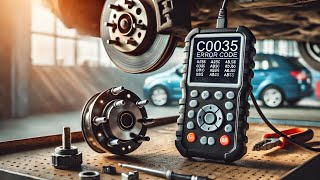
The Chevrolet Captiva Sport is a rebadged version of the Saturn Vue and shares its platform with the Opel Antara, Chevy Equinox, and Pontiac Torrent. While many generic code readers define C0035 as a fault with the left front wheel, on this GM platform, it specifically points to the right front wheel. 🎬 Watch: Diagnostic walkthrough for the C0035 wheel speed sensor code. This is a critical distinction that can lead to misdiagnosis. Interestingly, on its direct predecessor, the Saturn Vue, C0035 often refers to the left front sensor, adding to potential confusion. The most common failure is not just the sensor itself, but the entire wheel hub assembly it is integrated into, or the wiring harness leading to it.
Symptoms You May Notice
- ABS warning light is on
- Traction Control or Stability Control (StabiliTrak) warning light is on
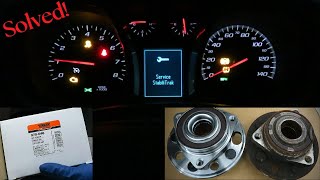
- Service StabiliTrak message on the driver information center
- ABS system is disabled and does not activate during hard braking
- Traction control is disabled and does not prevent wheel spin
- Cruise control may be inoperative
- Replacing the Left Front wheel speed sensor. Due to the generic definition of C0035, many will mistakenly replace the driver's side sensor when the fault is on the passenger side for this specific vehicle.
Most Likely Causes
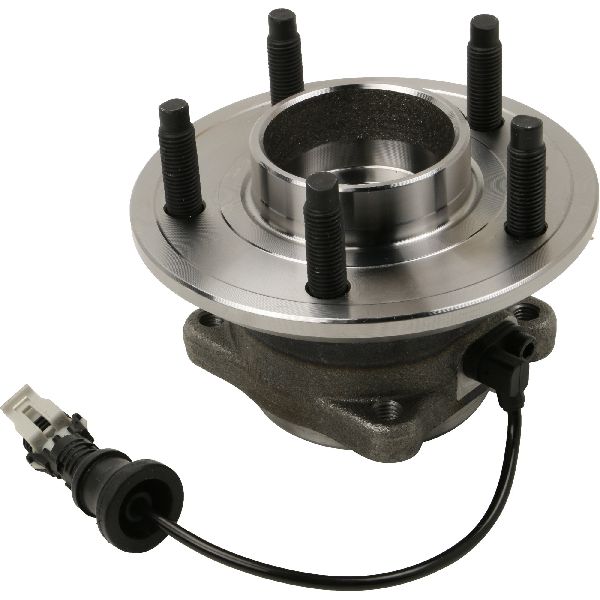
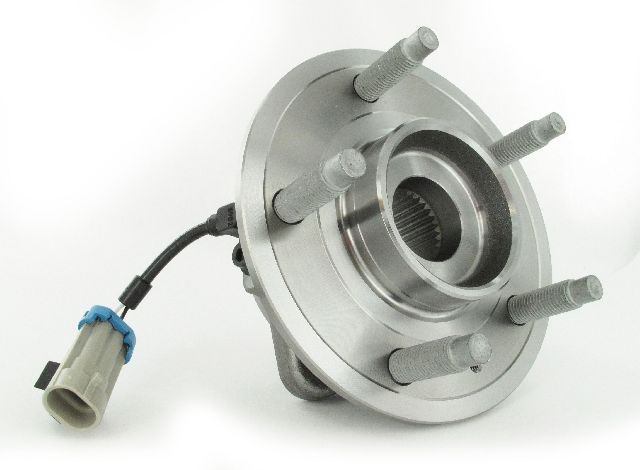
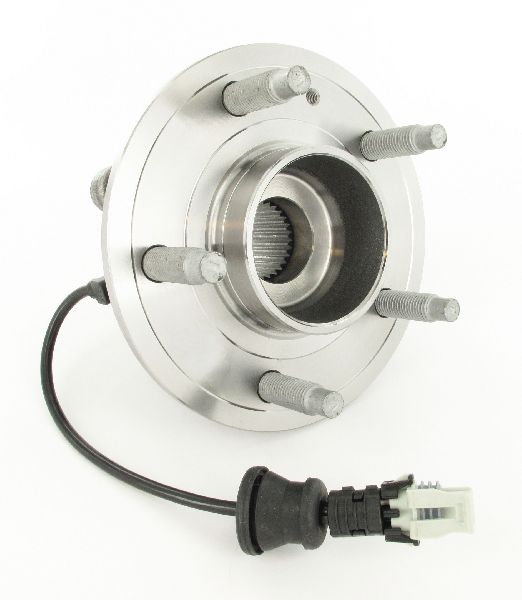
- Failed Right Front Wheel Hub Bearing Assembly 🔴 High Probability → Shop Hub Assembly The wheel speed sensor is integrated into the hub assembly. Corrosion and wear can damage the internal magnetic reluctor ring or the sensor itself, leading to signal failure. This is the most common point of failure for this code.
How to confirm: Using an ABS-capable scan tool, monitor the live data for the right front wheel speed sensor while driving. If the speed reads 0 MPH or is erratic while other wheels show correct speed, the hub assembly is the likely culprit.
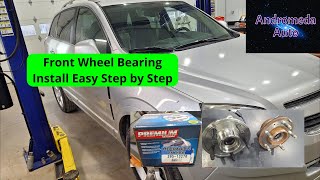
Typical fix: Replace the entire right front wheel hub bearing assembly. 🎬 See this step-by-step guide for replacing the front hub assembly. The sensor is included as part of the new hub.
Est. part cost: $55-$250 - Damaged Right Front Wheel Speed Sensor Wiring or Connector 🟡 Medium Probability → Shop ABS Wheel Speed Sensor The wiring harness is exposed to the elements and constant suspension movement, which can cause wires to fray or break internally, sometimes without visible damage to the insulation. The connector pins can also corrode, leading to a poor connection. A GM service bulletin notes a specific chafe point where the EBCM harness can rub on a transmission mounting bolt, leading to various electrical issues.
How to confirm: Visually inspect the wiring harness from the sensor to the main chassis connection for any signs of damage, chafing, or corrosion. Gently tug on the wires near the connector; a broken internal wire may cause the insulation to stretch. Use a multimeter to check for voltage at the connector with the ignition on; a lack of voltage points to a wiring or EBCM issue, while the presence of voltage with a bad signal points to the sensor/hub.
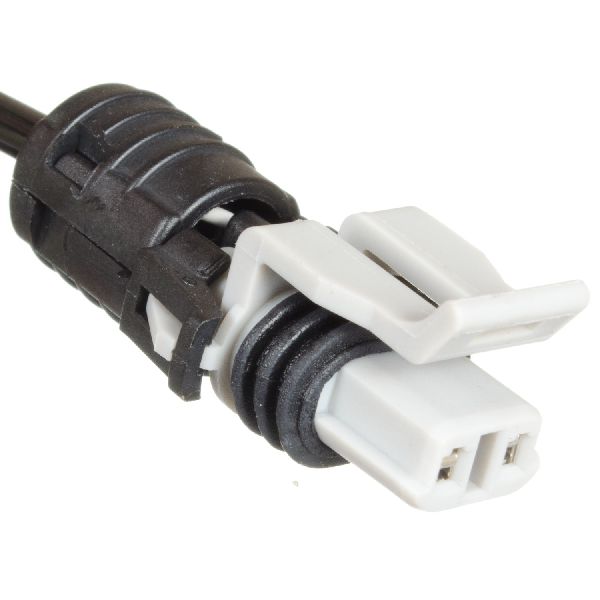
Typical fix: Repair the damaged section of wire or replace the pigtail connector. GM and aftermarket companies offer repair harnesses for this common issue.
Est. part cost: $20-$50
Rare But Worth Checking
- Failed Electronic Brake Control Module (EBCM): → Shop ABS Control Module While less common, the ABS module itself can fail. This usually happens after the sensor and wiring have been ruled out. A failed EBCM often presents with additional fault codes or a complete loss of communication with the scan tool. Replacement can be costly, with estimates ranging from $777 to $851.
Diagnosis Steps
- Connect an ABS-capable scan tool and confirm C0035 is the active code. Note the specific code definition provided by the tool, which should indicate 'Right Front' for a Captiva.
- Access the live data stream on the scan tool. Monitor the speeds of all four wheels while driving slowly (5-10 mph).
- Confirm that the Right Front wheel speed sensor reads 0 MPH or shows an erratic/inconsistent speed compared to the other three wheels.
- Raise and secure the vehicle. Visually inspect the right front wheel speed sensor wiring harness for any obvious damage, corrosion at the connector, or signs of rubbing against suspension components.
- Disconnect the sensor and inspect the connector terminals for corrosion or damage. Clean if necessary.
- With the ignition on, use a multimeter to test for voltage at the harness connector (not the sensor itself). The presence of voltage (typically around 12V) indicates the EBCM and wiring to that point are likely good. If no voltage is present, the wiring harness or EBCM is the likely problem.
- If voltage is present but the signal is bad (from step 3), the most probable cause is a failed sensor within the wheel hub assembly.
- To be certain, you can test the wiring harness for continuity from the sensor connector back to the EBCM connector.
- If wiring is confirmed to be good, replace the right front wheel hub assembly.
- If the problem persists after replacing the hub and verifying wiring, the EBCM may be at fault, which requires more advanced diagnostics.
Parts You'll Likely Need
- Front Wheel Bearing and Hub Assembly
(OEM #FW356 (ACDelco))— This is the most common failure. The ABS sensor and its magnetic reluctor ring are integrated into this assembly, which fails as a unit.
Trusted brands: ACDelco, Timken, SKF, WJB, MOOG
OEM price range: $180-$250
Aftermarket price range: $55-$150 - Front ABS Wheel Speed Sensor Wiring Harness — If the wiring pigtail or connector is corroded or broken, replacing just this harness section is a cost-effective repair instead of replacing the entire engine harness. 🎬 Watch: How to troubleshoot and fix common StabiliTrak wiring issues.
Trusted brands: Dorman, Standard Motor Products (Tech Smart), Carquest Premium
OEM price range: $40-$60
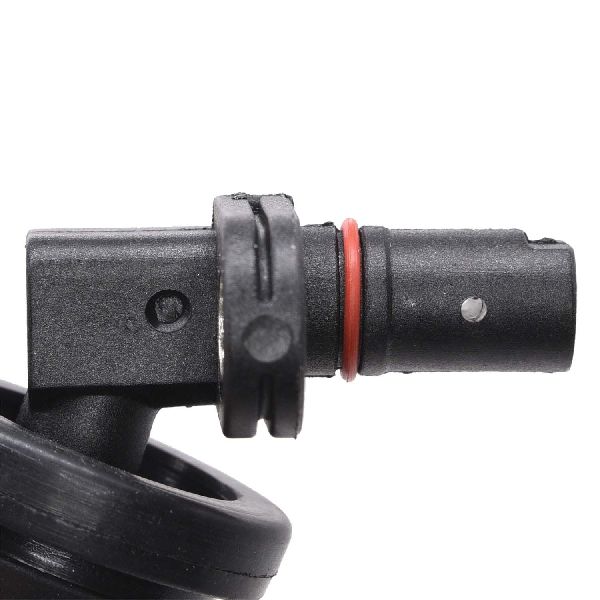
Aftermarket price range: $20-$50 - Front ABS Wheel Speed Sensor
(OEM #N/A - See Notes)— The standalone sensor is not commonly replaced. The original OEM part number cited in some databases (20863114) is incorrect and belongs to a mirror. The failure is almost always in the hub's internal reluctor ring or the sensor is seized in the old hub, making hub assembly replacement the standard, reliable repair.
Trusted brands: ACDelco, Dorman, Standard Motor Products
OEM price range: $60-$80
Aftermarket price range: $40-$60
Related Codes That Often Appear With This One
- C0040 — C0040 is the corresponding code for the 'Right Front Wheel Speed Sensor Circuit'. If you see both, it may indicate a more complex wiring or module issue affecting that corner of the vehicle.
- U0415 — This code indicates 'Invalid Data Received From Electronic Brake Control Module'. A GM TSB mentions this code can appear alongside C0035 when a wheel speed sensor fails.
Technical Service Bulletins (TSBs) & Recalls
- PIC5922C: Mentions that StabiliTrak messages accompanied by DTCs including C0035 can be caused by an internally shorted wheel speed sensor, recommending sensor replacement.
Mechanic-Grade Diagnostic Values
- Passive Wheel Speed Sensor Resistance — expected: 900 - 2000 Ohms between the two sensor pins.. Failure: A reading of infinite resistance (Open Loop) or very low resistance (short) indicates a failed sensor.
- Passive Wheel Speed Sensor AC Voltage Output — expected: Greater than 0.2 Volts AC (200 mV AC) when spinning the wheel at approximately half a revolution per second.. Failure: No AC voltage or a voltage significantly below the 200mV threshold while spinning the wheel indicates a failed sensor or an excessive air gap.
- Sensor Circuit Bias Voltage (at harness connector, sensor unplugged) — expected: Approximately 5V DC.. Failure: No voltage indicates an open in the supply wire from the EBCM. This is a quick check to see if the module is providing power to the circuit.
Hidden / Shadow Codes Worth Checking
- C0035 0F: Right Front Wheel Speed Sensor Signal Erratic. This indicates the EBCM is receiving a signal, but it's unstable or jumping, which can be caused by a damaged tone ring, debris on the sensor, or an intermittent break in the wiring. (see via GM-specific scan tool (Tech2, GDS2) or high-end professional scanner capable of reading manufacturer symptom bytes.)
- C0035 18: Right Front Wheel Speed Sensor Circuit Low Signal Amplitude. The signal from the sensor is present but too weak. This is often caused by an excessive air gap between the sensor and tone ring (due to rust or improper installation) or metallic debris on the sensor head. (see via GM-specific scan tool (Tech2, GDS2) or high-end professional scanner.)
- C0035 5A: Right Front Wheel Speed Sensor Circuit Not Plausible. The signal from this sensor does not correlate with other vehicle speed inputs (e.g., other wheel sensors). This points definitively to a fault in this specific corner of the vehicle. (see via GM-specific scan tool (Tech2, GDS2) or high-end professional scanner.)
Scan Tool Commands That Help
- GDS2 / Tech2 / Professional J2534 Device: EBCM Configuration & Setup — Required after replacing the Electronic Brake Control Module (EBCM). This function configures the new module to the specific options on the vehicle.
- GDS2 / Tech2 / Professional J2534 Device: VIN Security Link — Required after replacing the EBCM, especially with a used unit. This procedure writes the vehicle's VIN to the module, allowing it to communicate with other modules on the vehicle network. Failure to do this may result in a C0551 DTC.
- GDS2 / Tech2 / Professional J2534 Device: Steering Angle Sensor Learn — This procedure should be performed after replacing the EBCM to ensure the stability control system has an accurate reading of the steering wheel's position.
Wiring & Ground Locations
- EBCM (Electronic Brake Control Module) — Located in the engine compartment, near the left front shock tower, attached to the brake pressure modulator valve.. This module receives the signal from the right front wheel speed sensor and is the source of the C0035 code. All circuit testing ultimately leads back to this module's connector.
- EBCM Connector Pin 34 — On the 38-pin EBCM main connector.. This is the 'Right Front Wheel Speed Sensor Signal' wire. It should be tested for continuity back to the sensor connector.
- EBCM Connector Pin 33 — On the 38-pin EBCM main connector.. This is the 'Right Front Wheel Speed Sensor Low Reference' (ground) wire. It should be tested for continuity back to the sensor connector.
- G101 — On the frame in the left front of the engine compartment.. This is a primary ground point for the EBCM. A corroded or loose connection at G101 can cause various ABS faults, including intermittent or false C0035 codes.
- Harness Chafe Point — The EBCM body wiring harness branch located behind the radiator surge tank may rub on a transmission mounting bolt.. A GM document indicates that abrasion at this point can damage the wiring to the EBCM, causing shorts or opens in the wheel speed sensor circuits and setting codes like C0035.
Diagnostic Flowchart
Other Known Issues on This Vehicle
Issues unrelated to this code that are worth knowing about as an owner of this generation:
- Excessive Oil Consumption (2.4L Ecotec Engine) 🔴 High — Commonly presents around 70,000 miles. Caused by defective piston rings. Owners report consuming 1-2 quarts of oil between changes. GM issued bulletin #13-06-01-003H for this issue. (Ref: 13-06-01-003H)
- Premature Timing Chain Failure (2.4L & 3.0L Engines) 🔴 High — Very common, often caused by low oil levels resulting from the excessive oil consumption issue. A distinct rattling noise from the engine on cold startups is the primary symptom. Failure can cause catastrophic engine damage. (Ref: TSB 12313C (2.4L Balance Chain), TSB 11340C (3.6L V6))
- 6T40/6T45 Automatic Transmission Failure 🟠 Medium — Owners report issues including erratic or harsh shifting, slipping gears, and overheating. Problems can sometimes be caused by incorrect fluid levels (overfilling). The internal electronic control board (TCM) can also fail independent of mechanical issues.
Used vs. New Parts: Buying Guide for This Vehicle
When a used part is the smart pick: A used wiring harness pigtail from a junkyard is a perfectly acceptable and cost-effective repair for a damaged connector, provided the donor part is free of corrosion. A used EBCM can be a viable option to save money, but it is critical to understand that it will require professional programming (VIN linking) to function in your vehicle.
Donor-vehicle mileage cap: roughly under 120000 miles for the part to have meaningful remaining life.
What to inspect on the donor part:
- For wiring: Check for clean, un-corroded connector pins. Ensure the wire insulation is not brittle, cracked, or previously repaired.
- For EBCM: Look for a donor vehicle with no signs of front-end collision damage. Check that the module casing is not cracked and the connectors are clean. Try to get the VIN of the donor car, as it can sometimes help with programming.
OEM-only on this vehicle (don't cheap out):
- Wheel Hub Bearing Assembly: It is strongly recommended to use a new, quality OEM (ACDelco) or reputable aftermarket (Timken, SKF, MOOG) hub assembly. A used hub has unknown wear and life expectancy, and the labor to replace it is significant enough that you do not want to do the job twice.
Aftermarket brands forum-validated for this vehicle:
- Hub Assemblies: Timken, SKF, MOOG, WJB
- Wiring Harnesses: Dorman, Standard Motor Products (SMP)
Brands owners have reported issues with on this vehicle:
- Unbranded, 'white box' wheel hub assemblies from online marketplaces. These often use lower quality bearings and sensor components that can fail prematurely, leading to the code returning within a short period.
Real Owner Stories
Aggregated from forums and TSBs cited above. Mileages and costs reflect what owners reported in those sources.
2012 Chevy Captiva Sport
Symptoms: Service Stabilitrak, Service Traction Control, and ABS lights appearing intermittently.
What fixed it: The owner's report aligns with the common failure of the wheel speed sensor circuit, typically resolved by replacing the wheel hub assembly or repairing the wiring harness.
Source hint: chevroletforum.com - '2012 Chevy Captiva PROBLEMS!!!'
Related OBD-II Codes
Frequently Asked Questions
My 2012 Captiva Sport shows 'Service StabiliTrak' and 'Service Traction Control' with code C0035. Is this a common issue?
Can I just replace the sensor on my Captiva Sport, or do I need the whole hub?
I saw a forum post about code C0035 being the Left Front sensor on a Saturn Vue. Does that apply to my Captiva Sport?
Is there a specific TSB for StabiliTrak messages and wheel speed sensor codes like C0035?
Could a wiring problem cause C0035 instead of a bad hub?
What brands of replacement hubs are recommended for the Captiva Sport?
Helpful Videos
We Have This Part in Stock


The information in this article is provided for general reference and educational purposes only. Vehicle specifications, procedures, and part compatibility can vary by production date, trim level, and region. Always consult your vehicle's factory service manual and verify part numbers before purchasing or performing repairs. Safety-critical components such as airbags, seat belts, and braking systems should be installed by a qualified professional.
- Chevrolet Captiva Sport:
- 🧭 Diagnostic Flowchart
- 🎬 Helpful Videos
- 🛍️ Shop This Part
- What's Unique About the 2012-2015 Chevrolet Captiva Sport
- Symptoms You May Notice
- Most Likely Causes
- Rare But Worth Checking
- Diagnosis Steps
- Parts You'll Likely Need
- Related Codes That Often Appear With This One
- Technical Service Bulletins (TSBs) & Recalls
- Mechanic-Grade Diagnostic Values
- Hidden / Shadow Codes Worth Checking
- Scan Tool Commands That Help
- Wiring & Ground Locations
- Other Known Issues on This Vehicle
- Used vs. New Parts: Buying Guide for This Vehicle
- Real Owner Stories
- 2012 Chevy Captiva Sport
- Related OBD-II Codes
- Frequently Asked Questions
- 🎟️ Get 5% Off