

C0035 on 2002-2009 Chevrolet TrailBlazer: Left Front Wheel Speed Sensor Causes & Fixes
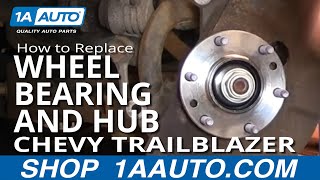
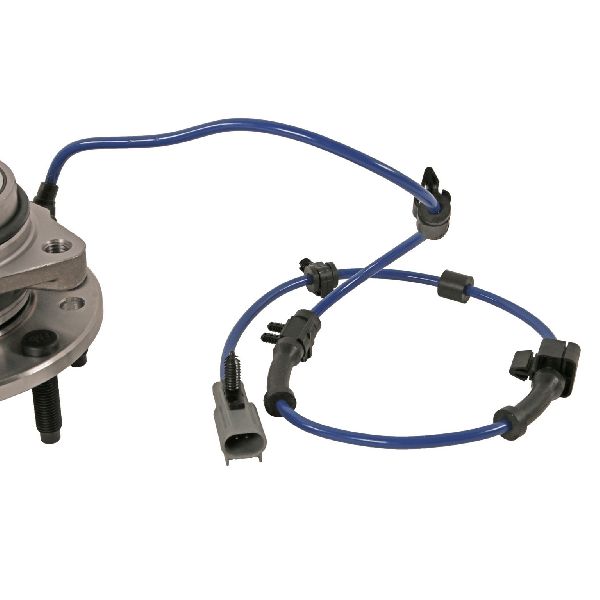
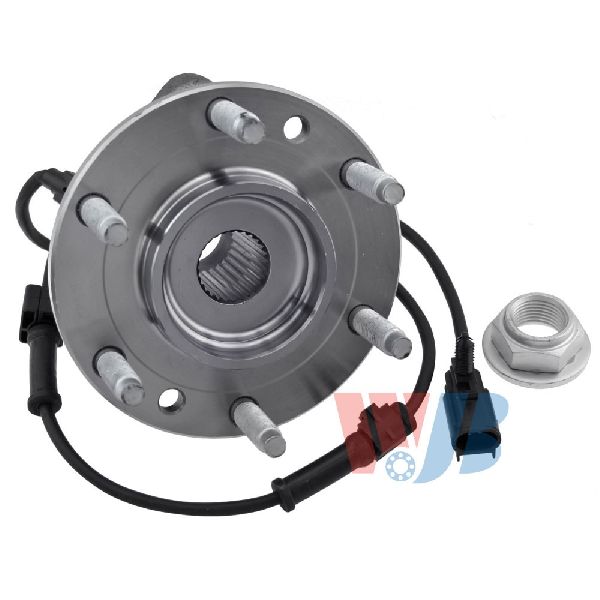
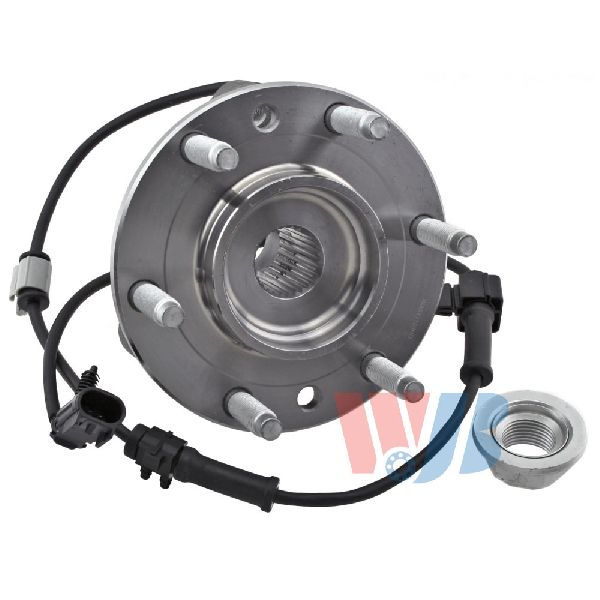
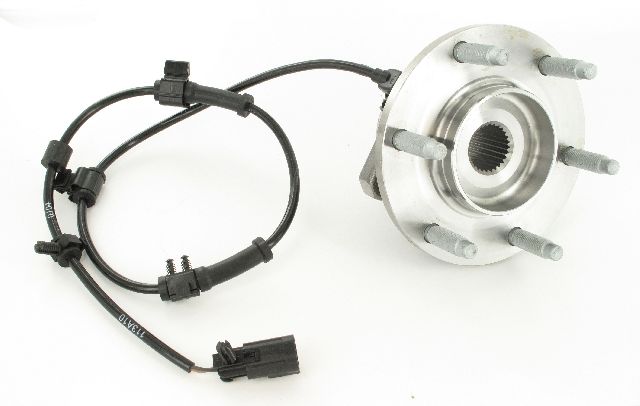
On a 2002-2009 TrailBlazer, code C0035 almost always means the entire front driver's side wheel hub assembly has failed. The sensor is integrated and not sold separately. Expect to pay $100-$250 for an aftermarket hub or $250+ for an OEM part. Before replacing, always inspect the wiring harness for damage, as chafing and corrosion are also common culprits.
- Code C0035 on a 2002-2009 TrailBlazer means there is a fault with the driver's side front wheel speed sensor circuit.
- The most common fix is to replace the entire front wheel hub assembly because the sensor is built into it.
- Before buying a new hub, always inspect the wiring harness and connector for damage, as this is a cheaper and common point of failure.
- Driving with this code is possible but not recommended, as your ABS and stability control will not function in an emergency.
- A humming or grinding noise from the front wheel, or ABS activation at low speeds, are strong indicators that the wheel bearing inside the hub is failing.
What's Unique About the 2002-2009 Chevrolet TrailBlazer
The 2002-2009 TrailBlazer is part of the GMT360 platform. On these vehicles, the front wheel speed sensor is not a separate, individually replaceable part. Instead, it is integrated directly into the sealed wheel hub and bearing assembly. This means that a failure of the sensor or the internal magnetic tone ring (also called a reluctor ring) it reads requires the replacement of the entire hub assembly. This design is different from many other vehicles where the sensor can be unbolted and replaced separately. While some owners have attempted to clean the sensor mounting surface for issues like 'rust jacking', the sealed nature of the hub usually makes replacement the only permanent fix.
Symptoms You May Notice
- ABS warning light is illuminated on the dashboard
- Traction Control or StabiliTrak warning light is on
- ABS system is disabled (wheels may lock up during hard braking)
- Traction control and stability control systems are disabled
- Cruise control may be disabled
- A grinding or humming noise from the front wheel if the bearing itself is failing
- ABS pump may activate erratically at low speeds (typically under 10 mph) before the warning light stays on permanently
- Replacing only the wheel speed sensor. On the TrailBlazer, the sensor is integrated into the hub and is not sold as a separate component.
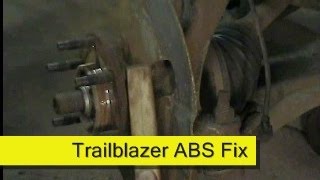
- Replacing the wheel hub assembly without first checking the wiring. A damaged wire or connector is a cheaper fix and a common point of failure. 🎬 See how to diagnose and fix common ABS wiring issues
- Ignoring rust buildup on the knuckle. Failing to clean the mounting surface before installing a new hub can cause the new part to report an incorrect signal.
Most Likely Causes
- Failed Front Wheel Hub & Bearing Assembly 🔴 High Probability → Shop Hub Assembly The wheel speed sensor is integrated into the sealed hub assembly. Corrosion, moisture intrusion, or simple wear and tear of the bearing causes the internal sensor or its magnetic encoder ring to fail. The bearing itself is also a known wear item on these trucks.
How to confirm: With a capable scan tool, observe the live data for the left front wheel speed sensor while driving. If the speed reads 0 mph or is erratic while other wheels report correctly, the hub assembly is faulty. You can also check for play in the wheel by jacking the vehicle up and trying to wiggle the tire at the 12 and 6 o'clock positions. Any significant play or noise when spinning indicates a bad bearing.
Typical fix: Replace the entire left front wheel hub and bearing assembly. Owners on forums strongly recommend using high-quality brands like Timken, MOOG, or ACDelco, as cheap, unbranded hubs are known to fail prematurely.
Est. part cost: $100-$250 - Damaged Wiring Harness or Connector 🟡 Medium Probability The wiring harness leading to the wheel hub is exposed to the elements, road debris, and constant suspension movement. Wires can become frayed, broken, or corroded over time, especially at the connector pigtail. Chafing against suspension or frame components is a common point of failure. A manufacturer service bulletin for other Chevrolet models, TSB Bulletin #PIT5499B, notes that technicians should specifically inspect the Electronic Brake Control Module connector for water intrusion when codes like C0035 are present.
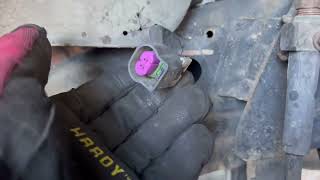
How to confirm: Visually inspect the entire length of the wiring from the hub connector up into the engine bay. Look for cracks, chafing, or green corrosion inside the connector pins. Use a multimeter to check for continuity and voltage between the EBCM and the sensor connector.
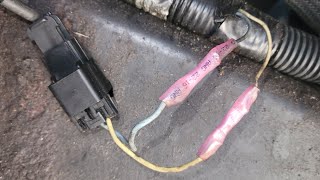
Typical fix: Repair the damaged section of wire or replace the connector pigtail (e.g., Dorman 645-506). In some cases, the entire harness section may need replacement.
Est. part cost: $20-$50 - Rust Buildup on Hub Mounting Surface ('Rust Jacking') ⚪ Low Probability In regions with heavy road salt use, rust can build up on the steering knuckle where the hub assembly mounts. This can push the sensor slightly away from the tone ring, increasing the air gap and causing a weak or lost signal, especially at low speeds.
How to confirm: This is often diagnosed after a hub replacement fails to fix the issue. The primary symptom is often unwanted ABS activation at low speeds. Confirmation requires removing the hub and seeing significant rust scale on the mating surfaces.
Typical fix: Thoroughly clean all rust and debris from the steering knuckle and the new hub's mounting surface before installation. While some have tried cleaning the original sensor, because the hub is sealed on the TrailBlazer, this is not a reliable repair and hub replacement is the standard fix.
Est. part cost: $100-$250
Rare But Worth Checking
- Faulty Electronic Brake Control Module (EBCM): → Shop ABS Control Module This is rare. The EBCM is the computer that controls the ABS. It should only be considered after definitively ruling out the hub assembly and wiring. Usually, a failed EBCM will trigger multiple wheel speed sensor codes or communication errors, not just a single one.
Diagnosis Steps
- Read the codes with an ABS-capable scan tool to confirm C0035 is the primary code. 🎬 Watch: Diagnosing a C0035 code on a Trailblazer Note any other codes like C0040 or C0245.
- Use the scan tool to monitor live data from all four wheel speed sensors. Drive the vehicle slowly (under 10 mph) and observe the reading from the left front sensor. If it reads 0, is erratic, or differs significantly from the others, the problem is in that corner.
- Raise and secure the front of the vehicle. Visually inspect the wiring harness for the left front wheel speed sensor. Check for any signs of physical damage, chafing against suspension components, or corrosion in the connector.
- Wiggle the connector and harness while watching the live data on the scan tool (if possible) to see if the signal changes, indicating a loose connection or broken wire.
- Check for wheel bearing play. Grab the tire at the 12 and 6 o'clock positions and attempt to rock it. Any significant play or a grinding/roaring noise when spinning the wheel indicates the bearing has failed and the hub must be replaced.
- If the wiring looks good and there's no bearing play, use a multimeter to test the circuit. Disconnect the sensor and check for the correct reference voltage from the EBCM and for continuity on the ground wire. Check the sensor's internal resistance (though this can be inconclusive).
- If wiring and connections are confirmed to be good, the fault is almost certainly the integrated wheel hub assembly. Before replacing, be prepared to thoroughly clean the mounting surface on the steering knuckle to remove all rust.
- After replacement, clear the codes and perform a test drive to ensure the ABS light does not return.
Parts You'll Likely Need
- Front Wheel Hub and Bearing Assembly
(OEM #15884292)— This is the most common failure. The wheel speed sensor is integrated into this assembly for the 2002-2009 TrailBlazer, so the entire unit must be replaced to fix the faulty sensor. The number '513188' is a common aftermarket industry part number.
Trusted brands: ACDelco, Timken, MOOG, SKF, Detroit Axle
OEM price range: $250-$350
Aftermarket price range: $100-$250 - ABS Wheel Speed Sensor Connector Pigtail
(OEM #ACDelco PT120, Dorman 645-506)— If the diagnostic process points to a damaged or corroded connector, replacing the pigtail is a cost-effective repair before replacing the entire hub.
Trusted brands: Dorman, ACDelco, Standard Motor Products
OEM price range: $30-$50
Aftermarket price range: $15-$30
Related Codes That Often Appear With This One
- C0040 — This is the code for the Right Front Wheel Speed Sensor. Seeing both C0035 and C0040 together could indicate a systemic issue, like a problem with the EBCM, its power/ground, or that both front hubs are failing around the same time, which is common due to age and mileage.
- C0245 — This code indicates a 'Wheel Speed Sensor Frequency Error'. It often appears with C0035 because the EBCM sees a signal that is so erratic or out of range that it's flagged as a frequency problem, directly caused by the failing sensor or wiring.
Technical Service Bulletins (TSBs) & Recalls
- 17-NA-047: While for newer models, this GM TSB describes ABS issues caused by ferrous debris on the magnetic encoder ring, a known cause for this code type.
- 16-NA-090: Discusses ABS/StabiliTrak lights due to mis-routed or twisted front wheel speed sensor harnesses, highlighting the importance of checking wiring.
- GM Special Coverage Adjustment 07081: While not a TSB for this specific code, it addressed faulty stepper motors in the instrument clusters of 2003-2005 models, a separate but extremely common platform issue.
- TSB Bulletin #22-NA-089: Notes that ABS, Traction Control, and Stabilitrak lamps may illuminate intermittently and/or deactivate for an ignition cycle when codes C0035 through C0051 are set.
- TSB Bulletin #PIC5428G: Describes scenarios where ABS, Traction Control, and Service Stabilitrak lights are on, noting that the EBCM may set C0035 with specific symptom bytes 18, 5A, or 0F, requiring technician access to the wheel bearing.
Platform-Specific Known Issues
- source — A user on the GMTNation forum with a 2008 Trailblazer reported codes C0035 and C0245. The issue presented without any noticeable braking problems or ABS light initially. The community advised checking for low-speed ABS activation and cleaning the sensor, but acknowledged that hub failure was the most likely cause, even on a vehicle with a previously replaced aftermarket hub.
Mechanic-Grade Diagnostic Values
- Wheel Speed Sensor Signal Wire Voltage (Key On, Wheel Stationary) — expected: A static DC voltage, typically either ~0.7V or ~1.8V depending on tone ring position.. Failure: A reading of 0V on the signal wire when the sensor is unplugged is normal; a reading of 0V when plugged in and a known-good power feed is present indicates a faulty sensor.
- Wheel Speed Sensor Signal Wire Voltage (Wheel Spinning) — expected: A toggling digital square wave, switching between a low (~0.7V) and high (~1.8V) state as the wheel turns.. Failure: A flat line, erratic signal, or a signal that drops out at low speeds indicates a failing sensor or damaged tone ring.
- Wheel Speed Sensor Power Supply Wire Voltage (at sensor connector, unplugged) — expected: Should be close to battery voltage (~12V).. Failure: Low or no voltage indicates a wiring problem between the EBCM and the sensor.
Hidden / Shadow Codes Worth Checking
- C0035 0F: Signal Erratic: The EBCM is receiving a signal, but it's unstable or jumping. This often points to a cracked internal tone ring, debris on the sensor, or intermittent breaks in the wiring harness. (see via A professional GM-capable scan tool (e.g., Tech2, GDS2) that can read ABS module symptom bytes/sub-codes.)
- C0035 18: Low Signal Amplitude: The signal from the sensor is present but too weak for the EBCM to read reliably. This is a classic symptom of an excessive air gap caused by 'rust jacking' on the hub's mounting surface. (see via A professional GM-capable scan tool (e.g., Tech2, GDS2).)
- C0035 5A: Signal Not Plausible: The sensor's speed reading doesn't make sense when compared to the other three wheel speed sensors. This can indicate a severely damaged tone ring or an incompatible/incorrect aftermarket hub assembly was installed. (see via A professional GM-capable scan tool (e.g., Tech2, GDS2).)
Wiring & Ground Locations
- EBCM Connector (at module) — The EBCM is located on the driver's side frame rail, toward the front of the vehicle. The main connector is a large, 38-pin sealed connector.. This is the termination point for the wheel speed sensor circuit. Testing for signal at these pins can confirm if the wiring harness is intact. The Left Front WSS uses a Light Blue wire and a Yellow wire on typical Kelsey-Hayes EBCM systems.
- EBCM Ground — On many GM trucks, the primary EBCM ground is located directly on the frame rail, near the EBCM itself, under the driver's door area. This ground point is notoriously prone to corrosion.. A corroded EBCM ground can cause a host of erratic ABS issues, including false wheel speed sensor codes. GM issued service bulletins for other platforms (like the GMT800 trucks) to specifically address cleaning this ground before replacing any parts. It is a critical and often-overlooked inspection point.
- G103 — Located on the cowl in the engine compartment, above the brake booster.. This is a major chassis ground point that provides ground for the Body Control Module (BCM) and the Data Link Connector (DLC). While not the direct ground for the EBCM power circuit, a poor connection here can cause communication issues between modules, potentially leading to incorrect diagnostic codes.
Real Owner Repair Stories
- Quora User Experience (Older GM car, model not specified) — C0035 code and ABS light.
❌ Tried (didn't work) Not specified, but implies standard diagnostics were performed.
✅ What actually fixed it The alternator was failing. The user reported this happened on two separate occasions. A faulty voltage regulator inside the alternator was likely creating electrical noise or voltage instability, which interfered with the sensitive EBCM and caused it to throw a false wheel speed sensor code. Replacing the alternator resolved the issue. - NHTSA ODI #10440851 — An owner reported seeing both the ABS light and the "Brake Light" illuminated on the dash. Upon reading the codes, they found C0035 and C0040, indicating circuit malfunctions for the front wheel speed sensors.
- NHTSA ODI #11228687 — A vehicle was reported to have multiple indicators illuminated. A diagnostic scan revealed a long list of codes including C0035, C0040, and C0050, alongside several communication codes (U-codes).
OEM Part Supersession History
15884292→N/A— This appears to be the primary and long-standing OEM part number for the front wheel hub assembly.
Heads up: While there is no direct supersession, be aware that numerous aftermarket part numbers exist. Using a low-quality, unverified brand can lead to premature failure or a 'Signal Not Plausible' sub-code if the internal tone ring is not manufactured to precise OEM specifications.
Model Year Variations Within This Range
- 2002-2008: Most TrailBlazers in this range were equipped with a Kelsey-Hayes 325 series EBCM. The diagnostic approach is consistent for these years.
- 2009: Some late-model GM vehicles transitioned to Bosch ABS modules. While not definitively confirmed for the TrailBlazer in searches, a 2009 model could potentially have a different EBCM. However, the root cause of C0035 related to the integrated hub assembly and wiring remains the same regardless of the EBCM brand.
Diagnostic Flowchart
Other Known Issues on This Vehicle
Issues unrelated to this code that are worth knowing about as an owner of this generation:
- Faulty Fuel Level Sensor 🟠 Medium — Extremely common. The gauge becomes erratic or reads empty. Often requires dropping the fuel tank to replace the sending unit inside the pump module. (Ref: GM offered a special policy (not a recall) to cover 50% of the repair cost for some 2005-2007 models up to 120,000 miles.)
- Failing Instrument Cluster Stepper Motors 🟠 Medium — Very common on 2003-2006 models. Gauges (speedometer, tachometer, etc.) will get stuck, read incorrectly, or stop working entirely. (Ref: A class-action lawsuit resulted in a Special Coverage Adjustment (07081) for vehicles under 7 years/70,000 miles, but this has long since expired.)
- Cooling Fan Clutch Failure 🔴 High — Common across all years. The electromagnetic fan clutch can fail to engage, causing overheating, or lock up, causing a loud roaring noise and reduced power/MPG.
- 4WD System Failure (Actuator/Switch) 🟠 Medium — Fairly common. The front axle actuator can fail, preventing engagement of 4WD. The selector switch in the dash and the transfer case encoder motor are also known failure points.
- Cracked Exhaust Manifold (4.2L I6) 🟡 Low — A known issue, though less frequent than others. Leads to a ticking noise, especially when cold, and an exhaust smell in the cabin.
- A/C Blower Motor Resistor Failure 🟡 Low — Very common. Causes the fan to only work on the highest setting (or not at all). It's a cheap and easy part to replace behind the glove box.
- Master Power Window Switch Module Failure 🟡 Low — Common enough to warrant a recall. Fluid can enter the driver's door module, causing corrosion and intermittent or total failure of window/lock switches. (Ref: GM Recall 14309)
Used vs. New Parts: Buying Guide for This Vehicle
When a used part is the smart pick: For this repair, obtaining used parts is NOT recommended. The primary failure part, the wheel hub assembly, is a wear-and-tear item like a brake pad. A used hub has unknown mileage and wear, and the risk of it failing shortly after installation is very high.
What to inspect on the donor part:
- Not applicable as used hubs are not advised.
OEM-only on this vehicle (don't cheap out):
- While not strictly 'OEM-only', this is a repair where part quality is critical. Cheap, unbranded aftermarket hub assemblies are known to fail quickly, sometimes within months. Stick to OEM (ACDelco) or top-tier aftermarket brands.
Aftermarket brands forum-validated for this vehicle:
- Timken
- MOOG
- SKF
- ACDelco (Professional or Gold series)
Brands owners have reported issues with on this vehicle:
- Generic, no-name, or 'white box' parts sold on online marketplaces with unusually low prices. Forum discussions frequently warn against these due to poor bearing quality and inaccurate sensor readings.
Real Owner Stories
Aggregated from forums and TSBs cited above. Mileages and costs reflect what owners reported in those sources.
2008 Chevrolet TrailBlazer
Symptoms: The vehicle reported codes C0035 and C0245. Initially, there were no noticeable braking problems or an ABS light, but the codes were present in the system.
What fixed it: The community consensus for this specific case was that hub failure was the most likely cause, even if an aftermarket hub had been installed previously.
Source hint: GMTNation.com thread titled 'trailblazer-abs-codes-c0035-and-c0245'
Related OBD-II Codes
Frequently Asked Questions
Which replacement hub brands are recommended for a 2002-2009 TrailBlazer to avoid repeat C0035 codes?
My 2008 TrailBlazer has C0035 and C0245; could this be related to the instrument cluster issues mentioned in GM Special Coverage Adjustment 07081?
Is there a specific wiring part I should look for if the connector to my left front hub is corroded?
Why does my ABS activate at low speeds on my TrailBlazer even though I just replaced the hub?
Does TSB 16-NA-090 apply to the ABS/StabiliTrak lights on my TrailBlazer?
Helpful Videos
We Have This Part in Stock


The information in this article is provided for general reference and educational purposes only. Vehicle specifications, procedures, and part compatibility can vary by production date, trim level, and region. Always consult your vehicle's factory service manual and verify part numbers before purchasing or performing repairs. Safety-critical components such as airbags, seat belts, and braking systems should be installed by a qualified professional.
- Chevrolet TrailBlazer:
- 🧭 Diagnostic Flowchart
- 🎬 Helpful Videos
- 🛍️ Shop This Part
- What's Unique About the 2002-2009 Chevrolet TrailBlazer
- Symptoms You May Notice
- Most Likely Causes
- Rare But Worth Checking
- Diagnosis Steps
- Parts You'll Likely Need
- Related Codes That Often Appear With This One
- Technical Service Bulletins (TSBs) & Recalls
- Platform-Specific Known Issues
- Mechanic-Grade Diagnostic Values
- Hidden / Shadow Codes Worth Checking
- Wiring & Ground Locations
- Real Owner Repair Stories
- OEM Part Supersession History
- Model Year Variations Within This Range
- Other Known Issues on This Vehicle
- Used vs. New Parts: Buying Guide for This Vehicle
- Real Owner Stories
- 2008 Chevrolet TrailBlazer
- Related OBD-II Codes
- Frequently Asked Questions
- 🎟️ Get 5% Off