

C0035 on 2017 Chevrolet Traverse: Left Front Wheel Speed Sensor Fault Explained
On a 2017 Traverse, code C0035 is almost always caused by a failed left front wheel speed sensor, which is integrated into the wheel hub assembly. The most common fix is to replace the entire left front wheel hub, which typically costs between $190 and $250 for the part. Before replacement, it is highly recommended to inspect the wiring harness for damage and clean the magnetic encoder ring on the hub, as per GM TSB 17-NA-047, as this can sometimes resolve the issue without new parts.
- Code C0035 on a 2017 Traverse means there is a fault with the left front wheel speed sensor circuit, which will disable your ABS and StabiliTrak systems.
- The most common cause is a failure of the sensor itself, which is integrated into the wheel hub assembly.
- The standard repair is to replace the entire left front wheel hub and bearing assembly (part #513277).
- Before replacing the hub, always perform a visual inspection of the wiring harness for obvious damage, as this can be a simpler and cheaper fix.
- Driving is possible, but your vehicle's key safety systems are offline, so it should be repaired promptly.
What's Unique About the 2017-2017 Chevrolet TRAVERSE
The 2017 Traverse is the final model year of the first generation (Lambda platform), which it shares with the GMC Acadia, Buick Enclave, and Saturn Outlook. On this platform, the wheel speed sensor is not a separate, easily serviced part. Instead, it is integrated with the magnetic encoder ring into the sealed wheel hub and bearing assembly. This design means that a common electronic sensor failure often requires the replacement of the entire mechanical hub assembly, making the repair more involved and costly than on vehicles with separate sensors. GM Technical Service Bulletin #PIC5428G and its successor, #17-NA-047, specifically address codes C0035-C0050 on this vehicle platform, pointing to issues with the wheel bearing assembly or, more commonly, ferrous debris accumulating on the magnetic encoder ring.
Diagnostic Flowchart
Tap your situation to follow the diagnostic path that matches what you're seeing on this vehicle.
Symptoms You May Notice
- ABS warning light is on
- StabiliTrak or Traction Control (TC) warning light is on
- "Service StabiliTrak" or "Service Traction Control" message on the driver information center
- Cruise control is disabled
- A grinding, pulsating, or ratcheting feeling from the brakes, especially at low speeds, as the ABS incorrectly activates
- In some GM vehicles, a "Service Steering" message may appear if equipped with electric power steering, as the system defaults to a heavier feel without a valid speed signal
- Replacing the EBCM before thoroughly testing the wheel hub and wiring.
- Replacing the wheel hub assembly without first inspecting the wiring harness for hidden breaks near the connector.
- Replacing the hub assembly without first attempting to clean debris from the magnetic encoder ring as recommended by GM TSBs.
Most Likely Causes
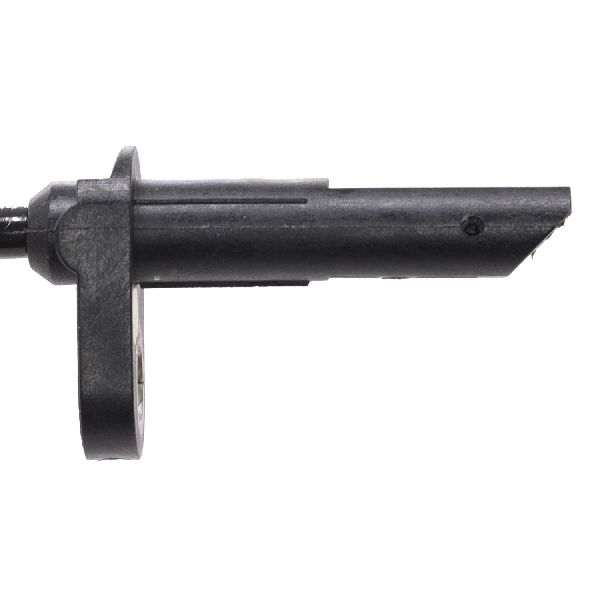
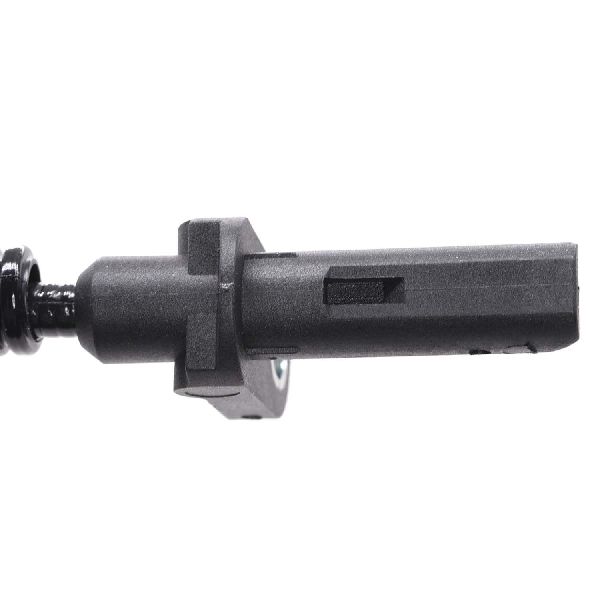
- Failed Wheel Speed Sensor (Integrated into Hub Assembly) 🔴 High Probability → Shop ABS Wheel Speed Sensor The sensor is part of the sealed hub assembly and cannot be replaced separately. Internal failure of the sensor electronics or the magnetic encoder ring it reads is the most common cause of C0035.
How to confirm: Use a scan tool to monitor live data from the left front wheel speed sensor while driving or spinning the wheel. A reading of zero, or one that is erratic compared to the other three wheels, confirms a bad sensor/hub.
Typical fix: Replace the entire left front wheel hub and bearing assembly.
Est. part cost: $190-$250 - Damaged Wiring Harness or Connector 🟡 Medium Probability The wiring harness is exposed to constant suspension movement, weather, and road debris. Wires can break internally near the connector without visible damage to the insulation, a common failure point on many GM vehicles.
How to confirm: Visually inspect the harness for chafing or corrosion. Gently pull on each wire at the connector; if the insulation stretches, the wire is broken inside. Use a multimeter to check for continuity and voltage at the connector. 🎬 See how to test active sensors and repair damaged wiring.
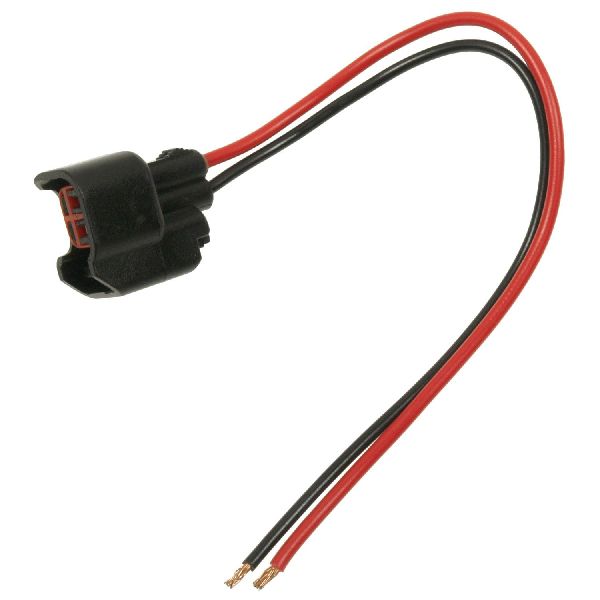
Typical fix: Repair the broken wire or replace the pigtail connector harness (GM P/N 10340314).
Est. part cost: $25-$50 - Worn or Damaged Wheel Bearing 🟡 Medium Probability Excessive play or 'wobble' in a worn wheel bearing can increase the air gap between the internal magnetic ring and the sensor, or damage the ring itself, leading to a weak or erratic signal.
How to confirm: Safely raise the vehicle and check for play by attempting to rock the wheel from the top and bottom (12 and 6 o'clock positions). A humming or grinding noise while driving that changes with turning is also a strong indicator.
Typical fix: Replace the left front wheel hub and bearing assembly.
Est. part cost: $190-$250
Rare But Worth Checking
- Ferrous Debris on Magnetic Encoder Ring: As detailed in GM TSBs PIC5428G and 17-NA-047, metallic debris can stick to the magnetic encoder ring on the hub, disrupting the sensor's reading and causing an erratic signal (symptom byte 0F). The TSB advises cleaning the ring with a soft brush and mild detergent before replacing any parts.
- Failed Electronic Brake Control Module (EBCM): → Shop ABS Control Module This is very uncommon and should only be considered after the hub assembly and wiring have been thoroughly tested and ruled out. An EBCM failure typically triggers multiple wheel speed sensor codes or communication errors.
Diagnosis Steps
- Connect an OBD-II scanner capable of reading ABS/Chassis codes to confirm C0035 is the active code and check for any manufacturer-specific symptom bytes (e.g., 18, 0F, 5A).
- Use the scanner's live data function to monitor the speeds of all four wheels while driving in a straight line. The Left Front (LF) sensor should read differently, erratically, or not at all compared to the other three.
- Safely lift and support the vehicle. Visually inspect the wheel speed sensor wiring harness from the back of the hub up into the wheel well. Look for any chafing, breaks, or signs of melting.
- Disconnect the harness and inspect the connector pins for corrosion. Gently tug on the wires at the back of the connector to check for internal breaks, which are common.
- Remove the wheel and brake caliper to get a clear view of the inboard side of the hub assembly. Inspect the magnetic encoder ring for any attached metallic debris. Clean it with a soft nylon brush and brake cleaner or mild soap, as per TSB 17-NA-047.
- If wiring and the encoder ring look good, spin the left front wheel by hand while watching the live data on the scan tool. A lack of a signal or an erratic signal points to a bad sensor/hub.
- Check the wheel for excessive play by grabbing it at the 12 and 6 o'clock positions and trying to rock it. Any significant movement indicates a bad wheel bearing, which necessitates replacing the hub assembly.
Parts You'll Likely Need
- Left Front Wheel Hub and Bearing Assembly
(OEM #ACDelco Professional: FW403, GM Genuine: 23156221)— This is the most common failure. The non-serviceable wheel speed sensor is integrated into this assembly, and replacing the whole unit is the standard repair. The industry part number is 513277. 🎬 Watch: Step-by-step walkthrough for replacing the front hub assembly.
Trusted brands: ACDelco, MOOG, Timken, SKF
OEM price range: $250-$300
Aftermarket price range: $150-$250 - Wheel Speed Sensor Wiring Harness Pigtail
(OEM #GM 10340314, Dorman 970-042)— If a visual inspection reveals corrosion or damage to the connector, or if an internal wire break is found, replacing this pigtail is a much cheaper fix than replacing the entire hub.
Trusted brands: ACDelco, Dorman
OEM price range: $30-$50
Aftermarket price range: $20-$40
Related Codes That Often Appear With This One
- C0040 — This is the code for the Right Front Wheel Speed Sensor. It can appear if there are similar wiring issues or if both front wheel bearings are failing around the same time due to age and mileage.
- C0035 18 — This is a manufacturer-specific symptom byte indicating 'Signal Amplitude Low/Too Small'. It points strongly to a failing sensor, an excessive air gap due to rust or a loose bearing, or high resistance in the wiring.
- C0035 0F — This symptom byte indicates an 'Erratic Signal'. This is often caused by a failing bearing, debris on the magnetic encoder ring, or an intermittent wiring break.
- C0035 5A — This symptom byte indicates 'Signal Plausibility Failure', meaning the signal is illogical compared to other vehicle sensors. This can be caused by a damaged magnetic encoder ring on the hub or a significant wiring issue.
Technical Service Bulletins (TSBs) & Recalls
- PIC5428G: The original bulletin noting that DTCs C0035 through C0050 may set. It directs technicians to inspect the relevant wheel bearing assembly and clean the magnetic encoder ring.
- 17-NA-047: This bulletin supersedes PIC5428G and reiterates the diagnostic procedure. It emphasizes that the cause is often ferrous metallic debris on the encoder ring and that cleaning it should be the first step before part replacement.
Platform-Specific Known Issues
- As noted in TSBs PIC5428G and 17-NA-047, this vehicle platform is known for setting wheel speed sensor codes (C0035-C0050). The primary recommendation from GM is to first inspect and clean the magnetic encoder ring for debris before replacing the hub assembly, as this is a very common cause and a no-parts fix.
- The wiring harness leading to the front wheel speed sensors is a known weak point. The wires can break internally from the constant flexing of the suspension, even if the outer insulation appears intact.
Mechanic-Grade Diagnostic Values
- Wheel Speed Sensor Type and Signal — expected: The 2017 Traverse uses a digital, two-wire magneto-resistive sensor. It does not generate its own voltage. It manipulates a voltage supplied by the EBCM to create a square wave signal that alternates between approximately 7mA and 14mA.. Failure: A flat line, a signal that does not switch, or an erratic waveform on an oscilloscope when the wheel is spinning indicates a fault.
- Key-On Voltage at Sensor Connector (harness side) — expected: One wire should have a reference voltage (often 5V or 12V) and the other is the signal return wire. GM active systems may only send a brief 12V pulse upon key-on to check circuit integrity before shutting the driver off if a fault is present.. Failure: No voltage present on either pin (after confirming fuses are good) points to a wiring issue or a fault within the EBCM.
Scan Tool Commands That Help
- GM GDS2/Tech2: Clear Codes & Power Cycle — On some GM active wheel speed systems, the EBCM will turn off the 12V driver to the sensor circuit once a fault code is set. To perform live voltage tests, the codes must be cleared, and the ignition cycled to get the module to briefly send power to the circuit again.
Wiring & Ground Locations
- EBCM (Electronic Brake Control Module) — Located under the hood on the passenger side, behind the air filter housing and under the main fuse box.. This module receives the signal from the wheel speed sensor, provides its power, and sets code C0035. All wiring for the sensor circuit terminates here.
- EBCM Fuses — In the main underhood fuse box, there are two fuses for the ABS motor/module, typically a 40A and a 25A fuse.. A blown fuse will cut all power to the EBCM, causing a loss of communication and multiple codes, but should be checked as a preliminary step.
- EBCM Connector Pin 29 — At the main electrical connector for the Electronic Brake Control Module (EBCM).. The signal from the Left Front Wheel Speed Sensor is transmitted on a Yellow/Violet wire specifically to Pin 29 of the EBCM connector. This is the exact pin to test for signal continuity back to the module.
- Engine Block Grounds — The 3.6L V6 engine has several key ground connections. One main battery ground attaches to the front left side of the engine block. Three smaller ground wires typically attach to studs on the rear and side of the cylinder heads.. Poor or corroded engine and chassis grounds can cause a variety of unpredictable electrical issues, including erratic sensor readings and module faults. Ensuring these are clean and tight is a crucial step in diagnosing any electrical problem.
Real Owner Repair Stories
- Reddit user on r/chevycolorado (Chevrolet Colorado (similar GM ABS system)) — ABS code C0035.
❌ Tried (didn't work) Replacing the left ABS sensor., Checking and replacing all ABS-related fuses.
✅ What actually fixed it The root cause was rusted-out reluctor rings on the hub assembly, which tricked the sensor into thinking the wheel was locked up. Replacing the entire hub assembly resolved the code. - YouTube channel 'Eli TheOBDTech' (GM Vehicle with C0035) — C0035 Left Front Wheel Speed Sensor Circuit Malfunction. Live data showed 0 MPH from the left front wheel while others registered speed.
❌ Tried (didn't work) The diagnosis went straight to visual inspection after confirming the code and live data.
✅ What actually fixed it A visual inspection found that the wiring harness going to the sensor was completely torn. Both wires were ripped apart, causing a total loss of signal. The fix was to repair or replace the damaged harness.
Helpful Videos
![Active ABS Wheel Speed Sensor Testing and Wiring Repair [09 Silverado]](https://img.youtube.com/vi/ErbK7RqNhXw/mqdefault.jpg)
We Have This Part in Stock


The information in this article is provided for general reference and educational purposes only. Vehicle specifications, procedures, and part compatibility can vary by production date, trim level, and region. Always consult your vehicle's factory service manual and verify part numbers before purchasing or performing repairs. Safety-critical components such as airbags, seat belts, and braking systems should be installed by a qualified professional.
- Chevrolet TRAVERSE:
- 🧭 Diagnostic Flowchart
- 🎬 Helpful Videos
- 🛍️ Shop This Part
- What's Unique About the 2017-2017 Chevrolet TRAVERSE
- Symptoms You May Notice
- Most Likely Causes
- Rare But Worth Checking
- Diagnosis Steps
- Parts You'll Likely Need
- Related Codes That Often Appear With This One
- Technical Service Bulletins (TSBs) & Recalls
- Platform-Specific Known Issues
- Mechanic-Grade Diagnostic Values
- Scan Tool Commands That Help
- Wiring & Ground Locations
- Real Owner Repair Stories
- 🎟️ Get 5% Off