

C0035 on 2011-2019 Ford Explorer: Left Front Wheel Speed Sensor Fault Explained
Code C0035 on a 2011-2019 Ford Explorer means there is a fault in the left front (driver's side) wheel speed sensor circuit. The most common fix is replacing the sensor itself or repairing its wiring. Expect to pay $30-$80 for an aftermarket sensor and $100-$180 for an OEM part.
- C0035 on your Explorer means the ABS computer has lost the signal from the driver's side front wheel.
- Your ABS and traction control will not work until this is fixed, so brake with caution.
- Before buying parts, always inspect the sensor's wiring and connector for obvious damage or corrosion, as this is a common and cheap fix.
- The most probable cause is a bad wheel speed sensor, which is a DIY-friendly replacement for those with basic tools.
- You need a scan tool that can read ABS codes to properly diagnose the issue and confirm the fix.
What's Unique About the 2011-2019 Ford Explorer
The 2011-2019 Ford Explorer (fifth generation) does not have a unique, widespread design flaw that causes code C0035. The issues leading to this code are typical for most modern vehicles, stemming from the exposed location of the wheel speed sensor and its wiring. The diagnostic process is standard, and the problem is not typically linked to broader electronic module failures on this platform. The wiring harness is known to be a common failure point, often chafing or breaking where it flexes with the suspension and steering.
Symptoms You May Notice
- ABS warning light is on
- Traction control or stability control light is on
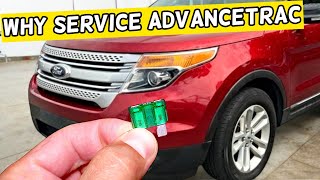
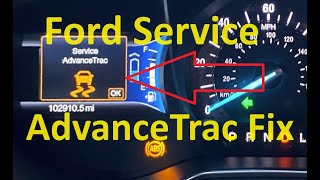
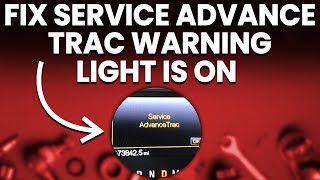
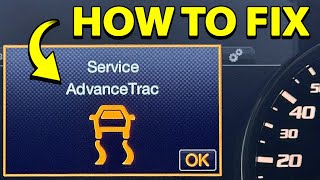
- "Service AdvanceTrac" message may a 🎬 Watch: Why your AdvanceTrac light is on and how to fix it.ppear on the dashboard
- "Hill Start Assist Not Available" message may appear
- ABS system does not activate during hard braking (wheels may lock up)
- Brake pedal feels firm or different during hard stops
- Replacing the wheel hub bearing when only the sensor is bad.
- Replacing the ABS module when the actual fault is a simple broken wire or corroded connector.
Most Likely Causes
- Failed Left Front Wheel Speed Sensor 🔴 High Probability → Shop ABS Wheel Speed Sensor The sensor is exposed to water, road salt, and debris, which can cause internal failure over time. It is a common wear-and-tear item on many vehicles, including the Explorer.
How to confirm: Using an ABS-capable scan tool, monitor the live data for all four wheel speed sensors while driving. The left front sensor will read 0 MPH or show an erratic signal compared to the others. You can also test the sensor's internal resistance with a multimeter; an open circuit indicates a failed sensor.
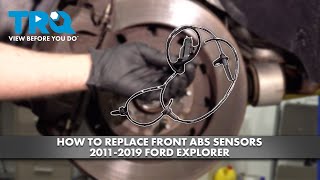
Typical fix: Replace the left front wheel speed sensor. It is typically held in place by a single bolt on the steering knuckle.
Est. part cost: $30-$80 - Damaged Wiring or Corroded Connector 🟡 Medium Probability The wiring harness runs down the suspension and is subject to constant stress from steering and suspension movement. Wires can break internally, especially near clips or where the harness bends. The connector is also vulnerable to moisture and road salt, leading to corrosion.
How to confirm: Visually inspect the entire length of the sensor's wiring harness from the sensor to the main chassis connection. Check for chafing, breaks, or green/white corrosion inside the connector pins. Perform a 'wiggle test' on the harness while watching live data to see if the signal cuts in and out.
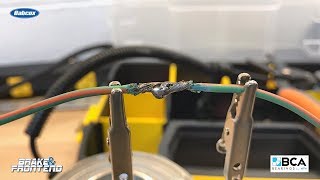
Typical fix: Repair the broken wire(s) using solder and heat shrink, 🎬 Watch: A pro mechanic's guide to repairing damaged sensor wiring. or replace the pigtail connector if it is corroded. In some cases, a new sensor with an integrated harness is required.
Est. part cost: $15-$40 - Damaged or Debris-Covered Tone Ring ⚪ Low Probability The tone ring is part of the wheel hub bearing assembly. While protected, rust jacking or metallic debris from brake wear can accumulate on it, disrupting the sensor's reading.
How to confirm: After removing the wheel speed sensor, visually inspect the tone ring through the sensor mounting hole using a flashlight. Look for rust buildup, caked-on debris, or cracked/missing teeth.
Typical fix: Often, the tone ring can be cleaned with a brush and brake cleaner. If the ring is physically damaged (cracked, missing teeth), the entire wheel hub bearing assembly must be replaced as the ring is integrated.
Est. part cost: $150-$250
Rare But Worth Checking
- Faulty ABS Control Module: → Shop ABS Control Module This is uncommon. Before condemning the module, exhaust all other possibilities, including wiring faults between the sensor and the module. A faulty module will often have other codes present or show no communication with the scan tool.
- Failed Wheel Hub Bearing: Excessive play in a worn wheel bearing can cause the tone ring to move out of alignment with the sensor, leading to an erratic or lost signal. This is usually accompanied by a grinding or humming noise from the wheel that changes with speed.
Diagnosis Steps
- Connect an ABS-capable OBD-II scanner to the vehicle.
- Confirm that C0035 is the active or stored code.
- Access the live data stream for the ABS module.
- Monitor the speeds of all four wheels while driving slowly (5-10 MPH). Confirm that the Left Front wheel speed reads 0 or is significantly different from the other three.
- Raise and secure the front of the vehicle. Remove the left front wheel.
- Visually inspect the wheel speed sensor and its wiring harness for any obvious signs of damage, such as cuts, chafing, or melting. Pay close attention to the area where the harness flexes.
- Unplug the sensor connector and inspect for corrosion or pushed-out pins. Clean with electrical contact cleaner if necessary.
- Remove the single bolt holding the sensor to the steering knuckle and pull the sensor out. This can be difficult if it's seized with rust.
- Inspect the sensor's magnetic tip for metallic debris. Inspect the tone ring (inside the hub) for damage or heavy contamination.
- If no visible issues are found, test the sensor's resistance with a multimeter. Compare the reading to the manufacturer's specification. An open or shorted reading indicates a bad sensor.
- If the sensor tests good, perform a continuity and resistance check on the wiring harness between the sensor connector and the ABS module to find any hidden breaks.
- If a new sensor does not resolve the issue and the wiring is confirmed to be good, the fault may lie with the ABS control module, though this is rare.
Parts You'll Likely Need
- Front Wheel Speed Sensor
(OEM #BB5Z-2C204-C)— This is the most frequent failure point for code C0035 due to its exposed location and electronic nature.
Trusted brands: Motorcraft, Bosch, Delphi, NTK, Standard Motor Products (SMP)
OEM price range: $100-$180
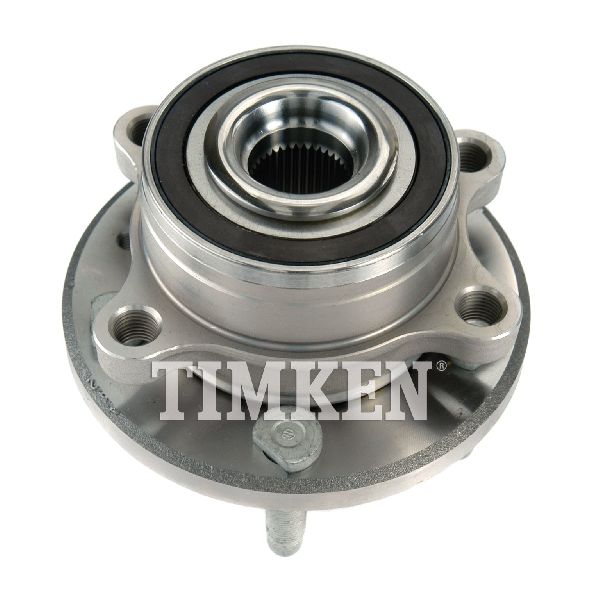
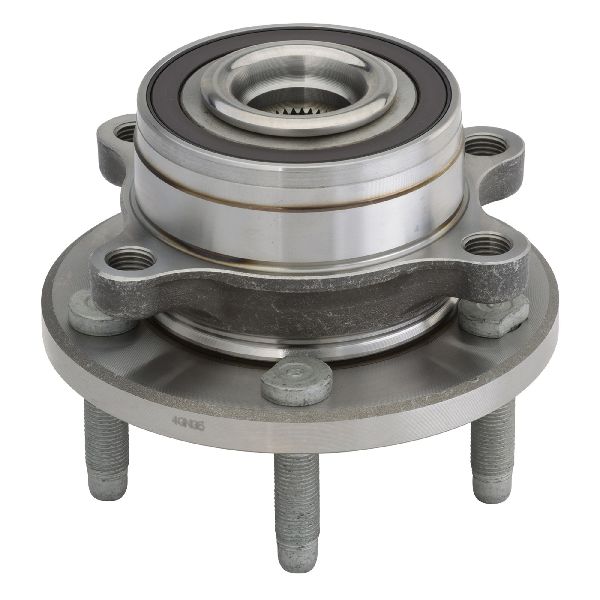
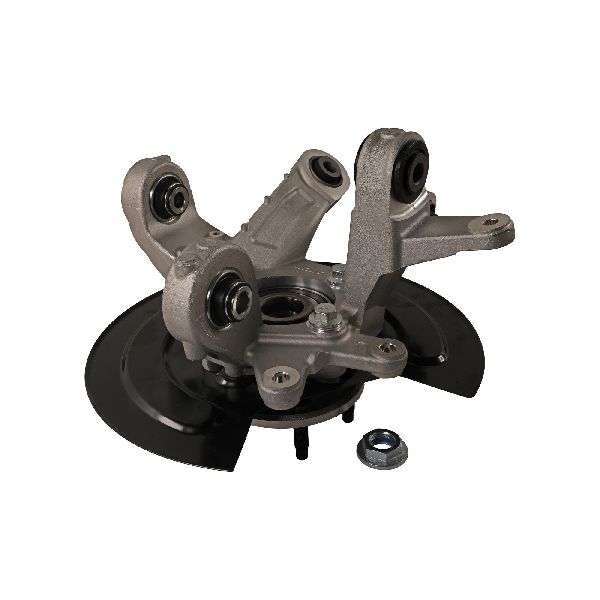
Aftermarket price range: $30-$80 - Front Wheel Hub and Bearing Assembly
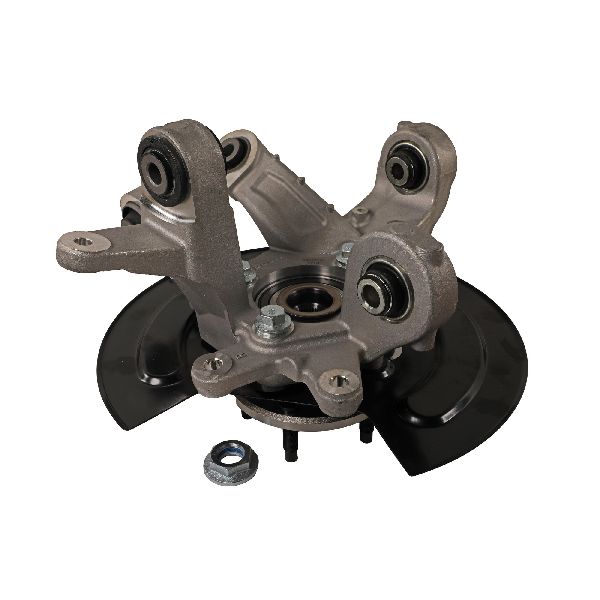
(OEM #DB5Z-1104-C)— Replaced if the integrated magnetic tone ring is damaged or if the bearing itself has failed, causing excessive play that damages the sensor.
Trusted brands: Motorcraft, Timken, SKF, MOOG, DuraGo
OEM price range: $250-$350
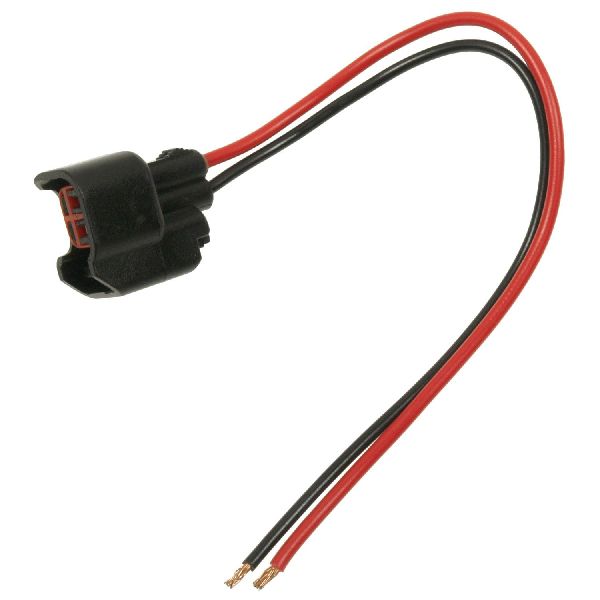
Aftermarket price range: $150-$250 - Wheel Speed Sensor Connector Pigtail
(OEM #WPT-1158 (Motorcraft))— If the connector is corroded or damaged, replacing the pigtail is often easier than repairing individual pins.
Trusted brands: Motorcraft, Dorman
OEM price range: $30-$50
Aftermarket price range: $15-$30
Related Codes That Often Appear With This One
- C0034 (Right Front Wheel Speed Sensor Circuit)
- C0037 (Left Rear Wheel Speed Sensor Circuit)
- C003A (Right Rear Wheel Speed Sensor Circuit)
Platform-Specific Known Issues
- Wiring Harness Chafing: Owners on forums like explorerforum.com have noted that the sensor harness can rub against suspension components or the inner fender liner, eventually wearing through the insulation and causing a short or open circuit. When inspecting, pay close attention to any point where the harness is secured by a clip or makes a sharp bend.
Technical Service Bulletins (TSBs) & Recalls
While specific to other manufacturers, technical bulletins such as #PIT3460N (cited in NHTSA ODI #10273914) highlight that the ABS and brake lights may illuminate due to EBCM DTCs including C0035 and C0040, reinforcing that this code is a standard industry indicator for left front wheel speed sensor circuit malfunctions.
Mechanic-Grade Diagnostic Values
- Wheel Speed Sensor Internal Resistance (Passive Sensor) — expected: 800 - 2,000 Ω. Compare reading to the sensor on the opposite side; they should be very close.. Failure: An open circuit (infinite resistance) or a dead short (near zero resistance) indicates a failed sensor.
- Wheel Speed Sensor AC Voltage Output (Passive Sensor) — expected: At least 200 mV (0.2 VAC) when spinning the wheel at approximately one revolution every two seconds.. Failure: No voltage or significantly lower voltage indicates a weak or failed sensor, or an excessive air gap.
- Voltage at Sensor Connector (Harness Side, Active Sensor) — expected: 4.5V - 5.5V reference voltage on one pin and good ground (near 0V) on the other, with key on, engine off.. Failure: Voltage below 4.0V or no voltage points to a problem in the wiring harness or the ABS module's supply circuit.
Scan Tool Commands That Help
- Ford IDS (or equivalent high-level scanner): ABS Self Test (KOEO) — To command the ABS module to run an internal diagnostic check, which can help confirm module health before extensive wiring checks.
- Ford IDS (or equivalent high-level scanner): Programmable Module Installation (PMI) — This is required when replacing the ABS module. It copies the as-built data and vehicle configuration from the old module to the new one to ensure compatibility.
- Ford IDS (or equivalent high-level scanner): IVD Initialization Sequence — After replacing certain ABS components or the module itself, this procedure may be required to calibrate sensors like the longitudinal accelerometer.
Wiring & Ground Locations
- ABS Control Module — Located in the driver's side front of the engine bay, positioned behind the driver's side headlight assembly.. This is the destination for the wheel speed sensor signal. The main harness connector here is a key test point for checking continuity from the sensor.
- Under-Hood Fuse Box (2011-2015) — In the engine bay, next to the battery on the driver's side.. Contains critical fuses for the ABS system. Check Fuse 5 (50A - Pump), Fuse 43 (40A - Valves), and Fuse 92 (10A - Module) before condemning components.
- Interior Fuse Box (2011-2015) — In the driver's footwell, behind a cover near the parking brake pedal.. Contains Fuse 18, which provides power to the ABS/Traction Control module.
Real Owner Repair Stories
- ScannerDanner Forum (2013 Ford Explorer 3.5L TiVCT) — ABS, Brake, and Traction Control Off warning lights illuminated on the dashboard, along with the 'wrench' symbol.
❌ Tried (didn't work) Disconnecting the battery to reset modules., Clearing codes with a scan tool (codes returned immediately)., Performing the IVD initialization sequence., Inspecting the ABS module connector for corrosion (it was clean).
✅ What actually fixed it The ABS control module itself was faulty. Live data showed flatline readings from two wheel speed sensors (C0034 and C0037), and the module stored an internal fault code (U3000:49-AB). Replacing the ABS control module and clearing the codes resolved all issues. - NHTSA ODI #10287028 — An owner reported an ABS fault that occurred while driving. Despite replacing the wheel hub and ABS sensor after finding a bad hub on the left side, the problem persisted, illustrating that C0035 can sometimes involve complex circuit issues beyond the sensor itself.
- NHTSA ODI #10442197 — A driver reported that their dealer identified C0035 for the left front sensor and C0220 for "left front in release too long," with an estimated repair cost of $762 for a new sensor and hub.
OEM Part Supersession History
DB5Z-2C204-A, DB5Z-2C204-B→DB5Z-2C204-C— Standard part revision and updates.
Heads up: The part number BB5Z-2C204-C, listed in the original Pass 2 data, is incorrect for this application. Use DB5Z-2C204-C.DB5Z-1104-C→BB5Z-1104-A (also valid)— Multiple valid part numbers exist for the hub assembly across the generation.
Heads up: Both DB5Z-1104-C and BB5Z-1104-A are cited for this generation. BB5Z-1104-A is listed for the full 2011-2019 range. Ensure the part matches your specific vehicle's drivetrain (FWD/AWD).
Model Year Variations Within This Range
- 2016-2019: The 2016 model year marked a significant mid-cycle refresh with updated exterior styling, a new optional 2.3L EcoBoost engine, and revised suspension tuning. While the primary ABS components like the sensor and hub assembly appear to carry over from 2013-onward models, the ABS module software and calibration may differ. When replacing an ABS module, it is critical to use a part specified for the correct year range and perform the PMI procedure.
Diagnostic Flowchart
Other Known Issues on This Vehicle
Issues unrelated to this code that are worth knowing about as an owner of this generation:
- Internal Water Pump Failure (3.5L V6) 🔴 High — Common at mileages over 80,000. A major, labor-intensive repair as the pump is driven by the timing chain.
- Power Transfer Unit (PTU) Failure (AWD Models) 🔴 High — The PTU fluid can overheat and break down, leading to gear failure. Ford considers the fluid 'lifetime,' but many owners and shops recommend changing it every 30,000-50,000 miles to prevent failure.
- Cracked Exhaust Manifold / Carbon Monoxide Leak 🔴 High — Cracks in the exhaust manifold can allow exhaust fumes to enter the cabin, particularly under acceleration. Ford initiated a customer service program (17N03) to address this. (Ref: Customer Satisfaction Program 17N03)
- Electronic Power Steering (EPAS) Failure 🔴 High — Early models (2011-2013) were prone to sudden loss of power steering assist due to faults in the steering gear. (Ref: Ford Recall 14S06)
- A-Pillar Exterior Trim Detachment 🟠 Medium — The exterior trim pieces on either side of the windshield can become loose and detach while driving, creating a road hazard. Affects all model years from 2011-2019. (Ref: Ford Recall 24S02)
- Coolant Intrusion in 2.0L/2.3L EcoBoost Engines 🔴 High — A known engine design flaw can allow coolant to leak into the cylinders, causing misfires, white smoke, and eventual engine failure. The typical fix is a long block replacement. (Ref: TSB 19-2346 (for 2.0L, but similar issues affect 2.3L))
Used vs. New Parts: Buying Guide for This Vehicle
When a used part is the smart pick: A used wheel hub assembly from a low-mileage, non-corroded (non-salt-belt) donor vehicle can be a cost-effective option. The primary risk is the remaining bearing life, not the integrated tone ring.
Donor-vehicle mileage cap: roughly under 60000 miles for the part to have meaningful remaining life.
What to inspect on the donor part:
- Check for any signs of grinding, roughness, or play when spinning the hub by hand.
- Inspect the magnetic tone ring on the back for any cracks, chips, or heavy rust.
- Ensure the donor vehicle was not from a region with heavy road salt use, as this accelerates bearing failure.
- Verify the lug studs are in good condition with no stripped threads.
OEM-only on this vehicle (don't cheap out):
- ABS Control Module: Due to the requirement for VIN-specific programming (PMI), a new or professionally remanufactured and pre-programmed module is strongly recommended. A used module will not work without dealer-level tools to reprogram it.
Aftermarket brands forum-validated for this vehicle:
- Hub Assemblies: Timken, MOOG, SKF
- Sensors: Motorcraft (OEM), Bosch, NTK, Standard Motor Products (SMP)
Brands owners have reported issues with on this vehicle:
- Unbranded or 'white-box' wheel speed sensors and hub assemblies from online marketplaces. Forum and technician reports across many platforms indicate these parts can have incorrect resistance or generate a weak/noisy signal, causing the C0035 code to persist even after replacement.
Documented NHTSA Reports
NHTSA ODI #10440851 describes a scenario where the ABS light and "Brake Light" illuminated simultaneously, with diagnostic codes C0035 and C0040 indicating circuit malfunctions. Similarly, NHTSA ODI #11228687 notes a vehicle where multiple indicators illuminated and a mechanic found C0035 alongside several other codes including U0415. These reports emphasize that C0035 is frequently part of a larger cluster of electronic faults that disable safety systems.
Real Owner Stories
Aggregated from forums and TSBs cited above. Mileages and costs reflect what owners reported in those sources.
2013 Ford Explorer
Symptoms: ABS, AdvanceTrac, and Hill Assist lights all came on simultaneously.
What fixed it: Diagnosis of the ABS system and addressing the wheel speed sensor/AdvanceTrac fault.
Source hint: https://www.ford-trucks.com/forums/1489721-2013-explorer-abs-advancetrac-hill-assist-lights-on.html
2012 Ford Explorer
Symptoms: Electronic Power Steering (EPAS) failure symptoms along with dashboard warning lights.
What fixed it: Investigation into steering gear faults and related safety systems.
Source hint: https://www.reddit.com/r/FordExplorer/comments/13b8v2y/2012_ford_explorer_epas_failure/
2011-2019 Ford Explorer
Symptoms: The sensor harness rubbed against the inner fender liner, wearing through the insulation and causing a short circuit.
What fixed it: Repairing the chafed wiring harness where it was secured by a clip.
Source hint: explorerforum.com vehicle_specific_issues
Related OBD-II Codes
Frequently Asked Questions
Is there a recall for the C0035 wheel speed sensor issue on my 2011-2019 Ford Explorer?
My dashboard says 'Service AdvanceTrac' and 'Hill Start Assist Not Available' along with the ABS light. Is this related to C0035?
Can I just clean the sensor, or do I have to spend $30-$80 on a new one?
Is the C0035 code related to the exhaust manifold recall on my Explorer?
I heard the wiring harness is a common problem on the Explorer. Where should I look for the break?
Helpful Videos

We Have This Part in Stock


The information in this article is provided for general reference and educational purposes only. Vehicle specifications, procedures, and part compatibility can vary by production date, trim level, and region. Always consult your vehicle's factory service manual and verify part numbers before purchasing or performing repairs. Safety-critical components such as airbags, seat belts, and braking systems should be installed by a qualified professional.
- Ford Explorer:
- 🧭 Diagnostic Flowchart
- 🎬 Helpful Videos
- 🛍️ Shop This Part
- What's Unique About the 2011-2019 Ford Explorer
- Symptoms You May Notice
- Most Likely Causes
- Rare But Worth Checking
- Diagnosis Steps
- Parts You'll Likely Need
- Related Codes That Often Appear With This One
- Platform-Specific Known Issues
- Technical Service Bulletins (TSBs) & Recalls
- Mechanic-Grade Diagnostic Values
- Scan Tool Commands That Help
- Wiring & Ground Locations
- Real Owner Repair Stories
- OEM Part Supersession History
- Model Year Variations Within This Range
- Other Known Issues on This Vehicle
- Used vs. New Parts: Buying Guide for This Vehicle
- Documented NHTSA Reports
- Real Owner Stories
- 2013 Ford Explorer
- 2012 Ford Explorer
- 2011-2019 Ford Explorer
- Related OBD-II Codes
- Frequently Asked Questions
- 🎟️ Get 5% Off