

C0035 on 2013-2017 Honda Accord: Wheel Speed Sensor Circuit Fault Causes and Fixes
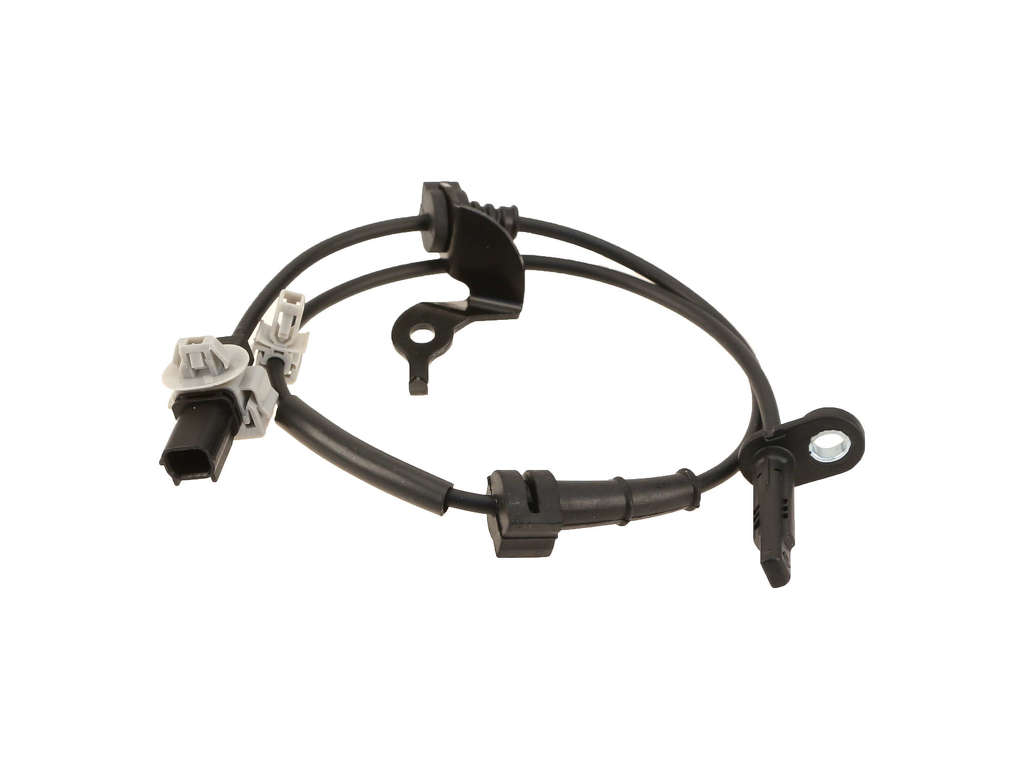
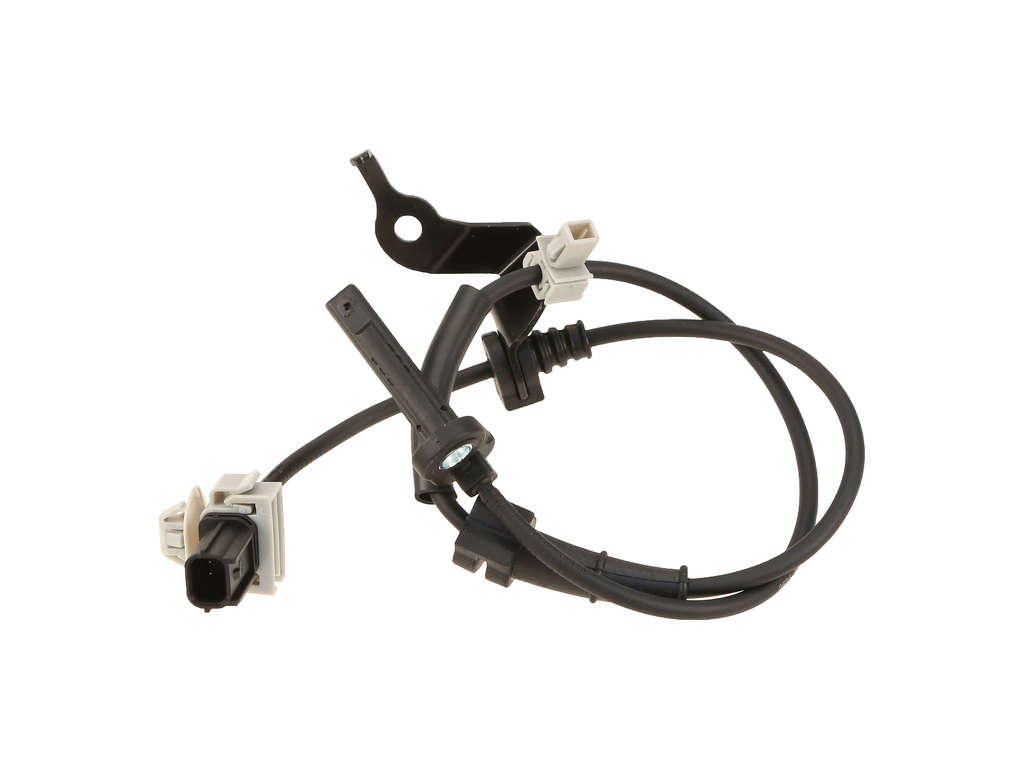
On a 2013-2017 Honda Accord, code C0035 indicates a fault in the Left Front (Driver's Side) Wheel Speed Sensor circuit. This is a definitive assignment for Honda vehicles. The most common fix is replacing the faulty sensor, which costs about $40-$90 for an aftermarket part or $70-$120 for OEM. The OEM part number for the left front sensor is 57455-T2F-A01.
- C0035 on a 2013-2017 Accord definitively means there is a fault with the Left Front wheel speed sensor circuit.
- You MUST use a scan tool's live data to confirm the fault before buying parts, but you can be confident the issue is on the driver's side front wheel.
- The most likely fix is replacing the sensor (OEM Part # 57455-T2F-A01), which is an affordable and straightforward DIY job for many.
- Before replacing the sensor, inspect the wiring for damage and the mounting surface for rust, as these are common, cheaper-to-fix causes.
- Driving with this code is possible but unsafe, as your ABS and stability control will not function in an emergency.
What's Unique About the 2013-2017 Honda Accord
For the ninth-generation Honda Accord, this code is a straightforward issue related to the ABS system. The wheel speed sensor's magnetic encoder is integrated into the wheel bearing, which is important to know during diagnosis. While sensor or wiring failure is common, this Accord generation is also known to sometimes suffer from internal ABS/VSA modulator failure, which can trigger similar wheel speed sensor codes and requires a more complex and expensive repair. 🎬 See how to repair a faulty ABS modulator yourself. This is a well-documented weak point for Hondas of this era and may be accompanied by codes like 66-11 or 121-11.
Symptoms You May Notice
- ABS warning light is on
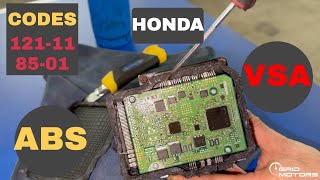
- Traction Control or VSA (Vehicle Stability Assist) warning light is on 🎬 Watch: What a typical VSA and ABS malfunction looks like.
- Power Steering (EPS) warning light may illuminate
- Brake pedal may feel different or ABS may not activate during hard braking
- Cruise control may be disabled
- Replacing the wrong wheel speed sensor. On many brands, C0035 can mean right front, but on Honda it is definitively left front. Always confirm with a scan tool's live data before replacing parts.
- Replacing the sensor when the actual fault is a broken wire clip allowing the connector to become unplugged.
Most Likely Causes
- Faulty Left Front Wheel Speed Sensor 🔴 High Probability → Shop ABS Wheel Speed Sensor Sensors are exposed to harsh conditions (water, road salt, debris) and the internal electronics can fail over time, leading to an open or shorted circuit.
How to confirm: Use a scan tool to monitor live data from all four wheel speed sensors while driving. The left front sensor will likely show 0 MPH or an erratic reading compared to the others. Swapping the left and right front sensors (if possible) and seeing if the code changes to C0030 (Right Front) is a definitive test.
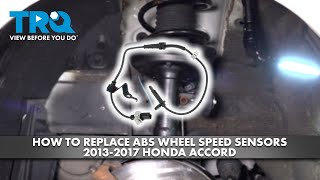
Typical fix: Replace the faulty left front wheel speed sensor assembly. The OEM part is 57455-T2F-A01. 🎬 Watch: Step-by-step guide to replacing the front wheel speed sensor.
Est. part cost: $40-$120 - Damaged Wiring or Connector 🟡 Medium Probability The sensor wiring harness is routed near moving suspension and steering components. The plastic clip holding the harness can break, allowing the wire to rub against the axle or suspension, or letting the connector unplug itself. Corrosion inside the connector is also common.
How to confirm: Visually inspect the entire length of the wiring from the sensor to where it enters the engine bay. Check for chafing, breaks, or green corrosion in the connector pins. A multimeter can be used to check for continuity from the sensor plug to the ABS module connector.
Typical fix: Repair the damaged section of wire with solder and heat shrink. If the connector is the issue, clean it with contact cleaner and apply dielectric grease. In some cases, the connector pigtail may need to be replaced.
Est. part cost: $10-$50 - Damaged or Incorrectly Installed Wheel Bearing ⚪ Low Probability The magnetic encoder (tone ring) is integrated into the wheel bearing seal. If a new wheel bearing is installed backward, the sensor will have nothing to read, triggering the code immediately. Damage to the bearing from impact can also damage the encoder.
How to confirm: This is the primary suspect if the C0035 code appears immediately after a front wheel bearing replacement. The bearing must be removed to verify its orientation.
Typical fix: Replace the wheel bearing, ensuring the new one is installed with the magnetic encoder side facing the wheel speed sensor.
Est. part cost: $100-$200
Rare But Worth Checking
- Faulty ABS/VSA Modulator: While less common than a sensor failure, the ABS modulator on this Accord generation can fail internally, often due to broken internal wiring. This is a known issue and often presents with multiple codes, such as 66-11, 121-11, or others, in addition to or instead of a specific wheel sensor code. If the sensor and wiring test good, the modulator is the next likely culprit.
- Rust Buildup Under Sensor: On Hondas, rust can accumulate on the steering knuckle where the sensor mounts. This 'rust jacking' increases the air gap between the sensor and the magnetic ring on the bearing, causing a weak or lost signal. The fix is to remove the sensor and thoroughly clean the mounting surface with a wire brush or file until it's bare metal.
Diagnosis Steps
- Connect an OBD-II scanner capable of reading ABS/Chassis codes to confirm C0035 is present. Note any other codes, as they can point toward a VSA modulator issue.
- Use the scanner's live data function to view the wheel speed from all four sensors while driving. Confirm the Left Front sensor reads 0 or erratically while the others report speed accurately.
- Perform a thorough visual inspection of the left front sensor, its connector, and its wiring harness. Look for broken clips, chafed wires, and corrosion. Pay close attention to the area where the harness flexes with steering and suspension movement.
- If wiring looks good, inspect the sensor's mounting surface on the knuckle for rust buildup. Remove the sensor (one 10mm bolt) and clean the mounting pad to bare metal if rust is present.
- The sensors on this Accord are active (magneto-resistive) and cannot be reliably tested with a multimeter for resistance. The proper test is to use an oscilloscope to check for a square wave signal while spinning the wheel, or to verify power and ground at the connector.
- If the sensor, wiring, and bearing encoder are confirmed to be good, the problem likely lies with the ABS/VSA control module.
Parts You'll Likely Need
- Front Wheel Speed Sensor (Left)
(OEM #57455-T2F-A01)— This is the most common failure point for the C0035 code. The part number provided is for the Left (Driver's) side, which is what C0035 indicates on a Honda.
Trusted brands: Honda (OEM), Bosch, Duralast, NGK/NTK, Standard Motor Products (SMP), Beck/Arnley
OEM price range: $70-$120
Aftermarket price range: $40-$90
Platform-Specific Known Issues
- Some owners have reported premature failure of the ABS/VSA modulator on this platform, which can present with wheel speed sensor codes. This is a well-documented issue across many Honda models from this era.
- Rust buildup on the knuckle under the sensor mounting point can cause an incorrect air gap and trigger a fault code. This is a common issue in areas where road salt is used.
- The plastic clips holding the sensor harness are prone to breaking, leading to unplugged connectors or chafed wiring.
Mechanic-Grade Diagnostic Values
- Wheel Speed Sensor Supply Voltage — expected: 4.5 - 5.5 Volts DC. Failure: A reading below 4.0V DC at the sensor connector (with key on, engine off) points to a problem in the wiring or the ABS module's power supply.
- Wheel Speed Sensor Signal (Oscilloscope) — expected: A clean digital square wave that increases in frequency as the wheel is spun.. Failure: A signal that is missing, intermittent, or shows dropouts indicates a faulty sensor or a problem with the magnetic encoder ring on the wheel bearing.
Hidden / Shadow Codes Worth Checking
- 66-11 / 66-13: Indicates an internal failure or pressure sensor issue within the VSA/ABS modulator control unit. (see via A professional-level OBD-II scanner capable of reading Honda-specific Chassis (C) codes. These codes often appear when the modulator is the root cause, not the wheel speed sensor itself.)
- 121-11: Indicates a VSA modulator solenoid fault. (see via A professional-level OBD-II scanner capable of reading Honda-specific Chassis (C) codes. This is a strong indicator that the VSA modulator requires repair or replacement.)
Scan Tool Commands That Help
- Honda HDS (or equivalent advanced scanner): Pulser Test — This is a non-intrusive service function to test the wheel speed sensor's signal. The tool commands the ABS module to count the pulses from the sensor during one full wheel rotation and compares it to a target value. A mismatch confirms a signal fault without needing an oscilloscope.
- Honda HDS (or equivalent advanced scanner): ABS/VSA Module Replacement/Calibration — This function is required after replacing the ABS/VSA modulator. It programs the new module to the vehicle's CAN network and calibrates offsets for the wheel speed sensors to ensure proper system function.
Wiring & Ground Locations
- G501 — Located at the upper left end of the dashboard, behind the driver's side kick panel near the A-pillar.. This is a major chassis ground point. A corroded or loose G501 can cause intermittent electrical issues for multiple systems, including the VSA/ABS control unit, leading to false codes.
- G502 — Also located at the upper left end of the dash, near G501.. Serves as another critical ground point for dashboard and control modules. A poor connection here can affect the gauge control module and VSA unit.
- VSA Modulator Control Unit — Located on the right side of the engine compartment.. This is the destination for the wheel speed sensor wiring. Knowing its location is essential for tracing wires and testing continuity from the sensor connector to the module connector.
- Left Front Wheel Speed Sensor Connector — In the left front wheel well, connected directly to the sensor which is bolted to the steering knuckle.. This is the primary point for testing sensor voltage and signal. It has two pins: one for power/signal and one for ground.
Real Owner Repair Stories
- Reddit user fogofwar115 (2014 Honda Accord) — Multiple dashboard lights, including ABS/VSA. Dealer diagnosed codes 66-11 and 66-13 and quoted $3500 to replace the VSA modulator.
❌ Tried (didn't work) N/A, went straight for the correct diagnosis.
✅ What actually fixed it The owner removed the VSA modulator themselves, mailed it to Module Master for a $250 repair, and reinstalled it. The lights were gone and the system worked correctly. - Reddit user TinySherbert7281 (2013 Honda Accord) — ABS/VSA lights on.
❌ Tried (didn't work) N/A
✅ What actually fixed it The owner removed the electronic part of the ABS module and sent it for repair via an eBay service for around $200 (which included programming). After reinstalling the repaired part, all warning lights cleared and the fix was successful for over 6 months.
OEM Part Supersession History
57455-T2F-A01→N/A— N/A
Heads up: Part number 57455-T2F-A01 appears to be consistent for all 2013-2017 Honda Accord models, including the 2016-2017 facelift and hybrid variants. No supersessions or compatibility issues within this generation were found.
Model Year Variations Within This Range
- 2013-2017: No significant variations related to the C0035 code were found between the pre-facelift (2013-2015) and post-facelift (2016-2017) models. The same Left Front Wheel Speed Sensor (57455-T2F-A01) and VSA modulator issues apply to the entire generation.
Diagnostic Flowchart
Other Known Issues on This Vehicle
Issues unrelated to this code that are worth knowing about as an owner of this generation:
- Failing Starter Motor 🟠 Medium — Common across both 4-cylinder and V6 models, often manifests as a slow crank or a single click with no start. Can occur anytime after 60,000 miles. (Ref: Honda TSB 16-002 addresses a grinding noise on V6 starters.)
- Burnt Out LED DRL Strips 🟡 Low — Very common on 2016-2017 models. The LED strip in the headlight assembly will dim or go out completely. (Ref: Honda issued a warranty extension (TSB 19-042) to 10 years/unlimited miles for this issue.)
- VTC Actuator Rattle on Cold Start 🟠 Medium — Common on the 2.4L 4-cylinder 'Earth Dreams' engine. A brief, loud grinding or rattling noise for 1-2 seconds on a cold start. Caused by a faulty locking pin in the VTC actuator. (Ref: Honda has released updated parts but no formal recall. Ignoring it can lead to timing chain stretch.)
- Automatic Transmission Judder 🟠 Medium — A shudder or judder may be felt between 20-60 mph, caused by deteriorated transmission fluid. Affects models with automatic transmissions. (Ref: Honda TSB 17-017 addresses this with a software update and transmission fluid flush procedure.)
- VCM Oil Leaks (V6 Models) 🟠 Medium — The Variable Cylinder Management (VCM) solenoid gasket can leak oil directly onto the alternator, causing alternator failure. Common on J35 V6 engines.
Used vs. New Parts: Buying Guide for This Vehicle
When a used part is the smart pick: A used OEM wheel speed sensor from a low-mileage (<80,000 miles) donor vehicle is a cost-effective alternative to a new part. For the more expensive ABS/VSA modulator, a remanufactured/repaired original unit from a reputable service like Module Master is a much smarter choice than buying a used, un-tested part from a junkyard.
Donor-vehicle mileage cap: roughly under 80000 miles for the part to have meaningful remaining life.
What to inspect on the donor part:
- For a used sensor, inspect for a clean connector with no corrosion.
- Ensure the wiring pigtail is not cracked, frayed, or repaired.
- Verify the mounting tab is not broken or cracked.
- Ask for the donor vehicle's mileage and check for signs of collision damage near the wheel.
OEM-only on this vehicle (don't cheap out):
- ABS/VSA Modulator: While not strictly 'OEM-only', using a random aftermarket or junkyard module is highly discouraged due to programming requirements and high failure rates. The best practice is to have your original OEM module repaired by a specialist.
Aftermarket brands forum-validated for this vehicle:
- NTK (often the OEM supplier for Honda)
- Bosch
- Standard Motor Products (SMP)
- Beck/Arnley
Brands owners have reported issues with on this vehicle:
- Ultra-cheap, unbranded sensors from online marketplaces can have poor build quality and inconsistent signal output, leading to the code returning shortly after repair.
Real Owner Stories
Aggregated from forums and TSBs cited above. Mileages and costs reflect what owners reported in those sources.
2013-2017 Honda Accord
Symptoms: The dashboard lit up with ABS, steering, and traction lights simultaneously.
What fixed it: Replacement of the left front wheel speed sensor (OEM part 57455-T2F-A01).
Source hint: DriveAccord.net
2013-2017 Honda Accord
Symptoms: C0035 code persisted even after the wheel speed sensor was replaced.
What fixed it: Repair or replacement of the ABS/VSA modulator.
Source hint: DriveAccord.net
2014 Honda Accord 2.4L
Symptoms: A brief, loud grinding or rattling noise for 1-2 seconds during a cold start.
What fixed it: Replacement of the VTC actuator due to a faulty locking pin.
Source hint: Honda-Tech.com
Related OBD-II Codes
Frequently Asked Questions
My 2016 Accord's dashboard is lit up with ABS, VSA, and Power Steering lights; is this common?
Can I use a multimeter to test the left front wheel speed sensor on my 2013-2017 Accord?
Is there a specific Honda part number I should look for to fix the C0035 code?
I just replaced my front wheel bearing and now C0035 is on. Did I do something wrong?
Does the 2013-2017 Accord have any known issues with the ABS/VSA modulator?
Are there any TSBs for the LED daytime running lights on my 2017 Accord?
Helpful Videos
We Have This Part in Stock


The information in this article is provided for general reference and educational purposes only. Vehicle specifications, procedures, and part compatibility can vary by production date, trim level, and region. Always consult your vehicle's factory service manual and verify part numbers before purchasing or performing repairs. Safety-critical components such as airbags, seat belts, and braking systems should be installed by a qualified professional.
- Honda Accord:
- 🧭 Diagnostic Flowchart
- 🎬 Helpful Videos
- 🛍️ Shop This Part
- What's Unique About the 2013-2017 Honda Accord
- Symptoms You May Notice
- Most Likely Causes
- Rare But Worth Checking
- Diagnosis Steps
- Parts You'll Likely Need
- Platform-Specific Known Issues
- Mechanic-Grade Diagnostic Values
- Hidden / Shadow Codes Worth Checking
- Scan Tool Commands That Help
- Wiring & Ground Locations
- Real Owner Repair Stories
- OEM Part Supersession History
- Model Year Variations Within This Range
- Other Known Issues on This Vehicle
- Used vs. New Parts: Buying Guide for This Vehicle
- Real Owner Stories
- 2013-2017 Honda Accord
- 2013-2017 Honda Accord
- 2014 Honda Accord 2.4L
- Related OBD-II Codes
- Frequently Asked Questions
- 🎟️ Get 5% Off