

C0035 on 2012-2015 Honda Civic: Left Front Wheel Speed Sensor Fault Causes and Fixes
Code C0035 on a 2012-2015 Honda Civic means there is a fault in the left front wheel speed sensor circuit. This is most often caused by a failed sensor or damaged wiring. Expect to pay $30-$70 for an aftermarket sensor, and it's a common DIY repair.
- C0035 means your Civic's ABS and Vehicle Stability Assist (VSA) are turned off due to a fault with the driver's side front wheel speed sensor.
- The most likely cause is a bad sensor, which is an affordable part ($30-$70) and a manageable DIY replacement for many owners.
- Before buying parts, always check the sensor's wiring harness for visible damage, as this is another common and even cheaper fix.
- Driving with this code is possible but risky, as your primary safety systems for braking and stability are inactive.
- Always use an ABS-capable scan tool to confirm the code and check live data before starting repairs.
What's Unique About the 2012-2015 Honda Civic
For the ninth-generation (2012-2015) Honda Civic, the C0035 code is a straightforward issue, typically isolated to the sensor or its wiring. Unlike some vehicles where the sensor is integrated into a more expensive wheel hub assembly, the Civic uses a standalone, bolt-on sensor that is relatively inexpensive and easy to access. The wiring harness is a known weak point, susceptible to damage from road debris or chafing against suspension components. The sensor is held in by a single 10mm bolt, making replacement a common DIY task.
Symptoms You May Notice
- ABS warning light is illuminated
- VSA (Vehicle Stability Assist) warning light is illuminated
- Traction Control (TCS) warning light is illuminated
- Power Steering (EPS) warning light may be illuminated
- Brakes may feel normal under light use but can lock up during hard braking
- Loss of anti-lock braking and traction control functionality
- Brake pedal feels harder than normal during emergency braking
- Replacing the wheel bearing/hub assembly when only the external sensor or wiring is at fault.
- Replacing the VSA/ABS modulator before thoroughly testing the sensor and wiring.
Most Likely Causes
- Failed Left Front Wheel Speed Sensor 🔴 High Probability → Shop ABS Wheel Speed Sensor The sensor is exposed to harsh conditions like water, road salt, and heat, which leads to internal failure over time. Corrosion can build up, and the sensor's internal electronics can short or break.
How to confirm: Using an ABS-capable scan tool, check live data for the left front wheel. If the speed reads 0 MPH or is erratic while the other wheels show speed, the sensor is likely bad. 🎬 Watch: Easy fix for the C0035 left front sensor circuit You can also test the sensor's internal resistance with a multimeter; a typical resistance reading for a good sensor is between 800-2000 ohms, though manufacturer specs should be confirmed. An open circuit (infinite resistance) or a reading far outside this range indicates failure. For these active sensors, a more accurate test is to check for a 4.5-5.5V supply voltage at the connector with the key on.
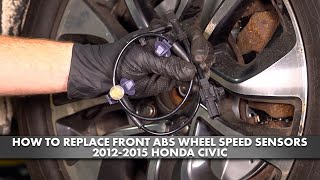
Typical fix: Replace the left front wheel speed sensor. This involves removing the wheel, unbolting the sensor (one 10mm bolt) from the steering knuckle, and disconnecting its electrical plug 🎬 See this walkthrough on how to replace the ABS sensor in the wheel well.
Est. part cost: $30 - $70 - Damaged Wiring Harness or Connector 🟡 Medium Probability The wiring is routed near the suspension and wheel, making it vulnerable to chafing, stretching during turns, or damage from road debris. The plastic clips holding the wire can break, allowing it to contact moving parts. The connector can also fill with water and corrode.
How to confirm: Visually inspect the entire length of the sensor's wiring harness from the sensor to its connection point in the wheel well. Look for breaks, chafed insulation, or green corrosion in the connector pins. Perform a 'wiggle test' on the harness while watching live data to see if the signal cuts in and out. Check for continuity on the wires between the sensor connector and the ABS module connector.
Typical fix: Repair the broken or shorted section of wire using solder and heat-shrink tubing. If the connector is damaged, it may need to be replaced with a new pigtail. Ensure the harness is properly secured in its clips, away from moving parts.
Est. part cost: $5 - $25 - Debris or Damage on Magnetic Encoder Ring ⚪ Low Probability The sensor reads a magnetic encoder built into the wheel bearing's seal. Metallic debris (from brake wear or bearing failure) can stick to the magnet and disrupt the signal. This is less common than sensor or wire failure but is a possible cause.
How to confirm: After removing the wheel speed sensor, inspect the surface of the wheel bearing it reads from. Look for a buildup of metallic dust or any visible damage to the bearing seal/encoder ring.
Typical fix: Clean the magnetic encoder ring with a brake cleaner and a soft brush. If the encoder ring is physically damaged (cracked, missing sections), the entire front wheel bearing and hub assembly must be replaced.
Est. part cost: $0 (cleaning) or $80 - $150 (hub assembly)
Rare But Worth Checking
- Faulty VSA/ABS Control Module: → Shop ABS Control Module This is very uncommon and should only be considered after the sensor, wiring, and wheel bearing have all been confirmed to be in good condition. A Reddit user with persistent VSA issues even after replacing all four sensors considered this as a last resort due to the high cost (nearly $1000 for the part).
Diagnosis Steps
- Connect an ABS-capable OBD-II scanner to the vehicle.
- Read the fault codes from the ABS/VSA module and confirm C0035 is present. Note any other codes.
- Access the live data stream for all four wheel speed sensors.
- Drive the vehicle slowly (or raise the front wheels and spin them by hand) and observe the speed readings. Confirm that the Left Front sensor reads 0 MPH or shows an erratic/inconsistent signal compared to the other three.
- Raise and safely support the front of the vehicle. Remove the left front wheel.
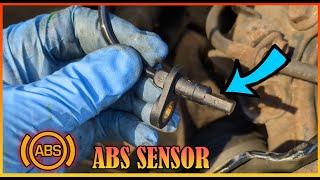
- Visually inspect the wheel speed sensor and its wiring harness for any signs of physical damage, chafing, or corrosion at the connector. 🎬 Watch: How to diagnose and repair a faulty ABS sensor
- Disconnect the sensor. With the ignition on, use a multimeter to check for a supply voltage of 4.5-5.5V at the harness-side connector. Lack of voltage points to a wiring or module issue.
- If voltage is present, test the sensor. While resistance checks (800-2000 Ohms is a general range) can find obvious opens or shorts, the best test is with an oscilloscope to look for a clean square wave signal while spinning the wheel.
- If wiring and sensor test good, remove the sensor (typically one 10mm bolt) and inspect the magnetic encoder on the wheel hub for metallic debris or physical damage. Clean as necessary.
- If the sensor, wiring, and encoder are all confirmed to be good, the fault may lie within the VSA/ABS control module, which requires more advanced diagnostics.
Parts You'll Likely Need
- Front Left ABS Wheel Speed Sensor
(OEM #57455-TR0-013, 57455-TR3-A02, 57455-TR3-A11, 57455-TR3-A12)— This is the most common failure part for code C0035. It is a standalone sensor that fails from exposure to the elements. Part number 57455-TR3-A12 is a supersession for 57455-TR3-A11. 57455-TR0-013 is often cited for the 2012 model year.
Trusted brands: Honda (OEM), Bosch, Duralast, NTK, Standard Motor Products, TRQ
OEM price range: $200-$250
Aftermarket price range: $30-$70
Platform-Specific Known Issues
- In some cases, the sensor can become seized in the steering knuckle due to corrosion, requiring it to be drilled or broken out for removal. Care must be taken not to damage the hub or knuckle during this process.
Mechanic-Grade Diagnostic Values
- Sensor Supply Voltage — expected: 4.5V - 5.5V. Failure: Voltage below 4.0V or no voltage indicates a problem in the wiring or the ABS/VSA module.
- Active Sensor Signal (Oscilloscope) — expected: A clean digital square wave pulse that switches between approximately 0V and 5V. The frequency of the pulse should increase smoothly with wheel speed.. Failure: A missing, erratic, or noisy waveform indicates a faulty sensor or a problem with the magnetic encoder ring.
Scan Tool Commands That Help
- Honda Diagnostic System (HDS): Clear DTCs — After a repair is completed, the HDS must be used to clear the fault code from the VSA module's memory. A standard OBD-II engine scanner cannot clear chassis codes.
- Honda Diagnostic System (HDS): VSA System Data List — To view the live output of all four wheel speed sensors simultaneously. This is the primary method to confirm that the left front sensor is the one providing an erratic or zero-speed signal compared to the others.
Wiring & Ground Locations
- VSA Modulator-Control Unit — Located in the right front of the engine compartment.. This is the computer that receives the signal from the left front wheel speed sensor. All diagnostic wiring tests will ultimately lead back to the connector on this module.
- G202 — A chassis ground point located at the right front of the engine compartment, near the VSA modulator.. This is the primary ground for the VSA modulator-control unit. A loose or corroded connection at this point can cause a variety of difficult-to-diagnose VSA system faults, including sensor codes.
- Left Front Wheel Speed Sensor Wires — Two wires running from the sensor on the steering knuckle, through clips on the strut and fender liner, to a connector in the wheel well, and then to the VSA modulator.. These wires are designated FL+ and FL- on wiring diagrams and carry the signal. They are the most common location for physical damage (chafing, breaks) that causes code C0035.
Real Owner Repair Stories
- YouTube channel 'The Flat Rate Mechanic' (Vehicle presented with ABS code C0035.) — ABS warning light on.
✅ What actually fixed it The cause was a broken plastic clip that holds the wiring harness. This allowed the sensor's electrical connector to come unplugged. The fix was simply plugging the connector back in securely and re-securing the harness. - Reddit user on r/MechanicAdvice (2014 Honda Civic) — Traction control, Power steering, and ABS warning lights were on.
❌ Tried (didn't work) The user did not report trying any fixes themselves before going to a shop.
✅ What actually fixed it The dealership diagnosed a VSA solenoid malfunction (code 124-11) and recommended replacing the entire VSA modulator for ~$1800. An independent shop offered to do the same job with a used part for ~$400. This story highlights that when the fault is internal to the VSA modulator, a used part is a common cost-saving measure, though it may come with risks.
OEM Part Supersession History
57455-TR0-013→N/A— This part number is specific to the 2012 model year.
Heads up: This part is for the 2012 Civic and may not be compatible with 2013-2015 models.57455-TR3-A11→57455-TR3-A12— Likely an updated design for improved durability or reliability. Supersessions are common for electronic parts exposed to the elements.
Heads up: 57455-TR3-A12 is the correct current replacement for 2013-2015 models that originally used 57455-TR3-A11.
Model Year Variations Within This Range
- 2012 vs 2013-2015: The front left wheel speed sensor part number is different. The 2012 model year uses OEM part number 57455-TR0-013. The 2013-2015 models use part number 57455-TR3-A12 (which replaced 57455-TR3-A11). It is critical to order the correct part for the specific model year.
Diagnostic Flowchart
Other Known Issues on This Vehicle
Issues unrelated to this code that are worth knowing about as an owner of this generation:
- Premature Clear Coat / Paint Failure 🟡 Low — Common on specific colors (blacks, blues, grays). Can start within 3-5 years. Honda issued a warranty extension (TSB 14-034) to 7 years/unlimited miles, but it has since expired for this generation. (Ref: TSB 14-034)
- Vibrations from Worn Engine Mounts 🟠 Medium — The rear torque strut mount ('dog bone' mount) is particularly prone to tearing, causing vibrations at idle or during acceleration. Typically occurs after 60,000 miles.
- Harsh Automatic Transmission Shifting 🟡 Low — Some owners report harsh or hesitant shifting from the 5-speed automatic transmission. Fluid changes can sometimes help. Noted as a common complaint by 1A Auto.
- Failing A/C Compressor or Leaks 🟠 Medium — Complaints of A/C systems failing to blow cold are documented, often traced to leaking components or failed compressors.
- Cracked Air Intake Duct/Hose 🟡 Low — The flexible rubber air intake hose between the air filter box and the throttle body can crack over time, potentially causing a lean condition or rough idle. It's an inexpensive and easy part to replace.
Used vs. New Parts: Buying Guide for This Vehicle
When a used part is the smart pick: For the ABS wheel speed sensor itself, new is strongly recommended due to its low cost and high failure rate from exposure. However, if the VSA/ABS modulator is diagnosed as the fault, a used unit from a reputable auto recycler is a very common and financially viable alternative to a new OEM unit, which can cost over $1,000.
Donor-vehicle mileage cap: roughly under 100000 miles for the part to have meaningful remaining life.
What to inspect on the donor part:
- For a used VSA modulator, source it from a vehicle with no major front-end or flood damage.
- Inspect the electrical connector on the used modulator for any bent pins, corrosion, or damage.
- Get the VIN of the donor car if possible to help with any potential programming needs.
OEM-only on this vehicle (don't cheap out):
- While not strictly OEM-only, many professional technicians and forum users strongly advise against using the cheapest, unbranded 'white-box' wheel speed sensors due to high rates of premature failure.
Aftermarket brands forum-validated for this vehicle:
- NTK (often the original equipment manufacturer)
- Bosch
- Beck/Arnley (often repackages OEM parts)
- Standard Motor Products (generally reliable, though some mixed reports exist)
Brands owners have reported issues with on this vehicle:
- Unbranded sensors from marketplaces like eBay and Amazon are frequently cited as having poor quality control and short lifespans.
Real Owner Stories
Aggregated from forums and TSBs cited above. Mileages and costs reflect what owners reported in those sources.
2014 Honda Civic
Symptoms: Multiple warning lights illuminated, including ABS, VSA, and Brake. Diagnosis involved testing circuits at the ABS module connector.
What fixed it: Found and repaired crossed wires in the wiring harness.
Source hint: YouTube: 'HONDA ABS VSA BRAKE EPS LIGHT REPAIR'
2012 Honda Civic
Symptoms: Persistent 'Check VSA' light. Owner replaced all four wheel speed sensors and checked all fuses, but the light remained on.
What fixed it: The fault was determined to be a faulty VSA modulator, though it was noted as a high-cost repair.
Source hint: Reddit r/civic: 'Anyone have a fix for the 9th gen Check VSA light problem?'
Related OBD-II Codes
Frequently Asked Questions
My 2012 Civic has a VSA light and the paint is peeling; is there a TSB that covers both?
Can a bad engine mount cause the C0035 code on my 2013 Civic?
I'm seeing ABS, VSA, and EPS lights all at once on my 2014 Civic. Is my power steering failing?
What size tools do I need to replace the front ABS sensor on my 2015 Civic?
Is it true I have to replace the whole wheel bearing if the encoder ring is dirty?
Why did my brake pedal feel harder than normal during a sudden stop in my 2012 Civic?
Helpful Videos
We Have This Part in Stock


The information in this article is provided for general reference and educational purposes only. Vehicle specifications, procedures, and part compatibility can vary by production date, trim level, and region. Always consult your vehicle's factory service manual and verify part numbers before purchasing or performing repairs. Safety-critical components such as airbags, seat belts, and braking systems should be installed by a qualified professional.
- Honda Civic:
- 🧭 Diagnostic Flowchart
- 🎬 Helpful Videos
- 🛍️ Shop This Part
- What's Unique About the 2012-2015 Honda Civic
- Symptoms You May Notice
- Most Likely Causes
- Rare But Worth Checking
- Diagnosis Steps
- Parts You'll Likely Need
- Platform-Specific Known Issues
- Mechanic-Grade Diagnostic Values
- Scan Tool Commands That Help
- Wiring & Ground Locations
- Real Owner Repair Stories
- OEM Part Supersession History
- Model Year Variations Within This Range
- Other Known Issues on This Vehicle
- Used vs. New Parts: Buying Guide for This Vehicle
- Real Owner Stories
- 2014 Honda Civic
- 2012 Honda Civic
- Related OBD-II Codes
- Frequently Asked Questions
- 🎟️ Get 5% Off