

C0035 on 2017-2022 Honda CR-V: Wheel Speed Sensor Fault Causes and Fixes
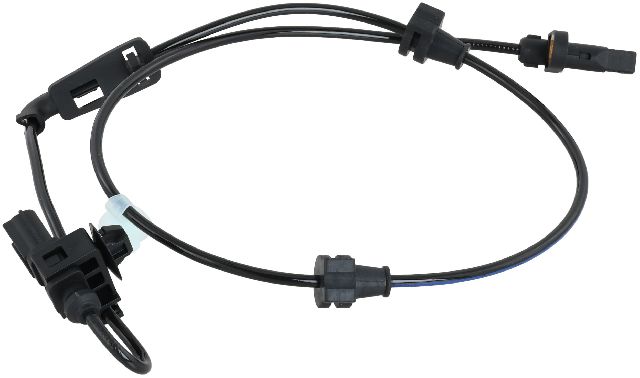
Code C0035 on a Honda CR-V specifically indicates a fault in the 'Right Front Wheel Speed Sensor Supply' circuit. The most common fix is replacing the faulty right front wheel speed sensor (OEM Part #57450-TLA-A02). Expect to pay $35-$80 for an aftermarket sensor or $45-$90 for an OEM part.
- C0035 on a Honda CR-V specifically points to a fault in the RIGHT front wheel speed sensor circuit.
- The most common cause is a failed wheel speed sensor (OEM part #57450-TLA-A02), which is a straightforward DIY replacement for many.
- This fault will disable your ABS and stability control, so drive with extra caution until it is repaired.
- Before replacing parts, always check the sensor's wiring and connector for visible damage and test for correct voltage, as this can be a cheaper fix.
- A cascade of dashboard warning lights is a normal symptom of this single fault.
What's Unique About the 2017-2022 Honda CR-V
For the 2017-2022 CR-V, a failure in any single wheel speed sensor can trigger a cascade of warning lights on the dashboard, including ABS, Vehicle Stability Assist (VSA), Brake System, and sometimes others like power steering or auto high beams. This can be alarming, but the root cause is often just one faulty sensor. Unlike some other manufacturers with known widespread issues related to this code, there are no prominent TSBs or recalls for the CR-V specifically for C0035, suggesting failures are typically due to normal wear or isolated incidents like wiring damage.
Symptoms You May Notice
- ABS light is on
- Vehicle Stability Assist (VSA) or Traction Control light is on
- Brake System warning light is on
- Cruise control is disabled
- Multiple other system warnings may appear simultaneously (e.g., Auto High Beam Problem, Power Steering Problem)
- Replacing the wrong wheel speed sensor. While generic definitions are ambiguous, C0035 on a Honda refers to the RIGHT front sensor. Always confirm with live data before purchasing parts.
Most Likely Causes
- Faulty Right Front Wheel Speed Sensor 🔴 High Probability → Shop ABS Wheel Speed Sensor Sensors are exposed to harsh conditions like water, road salt, and debris, leading to internal failure or corrosion over time. An owner of a 2018 CR-V confirmed this code was triggered by a faulty right front sensor, a documented failure pattern for these model years.
How to confirm: Use a scan tool with live data capability to monitor the speed of all four wheels while driving. The right front sensor will show an erratic, inconsistent, or zero speed reading compared to the others.
Typical fix: Replace the faulty wheel speed sensor. The sensor is typically held in by a single 10mm bolt on the steering knuckle. The OEM part number is 57450-TLA-A02.
Est. part cost: $35-$90 - Damaged Wiring or Corroded Connector 🟡 Medium Probability The wiring harness runs down the suspension and can be damaged by road debris, improper repairs, or flexing over time. Connectors can also accumulate moisture and corrode, which is a known issue on CR-Vs exposed to road salt.
How to confirm: Visually inspect the entire length of the sensor's wiring harness from the wheel well to its connection point. Check for chafed wires, breaks, or green corrosion inside the connector plug. A voltage test at the sensor connector should show 4.5-5.5V with the ignition on.
Typical fix: Repair the broken section of wire with solder and heat shrink tubing or replace the connector pigtail. In some cases, a complete harness segment may be needed.
Est. part cost: $15-$50 - Damaged or Debris-Covered Magnetic Ring ⚪ Low Probability The magnetic encoder ring is integrated into the wheel bearing/hub assembly. While protected, rust jacking or metallic debris from brake wear can accumulate and interfere with the sensor's reading. Damage to the toothed reluctor ring can mimic sensor failure.
How to confirm: After removing the wheel speed sensor, inspect the surface of the wheel bearing or axle it reads from. Look for heavy rust buildup, cracks, or metallic shavings.
Typical fix: Clean the magnetic ring surface thoroughly with a brush and brake cleaner. If the ring is physically damaged or part of a failed wheel bearing, the entire hub/bearing assembly must be replaced.
Est. part cost: $150-$250 for a hub assembly
Rare But Worth Checking
- Failing ABS/VSA Control Module: This is uncommon and should only be considered after ruling out the sensor, wiring, and hub. A faulty module can fail to supply the correct voltage to the sensor. A faulty module will typically trigger multiple, often nonsensical, codes and should be diagnosed by a professional.
- Low Battery Voltage: A weak or failing battery can cause numerous random electronic faults and warning lights at startup on modern Hondas. The 2017-2019 CR-V in particular is known for parasitic battery drain issues that can cause widespread electrical gremlins. If the issue is intermittent and occurs mainly during startup, have the battery and charging system tested.
Diagnosis Steps
- Connect an ABS-capable OBD-II scanner to the vehicle.
- Read the fault codes. Confirm the code is C0035, which on a Honda points to the Right Front Wheel Speed Sensor circuit.
- Access the live data stream for all four wheel speed sensors.
- Drive the vehicle slowly (under 20 mph) while an assistant monitors the live data. Identify if the right front sensor reports a speed of 0 mph or a reading that is erratic or different from the others.
- Raise and safely support the vehicle. Remove the right front wheel.
- Visually inspect the wheel speed sensor and its wiring harness for any obvious damage, corrosion, or loose connections.
- If no visible damage is found, remove the sensor (typically one 10mm bolt) and inspect its tip and the hub's magnetic ring for debris or damage.
- With the ignition on, use a multimeter to test for 4.5-5.5 volts at the sensor's power wire in the harness connector.
- If voltage is correct and the sensor/wiring appear fine, the most likely cause is an internal failure of the sensor itself. Replace the sensor.
- Clear the trouble codes with the scan tool and perform a test drive to ensure the warning lights do not return.
Parts You'll Likely Need
- Front Right Wheel Speed Sensor
(OEM #57450-TLA-A02)— This is the most common failure point for code C0035. The sensor itself fails internally from age and exposure.
Trusted brands: Honda (OEM), Bosch, NTK, Standard Motor Products, Delphi
OEM price range: $45-$90
Aftermarket price range: $35-$80 - Front Left Wheel Speed Sensor
(OEM #57455-TLA-A02)— Listed for reference, as it is often wise to replace sensors in pairs, especially on high-mileage vehicles or those in rust-prone areas. This part is NOT for code C0035.
Trusted brands: Honda (OEM), Bosch, NTK, Standard Motor Products, Delphi
OEM price range: $32-$50
Aftermarket price range: $27-$40
Platform-Specific Known Issues
- Owner Experience with C0035: An owner of a 2018 CR-V EX-L reported getting a C0035 code (Right Front Wheel Speed Sensor Circuit Malfunction) which caused the ABS and traction control lights to illuminate. They noted this is a 'documented failure pattern' for these model years due to corrosion or internal degradation. Replacing the sensor with an OEM unit permanently fixed the issue.
Mechanic-Grade Diagnostic Values
- Sensor Supply Voltage — expected: 4.5 - 5.5 Volts DC. Failure: A reading below 4.0V indicates a problem with the power supply from the ABS/VSA module or the wiring.
- Wheel Speed Sensor Internal Resistance — expected: No exact OEM spec is published, but a general range is 1000-2000 Ohms. The key is to compare the reading with the sensor on the opposite side (Left Front); they should be very close.. Failure: An open circuit (infinite resistance) or a reading that is significantly different from the known-good sensor on the other side of the vehicle indicates a failed sensor.
Scan Tool Commands That Help
- Honda HDS (or advanced aftermarket scanner): VSA Sensor Neutral Position Memorization / All Sensors Adjustment — This procedure should be performed after replacing the VSA/ABS modulator-control unit to calibrate the yaw rate, lateral, and longitudinal acceleration sensors. While not strictly required for a wheel speed sensor replacement, performing this reset can resolve system-level conflicts and is a good practice if multiple warning lights persist after the repair.
Wiring & Ground Locations
- Multi Fuse Block MUSB 3 — Under-hood fuse box.. This block contains the fuses for the 'ABS/VSA Motor' and 'ABS/VSA FSR' (Fail-Safe Relay). A blown fuse here will disable the entire system and can cause communication or power-related codes.
- ABS/VSA Module Ground — General location is on the chassis frame rail, often near the module itself or on a shared grounding point under the airbox or on the transmission.. A corroded or loose main ground for the ABS/VSA module can cause a voltage drop to all its circuits, including the 5V supply for the wheel speed sensors, potentially triggering a C0035 code.
"I Checked Everything" — The Actual Cause
- A technician found that testing the wheel speed sensor's resistance directly at its connector showed a good reading (within the 800-1600 ohm spec). However, when testing the same circuit from the main ABS control module connector, it read as an open circuit. This indicated the sensor itself was fine, but there was a break in the wiring harness somewhere between the wheel well and the module, caused by a previous, improper wire repair.
Model Year Variations Within This Range
- 2020-2022: The 2020 model year introduced a mid-cycle refresh. While the wheel speed sensors are generally the same, the ABS/VSA control modules are highly specific and can differ based on engine (1.5L Turbo vs. 2.0L Hybrid) and drivetrain (FWD vs. AWD). Ensure an exact part number match if replacing the module.
- 2017-2022: On some Honda models, there can be different part numbers for vehicles built in Japan versus those built in North America. While not confirmed for this specific part on the CR-V, it is a known variable. It is wise to verify the correct part number using the vehicle's VIN.
Diagnostic Flowchart
Other Known Issues on This Vehicle
Issues unrelated to this code that are worth knowing about as an owner of this generation:
- 1.5L Turbo Engine Oil Dilution 🔴 High — Common in 2017-2018 models, especially in cold climates or with frequent short trips. Less common in later years after software updates. (Ref: Honda issued product updates (e.g., TSB 18-114) and extended warranties to address the issue.)
- Parasitic Battery Drain 🟠 Medium — Frequently reported on 2017-2019 models. The battery may die after the vehicle sits for a few days. (Ref: TSB A19-039 (NHTSA ID 10169977) was issued for 2019 models to update PCM software. Other causes, like a faulty VSA modulator control unit software, also exist.)
- Infotainment System Glitches 🟡 Low — Owners report issues like freezing screens, random reboots, and problems with Apple CarPlay/Android Auto connectivity across all model years. (Ref: No specific recall, but dealers may perform software updates. Often resolved by a soft reset (holding the power/volume knob).)
- Fuel Injector Failure / Cold Start Misfire 🟠 Medium — Reported in 1.5T engines, sometimes leading to misfires on a cold startup. Can be exacerbated by lower-quality fuel.
- A/C Compressor Leaks 🟠 Medium — Some owners report premature failure or leaks from the A/C compressor, resulting in poor cooling performance.
Used vs. New Parts: Buying Guide for This Vehicle
When a used part is the smart pick: A used wiring harness pigtail from a junkyard is an excellent, cost-effective repair for a damaged connector. A used ABS/VSA control module can save significant money over a new unit, but it is critical to factor in the cost of professional programming, as it will not be plug-and-play.
Donor-vehicle mileage cap: roughly under 80000 miles for the part to have meaningful remaining life.
What to inspect on the donor part:
- For wiring: Check for intact insulation, no signs of cuts or previous repairs, and clean, corrosion-free connector pins.
- For modules: Source from a vehicle with no reported flood, fire, or major collision damage. Obtain the VIN of the donor car if possible to verify compatibility.
OEM-only on this vehicle (don't cheap out):
- Wheel Speed Sensor: While some aftermarket brands are reliable, many forum users and mechanics report chasing intermittent issues with cheap aftermarket sensors. To ensure a one-time fix, using an OEM (Honda) or OEM-supplier (like NTK) sensor is strongly recommended.
Aftermarket brands forum-validated for this vehicle:
- NTK (often the OEM supplier for Japanese vehicles)
- Beck/Arnley (known for repackaging OEM parts)
- Bosch
- Delphi
- Standard Motor Products (SMP) (generally reliable, though some users report occasional duds)
Brands owners have reported issues with on this vehicle:
- Unbranded, low-cost sensors from online marketplaces like eBay or Amazon are frequently cited as having high failure rates or causing intermittent problems.
Documented NHTSA Reports
While C0035 is specific to the right front sensor on Honda platforms, cross-manufacturer data illustrates the severity of this fault. For instance, NHTSA ODI #11228687 describes a vehicle where C0035 appeared alongside a cascade of other codes including U0415, similar to the "warning light party" seen on the CR-V. In other applications, NHTSA ODI #10440851 and NHTSA ODI #10442197 highlight that this code frequently triggers both the ABS and Brake system warning lights simultaneously. Furthermore, manufacturer bulletins such as #PIT3460N (referenced in NHTSA ODI #10273914) note that C0035 can cause intermittent illumination of these safety lights. In some cases, as reported in NHTSA ODI #10287028, owners found that replacing both the hub and the sensor was necessary to fully resolve the circuit malfunction.
Real Owner Stories
Aggregated from forums and TSBs cited above. Mileages and costs reflect what owners reported in those sources.
2018 Honda CR-V EX-L
Symptoms: ABS and traction control lights illuminated; code C0035 (Right Front Wheel Speed Sensor Circuit Malfunction) was present.
What fixed it: Replacing the sensor with an OEM unit (Part #57450-TLA-A02).
Source hint: AliExpress User Review/Article
2017 Honda CR-V
Symptoms: A single faulty wheel speed sensor caused a cascade of multiple, seemingly unrelated warning lights.
What fixed it: Replacement of the faulty wheel speed sensor.
Source hint: Reddit r/crv
2018 Honda CR-V
Symptoms: Faulty right front sensor triggered C0035; owner confirmed this is a documented failure pattern for these model years due to harsh road conditions.
What fixed it: Replace the faulty wheel speed sensor (held by a 10mm bolt).
Source hint: common_causes - Faulty Right Front Wheel Speed Sensor
Related OBD-II Codes
Frequently Asked Questions
Why are so many warning lights like 'Auto High Beam Problem' and 'Power Steering Problem' appearing on my 2017 CR-V alongside the ABS light?
Is there a specific TSB for the oil dilution issue on my 2018 CR-V 1.5L Turbo?
My 2019 CR-V battery dies after sitting for a few days; is there a known software fix?
What is the correct OEM part number for the Right Front Wheel Speed Sensor on a 2018 CR-V?
Can I use a used wiring harness to fix a C0035 code on my Honda CR-V?
Does the C0035 code affect the cruise control on my 2017-2022 CR-V?
Helpful Videos
We Have This Part in Stock


The information in this article is provided for general reference and educational purposes only. Vehicle specifications, procedures, and part compatibility can vary by production date, trim level, and region. Always consult your vehicle's factory service manual and verify part numbers before purchasing or performing repairs. Safety-critical components such as airbags, seat belts, and braking systems should be installed by a qualified professional.
- Honda CR-V:
- 🧭 Diagnostic Flowchart
- 🎬 Helpful Videos
- 🛍️ Shop This Part
- What's Unique About the 2017-2022 Honda CR-V
- Symptoms You May Notice
- Most Likely Causes
- Rare But Worth Checking
- Diagnosis Steps
- Parts You'll Likely Need
- Platform-Specific Known Issues
- Mechanic-Grade Diagnostic Values
- Scan Tool Commands That Help
- Wiring & Ground Locations
- "I Checked Everything" — The Actual Cause
- Model Year Variations Within This Range
- Other Known Issues on This Vehicle
- Used vs. New Parts: Buying Guide for This Vehicle
- Documented NHTSA Reports
- Real Owner Stories
- 2018 Honda CR-V EX-L
- 2017 Honda CR-V
- 2018 Honda CR-V
- Related OBD-II Codes
- Frequently Asked Questions
- 🎟️ Get 5% Off