

C0035 on 2010-2014 Honda Insight: Left Front Wheel Speed Sensor Fault Causes and Fixes
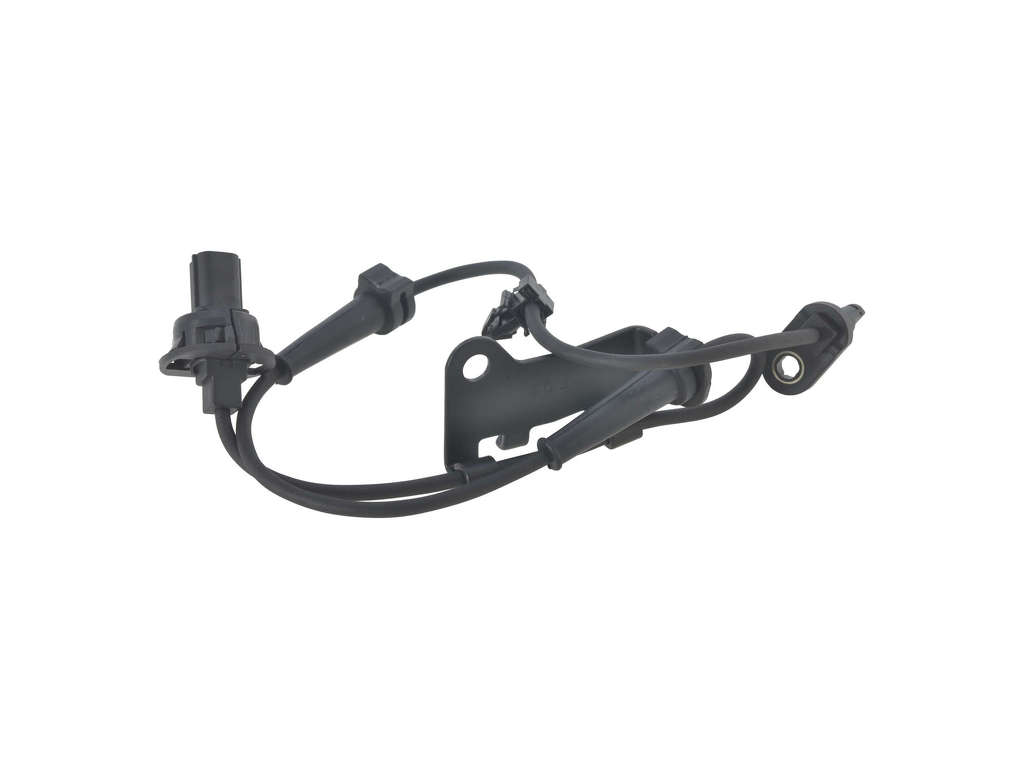
This code almost always means the left front (driver's side) wheel speed sensor has failed or its wiring is damaged. The ABS, VSA, and brake warning lights will be on. Replacing the sensor is the most common fix, costing around $25-$60 for an aftermarket part or $250-$300 for an OEM part. A scan tool capable of reading ABS codes is necessary for proper diagnosis.
- C0035 means there is a problem with the driver's side front wheel speed sensor circuit, which will disable your ABS and VSA systems.
- The most likely cause is a failed wheel speed sensor, which is a straightforward DIY replacement for many owners.
- Before replacing parts, always inspect the wiring harness for visible damage, as a simple wire repair can save you money.
- Use an ABS-capable scan tool to confirm the code and check live data to ensure you are diagnosing the correct wheel.
- The correct OEM part number for the Left Front sensor is 57455-TF0-003, which is shared with the Honda Fit and CR-Z.
What's Unique About the 2010-2014 Honda Insight
The second-generation Honda Insight shares its platform with the Honda Fit (2009-2014) and CR-Z (2011-2016), meaning many chassis and brake components, including the wheel speed sensors, are similar or identical. For this hybrid platform, a fault in the ABS/VSA system can sometimes trigger other warning lights like the IMA (Integrated Motor Assist) light, as many of the vehicle's control modules are interconnected. The most common failure point is the sensor itself or the wiring leading to it, which is exposed to road debris and weather. Due to the regenerative braking system, brake feel can sometimes be perceived as different, but a C0035 fault points directly to the wheel speed circuit, not the regenerative components themselves.
Symptoms You May Notice
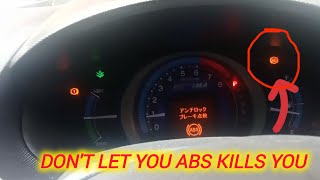
- ABS light is on
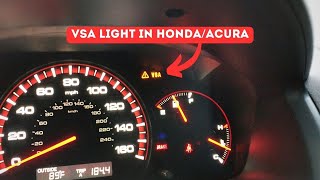
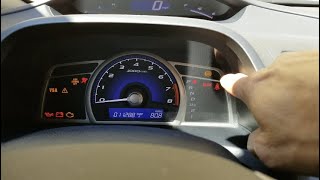
- VSA (Vehicle Stability Assist) light is on
- Brake system warning light may be on
- IMA (Integrated Motor Assist) light may be on
- Traction control is disabled
- Anti-lock braking system is disabled
- Cruise control may be inoperative
- Replacing the VSA/ABS module before thoroughly checking the sensor, wiring, and wheel bearing encoder ring.
- Replacing the wheel bearing without checking if the old sensor or wiring was the actual problem.
- Replacing the sensor without first inspecting the wiring harness for obvious breaks or chafing, which is a cheaper fix.
Most Likely Causes
- Failed Left Front Wheel Speed Sensor 🔴 High Probability → Shop ABS Wheel Speed Sensor The sensor is an electronic component located in the harsh environment of the wheel well, exposed to constant heat, moisture, vibration, and road debris, leading to internal failure over time.
How to confirm: Use an ABS-capable scan tool to monitor live data from all four wheel speed sensors while driving. The left front sensor will show 0 MPH or an erratic/implausible reading while the others report vehicle speed. You can also test the sensor's internal resistance with a multimeter (set to Ohms) and compare it to the sensor on the opposite side; an open circuit (infinite resistance) indicates a failed sensor.
Typical fix: Replace the left front wheel speed sensor. It is typically held in by a single 10mm bolt, but can be difficult to remove if seized by rust.
Est. part cost: $25 - $300 - Damaged Wiring or Connector 🟡 Medium Probability The wiring harness runs down the suspension and is vulnerable to being hit by road debris, rubbing against moving parts, or corrosion at the connector plug. Wires can also break internally near the connector from repeated suspension movement.
How to confirm: Visually inspect the entire length of the sensor's wiring harness from the sensor itself to the connector in the wheel well. Look for breaks, chafing, or green corrosion inside the connector plug. A YouTube video by Gariautocare specifically shows a 2011 Insight where a broken wire right at the sensor was the cause. 🎬 Watch this video to see a real-world wiring repair. A multimeter can be used to check for continuity between the connector at the sensor and the VSA module.
Typical fix: Repair the broken or shorted section of wire. If the connector is corroded, it may need to be cleaned or replaced. In some cases, a new pigtail connector is spliced in.
Est. part cost: $5 - $50 - Damaged or Debris-Covered Magnetic Encoder Ring ⚪ Low Probability The magnetic encoder is integrated into the wheel bearing seal. Rust jacking from the hub or an accumulation of metallic brake dust can obscure the signal or damage the ring.
How to confirm: After removing the wheel speed sensor, visually inspect the surface of the wheel bearing through the sensor mounting hole. Look for rust buildup, caked-on metallic debris, or physical damage to the dark magnetic ring on the bearing seal.
Typical fix: In most cases, the wheel bearing must be replaced as the encoder ring is not serviced separately. If only loose debris is present, cleaning the area with a brush and brake cleaner may resolve the issue temporarily.
Est. part cost: $60 - $150
Rare But Worth Checking
- Faulty VSA/ABS Control Module: → Shop ABS Control Module This is very uncommon. Before condemning the module, exhaust all other possibilities (sensor, wiring, and bearing). A module failure will often be accompanied by other, multiple trouble codes or a complete loss of communication with the scan tool.
- Incorrect Wheel Bearing Installation: The wheel bearing has a magnetic encoder on only one side. If a new bearing is pressed in backward, the speed sensor will have nothing to read, immediately setting the code. This is a common mistake during DIY or inexperienced shop repairs.
Diagnosis Steps
- Connect an OBD-II scanner capable of reading ABS/VSA codes to confirm C0035 is present and check for any other codes.
- Access the ABS live data stream on the scanner. Monitor the speeds of all four wheels while driving. Confirm that the Left Front (LF) wheel speed sensor reads 0, lags, or shows an erratic signal compared to the other three.
- Raise and secure the front of the vehicle on jack stands. Remove the driver's side front wheel.
- Visually inspect the wheel speed sensor and its wiring harness for any obvious signs of damage, such as cut wires, chafing, melted sections, or a damaged connector.
- Disconnect the sensor's electrical connector (located in the wheel well) and inspect the pins for corrosion or damage.
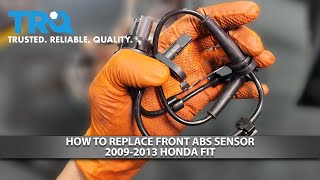
- Unbolt and remove the wheel speed sensor (typically one 10mm bolt). It may be seized with rust and require careful prying or even drilling to remove if it breaks. 🎬 See this walkthrough for replacing the front ABS sensor.
- Inspect the sensor tip for metallic debris. Look inside the mounting hole at the wheel bearing's magnetic encoder ring. Check for heavy rust, caked-on debris, or cracks.
- If wiring and bearing look good, test the sensor. With a multimeter, check for resistance across the sensor's pins. Compare the reading to the passenger side sensor. An open loop (OL) reading indicates a failed sensor.
- If the sensor tests good, perform a continuity test on the wiring harness from the sensor connector to the VSA/ABS control module connector to rule out a wire break.
- If a new sensor does not fix the issue and wiring is confirmed to be good, the fault may lie with the wheel bearing encoder ring or, rarely, the VSA/ABS control module. 🎬 Learn how to reset VSA lights when sensors are good.
Parts You'll Likely Need
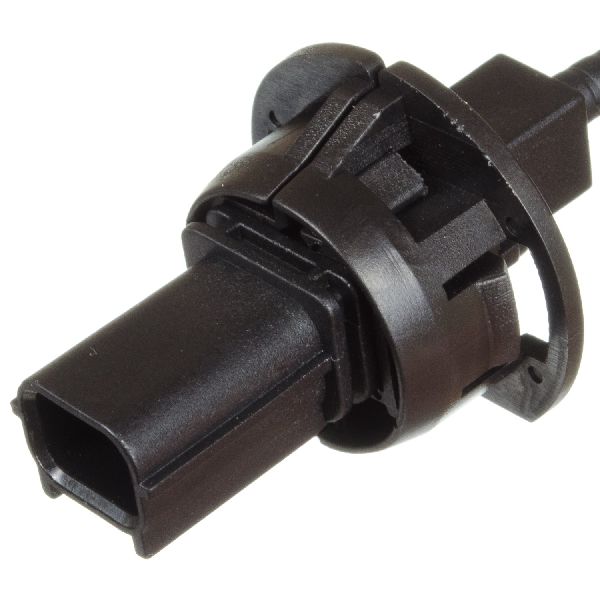
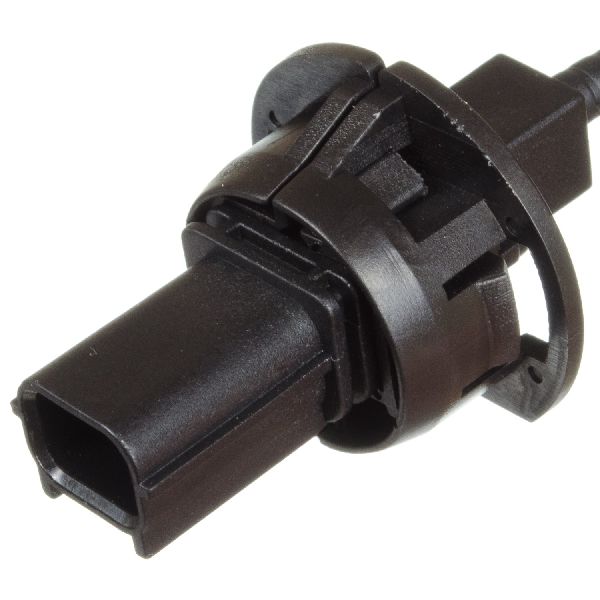
- Left Front Wheel Speed Sensor
(OEM #57455-TF0-003)— This is the most common failure point for code C0035. It is a sensitive electronic component exposed to harsh conditions.
Trusted brands: Honda (OEM), NTK, Duralast, Beck/Arnley, Bapmic, Standard Motor Products (SMP)
OEM price range: $250-$300
Aftermarket price range: $25-$80
Technical Service Bulletins (TSBs) & Recalls
- NHTSA ID #10187885 (APaS02262021902): A dealer message from Honda searching for certain 2010-2014 Insights with a customer complaint of the brake pedal feeling soft or spongy. While not directly for C0035, it relates to the brake system and could be investigated if brake feel is also a symptom.
Mechanic-Grade Diagnostic Values
- Wheel Speed Sensor Internal Resistance — expected: 800 - 2,000 Ohms. Failure: A reading of 0 Ohms (short circuit), infinite/OL (open circuit), or a value significantly outside the expected range indicates a faulty sensor.
- Wheel Speed Sensor AC Voltage Output (Passive Sensor) — expected: Greater than 100mV (0.1V) AC while spinning the wheel by hand.. Failure: No AC voltage or a very weak signal while the wheel is spinning indicates a failed sensor or a problem with the magnetic encoder ring.
- Voltage supply at sensor connector — expected: 4.5–5.5 V with ignition on.. Failure: Voltage below 4.0 V points to a problem with the wiring or the ABS/VSA control module's supply circuit.
Scan Tool Commands That Help
- Honda HDS or compatible advanced scanner: VSA Sensor Neutral Position Memorization — This procedure should be performed after replacing the VSA modulator-control unit or if other VSA-related codes are present. It recalibrates the yaw rate and deceleration sensors. While not always required for a simple wheel speed sensor replacement, it can resolve lingering VSA light issues if the system is sensitive.
- OBD-II Jumper Wire (Manual Reset): VSA/ABS DTC Clear Procedure — In some older Honda models, if a standard scanner cannot clear a persistent ABS/VSA light after a repair, a manual reset can be performed by jumping specific pins on the OBD-II connector (typically Pin 4 and Pin 9) and following a sequence of pressing and releasing the brake pedal. This forces the VSA module to re-check the system. This should only be done after confirming the initial fault is repaired.
Wiring & Ground Locations
- Left Front Wheel Speed Sensor Connector — In the driver's side front wheel well, where the sensor harness connects to the main body harness.. This is the primary point for testing both the sensor itself (on the sensor side of the connector) and the wiring integrity back to the VSA module (on the harness side of the connector). Corrosion or loose pins here are a common cause of intermittent faults.
- VSA Modulator-Control Unit Connector — In the engine compartment, typically on the passenger side near the firewall.. This is the termination point for the sensor wiring. A wiring diagram is needed to identify the specific pins for the left front wheel speed sensor to perform a continuity test from the wheel well connector, confirming the harness is intact.
OEM Part Supersession History
57455-TF0-003→N/A— This part number appears to be stable for the entire 2010-2014 Insight generation, as well as the related Honda Fit and CR-Z.
Diagnostic Flowchart
Other Known Issues on This Vehicle
Issues unrelated to this code that are worth knowing about as an owner of this generation:
- Excessive Oil Consumption 🔴 High — More common on 2012-2013 models, but reported across the generation. Can start around 40k-50k miles. Honda's official stance was that 1 quart per 1000 miles was acceptable, which frustrated many owners. (Ref: Honda TSB 16-101 (supersedes 15-015) extended the warranty for this issue on 2012-13 models to 8 years/unlimited miles, involving an oil consumption test and potential replacement of pistons and rings.)
- IMA Hybrid Battery Degradation 🟠 Medium — The IMA battery pack loses capacity over time, typically noticeable after 8-10 years or 100,000-150,000 miles. Symptoms include a lit IMA warning light, reduced fuel economy, and less electric assist. (Ref: Honda provided an 8-year/100k mile or 10-year/150k mile warranty (depending on state) on hybrid components. TSB #10118839 from Oct 2014 addressed a software issue causing a memory effect and reduced capacity on 2010-12 models.)
- EGR Valve and Port Clogging 🟠 Medium — Carbon buildup can clog the EGR valve and associated passages in the intake manifold, leading to rough idle, engine hesitation, stalling, and P0401/P0404 codes. (Ref: No specific recall, but this is a widely documented issue on many Honda engines of this era. The fix is typically cleaning the EGR valve and the EGR plate/passages, not necessarily replacing the valve itself.)
- CVT Judder or Hesitation 🟠 Medium — Some owners report a shudder or vibration during low-speed acceleration. This can sometimes be attributed to worn transmission fluid, a failing start-up clutch within the CVT, or require a software update. (Ref: While TSB 16-053 was for later model Accords/CR-Vs, similar CVT software updates have been issued for other Hondas to address driveability. Regular CVT fluid changes are critical.)
- Takata Airbag Recalls 🔴 High — This generation of Insight was included in the massive Takata airbag inflator recalls. It is critical to ensure all related recalls have been performed on any specific vehicle. (Ref: Multiple recalls issued, including NHTSA #19V502000, 18V661000, and others. Owners can check their VIN on the NHTSA website.)
Used vs. New Parts: Buying Guide for This Vehicle
When a used part is the smart pick: A used wheel speed sensor is generally not recommended as new aftermarket parts are inexpensive and sensors can fail from age and heat cycles. However, sourcing a complete used steering knuckle/hub assembly from a low-mileage donor car can be a cost-effective way to replace both the wheel bearing (with its integrated magnetic ring) and the sensor if both are suspect.
Donor-vehicle mileage cap: roughly under 70000 miles for the part to have meaningful remaining life.
What to inspect on the donor part:
- Check for a clean, undamaged magnetic encoder ring on the wheel bearing seal.
- Ensure the sensor wiring pigtail is not cut, frayed, or brittle.
- Look for minimal rust on the hub and sensor mounting point to reduce the chance of seizure.
- Verify the donor vehicle is from a region with minimal road salt usage to avoid premature corrosion.
OEM-only on this vehicle (don't cheap out):
- VSA/ABS Control Module - Due to programming and VIN-locking, replacing this module typically requires an OEM part and dealer-level tools to code it to the vehicle.
Aftermarket brands forum-validated for this vehicle:
- NTK
- Beck/Arnley (often repackaged OEM)
- Delphi
Brands owners have reported issues with on this vehicle:
- Some users have reported issues with generic, unbranded, or 'white-box' sensors failing prematurely or being dead-on-arrival.
Real Owner Stories
Aggregated from forums and TSBs cited above. Mileages and costs reflect what owners reported in those sources.
2011 Honda Insight
Symptoms: The ABS and VSA lights were on, and the scanner showed a C0035 code for a left front speed sensor circuit malfunction.
What fixed it: A technician found a broken wire located right at the sensor connector. Repairing the broken wire resolved the code.
Source hint: YouTube - Gariautocare
2010-2014 Honda Insight
Symptoms: Repeated failures of new ABS sensors after installation.
What fixed it: The owner discovered a broken piece of an old ABS sensor had become embedded in the wheel bearing surface. The issue was resolved by cleaning or replacing the bearing to clear the debris from the magnetic encoder area.
Source hint: hondabg.com
Related OBD-II Codes
Frequently Asked Questions
Does the Honda TSB regarding soft brake pedals (NHTSA ID #10187885) apply to my 2010-2014 Insight with code C0035?
Is there a specific part number for the Left Front Wheel Speed Sensor on my Insight?
Can I use a sensor from a Honda Fit or CR-Z to fix my C0035 code?
Could my IMA light being on be related to the C0035 wheel speed sensor code?
Is the C0035 code covered under the extended warranty for oil consumption or IMA batteries?
Helpful Videos
We Have This Part in Stock


The information in this article is provided for general reference and educational purposes only. Vehicle specifications, procedures, and part compatibility can vary by production date, trim level, and region. Always consult your vehicle's factory service manual and verify part numbers before purchasing or performing repairs. Safety-critical components such as airbags, seat belts, and braking systems should be installed by a qualified professional.
- Honda Insight:
- 🧭 Diagnostic Flowchart
- 🎬 Helpful Videos
- 🛍️ Shop This Part
- What's Unique About the 2010-2014 Honda Insight
- Symptoms You May Notice
- Most Likely Causes
- Rare But Worth Checking
- Diagnosis Steps
- Parts You'll Likely Need
- Technical Service Bulletins (TSBs) & Recalls
- Mechanic-Grade Diagnostic Values
- Scan Tool Commands That Help
- Wiring & Ground Locations
- OEM Part Supersession History
- Other Known Issues on This Vehicle
- Used vs. New Parts: Buying Guide for This Vehicle
- Real Owner Stories
- 2011 Honda Insight
- 2010-2014 Honda Insight
- Related OBD-II Codes
- Frequently Asked Questions
- 🎟️ Get 5% Off