

C0035 on 2005-2010 Jeep Grand Cherokee: Wheel Speed Sensor Fault Guide
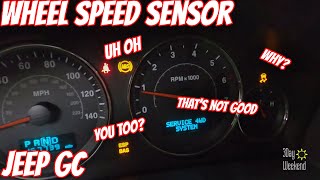
This code indicates a fault in a front wheel speed sensor circuit, which will disable your ABS, traction control, and stability control systems. It is most likely a failed sensor or damaged wiring. However, the generic C0035 code is ambiguous; it could mean 'Left Front' or 'Right Front' depending on the specific scanner used. A proper diagnosis with a manufacturer-level scan tool is crucial before buying parts to avoid replacing the wrong sensor.
- C0035 means there's a problem with a front wheel speed sensor, which disables your ABS and stability control.
- Crucially, you must use a scanner that gives the Jeep-specific definition to know if the fault is on the left or right side.
- The most common fix is replacing the failed wheel speed sensor itself.
- Always inspect the wiring harness for damage before replacing parts, as this is also a common point of failure.
- Due to the safety-critical nature of the ABS, address this code promptly.
What's Unique About the 2005-2010 Jeep Grand Cherokee
For the 2005-2010 Jeep Grand Cherokee (WK generation), the key challenge with code C0035 is not a unique vehicle flaw, but the ambiguity of the code itself. While the underlying ABS technology is standard for the era, owners often get trapped by generic code readers that don't specify which wheel is at fault. It is essential to use an ABS-capable scanner that can read Chrysler-specific codes to get the correct manufacturer-specific description before attempting a repair to avoid replacing the wrong part. Owners on forums frequently report this exact issue of chasing the wrong sensor based on a generic C0035 definition.
Symptoms You May Notice
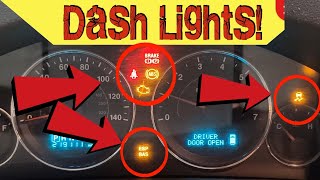
- ABS warning light is on
- Traction Control (ESP/BAS) warning light is on
- Electronic Stability Control is disabled
- ABS may not activate during hard braking, potentially causing wheel lock-up
- Cruise control may be disabled
- Brake pedal may feel different or harder than usual
- In some cases, the ABS may activate inappropriately at low speeds, causing a grinding or pulsing sensation.
- Replacing the wrong wheel speed sensor due to relying on a generic code definition (e.g., replacing the left sensor when the fault is on the right).
- Replacing the sensor when the actual problem is a broken wire or corroded connector further up the harness.
- Replacing a front sensor when the code (e.g., a related U-code like U1417) was actually for a rear sensor on the same side of the vehicle.
Most Likely Causes
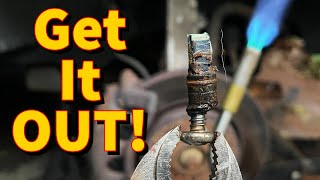
- Failed Wheel Speed Sensor 🔴 High Probability → Shop ABS Wheel Speed Sensor Sensors are exposed to harsh conditions (water, road salt, debris, heat from brakes) which leads to internal failure over time. Rust buildup in the steering knuckle can also push the sensor out, increasing the air gap, or seize it in place, making removal difficult. 🎬 See how to remove a broken or stuck ABS sensor.
How to confirm: Use an ABS-capable scan tool to monitor live data from all four wheels while driving. The faulty sensor will show an erratic, inconsistent, or 0 MPH reading compared to the others. You can also test the sensor's internal resistance with a multimeter; while specific OEM values are not published, a typical range for this type of sensor is 1000-2000Ω. An open circuit (infinite resistance) indicates a failed sensor.
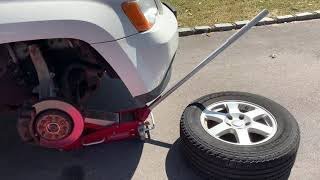
Typical fix: Replace the faulty wheel speed sensor. 🎬 Watch this walkthrough on diagnosing and replacing a wheel speed sensor. They are typically held in by a single bolt on the steering knuckle.
Est. part cost: $25-$70 - Damaged Wiring or Connector 🟡 Medium Probability The sensor wiring harness is routed near moving suspension components and is vulnerable to being stretched, chafed, or corroded, especially at the connector plug. Wires can break internally without visible damage to the insulation.
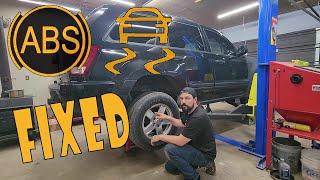
How to confirm: Visually inspect the entire length of the wiring from the sensor to the main harness for breaks, chafing, 🎬 Watch how to find and fix a broken sensor wire. or corrosion. Check for a secure connection at the sensor. Test for reference voltage (should be around 5V) and ground at the connector with a multimeter. Wiggle the harness while monitoring live data to see if the signal drops out.
Typical fix: Repair the damaged section of wire or replace the pigtail connector. Use solder and heat-shrink tubing for a durable repair.
Est. part cost: $15-$40 - Damaged or Debris-Covered Tone Ring ⚪ Low Probability The tone ring (or reluctor ring) is part of the wheel hub assembly and can become cracked, or heavy rust and debris can accumulate on it, blocking the sensor's magnetic reading.
How to confirm: Visually inspect the tone ring by removing the wheel and sensor. Check for cracks, missing teeth, or heavy rust/debris buildup. Ensure the air gap between the sensor and ring is clear.
Typical fix: Clean the tone ring with a wire brush and brake cleaner. If it is cracked or has missing teeth, the entire wheel hub assembly must be replaced as the ring is integrated.
Est. part cost: $100-$250 (for hub assembly)
Rare But Worth Checking
- Faulty ABS Control Module: → Shop ABS Control Module This is rare and should only be considered after all other possibilities (sensor, wiring, tone ring) have been definitively ruled out. A module failure can sometimes trigger a sensor circuit code. In some cases, a software update may be available to fix module-related glitches.
- Failing Wheel Hub Bearing: A worn or failing wheel hub bearing can introduce excessive play or 'wobble' in the hub assembly. This movement can alter the air gap between the sensor and the tone ring, causing an erratic or lost signal that mimics a sensor failure. This is often accompanied by a humming or grinding noise from the wheel that changes with speed.
Diagnosis Steps
- Connect an ABS-capable OBD-II scanner to get the manufacturer-specific code definition. This is critical to determine if the fault is with the left or right front wheel.
- Observe live data from all four wheel speed sensors while driving. Compare the readings to identify the sensor that is not reporting speed correctly or is showing erratic values.
- Perform a thorough visual inspection of the suspect sensor, its connector, and the wiring harness. Look for any signs of physical damage, corrosion, or loose connections.
- Inspect the tone ring on the wheel hub/axle for damage, rust, or debris.
- If no visual issues are found, use a multimeter to test the sensor. Disconnect the sensor and check its resistance, comparing it to the typical specification of 1000-2000Ω for this type of sensor.
- Test the wiring harness by checking for the correct reference voltage (around 5V) and ground at the sensor connector with the key on.
- If the sensor and wiring test good, check the wheel bearing for excessive play, which could indicate a failing hub assembly causing an unstable air gap.
- If all other components test good, the issue may be with the ABS module itself.
Parts You'll Likely Need
- Front Wheel Speed Sensor
(OEM #56044144AD (Front Right), 56044145AD (Front Left) - Note: Part numbers can vary by 2WD/4WD and build date. Always verify with VIN.)— This is the most common failure point for code C0035. The sensor fails internally from age and exposure to the elements.
Trusted brands: Mopar, Bosch, Delphi, NTK, Duralast
OEM price range: $50-$90
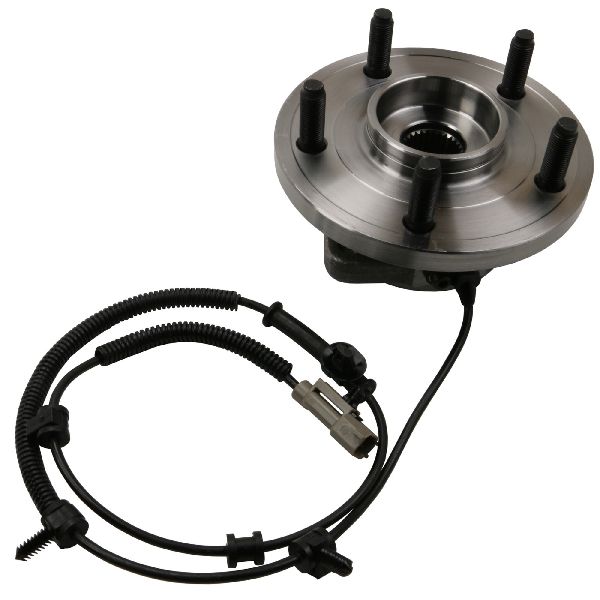
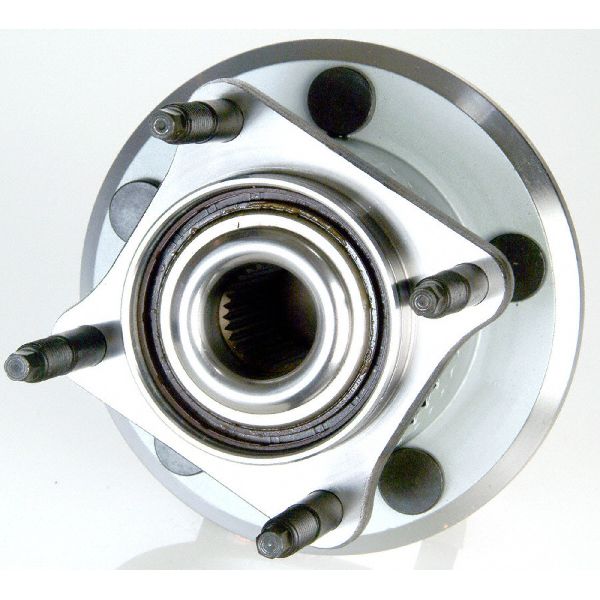
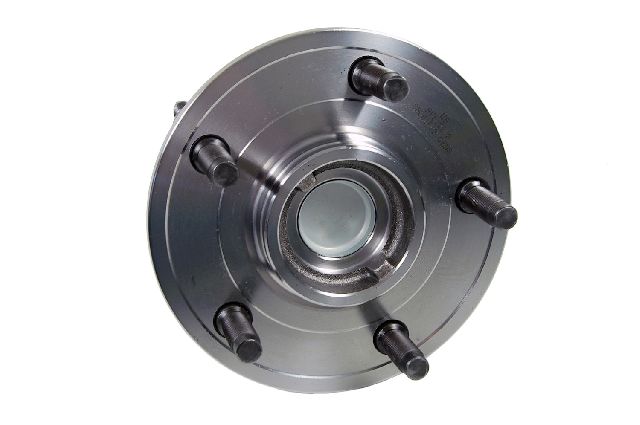
Aftermarket price range: $25-$70 - Front Wheel Hub Assembly — Needed if the tone ring, which is integrated into the hub, is damaged. A bad wheel bearing can also sometimes cause erratic sensor readings or damage the sensor.
Trusted brands: Mopar, Timken, Moog, SKF
OEM price range: $200-$300
Aftermarket price range: $100-$180
Related Codes That Often Appear With This One
- U1417 - Implausible Left Wheel Distance Signal Received
- U1418 - Implausible Right Wheel Distance Signal Received
Technical Service Bulletins (TSBs) & Recalls
- While no TSBs directly address code C0035 for the 2005-2010 WK, Chrysler has issued numerous ABS-related bulletins for other generations, such as Z48 / NHTSA 22V-426 for 2018-2019 models, which involved reprogramming the ABS module for false pressure readings. This highlights the importance of checking for software updates as a potential, though less common, fix.
Platform-Specific Known Issues
- A user on JeepForum.com with a 2006 Grand Cherokee reported code C0035 along with other ABS codes. The ultimate fix was replacing a faulty front wheel speed sensor after confirming the wiring was intact. The key takeaway was the necessity of a good scanner to read the manufacturer-specific codes to avoid guesswork.
- Another common experience shared across forums is the sensor becoming seized in the steering knuckle due to rust, making removal difficult. Soaking it with penetrating oil and careful twisting is often required to extract it without breaking it off in the knuckle.
Mechanic-Grade Diagnostic Values
- Sensor Supply Voltage at Connector — expected: 4.5–5.5 V (with ignition on). Failure: Voltage below 4.0 V indicates a supply circuit problem from the ABS module or wiring.
- Sensor Resistance (Passive Type) — expected: 1000-2000 Ω (Ohms). Failure: A reading outside this range, or an open circuit (infinite resistance), suggests a faulty sensor.
- Sensor Signal (Active Type) — expected: A square wave digital signal that switches between ~0V and the supply voltage (~5V). The frequency increases with wheel speed.. Failure: An absent, irregular, or non-switching signal when the wheel is rotated indicates a faulty sensor.
Wiring & Ground Locations
- G107 — On the driver's side inner fender, located behind the airbox. It may share a bolt with G106.. This is listed as the primary ground point for the anti-lock brake system on this Jeep platform. A corroded or loose G107 ground can cause various ABS faults, including sensor circuit codes. Note: This was documented on a WJ (99-04) but ground locations are often carried over or are in similar positions on the succeeding WK platform.
- ABS Module Connector (Right Front Sensor) — At the main ABS control module connector.. Pin B7 is for the Right Front Wheel Speed Sensor (+) signal (Dark Green/Violet wire) and Pin B6 is for the Right Front Wheel Speed Sensor (-) signal (Dark Green/White wire). These pins can be back-probed to test for signal continuity directly from the module.
- ABS Module Connector (Left Front Sensor) — At the main ABS control module connector.. A wiring diagram shows a splice (S310) for the Left Front sensor return signal (LT GRN/TAN wire). A fault at this splice could cause an intermittent signal. The signal wire itself can be tested at the module. Another diagram shows the Left Front Wheel Speed Supply is on pin 36 (Light Green/Yellow wire).
Real Owner Repair Stories
- YouTube user 'Nowhere Fast Garage' (2009 Jeep Grand Cherokee) — ABS light, traction control light, ESP/BAS light on. ABS system was kicking in during normal braking in dry weather. Engine was intermittently cutting out.
❌ Tried (didn't work) The owner had previously taken the vehicle to a dealer who replaced the front wheel hub/bearing assembly.
✅ What actually fixed it The wiring for the brand new wheel speed sensor (which came with the new hub) was not clipped in properly by the dealer. It chafed against the spinning axle, exposing the wires and causing an erratic signal. The fix was to repair the damaged wires with solder and heat shrink and properly secure the harness away from moving parts. - Reddit user in r/GrandCherokeeWK (Jeep Grand Cherokee WK) — ESP/BAS light, ABS light, and traction control light illuminated. Received code U1417 (Left Side ABS Sensor issue).
❌ Tried (didn't work) Based on the code, the owner replaced the front left wheel bearing/hub assembly and sensor., Also replaced the front right bearing/hub assembly to have matching parts.
✅ What actually fixed it The code U1417 only specified the 'left side', not front or rear. The actual fault was the rear left ABS sensor. Replacing the rear left sensor resolved all the warning lights. This highlights the ambiguity of some codes and the need for precise diagnosis.
OEM Part Supersession History
56044144AD→56044144AF— Part revision by manufacturer.
Heads up: The front sensor is the same part for the left and right sides on the WK/XK platform. The original part number sequence was 56044144AA, 56044144AB, 56044144AC, and 56044144AD, all of which are replaced by 56044144AF.
Diagnostic Flowchart
Other Known Issues on This Vehicle
Issues unrelated to this code that are worth knowing about as an owner of this generation:
- Totally Integrated Power Module (TIPM) Failure 🔴 High — Widespread across many 2007-2014 Chrysler/Jeep/Dodge vehicles. Can cause random electrical issues like fuel pump failure, stalling, horn honking, or no-start conditions. (Ref: Multiple recalls and a class-action lawsuit have been issued, such as the fuel pump relay recall (NHTSA #14V530000).)
- Front Differential Mount Bushing Failure 🟠 Medium — Very common. Owners report a distinct 'clunk' or 'thump' from the front end during acceleration or when shifting between drive and reverse. Onset can be as early as 30,000 miles.
- Electronic Shifter Module (ESM) Issues 🔴 High — Primarily affects later model WK2s (2014-2015), but the WK generation had its own ignition switch and shifter-related electrical problems. The WK2 issue led to a major safety recall for rollaway risk due to confusing shifter design. (Ref: Recall S27 / NHTSA #16V240000 for 2014-2015 models.)
- HVAC Blend Door Actuator Failure 🟡 Low — Extremely common. Results in inability to control cabin temperature, clicking noises from the dash, or air blowing from incorrect vents.
- Faulty Ignition Switch / Wireless Control Module 🟠 Medium — Common issue causing intermittent no-start conditions, flickering dash lights, or the engine stalling.
Used vs. New Parts: Buying Guide for This Vehicle
When a used part is the smart pick: A used wiring pigtail from a junkyard can be a cost-effective solution if only the connector is damaged and the donor vehicle's wiring is in good condition. A complete used sensor is generally not recommended due to the low cost of new aftermarket parts and the high failure rate of the original part.
Donor-vehicle mileage cap: roughly under 80000 miles for the part to have meaningful remaining life.
What to inspect on the donor part:
- For a wiring pigtail, inspect for any signs of corrosion on the pins, brittleness in the plastic, or previous repair attempts.
- Ensure there is plenty of wire length on the pigtail for splicing.
- Check that the locking tab on the connector is intact and functional.
OEM-only on this vehicle (don't cheap out):
- ABS Control Module: Due to the need for VIN-specific programming and calibration, replacing this module typically requires a new or professionally remanufactured unit programmed for the vehicle.
Aftermarket brands forum-validated for this vehicle:
- NTK
- Bosch
- Delphi
- Timken (for hub assemblies)
- Moog (for hub assemblies)
Brands owners have reported issues with on this vehicle:
- Unbranded, 'white-box' sensors may have a higher failure rate or cause intermittent issues. One owner reported issues with non-OEM compatible sensors that came with an aftermarket wheel bearing, which could not be sourced for individual replacement later.
Real Owner Stories
Aggregated from forums and TSBs cited above. Mileages and costs reflect what owners reported in those sources.
2006 Jeep Grand Cherokee
Symptoms: ABS warning light and other ABS-related codes present.
What fixed it: Replacing a faulty front wheel speed sensor after using a high-quality scanner to confirm the wiring was intact and identify the specific sensor.
Source hint: JeepForum.com thread mentioned in vehicle_specific_issues
2005-2010 Jeep Grand Cherokee
Symptoms: ABS light on, potentially caused by a chewed or corroded wire rather than the sensor itself.
What fixed it: Repairing a damaged section of wire or replacing the pigtail connector.
Source hint: Reddit r/GrandCherokee
Related OBD-II Codes
Frequently Asked Questions
Does the ABS recall Z48 (NHTSA 22V-426) apply to my 2005-2010 Jeep Grand Cherokee?
I have a 2006 Grand Cherokee with C0035; how do I know which side is failing?
Can I just clean the sensor on my WK Grand Cherokee instead of replacing it?
Is it true that the wheel speed sensor can get stuck in the steering knuckle?
Does my 2007 Jeep Commander have the same C0035 sensor issues as the Grand Cherokee?
What is the correct resistance for a new front wheel speed sensor on this Jeep?
Helpful Videos
We Have This Part in Stock


The information in this article is provided for general reference and educational purposes only. Vehicle specifications, procedures, and part compatibility can vary by production date, trim level, and region. Always consult your vehicle's factory service manual and verify part numbers before purchasing or performing repairs. Safety-critical components such as airbags, seat belts, and braking systems should be installed by a qualified professional.
- Jeep Grand Cherokee:
- 🧭 Diagnostic Flowchart
- 🎬 Helpful Videos
- 🛍️ Shop This Part
- What's Unique About the 2005-2010 Jeep Grand Cherokee
- Symptoms You May Notice
- Most Likely Causes
- Rare But Worth Checking
- Diagnosis Steps
- Parts You'll Likely Need
- Related Codes That Often Appear With This One
- Technical Service Bulletins (TSBs) & Recalls
- Platform-Specific Known Issues
- Mechanic-Grade Diagnostic Values
- Wiring & Ground Locations
- Real Owner Repair Stories
- OEM Part Supersession History
- Other Known Issues on This Vehicle
- Used vs. New Parts: Buying Guide for This Vehicle
- Real Owner Stories
- 2006 Jeep Grand Cherokee
- 2005-2010 Jeep Grand Cherokee
- Related OBD-II Codes
- Frequently Asked Questions
- 🎟️ Get 5% Off