

C0035 on 2010-2016 Mercedes-Benz E-Class: Right Front Wheel Speed Sensor Circuit Fault Causes and Fixes
On a 2010-2016 E-Class, code C0035 points to a fault in the right front wheel speed sensor's power supply circuit. The most common fix is replacing the right front wheel speed sensor itself. Expect to pay $40-$80 for an aftermarket part or $120-$200 for an OEM sensor. Always confirm the fault with a scanner capable of reading live ABS data before replacing parts.
- C0035 on a 2010-2016 E-Class refers to the **Right Front** wheel speed sensor circuit, not the left.
- The most probable cause is a failed sensor, which is a straightforward DIY replacement for many owners.
- Always use a scanner with live data to confirm which wheel sensor is not reporting speed before buying parts.
- Driving with this fault is possible but risky, as your ABS and stability control will not function in an emergency.
- OEM part numbers for the sensor include A2129050300 and A2125400217.
What's Unique About the 2010-2016 Mercedes-Benz E-Class
While many generic scan tools incorrectly define C0035 as a 'Left Front Wheel Speed Sensor' fault, on Mercedes-Benz vehicles it consistently refers to the 'Right Front Wheel Speed Sensor Supply Circuit'. The W212/S212 E-Class platform is prone to wheel speed sensor failures due to the sensor's exposed location and the wiring harness flexing with suspension travel. Unlike some vehicles where the magnetic tone ring is part of the wheel bearing, on many E-Class models, it is integrated into the CV axle shaft. The sensor itself is an active sensor, meaning it requires a power supply from the ABS module to function, which is why a supply circuit fault (C0035) is a specific and common code.
Symptoms You May Notice
- ABS warning light is on
- ESP (Electronic Stability Program) or Traction Control light is on
- "Run Flat Inoperative" message on the dashboard 🎬 See why the Run Flat Inoperative message appears on your dash.
- ABS and traction control are disabled
- Brake pedal may feel firm or different during hard stops
- Potential for wheel lock-up under heavy braking
- Cruise control may be inoperative
- Replacing the Left Front wheel speed sensor. Many generic code readers incorrectly report C0035 as a left-side fault. Always verify the manufacturer-specific definition, which points to the Right Front sensor circuit for Mercedes-Benz.
Most Likely Causes
- Failed Right Front Wheel Speed Sensor 🔴 High Probability → Shop ABS Wheel Speed Sensor The sensor is exposed to road debris, moisture, and heat from the brakes, leading to internal electronic failure over time. The wiring near the sensor is also subject to constant movement and vibration, which can break down the sensor's internal connections.
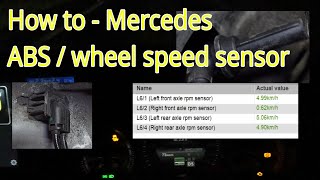
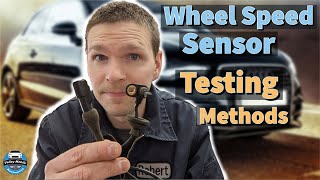
How to confirm: Use a scanner capable of reading live ABS data. Drive the vehicle and observe the speed readings from all four wheels. The right front sensor will likely show a reading of 0 MPH or an erratic, inconsistent speed compared to the other three. You can also test the sensor with a multimeter for resistance, though comparing to a new sensor is often the best confirmation. 🎬 Watch: Professional methods for testing wheel speed sensor functionality.
Typical fix: Replace the right front wheel speed sensor. The sensor is typically held in by a single 10mm or E-Torx bolt on the steering knuckle. The electrical connector is located in the wheel well, behind the fender liner.
Est. part cost: $40-$200 - Damaged Wiring or Connector 🟡 Medium Probability The wiring harness runs down the suspension and can be damaged by road debris, improper servicing (like letting the brake caliper hang by the wire), or simply fatigue from constant flexing. The connector pins can also corrode with moisture, causing a poor connection.
How to confirm: Visually inspect the entire length of the wiring from the sensor to where it enters the main harness in the wheel well. Look for chafing, breaks, or green corrosion inside the connector. Perform a 'wiggle test' on the harness while monitoring live data to see if the signal cuts in and out. Use a multimeter to check for continuity and for shorts to ground or power from the sensor connector back to the ABS module plug.
Typical fix: Repair the damaged section of wire or replace the pigtail connector. In severe cases, the entire sensor harness may need replacement.
Est. part cost: $15-$150 - Damaged or Contaminated Magnetic Reluctor Ring ⚪ Low Probability The magnetic ring is part of the front CV axle on this platform. While protected by a seal, damage can occur during axle replacement, or metallic debris from brake wear can accumulate on it, distorting the magnetic signal the sensor reads.
How to confirm: After removing the wheel speed sensor, use a borescope or carefully inspect the magnetic ring on the CV axle. Look for cracks, missing sections, or a heavy buildup of metallic dust. The ring should be clean and uniform.
Typical fix: Cleaning the ring with a soft brush and brake cleaner may work if it's just contaminated. If the ring is physically damaged (cracked, missing teeth), the entire front CV axle must be replaced.
Est. part cost: $250-$700
Rare But Worth Checking
- Faulty ABS/ESP Control Module: → Shop ABS Control Module This is rare, but if a new sensor and verified good wiring do not resolve the code, the module itself may have a failed internal voltage regulator that supplies power to the sensor. This usually requires professional diagnosis with a Mercedes-specific scan tool like Xentry to perform a module self-test.
Diagnosis Steps
- Connect an OBD-II scanner capable of reading ABS/Chassis codes (like an iCarsoft MB or Autel). Confirm C0035 is present.
- Verify the code's definition with your specific scan tool. It should point to the 'Right Front Wheel Speed Sensor Supply' or a similar description.
- Access the live data stream for the ABS system. Monitor the speed readings from all four wheels while driving slowly or spinning the wheel by hand.
- Confirm that the 'Right Front' wheel speed reads 0 MPH or is erratic, while the other three wheels report speed accurately.
- Raise and safely support the front of the vehicle. Remove the right front wheel.
- Locate the sensor on the steering knuckle and its wiring. Follow the wire into the wheel well to find the connector, which is usually behind the fender liner.
- Visually inspect the wheel speed sensor and its wiring harness. Look for any obvious signs of damage, such as cut wires, a broken connector, or chafing against suspension components.
- Unplug the sensor and inspect the connector terminals for corrosion or moisture. Clean with electrical contact cleaner if necessary.
- With the ignition on, use a multimeter to check for the correct reference voltage (typically 4.5V-5.5V) at the harness-side connector. If voltage is missing, the problem is in the wiring or ABS module.
- If voltage is present and the wiring appears intact, the most likely cause is the sensor itself. Replace the right front wheel speed sensor.
- After replacement, clear the fault codes with the scan tool. The warning lights should go out, often after driving a short distance.
- If a new sensor does not fix the issue, re-inspect the wiring harness more thoroughly. Check for continuity and shorts using a multimeter from the sensor plug to the ABS module connector.
- If wiring and sensor are confirmed good, the final possibilities are a damaged reluctor ring on the CV axle or a faulty ABS control module, which may require professional diagnosis.
Parts You'll Likely Need
- Right Front Wheel Speed Sensor
(OEM #A2129050300 / A2125400217 / A2129050801)— This is the most common failure point for code C0035, as the sensor's internal electronics fail from age, heat, and vibration.
Trusted brands: Bosch, ATE, Delphi, Genuine Mercedes-Benz
OEM price range: $120-$200
Aftermarket price range: $40-$80
Platform-Specific Known Issues
- DIY Replacement Access: To replace the front sensor, the wheel must be removed. The sensor wire runs up the suspension and connects behind the plastic fender liner. This liner is typically held on by several 8mm and 10mm bolts and plastic rivets, which must be removed to access the electrical connector.
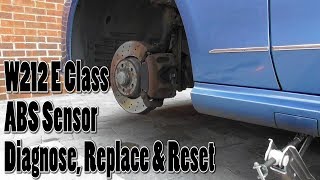
- Owner Repair Story: A user on MBWorld.org described a similar issue where ABS/ESP lights appeared. After confirming the right front sensor was dead via live data, they replaced the sensor (held by one E-Torx bolt) and disconnected/reconnected the battery to clear the lights, successfully resolving the issue. 🎬 Watch: Step-by-step guide to replacing the right front sensor. This highlights the commonality and straightforward nature of the fix.
Mechanic-Grade Diagnostic Values
- Sensor Supply Voltage at Harness Connector — expected: 4.5 - 5.5 Volts DC (with ignition on). Failure: Voltage below 4.0V or 0V indicates a wiring or ABS module fault.
- Active Sensor Signal Output (using oscilloscope) — expected: A clean square wave signal that increases in frequency as the wheel is spun.. Failure: A missing, erratic, or noisy waveform.
- Passive Sensor AC Voltage Output — expected: Minimum of 0.25 Volts AC when spinning the wheel by hand at about half a revolution per second.. Failure: Voltage is less than 0.25 VAC, indicating a weak or dead sensor.
Hidden / Shadow Codes Worth Checking
- 443100: A Mercedes-specific fault code that translates to 'Component L6/1 (Left front axle RPM sensor) - All the signal lines to the component are defective.' While this example is for the left side, a similar code would exist for the right side when C0035 is present. (see via Mercedes-specific diagnostic tools like iCarsoft MB series or Xentry/DAS.)
- 44F100: A Mercedes-specific fault code for the rear right sensor, 'The signal from component L6/4 (Rear right axle RPM sensor) is faulty.' This demonstrates the format of manufacturer-specific codes that provide more detail than the generic C-code. (see via Mercedes-specific diagnostic tools like iCarsoft MB series or Xentry/DAS.)
Scan Tool Commands That Help
- Xentry/DAS: ESP (Electronic Stability Program) Module Self-Test — Use this function when a new sensor and verified wiring do not fix the C0035 code. A failure of the self-test can confirm an internal fault in the ABS/ESP control module's voltage regulator, pointing to module replacement as the necessary fix.
- iCarsoft MB / Autel / Xentry: Live Data - Wheel RPM Sensors — This is the primary first step in diagnosis. By viewing the speed readings from all four wheels simultaneously while driving, a technician can instantly confirm if the right front sensor is providing no signal or an erratic signal compared to the other three.
Wiring & Ground Locations
- N30/4 or N30/7 (ESP Control Module) — Under the hood on the driver's side, behind the shock tower. It is the main hydraulic block with an attached electronic module and numerous brake lines connected to it.. This module is the source of the 5V reference voltage for the wheel speed sensor. The C0035 code is reported by this module when it detects a fault in the supply circuit it provides to the right front sensor. Technicians may need to test for continuity from this module's connector to the sensor connector.
- ESP Module Connector — Attached to the ESP control module (N30/4).. On the W212, there are different versions. The basic ESP pump uses a 38-pin connector (A2125400281), while the premium version (for cars with options like Distronic Plus) uses a 47-pin connector (A0045409881). Knowing this is critical if diagnosing a wiring issue at the module or replacing the module itself.
Real Owner Repair Stories
- MBClub UK Forum Member (Modern Mercedes model) — ABS/ESP warning lights.
❌ Tried (didn't work) Fitting aftermarket ABS sensors, even from known OEM brands like ATE.
✅ What actually fixed it Replacing the faulty sensor with a genuine Mercedes-Benz part. The forum post notes that for many modern Mercedes, aftermarket sensors may not work correctly due to differences in digital vs. analog signaling, causing the fault to persist. - MBWorld.org Forum Member (2012 S212 E250 CDI 4Matic) — ABS, ESP, and other warning lights illuminated.
❌ Tried (didn't work) Noticing that live data showed all four sensors reporting correct speeds, which was confusing since the Xentry scan pointed to a right rear sensor fault.
✅ What actually fixed it The user heard a metallic 'snip' sound from the front end during a hard stop just before the lights appeared, suggesting a physical wiring break was the likely culprit, even though the sensor itself was still intermittently functional. The final fix was not posted, but the story highlights that an intermittent wiring failure can cause the code even if the sensor appears to work on a live data test.
OEM Part Supersession History
A2125400217→A2129050300— Part number evolution and potential design revision by the manufacturer.
Heads up: Both part numbers are listed for the front right sensor on the W212 E-Class and are generally interchangeable. However, it is always best to confirm the correct part number for a specific VIN.
Model Year Variations Within This Range
- 2010-2016: While the C0035 fault is consistent, the ESP control module itself can differ. Base models use a unit with a 38-pin connector (N30/4), while models with advanced driver-assistance systems like Distronic Plus use a premium module with a 47-pin connector (N30/7). This is critical information if diagnosing wiring at the module or replacing the module.
Diagnostic Flowchart
Other Known Issues on This Vehicle
Issues unrelated to this code that are worth knowing about as an owner of this generation:
- 7G-Tronic (722.9) Transmission Conductor Plate Failure 🔴 High — Very common, especially on pre-facelift models. Can occur anytime after 60,000 miles. Symptoms include harsh shifting, getting stuck in gear, or the transmission going into limp mode.
- M276/M278 Engine Timing Chain Tensioner and Camshaft Adjuster Wear 🔴 High — Common on earlier M276 V6 engines (pre-2014). Presents as a loud rattling noise for a few seconds on a cold start. Ignoring it can lead to jumped timing and severe engine damage. (Ref: Mercedes issued updated tensioners and check valves to address the oil pressure issue on startup.)
- Engine and Transmission Mount Collapse 🟠 Medium — The hydraulic engine mounts commonly fail around 60,000-80,000 miles, causing excessive vibration in the cabin at idle or when in gear. A failed transmission mount can cause clunking when shifting.
- Fading Interior Wood Trim 🟡 Low — Very common across the model range, especially on cars frequently exposed to sun. The wood trim, particularly the Burl Walnut, can fade and develop a milky or cloudy appearance. (Ref: Mercedes-Benz issued a Limited Warranty Extension for this issue on certain model years.)
- Airmatic Suspension Failures 🔴 High — On models equipped with Airmatic, the air struts can develop leaks and the compressor can fail, typically after 80,000 miles. Symptoms include the car sagging at one corner when parked or a harsh ride.
- Leaking Camshaft Position Sensors (Oil in Harness) 🟠 Medium — A known issue on M276 engines where oil leaks past the camshaft position sensor's internal seal and wicks through the wiring harness, potentially damaging the engine control unit (ECU) and other electronics. (Ref: Mercedes dealers often recommend installing inexpensive pigtail harnesses to stop the oil from migrating to the main ECU.)
Used vs. New Parts: Buying Guide for This Vehicle
When a used part is the smart pick: A used part is generally not recommended for the wheel speed sensor itself due to its low cost new and high failure rate from wear and exposure. However, if the ABS/ESP control module is diagnosed as faulty, a used module from a reputable salvage yard can be a cost-effective alternative to a new one, provided it is the exact same part number and can be coded to the vehicle.
Donor-vehicle mileage cap: roughly under 80000 miles for the part to have meaningful remaining life.
What to inspect on the donor part:
- For a used ABS Module: Match the part number exactly. Inspect the connector pins for any signs of corrosion or damage. Ensure the donor vehicle was not involved in a front-end collision that could have damaged the module.
- For a sensor (if you must): Visually inspect the wiring for any cracks, brittleness, or previous repairs. Ensure the mounting tab is intact.
OEM-only on this vehicle (don't cheap out):
- Wheel Speed Sensor - While some aftermarket brands may work, many forum users and technicians report persistent issues with non-genuine sensors on this platform. Using a Genuine Mercedes-Benz, Bosch, or ATE sensor is strongly advised to prevent repeat repairs.
Aftermarket brands forum-validated for this vehicle:
- Bosch
- ATE
- VDO
- Hella
Brands owners have reported issues with on this vehicle:
- Generic, unbranded sensors from online marketplaces. These often lack the precise electronic signaling required by the Mercedes ESP system, leading to immediate or premature failure.
Real Owner Stories
Aggregated from forums and TSBs cited above. Mileages and costs reflect what owners reported in those sources.
Mercedes-Benz E-Class (W212)
Symptoms: ABS/ESP warning lights appeared on the dashboard.
What fixed it: Confirmed the right front sensor was dead via live data, replaced the sensor (held by one E-Torx bolt), and disconnected/reconnected the battery to clear the lights.
Source hint: mbworld.org - Owner Repair Story
Related OBD-II Codes
Frequently Asked Questions
Where is the electrical connector for the right front wheel speed sensor located on my W212 E-Class?
My dashboard says 'Run Flat Inoperative' along with the ABS light; is this related to code C0035?
Is the magnetic reluctor ring part of the wheel bearing on the 2010-2016 E-Class?
What specific bolt holds the sensor to the steering knuckle?
Can I use a standard OBD-II scanner to diagnose this on my Mercedes?
What is the correct reference voltage I should see at the sensor harness?
Helpful Videos


We Have This Part in Stock




The information in this article is provided for general reference and educational purposes only. Vehicle specifications, procedures, and part compatibility can vary by production date, trim level, and region. Always consult your vehicle's factory service manual and verify part numbers before purchasing or performing repairs. Safety-critical components such as airbags, seat belts, and braking systems should be installed by a qualified professional.
- Mercedes-Benz E-Class:
- 🧭 Diagnostic Flowchart
- 🎬 Helpful Videos
- 🛍️ Shop This Part
- What's Unique About the 2010-2016 Mercedes-Benz E-Class
- Symptoms You May Notice
- Most Likely Causes
- Rare But Worth Checking
- Diagnosis Steps
- Parts You'll Likely Need
- Platform-Specific Known Issues
- Mechanic-Grade Diagnostic Values
- Hidden / Shadow Codes Worth Checking
- Scan Tool Commands That Help
- Wiring & Ground Locations
- Real Owner Repair Stories
- OEM Part Supersession History
- Model Year Variations Within This Range
- Other Known Issues on This Vehicle
- Used vs. New Parts: Buying Guide for This Vehicle
- Real Owner Stories
- Mercedes-Benz E-Class (W212)
- Related OBD-II Codes
- Frequently Asked Questions
- 🎟️ Get 5% Off