

C0035 on 2006-2011 Mercedes-Benz ML-Class: Right Front Wheel Speed Sensor Circuit Fault Causes and Fixes
On a 2006-2011 (W164) Mercedes ML-Class, code C0035 points to a fault in the right front wheel speed sensor's power supply circuit. The most common fix is replacing the sensor itself or repairing its wiring harness after checking for corrosion in the connector. The sensor often seizes in the steering knuckle and breaks upon removal. Expect to pay $50-$150 for the part and around one hour of labor.
- For the W164 ML-Class, C0035 means a problem with the RIGHT front wheel speed sensor circuit, not the left.
- The most likely causes are damaged wiring to the sensor or the sensor itself has failed.
- This fault disables ABS and ESP, making the vehicle less safe. Repair it promptly.
- Be prepared for the old sensor to be brittle and break during removal, which can add time to the repair.
- Check if your vehicle has had the separate, critical brake booster safety recall performed by a dealer.
What's Unique About the 2006-2011 Mercedes-Benz ML-Class
While many generic code readers define C0035 as a 'Left Front Wheel Speed Sensor' issue, for Mercedes-Benz vehicles of this era, it correctly refers to the 'Right Front Wheel Speed Sensor Supply Circuit'. The distinction is critical for accurate diagnosis. Owners and technicians should be aware that the plastic body of the original sensors on the W164 platform can become extremely brittle over time. Due to galvanic corrosion between the sensor and the aluminum steering knuckle, they frequently break during removal, leaving the lower portion seized in the knuckle, which significantly complicates the repair.
Symptoms You May Notice
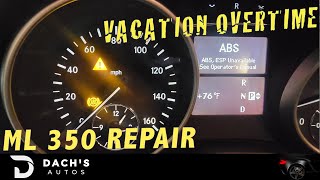
- ABS warning light illuminated on the instrument cluster
- ESP (Electronic Stability Program) or Traction Control warning light illuminated
- Disabling of the ABS, ESP, and traction control systems
- Brake pedal may feel harder than usual or pulse unexpectedly during stops
- Vehicle may brake erratically on its own or seem to lose power as the ESP system incorrectly attempts to correct a perceived wheel slip.
- Replacing the left front wheel speed sensor, due to relying on generic OBD-II definitions instead of the specific Mercedes-Benz definition for C0035.
- Replacing the ABS control module before thoroughly checking the sensor wiring and connector for damage.
- Replacing the wheel speed sensor when the actual fault is a damaged or corroded connector plug.
Most Likely Causes
- Damaged Wheel Speed Sensor Wiring or Connector 🔴 High Probability → Shop ABS Wheel Speed Sensor The wiring harness is exposed to road debris, moisture, and suspension movement, which can lead to chafed insulation, broken wires, or corrosion within the connector pins over time.
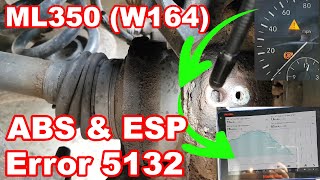
How to confirm: Visually inspect the entire length of the wiring from the sensor to where it enters the main loom. Unplug the connector and check for green/white corrosion, bent pins, or pushed-out pins. 🎬 See how a pro diagnoses complex ABS and ESP wiring faults. Use a multimeter to test for continuity and proper voltage (approx. 12V supply) and ground at the connector.
Typical fix: Repair the damaged section of wire with solder and heat-shrink tubing or replace the pigtail connector. Clean corroded terminals with electrical contact cleaner.
Est. part cost: $15-$40 - Failed Right Front Wheel Speed Sensor 🔴 High Probability → Shop ABS Wheel Speed Sensor The sensor's plastic housing becomes brittle with age and heat cycles, leading to internal failure or breaking during service. Internal electronics can also fail from vibration and moisture. This is the most common failure point for this code.
How to confirm: With a Mercedes-specific scan tool, check for a speed reading from the right front wheel while driving or spinning the wheel by hand. If the reading is zero or erratic while the wiring is confirmed to be good, the sensor has failed. Resistance can also be checked with a multimeter, though live data is more reliable.
Typical fix: Replace the right front wheel speed sensor. Be prepared for the old sensor to break upon removal. It may need to be carefully drilled or pried out of the steering knuckle. Applying penetrating oil beforehand may help but is often not enough.
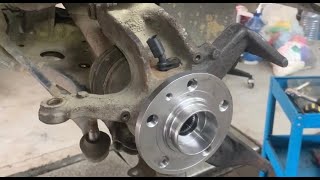
Est. part cost: $50-$180 - Damaged or Debris-Covered Tone Ring ⚪ Low Probability The tone ring (or reluctor ring) which the sensor reads is integrated into the sealed wheel bearing hub assembly and is not a separately serviceable part on the W164. While durable, severe corrosion or a failing wheel bearing can damage it.
How to confirm: After removing the wheel speed sensor, visually inspect the magnetic encoder ring on the bearing through the sensor mounting hole while rotating the hub. Look for rust buildup, debris, or physical damage like cracks. A fault is often difficult to see.
Typical fix: The tone ring is part of the wheel bearing hub assembly. The entire hub must be replaced. This is a much more involved and expensive repair.
Est. part cost: $150-$350
Rare But Worth Checking
- Faulty ABS/ESP Control Module: → Shop ABS Control Module This is an uncommon cause. Before condemning the expensive module, all other possibilities (sensor, wiring, tone ring) must be exhaustively ruled out. A failure of the internal voltage regulator that powers the sensor can trigger this code.
Diagnosis Steps
- Connect a Mercedes-Benz compatible scanner (like STAR/Xentry, not a generic OBD-II reader) to confirm code C0035 and its specific definition: 'Right Front Wheel Speed Sensor Supply'.
- Monitor live data from all four wheel speed sensors while driving. Confirm that the right front sensor shows a zero, erratic, or inconsistent reading compared to the other three.
- Raise and secure the vehicle. Remove the right front wheel.
- Thoroughly inspect the wheel speed sensor wiring harness from the sensor up into the wheel well. Look for any signs of physical damage, chafing against suspension components, or heat damage.
- Disconnect the sensor and inspect the connector terminals on both the sensor and harness side for corrosion, moisture, or damaged/pushed-out pins.
- With the key on, engine off, use a multimeter set to DC volts to check for reference voltage (should be approx. 12V) and a good ground at the harness-side of the connector.
- If wiring and power supply are confirmed to be good, the sensor itself is the primary suspect. Attempt to remove the sensor. Apply penetrating oil and let it soak before trying to twist and pull it out. Be prepared for it to break.
- If the sensor is replaced and the code returns, re-inspect wiring. If wiring is perfect, the next step is to inspect the tone ring on the wheel hub for damage or debris.
- If all other components are verified to be good, the ABS control module may be faulty, which requires advanced diagnostics to confirm.
Parts You'll Likely Need
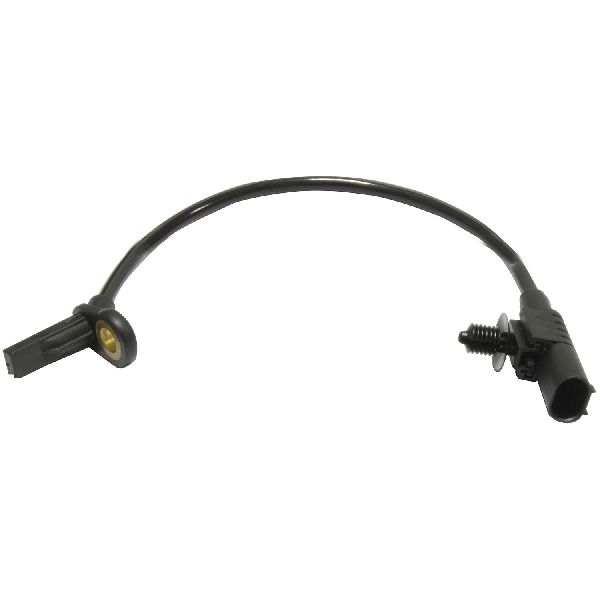
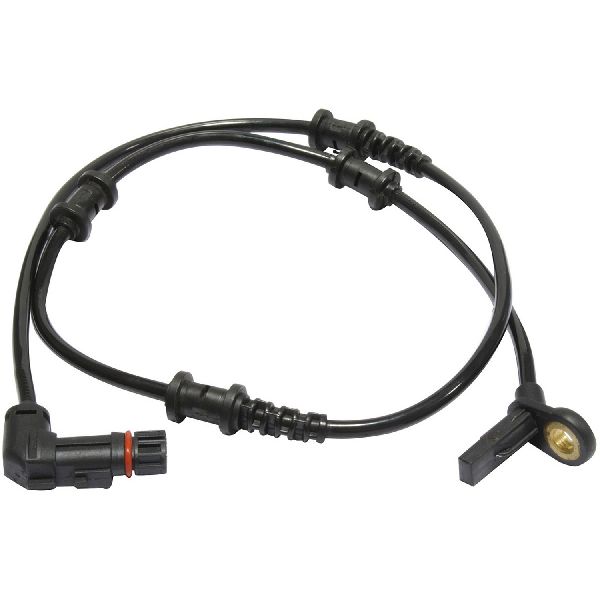
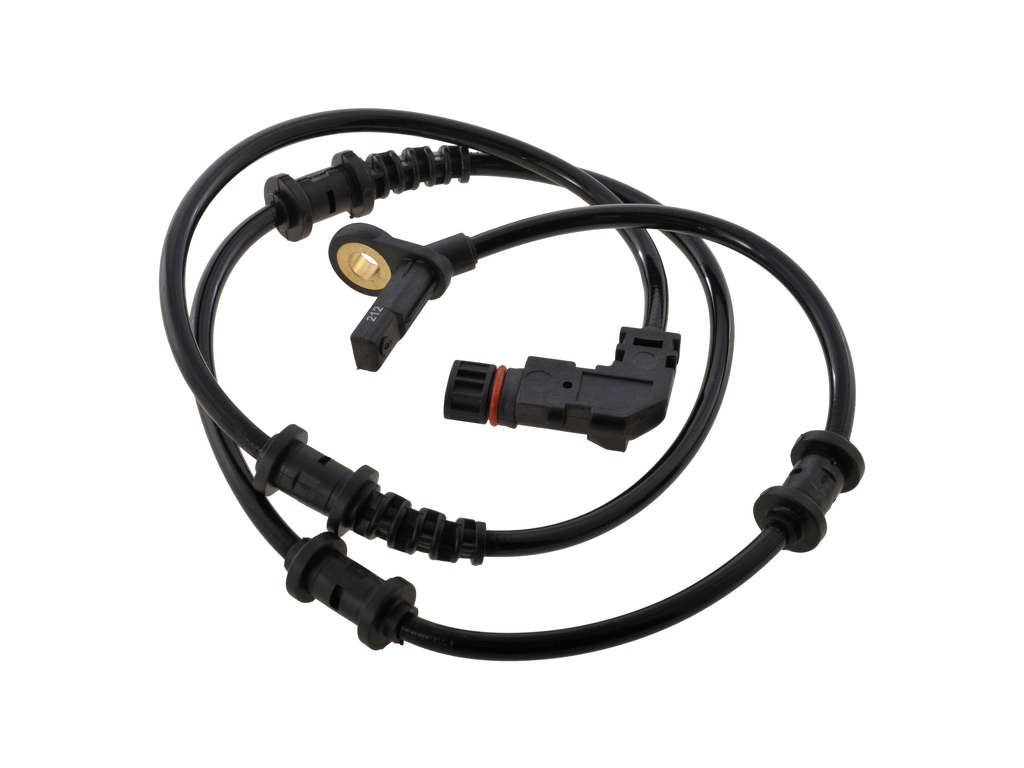
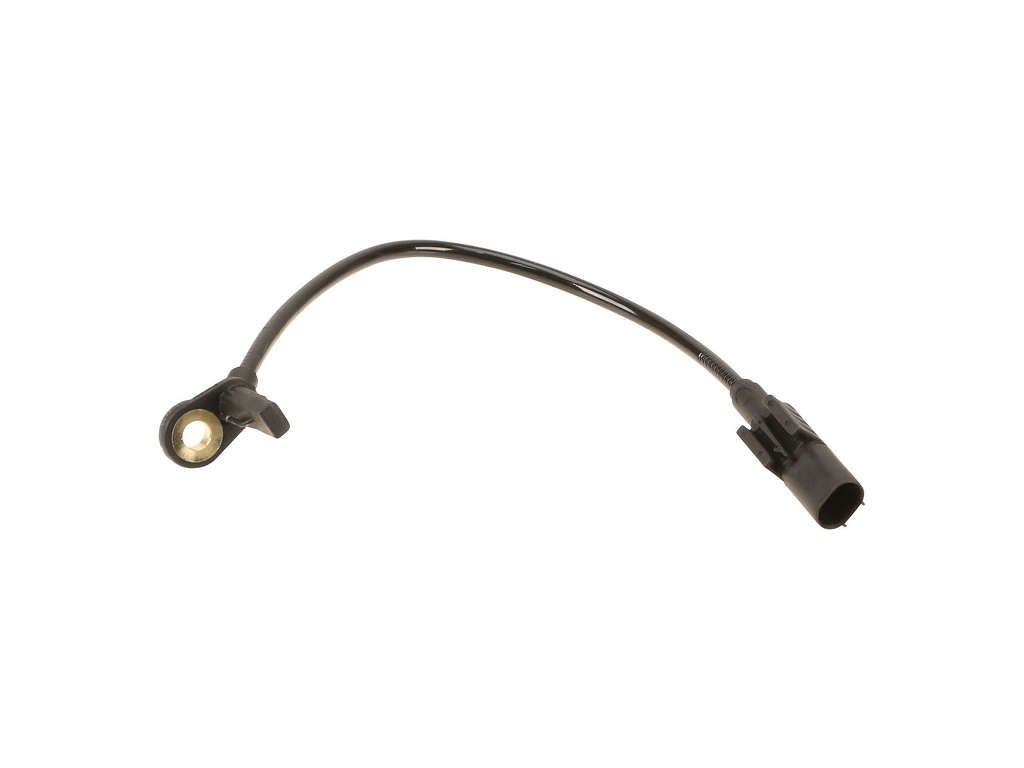
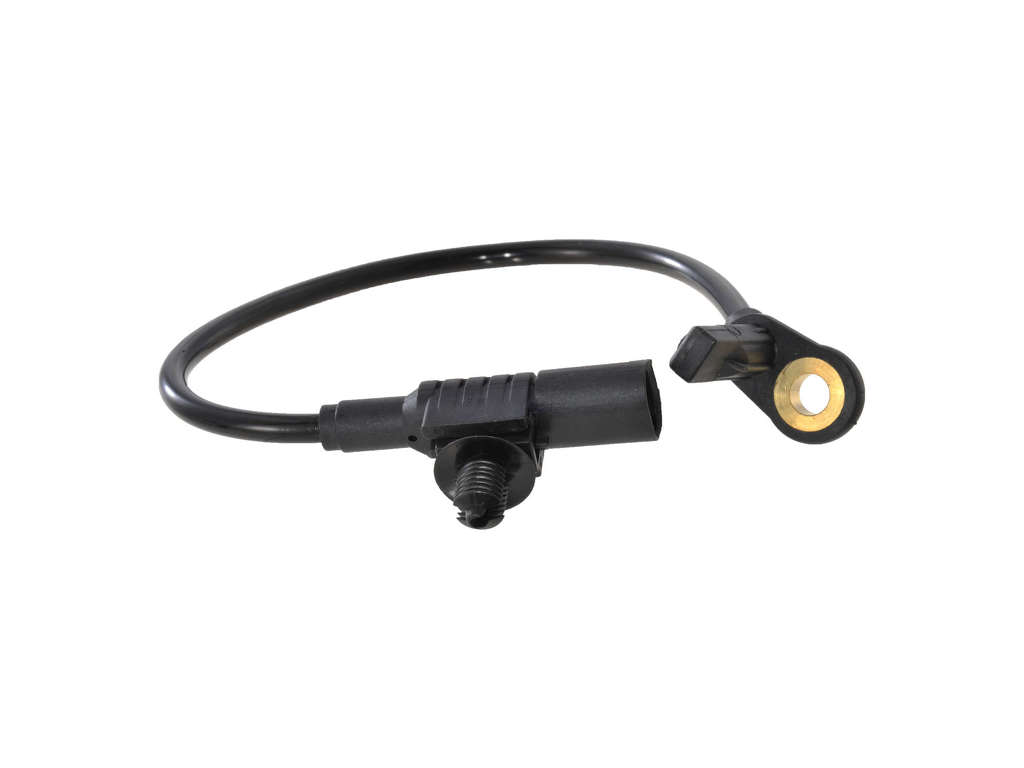
- Front Wheel Speed Sensor
(OEM #1649058200)— This is the most common failure point for code C0035, either due to internal electronic failure or physical damage. The front left and right sensors are the same part. Alternate/superseded part numbers include A1649058200 and 1644405541.
Trusted brands: Bosch, ATE, URO Parts, Meyle
OEM price range: $120-$180
Aftermarket price range: $50-$100
Platform-Specific Known Issues
- Sensor Seizure and Breakage: A very common experience is for the old sensor to be seized in the aluminum steering knuckle. The removal process often results in the plastic top of the sensor breaking off, leaving the body stuck fast. Forum threads are filled with owners having to resort to drilling, prying, and chiseling the remnants out, turning a simple job into a difficult one. 🎬 Watch this trick for removing a broken or seized ABS sensor.
- Brake Booster Corrosion Recall: While not directly related to code C0035, the 2006-2012 ML-Class was subject to a major safety recall for brake booster corrosion. Moisture can get trapped under a rubber sleeve on the booster, leading to corrosion that can reduce braking power or, in rare cases, cause a complete failure. Owners should verify with a Mercedes-Benz dealer if their vehicle has had this recall service performed.
Documented NHTSA Reports
While C0035 is specific to the Right Front Wheel Speed Sensor Supply on Mercedes-Benz vehicles, it is important to note that other manufacturers use this code differently. For context, NHTSA ODI #10440851 and NHTSA ODI #10442197 describe C0035 as a "Left Front Wheel Speed Sensor Circuit Malfunction" on Chevrolet platforms, which often leads to confusion when using generic scan tools on a Mercedes-Benz. Furthermore, NHTSA ODI #10287028 notes instances where replacing both the hub and the ABS sensor failed to resolve the issue, while NHTSA ODI #10273914 references a manufacturer bulletin (PIT3460N) regarding the ABS light illuminating with EBCM DTCs including C0035. Finally, NHTSA ODI #11228687 reports a case where C0035 appeared alongside multiple other communication and sensor codes (U0126, U0415), suggesting that in complex electrical failures, this code may be one of many triggered simultaneously.
Mechanic-Grade Diagnostic Values
- Wheel Speed Sensor Supply Voltage — expected: 11V - 14V (approx. battery voltage). Failure: Voltage below 11V indicates a wiring or ABS module supply issue.
- Wheel Speed Sensor Resistance (Ohm test) — expected: Not a reliable test.. Failure: Unlike older passive sensors, these are active Hall-effect sensors. A resistance test is inconclusive and not a valid diagnostic procedure. Diagnosis should be done via live data and voltage/signal checks.
- Continuity Test from Sensor Connector to ABS Module — expected: < 1.0 Ohm. Failure: High or infinite resistance (OL) on any of the three wires indicates a break in the harness.
Scan Tool Commands That Help
- Xentry/DAS: Control Units -> Chassis -> ESP - Electronic Stability Program -> Actual Values — This is the primary diagnostic step to view the live speed readings from all four wheels simultaneously while the vehicle is moving. It will clearly show if the right front sensor is reading 0 or has an erratic signal compared to the others.
- Xentry/DAS: Control Units -> Chassis -> ESP -> Control unit adaptations -> Control module programming — This function, which requires an online connection for SCN Coding, is mandatory if the ABS/ESP control module (N47-5) itself is replaced. It pairs the new module to the car's VIN and configuration.
Wiring & Ground Locations
- N47-5 — The ESP (ABS) control module is located in the engine compartment on the driver's side, attached to the hydraulic unit/ABS pump block.. This module supplies the power and ground to the right front wheel speed sensor and interprets its signal. Testing continuity back to this module's connector is the definitive way to rule out a wiring harness break.
- L6/2 — This is the Mercedes designator for the right front wheel speed sensor itself, located on the steering knuckle behind the brake rotor.. This is the primary component monitored by code C0035.
- N47-5 Connector Pins 12, 13, 30 — On the main electrical connector for the ESP control module (N47-5).. Pin 12 is the voltage supply (+V) to the sensor, Pin 13 is the signal wire, and Pin 30 is the ground. Testing for continuity between these pins and the corresponding pins at the sensor connector confirms the integrity of the entire wiring harness.
- Main Chassis Grounds (e.g., W7, W9) — Located in the engine bay, typically on the inner fender wells. They appear as a stud with multiple brown wires attached.. While less common for a single sensor fault, a corroded main ground for the ABS/ESP system could cause various electrical issues, including power supply faults to sensors.
Real Owner Repair Stories
- MBWorld.org Forums (2011 ML350) — Random ABS dash lights appearing and disappearing.
❌ Tried (didn't work) Initially assumed it was the sensor itself.
✅ What actually fixed it The wire for the left rear ABS sensor had broken inside the insulation, about 1 inch from the harness-side connector. The user asked if splicing was a viable repair, and the consensus was yes, it is a common and acceptable fix for a localized wire break. This highlights that an internal wire break, invisible to the eye, can be the root cause. - MBWorld.org Forums (ML320 CDI (W164)) — ABS and ESP warning lights on.
❌ Tried (didn't work) Swapping the suspected faulty right front sensor with the known-good left front sensor. The fault code C0035 remained for the right front position, proving the sensor was not the issue.
✅ What actually fixed it The user suspected the magnetic ring on the wheel bearing was the cause, as the sensor itself was ruled out. The final resolution was not posted, but the diagnostic step of swapping sensors side-to-side was critical in proving the fault was with the wiring or the tone ring, not the sensor part.
OEM Part Supersession History
A 164 540 07 17→164 440 55 41— Part revision by manufacturer.164 440 55 41→164 905 82 00— Part revision by manufacturer. This is the most current part number commonly available.
Heads up: The front left and right sensors are the same part.
Model Year Variations Within This Range
- 2006-2011: While the C0035 fault and its causes are consistent across the W164 generation, there were cosmetic and minor interior electronic changes during the 2009 model year facelift. However, the ABS/ESP system, sensors, and wiring relevant to this code did not undergo significant changes.
Diagnostic Flowchart
Other Known Issues on This Vehicle
Issues unrelated to this code that are worth knowing about as an owner of this generation:
- M272/M273 Engine Balance Shaft/Idler Gear Failure 🔴 High — Common on engines produced before ~2009, typically between 80,000-150,000 km. A class-action lawsuit was filed over this issue. Causes timing correlation codes (P0016, P0017) and engine rattle.
- OM642 Diesel Engine Oil Cooler Seal Leak 🟠 Medium — Very common issue, especially on pre-2010 models with original orange seals. Seals degrade from heat, causing oil to leak into the engine valley. Labor-intensive and costly to repair due to location. Updated purple Viton seals are more durable but can still fail.
- 7G-Tronic (722.9) Transmission Conductor Plate Failure 🔴 High — A widespread and very common failure point around 90,000-100,000 miles. The Transmission Control Module (TCM) on the valve body fails, causing harsh shifting, getting stuck in gear, or limp mode. Repair is complicated as it's a 'theft-relevant part' requiring dealer coding.
- Airmatic Suspension Failure 🟠 Medium — On vehicles equipped with Airmatic, failure of components is considered almost inevitable with age. Common failures include leaking air springs causing the vehicle to sag (often overnight), worn-out compressors, and faulty valve blocks that fail to distribute air correctly.
- Rear SAM (Signal Acquisition Module) Failure due to Water Ingress 🟠 Medium — A well-known W164 issue where water leaks past failing gaskets on the rear tail lights or third brake light, dripping onto and shorting out the Rear SAM located in the trunk area. This causes a wide range of bizarre electrical faults.
Used vs. New Parts: Buying Guide for This Vehicle
When a used part is the smart pick: A used part may be a cost-effective choice for the ABS/ESP Control Module (N47-5) or the complete wheel hub/bearing assembly. It is generally not recommended for the wheel speed sensor itself.
Donor-vehicle mileage cap: roughly under 80000 miles for the part to have meaningful remaining life.
What to inspect on the donor part:
- For a wheel hub/bearing: Spin the hub by hand. It should be smooth with no grinding, roughness, or binding. Check for any visible damage or heavy corrosion on the magnetic encoder ring.
- For an ABS module: Ensure the part number matches your original module exactly. Check for any signs of corrosion on the aluminum housing or pins in the electrical connector. Purchase from a reputable seller that guarantees the part is functional.
OEM-only on this vehicle (don't cheap out):
- SCN Coding Service: While the ABS module itself can be used, the programming (SCN Coding) required to pair it to your car must be done with official Mercedes tools and software, effectively making the *service* an OEM-only requirement.
Aftermarket brands forum-validated for this vehicle:
- For Wheel Speed Sensors: Bosch, ATE, Continental, VEMO. These are often the original equipment manufacturers.
- For Wheel Bearing/Hubs: SKF, FAG, Timken, Meyle.
Brands owners have reported issues with on this vehicle:
- Unbranded, no-name wheel speed sensors from online marketplaces are frequently reported to be dead-on-arrival or fail within a few months. Given the labor involved, especially if the old sensor seizes, using a quality part is crucial.
Real Owner Stories
Aggregated from forums and TSBs cited above. Mileages and costs reflect what owners reported in those sources.
2009 Mercedes-Benz ML350
Symptoms: The owner experienced a wheel speed sensor fault and investigated whether the magnetic ring could be serviced individually.
What fixed it: Confirmation that the magnetic ring is part of the complete wheel bearing, requiring a full hub assembly replacement.
Source hint: MBClub UK - '2009 W164 ML350 Wheel speed sensor issue'
2007-2011 Mercedes-Benz ML-Class (W164)
Symptoms: ABS/wheel sensor fault; the owner replaced the sensor but the fault remained, leading to an inspection of the magnetic tone ring.
What fixed it: Checking the magnetic tone ring integrated into the bearing after a sensor replacement failed to clear the code.
Source hint: MBWorld.org Forums - 'W164 ABS/ wheel sensor fault?'
2006-2011 Mercedes-Benz ML-Class
Symptoms: The plastic top of the sensor broke off during an attempted removal, leaving the body stuck fast in the steering knuckle.
What fixed it: Drilling, prying, and chiseling the remnants of the seized sensor out of the aluminum steering knuckle.
Source hint: vehicle_specific_issues - 'Sensor Seizure and Breakage'
Related OBD-II Codes
Frequently Asked Questions
Is there a recall for the braking system on my 2006-2011 ML-Class that might be related to this ABS light?
Can I just replace the magnetic tone ring on my W164 ML-Class if it's damaged?
Why is it so difficult to remove the right front wheel speed sensor on this vehicle?
Do I need a special tool to diagnose C0035 on my Mercedes?
Does the GL-Class share this same wheel speed sensor issue?
Helpful Videos
We Have This Part in Stock


The information in this article is provided for general reference and educational purposes only. Vehicle specifications, procedures, and part compatibility can vary by production date, trim level, and region. Always consult your vehicle's factory service manual and verify part numbers before purchasing or performing repairs. Safety-critical components such as airbags, seat belts, and braking systems should be installed by a qualified professional.
- Mercedes-Benz ML-Class:
- 🧭 Diagnostic Flowchart
- 🎬 Helpful Videos
- 🛍️ Shop This Part
- What's Unique About the 2006-2011 Mercedes-Benz ML-Class
- Symptoms You May Notice
- Most Likely Causes
- Rare But Worth Checking
- Diagnosis Steps
- Parts You'll Likely Need
- Platform-Specific Known Issues
- Documented NHTSA Reports
- Mechanic-Grade Diagnostic Values
- Scan Tool Commands That Help
- Wiring & Ground Locations
- Real Owner Repair Stories
- OEM Part Supersession History
- Model Year Variations Within This Range
- Other Known Issues on This Vehicle
- Used vs. New Parts: Buying Guide for This Vehicle
- Real Owner Stories
- 2009 Mercedes-Benz ML350
- 2007-2011 Mercedes-Benz ML-Class (W164)
- 2006-2011 Mercedes-Benz ML-Class
- Related OBD-II Codes
- Frequently Asked Questions
- 🎟️ Get 5% Off