

C0035 on 2013-2018 Nissan Altima: Front Wheel Speed Sensor Fault Causes and Fixes
Code C0035 on a 2013-2018 Nissan Altima means there is a fault in a front wheel speed sensor circuit. The most common fix is replacing the faulty sensor, which costs about $20-$60 for an aftermarket part. A diagnostic scan tool is needed to confirm which side (left or right) is failing, as generic definitions for this code are conflicting.
- C0035 points to a fault in a front wheel speed sensor circuit on your Altima.
- The ABS, traction (VDC), and SLIP lights will be on, and these safety systems are disabled.
- You MUST use a scan tool that can read live ABS data to determine if the fault is on the left or right side before buying parts.
- The most common fix is replacing the faulty sensor, which is a relatively simple and inexpensive repair.
- Always inspect the wiring and connector for damage before replacing the sensor, and clean the mounting hole thoroughly during installation.
What's Unique About the 2013-2018 Nissan Altima
For the fifth-generation (L33) Altima, the C0035 code is a straightforward sensor or circuit failure. Unlike some vehicles where this code is tied to complex software issues or specific recalls, on the Altima it almost always points to a physical component failure. The front wheel speed sensors are also the same part for both driver and passenger sides, simplifying part sourcing. The key challenge is not the complexity of the system, but correctly identifying which side has the fault before replacing parts.
Generation note: The 2013-2018 model years cover the entire fifth generation (L33) of the Nissan Altima. This includes the pre-facelift models (2013-2015) and the facelifted models (2016-2018). The underlying ABS components, wiring, and common causes for this code are the same across this generation.
Symptoms You May Notice
- Illuminated ABS warning light on the dashboard
- Illuminated Traction Control System (TCS) or Vehicle Dynamic Control (VDC) light
- Illuminated 'SLIP' indicator light
- Traction control and stability control systems are disabled
- ABS may not activate during hard braking, leading to wheel lock-up
- In some rare cases, the speedometer may stop working if it relies on the failed sensor for its reading.
- Replacing the wrong side wheel speed sensor due to the code's ambiguity. Always confirm with a scanner's live data.
- Replacing the wheel hub/bearing when only the sensor is bad.
- Replacing the sensor when the actual problem is a broken wire or corroded connector pin further up the harness.
Most Likely Causes
- Faulty Front Wheel Speed Sensor 🔴 High Probability → Shop ABS Wheel Speed Sensor Wheel speed sensors are exposed to harsh conditions (water, road salt, debris) which can lead to internal failure or corrosion over time. They are a common failure item on many vehicles, including the Altima.
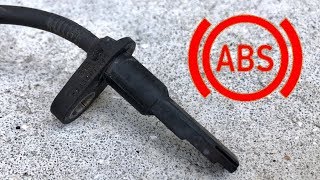
How to confirm: Use an OBD-II scanner with ABS capabilities to monitor live data from all wheel speed sensors while driving. The faulty sensor will show a speed of 0 mph or a reading that is erratic and does not match the other sensors. You can also test the sensor's internal resistance with a multimeter; it should typically be between 800-2000Ω. An open circuit reading indicates a failed sensor. 🎬 See this guide on testing sensor resistance with a multimeter.
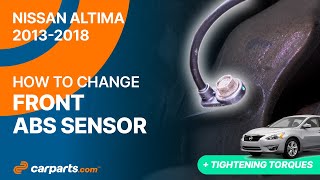
Typical fix: Replace the faulty wheel speed sensor. 🎬 Watch: Step-by-step front ABS sensor replacement for this Altima generation. The sensor is mounted on the steering knuckle with a single 10mm bolt, torqued to 84 in-lbs (7 ft-lbs).
Est. part cost: $20 - $60 - Damaged Wiring or Connector 🟡 Medium Probability The wiring harness leading to the sensor can be damaged by road debris, improper servicing, or rubbing against suspension components. The connector pins can also corrode, especially in regions that use road salt.
How to confirm: Visually inspect the entire length of the sensor's wiring harness from the sensor to the connection point in the wheel well. Look for any breaks, chafing, melted spots, or green/white corrosion in the connector pins. A continuity test with a multimeter can confirm a broken wire. A broken clip on the harness connector can cause it to come unplugged.
Typical fix: Repair the damaged section of wire or replace the connector pigtail. In severe cases, the entire sensor harness may need replacement.
Est. part cost: $10 - $40 - Debris on Sensor or Tone Ring ⚪ Low Probability The wheel speed sensor is magnetic and can attract metallic debris (brake dust, metal shavings), which can interfere with its reading. The tone ring, which is integrated into the wheel hub assembly, can become caked with rust or debris.
How to confirm: Remove the wheel speed sensor and inspect its tip for metal shavings or heavy rust buildup. Inspect the tone ring (part of the wheel hub) through the sensor mounting hole for damage, rust, or missing teeth. Sometimes the hole can fill with rust, preventing a new sensor from seating properly.
Typical fix: Clean the debris off the sensor tip and out of the mounting hole. If the tone ring on the wheel hub is damaged, the entire wheel hub assembly must be replaced.
Est. part cost: $0 - $150
Rare But Worth Checking
- Faulty ABS Control Module: → Shop ABS Control Module This is very rare and should only be considered after thoroughly ruling out the sensor, wiring, and hub/tone ring. A module failure will typically require programming by a dealer or specialized shop and may be accompanied by other communication-related trouble codes.
- Bad Wheel Hub / Bearing Assembly: → Shop Hub Assembly Excessive play in a worn wheel bearing can cause the tone ring to move out of alignment with the sensor, creating an erratic signal. This is usually accompanied by a humming or grinding noise from the wheel that changes with speed.
Diagnosis Steps
- Connect an OBD-II scanner capable of reading ABS codes and live data.
- Confirm C0035 is the active code. Note if the scanner specifies 'Left' or 'Right' front.
- Access the live data stream for all four wheel speed sensors.
- Drive the vehicle slowly (above 5 mph) and observe the speed readings from each sensor. The sensor that reads 0 mph or has an erratic/jumpy signal is the faulty one. This step is critical to identify the correct side.
- Raise and support the vehicle safely.
- Visually inspect the identified faulty sensor, its connector, and wiring for any obvious damage, corrosion, or debris.
- Disconnect the sensor and test its resistance with a multimeter. A reading between a few hundred and a few thousand ohms is expected; an open circuit indicates failure.
- If wiring looks good and the sensor tests bad, remove the 10mm bolt holding the sensor to the steering knuckle and pull the sensor out. It may be seized with rust and require careful prying.
- Inspect the sensor tip and the tone ring inside the hub for debris or damage. Clean the mounting hole thoroughly before installing the new sensor.
- If no visual issues are found, the sensor itself is the most likely culprit. Replace the sensor.
- Torque the new sensor's 10mm bolt to 84 in-lbs (7 ft-lbs).
- Clear the ABS code and perform another test drive to confirm the fix and that the ABS, VDC, and SLIP lights do not return.
Parts You'll Likely Need
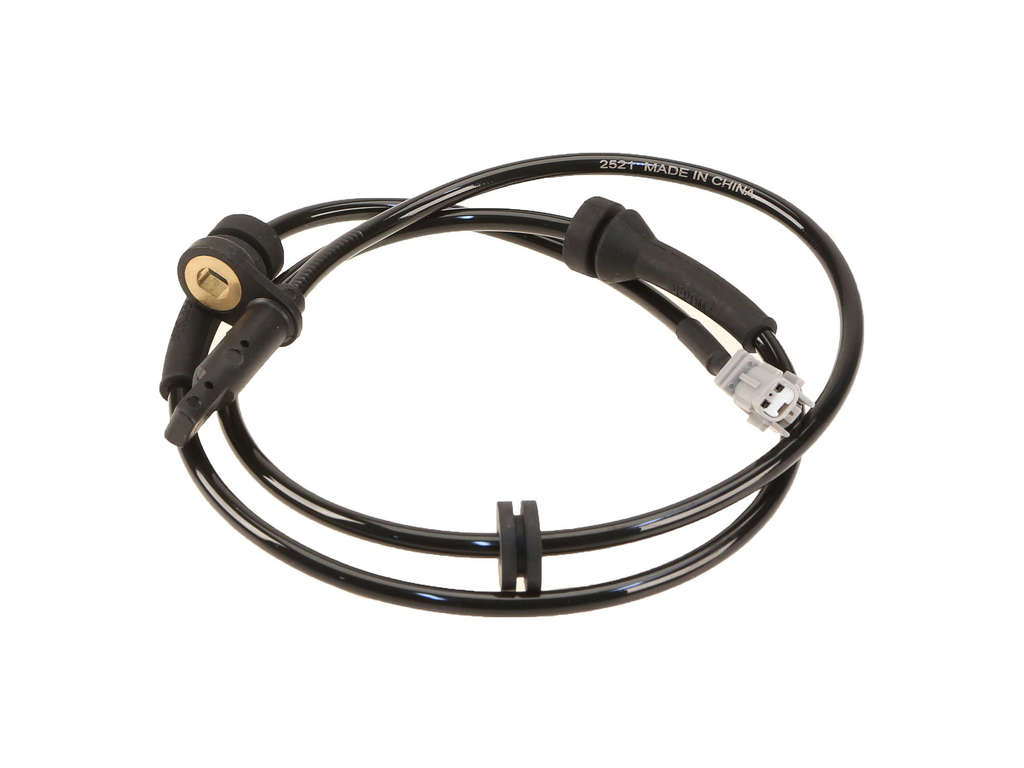
- Front Wheel Speed Sensor
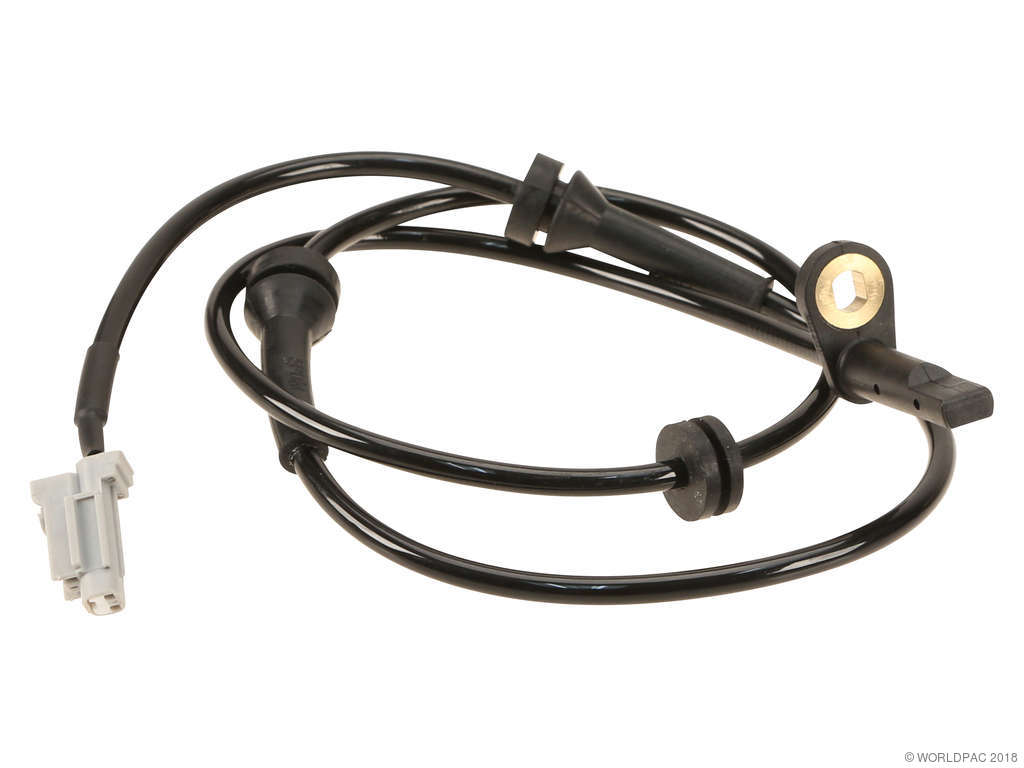
(OEM #47910-3TA2A)— This is the most common failure point for code C0035. The sensor itself fails internally from age and exposure to the elements. The same part number fits both left and right front wheels.
Trusted brands: Hitachi, Delphi, Dorman, Standard Motor Products (SMP), Holstein
OEM price range: $100-$230
Aftermarket price range: $20-$65
Platform-Specific Known Issues
- Owner Experience: Speedometer Failure: A 2014 Altima owner on Reddit reported that along with the ABS and other warning lights, their speedometer stopped working and the RPMs fluctuated, which can happen if the vehicle speed signal is derived from the failed wheel sensor.
- Installation Difficulty: Seized Sensor: Due to rust buildup in the steering knuckle, the old sensor can be difficult to remove. Additionally, rust and debris can build up inside the mounting hole, preventing the new sensor from seating fully. A forum user noted their new sensor would only go in halfway until the hole was thoroughly cleaned out.
Mechanic-Grade Diagnostic Values
- Front Wheel Speed Sensor Resistance — expected: A few hundred to a few thousand Ohms (Ω). Failure: An open circuit (infinite resistance) reading on a multimeter indicates a failed sensor.
- Front Wheel Speed Sensor Retaining Bolt Torque — expected: 84 in-lbs (7 ft-lbs). Failure: Over-tightening can damage the sensor or bolt; under-tightening can allow the sensor to move.
- Sensor Supply Voltage — expected: Approximately 5V or battery voltage, depending on system design.. Failure: A reading below 4.0V at the sensor connector (with key on) can indicate a wiring or ABS module supply issue.
Wiring & Ground Locations
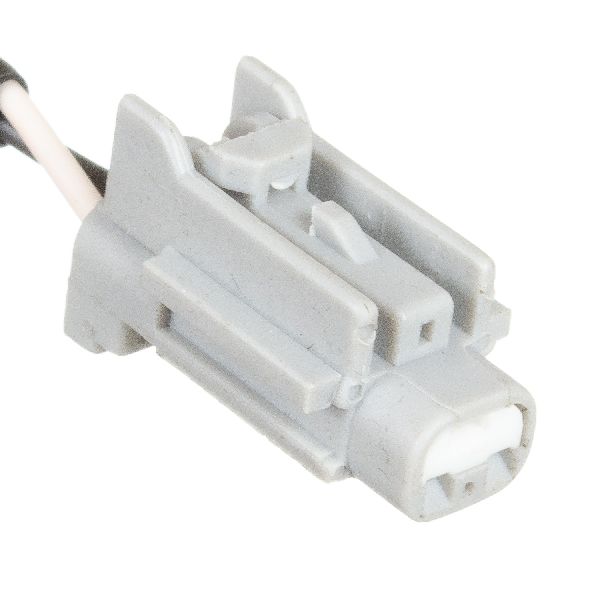
- Front ABS Sensor Connector — Located in the wheel well, behind the plastic fender liner. You must remove a push-pin clip to peel the liner back for access.. This is the primary connection point to test wiring from the ABS module and the first place to check for corrosion or damage after the sensor itself.
- B10, B43 — These are connector designators for the ABS Actuator and Electric Unit (Control Unit) located in the right rear of the engine compartment.. These are the main harness connection points at the ABS module. Testing for power, ground, and signal continuity would happen at these connectors in advanced diagnostics.
Real Owner Repair Stories
- YouTube channel 'The Flat Rate Mechanic' (Vehicle with C0035 (General, not specific to Altima but applicable)) — ABS light on, code C0035 stored.
✅ What actually fixed it The wheel speed sensor connector was found to be unplugged. The plastic clip that holds the harness in place had broken, allowing the connector to separate. The fix was simply to plug the connector back in and secure the harness with a zip tie.
OEM Part Supersession History
47910-3TA0A→47910-3TA1A, then 47910-3TA2A— Standard part revision and improvement process by the manufacturer.
Heads up: All part numbers are interchangeable for the 2013-2018 Altima. The latest version, 47910-3TA2A, is the current replacement part.
Diagnostic Flowchart
Other Known Issues on This Vehicle
Issues unrelated to this code that are worth knowing about as an owner of this generation:
- CVT Transmission Failure 🔴 High — Very common, especially in 2013-2017 models. Issues like shuddering, hesitation, and complete failure can occur well before 100,000 miles. (Ref: Multiple class-action lawsuits were settled, and Nissan extended warranties for some earlier models.)
- Rear Lower Control Arm Corrosion 🔴 High — Primarily affects vehicles in 'salt belt' states. Corrosion can cause the arm to crack and potentially separate from the frame. (Ref: Nissan initiated a voluntary service campaign and extended the warranty rather than issuing a formal recall.)
- Failing A/C Compressor or Clutch 🟠 Medium — Commonly reported issue where the A/C stops blowing cold. Often, only the clutch assembly fails, which is cheaper to replace than the entire compressor.
- Secondary Hood Latch Failure 🔴 High — A faulty hood latch could allow the hood to fly open while driving. This was a widespread issue. (Ref: Subject to multiple recalls and a class-action lawsuit alleging the fixes were insufficient.)
- Dim Headlights 🟡 Low — The internal reflector bowl of the headlight assembly can degrade over time, causing very poor light output even with new bulbs.
Used vs. New Parts: Buying Guide for This Vehicle
When a used part is the smart pick: A used OEM wheel speed sensor from a low-mileage donor vehicle can be a cost-effective option, but it carries risk. Given the low cost of quality aftermarket sensors, buying used is generally not recommended unless on a strict budget.
Donor-vehicle mileage cap: roughly under 60000 miles for the part to have meaningful remaining life.
What to inspect on the donor part:
- Check for a clean, undamaged sensor tip.
- Inspect the wiring for any signs of cracking, brittleness, or previous repairs.
- Ensure the connector pins are clean, straight, and free of corrosion.
- Verify the plastic mounting tab and bolt hole are not cracked or stressed.
OEM-only on this vehicle (don't cheap out):
- ABS Control Module/Actuator - Due to programming requirements and the critical safety nature, OEM or a professionally remanufactured and programmed unit is essential.
Aftermarket brands forum-validated for this vehicle:
- Delphi
- Standard Motor Products (SMP)
- Hitachi
- NTK
Brands owners have reported issues with on this vehicle:
- Unnamed, ultra-low-cost brands from online marketplaces are frequently cited in forums as having high premature failure rates. While no specific brand is universally condemned, mechanics often advise against the cheapest available option.
Real Owner Stories
Aggregated from forums and TSBs cited above. Mileages and costs reflect what owners reported in those sources.
2014 Nissan Altima
Symptoms: ABS and other warning lights illuminated, speedometer stopped working, and the RPMs fluctuated.
What fixed it: Replacement of the failed wheel speed sensor.
Source hint: Reddit r/AskMechanics thread titled 'whats_gone_wrong_and_is_this_fixable_2014_nissan/'
Nissan Altima (L33 Chassis)
Symptoms: The new wheel speed sensor would only go in halfway during installation.
What fixed it: The mounting hole in the steering knuckle had to be thoroughly cleaned of rust and debris to allow the sensor to seat properly.
Source hint: NissanForums.com thread titled 'wheel-speed-sensor-not-fitting'
Related OBD-II Codes
Frequently Asked Questions
My 2014 Altima has an ABS light and the speedometer stopped working. Is this related to code C0035?
I'm trying to replace the sensor on my Altima but it won't go all the way into the hole. What should I do?
What is the correct torque spec for the front wheel speed sensor bolt on a 2013-2018 Altima?
Can I use a wheel speed sensor from a Nissan Maxima to fix code C0035 on my Altima?
What resistance should I look for when testing the Altima's front wheel speed sensor with a multimeter?
Is there a recall for the wheel speed sensors on the 2013-2018 Altima?
Helpful Videos


We Have This Part in Stock


The information in this article is provided for general reference and educational purposes only. Vehicle specifications, procedures, and part compatibility can vary by production date, trim level, and region. Always consult your vehicle's factory service manual and verify part numbers before purchasing or performing repairs. Safety-critical components such as airbags, seat belts, and braking systems should be installed by a qualified professional.
- Nissan Altima:
- 🧭 Diagnostic Flowchart
- 🎬 Helpful Videos
- 🛍️ Shop This Part
- What's Unique About the 2013-2018 Nissan Altima
- Symptoms You May Notice
- Most Likely Causes
- Rare But Worth Checking
- Diagnosis Steps
- Parts You'll Likely Need
- Platform-Specific Known Issues
- Mechanic-Grade Diagnostic Values
- Wiring & Ground Locations
- Real Owner Repair Stories
- OEM Part Supersession History
- Other Known Issues on This Vehicle
- Used vs. New Parts: Buying Guide for This Vehicle
- Real Owner Stories
- 2014 Nissan Altima
- Nissan Altima (L33 Chassis)
- Related OBD-II Codes
- Frequently Asked Questions
- 🎟️ Get 5% Off