

C0035 on 2008-2013 Nissan Rogue: Left Front Wheel Speed Sensor Causes and Fixes
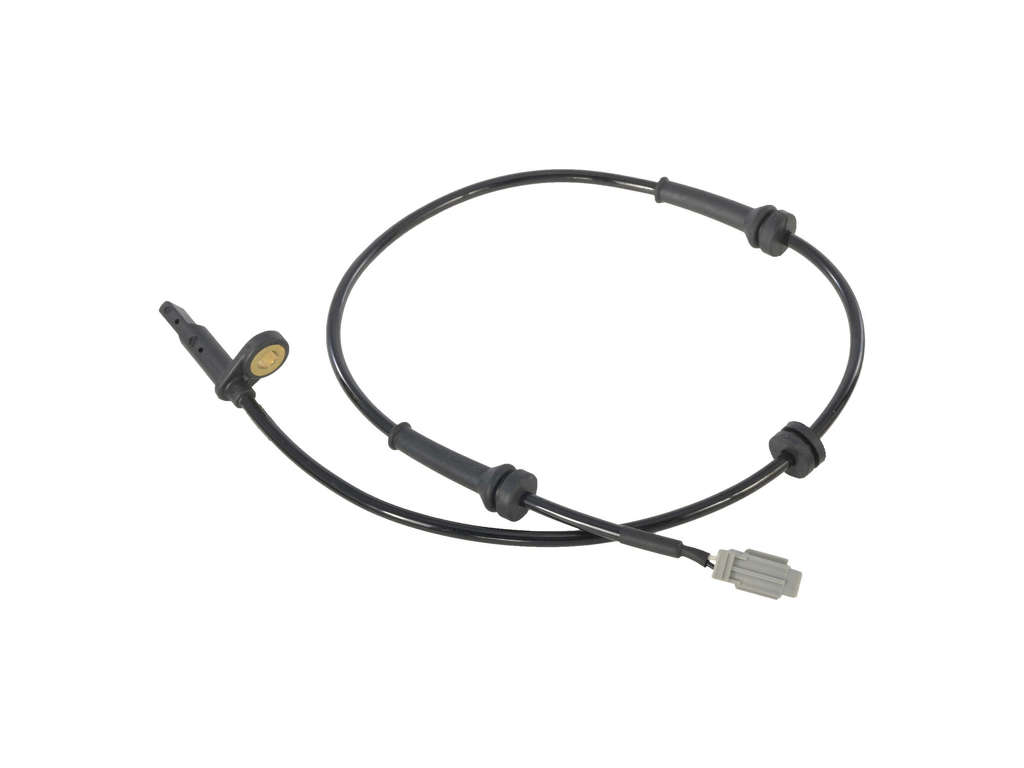
Code C0035 on a 2008-2013 Nissan Rogue indicates a fault with the left front wheel speed sensor. This is almost always fixed by replacing the sensor itself. Expect the part to cost between $40-$100 for an aftermarket replacement and around $150 for an OEM part. Be prepared for the sensor to be seized in the knuckle due to rust.
- C0035 means your Rogue needs a new left front wheel speed sensor.
- Driving is possible, but your ABS and traction control will not work, which is a safety risk.
- The sensor will likely be rusted into the steering knuckle; use plenty of penetrating oil and be prepared for a difficult removal that may require drilling.
- Always use an ABS-capable scanner to confirm the code and check live data before buying parts.
- The correct OEM part number is 47910-1DA1A, and it fits both front wheels.
What's Unique About the 2008-2013 Nissan Rogue
For the first-generation Nissan Rogue, the C0035 code is a straightforward issue, almost always pointing to the sensor or its wiring. A common challenge on these vehicles, especially in regions with rust, is that the sensor can become seized in the steering knuckle. This can cause the sensor to break during removal, complicating what is otherwise a simple repair. It's crucial to remove the sensor before attempting to replace the wheel bearing hub, as failure to do so will almost certainly destroy the sensor by shearing it off.
Symptoms You May Notice
- ABS light is on
- Traction control light is on (often looks like a car with squiggly lines, VDC light)
- AWD light may be on (for All-Wheel Drive models)
- Anti-lock brakes do not function during hard braking, causing wheels to lock up
- Traction or stability control does not engage on slippery surfaces
- Brake pedal may feel unusual or pulse at low speeds during initial failure
- Replacing the ABS module first. This is an expensive and unlikely fix.
- Replacing the wrong wheel speed sensor. Always confirm the code is C0035 (Left Front) 🎬 Watch this helpful explanation of sensor failure and replacement. and not C0036 (Right Front) or a rear sensor code.
- Replacing the wheel hub/bearing when only the sensor is bad. While they can be related, the sensor is the far more common failure point.
Most Likely Causes
- Failed Left Front Wheel Speed Sensor 🔴 High Probability → Shop ABS Wheel Speed Sensor The sensor is exposed to harsh conditions like water, salt, and road debris, leading to internal failure over time. They are notoriously prone to seizing in the steering knuckle due to galvanic corrosion between the sensor body and the knuckle.
How to confirm: Use an OBD-II scanner capable of reading ABS codes and live data. Monitor the left front wheel speed while driving. If it reads 0 MPH or is erratic while other wheels read correctly, the sensor or its circuit is faulty. A multimeter can be used to check for resistance across the sensor's pins (typically 800-2350Ω); an open circuit (infinite resistance) indicates a failed sensor.
Typical fix: Replace the left front wheel speed sensor. The sensor is held in by a single 10mm bolt.
Est. part cost: $40-$100 - Damaged Wiring or Corroded Connector 🟡 Medium Probability The wiring harness runs down the suspension and is subject to damage from road debris, rubbing against suspension components, or corrosion at the connector plug where it's exposed in the wheel well.
How to confirm: Visually inspect the wiring from the sensor up into the wheel well for any breaks, chafing, or green corrosion on the connector pins. Perform a 'wiggle test' on the harness while monitoring live data to see if the signal changes.
Typical fix: Repair the broken section of wire with solder and heat-shrink tubing or clean/replace the connector pigtail.
Est. part cost: $5-$30 - Damaged Wheel Hub Bearing / Tone Ring ⚪ Low Probability The sensor reads a magnetic tone ring integrated into the wheel hub bearing assembly. While durable, a failing wheel bearing can introduce excessive play ('wobble'), which alters the gap between the sensor and the ring, causing an erratic signal. Severe corrosion can also cause the tone ring to delaminate or crack.
How to confirm: Listen for grinding or humming noises from the front wheel that change with speed, which indicates a bad wheel bearing. With the wheel raised, check for excessive play by rocking it at the 12 and 6 o'clock positions.
Typical fix: Replace the entire front wheel hub bearing assembly.
Est. part cost: $70-$150
Rare But Worth Checking
- Faulty ABS Control Module: → Shop ABS Control Module This is very rare. Before condemning the module, you must exhaustively rule out the sensor, wiring, and hub. This is typically a last resort and should be diagnosed by a professional.
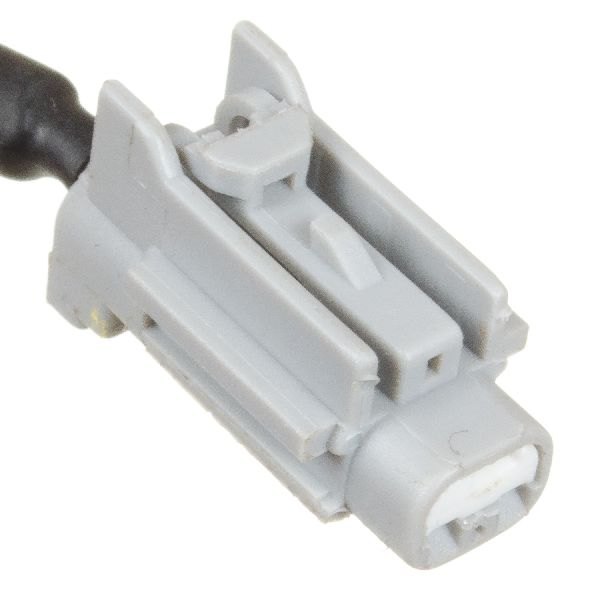
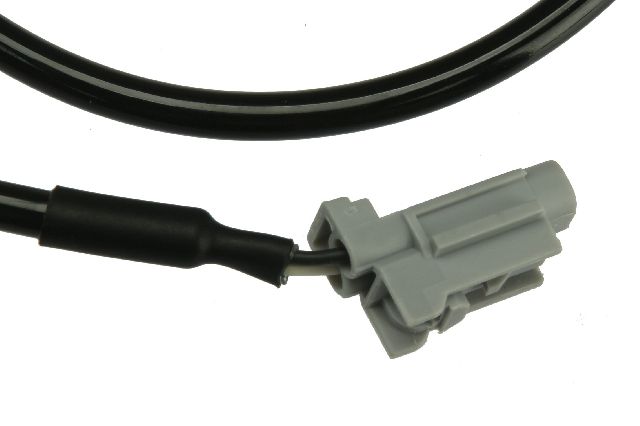
- Failed Wiring Harness Pigtail Connector: → Shop Splice Wire Connector Sometimes, just the connector at the end of the harness fails due to corrosion or a broken locking tab, not the entire wire. In these cases, splicing in a new pigtail connector is a cost-effective repair.
Diagnosis Steps
- Connect an ABS-capable OBD-II scanner to confirm C0035 is the active code.
- Access the live data stream on the scanner and monitor all four wheel speed sensors while driving slowly. Confirm that the Left Front sensor reads 0 MPH or has an erratic signal compared to the others.
- Raise and secure the front of the vehicle and remove the left front wheel.
- Thoroughly spray the area where the sensor enters the steering knuckle with a quality penetrating oil (like PB Blaster or Kroil) and let it soak for at least 30 minutes. This is a critical step.
- Visually inspect the wheel speed sensor and its wiring harness for any obvious damage, such as cut wires, chafing, or corrosion on the connector. The connector is located behind the plastic fender liner.
- Attempt to remove the 10mm bolt holding the sensor to the steering knuckle. If it's rusty, be gentle to avoid snapping it.
- Using pliers, gently try to twist the sensor back and forth to break the rust bond before attempting to pull it out. Do not pull straight out.
- If the sensor breaks, the remaining plastic portion must be carefully drilled out. Start with a small pilot bit in the exact center and gradually increase the drill bit size until the plastic walls are thin enough to collapse and be picked out. A 3/8" drill bit is often the final size ne 🎬 See how to safely remove a stuck or broken sensor.eded. Be extremely careful not to drill into the hub's tone ring behind the sensor.
- Inspect the tone ring on the hub for damage or debris. Clean it with a brake cleaner and a soft brush.
- Before installing the new sensor, clean the bore in the knuckle thoroughly with a small wire brush or sandpaper to remove all rust and corrosion.
- Apply a thin layer of silicone dielectric grease or anti-seize compound to the O-ring and body of the new sensor to aid installation and prevent future seizure.
- Install the new sensor, route the wiring through the retainers, and connect the plug. Clear the code with the scanner and take a test drive to ensure the warning lights do not return.
Parts You'll Likely Need
- Front Wheel Speed Sensor
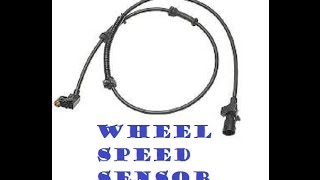
(OEM #47910-1DA1A)— This is the electronic sensor that fails and is the primary cause of code C0035. The OEM part number 47910-1DA1A is used for both the front left and front right wheels and supersedes part number 47910-JG000.
Trusted brands: Hitachi (OEM supplier), NTK, Delphi, Bosch, TRQ
OEM price range: $150-$185
Aftermarket price range: $40-$100
Technical Service Bulletins (TSBs) & Recalls
- NTB22-026: While not directly for C0035, this TSB for inaccurate fuel gauges is a relevant platform issue for owners. It advises on replacing the fuel level sensor separately from the fuel pump assembly for certain DTCs.
Platform-Specific Known Issues
- The wheel speed sensor is prone to seizing in the steering knuckle due to rust, often breaking upon removal. Soaking the sensor with penetrating oil before attempting removal is highly recommended.
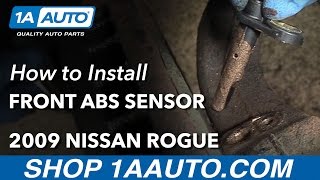
- A video from 1A Auto shows the sensor breaking during removal, requiring it to be drilled out, which confirms this is a very common outcome for DIY and professional mechanics alike.
Mechanic-Grade Diagnostic Values
- Wheel Speed Sensor Resistance (Passive Sensor) — expected: 800Ω - 2350Ω when measured across the sensor's two pins.. Failure: A reading of infinite resistance (Open Loop) or near 0Ω (short circuit) indicates a failed sensor.
- Wheel Speed Sensor AC Voltage Output (Passive Sensor) — expected: At least 0.2V AC (200mV AC) when spinning the wheel at approximately one revolution every two seconds.. Failure: No AC voltage or a very weak/erratic signal suggests a failed sensor or an issue with the tone ring/air gap.
- Wheel Speed Sensor Supply Voltage (Active Sensor) — expected: 4.5V - 5.5V DC at the harness connector (power to ground) with the ignition on.. Failure: Voltage below 4.0V indicates a problem with the wiring or the ABS control module's supply circuit.
Scan Tool Commands That Help
- Nissan CONSULT-III plus or equivalent: Live Data / Data Monitor — This is the primary diagnostic step. Use it to view the speed of all four wheels simultaneously while the vehicle is moving to confirm the left front sensor is the one providing no signal or an erratic signal.
- Nissan CONSULT-III plus: ABS/VDC Reprogramming — A voluntary service campaign was issued for some Rogues to reprogram the ABS/VDC control unit to improve performance in specific evasive maneuvers. This is a dealer-level function and may be available for certain VINs.
- Nissan CONSULT-III plus: Steering Angle Sensor / Decel G Sensor Calibration — This 'Work Procedure' is required after replacing the ABS actuator and electric unit (control module) to ensure the VDC system functions correctly.
Wiring & Ground Locations
- LF Wheel Speed Sensor Connector — In the front left wheel well, behind the plastic fender liner/splash shield.. This is the first point of electrical diagnosis after the sensor itself. The connector is exposed to moisture and debris, making it a common point for corrosion and connection failures.
- ABS Control Unit Ground — On some Nissan models, the main body grounds for the ABS module are on pins 1 and 4 of the main harness connector.. A corroded or loose main ground for the entire ABS module can cause a variety of faults, including what appears to be an isolated sensor circuit issue due to incorrect voltage references.
- ABS Sensor Wiring Harness — Runs from the sensor on the steering knuckle, is clipped to the strut assembly, and runs up into the wheel well.. This harness is subject to constant movement and exposure. Be aware that on Nissans, the wire colors at the sensor connector may not match the wire colors at the ABS control unit connector, which can cause confusion when tracing wires based on a diagram.
Real Owner Repair Stories
- YouTube channel 'DIY-time' (Nissan Altima (similar ABS system and diagnostic process)) — ABS light on, code C1103 (Front Right Sensor).
❌ Tried (didn't work) Initially suspected the sensor itself.
✅ What actually fixed it The wiring harness had been chewed by a rodent. The technician diagnosed this by first swapping the known-good left sensor to the right side; when the code did not move, it confirmed the sensor was not the issue and pointed to the wiring. The damaged section of wire was spliced and repaired to fix the problem. - YouTube channel 'Goateech Automotive' (2011 Ford Escape (demonstrating a universal diagnostic technique)) — ABS light on, code for Left Front wheel speed sensor circuit failure.
✅ What actually fixed it The technician demonstrated a signal substitution test. He used long jumper wires to connect the known-good Right Front sensor to the Left Front vehicle harness. When the scan tool then showed a valid signal on the Left Front channel, it proved the wiring from the connector to the ABS module and the module itself were good. This isolated the fault to either the original LF sensor or its tone ring, dramatically speeding up diagnosis without needing a wiring diagram.
OEM Part Supersession History
47910-JG000→47910-1DA1A— Part has been updated by the manufacturer.
Heads up: No incompatibility is noted. The new part number (47910-1DA1A) is the correct replacement for the entire 2008-2013 generation and fits both front left and front right positions.
Model Year Variations Within This Range
- 2008-2013 (Certain VINs): A voluntary service campaign was issued to reprogram the ABS/VDC control unit software. This is not a hardware change but a software update performed by a dealer to 'improve vehicle performance during an evasive double lane-change driving maneuver'. It does not directly address the C0035 code but is a known software-related action for the ABS system on these vehicles.
Diagnostic Flowchart
Other Known Issues on This Vehicle
Issues unrelated to this code that are worth knowing about as an owner of this generation:
- CVT Transmission Failure 🔴 High — Very common, often occurring before 100,000 miles. Symptoms include hesitation, jerking, whining, and sudden loss of power. (Ref: Nissan extended the CVT warranty to 10 years/120,000 miles for early models. Multiple TSBs exist for related issues like judder and error codes (e.g., NTB16-110p for later models).)
- Air Conditioning (A/C) Compressor Failure 🟠 Medium — Common for the compressor to fail prematurely, sometimes as early as 60,000-80,000 miles, resulting in no cold air.
- Inaccurate Fuel Gauge / Faulty Fuel Level Sensor 🟡 Low — Owners report the fuel gauge reading empty after a fill-up or showing an incorrect level. This is often due to a faulty fuel sending unit in the tank. (Ref: NTB22-026 addresses this for later models, advising replacement of just the sensor, not the whole pump assembly.)
- EVAP System Leaks (Code P0455) 🟡 Low — Often caused by a loose gas cap, but can also be due to a failed EVAP vent control valve or canister, leading to a check engine light.
- Blower Motor Failure 🟡 Low — The blower motor for the HVAC system is known to fail, causing a squeaking/rumbling noise or no airflow. Its location next to the accelerator pedal makes replacement more difficult than on other vehicles.
Used vs. New Parts: Buying Guide for This Vehicle
When a used part is the smart pick: For this specific repair, a used wheel speed sensor is NOT recommended. They are a common failure item and are notoriously difficult to remove without breaking, making a junkyard part a high-risk, low-reward option. The only part where 'used' might be considered is for a replacement wiring harness pigtail if the original connector is damaged.
Donor-vehicle mileage cap: roughly under 75000 miles for the part to have meaningful remaining life.
What to inspect on the donor part:
- For a wiring pigtail: Check for any signs of green corrosion inside the connector pins.
- Ensure the plastic isn't brittle and the locking tab is intact.
- Avoid any pigtails with previous, poorly-done splice repairs.
OEM-only on this vehicle (don't cheap out):
- ABS Control Module: If the module itself is diagnosed as faulty, an OEM or professionally remanufactured and programmed unit is strongly recommended. A used module may have VIN-locking or software incompatibilities.
Aftermarket brands forum-validated for this vehicle:
- Hitachi (often the OEM supplier)
- NTK
- Delphi
- Bosch
- TRQ
Brands owners have reported issues with on this vehicle:
- Unbranded, 'white-box' sensors from major online marketplaces should be avoided, as sources note that cheap copies often fail prematurely.
Real Owner Stories
Aggregated from forums and TSBs cited above. Mileages and costs reflect what owners reported in those sources.
2008-2013 Nissan Rogue AWD
Symptoms: ABS, traction control, and AWD lights were on. The owner noted the sensor was completely rusted into the steering knuckle.
What fixed it: The original sensor broke upon attempted removal; the remaining plastic had to be carefully drilled and chiseled out before a new sensor could be installed.
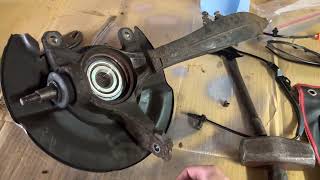
Source hint: YouTube/Ozzstar: A 2015 video titled 'Wheel Speed Sensor Replacement/Explanation - Nissan Rogue SUV AWD'
2007-2013 Nissan Rogue
Symptoms: ABS warning light active due to a failed front ABS sensor.
What fixed it: Replacement of the front ABS sensor, which involved drilling out the old sensor after it snapped off in the knuckle during the repair process.
Source hint: YouTube/1A Auto: A 2017 video titled 'How to Replace Front ABS Sensor 07-13 Nissan Rogue'
2008-2013 Nissan Rogue
Symptoms: C0035 code present; sensor failed to come out cleanly due to rust and corrosion.
What fixed it: The sensor was drilled out using a progression of drill bits, finishing with a 3/8" bit to collapse the plastic walls, followed by cleaning the bore with a wire brush.
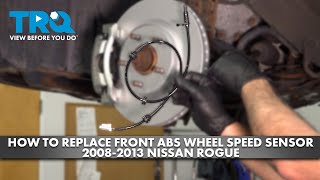
Source hint: YouTube/TRQ: A 2023 video titled 'How to Replace Front ABS Wheel Speed Sensor 2008-2013 Nissan Rogue'
Related OBD-II Codes
Frequently Asked Questions
Why are the ABS, VDC, and AWD lights all on at the same time on my 2013 Rogue?
I'm trying to replace the sensor myself; is it true it might break off in the steering knuckle?
Does TSB NTB22-026 relate to my ABS code C0035?
Can a bad wheel bearing cause the C0035 code on my Rogue?
What is the typical resistance for a healthy left front wheel speed sensor on this model?
Are there other Nissan models that have this same C0035 sensor issue?
Helpful Videos
We Have This Part in Stock


The information in this article is provided for general reference and educational purposes only. Vehicle specifications, procedures, and part compatibility can vary by production date, trim level, and region. Always consult your vehicle's factory service manual and verify part numbers before purchasing or performing repairs. Safety-critical components such as airbags, seat belts, and braking systems should be installed by a qualified professional.
- Nissan Rogue:
- 🧭 Diagnostic Flowchart
- 🎬 Helpful Videos
- 🛍️ Shop This Part
- What's Unique About the 2008-2013 Nissan Rogue
- Symptoms You May Notice
- Most Likely Causes
- Rare But Worth Checking
- Diagnosis Steps
- Parts You'll Likely Need
- Technical Service Bulletins (TSBs) & Recalls
- Platform-Specific Known Issues
- Mechanic-Grade Diagnostic Values
- Scan Tool Commands That Help
- Wiring & Ground Locations
- Real Owner Repair Stories
- OEM Part Supersession History
- Model Year Variations Within This Range
- Other Known Issues on This Vehicle
- Used vs. New Parts: Buying Guide for This Vehicle
- Real Owner Stories
- 2008-2013 Nissan Rogue AWD
- 2007-2013 Nissan Rogue
- 2008-2013 Nissan Rogue
- Related OBD-II Codes
- Frequently Asked Questions
- 🎟️ Get 5% Off