

C0035 on 2007-2009 Saturn Aura: ABS & StabiliTrak Light Causes and Fixes
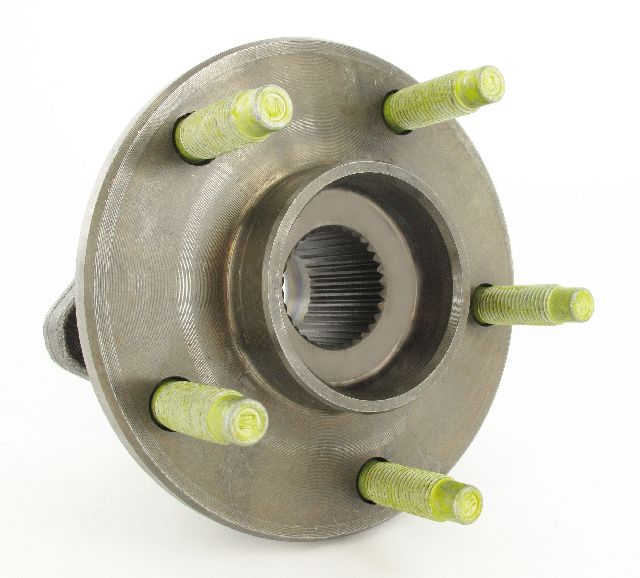
On a 2007-2009 Saturn Aura, code C0035 is almost always caused by a faulty left front wheel speed sensor, which is integrated into the wheel hub. The most common fix is replacing the entire left front wheel hub assembly. Before replacing, check the wiring harness pigtail for internal breaks or corrosion, and inspect the hub's magnetic ring for metallic debris, as these are also very common and cheaper fixes.
- Code C0035 on a 2007-2009 Aura means there's a problem with the driver's side front wheel speed sensor circuit, which will disable your ABS and StabiliTrak systems.
- The most common fix is to replace the entire front-left wheel hub assembly, as the sensor is built into it.
- Before buying a new hub, always inspect the wiring harness for visible damage and check the magnetic ring on the back of the hub for metallic debris, as these are common, cheaper fixes.
- Driving with this code is not recommended as critical safety features are inactive.
What's Unique About the 2007-2009 Saturn Aura
The Saturn Aura shares its Epsilon platform with vehicles like the Chevrolet Malibu and Pontiac G6. On this GM platform, the wheel speed sensor is not a separate, replaceable part. Instead, it is integrated into the wheel hub and bearing assembly. This design means that a failed sensor or the magnetic encoder ring it reads requires the replacement of the entire hub, which is more expensive and labor-intensive than replacing a standalone sensor. However, a very common point of failure on these cars is the wiring harness pigtail leading to the hub, which can often be replaced separately.
Symptoms You May Notice
- ABS warning light is on
- StabiliTrak or Traction Control System (TCS) warning light is on
- "Service StabiliTrak" or "Service Traction Control" message on the Driver Information Center (DIC)
- ABS and traction control systems are disabled
- Brake pedal may feel different during hard stops (no ABS pulsation)
- Possible heavy or stiff steering feel at low speeds if equipped with electric power steering.
- Replacing the EBCM before thoroughly testing the wheel hub assembly and its wiring circuit.
- Replacing the wheel hub assembly when the actual fault is a less expensive, repairable break in the wiring harness pigtail.
Most Likely Causes
- Failed Left Front Wheel Hub & Bearing Assembly 🔴 High Probability → Shop Hub Assembly The wheel speed sensor and its magnetic encoder ring are integrated into the hub assembly, a wear-and-tear item exposed to harsh road conditions, moisture, and heat. Bearing wear can cause excessive play, leading to an erratic signal.
How to confirm: Using a capable scan tool, monitor the live data for the left front wheel speed sensor while driving or spinning the wheel. If the speed reads zero, is erratic ('noisy' or 'choppy'), or doesn't match the other wheels, the hub assembly is likely faulty. You can also check for physical play by shaking the wheel at the 12 and 6 o'clock positions.
Typical fix: Replace the entire left front wheel hub and bearing assembly. 🎬 Watch: Step-by-step guide to replacing the front wheel hub assembly. The axle nut torque is critical, typically around 155 ft-lbs for this platform, but always verify the spec for your model year.
Est. part cost: $80-$250 - Damaged or Corroded Wiring Harness/Connector 🔴 High Probability The wiring harness is located in the wheel well, where it is exposed to water, road salt, debris, and constant flexing from steering and suspension movement. This leads to internal wire breaks that may not be visible, or corrosion in the connector pins. This is a very well-documented failure point on the Epsilon platform.
How to confirm: Visually inspect the wiring from the wheel hub to the main harness for any signs of chafing, breaks, or green corrosion inside the connector. Perform a 'wiggle test' on the harness while monitoring the live sensor data on a scan tool; a fluctuating signal indicates an internal break. A multimeter can be used to check for continuity between the sensor connector and the EBCM connector.
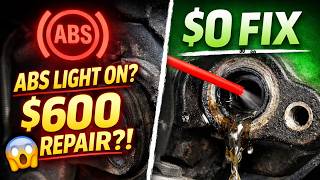
Typical fix: Repair the damaged section of wire or, more reliably, replace the sensor pigtail connector. 🎬 See how to fix the common C0035 wiring harness issue. The ACDelco PT2298 is a common replacement part.
Est. part cost: $15-$50 - Metallic Debris on Magnetic Encoder Ring 🟡 Medium Probability The magnetic ring on the back of the hub that the sensor reads can attract fine, fuzzy metallic particles from brake wear or road debris. This is a known issue on many GM platforms and is the subject of a TSB.
How to confirm: Remove the wheel and brake components to visually inspect the magnetic ring on the inboard side of the hub. Look for a build-up of metallic dust. This condition is specifically mentioned in GM TSB PIC5428G.
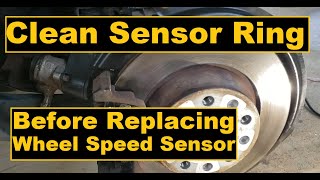
Typical fix: Carefully clean the debris from the magnetic ring using a soft brush or cloth and a brake cleaner. Do not use a magnet or harsh solvents. 🎬 Watch: How to properly clean the magnetic encoder ring. Reassemble and test. Note that this may be a temporary fix if the bearing seal is failing and leaking grease.
Est. part cost: $0
Rare But Worth Checking
- Faulty Electronic Brake Control Module (EBCM): → Shop ABS Control Module This is uncommon. Before condemning the EBCM, all other possibilities, especially the hub and wiring, must be thoroughly ruled out. An EBCM failure may also be accompanied by other trouble codes, such as for both front wheels (C0035 and C0040) simultaneously.
Diagnosis Steps
- Read the codes with a scanner capable of accessing the ABS module. Confirm C0035 is present and check for any specific symptom bytes (e.g., 0F, 18, 5A).
- Monitor live data from all four wheel speed sensors with the scan tool. While driving slowly (or spinning the wheel by hand), check if the left front sensor reading is 0, erratic, or doesn't match the others.
- Raise and secure the front of the vehicle. Perform a 'wiggle test' by shaking and bending the LF wheel speed sensor harness while watching the live data for any dropouts, which would indicate an internal wire break.
- Visually inspect the wiring harness from the hub to the car body. Unplug the connector and check for bent or corroded pins.
- Remove the front wheel and brake caliper. Inspect the hub's magnetic encoder ring (on the back of the hub) for any metallic debris. Clean if necessary, as per TSB PIC5428G.
- If wiring and the encoder ring look good, but the signal is still bad, the wheel hub assembly is the most likely culprit. Check for any play in the bearing by rocking the tire/hub from the 12 and 6 o'clock positions.
- Before replacement, you can test the old sensor circuit. A good sensor should have a resistance between 850 and 1350 ohms. Note: some sources claim a simple resistance test is not reliable for these digital sensors.
- If a new hub assembly and pigtail do not resolve the issue, the problem likely lies further up in the wiring harness or with the EBCM itself, which requires more advanced diagnostics.
Parts You'll Likely Need
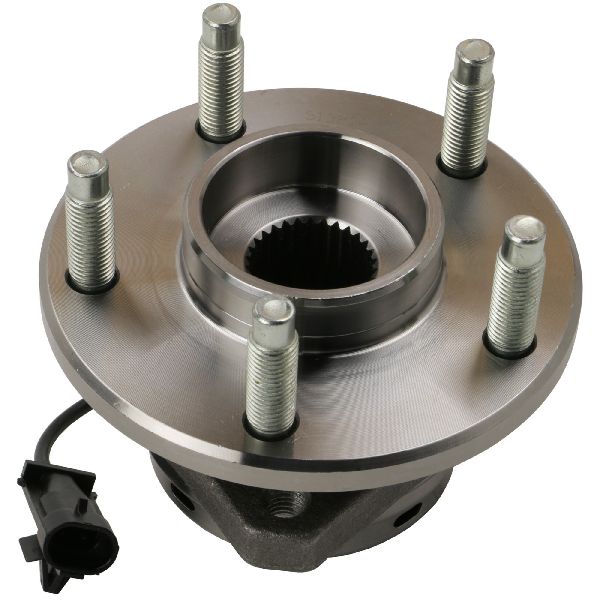
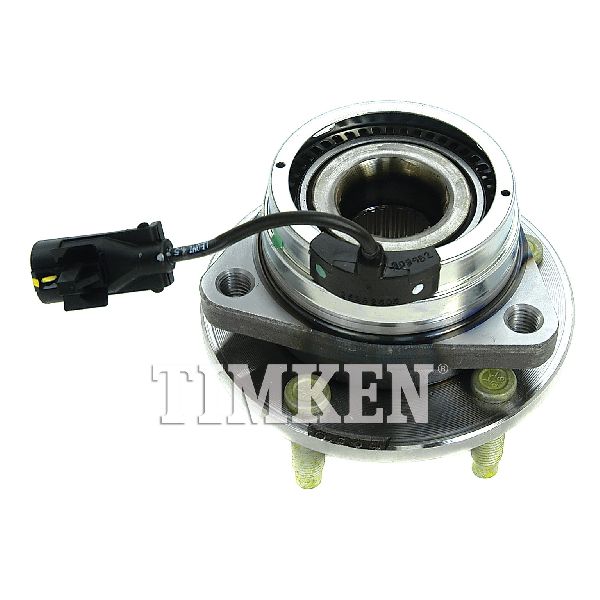
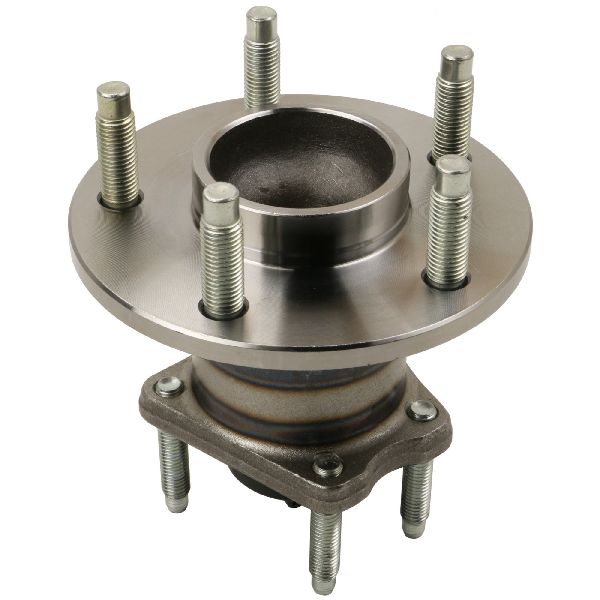
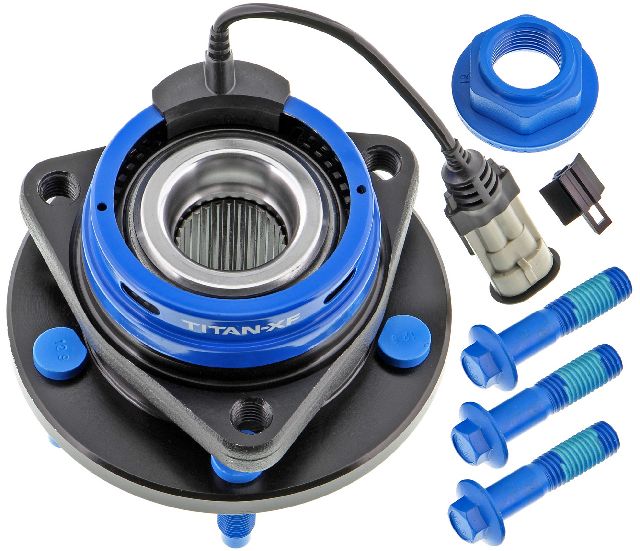
- Left Front Wheel Hub and Bearing Assembly
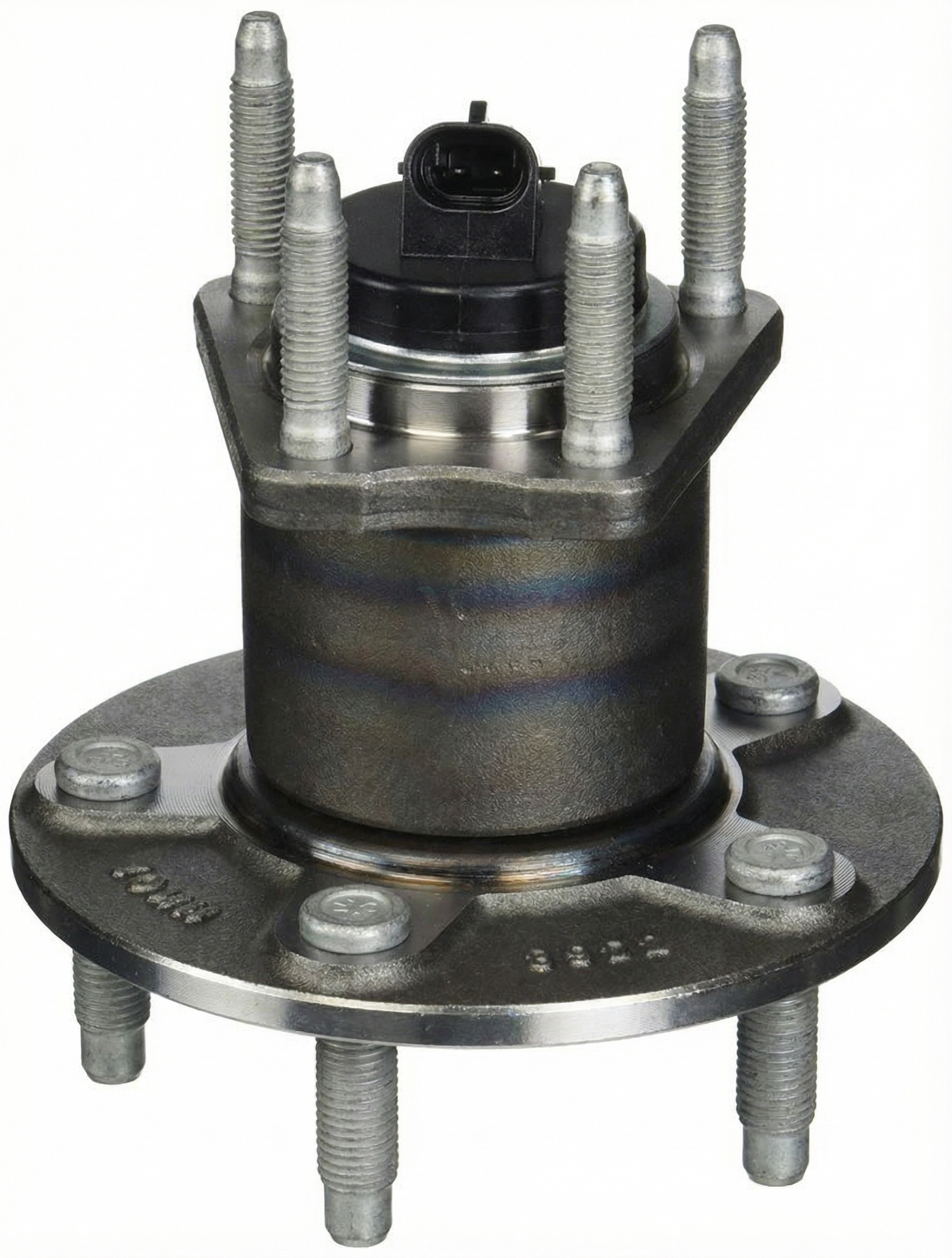
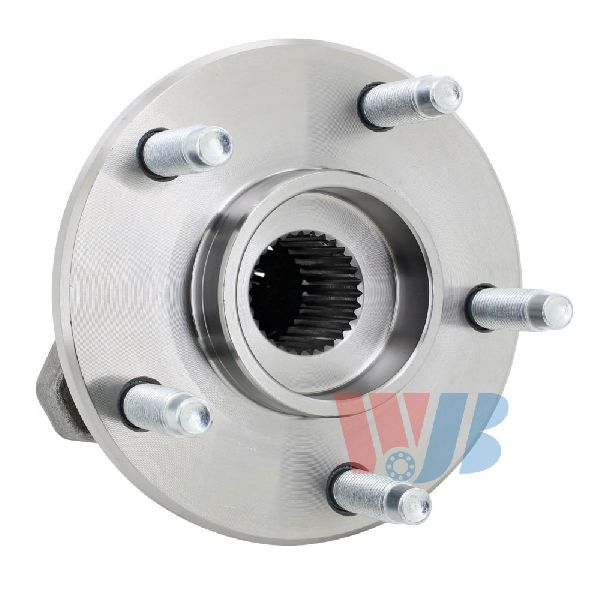
(OEM #GM 25900713 (superseded by other numbers), Aftermarket equivalent Timken HA590070, MOOG 513214)— This is the most common failure. The wheel speed sensor and magnetic ring are integrated into this assembly and cannot be replaced separately.
Trusted brands: ACDelco, MOOG, Timken, SKF, Detroit Axle
OEM price range: $180-$250
Aftermarket price range: $80-$180 - Front ABS Wheel Speed Sensor Wiring Harness
(OEM #ACDelco PT2298 (GM 19177325), Dorman 970-040 (cross-references to OE 10340314))— If the diagnostic process points to a damaged connector or internal wire break from flexing, replacing this harness pigtail is the proper fix and a very common repair.
Trusted brands: ACDelco, Dorman, Standard Motor Products
OEM price range: $30-$50
Aftermarket price range: $15-$30
Related Codes That Often Appear With This One
- C0040 — This is the code for the Right Front Wheel Speed Sensor. Seeing both codes together could point to a shared wiring issue, a problem with the EBCM, or simply that both front hubs are failing around the same time due to age and mileage.
- U0415 — Indicates 'Invalid Data Received From EBCM'. On vehicles with electric power steering, the loss of a wheel speed sensor signal can cause the Power Steering Control Module to set this code, potentially resulting in heavier steering feel at low speeds. This is noted in TSBs for related platforms.
- C0035 with symptom bytes (0F, 18, 5A) — A professional scan tool can read symptom bytes. '0F' means an erratic signal (often debris or bearing play), '18' means an open/shorted circuit (wiring or failed sensor), and '5A' means the signal is not plausible (wiring or magnetic ring issue).
Technical Service Bulletins (TSBs) & Recalls
- GM TSB PIC5428G (later superseded by 17-NA-047): This is a key document that applies to many GM platforms, including the Aura's relatives. It discusses ABS activation issues and codes like C0035 (with symptom bytes 18, 5A
Platform-Specific Known Issues
- GM Recall 14V252000 was issued for 2007-2010 Saturn Auras for voltage fluctuations in the Brake Apply Sensor (BAS) circuit due to resistance in the Body Control Module (BCM) connection. While not directly for C0035, it highlights potential electrical issues in the brake system.
- GM Special Coverage 14404B covers a condition on 2007-2009 Auras with the 6T70/6T75 6-speed automatic transmission where a fractured wave plate can cause the loss of 3rd, 5th, and reverse gears. This is a major known issue unrelated to the C0035 code.
Mechanic-Grade Diagnostic Values
- GMLAN Bus Terminating Resistance — expected: 60 Ohms (± 5 Ohms). Failure: A reading of ~120 Ohms indicates an open in the bus or one of the terminating resistors (in the ECM or EBCM) is not connected. A reading significantly less than 60 Ohms indicates a short between the two LAN wires.
- Wheel Speed Sensor Circuit Voltage (at sensor connector) — expected: 4.5 - 5.5 V. Failure: Voltage below 4.0 V indicates a problem with the power supply from the EBCM or high resistance in the wiring.
Hidden / Shadow Codes Worth Checking
- C0035 0F: Erratic Signal. The EBCM is receiving a signal, but it's unstable or jumping. This often points to a failing bearing causing hub movement, or metallic debris on the magnetic encoder ring. (see via GM-capable scan tool (Tech2, GDS2, or equivalent high-end scanner).)
- C0035 18: Signal Circuit Open/Shorted or Low Signal Amplitude. This indicates the signal is missing or too weak. This is the most common symptom byte for a broken wire in the pigtail or a completely failed sensor inside the hub. (see via GM-capable scan tool (Tech2, GDS2, or equivalent high-end scanner).)
- C0035 5A: Signal Not Plausible. The sensor's reading doesn't make sense compared to other vehicle data (e.g., other wheels). This can be caused by an incorrect/incompatible aftermarket hub or significant debris on the encoder ring. (see via GM-capable scan tool (Tech2, GDS2, or equivalent high-end scanner).)
Wiring & Ground Locations
- EBCM (Electronic Brake Control Module) — Located on the driver's side of the engine compartment, attached to the hydraulic brake valve assembly.. This module is the 'brain' for the ABS system. It receives the signal from the wheel speed sensor, provides power to the sensor, and sets code C0035. All wiring for the sensor circuit ultimately terminates here.
- G103 — On the left rear of the engine compartment, on top of the driver's side strut tower.. This is a primary ground point for several engine compartment components, including the EBCM. A corroded or loose G103 can cause a variety of difficult-to-diagnose electrical issues, including ABS faults.
- EBCM Connector Pin 25 — Pin 25 on the 38-pin EBCM connector.. This is the signal wire for the Left Front Wheel Speed Sensor. A continuity test should be performed from this pin to the sensor connector in the wheel well to rule out a wiring break in the main harness.
- EBCM Connector Pin 26 — Pin 26 on the 38-pin EBCM connector.. This is the low reference (ground) wire for the Left Front Wheel Speed Sensor. A continuity test should be performed from this pin to the sensor connector.
Real Owner Repair Stories
- 2CarPros Forum User (Vehicle not specified, but GM platform with C0035) — ABS light on with code C0035. Scan tool graph showed no signal from the left front wheel.
❌ Tried (didn't work) Replaced wheel speed sensor (twice), Replaced ABS module, Verified continuity in wires from sensor to ABS module
✅ What actually fixed it The issue was an incompatible aftermarket hub (Timken SP580310) that had been installed previously. The sensor that came with the hub failed, and all correct replacement sensors (ACDelco and aftermarket) were physically too short to get a signal from the tone ring inside that specific hub. The final resolution was not posted, but the root cause was identified as a part incompatibility issue between the hub and available sensors. - SaturnFans.com Forum User (2009 Saturn Aura XR) — Intermittent ABS and Traction Control lights, sometimes accompanied by a vehicle 'stutter'. Code U2100 (Lost Communication with BCM) set first, followed by ABS codes.
❌ Tried (didn't work) Multiple dealer visits where the problem could not be replicated.
✅ What actually fixed it The user was still diagnosing, but the pattern of a U2100 communication code appearing first suggests the root cause is not a simple hub or pigtail failure, but a more complex network or module power/ground issue affecting the entire system. This points towards checking main grounds like G103 or inspecting for issues at the BCM/EBCM.
OEM Part Supersession History
GM 10340314→GM 19177325 (ACDelco PT2298)— Standard part lifecycle update.
Heads up: The Dorman 970-040 is a common aftermarket cross-reference for this pigtail. Some users report the wire gauge on the Dorman part is thinner than the OEM ACDelco part, which may affect long-term durability in the harsh wheel well environment.
Model Year Variations Within This Range
- 2007-2008: The base XE model came standard with a 3.5L V6 and a 4-speed 4T45-E automatic transmission.
- 2009: The XE V6 was dropped. The standard engine became the 2.4L I4 paired with a more modern 6-speed 6T40 automatic transmission, which was previously unavailable on the base model. This change does not affect the diagnosis of C0035, as the ABS system components remained the same.
Diagnostic Flowchart
Other Known Issues on This Vehicle
Issues unrelated to this code that are worth knowing about as an owner of this generation:
- 6-Speed Automatic Transmission 3-5-R Wave Plate Failure 🔴 High — Common on models with the 6T70/6T75 transmission. Can occur under 100,000 miles. Results in loss of 3rd, 5th, and Reverse gears. (Ref: GM Special Coverage 14404B extends warranty coverage for this specific failure to 10 years/120,000 miles.)
- Worn Intermediate Steering Shaft 🟠 Medium — Common issue causing a clunking or popping noise in the steering column when turning the wheel, especially at low speeds. (Ref: No recall, but it is a widely recognized problem. Repair involves lubricating or replacing the intermediate shaft.)
- Power Steering System Faults 🔴 High — NHTSA data shows a high number of complaints related to the power steering system, including sudden loss of power assist. Some issues were covered by recalls (e.g., 14V153000). (Ref: Recall 14V153000)
- Blown High-Speed Cooling Fan Fuse 🟠 Medium — The 30-amp fuse for the high-speed cooling fan can blow, leading to the engine overheating, especially in traffic.
- Timing Chain Issues (V6 Engines) 🔴 High — Some V6 models can experience stretched timing chains, leading to Check Engine Lights with codes like P0011/P0014 and requiring a costly repair.
Used vs. New Parts: Buying Guide for This Vehicle
When a used part is the smart pick: A used wiring pigtail from a junkyard is a potentially smart, low-cost option. The failure is usually wire fatigue from flexing, not age, so a pigtail from a lower-mileage or rear-ended donor car can be a good value if the connector pins are clean and the wires are flexible.
Donor-vehicle mileage cap: roughly under 80000 miles for the part to have meaningful remaining life.
What to inspect on the donor part:
- For a wiring pigtail, inspect for clean, corrosion-free connector pins (no green crust).
- Gently bend the wires near the connector; they should be flexible, not stiff or brittle.
- Ensure the locking tab on the plastic connector is intact.
- Avoid parts from vehicles in heavy salt-belt regions if possible.
OEM-only on this vehicle (don't cheap out):
- Electronic Brake Control Module (EBCM). If the module is faulty, a new or professionally remanufactured unit with a warranty is the only reliable option. A used module may have the same internal flaws and will likely require dealer programming to the vehicle's VIN, negating any cost savings.
Aftermarket brands forum-validated for this vehicle:
- Hub Assemblies: Timken, MOOG, SKF, ACDelco (Professional line). These brands are consistently cited in forums as reliable, high-quality replacements.
- Wiring Pigtail: ACDelco (OEM), Standard Motor Products (SMP). Dorman is widely available but some users note differences in wire gauge.
Brands owners have reported issues with on this vehicle:
- Unbranded 'white box' or no-name eBay/Amazon wheel hub assemblies. These often use lower-quality bearings and have poor tolerances for the magnetic encoder ring, leading to the code returning prematurely.
Real Owner Stories
Aggregated from forums and TSBs cited above. Mileages and costs reflect what owners reported in those sources.
2009 Saturn Vue
Symptoms: Owner had code C0035 and was questioning if a multimeter test was sufficient for diagnosis.
What fixed it: The owner was directed to TSB PIC5428G, which identifies that the digital sensors are better diagnosed by checking for debris on the encoder ring or replacing the hub rather than relying on an Ohm test.
Source hint: SaturnFans.com Forum discussion on Vue C0035
2007 Saturn Ion
Symptoms: ABS codes C0035 and C0036 simultaneously; owner suspected the LF sensor circuit.
What fixed it: The discussion confirmed the wiring harness as a primary suspect for these codes on the Saturn platform.
Source hint: SaturnForum.com thread titled 'ABS Codes C0035 & C0036 on Saturn Ion'
2007-2009 Saturn Aura — ~100000 miles
Symptoms: Loss of 3rd, 5th, and Reverse gears.
What fixed it: Replacement of the fractured wave plate in the 6T70/6T75 6-speed automatic transmission under GM Special Coverage 14404B.
Source hint: GM Special Coverage 14404B
Related OBD-II Codes
Frequently Asked Questions
Does GM TSB PIC5428G apply to my Saturn Aura if I have code C0035?
Is there a specific wiring part recommended for repairing the LF wheel speed sensor on my Aura?
Can I just clean the sensor, or do I need to replace the whole hub assembly?
Is the C0035 code related to the Saturn Aura brake recall?
What is the correct torque for the axle nut when replacing the LF hub on a Saturn Aura?
Why does my steering feel heavy at low speeds when the ABS light is on?
Helpful Videos
Used OEM Parts in Stock
New Aftermarket Parts Available

The information in this article is provided for general reference and educational purposes only. Vehicle specifications, procedures, and part compatibility can vary by production date, trim level, and region. Always consult your vehicle's factory service manual and verify part numbers before purchasing or performing repairs. Safety-critical components such as airbags, seat belts, and braking systems should be installed by a qualified professional.
- Saturn Aura:
- 🧭 Diagnostic Flowchart
- 🎬 Helpful Videos
- 🛍️ Shop This Part
- What's Unique About the 2007-2009 Saturn Aura
- Symptoms You May Notice
- Most Likely Causes
- Rare But Worth Checking
- Diagnosis Steps
- Parts You'll Likely Need
- Related Codes That Often Appear With This One
- Technical Service Bulletins (TSBs) & Recalls
- Platform-Specific Known Issues
- Mechanic-Grade Diagnostic Values
- Hidden / Shadow Codes Worth Checking
- Wiring & Ground Locations
- Real Owner Repair Stories
- OEM Part Supersession History
- Model Year Variations Within This Range
- Other Known Issues on This Vehicle
- Used vs. New Parts: Buying Guide for This Vehicle
- Real Owner Stories
- 2009 Saturn Vue
- 2007 Saturn Ion
- 2007-2009 Saturn Aura — ~100000 miles
- Related OBD-II Codes
- Frequently Asked Questions
- 🎟️ Get 5% Off