

C0035 on 2010-2014 Subaru Outback: Left Front Wheel Speed Sensor Fault Causes and Fixes
Code C0035 on a 2010-2014 Subaru Outback indicates a fault with the left front wheel speed sensor circuit. This usually means the sensor's wiring is damaged or the sensor itself has failed. The fix is typically replacing the sensor harness or the entire front wheel bearing hub assembly, which contains the sensor.
- C0035 on a 2010-2014 Outback means there is a problem with the LEFT front wheel speed sensor circuit.
- The most common causes are a damaged wiring harness near the wheel or a failed sensor, often due to rust.
- Before buying parts, inspect the wiring harness closely for damage, as it's a frequent and sometimes overlooked point of failure.
- If the sensor is seized in the hub or the bearing's tone ring is damaged, you will need to replace the entire wheel bearing/hub assembly.
- Driving with this code is possible but not recommended, as critical safety systems like ABS and stability control will be offline.
What's Unique About the 2010-2014 Subaru Outback
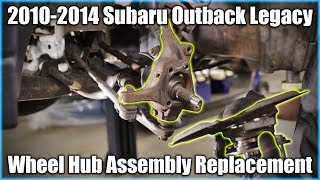
On the fourth-generation Subaru Outback (2010-2014), the front wheel speed sensor and its wiring are highly susceptible to damage from road debris, corrosion, and stress from suspension movement. While the sensor can be purchased separately, it is integrated into the wheel bearing and hub assembly. Rust buildup between the sensor and the hub is a common problem that can damage the sensor or push it out of position, creating an excessive air gap and leading to signal loss. Many technicians opt to replace the entire hub assembly to ensure a lasting repair, 🎬 See this walkthrough for replacing the front wheel hub assembly. especially since the magnetic encoder ring for the sensor is built into the bearing's seal and is not a separately serviceable part.
Symptoms You May Notice
- ABS warning light is on
- Traction Control / Vehicle Dynamics Control (VDC) warning light is on
- Cruise control is disabled
- Brake pedal may feel different or pulsate during low-speed stops as the ABS tries to activate incorrectly
- Potential for wheels to lock up during hard braking
- In some cases, the 'AT OIL TEMP' light may flash along with the ABS and VDC lights.
- Replacing only the ABS sensor when the underlying problem is a damaged wiring connector or an internal break in the harness further up the line.
- Replacing the sensor when the actual fault is a failing wheel bearing that has contaminated the magnetic tone ring with debris.
- Assuming the hub is bad when the issue is simply rust buildup on the mounting surfaces, which creates an excessive air gap between the sensor and the tone ring.
Most Likely Causes
- Damaged or Corroded Sensor Wiring Harness 🔴 High Probability The wiring harness is exposed in the wheel well and is subject to constant flexing and exposure to road salt, water, and debris. Wires can break internally near the connector even if the outer insulation looks intact. Subaru also issued a TSB (06-49-15R) noting that the harness retaining clips could become brittle and break when exposed to certain acidic wheel cleaners, allowing the harness to move and chafe.
How to confirm: Visually inspect the harness from the sensor to the chassis for cracks, chafing, or green corrosion. Gently wiggle and pull on the wires near the connector to see if the insulation stretches, which indicates an internal break. Use a multimeter to check for continuity between the sensor connector and the ABS module connector.
Typical fix: Repairing the broken wire is possible but often not recommended for critical ABS circuits due to potential signal interference. The best practice is to replace the short pigtail harness or the entire sensor assembly which includes the harness.
Est. part cost: $20-$60 for a sensor with pigtail - Failed Left Front Wheel Speed Sensor 🔴 High Probability → Shop ABS Wheel Speed Sensor Rust buildup in the steering knuckle where the sensor is mounted can physically damage the sensor or push it away from the magnetic tone ring, creating an excessive air gap and causing signal loss. The sensor itself can also fail internally from age and heat cycles.
How to confirm: Use a scan tool with live data capability to monitor all four wheel speeds while driving. The left front sensor will read 0 mph or show an erratic/inconsistent speed compared to the other three. The sensor can also be tested with a multimeter for proper resistance (if specs are known) or by spinning the wheel and checking for an AC voltage signal (for passive sensors).
Typical fix: Replace the left front ABS wheel speed sensor. If the sensor is seized in the hub due to rust, the entire wheel bearing/hub assembly may need to be replaced. This is a very common scenario in regions that use road salt.
Est. part cost: $25-$80 for the sensor, $100-$250 for a complete hub assembly - Damaged or Debris-Contaminated Tone Ring 🟡 Medium Probability The magnetic tone ring (or encoder) is built into the seal of the wheel bearing. If the bearing starts to fail, it can generate metallic debris that contaminates the ring, disrupting the sensor's reading. The ring can also be damaged during other repairs like axle replacement. Rust flaking off the knuckle or backing plate can also adhere to the magnetic ring and block the signal.
How to confirm: After removing the wheel speed sensor, visually inspect the tone ring inside the hub for metallic debris, rust, or physical damage like cracks or missing magnetic strips.
Typical fix: The tone ring is not serviced separately. The entire front wheel bearing and hub assembly must be replaced.
Est. part cost: $100-$250
Rare But Worth Checking
- Failing ABS Control Module (VDC Unit): → Shop ABS Control Module This is uncommon for a single-wheel fault. Before condemning the module, exhaust all other possibilities (sensor, wiring, hub). A faulty module will typically have other codes present (like C0071, C0073, C0074) and may show issues with more than one wheel speed sensor. However, an internal failure of the module's voltage supply circuit for just one sensor can occur.
Diagnosis Steps
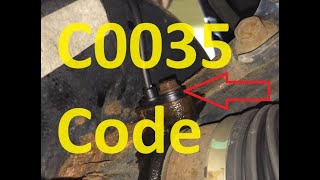
- Connect an ABS-capable OBD-II scanner and confirm C0035 is the active code. 🎬 Watch: Diagnosing and fixing the C0035 wheel speed sensor code. Note any other codes.
- Access the live data stream on the scanner. Drive the vehicle slowly (under 10 mph) and monitor the wheel speed readings from all four sensors. Confirm that the Left Front (LF) sensor reads 0 mph, is erratic, or does not match the other sensors.
- Raise and safely support the front of the vehicle. Remove the left front wheel.
- Thoroughly inspect the ABS sensor wiring harness from the sensor body up into the engine bay. Look for any signs of physical damage, chafing against suspension components, broken retaining clips, or corrosion at the connector. Gently tug on the wires to check for internal breaks.
- Unplug the sensor and inspect the connector terminals for corrosion or damage. Clean if necessary.
- Remove the 10mm bolt holding the ABS sensor to the steering knuckle. Carefully try to remove the sensor. It may be seized with rust and require significant force, often leading to its destruction.
- Once the sensor is out, inspect its tip for damage or metallic debris. Look inside the knuckle at the magnetic tone ring on the wheel bearing. Check for debris, rust, or damage. Clean the mounting surface thoroughly.
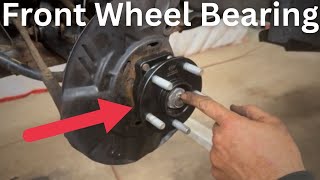
- If wiring and the tone ring look good, the sensor itself is the most likely culprit. If the tone ring is damaged or covered in metallic filings, the entire wheel bearing/hub assembly needs replacement. 🎬 Watch: Step-by-step guide to replacing a Subaru front wheel bearing.
- If a new sensor and hub do not fix the issue, the problem lies further up the wiring harness or, rarely, in the ABS module itself. A continuity test from the wheel sensor connector to the ABS module connector is the next step.
Parts You'll Likely Need
- Front ABS Wheel Speed Sensor
(OEM #27540AJ01A (superseded by 27540AJ13A))— This is the most direct cause of a circuit malfunction. It often fails due to corrosion, damage from debris, or internal electrical faults. It includes the sensor and a short wiring pigtail.
Trusted brands: Subaru (Genuine), NGK, Standard Motor Products (SMP), Beck Arnley, Zcargel
OEM price range: $60-$90
Aftermarket price range: $25-$50 - Front Wheel Bearing and Hub Assembly
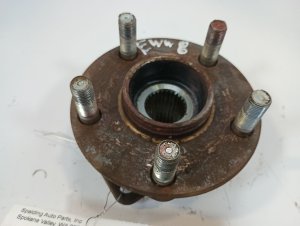
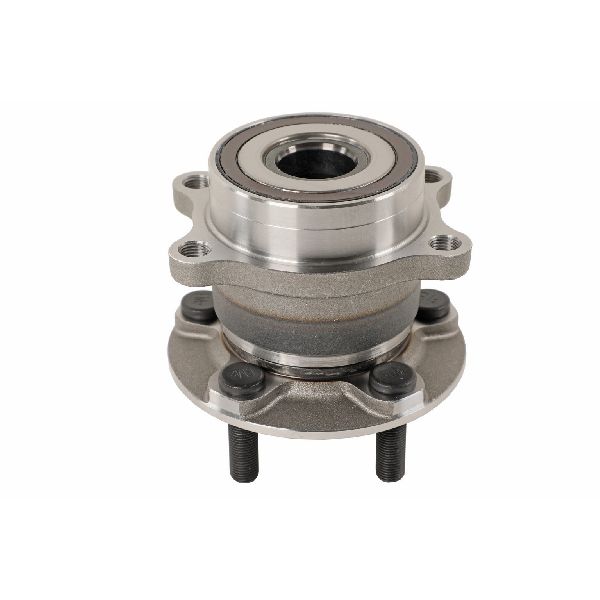
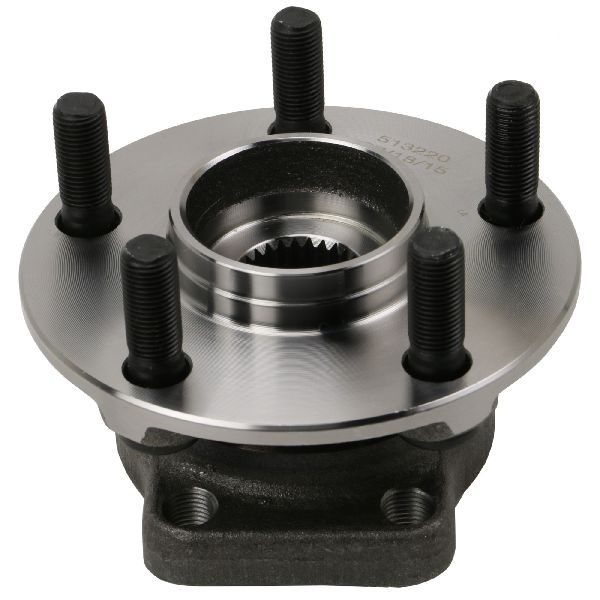
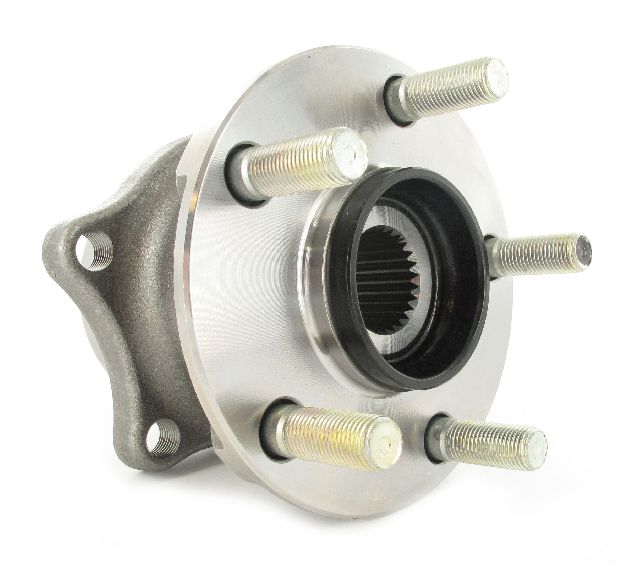
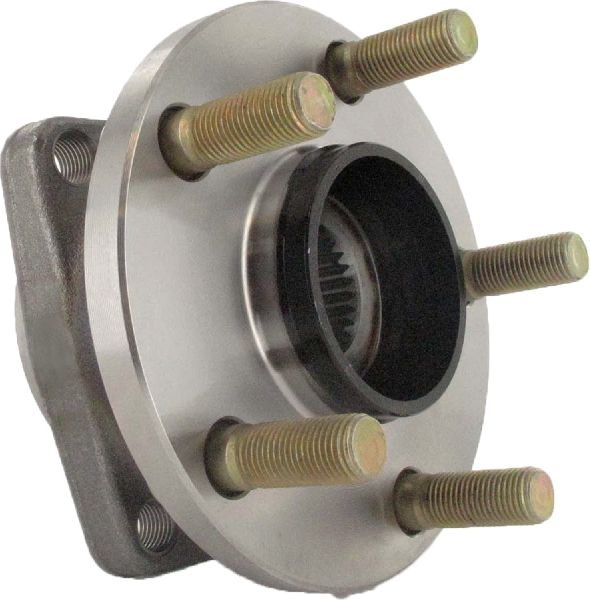
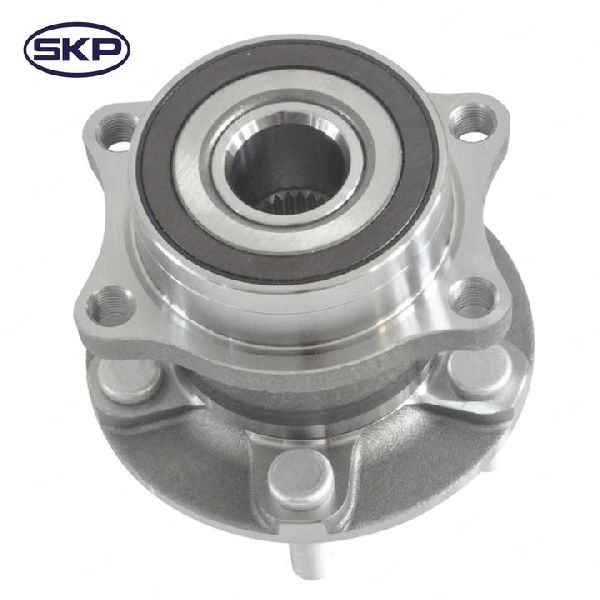
(OEM #28373AG01A)— Required if the magnetic tone ring is damaged, if the bearing itself is failing, or if the old sensor is seized into the hub and cannot be removed without destroying it. This is a common scenario in areas with rust.
Trusted brands: Subaru (OEM), Timken, GSP, NTN, MOOG (Part #513220), Quality-Built (Part #WH513220)
OEM price range: $200-$300
Aftermarket price range: $100-$180
Technical Service Bulletins (TSBs) & Recalls
- TSB #06-49-15R: Notes that acidic wheel cleaners can damage the ABS sensor harness retaining clips, leading to harness damage.
- TSB #16-90-13R: While not directly for C0035, this TSB addresses a faulty torque converter in 2010-2012 models that can cause stalling-like symptoms. It's a critical issue for owners of these years to be aware of.
Platform-Specific Known Issues
- Seized Sensor Requiring Hub Replacement: Owners on forums like subaruoutback.org frequently report that the 10mm bolt for the sensor snaps off and the sensor body is completely seized in the steering knuckle due to galvanic corrosion. Attempts to drill it out often fail or damage the knuckle, making a full hub replacement the only practical solution.
- Wiring Break at the Strut Mount: A common failure point for the sensor wiring is where it is clipped to the front strut. The constant turning and suspension travel can cause the wire to fatigue and break internally at this flex point, even with no visible damage to the outer sheathing.
Mechanic-Grade Diagnostic Values
- Voltage supply at the wheel speed sensor connector — expected: 4.5–5.5 V with ignition on, engine off.. Failure: Voltage below 4.0 V indicates a problem with the wiring or the ABS module's power supply.
- Continuity of the wiring harness — expected: Near 0 ohms resistance between the sensor connector pin and the corresponding pin at the ABS module connector.. Failure: Infinite resistance (OL) indicates a broken wire.
- Sensor Resistance (Note: This applies to passive sensors, but this vehicle uses an active MR sensor, making this test less reliable) — expected: Generally 800-2500 Ohms for passive sensors. For this vehicle's active sensor, checking for a square wave signal with an oscilloscope is the correct method.. Failure: An open (OL) or shorted (0 ohms) reading on a passive sensor indicates failure. For this active sensor, the absence of a square wave signal while spinning the wheel indicates failure.
Scan Tool Commands That Help
- Subaru Select Monitor (SSM) or equivalent professional scanner: Current Data Display / Live Data — This is the primary diagnostic step. It allows viewing and graphing the speed signal from all four wheels simultaneously to confirm the left front sensor is the one that is failing or providing an erratic signal compared to the others.
- Subaru Select Monitor (SSM) or equivalent professional scanner: Clear Memory / Clear ABS DTCs — After the repair is completed, this function must be used to erase the stored C0035 code and turn off the ABS/VDC warning lights.
Wiring & Ground Locations
- VDC Control Module (ABSCM&H/U) — Located in the right rear corner of the engine compartment.. This module receives the signal from the left front wheel speed sensor. All continuity tests of the sensor harness will terminate at the connector for this module (Connector B301).
- Left Front ABS Wheel Speed Sensor Connector — In the left front wheel well, connecting the sensor pigtail to the main chassis harness.. This is a primary point of failure due to corrosion and stress. It's the first place to check for voltage and signal.
- Connector B301 — The main electrical connector at the VDC Control Module.. To perform a full continuity test of the sensor circuit, you must test the wires between the sensor connector in the wheel well and the specific pins for the left front sensor at this connector.
Real Owner Repair Stories
- subaruoutback.org forum user (2011 Subaru Outback) — ABS, VDC, and flashing 'Brake' light. Code C0035 present.
❌ Tried (didn't work) Replaced the left front ABS sensor twice with aftermarket parts.
✅ What actually fixed it The problem was a broken wire inside the insulation of the wiring harness pigtail, a few inches from the connector. The break was not visible externally. Replacing the entire front ABS sensor harness (the section from the sensor to the chassis connector) resolved the issue permanently. - subaruoutback.org forum user (2010 Subaru Outback 2.5i, ~120,000 miles) — ABS and VDC lights on, cruise control disabled. Code C0035.
❌ Tried (didn't work) Initial diagnosis pointed to the sensor.
✅ What actually fixed it The mechanic found the sensor was seized in the hub. During attempted removal, the sensor broke. The final, successful repair was the replacement of the entire front left wheel bearing and hub assembly, which includes a new tone ring. The new hub came with a new sensor.
OEM Part Supersession History
27540AJ01A→27540AJ13A— Updated part design or manufacturer change.
Heads up: The parts are interchangeable for the 2010-2014 model years.28373AG00A, 28373AG00B→28373AG01A (which is also superseded by 28373AG01B)— Incremental revisions to the hub and bearing assembly.
Heads up: All listed part numbers are compatible with the 2010-2014 Outback.
Diagnostic Flowchart
Other Known Issues on This Vehicle
Issues unrelated to this code that are worth knowing about as an owner of this generation:
- CVT Failure / Shudder 🔴 High — Very common, especially in 2010-2012 models. Can manifest as shuddering, hesitation, or complete failure. Onset can be as early as 60,000 miles. (Ref: Subaru extended the CVT warranty to 10 years/100,000 miles for many vehicles, including the 2010-2015 Outback, under TSB 16-107-17R. TSB 16-90-13R addresses a faulty torque converter in 2010-12 models.)
- Excessive Oil Consumption 🔴 High — Common in 2013-2014 models with the 2.5L FB25 engine. Caused by faulty piston rings, leading to oil consumption as high as 1 quart per 1200 miles. (Ref: Subaru addressed this with TSB 02-157-14R, which revised the repair from replacing piston rings to replacing the entire engine short block. An extended warranty was offered, but has since expired for most vehicles.)
- Steering Wheel Vibration / Shimmy 🟠 Medium — Frequently reported on 2010-2012 models, typically a vibration felt in the steering wheel at highway speeds. (Ref: TSB 05-48-10 (mentioned in search result) was an early attempt to fix this. A later TSB, 04-15-17, introduced a new steering column assembly to address tilt mechanism issues that could contribute to looseness.)
- Frequently Burnt-Out Headlight Bulbs 🟡 Low — Extremely common across this generation. Owners report replacing low-beam bulbs every 6-12 months. Accessing the bulb through the wheel well is difficult.
- Takata Airbag Recall 🔴 High — All 2010-2014 Outbacks were part of the massive Takata airbag recall for the passenger-side inflator, which could rupture. (Ref: NHTSA Recalls 15V-323, 16V-064, 17V-008, and others. This should have been completed on all vehicles by now.)
Used vs. New Parts: Buying Guide for This Vehicle
When a used part is the smart pick: A used wiring harness pigtail from a junkyard can be a cost-effective solution if the original harness is confirmed to be the point of failure. It is generally not recommended to buy a used sensor or a complete used wheel hub assembly due to the unknown remaining lifespan of the bearing and the sensitivity of the electronic components.
Donor-vehicle mileage cap: roughly under 80000 miles for the part to have meaningful remaining life.
What to inspect on the donor part:
- For a wiring harness, inspect for any signs of cracking, brittleness, or previous repairs.
- Ensure the connector pins are clean, straight, and free of corrosion.
- Verify the donor vehicle is from a region with minimal road salt to reduce the chance of corrosion issues.
Aftermarket brands forum-validated for this vehicle:
- For Wheel Bearing/Hub Assembly: Timken, MOOG, NTN, SKF, GSP.
- For ABS Sensor: NGK/NTK, Standard Motor Products (SMP), Beck Arnley.
Brands owners have reported issues with on this vehicle:
- Unbranded, 'white-box' sensors and hub assemblies from online marketplaces are frequently reported on forums to have high premature failure rates.
Real Owner Stories
Aggregated from forums and TSBs cited above. Mileages and costs reflect what owners reported in those sources.
2010-2014 Subaru Outback
Symptoms: ABS warning light, Traction Control/VDC light on, and cruise control disabled. The sensor was found to be completely seized in the steering knuckle.
What fixed it: Full hub assembly replacement because the sensor was seized and the 10mm mounting bolt snapped off during attempted removal.
Source hint: subaruoutback.org forum threads regarding C0035 resolutions
2010-2014 Subaru Outback
Symptoms: C0035 code triggered by an internal wire break that wasn't visible on the outside of the harness.
What fixed it: Replacement of the short pigtail harness/sensor assembly.
Source hint: Article context section regarding internal wiring breaks near the connector
Related OBD-II Codes
Frequently Asked Questions
Does TSB 06-49-15R apply to my 2010-2014 Outback's ABS issues?
Can I just replace the sensor if it's stuck in the steering knuckle?
Why is my 'AT OIL TEMP' light flashing along with the ABS light?
Is there a specific spot where the wiring usually fails on the Outback?
Will a bad wheel bearing cause a C0035 code?
Does the 2010-2014 Subaru Legacy have this same problem?
Helpful Videos
Used OEM Parts in Stock
New Aftermarket Parts Available


The information in this article is provided for general reference and educational purposes only. Vehicle specifications, procedures, and part compatibility can vary by production date, trim level, and region. Always consult your vehicle's factory service manual and verify part numbers before purchasing or performing repairs. Safety-critical components such as airbags, seat belts, and braking systems should be installed by a qualified professional.
- Subaru Outback:
- 🧭 Diagnostic Flowchart
- 🎬 Helpful Videos
- 🛍️ Shop This Part
- What's Unique About the 2010-2014 Subaru Outback
- Symptoms You May Notice
- Most Likely Causes
- Rare But Worth Checking
- Diagnosis Steps
- Parts You'll Likely Need
- Technical Service Bulletins (TSBs) & Recalls
- Platform-Specific Known Issues
- Mechanic-Grade Diagnostic Values
- Scan Tool Commands That Help
- Wiring & Ground Locations
- Real Owner Repair Stories
- OEM Part Supersession History
- Other Known Issues on This Vehicle
- Used vs. New Parts: Buying Guide for This Vehicle
- Real Owner Stories
- 2010-2014 Subaru Outback
- 2010-2014 Subaru Outback
- Related OBD-II Codes
- Frequently Asked Questions
- 🎟️ Get 5% Off