

C0035 on 2012-2017 Toyota Camry: Wheel Speed Sensor Circuit Fault Causes and Fixes
Code C0035 on a 2012-2017 Toyota Camry indicates a fault in a front wheel speed sensor circuit. The most common cause is a failed front wheel speed sensor, which costs about $40-$90 for an aftermarket part or $150-$220 for an OEM part. Replacing it is a straightforward DIY job for many. It is critical to use a scanner to confirm which side is faulty before repair, as the code definition can be ambiguous.
- C0035 means there is a fault in a front wheel speed sensor circuit, which will disable your ABS and traction/stability control.
- Before buying parts, you MUST use a scanner with live data to confirm which front wheel (Left or Right) is causing the fault.
- The most likely cause is a failed wheel speed sensor, followed by damaged wiring.
- Replacing the sensor is a relatively simple job that many DIYers can perform in under an hour.
- Do not ignore this code; the disabled safety systems significantly increase risk, especially in adverse conditions.
What's Unique About the 2012-2017 Toyota Camry
For the 2012-2017 (XV50 generation) Camry, the C0035 code is a very common and straightforward issue. The problem is almost always the sensor itself or the wiring leading to it, which is exposed to road debris, moisture, and flexing with the suspension. There are no widespread, complex issues like ECU failures commonly associated with this code on this specific platform; it's typically a simple component failure. The repair is considered accessible for DIYers with basic tools.
Symptoms You May Notice
- ABS warning light is on
- Traction Control (TRAC) warning light is on
- Vehicle Stability Control (VSC) warning light is on
- ABS and traction control are disabled
- Brake pedal may feel different or pulse unexpectedly at low speeds
- Replacing the wrong side wheel speed sensor. It is critical to use a scan tool to confirm which sensor has failed before ordering parts, as the C0035 code definition can be ambiguous.
- Replacing the sensor when the actual fault is a broken wire a few inches up the harness. A wiggle test is crucial.
Most Likely Causes
- Failed Front Wheel Speed Sensor 🔴 High Probability → Shop ABS Wheel Speed Sensor The sensor is located in a harsh environment behind the wheel hub, exposed to water, salt, and road debris, leading to eventual internal failure or corrosion.
How to confirm: Use an OBD-II scanner with live data capability to monitor all four wheel speeds while driving. The sensor that reads 0 MPH or has an erratic signal is the faulty one. You can also test the sensor's internal resistance with a multimeter (typically 800-1400Ω); an open circuit (infinite resistance) indicates failure.
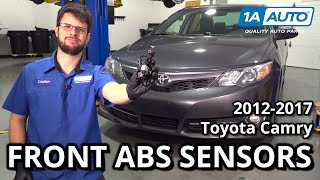
Typical fix: Replace the faulty wheel speed sensor. The sensor is typically held in by a single 10mm bolt on the steering knuckle. 🎬 Watch: How to replace front ABS sensors on your Camry
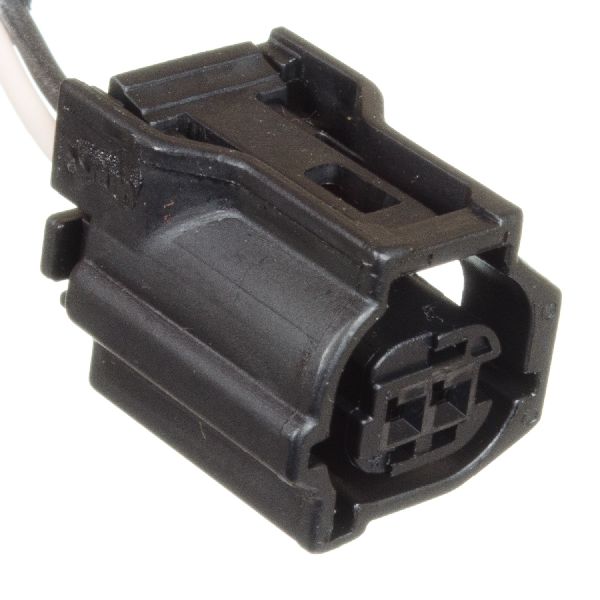
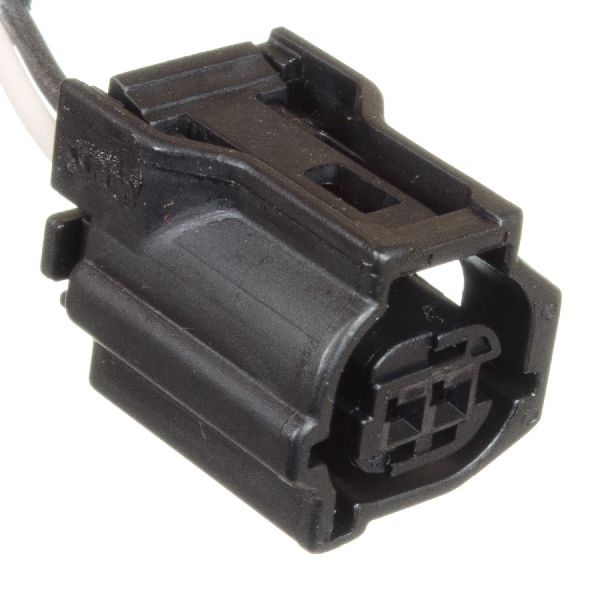
Est. part cost: $40-$220 - Damaged Wiring Harness or Connector 🟡 Medium Probability The wiring harness runs along the suspension and can be damaged by road debris, improper servicing (e.g., stretching during a brake job), or repeated flexing, causing wires to break internally or chafe. Corrosion can also build up in the connector pins.
How to confirm: Visually inspect the entire length of the sensor's wiring harness from the wheel well to its connection point. Check for chafing, breaks, or green corrosion in the connector pins. Perform a 'wiggle test' on the harness while watching live data to see if the signal cuts in and out.
Typical fix: Repair the broken section of wire with solder and heat-shrink tubing or replace the sensor pigtail/harness if damage is severe. Clean corroded connectors and apply dielectric grease.
Est. part cost: $15-$50 - Debris on Sensor or Tone Ring ⚪ Low Probability Metallic debris from brake wear or road grime can accumulate on the magnetic tip of the sensor or the teeth of the tone ring (which is integrated into the wheel hub/bearing), obstructing the signal.
How to confirm: Remove the wheel speed sensor and inspect its magnetic tip for metal filings or heavy contamination. Inspect the tone ring through the sensor mounting hole for damage or debris.
Typical fix: Clean the tip of the sensor and the tone ring with a rag and brake cleaner. Reinstall and test.
Est. part cost: $0
Rare But Worth Checking
- Faulty Wheel Hub/Bearing Assembly: → Shop Hub Assembly The magnetic tone ring that the sensor reads is part of the wheel hub assembly. Excessive play in a worn-out wheel bearing can cause the distance between the sensor and the ring to become too large, resulting in a weak or lost signal. A damaged tone ring (cracked, missing teeth) will also cause this code. NHTSA ODI #10287028 notes a case where a bad wheel hub was identified alongside this code, requiring replacement of both the hub and the sensor.
- Faulty ABS/VSC Control Module: This is very rare. The control module itself can fail, but this should only be considered after all other possibilities (sensor, wiring, hub) have been exhaustively ruled out. A faulty module will typically present with other codes as well. A manufacturer bulletin, #PIT3460N, mentions that the ABS or Brake light may illuminate when EBCM DTCs like C0035 are present (NHTSA ODI #10273914).
Diagnosis Steps
- Connect an ABS-capable OBD-II scanner to the vehicle.
- Read the fault codes. Confirm C0035 is present and check for any other related codes. NHTSA ODI #11228687 describes a scenario where C0035 appeared alongside several other communication and sensor codes (U0126, U0401, etc.), suggesting a broader electrical issue.
- Access the live data stream for all four wheel speed sensors.
- Drive the vehicle slowly (above 5 mph) and observe the speed readings. Identify which sensor is not reporting speed or is providing an erratic signal. This confirms the location of the fault.
- Raise and secure the vehicle. Remove the wheel at the affected corner.
- Perform a thorough visual inspection of the wheel speed sensor, its connector, and the wiring harness for any signs of physical damage, corrosion, or loose connections. Pay close attention to where the harness flexes.
- If no visual damage is found, disconnect the sensor and use a multimeter to test its internal resistance. Compare the reading to specifications (often 800-1400Ω). An open or shorted sensor needs replacement.
- If the sensor tests good, inspect the wiring harness for continuity and shorts to ground from the sensor connector back to the ABS control module. Perform a 'wiggle test' on the harness while monitoring continuity.
- If wiring and sensor are confirmed good, inspect the tone ring on the wheel hub for damage or debris. Check the wheel bearing for excessive play.
- As a final, less common check, the issue may be with the ABS module itself.
Parts You'll Likely Need
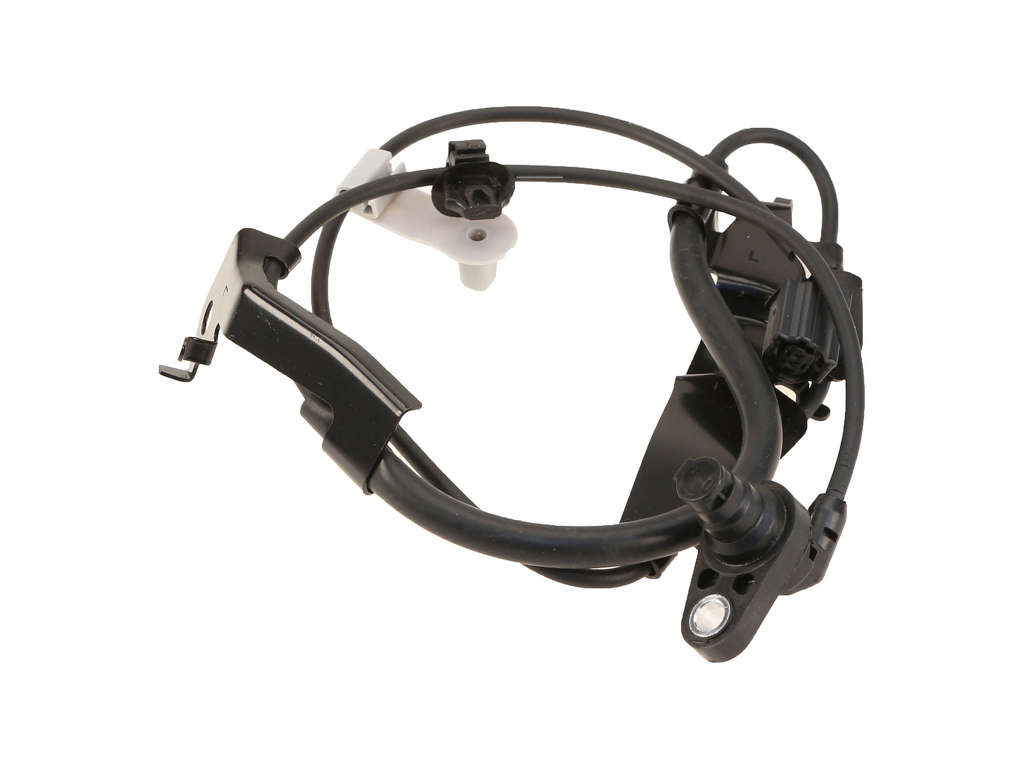
- Front Left Wheel Speed Sensor
(OEM #89543-06050)— This is the most common failure point for a C0035 code, assuming it corresponds to the left side as is most common for Toyota.
Trusted brands: Denso, Delphi, NTK, Standard Motor Products (SMP)
OEM price range: $150-$220
Aftermarket price range: $40-$90 - Front Right Wheel Speed Sensor
(OEM #89542-06050)— In the event the C0035 code on your specific vehicle refers to the right side, this is the part you would need. Always confirm with a scanner before purchasing.
Trusted brands: Denso, Delphi, NTK, Standard Motor Products (SMP)
OEM price range: $150-$220
Aftermarket price range: $40-$90
Platform-Specific Known Issues
- Owner Experience on ToyotaNation Forum: A user with a 2012 Camry reported the ABS and Trac lights on with code C0035. After confirming with a scanner that the Left Front sensor was reading 0 mph, they replaced the sensor (part #89543-06050). The repair was straightforward, involving removing the wheel, 🎬 See this XV50 wheel speed sensor replacement walkthrough a 10mm bolt for the sensor, and unclipping the harness. The lights went off after driving a short distance.
- DIY Repair on YouTube: Multiple YouTube videos for the XV50 Camry show the replacement process. A common point of failure highlighted is the wiring harness right where it clips to the suspension components, as this area is prone to stress and breaking. Mechanics advise checking for continuity while wiggling the wire before condemning the sensor itself.
Mechanic-Grade Diagnostic Values
- Front Wheel Speed Sensor Internal Resistance (Passive VR Type) — expected: 800Ω - 1,400Ω at room temperature.. Failure: An open circuit (infinite resistance) or a short (near zero resistance) indicates a failed sensor.
- Front Wheel Speed Sensor AC Voltage Output (Passive VR Type) — expected: Greater than 100mV AC when spinning the wheel by hand.. Failure: No voltage or erratic voltage that doesn't correspond to wheel speed indicates a failed sensor or tone ring issue.
- Voltage supply at sensor harness connector (Key On, Engine Off) — expected: A reference voltage should be present from the ABS module. One technician measured ~0.6V on a similar Toyota model.. Failure: No voltage suggests a wiring break or a problem at the ABS module.
- Front Wheel Speed Sensor Internal Resistance (Active MRE Type - anecdotal) — expected: A user reported a known-good sensor reading ~5 MΩ (Mega-ohms).. Failure: The same user reported a new, faulty sensor reading ~7 MΩ. This indicates that for some sensor types, comparing the resistance to the known-good sensor on the other side is critical, as simple open/short tests may not apply.
Hidden / Shadow Codes Worth Checking
- C0561: System Disabled Information Stored. This is an informational code that is often set alongside a primary fault like C0035. It simply indicates the EBCM has disabled the ABS/VSC system due to the detected fault. (see via Should be visible on most ABS-capable OBD-II scanners. It should be ignored as the root cause is the primary code (C0035).)
Scan Tool Commands That Help
- Toyota Techstream: Data List for ABS/VSC/TRAC — This is the primary function used to diagnose C0035. It allows you to view the live speed reading from all four wheels simultaneously while driving. The faulty sensor will read 0 or an erratic value compared to the others. You can also record the data during a test drive for later review.
- Toyota Techstream: Active Test — The Active Test menu allows a technician to command specific components to operate, such as the ABS pump motor. While not used to directly test the sensor input, it can help verify the health of the ABS module and other system outputs after a repair.
Wiring & Ground Locations
- Brake Actuator Assembly Connector (A49/A94) — This is the main electrical connector on the ABS module itself, located in the engine bay near the coolant reservoir.. This is the termination point for the wheel speed sensor circuits. It's where you can perform definitive continuity and resistance checks of the entire circuit without having to access the sensor directly.
- Front Left WSS Pins at ABS Module — Pins 19 (FL+) and 8 (FL-) on the ABS module connector.. These are the specific pins to test for resistance and continuity for the front left wheel speed sensor circuit. A user confirmed testing these pins to diagnose a C0035 issue.
- Front Right WSS Pins at ABS Module — Pins 16 (FR+) and 4 (FR-) on the ABS module connector.. These are the specific pins to test for the front right wheel speed sensor circuit if your scanner indicates the fault is on that side.
- ABS Module Grounds at Connector — Pins 38 (GND1) and 13 (GND2) on the ABS module connector.. A poor ground connection for the module itself can cause a variety of faults, including sensor circuit codes. Verifying a solid ground at these pins is a crucial step if sensor and wiring tests are inconclusive.
Real Owner Repair Stories
- Reddit user in r/MechanicAdvice (2013 Toyota Camry LE 4-cyl) — ABS/TCS/Brake lights on, code C0035.
❌ Tried (didn't work) Initial replacement of the front left wheel speed sensor did not fix the issue., Inspecting and attempting to repair bent female pin sockets inside the ABS module's main connector.
✅ What actually fixed it The brand new replacement sensor (ordered from RockAuto) was faulty out of the box. It had a resistance of 7 MΩ. A second new sensor (from Amazon) read 5 MΩ, matching the reading from the known-good sensor on the other side of the car. Installing the second new sensor cleared the code and fixed the problem.
"I Checked Everything" — The Actual Cause
- A common scenario for this code is for the sensor and wiring to test perfectly fine, but the code persists or returns intermittently. This often happens after a wheel bearing replacement. The actual cause is a defective or damaged magnetic encoder ring that is integrated into the new wheel hub/bearing assembly. The sensor is reading a bad signal, not a lack of signal, which can be confusing during diagnosis.
Documented NHTSA Reports
- NHTSA ODI #10440851: An owner reported having two lights on the dash, the ABS light and the "Brake Light," with codes C0035 and C0040 indicating a left front wheel speed sensor circuit malfunction.
- NHTSA ODI #10442197: A report describes a vehicle being taken to a dealer where C0035 and C0220 were found; the dealer estimated the cost for a new sensor and hub at $762.00.
OEM Part Supersession History
89543-06040, 89543-33110, 89543-33120→89543-06050— Part consolidation and revision.
Heads up: These part numbers are listed as being superseded by 89543-06050 for the Front Left sensor, indicating they are interchangeable.89542-06040, 89542-33100, 89542-33120→89542-06050— Part consolidation and revision.
Heads up: These part numbers are listed as being superseded by 89542-06050 for the Front Right sensor, indicating they are interchangeable.
Model Year Variations Within This Range
- 2015-2017: The Camry received a significant facelift for the 2015 model year, which included a stiffer chassis, retuned suspension, and updated electronics. Wiring diagrams show production change cutoffs around September 2014. While the primary wheel speed sensor part numbers appear to remain consistent across the 2012-2017 range, technicians should be aware that wiring colors or connector locations for related components could differ between pre-facelift (2012-2014) and post-facelift (2015-2017) models.
Diagnostic Flowchart
Other Known Issues on This Vehicle
Issues unrelated to this code that are worth knowing about as an owner of this generation:
- Torque Converter Shudder 🟠 Medium — Common on 2012-2014 models with the U760E 6-speed automatic, typically appearing between 80,000-120,000 miles. Feels like driving over rumble strips under light acceleration between 25-50 mph. (Ref: T-SB-0312-17 (supersedes T-SB-0034-14). Recommends ECM reprogram and/or torque converter replacement.)
- Excessive Oil Consumption (2AR-FE Engine) 🟠 Medium — Some 2.5L 4-cylinder engines can develop oil consumption issues at higher mileage, often attributed to piston ring design and extended oil change intervals. Not as widespread as the earlier 2AZ-FE engine's issues, but still noted by owners.
- Melting / Sticky Dashboard 🟡 Low — While more prominent on the prior generation, some XV50 models, especially in high-heat, high-humidity climates, can experience a sticky or melting dashboard surface. This can cause a dangerous glare on the windshield. (Ref: Toyota initiated a Warranty Enhancement Program (ZLD/ZE6) for this issue, though coverage for this generation may have expired.)
- A/C System Musty Odor 🟡 Low — A common complaint is a musty or moldy smell from the vents when the A/C is first turned on, caused by moisture buildup on the evaporator core. (Ref: T-SB-0142-13 describes methods to minimize the odor, including running the system in fresh air mode before shutdown and regular cabin filter replacement.)
Used vs. New Parts: Buying Guide for This Vehicle
When a used part is the smart pick: A used OEM wheel speed sensor or a wiring harness pigtail from a reputable auto recycler is a smart, cost-effective choice. These are generally reliable components, and a used OEM part is often higher quality than a cheap, new aftermarket alternative.
Donor-vehicle mileage cap: roughly under 100000 miles for the part to have meaningful remaining life.
What to inspect on the donor part:
- Check for a low-mileage, accident-free donor vehicle, preferably from a dry climate to minimize corrosion.
- Visually inspect the sensor's wiring for any cracks, brittleness, or previous repairs.
- Ensure the connector pins are straight, clean, and free of any green or white corrosion.
- Confirm the plastic sensor body has no cracks or signs of physical damage.
OEM-only on this vehicle (don't cheap out):
- ABS Control Module. While used modules are available, they carry a risk of being faulty and may require VIN programming. If the module is condemned, a professionally remanufactured unit with a warranty is a safer and more reliable option than a junkyard part.
Aftermarket brands forum-validated for this vehicle:
- Denso (often the OEM supplier)
- NTK
- Delphi
- Standard Motor Products (SMP)
- TRQ
Brands owners have reported issues with on this vehicle:
- Be cautious with unbranded, 'white-box' parts from online marketplaces. A real-world repair story documented a brand-new, non-OEM sensor being faulty out of the box, causing a significant diagnostic headache.
Real Owner Stories
Aggregated from forums and TSBs cited above. Mileages and costs reflect what owners reported in those sources.
2015 Toyota Camry LE
Symptoms: Traction control light stayed illuminated even after resetting; during wet stops, the brake pedal pulsed unnaturally as if the system was misreading.
What fixed it: Replacement of the Front Right Wheel Speed Sensor.
Source hint: AliExpress Product Page/Blog
2012 Toyota Camry
Symptoms: ABS and Trac lights on; scanner showed the Left Front sensor was reading 0 mph.
What fixed it: Replaced the sensor (part #89543-06050) by removing the wheel and a 10mm bolt.
Source hint: Owner Experience on ToyotaNation Forum
2012-2017 Toyota Camry (XV50)
Symptoms: ABS warning lights; signal cuts in and out when the wiring is moved.
What fixed it: Repairing the wiring harness right where it clips to the suspension components.
Source hint: DIY Repair on YouTube
Related OBD-II Codes
Frequently Asked Questions
What is the specific part number for the wheel speed sensor on a 2012 Toyota Camry?
Does TSB-0312-17 regarding torque converter shudder relate to my C0035 ABS light?
Can I just clean the sensor on my XV50 Camry instead of replacing it?
Is there a specific area of the wiring harness on the 2012-2017 Camry that fails?
Will a C0035 code affect my Camry's stability control?
What is the correct resistance range for a Camry wheel speed sensor?
Helpful Videos

We Have This Part in Stock


The information in this article is provided for general reference and educational purposes only. Vehicle specifications, procedures, and part compatibility can vary by production date, trim level, and region. Always consult your vehicle's factory service manual and verify part numbers before purchasing or performing repairs. Safety-critical components such as airbags, seat belts, and braking systems should be installed by a qualified professional.
- Toyota Camry:
- 🧭 Diagnostic Flowchart
- 🎬 Helpful Videos
- 🛍️ Shop This Part
- What's Unique About the 2012-2017 Toyota Camry
- Symptoms You May Notice
- Most Likely Causes
- Rare But Worth Checking
- Diagnosis Steps
- Parts You'll Likely Need
- Platform-Specific Known Issues
- Mechanic-Grade Diagnostic Values
- Hidden / Shadow Codes Worth Checking
- Scan Tool Commands That Help
- Wiring & Ground Locations
- Real Owner Repair Stories
- "I Checked Everything" — The Actual Cause
- Documented NHTSA Reports
- OEM Part Supersession History
- Model Year Variations Within This Range
- Other Known Issues on This Vehicle
- Used vs. New Parts: Buying Guide for This Vehicle
- Real Owner Stories
- 2015 Toyota Camry LE
- 2012 Toyota Camry
- 2012-2017 Toyota Camry (XV50)
- Related OBD-II Codes
- Frequently Asked Questions
- 🎟️ Get 5% Off