

OBD-II Code C0037: Left Rear Wheel Speed Sensor Circuit Malfunction
The Ultimate 2026 Guide to Diagnosing and Fixing C0037
- Code C0037 disables your ABS, traction control, and stability control, increasing stopping distances by up to 50% in panic stops.
- Inspect the wiring harness within 6 inches of the sensor before buying parts; broken or chafed wires are the root cause in over 40% of cases.
- Use an ABS-capable OBD-II scanner to view live data; a faulty left rear sensor will read 0 mph or show erratic jumps compared to the other three wheels.
- Swap the left and right rear sensors to test them; if the code changes to C003A, the sensor is dead, but if C0037 remains, you have a wiring or hub issue.
What Does C0037 Mean?

Code C0037 means the Anti-lock Brake System (ABS) module lost the electrical signal from the left rear wheel speed sensor. The computer disables the ABS and related safety systems as a fail-safe, illuminating dashboard warning lights.
Technical definition: The SAE/OBD-II definition for C0037 is "Left Rear Wheel Speed Sensor Subfault." 🎬 Watch: Why you shouldn't replace the sensor without checking this first. The ABS control module detects the signal from the left rear wheel speed sensor is missing, erratic, invalid, or out of range. Manufacturer-specific suffixes provide exact diagnostic details, such as -11 (Circuit Short to Ground), -1D (Circuit Current Out of Range), -2F (Signal Erratic), or -4A (Incorrect Component Installed).
Can I Drive With C0037?
Yes, But With Caution. You can operate the vehicle, but your Anti-lock Braking System (ABS), Traction Control (TCS), and Electronic Stability Control (ESC) are disabled. In a panic stop, your wheels will lock up, causing a total loss of steering control and increasing stopping distances by over 50% on slick surfaces. Continued driving also prevents cruise control and 4WD systems from functioning.
Common Causes


- Damaged Wiring Harness or Connector (Very Common) — The wiring leading to the sensor is the most frequent failure point due to road debris, moisture, and suspension movement. Wires chafe, break internally, or corrode within 1-6 inches of the sensor connector. Loose or water-contaminated connectors also create high resistance.
- Faulty Left Rear Wheel Speed Sensor (Very Common) — The sensor operates in a harsh environment at the wheel hub. Internal failure from heat cycles, vibration, and water intrusion destroys the sensor's ability to generate a magnetic signal.
- Failing Wheel Hub/Bearing Assembly (Common) — A worn wheel bearing causes excessive play or 'wobble' in the hub. This movement alters the critical air gap between the sensor and the tone ring, leading to an erratic signal long before the bearing grinds or hums.
- Contaminated or Damaged Tone Ring (Common) — The sensor reads a toothed or magnetic ring on the wheel hub or CV axle. Metallic debris, heavy rust, broken teeth, or a cracked CV axle tone ring prevents the sensor from generating a clean signal.
- Incorrect Sensor Part Installed (Common) — Installing the wrong part number causes the ABS module to reject the signal, setting sub-code C0037-4A. This happens frequently on vehicles with optional features like active park assist, which require specific sensors.
- Incorrect Sensor Mounting / Air Gap (Less Common) — Rust buildup on the hub underneath the sensor's mounting point pushes the sensor away from the tone ring. Improper installation or a loose bolt also increases the air gap, causing a weak signal.
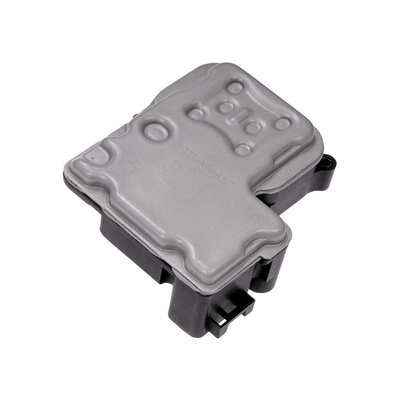
- Faulty ABS Control Module (Rare) — A hardware failure (like cracked internal solder joints) or a software issue within the ABS module itself. Consider this only after exhaustively ruling out the sensor, wiring, and hub.
Symptoms
- ABS, Traction, and Stability Warning Lights On — The ABS, Traction Control (TCS), and Electronic Stability Control (ESC) lights illuminate simultaneously and remain on.
- Safety Systems Disabled — Wheels lock up and skid during hard braking. Tires spin when accelerating from a stop on wet or loose surfaces.
- Cruise Control and 4WD Disabled — Cruise control and 4-Wheel Drive systems deactivate because they require accurate speed data from all four wheels to function safely.
- Cascade of Secondary Warnings — Triggers warnings for dependent systems like 'Emergency Brake Assist Not Available', 'Auto Hold System Error', or 'Regenerative Braking Disabled' on hybrid/EV models.
Diagnostic Flowchart
Tap your situation to follow the diagnostic path that matches what you're seeing on this code.
Common Fixes & Costs
- Replace Left Rear Wheel Speed Sensor — Parts: $35-$150, Labor: $100-$150, ~0.8 hr book time (DIY)
- Repair Wiring Harness/Connector — Parts: $20-$60, Labor: $120-$250, ~1.5 hr book time (Intermediate)
- Replace Wheel Hub/Bearing Assembly — Parts: $150-$350, Labor: $150-$300, ~2.2 hr book time (Intermediate)
- Clean Sensor Mounting Surface and Tone Ring — Parts: $5-$15, Labor: $50-$100, ~0.5 hr book time (DIY)
- Replace CV Axle Shaft — Parts: $100-$350, Labor: $150-$250, ~2.0 hr book time (Intermediate)
- Replace ABS Control Module — Parts: $600-$1200, Labor: $200-$400, ~2.5 hr book time (Professional)
DIY vs Professional
- Replace Left Rear Wheel Speed Sensor — Beginner: Yes
Tools: Jack, jack stands, socket set, torque wrench. - Repair Wiring Harness/Connector — Beginner: No (Intermediate skill recommended)
Tools: Soldering iron, heat shrink tubing, wire strippers, multimeter. - Replace Wheel Hub/Bearing Assembly — Beginner: No (Intermediate to Advanced skill recommended)
Tools: Breaker bar, high-torque impact wrench, torque wrench, axle socket, slide hammer.
Used vs. New Parts: Buying Guide
When a used part is worth it: Never buy a used wheel speed sensor due to low aftermarket costs. A used wheel hub/bearing assembly from a low-mileage donor is a cost-effective option for older vehicles.
Donor-vehicle mileage cap: roughly under 60000 miles for the part to have meaningful remaining life.
Donor quality checklist:
- Verify the part number matches exactly.
- Ensure the donor vehicle was not involved in a collision impacting the wheel.
- Avoid parts from regions with heavy road salt usage.
Decision logic:
- If The part is a wheel speed sensor → Buy a new aftermarket or OEM part. The cost savings of a used sensor are minimal.
- If The part is a wheel hub assembly and the vehicle is over 10 years old → A used assembly from a low-mileage donor is a reasonable choice to save money.
- If The vehicle is newer or has low mileage → Buy a new OEM or high-quality aftermarket hub assembly.
Warranty tradeoff: Used parts include a 30-90 day warranty covering only the part. New aftermarket parts offer 1-year to lifetime warranties. New OEM parts carry a 12-month warranty.
Worst-case if a used part fails: $250-$500 if a used hub fails shortly after installation, requiring a second labor charge.
What Happens If You Wait — Timeline
- 0-4 weeks: ABS and Traction Control lights illuminate. Safety systems are disabled, but regular brakes function normally. (MPG impact: 0%% · Added cost: $0)
- 1-3 months (If caused by a bearing): A failing wheel bearing generates a faint humming noise. Excess play causes slight, uneven tire wear. (MPG impact: 1-3%% · Added cost: $20-$50)
- 3-6 months (If caused by a bearing): Bearing noise becomes a loud grinding. Significant play causes vibration in the steering wheel. Excess heat damages the hub and CV joint. (MPG impact: 3-8%% · Added cost: $300-$800)
- 6+ months (If caused by a bearing): Catastrophic bearing failure is imminent. The wheel seizes completely or separates from the vehicle, causing an immediate loss of control. (MPG impact: N/A% · Added cost: $1500-$2500)
Cost of Not Fixing It
- Immediate: ABS, Traction Control, and Stability Control are disabled. Increased risk of skidding and loss of control during emergency braking. (Added cost: N/A (Safety risk))
- 1-6 months: If caused by a failing wheel bearing, continued driving leads to complete bearing failure, damaging the hub and knuckle. (Added cost: $500-$1500)
- 6+ months: Results in an automatic failure of state safety inspections, leading to fines or inability to legally register the vehicle. (Added cost: $50-$300)
Diagnosis Steps
- Read Codes and Sub-codes
Use an ABS-capable OBD-II scanner to confirm C0037. Document manufacturer-specific suffixes (e.g., -2F, -1D, -4A) to identify if the module sees an erratic signal, an electrical short, or an incorrect part.
Tools: ABS-capable OBD-II Scanner (Beginner) - Analyze Live Data
View the live data stream for all four wheel speed sensors while driving under 10 mph. A healthy system shows all sensors within 3 mph of each other. The left rear sensor will show 0 mph, an erratic reading, or a stuck value (like 255 KPH on Fords).
Tools: ABS-capable OBD-II Scanner (Beginner) - Visually Inspect Sensor, Wiring, and Hub
Raise the vehicle. Inspect the wiring harness from the left rear wheel into the wheel well for cuts, chafing, or melting. Remove the sensor (one 10mm bolt) and check the tip for metallic debris. Look inside the mounting hole for a rusted or damaged tone ring.
Tools: Jack, Jack Stands, Flashlight, Socket Set (Intermediate) - Swap Test (Left to Right)
If the sensors are physically interchangeable, swap the left rear and right rear sensors. Clear codes and drive. If the code changes to C003A (Right Rear), the sensor is dead. If C0037 returns, the problem is the wiring or the hub.
Tools: Socket Set, Ratchet (Intermediate) - PRO TIP: Multimeter Test (Sensor)
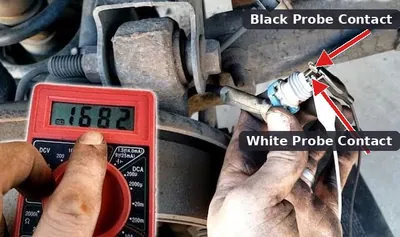
For a 2-wire passive sensor, measure resistance across the pins (typically 800-2,000 Ω). An open loop or near-zero reading means a bad sensor. Set the meter to AC Volts, reconnect, and spin the wheel; it should generate at least 0.2V. For active sensors, check for a 5V or 12V reference voltage at the harness connector with the key on.
Tools: Multimeter with backprobe pins (Advanced) - PRO TIP: Multimeter Test (Wiring)
Disconnect the harness from the sensor and ABS module. Check for continuity on both wires (< 1 Ω). Check for a short to ground (continuity between wire and chassis ground should be infinite). Check for a short to power (voltage between wire and ground with key on should be 0V).
Tools: Multimeter, Wiring Diagram (Advanced) - PRO TIP: Voltage Drop Test
With the sensor and module connected, backprobe the ground wire at the sensor and connect the other lead to the battery negative. With ignition on, voltage must be under 0.1V. Repeat for the power wire to the battery positive. Higher readings indicate excessive harness resistance.
Tools: Multimeter with backprobe pins (Advanced) - PRO TIP: Oscilloscope Signal Analysis
Backprobe the sensor's signal wires. A passive sensor produces a clean AC sine wave. An active (Hall-effect) sensor produces a clean DC square wave that toggles between two voltages or current states. A missing or 'hashy' pattern confirms a bad sensor, tone ring, or air gap.
Tools: Oscilloscope, Backprobe pins (Professional)
When This Code Triggers (Freeze-Frame Conditions)
- Vehicle Speed: 15-45 mph (Detected during acceleration or steady driving when the ABS module compares the left rear sensor signal to the other three wheels.)
- Brake Pedal Status: Off (Sets during steady-state driving as the module continuously monitors for a valid signal, not just during braking.)
- System Voltage: 13.5-14.5V (Sets during normal vehicle operation with the alternator charging.)
- ABS/TCS/ESC Status: Active/Monitoring (Logged when the ABS module actively monitors wheel speeds and detects a discrepancy.)
Related Codes
- C003A — Identical code for the Right Rear Wheel Speed Sensor. If you swap sensors for diagnosis and this code appears, it confirms the original left sensor was faulty.
- U0415 — Means 'Invalid Data Received from ABS Control Module'. Appears in other modules (like 4WD or power steering) as a secondary fault because they are not receiving speed data due to the C0037 fault.
- C0037-4A — Sub-type meaning 'Incorrect Component Installed'. The ABS module recognizes the sensor but determines it is the wrong part for the vehicle's configuration.
- C0031 / C0034 — Codes for the Left Front and Right Front sensors. Multiple simultaneous sensor codes point to a systemic issue, like a bad ABS module ground.
Climate & Environmental Factors
- Road Salt and Brine (Rust Belt): Saltwater spray accelerates corrosion of the wiring harness and connector pins. It also causes rust buildup on the hub under the sensor, pushing it away from the tone ring and creating an excessive air gap.
- High Humidity and Coastal Air: Constant moisture penetrates non-sealed connectors and sensor housings, causing internal corrosion and signal faults.
How to Talk to a Mechanic About This Code
Say this: "I have an ABS light on and my scanner shows code C0037 for the left rear wheel speed sensor circuit. Can you please check the live data from all four wheel speed sensors first to confirm the fault before replacing any parts?"
This signals you understand the code relates to the ABS system and requires a logical diagnostic process. It steers the mechanic away from immediately replacing the sensor without confirming it's the actual point of failure.
Avoid saying:
- 'My ABS light is on, can you just fix it?'
- 'I think I need a new wheel sensor, can you give me a price?'
- 'Just do whatever it takes to get the light off.'
Questions to ask before authorizing the repair:
- Did the live data show a zero or erratic reading from the left rear sensor compared to the others?
- Did you visually inspect the wiring harness and connector for damage?
- If you recommend a wheel hub replacement, can you show me the excessive play in the bearing?
- What is the warranty on this specific repair, including parts and labor?
Where to Take It: Dealer vs Independent vs Chain
- Dealer:
Recommended only if the vehicle is under warranty or has a known manufacturer-specific software issue.
Best for: Vehicles still under warranty., Complex electrical issues requiring ABS module programming.
Downsides: Significantly higher labor rates and part costs., Defaults to replacing expensive assemblies rather than performing detailed wiring repairs. (Typical cost: +50% vs. baseline) - Independent Shop:
Best fit. An experienced independent mechanic effectively diagnoses and repairs the vast majority of C0037 causes at a reasonable cost.
Best for: Out-of-warranty vehicles where cost is a factor., Diagnosing common failures like a bad sensor, damaged wiring, or a faulty wheel bearing.
Downsides: Quality varies widely. Ensure the shop has ASE-certified technicians. (Typical cost: +0% vs. baseline) - Chain Shop:
Use with caution. Acceptable for a simple sensor swap, but avoid for initial diagnosis.
Best for: Simple wheel speed sensor replacement if you have already diagnosed the sensor as the definite cause.
Downsides: Technician skill varies dramatically; lacks experience for in-depth electrical diagnosis., High pressure to upsell services like replacing calipers. (Typical cost: -10% vs. baseline)
When to Walk Away From the Repair
If the total estimated repair cost for the C0037 fault and any other known issues exceeds 50-70% of the car's private-party value, consider selling or trading it in.
- Car worth $4000, fix is $800: Fix it. The repair cost is well below the threshold and restores critical safety features.
- Car worth $3000, fix is $1800: Walk away. The repair cost is over 50% of the vehicle's value.
- Car worth $15000, fix is $1600: Fix it. This is a manageable repair cost relative to the car's value.
What Scan Tool You Need for This Code
Minimum: An OBD-II scanner that reads and clears Anti-lock Brake System (ABS) fault codes and displays live data for wheel speed sensors.
A standard $20 engine code reader cannot communicate with the ABS module. You need a tool that accesses the ABS system to view live speed data from each wheel to confirm the diagnosis.
Budget: BlueDriver Pro Scan Tool (~$119) — Connects to your smartphone via Bluetooth. Reads/clears ABS codes and displays live data for all four wheel speed sensors.
Mid-range: Foxwell NT630 Plus (~$130) — A dedicated handheld scanner that reads/clears ABS codes, shows live wheel speed data, and offers bi-directional controls for ABS systems.
Professional: Autel MaxiCOM MK808 (~$500-800) — Offers comprehensive, dealer-level diagnostics. Provides fast live data graphing and advanced bi-directional controls to test components.
Rent vs buy: Auto parts stores offer free loaner tools, but their scanners often cannot read ABS codes. Buying a budget pick like the BlueDriver saves the cost of a single diagnostic fee.
How to Clear the Code After You Fix It
- Use an ABS-capable OBD-II scan tool to clear the fault codes from the ABS module.
- Perform a short test drive, including some turns, to allow the system to verify the repair.
- Cycle the ignition off and on.
Drive cycle (~15 minutes): A specific drive cycle is not required. If the repair is successful, the ABS light turns off after a 10-15 minute test drive where the module confirms it is receiving a valid signal from all sensors.
Readiness monitors affected: ABS faults do not affect engine-related emissions readiness monitors.
Watch out for:
- Basic $20 engine code readers cannot access the ABS module to clear the C0037 code.
- Disconnecting the battery does not clear the code from the ABS module's memory.
- If the light returns immediately, the root cause (e.g., wiring short, bad bearing) was not fixed.
Will This Fail Emissions / State Inspection?
Yes — this code typically fails an OBD-II emissions inspection.
- California: An illuminated ABS warning light causes an automatic failure of the state safety inspection.
- New York: An illuminated ABS warning light is grounds for failing the annual safety inspection.
- Texas: An illuminated ABS light is not a cause for rejection during commercial vehicle inspections, though driving with disabled safety systems is unsafe.
Most Commonly Affected Vehicles
- Ford Fusion / Lincoln MKZ (2013-2014) — TSB SSM 44504 identifies wiring insulation failure within 1-3 inches of the connector. This manifests as a stuck 255 KPH reading in live data. Fix by splicing in a new pigtail connector.
- Ram 3500 (2019-2024) — TSBs 05-004-24 and S2205000002 note driving over rough roads triggers an erratic signal code (C0037-2F). The wiring harness frequently chafes and breaks where it routes over the fuel tank.
- Jeep Grand Cherokee / Compass (2018-2021) — TSB S2005000003 points to hidden corrosion inside the wiring harness pigtail. TSB 05-003-21 notes failure from water intrusion, recommending replacement of all four sensors.
- Ford Escape / Lincoln MKC (2013-2019) — Models with Active Park Assist require a different sensor than those without. Installing the wrong part triggers code C0037-4A ('Incorrect Component Installed').
- Jaguar F-PACE / XE / XF (2017-2019) — TSB #SSM73690 identifies a poor connection at harness connector C34A/B in the left rear wheel arch. This triggers both C0037 and parking brake fault code C2008-13.
- Chevrolet / GMC Silverado 1500 / Sierra 1500 (1999-2007) — On trucks with the Kelsey Hayes 325 ABS module, this code is frequently caused by cracked solder joints on the module's internal circuit board, requiring a module rebuild.
- Hyundai / Kia Ioniq / Niro / Santa Fe (2013-2023) — Service Campaign 949 addresses water intrusion into the sensor housing in coastal areas, which disables the regenerative braking system.
Manufacturer-Specific Notes
- Ford: On the Fusion and Focus, a wiring failure near the connector causes the live data stream to display a stuck wheel speed of 255 km/h (158 mph).
- Ram (Stellantis): On heavy-duty trucks, the wiring harness frequently chafes where it passes over the fuel tank, requiring a new harness section to be run.
- Jaguar / Land Rover: A shared electrical connector (C34A/B) in the wheel well controls both the ABS sensor and the electronic parking brake. Corrosion here triggers faults for both systems simultaneously.
- Chevrolet / GMC (GMT800): On 1999-2007 trucks, a C0037 code is often an internal ABS module failure due to cracked solder joints, not an external sensor or wiring fault.
Real Owner Stories
2019 Ram 1500 DT at 50K miles
ABS and 'Service 4WD' lights appeared after driving in heavy snow.
What they tried:
- Replaced the left rear wheel speed sensor, but the lights returned immediately.
Outcome: The owner inspected the harness where it runs along the frame and found a broken wire. Splicing the wire with a weatherproof butt connector permanently fixed the issue.
Lesson: On Ram trucks, always inspect the wiring harness for chafing near the frame and fuel tank before assuming the sensor failed.
2017 Jaguar F-PACE at 65K miles
A cascade of warnings appeared: 'ABS Fault', 'DSC Not Available', 'Emergency Brake Assist Not Available'.
What they tried:
- Fully charged the battery, suspecting a low voltage issue.
Outcome: An ABS scanner revealed code C0037. Following Jaguar TSB #SSM73690, the mechanic cleaned corroded pins at connector C34A/B in the left rear wheel arch, resolving all warnings.
Lesson: A single fault triggers a cascade of seemingly unrelated warning lights. Check TSBs for known connector issues.
2012 Ford Focus at 110K miles
Intermittent ABS and Traction Control lights stayed on permanently with code C0037.
What they tried:
- Replaced the left rear sensor, but the code returned.
- Swapped the new left sensor with the old right sensor; the code remained C0037.
- A multimeter test on the harness showed good continuity.
Outcome: The owner discovered a failing wheel bearing causing excessive 'wobble' in the hub, creating an erratic signal. Replacing the rear wheel hub assembly for $150 cleared the code.
Lesson: If a new sensor and wiring check don't fix the issue, check for mechanical play in the wheel bearing.
How to Prevent This Code From Triggering
- Periodically clean wheel wells and undercarriage (Seasonally, especially after winter) — Washing away road salt and mud prevents corrosive buildup on the sensor body and wiring harness.
- Apply dielectric grease to sensor connectors (During any brake or suspension work) — Dielectric grease blocks moisture from reaching the metal pins inside the connector, preventing corrosion and high resistance.
- Inspect wiring harness for secure mounting (Annually or during tire rotation) — Ensures the harness is routed away from moving suspension parts. A loose harness is prone to chafing and vibration damage.
- Address failing wheel bearings promptly (As soon as humming or play is detected) — A worn bearing introduces wobble that damages the integrated tone ring or allows the hub to destroy the wheel speed sensor tip.
Frequently Asked Questions
Can I fix a C0037 code myself?
Yes, replacing the sensor or cleaning the tone ring is a beginner-friendly DIY task requiring basic hand tools. Splicing a damaged wiring harness requires intermediate soldering and weatherproofing skills. Take the vehicle to a shop if you lack a multimeter or cannot safely lift the car.
What happens if I ignore the C0037 code?
Your primary safety systems (ABS, traction control, stability control) remain disabled, significantly increasing the risk of losing control during an emergency stop. It also triggers an automatic failure during state safety inspections.
Why did my 'Service 4WD' light come on with the ABS light?
Modern 4WD systems rely on wheel speed sensors to monitor wheel slip and manage power distribution. Without the left rear signal, the 4WD computer disables the system to prevent drivetrain damage.
The mechanic replaced the sensor, but the light came back on. What now?
The root cause is likely a broken wire in the harness or excessive play in the wheel bearing. Verify the shop installed the exact correct part number, as installing a non-park-assist sensor on a park-assist vehicle triggers this code.
Can a bad wheel bearing cause a C0037 code without making noise?
Yes. A worn bearing develops enough play to alter the critical air gap between the sensor and the tone ring. This wobble disrupts the magnetic signal long before the bearing starts grinding or humming.
Why does code C0037 disable regenerative braking on my EV/Hybrid?
Regenerative braking uses the electric motor to slow the vehicle and requires precise wheel speed data to prevent lock-up. Without this data, the hybrid/EV computer disables regeneration and relies entirely on conventional friction brakes.
Key Takeaways
- Code C0037 disables your ABS, traction control, and stability control, increasing stopping distances by up to 50% in panic stops.
- Inspect the wiring harness within 6 inches of the sensor before buying parts; broken or chafed wires are the root cause in over 40% of cases.
- Use an ABS-capable OBD-II scanner to view live data; a faulty left rear sensor will read 0 mph or show erratic jumps compared to the other three wheels.
- Swap the left and right rear sensors to test them; if the code changes to C003A, the sensor is dead, but if C0037 remains, you have a wiring or hub issue.
Helpful Videos
Shop the Parts Behind C0037
Below are the parts most often responsible for code C0037, ranked by how frequently each one is the actual culprit (per the diagnosis above). Tap any to see what we have for your vehicle.





The information in this article is provided for general reference and educational purposes only. Vehicle specifications, procedures, and part compatibility can vary by production date, trim level, and region. Always consult your vehicle's factory service manual and verify part numbers before purchasing or performing repairs. Safety-critical components such as airbags, seat belts, and braking systems should be installed by a qualified professional.
- 🧭 Diagnostic Flowchart
- 🎬 Helpful Videos
- 🛍️ Shop This Part
- What Does C0037 Mean?
- Can I Drive With C0037?
- Common Causes
- Symptoms
- Common Fixes & Costs
- DIY vs Professional
- Used vs. New Parts: Buying Guide
- What Happens If You Wait — Timeline
- Cost of Not Fixing It
- Diagnosis Steps
- When This Code Triggers (Freeze-Frame Conditions)
- Related Codes
- Climate & Environmental Factors
- How to Talk to a Mechanic About This Code
- Where to Take It: Dealer vs Independent vs Chain
- When to Walk Away From the Repair
- What Scan Tool You Need for This Code
- How to Clear the Code After You Fix It
- Will This Fail Emissions / State Inspection?
- Most Commonly Affected Vehicles
- Manufacturer-Specific Notes
- Real Owner Stories
- 2019 Ram 1500 DT at 50K miles
- 2017 Jaguar F-PACE at 65K miles
- 2012 Ford Focus at 110K miles
- How to Prevent This Code From Triggering
- Frequently Asked Questions
- Can I fix a C0037 code myself?
- What happens if I ignore the C0037 code?
- Why did my 'Service 4WD' light come on with the ABS light?
- The mechanic replaced the sensor, but the light came back on. What now?
- Can a bad wheel bearing cause a C0037 code without making noise?
- Why does code C0037 disable regenerative braking on my EV/Hybrid?
- Key Takeaways
- 🎟️ Get 5% Off