

C0037 on 2018-2020 Jeep Renegade: Left Rear Wheel Speed Sensor Fault Guide
Code C0037 on a 2018-2020 Jeep Renegade indicates a fault with the left rear wheel speed sensor circuit. The most common fix is replacing the left rear wheel speed sensor itself, which can fail due to water intrusion or oxidation. Expect to pay between $40-$85 for the part. However, wiring damage near the sensor and low battery voltage are also known culprits.
- Code C0037 on your Renegade points directly to an issue in the left rear wheel speed sensor circuit.
- The most likely cause is a failed wheel speed sensor due to a known issue with water intrusion and oxidation on this model.
- Before ordering parts, visually inspect the sensor's wiring and connector for any obvious damage, as this is also a common failure point.
- Don't overlook the battery; if you have multiple, seemingly unrelated warning lights, get your battery professionally load tested before beginning other repairs.
- Driving with this code is possible, but your ABS and stability control will not function, so it should be repaired promptly.
What's Unique About the 2018-2020 Jeep RENEGADE
On the Jeep Renegade, this code is frequently linked to the wheel speed sensors failing from water intrusion or oxidation, a problem significant enough for Jeep to issue Technical Service Bulletin 05-003-21, which recommends replacing all four sensors if this is the root cause. While a sensor failure is the most common cause, owners should also be aware that these vehicles are sensitive to battery voltage; a failing battery can sometimes cause a cascade of electrical warnings, including ABS faults, even when the battery seems to be working correctly. Wiring harnesses are also a known weak point, with chafing and corrosion occurring near the sensor connector, sometimes hidden under protective tubing.
Diagnostic Flowchart
Tap your situation to follow the diagnostic path that matches what you're seeing on this vehicle.
Symptoms You May Notice
- ABS warning light is on
- Traction Control (ESC) warning light is on
- "Service 4WD System" message may appear
- "Service Hill Start" message may appear
- Cruise control may be disabled
- Brake pedal may pulse briefly or feel different during stops
- Replacing the ABS module before thoroughly checking the sensor and its wiring.
- Ignoring a weak battery as the potential root cause of multiple electronic error codes.
- Replacing only the sensor when the hidden wiring harness is chafed or broken.
Most Likely Causes
- Failed Left Rear Wheel Speed Sensor 🔴 High Probability → Shop ABS Wheel Speed Sensor Jeep issued TSB #05-003-21 acknowledging that wheel speed sensors on this platform are prone to failure from oxidation or water intrusion. The bulletin advises that if this is the cause, all four sensors should be replaced.
How to confirm: Use a scan tool to monitor live data from the left rear wheel speed sensor while rotating the wheel. If the speed reading is absent, erratic, or doesn't match the other wheels, the sensor is the primary suspect.
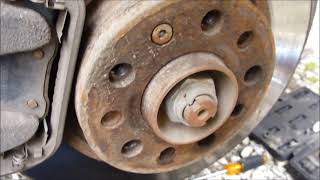
Typical fix: Replace the left rear wheel speed sensor. The sensor is typically held in by a single 8mm or Torx/Allen bolt. 🎬 Watch: This video shows the rear speed sensor replacement process.
Est. part cost: $40-$85 - Damaged Wiring or Corroded Connector 🟡 Medium Probability The wiring harness runs in an exposed area near the wheel, making it susceptible to damage from road debris, moisture, and vibration. A STAR case (S2005000003) specifically calls out inspecting this wiring for damage and corrosion, even if it's not visible on the outside of the protective tubing.
How to confirm: Visually inspect the wiring harness from the sensor up into the wheel well. As per STAR Case S2005000003, remove the convoluted tubing to check the wires directly for chafing, breaks, or green corrosion. Wiggle the harness while monitoring live data to see if the signal cuts out.
Typical fix: Repair the damaged section of wire using heat-shrink butt connectors or replace the connector pigtail. It is common for the plastic clip on the harness connector to break during removal.
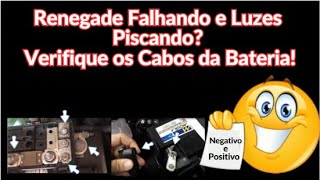
Est. part cost: $15-$50 - Failing Vehicle Battery ⚪ Low Probability Modern Jeeps are highly sensitive to battery voltage. A weak or failing battery can cause numerous, seemingly unrelated electronic faults and a 'Christmas tree' of warning lights on the dash, even if the vehicle still starts. Multiple owners report that codes like C0037 disappeared after replacing an old battery. 🎬 Watch: How a loose battery cable causes flashing dash lights.
How to confirm: Have the battery professionally load tested. A simple voltage check is often not sufficient to identify a weak battery that fails under load.
Typical fix: Replace the vehicle's 12V battery.
Est. part cost: $200-$350
Rare But Worth Checking
- Damaged or Debris-Covered Tone Ring: The tone ring (or reluctor ring) is what the sensor reads. If it's cracked, damaged, or covered in heavy rust or metal debris, it can cause an erratic signal. This often happens during other repairs like axle or wheel bearing replacement.
- Worn Wheel Bearing: A worn or failing wheel bearing can introduce excessive play or 'wobble' in the hub, which changes the air gap between the sensor and the tone ring, leading to an incorrect signal and triggering the C0037 code.
- Faulty ABS Control Module: → Shop ABS Control Module While rare, the ABS module itself can fail. This is typically the last item to suspect after the sensor and wiring have been thoroughly checked and confirmed to be good. One owner on a forum reported this as the ultimate fix after replacing the sensor and checking the battery did not solve the problem.
Diagnosis Steps
- Read the fault codes from the ABS module using a capable OBD-II scanner. Note any sub-faults like -1D, -29, or -01.
- Visually inspect the left rear wheel speed sensor and its wiring harness for any obvious signs of damage, such as cuts, chafing, or corrosion.
- Inspect the electrical connector for the sensor, checking for bent, loose, or corroded pins.
- Using a scan tool with live data capability, monitor the wheel speed from all four sensors while driving or spinning the wheels. The left rear should read differently, erratically, or not at all.
- If the sensor signal is erratic, remove the sensor and inspect the tone ring on the wheel hub for damage, debris, or excessive rust.
- If the sensor and wiring appear okay, disconnect the harness and use a multimeter to test for proper voltage and ground at the sensor connector per the service manual.
- Carefully remove the protective tape and convolute from the harness near the sensor connector to inspect for hidden wire damage, as recommended by STAR Case S2005000003.
- If a weak battery is suspected, perform a professional load test.
- If all else fails, the issue may lie within the ABS control module, which may require professional diagnosis.
Parts You'll Likely Need
- Left Rear Wheel Speed Sensor
(OEM #68253916AC, 68246762AA, 68372700AA)— This is the most frequent point of failure for code C0037, often due to environmental factors like water and oxidation as cited in Jeep's own service bulletins.
Trusted brands: Mopar, Duralast, Standard Motor Products, NTK
OEM price range: $60-$85
Aftermarket price range: $40-$60
Related Codes That Often Appear With This One
- C003A — This code is for the Right Rear Wheel Speed Sensor. It often appears with C0037 if there is a shared wiring issue or if both sensors are failing due to the same conditions (e.g., water intrusion as noted in TSB 05-003-21).
- C0031 — This is the code for the Left Front Wheel Speed Sensor. TSB 05-003-21 notes that it's common for multiple wheel speed sensor codes to appear at once due to a common failure pattern.
- C0034 — This is the code for the Right Front Wheel Speed Sensor. Similar to the other codes, it can be set alongside C0037 due to systemic issues like water intrusion affecting all four sensors.
- U0415 — This code indicates 'Invalid Data Received From Anti-Lock Brake System Control Module'. It can appear alongside C0037 when the ABS module is not receiving a plausible signal from the wheel speed sensor, further pointing to an issue in that circuit.
Technical Service Bulletins (TSBs) & Recalls
- 05-003-21: Replacement of Front and Rear Wheel Speed Sensors Due to Oxidation or Water Intrusion Setting Diagnostic Trouble Codes (DTCs).
- 05-001-20: This TSB was superseded by 05-003-21 but also addressed wheel speed sensor electrical failures.
Platform-Specific Known Issues
- TSB #05-003-21 and #05-001-20 specifically address the failure of wheel speed sensors on the 2018-2020 Renegade due to oxidation or water intrusion, recommending replacement of all four sensors if this is the cause.
- A STAR Case (S2005000003) was created to address codes C0037-1D and C003A-1D, advising technicians to perform a detailed inspection of the rear wheel speed sensor wiring harnesses for corrosion or damage, even if not visible externally. This involves opening the convolute tubing.
Mechanic-Grade Diagnostic Values
- Active Wheel Speed Sensor Voltage Supply — expected: Approximately 5V reference at the sensor connector with key on.. Failure: No voltage or significantly lower voltage indicates a wiring or ABS module issue.
- Wheel Speed Sensor Resistance Comparison — expected: The Ohm reading of the left rear sensor should be within approximately 1% of the reading from the right rear sensor.. Failure: A reading of OL (Open Loop/infinite resistance) or a resistance value that differs significantly from the known-good sensor on the other side points to a failed sensor.
Hidden / Shadow Codes Worth Checking
- C0037-1D: Left Rear Wheel Speed Sensor - Circuit Current Out of Range. This is specifically mentioned in TSB 05-003-21 as a primary code for sensor failure due to water/oxidation. (see via Dealer-level scanner (wiTECH) or advanced OBD-II tool with ABS capability.)
- C0037-2F: Left Rear Wheel Speed Sensor - Signal Erratic. The ABS module detects multiple drastic or implausible changes in the sensor's signal. (see via Dealer-level scanner (wiTECH) or advanced OBD-II tool with ABS capability.)
- C0037-62: Left Rear Wheel Speed Sensor - Signal Compare Failure. The signal from this sensor is illogical when compared to the other wheel speed signals. (see via Dealer-level scanner (wiTECH) or advanced OBD-II tool with ABS capability.)
- C0037-4A: Incorrect Component Installed. The control module detects a mismatch between the hardware connected (the sensor) and the hardware it expects. This can occur if an incorrect or incompatible part is used. (see via Dealer-level scanner (wiTECH) or advanced OBD-II tool with ABS capability.)
Scan Tool Commands That Help
- wiTECH or equivalent (Multiecuscan, Autel): Proxy Alignment Procedure (PROXI) — This is a critical step required after replacing a battery or certain control modules (like the ABS module or BCM). It allows all vehicle modules to recognize each other and communicate correctly. A blinking odometer is a key symptom that a PROXI alignment is needed.
- wiTECH or equivalent: ABS Initialization / Calibration Routines — After replacing the ABS module or related sensors, routines like 'Brake Pedal Calibration' and 'Longitudinal G-Sensor Calibration' may need to be run to ensure the system functions correctly.
Wiring & Ground Locations
- ABS Control Module — Typically located in the engine bay, attached to the hydraulic control unit (HCU), often found behind the battery and next to the brake booster.. This is the module that receives the signal from the wheel speed sensor. All wiring for the sensor circuit terminates here, and it's a central point for testing power, ground, and signal wires.
- ABS Module Ground — While specific Renegade ground points are not detailed, common Jeep ground locations for the ABS system are on the chassis frame rails in the engine compartment. On similar platforms, poor grounds in front of the engine have caused ABS faults.. A poor ground connection to the ABS module can cause a host of erratic electrical issues and fault codes, including C0037, even if the sensor and wiring are perfectly fine.
Real Owner Repair Stories
- Reddit r/JeepRenegade user Scott_Seven007 (2017 Jeep Renegade) — A 'Christmas light' effect on the dash with 7 different error codes appearing at once, including ABS/ESC faults.
❌ Tried (didn't work) A mechanic suggested it was an ABS sensor, but a scan showed all 4 sensors were registering and in sync.
✅ What actually fixed it Replacing the original Mopar 12V battery with a new one. All warning lights and error codes disappeared immediately after replacement, even though the old battery showed a seemingly healthy 14.8V reading.
"I Checked Everything" — The Actual Cause
- In one documented case, a scan tool showed all four wheel speed sensors were 'registering just fine in sync,' which would normally rule them out as the problem. However, the vehicle was displaying multiple ABS and system errors. The actual root cause was a failing 12V battery that could still start the car and show normal voltage on a simple test, but was causing system-wide electronic failures under load.
When the Usual Fixes Don't Work
- While C0037 most commonly points to a failed sensor or its direct wiring, there is strong evidence from owners that these symptoms can be caused by a weak 12V battery, even if the battery seems to test fine with a simple voltage meter. In one case, a full dash of warning lights, including for the ABS system, was resolved entirely by replacing the battery after a mechanic's initial diagnosis of a bad sensor proved incorrect. Furthermore, if the ABS module itself is suspected and replaced with a used unit, it will likely require VIN programming ('Proxy Alignment') by a dealer or specialist to function, as these modules are coded to the original vehicle.
OEM Part Supersession History
68246762AA, 68253916AC→Unknown, but 68372700AA is also listed for this application.— Part revisions or consolidation.
Heads up: TSB 05-003-21 advises replacing all four sensors with the updated parts if water intrusion is the cause, suggesting older revisions may be prone to failure.
Model Year Variations Within This Range
- 2018 - mid-2019: According to TSB 05-003-21, Jeep Renegade (B1) vehicles built on or before July 31, 2019 (MDH 0731XX) are specifically called out for wheel speed sensor failures due to water/oxidation. This implies that vehicles built after this date may have an updated, more robust sensor design.
Helpful Videos

We Have This Part in Stock


The information in this article is provided for general reference and educational purposes only. Vehicle specifications, procedures, and part compatibility can vary by production date, trim level, and region. Always consult your vehicle's factory service manual and verify part numbers before purchasing or performing repairs. Safety-critical components such as airbags, seat belts, and braking systems should be installed by a qualified professional.
- Jeep RENEGADE:
- 🧭 Diagnostic Flowchart
- 🎬 Helpful Videos
- 🛍️ Shop This Part
- What's Unique About the 2018-2020 Jeep RENEGADE
- Symptoms You May Notice
- Most Likely Causes
- Rare But Worth Checking
- Diagnosis Steps
- Parts You'll Likely Need
- Related Codes That Often Appear With This One
- Technical Service Bulletins (TSBs) & Recalls
- Platform-Specific Known Issues
- Mechanic-Grade Diagnostic Values
- Hidden / Shadow Codes Worth Checking
- Scan Tool Commands That Help
- Wiring & Ground Locations
- Real Owner Repair Stories
- "I Checked Everything" — The Actual Cause
- When the Usual Fixes Don't Work
- OEM Part Supersession History
- Model Year Variations Within This Range
- 🎟️ Get 5% Off