

C0039 on 2015-2016 Ram 1500: Right Rear Tone Wheel Failure Causes and Fixes
This code means the ABS module has detected a signal failure from the right rear tone wheel. This is often caused by a damaged or contaminated tone wheel, a faulty wheel speed sensor, or a failing wheel bearing/hub assembly. The ABS and traction control warning lights will be on.
- Code C0039 on a 2015-2016 Ram 1500 points directly to a signal problem with the right rear tone wheel.
- The most common fixes are cleaning or replacing the tone ring, replacing the wheel speed sensor, or addressing a worn wheel bearing.
- A visual inspection of the tone ring for damage or debris is the most important first diagnostic step.
- Driving with this fault is possible, but your ABS and traction control will not work, compromising safety in emergency situations.
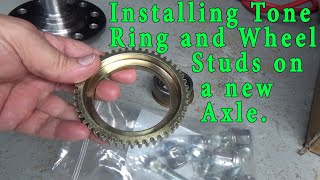
- The tone ring is a separate part pressed onto the axle shaft, which must be removed for replacement.
What's Unique About the 2015-2016 Ram 1500
On the fourth-generation Ram 1500, the rear ABS tone ring is a separate component that is press-fit onto the axle shaft. This is significant because a damaged ring can sometimes be replaced without replacing the entire axle shaft or wheel hub assembly, although the axle must be removed to service it. However, problems with the tone wheel signal are frequently linked to excessive play in the wheel bearing. A worn bearing allows the axle to wobble, which in turn causes the tone ring's distance to the sensor to vary, creating a bad signal. In many owner experiences, the C0039 code was ultimately traced back to a failed wheel bearing that needed replacement.
Diagnostic Flowchart
Tap your situation to follow the diagnostic path that matches what you're seeing on this vehicle.
Symptoms You May Notice
- ABS warning light is on
- Traction Control (ESC/ESP) warning light is on
- "Service Antilock Brake System" message on the dash
- Cruise control may be disabled
- 4WD system may be disabled or show a "Service 4WD" light (if applicable)
- A grinding or humming noise from the rear of the vehicle that changes with speed, indicating a possible wheel bearing failure.
- Replacing only the wheel speed sensor when the underlying cause is a damaged tone ring or a bad wheel bearing. This results in the code returning quickly. Many owners report replacing the sensor first, only to find the real issue was the bearing play causing an incorrect air gap.
Most Likely Causes
- Failing Wheel Bearing / Hub Assembly 🔴 High Probability A worn wheel bearing allows for excessive play (wobble) in the axle shaft. This movement changes the gap between the tone wheel and the sensor, causing an erratic signal. A failing bearing can also shed metal debris that contaminates the sensor and ring. Many forum discussions point to this as the true root cause after initial attempts to fix the sensor or ring failed.
How to confirm: With the vehicle raised, check the right rear wheel for excessive play by trying to rock it from top to bottom and side to side. A grinding or humming noise while driving that changes pitch or intensity when turning is a classic symptom. For example, a failing right-side bearing may get louder during a left turn as the vehicle's weight transfers onto it.
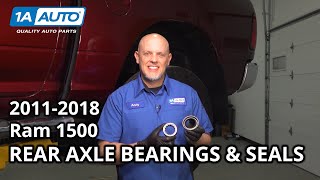
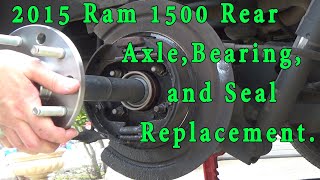
Typical fix: Replace the rear wheel bearing and seal. This is an involved job that requires removing the differential cover, C-clip, and axle shaft.
Est. part cost: $40-$100 for the bearing and seal kit. - Damaged or Contaminated Tone Wheel 🟡 Medium Probability The tone wheel is exposed to the elements. Rust can build up underneath the ring, causing it to swell, crack, or wobble. It can also accumulate rust, brake dust, and metallic debris from a failing bearing, which can obscure the signal or damage the sensor tip.
How to confirm: Visually inspect the right rear tone wheel for cracks, missing teeth, or heavy contamination. This requires removing the wheel, caliper, and rotor. Check for signs of swelling or a visible crack in the ring.
Typical fix: Clean the tone wheel thoroughly with brake cleaner. If it is cracked or damaged, it must be replaced. This involves removing the axle shaft to press the old ring off and a new one on. A shop press is typically required for installation.
Est. part cost: $25-$60 for an aftermarket ring, or up to $150-$230 for an OEM Mopar part. - Faulty Right Rear Wheel Speed Sensor 🟡 Medium Probability → Shop ABS Wheel Speed Sensor The sensor is a sensitive electronic component located in a harsh environment. It can fail internally or become damaged by debris or contact from a wobbling tone ring.
How to confirm: Use a scan tool to monitor live data from the right rear wheel speed sensor while driving; look for dropouts or erratic readings compared to the other wheels. You can also test the sensor's internal resistance with a multimeter, though live data is more definitive. Often, the sensor tip will be covered in metallic 'fuzz' if the wheel bearing is failing.
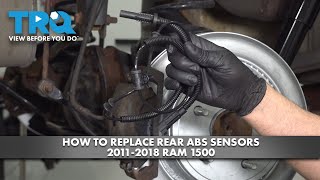
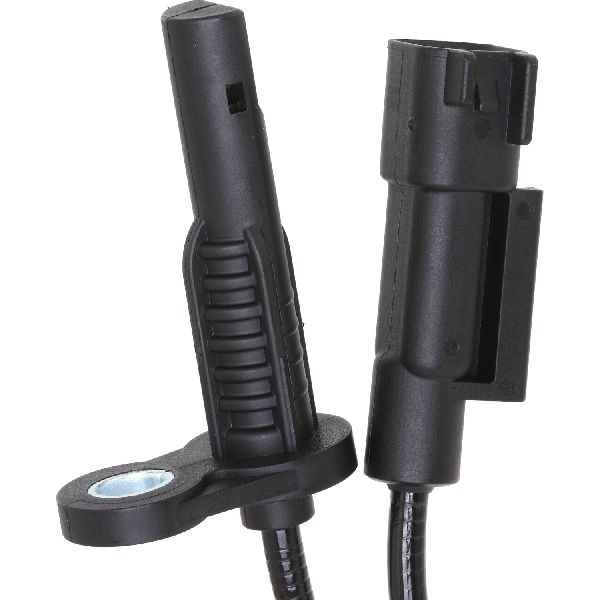
Typical fix: Replace the right rear wheel speed sensor. This is typically held in by a single 8mm bolt and is relatively easy to access after removing the wheel. 🎬 Watch a quick walkthrough on replacing the rear ABS sensor.
Est. part cost: $30-$75 - Damaged Wiring or Connector ⚪ Low Probability The sensor wiring harness runs through the wheel well and is exposed to moisture, debris, and physical damage, which can lead to corrosion or broken wires.
How to confirm: Visually inspect the wiring harness from the sensor to the main chassis loom for any signs of chafing, breaks, or corrosion in the connector pins. Perform a continuity test on the wires between the sensor connector and the ABS module connector.
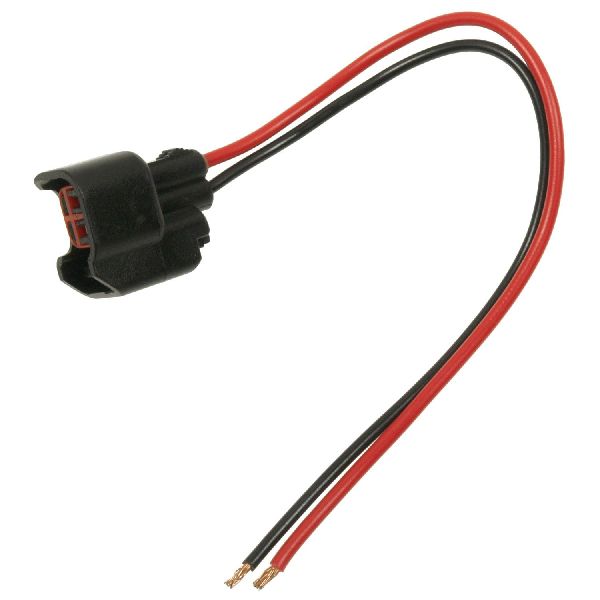
Typical fix: Repair the damaged section of wire or replace the pigtail connector. In severe cases, a new harness may be needed.
Est. part cost: $15-$50 for a pigtail connector.
Rare But Worth Checking
- Faulty ABS Control Module: → Shop ABS Control Module This is the least likely cause. Before condemning the module, all other possibilities (sensor, tone ring, wiring, bearing) must be exhaustively ruled out. A replacement module must be programmed to the truck's VIN to function; it is not a plug-and-play part. Some owners have had success sending their original module to a specialist for repair.
Diagnosis Steps
- Connect an ABS-capable OBD-II scanner and confirm C0039 is the active code. Note any other codes, like C003A.
- Safely raise and support the rear of the vehicle on jack stands.
- Grasp the right rear wheel at the top and bottom and attempt to rock it. Any significant play or clunking strongly suggests a bad wheel bearing, which is a very common root cause.
- Remove the right rear wheel.
- Remove the brake caliper and rotor to get a clear view of the tone ring and sensor.
- Visually inspect the ABS tone ring for any obvious cracks, missing teeth, heavy rust, or swelling. Check if it has made contact with the sensor tip.
- Inspect the wheel speed sensor for physical damage or buildup of metallic debris on its magnetic tip. A sensor covered in metal shavings is a strong indicator of a failing wheel bearing.
- Inspect the wiring harness and connector leading to the sensor for any signs of damage, corrosion, or loose connections.
- If a scan tool with live data is available, monitor the speed of all four wheels while driving. The right rear wheel speed should read consistently and match the others. Any dropouts or erratic behavior points to an issue with that corner.
- If the wheel bearing has excessive play, it must be replaced. This will likely require replacing the tone ring and axle seal at the same time.
- If the tone ring is damaged (cracked, swollen), replace it. This requires removing the differential cover, C-clip, and axle shaft.
- If the tone ring and bearing are good, the wheel speed sensor is the next most likely culprit. Replace it.
- If the problem persists, perform continuity and resistance checks on the wiring harness between the sensor and the ABS module.
Parts You'll Likely Need
- Rear ABS Tone Wheel / Ring
(OEM #68142026AB)— This is the component directly named by the code. It is prone to damage from rust swelling or impact, which is a primary cause of the fault.
Trusted brands: Mopar, Yukon Gear & Axle, Dorman
OEM price range: $150-$230
Aftermarket price range: $25-$60 - Right Rear Wheel Speed Sensor
(OEM #68457706AD (supercedes multiple previous part numbers))— The sensor is often replaced along with the tone ring, or when it fails internally, causing the C0039 code.
Trusted brands: Mopar, Standard Motor Products, Delphi
OEM price range: $60-$90
Aftermarket price range: $30-$75 - Rear Wheel Bearing and Seal Kit — A failing wheel bearing is a common underlying cause, as the resulting play creates an incorrect signal from the tone ring. This is often the true root cause of the C0039 code.
Trusted brands: Mopar, Timken, SKF
OEM price range: $70-$120
Aftermarket price range: $40-$80
Related Codes That Often Appear With This One
- C003A — This code indicates a fault with the Right Rear Wheel Speed Sensor itself. A problem with the tone wheel (C0039) will cause the sensor to send an erratic signal, which can also trigger a C003A code.
Technical Service Bulletins (TSBs) & Recalls
- 68292756A$: This is a Mopar diagnostic document, not a formal TSB, that lists C0039-02 as a possible diagnostic trouble code related to the hydraulic brake system for 2016 models.
Platform-Specific Known Issues
- The official Mopar document #68292756A$ acknowledges the existence of code C0039-02 'Right Rear Tone Wheel-General Signal Failure' on 2016 models, among other wheel speed-related codes, as part of its diagnostic procedures.
- Owner Experience: Wheel Bearing as Root Cause: A common story on forums like RamForum.com involves an owner first replacing the wheel speed sensor for a C0039 or related code. When the code returns, further investigation reveals the actual problem was a failed rear wheel bearing. The excessive play in the bearing causes the tone ring to move erratically in relation to the sensor, generating the signal fault. Replacing the bearing, and often the tone ring and seal at the same time, permanently resolves the issue.
Mechanic-Grade Diagnostic Values
- Wheel Speed Sensor Resistance — expected: 1200 - 2700 Ohms. Failure: A reading below 1200 Ohms or above 2700 Ohms indicates a faulty sensor.
- Wheel Speed Sensor AC Voltage Output — expected: Minimum of 0.25 Volts AC. Failure: An output of less than 0.25V AC while spinning the wheel by hand (at least 1/2 revolution per second) suggests a problem with the sensor or the air gap between the sensor and tone wheel.
- Continuity to Ground (Wiring Check) — expected: Under 5 Ohms. Failure: A reading higher than 5 Ohms from either pin on the sensor harness to a chassis ground indicates a short in the wiring.
Hidden / Shadow Codes Worth Checking
- C0039-02: Right Rear Tone Wheel - General Signal Failure. This is the most common sub-type for this code on Ram trucks and indicates the ABS module is seeing periodic drops in the signal. (see via An ABS-capable scan tool.)
Scan Tool Commands That Help
- wiTECH: ABS Initialization — After replacing the ABS module, this function must be run to initialize the new unit. It is found under the 'Misc Functions' tab for the ABS module.
- wiTECH: ABS Bleed Procedure — Required if the hydraulic control unit (HCU) of the ABS module is replaced, to properly bleed air from the system. This is a bi-directional command that actuates the pump and valves.
- wiTECH or equivalent: Live Data Graphing — To diagnose a C0039, monitor and graph all four wheel speed sensor signals while driving. An erratic or dropping signal from the right rear wheel compared to the others confirms the location of the fault.
Wiring & Ground Locations
- G101 — Located on the left front (driver's side) area of the engine bay, down low.. This is a primary ground point that supplies the ABS module. A poor connection at G101 can cause various ABS faults, including communication errors and false sensor codes.
- ABS Module Fuses — In the underhood fuse box (Power Distribution Center) next to the battery.. Three fuses are critical for the ABS system: F6 (40A, ABS Pump), F26 (30A, ABS Valves), and F76 (10A, ABS/ESC). While a blown fuse is not a direct cause of a single wheel code, checking them is a fundamental step.
- ABS Module Connector (C135) — The main electrical connector on the ABS module itself, located under the driver's side of the truck, attached to the frame rail.. This is the termination point for the wheel speed sensor wiring. Checking for corrosion or backed-out pins here is crucial if sensor and wiring tests at the wheel end are inconclusive.
Real Owner Repair Stories
- RamForum.com user (2006 Dodge Ram (similar 3rd Gen architecture)) — ABS light on and off intermittently, then stayed on continuously. Code for left front WSS circuit.
❌ Tried (didn't work) Replaced the wheel speed sensor, but the light remained on., Ohm test of the new sensor showed it was good., Ran a jumper wire from the battery negative to the ground wire at the sensor plug, but the light still did not go out.
✅ What actually fixed it The root cause was a bad ground wire within the harness leading back to the ABS module. The WSS circuit uses a floating ground provided by the module, not a direct chassis ground, so a simple jumper to the frame doesn't work. The fix required tracing and repairing the faulty ground wire in the harness. - Reddit user r/ram_trucks (Unknown year Ram truck) — ABS light on, code C003A (Right Rear Wheel Speed Sensor).
❌ Tried (didn't work) Replaced the sensor with a new Mopar part., Performed a continuity test on the wire from the sensor connector to the ABS module plug, which passed., An oscilloscope test at the sensor showed it was generating a signal correctly.
✅ What actually fixed it The issue was diagnosed as an internal failure of the ABS module. Despite the sensor and wiring being good, the module was not processing the signal from the right rear wheel, as confirmed by the scan tool showing no signal at the OBD-II port for that specific sensor.
OEM Part Supersession History
4779980AC, 4779980AD, 4779980AE, 68457706AA, 68457706AB, 68457706AC→68457706AD— Standard part evolution for improved durability, material changes, or supplier updates.
Model Year Variations Within This Range
- 2016: For the 2016 model year, Ram introduced frame and body modifications, including reinforced pillars and door sills, to improve performance in small front overlap crashes. A new center console design also became available. These changes do not affect the diagnosis or repair of the C0039 code.
Helpful Videos
We Have This Part in Stock


The information in this article is provided for general reference and educational purposes only. Vehicle specifications, procedures, and part compatibility can vary by production date, trim level, and region. Always consult your vehicle's factory service manual and verify part numbers before purchasing or performing repairs. Safety-critical components such as airbags, seat belts, and braking systems should be installed by a qualified professional.
- Ram 1500:
- 🧭 Diagnostic Flowchart
- 🎬 Helpful Videos
- 🛍️ Shop This Part
- What's Unique About the 2015-2016 Ram 1500
- Symptoms You May Notice
- Most Likely Causes
- Rare But Worth Checking
- Diagnosis Steps
- Parts You'll Likely Need
- Related Codes That Often Appear With This One
- Technical Service Bulletins (TSBs) & Recalls
- Platform-Specific Known Issues
- Mechanic-Grade Diagnostic Values
- Hidden / Shadow Codes Worth Checking
- Scan Tool Commands That Help
- Wiring & Ground Locations
- Real Owner Repair Stories
- OEM Part Supersession History
- Model Year Variations Within This Range
- 🎟️ Get 5% Off