

C0040 on 2007-2014 Buick LaCrosse: Right Front Wheel Speed Sensor Circuit Faults and Fixes
Code C0040 on a Buick LaCrosse almost always points to a problem with the right front wheel speed sensor circuit. Before replacing the whole wheel hub, inspect the wiring harness for damage, as this is a very common and cheaper fix. An internal break in the wire right at the connector's flex point is the most frequent cause. A wiring repair might cost $150-$300, while a new hub assembly is $300-$500.
- C0040 means there's a fault in the right front wheel speed sensor circuit, disabling your ABS and Stabilitrak.
- The most probable cause on a LaCrosse is a damaged wiring harness. Always inspect the wiring thoroughly before buying parts.
- The second most likely cause is a failed sensor, which is part of the wheel hub assembly and requires replacing the entire unit.
- A less common but possible cause is metallic debris on the hub's magnetic ring, which can be fixed by cleaning.
- Driving with this code is risky as your vehicle's primary safety systems for braking and stability are offline.
What's Unique About the 2007-2014 Buick LACROSSE

The 2007-2014 LaCrosse spans two different platforms (W-body and Epsilon II), but both are susceptible to C0040 issues. GM vehicles from this era are particularly known for wheel speed sensor wiring harness failures. The harness, especially the short pigtail from the hub, is prone to internal wire breaks from the constant flexing and movement of the suspension and steering. The wire can break inside the insulation, appearing visually intact but causing an intermittent connection. Manufacturer bulletins also point to wiring rubbing on engine pulleys or other components, making a thorough harness inspection the first and most critical diagnostic step. [Bulletin #PIC5720B]
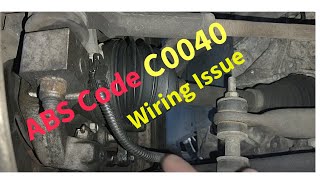
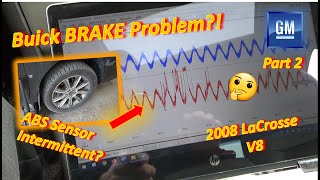
🎬 Watch: Diagnostic walkthrough of a C0040 fault on a LaCrosse.Diagnostic Flowchart

Tap your situation to follow the diagnostic path that matches what you're seeing on this vehicle.
Generation note: This range covers the end of the first generation (2007-2009, W-body) and the beginning of the second generation (2010-2014, Epsilon II). While the underlying platforms are different, the ABS technology and common failure points (wiring harness, hub-integrated sensor) are very similar for this specific code. The provided TSBs apply to vehicles in both generations, indicating a shared vulnerability to wiring harness failures.
Symptoms You May Notice

- ABS warning light is on.
- Traction Control and/or Stabilitrak warning light is on.
- "Service Stability System" message displayed in the driver information center.
- Unwanted ABS activation or pulsing brake pedal at low speeds, especially during turns.
- Loss of power steering assist (on models with electric power steering).
- Cruise control may be disabled.
- Replacing the wheel hub/sensor assembly when the actual fault is in the wiring harness. This is a common and expensive mistake, as the symptoms are identical. Many owners and even shops have replaced a hub only to have the code return, because the intermittent wiring fault was the true cause. Always inspect and test the wiring first.
Most Likely Causes

- Damaged Wheel Speed Sensor Wiring Harness 🔴 High Probability → Shop ABS Wheel Speed Sensor GM Technical Service Bulletins for this platform specifically call out wiring harness issues, including chafing against engine pulleys or suspension components. [Bulletin #PIC5720B, #PIC-5992-A] The most common failure is an internal break in the wires within the pigtail harness right where it flexes with steering and suspension movement. The wire can stretch and break internally like a rubber band, even if the outer insulation looks perfect.
How to confirm: Visually inspect the entire length of the harness from the wheel hub to the EBCM. The key diagnostic step is to use a scan tool or oscilloscope to watch the live signal from the sensor while turning the steering wheel lock-to-lock and wiggling the harness. A signal that drops out or becomes erratic confirms an internal wire break. A simple resistance check at the EBCM connector can also identify an open circuit.
Typical fix: Repair the damaged section of wire using solder and heat-shrink tubing, or replace the pigtail connector. Ensure the repaired harness is routed correctly to allow for suspension travel without binding.
Est. part cost: $15-$50 for a pigtail connector. - Failed Wheel Speed Sensor / Hub Bearing Assembly 🟡 Medium Probability → Shop ABS Wheel Speed Sensor On the LaCrosse, the wheel speed sensor is integrated into the wheel hub bearing assembly and is not serviced separately. These sensors can fail internally over time. A worn wheel bearing can also cause excessive play ('wobble'), which creates an incorrect air gap between the sensor and the magnetic encoder ring, generating a fault.
How to confirm: If the wiring is confirmed to be good, the sensor itself is the next likely culprit. A scan tool showing an erratic or absent signal from the right front wheel points to a bad sensor/hub. You can also check for bearing wear by trying to rock the wheel at the 12 and 6 o'clock positions; any play indicates a bad bearing.
Typical fix: Replace the entire wheel hub bearing assembly. It is recommended to use a quality OEM (ACDelco) or reputable aftermarket brand (Timken, MOOG).
Est. part cost: $100-$250 - Debris on Magnetic Encoder Ring ⚪ Low Probability A GM service bulletin notes that ferrous metallic debris (rust or metal shavings) can stick to the magnetic encoder ring on the inboard side of the hub, disrupting the sensor's reading. This can cause intermittent issues and a C0040 code with specific symptom bytes (18, 5A, 0F), which indicate an erratic signal.
How to confirm: After removing the hub assembly, visually inspect the magnetic ring on the back for metal shavings or rust buildup.
Typical fix: Carefully clean the debris from the magnetic encoder ring with a cloth or soft brush. In most cases, this does not require part replacement.
Est. part cost: $0
Rare But Worth Checking
- Faulty Electronic Brake Control Module (EBCM): → Shop ABS Control Module This is the least likely cause. The EBCM should only be suspected after the wiring, sensor, and hub have been thoroughly tested and ruled out. A failure here would typically set multiple wheel speed sensor codes.
Diagnosis Steps
- Connect an ABS-capable scan tool and confirm C0040 is the active code. Note any symptom bytes (e.g., 0F, 18, 5A), as they can provide more specific diagnostic clues.
- Use the scan tool to monitor live data from all four wheel speed sensors while driving slowly and turning the wheel. Confirm that the right front sensor reads 0 mph when stopped and increases smoothly, matching the other sensors. Look for signal dropouts or erratic readings, especially when turning.
- Perform a thorough visual inspection of the right front wheel speed sensor wiring harness. Look for any signs of chafing, rubbing, melting, or corrosion from the hub all the way back to the EBCM. Pay close attention to the flex point near the connector and where the harness passes near moving parts.
- With the vehicle on and a scope or scan tool monitoring the signal, gently wiggle and pull on the wiring harness at various points, particularly the pigtail. A change in the reading or a signal dropout confirms an internal wire break.
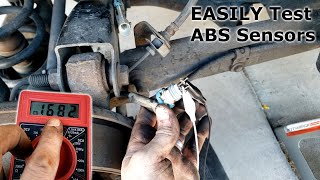
- If the wiring appears intact, check for resistance across the sensor's terminals at the connector. For W-body vehicles, it should be between 850-1350 ohms. An open circuit (infinite resistance) points to a broken wire or bad sensor.
- If the wiring and sensor resistance check out, check for excessive play in the wheel bearing by grabbing the tire at the 12 and 6 o'clock positions and attempting to rock it. Any significant movement indicates a worn bearing, which requires hub replacement.
- If the hub is removed, inspect the magnetic encoder ring on the hub for metallic debris or damage.
- If all other components check out, the issue may be with the EBCM, but this is rare.
Parts You'll Likely Need

- Wheel Speed Sensor Wiring Harness Pigtail — This is the most common failure point due to internal breaks from flexing. Replacing the connector pigtail is often all that's needed.
Trusted brands: ACDelco PT2701 (verify fitment), Dorman 970-040, 645-134
OEM price range: $40-$60
Aftermarket price range: $15-$30 - Front Wheel Hub and Bearing Assembly
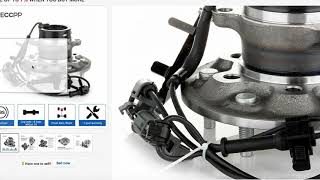
(OEM #ACDelco FW400 / 513288 (Epsilon II, 2010+ FWD), ACDelco 19340154 (W-Body, 2007-2009))— The wheel speed sensor is integrated into this assembly. If the sensor itself has failed or the bearing is worn, the entire hub must be replaced.
Trusted brands: ACDelco, Timken, MOOG
OEM price range: $200-$300
Aftermarket price range: $100-$180
Related Codes That Often Appear With This One
- C0035 — This is the code for the Left Front Wheel Speed Sensor. Seeing both may indicate a systemic issue like a wiring harness problem common to both sides, a faulty EBCM, or a common point of harness chafing affecting both circuits.
- C0800 — This code relates to the power steering control module. A TSB mentions that loss of a wheel speed sensor signal is a common cause for this code to appear alongside C0040. [Bulletin #PIC5837]
- C027B — This code for the Brake Pedal Position Sensor can be set along with C0040 when a wiring harness is chafing on an engine pulley, as noted in TSB PIC5720B.
Technical Service Bulletins (TSBs) & Recalls
- PIC5720B: Notes harness may contact engine pulleys, causing C0040 and other codes.
- PIC-5992-A: Focuse
Platform-Specific Known Issues
- TSB #PIC5720B warns of the wire harness under the hood contacting the crank pulley or A/C compressor pulley, causing codes C0040, C027B, and P0CBE.
- TSB #PIC-5992-A points directly to a damaged wheel speed sensor harness as the cause for C0040 and an illuminated ABS lamp, instructing technicians to inspect and repair broken or damaged wires.
- TSB #PIC5428 (superseded) and others mention that metallic debris on the magnetic encoder ring can cause C0040 with specific symptom bytes (18, 5A, 0F), often fixable by simple cleaning.
Mechanic-Grade Diagnostic Values
- Wheel Speed Sensor Resistance (Passive Sensor) — expected: 1.0-1.1 kΩ (1000-1100 Ohms) when measured at the EBCM connector for a W-body LaCrosse. Other sources suggest a broader range of 800-1700 Ohms is acceptable for similar GM passive sensors.. Failure: An open circuit (infinite resistance) or a reading far outside the expected range indicates a failed sensor or broken wire.
- Wheel Speed Sensor AC Voltage Output (Passive Sensor) — expected: At least 100-200 mV AC when spinning the wheel by hand at about one revolution per second. The voltage should increase as the wheel spins faster.. Failure: No AC voltage generated while spinning the wheel points to a dead sensor or a complete circuit failure.
- Axle Nut Torque (W-Body, 2007-2009) — expected: 118 ft-lbs (160 Nm).. Failure: Incorrect torque can lead to premature wheel bearing failure.
Hidden / Shadow Codes Worth Checking
- C0040 0F: Indicates the EBCM has detected an erratic signal from the right front wheel speed sensor. This often points to an intermittent wiring connection, debris on the sensor ring, or a failing bearing causing signal fluctuations. (see via An ABS-capable scan tool (such as Autel, or a professional tool like GDS2/Tech2) can read DTCs with their symptom bytes.)
- C0040 18: Indicates the signal amplitude from the right front wheel speed sensor is below the minimum threshold. This can be caused by an excessive air gap (from a worn bearing or improper installation) or metallic debris on the magnetic encoder. (see via An ABS-capable scan tool.)
- C0040 05: Indicates the EBCM has detected a short to power or an open in the right front wheel speed sensor circuit. This strongly suggests a wiring issue, such as a broken wire in the harness. (see via An ABS-capable scan tool.)
Scan Tool Commands That Help
- GDS2/Tech2 or equivalent professional scan tool: Live Data Graphing for all four wheel speed sensors. — This is the most effective way to diagnose intermittent issues. By graphing all four sensor outputs while driving, turning, and wiggling the harness, you can visually identify dropouts or erratic signals from the right front sensor that confirm a fault.
Wiring & Ground Locations
- K17 EBCM (Electronic Brake Control Module) — On 2010+ Epsilon II models, it is located in the engine compartment, on the driver's side, near the brake booster and master cylinder.. This module receives the signal from the right front wheel speed sensor. Testing at the EBCM connector is the best way to determine if the fault is in the wiring/sensor or the module itself.
- EBCM Connector (W-Body) — On the EBCM module.. The Right Front Wheel Speed Sensor circuit is on Pins 4 and 5. The Left Front (known good for comparison) is on Pins 20 and 21. This allows for direct resistance and voltage testing at the module.
- G103 Ground — Located at the left rear of the engine compartment on the cowl, above the brake booster. On some models, it may be on the left frame rail under the Starter Generator Control Module (SGCM) bracket.. This is a major ground point for the Body Control Module (BCM) and other critical modules. While not the direct ground for the sensor, a poor ground here can cause a host of difficult-to-diagnose electronic issues.
Real Owner Repair Stories
- YouTube channel 'Cars and Service' (2012 Chevrolet Impala (W-Body, similar to 2007-2009 LaCrosse)) — ABS light was on with code C0040. The light would come and go when turning the steering wheel.
❌ Tried (didn't work) The previous owner had replaced the right front wheel hub assembly in an attempt to fix the problem, but the code and symptoms persisted.
✅ What actually fixed it The technician found an internal break in the wheel speed sensor pigtail harness. Stretching the wire by hand revealed it was flimsy and broken inside the insulation. The fix was to cut out the bad section of wire and splice in a new piece, which permanently resolved the code. - YouTube channel 'Pine Hollow Auto Diagnostics' (2008 Buick LaCrosse V8 (W-Body)) — ABS light on with code C0040. Unwanted ABS activation at low speeds.
❌ Tried (didn't work) The owner had already replaced the wheel hub, but the problem continued., A simple resistance check of the sensor circuit at the EBCM connector showed 1.1 kΩ, which appeared to be good, matching the known-good left front sensor.
✅ What actually fixed it Using an oscilloscope to graph the live sensor signal, the technician saw the signal drop out completely when wiggling the harness and turning the steering wheel. The wire was broken internally right at the connector flex point. A wiring repair fixed the issue without replacing any parts.
Model Year Variations Within This Range
- 2007-2009 (W-Body) vs. 2010-2014 (Epsilon II): The wheel hub bearing assemblies are different parts between the two generations. For example, an ACDelco hub for a 2009 FWD is part #19340154, while for a 2010 FWD it is #FW400 (or GM #513288). While the failure mode (wiring, sensor) is the same, the physical parts are not interchangeable.
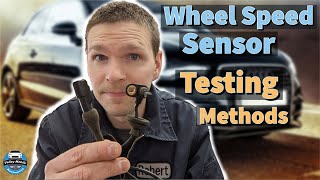
Helpful Videos


The information in this article is provided for general reference and educational purposes only. Vehicle specifications, procedures, and part compatibility can vary by production date, trim level, and region. Always consult your vehicle's factory service manual and verify part numbers before purchasing or performing repairs. Safety-critical components such as airbags, seat belts, and braking systems should be installed by a qualified professional.
- Buick LACROSSE:
- 🧭 Diagnostic Flowchart
- 🎬 Helpful Videos
- What's Unique About the 2007-2014 Buick LACROSSE
- Symptoms You May Notice
- Most Likely Causes
- Rare But Worth Checking
- Diagnosis Steps
- Parts You'll Likely Need
- Related Codes That Often Appear With This One
- Technical Service Bulletins (TSBs) & Recalls
- Platform-Specific Known Issues
- Mechanic-Grade Diagnostic Values
- Hidden / Shadow Codes Worth Checking
- Scan Tool Commands That Help
- Wiring & Ground Locations
- Real Owner Repair Stories
- Model Year Variations Within This Range
- 🎟️ Get 5% Off