

C0040 on 2014-2023 Jeep Cherokee: Right Front Wheel Speed Sensor Causes and Fixes
This code means there's a problem with the right front wheel speed sensor circuit. The most likely causes are a damaged wiring harness near the wheel, a failed sensor, or a bad wheel hub bearing. Expect to pay $40-$90 for a sensor and $150-$250 for a wheel hub assembly. Always check the wheel bearing for looseness before replacing any parts.
- C0040 on a Jeep Cherokee means the right front wheel speed sensor circuit has a fault, which disables ABS and stability control.
- Before buying parts, always check for damaged wiring first, as it's a very common and inexpensive fix.
- Physically check the right front wheel for any looseness or wobble. A bad wheel bearing is a frequent root cause of this code on the Cherokee.
- If you replace the wheel speed sensor, use a quality part. Cheap sensors are known to have a high failure rate.
- This is a safety-critical system. If you are not comfortable with brake system diagnostics, it is best to have the vehicle serviced by a professional.
What's Unique About the 2014-2023 Jeep Cherokee
On the 2014-2023 Jeep Cherokee (KL generation), the magnetic reluctor ring that the wheel speed sensor reads is integrated into the wheel hub and bearing assembly. This design means that a worn or failing wheel bearing can directly cause the C0040 code by creating excessive play and disrupting the sensor's reading. Therefore, diagnosing a bad wheel bearing is just as important as checking the sensor and its wiring.
Symptoms You May Notice
- ABS warning light is illuminated on the dashboard
- Traction Control or Electronic Stability Control (ESC/ESP) warning light is on
- Cruise control may be disabled
- A noticeable change in brake pedal feel during hard stops (no ABS pulsation)
- Service StabiliTrak/ESC message may appear on the driver information center
- Replacing the wheel speed sensor without first checking for a worn wheel bearing. If the bearing has excessive play, it will quickly ruin the new sensor or the code will return immediately.
Most Likely Causes
- Damaged Wheel Speed Sensor Wiring or Connector 🔴 High Probability → Shop ABS Wheel Speed Sensor The wiring harness is located in a vulnerable area behind the wheel, where it is exposed to constant suspension movement, road debris, water, and salt. Wires can chafe, break internally, or the connector pins can corrode. This is a very common failure point on many vehicles, not just the Cherokee.
How to confirm: Visually inspect the entire length of the harness from the sensor to the chassis connection for any signs of damage, chafing, or corrosion. Perform a 'wiggle test' on the wire and connector while monitoring the sensor's signal with a capable scan tool to see if the reading cuts out.
Typical fix: Repair the damaged section of wire with solder and heat shrink, or replace the pigtail connector. Ensure the harness is properly secured away from moving parts.
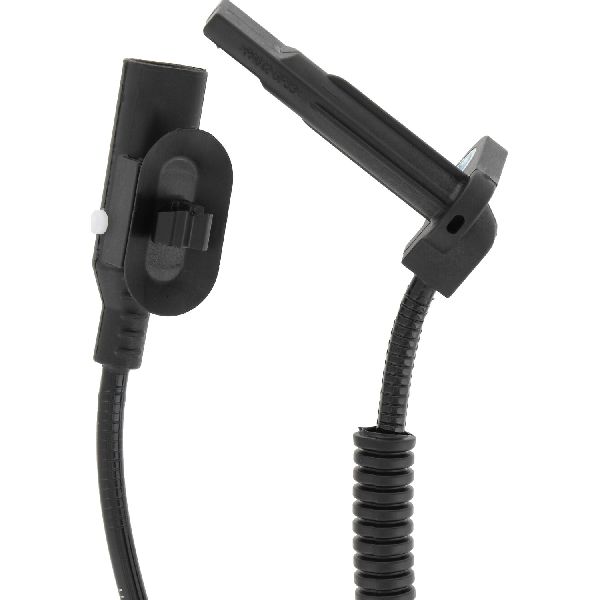
Est. part cost: $20-$50 for a pigtail connector - Failed Right Front Wheel Speed Sensor 🟡 Medium Probability → Shop ABS Wheel Speed Sensor The sensor is an electronic component exposed to harsh conditions (heat, vibration, moisture) which can lead to internal failure over time. Metallic debris from brake wear can also accumulate on the magnetic tip and disrupt the signal.
How to confirm: Use a scan tool to view live data from the right front sensor while driving or spinning the wheel; compare its reading to the other three sensors. If it reads 0 or is erratic while the others are normal, the sensor is likely bad. You can also test the sensor's internal resistance with a multimeter (if specs are available) or check for AC voltage generation while spinning the wheel.
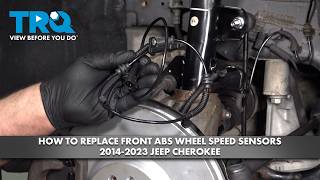
Typical fix: Replace the right front wheel speed sensor. It is typically held in by a single 10mm bolt.
Est. part cost: $40-$90 - Failed Right Front Wheel Hub & Bearing Assembly 🟡 Medium Probability → Shop Hub Assembly The magnetic tone ring is built into the hub assembly. Wear and tear can cause the bearing to develop excessive play (wobble), which increases the air gap between the sensor and the tone ring, leading to a weak or lost signal. The bearing seal can also fail, allowing debris to contaminate the magnetic ring.
How to confirm: Safely raise the front of the vehicle. Grasp the right front tire at the 12 and 6 o'clock positions and attempt to rock it. Any noticeable play or clunking indicates a worn wheel bearing. A humming or grinding noise while driving that changes when turning is also a classic symptom.
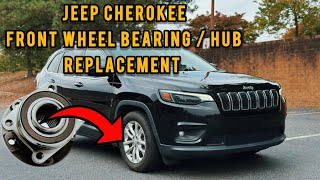
Typical fix: Replace the entire right front wheel hub and bearing assembly. 🎬 See this step-by-step front wheel hub replacement walkthrough
Est. part cost: $150-$250
Rare But Worth Checking
- Faulty ABS Control Module: → Shop ABS Control Module This is the least likely cause. Before condemning the module, all other possibilities (sensor, wiring, hub) must be exhaustively tested and ruled out. A faulty module will often be accompanied by other wheel speed sensor codes or communication errors.
Diagnosis Steps
- Read the Code: Use an ABS-capable OBD-II scanner to confirm C0040 is the active code. Note any sub-codes (e.g., C0040-05 for an open circuit, 🎬 Watch: Causes and fixes for the C0040 code explained C0040-0F for an erratic signal), as they can help pinpoint the issue.
- Live Data Analysis: Use the scanner to monitor the live data stream for all four wheel speed sensors. Drive the vehicle slowly (or spin the wheel by hand if safely raised) and compare the reading from the right front sensor to the others. A reading of zero, or one that is erratic or lagging, points to a problem in that corner.
- Visual Inspection: Raise and secure the front right wheel. Thoroughly inspect the wheel speed sensor and its wiring harness for any obvious damage, such as cuts, chafing, melting, or corrosion on the connector pins. Ensure the harness is securely clipped in place.
- Check for Wheel Bearing Play: With the wheel still raised, grasp the tire at the top and bottom (12 and 6 o'clock) and try to rock it. Any looseness, wobble, or clunking noise indicates a bad wheel bearing, which is a very common root cause.
- Electrical Testing: If the visual inspection and bearing check are inconclusive, disconnect the sensor and use a digital multimeter to test the wiring harness for proper voltage and ground from the ABS module. Test the sensor itself for internal resistance (compare to a known good sensor if specs are unavailable) or for AC voltage output while spinning the wheel.
- Isolate the Fault: Based on the tests, determine if the fault lies with the sensor, the wiring, or the hub/bearing assembly. Replace the faulty component.
Parts You'll Likely Need
- Front Wheel Speed Sensor
(OEM #68141887AF)— This is the sensor that provides the wheel speed reading to the ABS module. It can fail internally from heat and vibration.
Trusted brands: Mopar, Standard Motor Products, Delphi, Holstein
OEM price range: $70-$110
Aftermarket price range: $40-$90 - Front Wheel Hub & Bearing Assembly
(OEM #68141123AD (Standard Suspension) or 04779869AC (Off-Road Suspension))— A worn bearing causes wheel play, which disrupts the sensor signal. The magnetic tone ring is integrated into this assembly, so it must be replaced as a unit.
Trusted brands: Mopar, Timken, MOOG, TRQ
OEM price range: $220-$300
Aftermarket price range: $150-$250
Related Codes That Often Appear With This One
- C0035 (Left Front Wheel Speed Sensor Circuit): If both front wheel speed sensor codes appear together, it could point towards a shared wiring issue or a problem with the ABS module rather than two simultaneous sensor failures.
Platform-Specific Known Issues
- Recurring Sensor Failures Due to Wiring: Some owners have reported replacing the wheel speed sensor multiple times only for the code to return. In many of these cases, the root cause was not the sensor itself but an intermittent break or high resistance in the wiring harness that was not found during the initial diagnosis. A thorough 'wiggle test' and checking for voltage drop along the harness is crucial.
Mechanic-Grade Diagnostic Values
- Wheel Speed Sensor Supply Voltage — expected: Approximately 11-12V (Battery Voltage) with key on, sensor unplugged, measured at the harness connector.. Failure: Low or no voltage points to an open or short in the wiring between the ABS module and the sensor connector.
- Wheel Speed Sensor Signal (Active Sensor) — expected: A digital square wave that switches between a high and low voltage state as the wheel is turned. One source on a similar system noted a switch between ~1.6V and ~0.8V.. Failure: A flat line, no voltage change, or a noisy/erratic signal when backprobing the connector indicates a faulty sensor, damaged tone ring, or wiring issue.
Hidden / Shadow Codes Worth Checking
- C0040-02: Indicates the ABS module has detected a short to ground in the right front wheel speed sensor circuit. (see via A professional-grade scan tool or dealer tool like wiTECH is needed to read these sub-codes.)
- C0040-05: Indicates the ABS module has detected a short to power or an open in the right front wheel speed sensor circuit. (see via A professional-grade scan tool or dealer tool like wiTECH is needed to read these sub-codes.)
- C0040-0F: Indicates the ABS module has detected an erratic signal from the right front wheel speed sensor, often pointing to a damaged tone ring or excessive wheel bearing play. (see via A professional-grade scan tool or dealer tool like wiTECH is needed to read these sub-codes.)
- C0040-18: Indicates the ABS module has detected the right front wheel speed sensor signal amplitude is below the minimum threshold, often caused by an excessive air gap between the sensor and tone ring. (see via A professional-grade scan tool or dealer tool like wiTECH is needed to read these sub-codes.)
Scan Tool Commands That Help
- wiTECH Diagnostic Application: View Live Data (Wheel Speed Sensors) — This is the primary first step to compare the signal from the right front sensor to the other three wheels while driving or spinning the wheel. A discrepancy immediately isolates the problem corner.
- wiTECH Diagnostic Application: Brake Pedal Calibration — After certain brake system repairs or module replacements, this routine may be required to ensure the ABS module has correct baseline readings.
- wiTECH Diagnostic Application: Proxi Alignment Procedure — Required after replacing or reprogramming the ABS/BSM module to ensure all vehicle modules are communicating correctly.
Wiring & Ground Locations
- Right Front WSS Harness Connector — Located in the right front wheel well, connecting the sensor pigtail to the main chassis harness.. This connector is a common point for corrosion, water intrusion, and terminal damage due to its exposed location. It is the first place to test for voltage and signal from the ABS module.
- ABS Module Connector — On the ABS hydraulic control unit, typically located in the engine bay near the brake master cylinder.. This is the termination point for the wheel speed sensor circuit. Testing for continuity and shorts between this connector and the sensor connector can confirm the integrity of the wiring harness.
OEM Part Supersession History
68141887AA→68141887AF— Part has been updated multiple times by the manufacturer. The latest revision is AF.
Heads up: The front sensors (68141887AF) are the same for the left and right sides.
Diagnostic Flowchart
Other Known Issues on This Vehicle
Issues unrelated to this code that are worth knowing about as an owner of this generation:
- ZF 9-Speed Automatic Transmission Problems 🔴 High — Very common, especially in 2014-2016 models. Symptoms include harsh/erratic shifting, lurching, hesitation, and sudden shifts to neutral. (Ref: Multiple software update TSBs and recalls (e.g., NHTSA 16V-529) were released, but many owners report persistent issues.)
- 2.4L Tigershark Engine Excessive Oil Consumption 🔴 High — Widespread issue affecting the 2.4L engine, which can lead to dangerously low oil levels and engine stalling or failure. (Ref: Subject of class-action lawsuits and Customer Satisfaction Notifications (W20, W80, W84) which extended warranties and provided for oil consumption tests or engine replacement in some cases.)
- Electronic Parking Brake Malfunction 🔴 High — Affects 2014-2020 models. The EPB may activate unexpectedly while driving, causing the vehicle to stall. This is the subject of an ongoing NHTSA investigation. (Ref: NHTSA Preliminary Evaluation PE22-010. The suspected cause is water intrusion into the EPB module.)
- Water Leaks into Cabin/Modules 🟠 Medium — Owners report water leaking into the front footwells or rear cargo area, potentially damaging electronic modules like the EPB or power liftgate module. (Ref: TSB 23-015-16 and 23-021-20 were issued to address sealing issues around the A-pillar and engine bulkhead that cause water on the front carpet.)
- Power Transfer Unit (PTU) Failure 🟠 Medium — The PTU on AWD models can fail, leading to a loss of 4x4 capability or grinding/whining noises. Issues are related to input shaft splines wearing out. (Ref: Safety Recalls W47 and W48 were issued for PTU issues.)
- 3.2L V6 Long Crank/No Start 🟡 Low — Some models with the 3.2L Pentastar V6 may experience extended cranking times before starting, often without setting a trouble code. The common cause is a failing camshaft position sensor.
Used vs. New Parts: Buying Guide for This Vehicle
When a used part is the smart pick: A used wiring harness pigtail from a junkyard can be a cost-effective repair if the damage is isolated to the connector. A used ABS control module could be an option, but may require professional programming. Used sensors and hub bearings are generally not recommended due to unknown wear and high failure rates.
Donor-vehicle mileage cap: roughly under 80000 miles for the part to have meaningful remaining life.
What to inspect on the donor part:
- For a wiring pigtail, ensure there are no cuts, scrapes, or signs of brittleness in the insulation.
- Check connector pins for any green or white corrosion.
- For a hub assembly, spin it by hand to feel for any roughness or grinding, and check for any play or wobble.
- Verify the donor vehicle was not in a major front-end collision that could have damaged the components.
OEM-only on this vehicle (don't cheap out):
- ABS Control Module: While aftermarket modules exist, an OEM module is often recommended to avoid potential software and communication issues. It will likely require programming by a dealer or specialist.
Aftermarket brands forum-validated for this vehicle:
- Wheel Hub/Bearing Assembly: Timken, SKF, and MOOG are consistently cited by owners and mechanics as high-quality, reliable alternatives to OEM.
Brands owners have reported issues with on this vehicle:
- Unbranded, 'white-box' wheel speed sensors and hub assemblies from online marketplaces often have high failure rates and may not be manufactured to the same tolerances as OEM or premium aftermarket brands.
Documented NHTSA Reports
While the C0040 code specifically refers to the Right Front Wheel Speed Sensor on the Jeep Cherokee, cross-manufacturer records provide additional context for this fault. NHTSA ODI #10629708 describes a case where the right front hub was dropping the signal, necessitating a full hub replacement. In other vehicle platforms, this code can sometimes be associated with broader electrical faults; for instance, NHTSA ODI #11645269 notes a C0040-62 sub-code related to a brake lamp switch failure, and NHTSA ODI #11191073 describes a C0040-12 code where a brake switch was stuck on, causing extreme heat and smoke from the front brakes. Furthermore, multiple sensor failures including C0040 and C0035 have been documented in NHTSA ODI #11228687 and NHTSA ODI #10440851, often appearing alongside communication errors or other chassis system warnings.
Real Owner Stories
Aggregated from forums and TSBs cited above. Mileages and costs reflect what owners reported in those sources.
2014-2023 Jeep Cherokee
Symptoms: The ABS warning light was on and the owner was unsure if they should just buy a sensor.
What fixed it: Checking for wheel bearing play before purchasing parts, as the magnetic tone ring in the hub is a frequent failure point.
Source hint: jeepcherokeeclub.com: Numerous threads discuss the C0040 code
2014-2023 Jeep Cherokee
Symptoms: The wheel speed sensor was replaced multiple times but the C0040 code kept returning.
What fixed it: A thorough 'wiggle test' and checking for voltage drop along the wiring harness to find an intermittent break.
Source hint: vehicle_specific_issues: Recurring Sensor Failures Due to Wiring
Related OBD-II Codes
Frequently Asked Questions
My 2014 Jeep Cherokee is shifting harshly and sometimes goes into neutral; is this related to the C0040 code?
Could a bad wheel bearing cause the C0040 code on my Cherokee?
I've replaced the right front sensor twice but the ABS light is still on. What else should I check?
Is there a recall for the Electronic Parking Brake (EPB) on my 2015 Cherokee?
My 2.4L Tigershark Cherokee is stalling; could this be caused by the C0040 code?
What is the estimated cost to fix the wiring for the C0040 code?
Helpful Videos

We Have This Part in Stock


The information in this article is provided for general reference and educational purposes only. Vehicle specifications, procedures, and part compatibility can vary by production date, trim level, and region. Always consult your vehicle's factory service manual and verify part numbers before purchasing or performing repairs. Safety-critical components such as airbags, seat belts, and braking systems should be installed by a qualified professional.
- Jeep Cherokee:
- 🧭 Diagnostic Flowchart
- 🎬 Helpful Videos
- 🛍️ Shop This Part
- What's Unique About the 2014-2023 Jeep Cherokee
- Symptoms You May Notice
- Most Likely Causes
- Rare But Worth Checking
- Diagnosis Steps
- Parts You'll Likely Need
- Related Codes That Often Appear With This One
- Platform-Specific Known Issues
- Mechanic-Grade Diagnostic Values
- Hidden / Shadow Codes Worth Checking
- Scan Tool Commands That Help
- Wiring & Ground Locations
- OEM Part Supersession History
- Other Known Issues on This Vehicle
- Used vs. New Parts: Buying Guide for This Vehicle
- Documented NHTSA Reports
- Real Owner Stories
- 2014-2023 Jeep Cherokee
- 2014-2023 Jeep Cherokee
- Related OBD-II Codes
- Frequently Asked Questions
- 🎟️ Get 5% Off