

C0040 on 2006-2011 Mercury Milan: Meaning, Causes, and Fixes
On a 2006-2011 Mercury Milan, code C0040 has conflicting meanings. It could be a 'Right Front Wheel Speed Sensor Circuit' fault or a 'Brake Pedal Switch Circuit' fault. Check your symptoms: if your ABS light is on and brake lights work, suspect the wheel speed sensor (~$150-$275 repair). If your brake lights don't work or you can't shift from Park, suspect the brake light switch (~$80-$120 repair). Diagnosis is key before buying parts.
- Code C0040 on a 2006-2011 Milan is ambiguous. **Match your symptoms** before buying parts.
- If your **ABS light is on**, the problem is likely the right front wheel speed sensor or its wiring.
- If your **brake lights don't work** or you're **stuck in Park**, the problem is almost certainly the brake light switch.
- Both potential fixes are relatively inexpensive and accessible for a DIYer with basic tools.
- Driving with this code is risky as your ABS and traction control are disabled.
What's Unique About the 2006-2011 Mercury Milan
The uncertainty of this code is the key issue for the Milan and its sister platform, the Ford Fusion. While many sources cite the generic 'Wheel Speed Sensor' definition, Ford service information for similar vehicles often links C0040 to the 'Brake Pedal Switch'. Adding to the confusion, some Fusion owners report different code numbers for wheel speed sensor faults. Furthermore, a recall (09V-232) was issued for the 2009 Milan for an improperly installed brake light switch, indicating it's a known failure point on this platform. Therefore, owners should not automatically assume C0040 means one or the other without first matching their symptoms to the correct fault.
Symptoms You May Notice
- If the problem is the Right Front Wheel Speed Sensor:
- ABS warning light is on.
- Traction Control or Stability Control light is on.
- Cruise control may not work.
- Brake pedal may pulse or feel strange during normal braking.
- If the problem is the Brake Pedal Switch:
- Brake lights do not work when the pedal is pressed.
- Brake lights are stuck on, even when the car is off.
- Cannot shift the transmission out of Park. 🎬 See how a faulty switch can leave you stuck in Park.
- Cruise control will not engage.
- Engine may not start (if brake pedal input is required).
- Replacing the wrong part due to the code's ambiguous definition. For example, replacing the wheel speed sensor when the brake lights are out, or replacing the brake light switch when only the ABS light is on.
Most Likely Causes
- Faulty Right Front Wheel Speed Sensor 🔴 High Probability → Shop ABS Wheel Speed Sensor Wheel speed sensors are exposed to road debris, moisture, and extreme temperatures, leading to failure over time. It is a common wear item.
How to confirm: Use a scan tool capable of reading live ABS data to monitor the right front wheel speed while driving. If the reading is erratic, zero, or doesn't match the other wheels, the sensor is likely bad. You can also test the sensor's internal resistance with a multimeter (check service manual for spec, but often 800-2,700Ω). 🎬 Watch: Professional methods for testing your wheel speed sensor.
Typical fix: Replace the right front ABS wheel speed sensor. The sensor is located on the wheel hub assembly and is typically held in by a single bolt. 🎬 Watch: Step-by-step guide to replacing the front ABS sensor.
Est. part cost: $25-$60 - Faulty Brake Light Switch 🔴 High Probability → Shop Brake Light Switch The switch is a small mechanical part that is used every time the brakes are applied, leading to eventual wear. A recall for the 2009 Milan for improper switch installation suggests it's a sensitive component on this platform.
How to confirm: Have a helper observe the brake lights while you press the pedal. If they don't work, but the fuse and bulbs are good, the switch is the primary suspect. Test for power at the switch connector with a multimeter.
Typical fix: Replace the brake light switch. It is located on the brake pedal support bracket under the dashboard. Per Ford instructions, the brake pedal should not be pressed during installation.
Est. part cost: $20-$50 - Damaged Wiring or Connectors 🟡 Medium Probability The wheel speed sensor harness is vulnerable to damage from road debris or rubbing against suspension components. The brake light switch wiring can be kicked or stressed in the driver's footwell.
How to confirm: Visually inspect the wiring harness for the affected component (either the wheel speed sensor or brake light switch) for any signs of chafing, breaks, or corrosion. Perform a continuity test on the wires from the sensor/switch back to the control module.
Typical fix: Repair or replace the damaged section of the wiring harness.
Est. part cost: $10-$40 for repair materials
Rare But Worth Checking
- Damaged Tone Ring / Failing Wheel Bearing: The ABS sensor reads a toothed or magnetic ring (tone ring) on the axle or wheel hub. If this ring is cracked, covered in rust, or if the wheel bearing it's part of has excessive play, it can cause erratic sensor readings. A visual inspection and checking for wheel wobble is necessary.
- Faulty ABS Hydraulic Control Unit (HCU) or Module: → Shop ABS Control Module In rare cases, the ABS module itself can fail. This is often accompanied by other ABS-related codes. A recall (19S54) was issued for 2006-2010 models for sticking valves in the HCU causing a soft pedal, which is a separate but related ABS system fault that does not typically trigger a DTC.
Diagnosis Steps
- Confirm Symptoms: First, determine which set of symptoms your vehicle is exhibiting. Are the brake lights malfunctioning and you can't shift from park, or is the issue limited to an ABS warning light on the dash?
- Scan for Codes: Use an advanced OBD-II scanner that can read manufacturer-specific Chassis (C-codes) to confirm C0040 is the primary code. Note any other codes or sub-codes (e.g., C0040:64, C0040:72, C0040:73) which can point more directly to the brake switch.
- If Symptoms Point to Brake Switch: Visually inspect the brake lights with a helper. Check the fuse for the brake light circuit. If the fuse is good, inspect the brake light switch above the pedal for damage. Test the switch for power and proper operation with a multimeter.
- If Symptoms Point to Wheel Speed Sensor: Use the scanner's live data function to view the wheel speed from all four sensors while driving. Compare the right front sensor's reading to the others. An erratic or zero reading indicates a problem.
- Inspect the Suspected Component: Based on the steps above, perform a close visual inspection of the suspect part (either the brake light switch or the right front wheel speed sensor) and its wiring harness. Look for damage, corrosion, or loose connections.
- Test the Circuit: If the component itself seems okay, test the wiring circuit for continuity and shorts between the component and its control module (ABS or BCM).
- Check Mechanicals (for Wheel Speed Sensor issue): If the sensor and wiring are good, jack up the front right wheel and check for any play or wobble in the wheel bearing. Spin the wheel and listen for noise. Inspect the tone ring for damage or debris if it's visible.
Parts You'll Likely Need
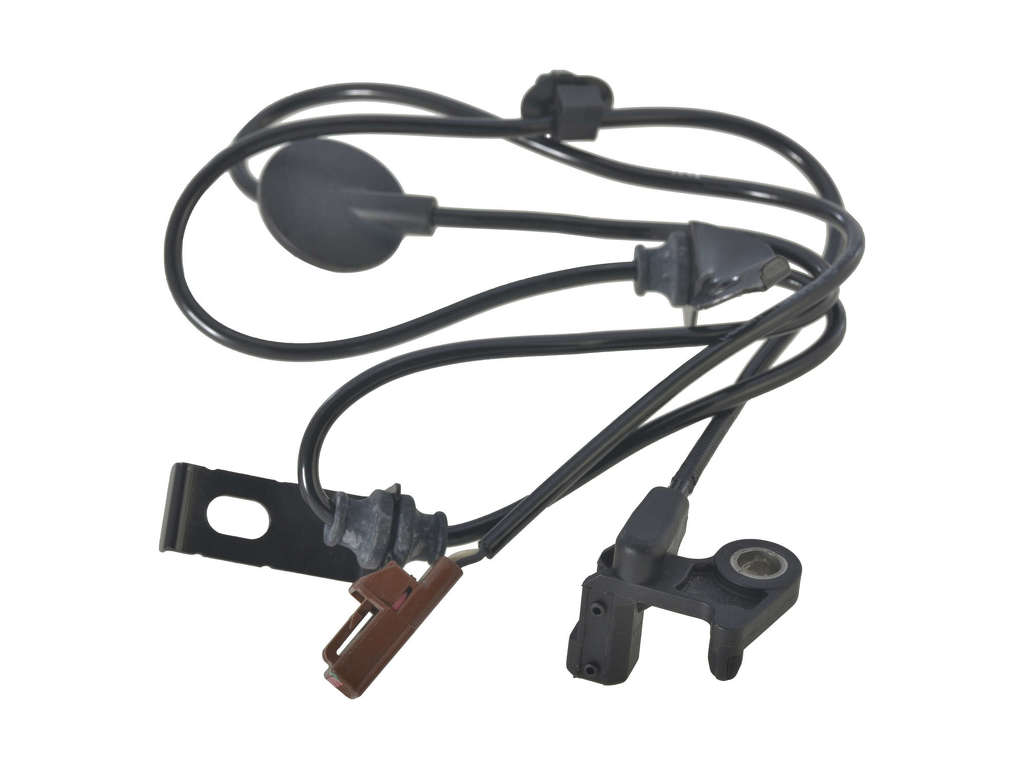
- Right Front ABS Wheel Speed Sensor
(OEM #ALS1723)— This is the most likely part to fail if your symptoms are an ABS light and no brake light issues. It is a common failure point across many vehicles.
Trusted brands: Motorcraft, Standard Motor Products (SMP), Delphi, SKP, Dorman
OEM price range: $70-$100
Aftermarket price range: $25-$60 - Brake Light Switch (Stoplight Switch)
(OEM #6E5Z-13480-A)— This is the most likely part to fail if your symptoms include brake light failure or being stuck in Park. It's a known issue on this platform.
Trusted brands: Motorcraft, Dorman, Standard Motor Products (SMP)
OEM price range: $40-$60
Aftermarket price range: $20-$40
Technical Service Bulletins (TSBs) & Recalls
- Ford Recall 09V-232 / 09C09: Addresses improperly installed brake light switches on some 2009 Mercury Milan vehicles.
- Ford Recall 19S54 / 19V-904: Addresses sticking valves within the ABS Hydraulic Control Unit (HCU) on 2006-2010 models, leading to increased brake pedal travel.
- Ford Customer Satisfaction Program 13N03: Extended warranty coverage for faulty electronic throttle bodies on Ford Fusions, a problem also known to affect the Milan.
Platform-Specific Known Issues
- A recall (NHTSA ID 09V-232, Ford ID 09C09) was issued for some 2009 Mercury Milan vehicles due to improperly installed brake light switches, which could cause the brake lights to fail. This lends credibility to the 'Brake Pedal Switch' interpretation of the C0040 code.
- A recall (FSA 19S54, NHTSA ID 19V-904) was issued for 2006-2010 models for sticking valves in the ABS Hydraulic Control Unit (HCU). A chemical reaction with old brake fluid can cause a gel to form, leading to extended brake pedal travel. While this recall doesn't directly cause code C0040, it highlights a significant known issue with the braking system on this platform.
Documented NHTSA Reports
While C0040 is often linked to the wheel speed sensor, cross-manufacturer records highlight the code's ambiguity. For instance, NHTSA ODI #11645269 describes a "Brake lamp switch failure stuck" associated with sub-code C0040-62, while NHTSA ODI #11191073 reports a "Brake switch stuck on" resulting in extremely heated brakes and smoke. Conversely, other reports reinforce the wheel speed sensor definition; NHTSA ODI #10629708 notes a case where a "right front hub was dropping signal" under code C0040, and NHTSA ODI #10440851 explicitly identifies C0040 as a "left front wheel speed sensor circuit malfunction." Additionally, NHTSA ODI #11228687 shows C0040 appearing alongside numerous other chassis codes during a suspension-related failure.
Mechanic-Grade Diagnostic Values
- Passive ABS Wheel Speed Sensor Resistance — expected: 1200 - 2700 Ohms (Ω). Failure: A reading below 1200 Ω or above 2700 Ω indicates a faulty sensor.
- Passive ABS Wheel Speed Sensor AC Voltage Output — expected: Minimum of 0.25 Volts AC. Failure: A voltage reading below 0.25V AC while spinning the wheel by hand (at ~0.5 revolutions per second) points to a weak or failed sensor or an issue with the tone ring.
- Active ABS Wheel Speed Sensor Signal (on later models, if applicable) — expected: A square wave signal switching between two voltage levels, for example, between ~10.1V and ~10.7V.. Failure: A flat line or missing signal. Note: On many Fords, the ABS module will shut down the power to a sensor circuit once a fault is detected, so a reading of 0V may be normal after a code is set. Clearing the codes may be necessary to see the signal briefly.
Hidden / Shadow Codes Worth Checking
- C0040:64: Brake Pedal Switch 'A': Signal Plausibility Failure. This sub-code sets when the ABS module detects that the brake pedal input signal doesn't match other data, like vehicle speed or brake pressure signals. (see via A professional scan tool capable of reading Ford-specific fault type bytes, such as the Ford IDS.)
- C0040:72: Brake Pedal Switch 'A': Actuator Stuck Open. This indicates the ABS module is not receiving a signal that the brake pedal is being pressed when it should be (e.g., the vehicle is decelerating). (see via A professional scan tool capable of reading Ford-specific fault type bytes, such as the Ford IDS.)
- C0040:73: Brake Pedal Switch 'A': Actuator Stuck Closed. This indicates the ABS module is receiving a constant signal that the brake pedal is pressed, even when the vehicle is accelerating. (see via A professional scan tool capable of reading Ford-specific fault type bytes, such as the Ford IDS.)
Scan Tool Commands That Help
- Ford IDS (Integrated Diagnostic System): ABS Module Self-Test — To command the ABS module to check its internal circuits and the circuits for all connected sensors and actuators. This can help confirm if the module itself is faulty.
- Ford IDS (Integrated Diagnostic System): Datalogger for Brake Pedal Position (BPP) PID — To monitor the live data status of the brake pedal switch as seen by the control module. This allows you to confirm if the switch's signal is being received and interpreted correctly when you press and release the pedal.
- Ford IDS (Integrated Diagnostic System): ABS Service Bleed — This is required after replacing the ABS Hydraulic Control Unit (HCU) or if air has entered the ABS system. It cycles the internal valves and pump to purge all trapped air.
- Ford IDS (Integrated Diagnostic System): PMI (Programmable Module Installation) — When replacing the ABS module, this function is used to download the as-built data from the old module (if possible) and upload it to the new one, ensuring correct configuration for the vehicle's specific options.
Wiring & Ground Locations
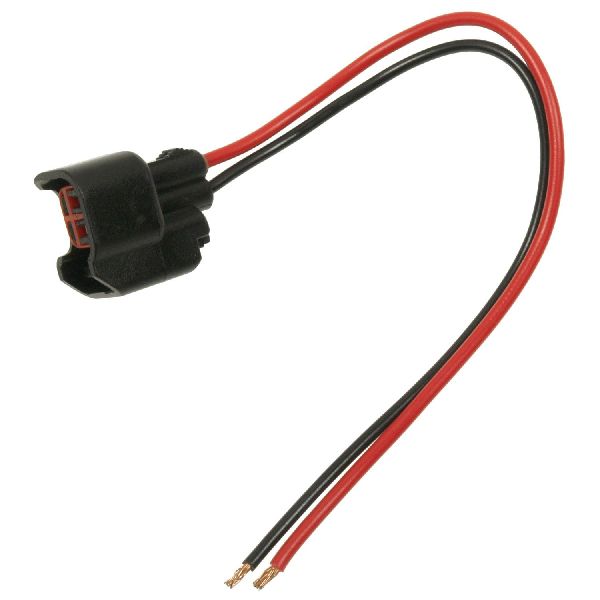
- B21C2 — This is the connector designator for the Front ABS Wheel Speed Sensor on a 2010 Ford Fusion.. This is the primary connector to inspect, test, and potentially replace for a C0040 code related to the wheel speed sensor. It's a 2-pin connector.
- Brake Pedal Switch Connector — Located directly on the brake light switch, attached to the brake pedal support bracket under the driver's side dashboard.. This 4-pin connector is where voltage and continuity tests are performed for a C0040 code related to the brake switch. Wires can be stressed or damaged in this area from driver foot activity.
Real Owner Repair Stories
- YouTube channel 'Steven's DIY Auto Repair' (Ford Fusion (platform mate)) — No start, no power, and a code for 'Brake Pedal Switch A'.
❌ Tried (didn't work) Initial diagnosis focused on battery and power issues.
✅ What actually fixed it Replacing the brake light switch resolved the no-start condition and cleared the code. The repair involved a simple quarter-turn of the old switch to remove it and installing the new one in its place. - Reddit user on r/MechanicAdvice (2007 Mercury Milan) — ABS failure, 'check brake system' light on, intermittent functionality.
❌ Tried (didn't work) Replaced the driver side rear wheel sensor based on a mechanic's diagnosis.
✅ What actually fixed it The user was still in the diagnostic process, but noted the mechanic found heavily corroded connections to the ABS system, suggesting a wiring or module issue rather than just the sensor. This highlights the importance of checking the entire circuit.
OEM Part Supersession History
6E5Z-13480-A→7E5Z-13480-A— Standard part revision and update by Ford.
Heads up: These parts are generally interchangeable for the specified models. However, some 2010-2011 models may use a different switch (p/n 8T4Z-13480-A). Always verify the correct part number with the vehicle's VIN.
Model Year Variations Within This Range
- 2006-2009 vs 2010-2011: The 2010 model year marked a significant facelift for the Fusion/Milan platform. While many core components remained, there were changes to wiring and potentially the brake light switch part number. For example, some 2010-2011 models may require brake light switch p/n 8T4Z-13480-A instead of the earlier 6E5Z/7E5Z-13480-A. Always confirm by VIN.
- 2008+: ABS became a standard feature on all Fusion models starting in the 2008 model year. Earlier 2006-2007 base models may not have been equipped with ABS, in which case this code would not be possible.
Diagnostic Flowchart
Other Known Issues on This Vehicle
Issues unrelated to this code that are worth knowing about as an owner of this generation:
- Electronic Throttle Body (ETB) Failure 🔴 High — Common, especially on 2010-2011 models. Can cause sudden loss of power ('limp home mode') while driving. (Ref: Ford Customer Satisfaction Program 13N03 (for Fusion, but Milan is affected); TSB 09-23-5 mentions DTC P2135 related to ETB.)
- 6F35 Automatic Transmission Problems 🔴 High — Widespread reports of harsh shifting, delayed engagement, shuddering, and premature failure. Problems can start at any mileage. (Ref: Numerous TSBs exist. A class-action lawsuit was filed concerning this transmission in Fusion and Escape models.)
- ABS Hydraulic Control Unit (HCU) Internal Failure 🟠 Medium → Shop ABS Control Module — Affects 2006-2010 models. Internal valves can stick due to a reaction with old brake fluid, causing a soft/long brake pedal travel. (Ref: Safety Recall 19S54 (NHTSA 19V-904).)
- Power Steering Failure 🔴 High — Common complaint, particularly in 2010 models, involving intermittent or total loss of power steering assist, making the vehicle difficult to steer. (Ref: NHTSA complaints are numerous, but no single recall covers all instances.)
- Interior Door Handle Breakage 🟡 Low — The plastic interior door handles are known to be brittle and can break, a common complaint for 2006 models in particular.
- Takata Airbag Inflator Rupture 🔴 High — Part of the massive global Takata airbag recall. Affects all model years (2006-2011). Propellant can degrade and cause the inflator to explode in a crash. (Ref: Multiple NHTSA recalls, including 19E-004 and 18V-020.)
Used vs. New Parts: Buying Guide for This Vehicle
When a used part is the smart pick: A used part is a reasonable choice for a wiring harness pigtail if the original connector is damaged. For the main components like the sensor or switch, new is strongly recommended due to their low cost and high failure rate from wear.
Donor-vehicle mileage cap: roughly under 80000 miles for the part to have meaningful remaining life.
What to inspect on the donor part:
- For a wiring pigtail, ensure the connector is not cracked or brittle.
- Check for any signs of corrosion on the pins.
- Ensure there is at least 4-6 inches of wire attached to the connector for easier splicing.
OEM-only on this vehicle (don't cheap out):
- ABS Module / HCU: While expensive, a new or professionally remanufactured OEM unit is critical. Used units may have the same internal valve sticking issue (recall 19S54) and will require dealer-level programming (PMI with as-built data) to function, which can be costly and complex.
Aftermarket brands forum-validated for this vehicle:
- Standard Motor Products (SMP)
- Delphi
- Motorcraft (OEM)
- Dorman
Brands owners have reported issues with on this vehicle:
- No-name, unbranded parts from online marketplaces should be avoided for critical safety components like ABS sensors and brake switches, as their quality and longevity are unverified.
Real Owner Stories
Aggregated from forums and TSBs cited above. Mileages and costs reflect what owners reported in those sources.
2009 Mercury Milan
Symptoms: Brake lights failed to operate when the pedal was pressed.
What fixed it: The improperly installed brake light switch was addressed as part of a manufacturer recall.
Source hint: Ford Recall 09V-232 / 09C09
2008 Mercury Milan
Symptoms: Experienced extended brake pedal travel, feeling like the pedal was soft or going too far to the floor.
What fixed it: The issue was with sticking valves inside the ABS Hydraulic Control Unit (HCU), a known problem addressed by a recall.
Source hint: Ford Recall 19S54 / 19V-904
2010 Mercury Milan
Symptoms: Sudden loss of power while driving, vehicle entered 'limp home mode'.
What fixed it: The electronic throttle body (ETB) was found to be faulty and was replaced. This was a common issue covered by Ford's Customer Satisfaction Program 13N03.
Source hint: Ford Customer Satisfaction Program 13N03
2011 Mercury Milan
Symptoms: Transmission exhibited harsh shifting, shuddering, and delayed engagement into gear.
What fixed it: This is a widespread issue with the 6F35 transmission. A definitive fix isn't listed, but numerous Technical Service Bulletins (TSBs) were issued to address the various symptoms.
Source hint: Class-action lawsuit concerning 6F35 transmission in Fusion/Escape models
Related OBD-II Codes
Frequently Asked Questions
My 2009 Mercury Milan has a C0040 code. Is this related to the brake light switch recall?
How can I tell if the C0040 code on my Milan is from the wheel speed sensor or the brake light switch?
Can I use repair information for a Ford Fusion to fix the C0040 code on my Mercury Milan?
My scanner shows a sub-code like C0040:64. What does that mean for my Milan?
What's the best way to test the right front wheel speed sensor on my 2007 Milan?
I have a soft brake pedal on my 2008 Milan. Is this related to the C0040 code?
Helpful Videos

We Have This Part in Stock


The information in this article is provided for general reference and educational purposes only. Vehicle specifications, procedures, and part compatibility can vary by production date, trim level, and region. Always consult your vehicle's factory service manual and verify part numbers before purchasing or performing repairs. Safety-critical components such as airbags, seat belts, and braking systems should be installed by a qualified professional.
- Mercury Milan:
- 🧭 Diagnostic Flowchart
- 🎬 Helpful Videos
- 🛍️ Shop This Part
- What's Unique About the 2006-2011 Mercury Milan
- Symptoms You May Notice
- Most Likely Causes
- Rare But Worth Checking
- Diagnosis Steps
- Parts You'll Likely Need
- Technical Service Bulletins (TSBs) & Recalls
- Platform-Specific Known Issues
- Documented NHTSA Reports
- Mechanic-Grade Diagnostic Values
- Hidden / Shadow Codes Worth Checking
- Scan Tool Commands That Help
- Wiring & Ground Locations
- Real Owner Repair Stories
- OEM Part Supersession History
- Model Year Variations Within This Range
- Other Known Issues on This Vehicle
- Used vs. New Parts: Buying Guide for This Vehicle
- Real Owner Stories
- 2009 Mercury Milan
- 2008 Mercury Milan
- 2010 Mercury Milan
- 2011 Mercury Milan
- Related OBD-II Codes
- Frequently Asked Questions
- 🎟️ Get 5% Off