

OBD-II Code C0041: Brake Pedal Switch 'B' Circuit / Right Front Wheel Speed Sensor Circuit
What C0041 means, why it triggers, and how to fix the most common automotive code with a dual identity.
- Confirm your vehicle's specific C0041 definition before buying parts, as it means 'Brake Pedal Switch B' on Hyundai/Honda but 'Right Front Wheel Speed Sensor' on GM/Ford.
- Clean the magnetic hub encoder ring with a $5 can of brake cleaner before replacing the wheel speed sensor on 2007-2017 GM vehicles, per TSB PIC5428G.
- Inspect the driver's side floor mat for shattered plastic pieces on Honda and Nissan models; a broken $10 brake pedal stopper pad causes this code 80% of the time.
- Expect up to 20% longer stopping distances on wet roads because C0041 completely disables your Anti-lock Braking System (ABS) and Electronic Stability Control (ESC).
- Check your brake lights immediately if C0041 triggers; a stuck brake switch drains the battery overnight and prevents automatic transmissions from shifting out of Park.
What Does C0041 Mean?
Code C0041 indicates the Anti-lock Brake System (ABS) module detected an electrical fault. Its meaning splits between two different components depending on the manufacturer. For Hyundai, BMW, and Honda, it signifies a fault in the 'B' circuit of the brake pedal switch. Modern vehicles use a dual-circuit switch; the 'A' circuit controls brake lights, while the 'B' circuit informs the ABS and ECU that the brake is applied. For General Motors and Ford, C0041 points to a fault in the 'Right Front Wheel Speed Sensor Circuit'. Verifying the code's definition for your specific VIN is the critical first step.
Technical definition: The official SAE/OBD-II definition for C0041 is "Brake Pedal Switch 'B' (Subfault)". This indicates the signal from the secondary circuit of the brake pedal switch is intermittent, incorrect, or missing. However, General Motors and Ford define C0041 as "Right Front Wheel Speed Sensor Circuit Range/Performance", pointing to a completely different component.
Can I Drive With C0041?
Yes, But With Caution. You can drive, but your Anti-lock Braking System (ABS) and Electronic Stability Control (ESC) are disabled. You lose assistance during hard stops or swerving. Primary hydraulic brakes function normally, but the risk of wheel lock-up and skidding increases significantly on wet, snowy, or gravel roads. Expect increased stopping distances. Drive cautiously to a repair shop; ignoring this compromises critical safety systems.
Common Causes
- Faulty Brake Pedal Switch (Very Common) — Internal contacts wear out, stick, or break over time, sending an unreliable or missing signal. 🎬 Watch: A simple guide to testing your brake pedal switch. Incorrect switch adjustment also causes this fault.
- Faulty Wheel Speed Sensor (Very Common) — The sensor at the right front wheel operates in a harsh environment and fails electronically or sustains damage from road debris.
- Broken Brake Pedal Stopper Pad (Common) — On Honda, Nissan, and Hyundai vehicles, a small plastic pad on the brake pedal arm disintegrates. This prevents the switch plunger 🎬 Watch: How to replace a broken Hyundai or Kia stopper pad. from depressing, leaving brake lights stuck on and triggering the code.
- Debris on Wheel Hub Magnetic Encoder Ring (Common) — On GM vehicles, metallic debris accumulates on the magnetic ring on the wheel hub assembly. This disrupts the speed sensor signal, triggering C0041 even if the sensor and wiring are perfect.
- Wiring and Connector Issues (Common) — Wires leading to the brake switch or wheel speed sensor fray, pinch, or break. Connectors corrode from moisture, causing poor connections and intermittent signals.
- Worn Wheel Bearing / Hub Assembly (Rare) — Excessive play in a worn wheel bearing alters the distance between the wheel speed sensor and the magnetic tone ring, creating an erratic signal.
- Faulty ABS/ESC Control Module (Rare) — The computer module receiving the signal fails internally, rendering it unable to recognize correct inputs.
Symptoms
- ABS Warning Light is On — The computer disables the ABS system because it cannot trust a critical input signal.
- Traction or Stability Control (ESC/VSA/StabiliTrak) Light is On — These safety systems rely on the same brake and wheel speed signals and disable themselves, illuminating their warning lights.
- Brake Lights Stay On or Do Not Work — A failed brake switch or broken stopper pad causes brake lights to stick on (draining the battery) or fail to illuminate entirely.
- Unable to Shift Out of Park — Automatic vehicles require a brake pedal signal to release the shifter interlock. A faulty switch leaves you stranded in Park.
- Cruise Control Does Not Work — The cruise control system needs the brake signal to disengage safely. A faulty signal prevents activation or causes unexpected shut-offs.
Diagnostic Flowchart
Tap your situation to follow the diagnostic path that matches what you're seeing on this code.
Common Fixes & Costs
- Brake Pedal Switch Replacement — Parts: $15-$50, Labor: $70-$120, ~0.8 hr book time (DIY)
- Wheel Speed Sensor Replacement — Parts: $40-$150, Labor: $150-$250, ~1.2 hr book time (Intermediate)
- Cleaning Magnetic Encoder Ring — Parts: $5, Labor: $80-$150, ~1 hr book time (DIY)
- Wiring or Connector Repair — Parts: $5-$30, Labor: $100-$300, ~1.5 hr book time (Intermediate)
- ABS/ESC Control Module Replacement — Parts: $500-$1400, Labor: $700-$1700, ~2 hr book time (Professional)
DIY vs Professional
- Brake Pedal Switch Replacement 🟢 Beginner
Tools: Basic hand tools (socket set, pliers), flashlight. - Wheel Speed Sensor Replacement 🟢 Beginner
Tools: Jack and jack stands, lug wrench, socket set, torque wrench. - Cleaning Magnetic Encoder Ring 🟢 Beginner
Tools: Jack and jack stands, lug wrench, socket set, brake cleaner, non-magnetic brush. - Wiring or Connector Repair 🟢 Beginner
Tools: Multimeter, wire strippers, soldering iron, heat shrink tubing, wiring diagrams. - ABS/ESC Control Module Replacement 🟢 Beginner
Tools: Advanced scan tool for programming, socket set, torque wrench, brake bleeding setup.
Used vs. New Parts: Buying Guide
When a used part is worth it: Buying used electronic parts like brake switches or wheel speed sensors rarely makes sense. The labor to replace a failed used part negates any initial savings.
Donor-vehicle mileage cap: roughly under 40000 miles for the part to have meaningful remaining life.
Donor quality checklist:
- Avoid parts from rust-belt donors; corrosion is a primary failure mode for wheel speed sensors.
- Ensure the part number matches exactly.
Decision logic:
- If The part is a wheel speed sensor or brake pedal switch → Buy a new OEM or high-quality aftermarket part.
- If The part is an expensive ABS Control Module and the vehicle is old → A used module from a reputable salvage yard is cost-effective, but requires professional VIN programming.
Warranty tradeoff: Used parts: 30-90 day warranty. Aftermarket new: 1-year to limited lifetime. OEM new: 1-year/12,000-mile.
Worst-case if a used part fails: $150-$300 if a used sensor fails after installation, requiring repeat labor.
What Happens If You Wait — Timeline
- Immediate: Code is set. ABS and Stability/Traction Control warning lights illuminate, disabling safety systems. Cruise control stops working. (MPG impact: 0%% · Added cost: $0 (Immediate safety risk is the primary cost))
- 1 week - 2 months: If caused by a stuck brake switch, brake lights remain illuminated, killing the battery. If caused by a bad wheel bearing, a faint humming begins. (MPG impact: 0-1%% · Added cost: $150-$300 (Cost of a new battery))
- 2 - 6 months: If the root cause is a failing wheel bearing, the noise becomes a noticeable grinding. The wheel develops a wobble, causing uneven tire wear. (MPG impact: 1-5%% · Added cost: $200-$400 (Cost of a new tire and wasted fuel))
- 6+ months: Continued driving on a severely worn wheel bearing leads to complete bearing failure. The wheel seizes or separates from the vehicle. (MPG impact: 5-10%+% · Added cost: $400-$800+ (Cost to replace the hub assembly and damaged brake components))
Cost of Not Fixing It
- Immediate: ABS and Stability/Traction Control are disabled. Increased risk of skidding and longer stopping distances in emergency braking situations. (Added cost: $0 (Safety risk, not a direct financial cost))
- 0-1 month: A stuck brake switch leaves brake lights on, destroying the battery. (Added cost: $150-$300 (New battery))
- 1-6+ months: Continued driving on a failing wheel bearing leads to complete bearing failure and wheel separation. (Added cost: $400-$800 (Per wheel bearing and hub assembly replacement))
Diagnosis Steps
- Verify the Code Definition for Your Vehicle
Confirm what C0041 means for your specific make and model. Is it a Brake Switch issue (Hyundai/Honda) or a Right Front Wheel Speed Sensor issue (GM/Ford)? This step prevents wasted time and money.
Tools: OBD-II Scanner (with ABS capability), Service Information (Beginner) - Read the Code and Analyze Live Data
Use an OBD-II scanner to view the live ABS data stream. For a wheel speed sensor, monitor all four wheel speeds while driving slowly; the right front reading must match the others. For a brake switch, monitor the switch status ('On'/'Off') as you press the pedal.
Tools: OBD-II Scanner with Live Data (Beginner) - Visually Inspect the Component and Wiring
For a brake switch code, look under the dashboard for a broken plastic stopper pad on the floor mat, and inspect the switch mounting. For a wheel speed sensor code, remove the right front wheel and inspect the sensor and harness for chafing or corrosion.
Tools: Flashlight, Jack and Jack Stands (Beginner) - Inspect the Wheel Hub and Magnetic Encoder Ring
On GM vehicles, remove the wheel speed sensor bolt and pull the sensor out. Use a flashlight to look inside the hole at the magnetic ring. If you see a paste-like buildup of metallic debris, clean it off with a non-magnetic brush and brake cleaner.
Tools: Socket/wrench, Flashlight, Brake Cleaner, Nylon Brush (Intermediate) - Pro Tip: Test the Brake Pedal Switch (Voltage & Resistance)
Back-probe the 'B' circuit signal wire. With ignition on, voltage drops from reference (5V/12V) to near 0V when the pedal is pressed. Disconnect the switch and measure resistance; it must toggle between near 0 Ω and infinite resistance (OL) as you press the plunger.
Tools: Multimeter with back-probe pins (Advanced) - Pro Tip: Test the Wheel Speed Sensor (AC Voltage & Resistance)
For passive sensors, disconnect and measure AC Volts across the pins while spinning the wheel hub by hand. It must generate at least 100-200mV AC. Switch to Ohms (Ω); resistance must fall between 800 and 2,500 Ohms. An 'OL' reading confirms a broken internal coil.
Tools: Multimeter, Jack and Jack Stands (Advanced) - Check for Wiring Harness Integrity
Trace the wiring from the component back towards the control module. Perform a 'wiggle test' by gently moving the harness near suspension components while monitoring the signal on a scan tool to find intermittent open circuits.
Tools: Flashlight, Multimeter or Scan Tool (Intermediate) - Check for a Bad Ground Connection
A corroded ground point for the ABS control module causes strange electrical issues. Consult a wiring diagram to locate the module's ground points and ensure they are clean and tight.
Tools: Service Manual/Wiring Diagram, Basic Hand Tools (Intermediate)
When This Code Triggers (Freeze-Frame Conditions)
- Vehicle Speed: 15-65 mph (During driving when the wheel speed sensor signal becomes erratic or drops out.)
- Brake Pedal Status: On/Pressed (When the pedal is pressed or released, and the 'B' circuit signal contradicts the module's expectation.)
- System Voltage: 11.5-14.5V (Normal operating voltage; low voltage causes erratic module behavior.)
- Time Since Engine Start: > 2 minutes (Fault detected after the initial system self-check at startup.)
Related Codes
- C0040 — The direct counterpart to C0041. For brake switches, C0040 is the 'A' circuit (brake lights) and C0041 is the 'B' circuit. For wheel speed sensors, C0040 is the Left Front, while C0041 is the Right Front.
- C0042 — Refers to the 'Brake Pedal Position Sensor Circuit'. C0041 flags a simple on/off switch, while C0042 flags a complex sensor measuring how far the pedal is pressed.
- C0161 — Means 'ABS/TCS Brake Switch Circuit Malfunction'. Set when the brake switch signal is implausible (e.g., braking while accelerating). A failing switch triggering C0041 often causes C0161.
- U0121 — Means 'Lost Communication With ABS Control Module'. If the ABS module fails or loses ground, it triggers this code alongside C0041.
Climate & Environmental Factors
- Cold Weather: Extreme cold causes temporary sensor malfunctions or low voltage during cranking, illuminating the ABS light on startup. This often resolves as the vehicle warms up.
- Moisture and Humidity: Water intrusion into wiring connectors or cracked sensor housings corrodes connector pins, causing intermittent signal loss.
- Road Salt and Corrosion (Rust Belt): Road salt seizes sensors in the wheel hub and degrades wiring grounds. On GM vehicles, it accelerates metallic debris buildup on the magnetic hub ring.
How to Talk to a Mechanic About This Code
Say this: "I have an ABS light on and my scanner shows a C0041 code. I know for my [Your Car's Make/Model], this means either a brake switch or a right front wheel speed sensor issue. I'd like to schedule a diagnostic to confirm which it is."
This signals you are an informed consumer. It prevents the shop from guessing or replacing the wrong part and directs them to perform a specific diagnosis.
Avoid saying:
- 'My ABS light is on, can you fix it?' (Invites expensive, open-ended diagnostics).
- 'Just replace the C0041 part.' (You might be telling them to replace the wrong component).
- 'Do whatever you think is best.' (Gives up all control and leads to upselling).
Questions to ask before authorizing the repair:
- Have you confirmed whether the C0041 on my VIN corresponds to the brake switch or the wheel speed sensor?
- If it's a wheel speed sensor, did you inspect the wiring harness and the hub's magnetic ring for debris before recommending replacement?
- If it's a brake switch, did you check for a broken stopper pad on the pedal arm first?
- Can you provide a printout of the live data showing the erratic wheel speed reading or the brake switch status?
- What is the warranty on the recommended parts and labor?
Where to Take It: Dealer vs Independent vs Chain
- Dealer:
Recommended if you have a GM vehicle with a known hub debris issue or if the car is under warranty. Otherwise, it is an expensive option.
Best for: Vehicles under warranty, Documented manufacturer-specific issues (e.g., GM TSB PIC5428G), Complex electrical issues requiring factory diagnostic tools.
Downsides: Highest labor rates, often 1.5-2x more than independent shops., Dealers often recommend replacing an entire assembly (like a hub) when only cleaning is needed. (Typical cost: +50% vs. baseline) - Independent Shop:
Best fit for most C0041 repairs. A good independent shop has the tools to read ABS live data and perform the necessary repairs at a reasonable cost.
Best for: Out-of-warranty vehicles where cost is a factor., Common repairs like sensor or switch replacement.
Downsides: Diagnostic skill varies widely. Vet shops by looking for ASE certifications., May lack immediate access to the latest manufacturer TSBs. (Typical cost: +0% vs. baseline) - Chain Shop:
Use with caution. Acceptable if you are certain it's a simple switch replacement. AVOID for initial diagnosis due to the code's dual meaning.
Best for: Simple parts replacement when you have already diagnosed the problem yourself.
Downsides: Technician skill varies dramatically., High pressure to upsell services., Lacks the advanced diagnostic experience to differentiate between a bad sensor, bad wiring, or hub debris. (Typical cost: -10% vs. baseline)
When to Walk Away From the Repair
Sell or trade the vehicle if the estimated repair cost exceeds 40-50% of its private-party value.
- Car worth $5000, fix is $250: Fix it. This is a minor repair cost compared to the vehicle's value.
- Car worth $3000, fix is $1700: Walk away. The repair cost exceeds 50% of the car's value. Put the money toward a replacement vehicle.
- Car worth $15000, fix is $1700: Fix it. The repair is 11% of the car's value and restores a critical safety system.
What Scan Tool You Need for This Code
Minimum: A scanner that reads Anti-lock Braking System (ABS) codes and displays live ABS data.
A basic $20 engine code reader cannot see 'C' codes like C0041. It shows 'No Codes Found'. You need a tool that accesses the ABS module to watch live wheel speed and brake switch data.
Budget: BlueDriver Pro (~$99) — Connects to your smartphone to read/clear ABS codes. Its live data feature is crucial for watching the right front wheel speed sensor's output or monitoring the brake switch status.
Mid-range: Innova 5610 or Foxwell NT510 Elite (~$150-330) — Offers robust ABS code reading and live data graphing, which is better for spotting intermittent signal dropouts.
Professional: Autel MaxiCOM MK808S / MK906BT (~$500-1200) — Provides full bidirectional control, allowing you to command the ABS module to perform self-tests. Offers OE-level diagnostics for troubleshooting complex wiring issues.
Rent vs buy: AutoZone lends scanners for free with a deposit. You must ask specifically for a scanner that reads ABS codes. Renting is best for a one-time fix; buying a budget pick is better for regular DIYers.
How to Clear the Code After You Fix It
- Use an OBD-II scan tool with ABS capability to erase the code.
- Perform a test drive exceeding 15 mph to allow the ABS module to self-test the sensor or switch.
- Confirm the ABS warning light remains off.
Drive cycle (~20 minutes): Start the vehicle and idle for 2 minutes. Drive in mixed city/highway conditions, exceeding 20 mph. Perform several normal stops. The ABS light extinguishes if the repair was successful.
Readiness monitors affected: None. This is a Chassis ('C') code and does not affect powertrain emissions monitors.
Watch out for:
- Using a basic scanner that cannot read or clear ABS codes.
- Disconnecting the battery, which fails to clear codes from the ABS module's non-volatile memory.
- The code returning immediately, indicating the root cause remains unfixed.
Will This Fail Emissions / State Inspection?
No — by itself this code doesn't fail OBD inspection (but it can keep readiness monitors from setting, which causes a separate fail).
- California: An ABS light does not fail the smog check, but the technician notes it as a safety issue.
- New York: An illuminated ABS warning light is immediate grounds for failure of the annual safety inspection.
- Texas: The annual safety inspection requires the ABS warning light to illuminate at key-on and then extinguish. A stuck light fails the inspection.
Most Commonly Affected Vehicles
- Chevrolet / GMC Equinox, Silverado, Terrain, Sierra (2007-2017) — C0041 almost always means 'Right Front Wheel Speed Sensor Circuit'. The cause is often a broken wire inside the harness or metallic debris on the magnetic hub encoder (TSB PIC5428G).
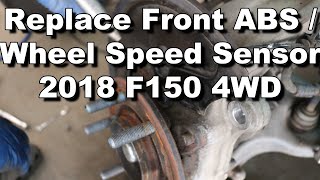
- Ford Focus, F-150, Transit (2012-2018) — Ford uses both definitions. On the Focus, it points to a brake pedal switch fault. On the F-150 and Transit, it is a Right Front Wheel Speed Sensor issue.
- Hyundai / Kia Sonata, Elantra, Optima, Sorento (2011-2019) — C0041 consistently refers to the 'Brake Pedal Switch B Circuit'. Multiple recalls address faulty switches and disintegrating pedal stopper pads.
- Honda Civic, HR-V, Accord (2016-2022) — Often a brake switch issue. Check the floor mat for a broken brake pedal stopper pad before replacing the switch.
- Nissan Altima, Maxima, Rogue (2007-2015) — Frequently caused by a failed brake pedal switch or a shattered plastic pedal stopper pad, causing brake lights to stay on.
- BMW 3 Series (E90/E92) (2006-2013) — Experiences C0041 due to brake pedal switch failure, disabling Dynamic Stability Control (DSC) and illuminating the ABS, Brake, and DSC lights.
- Subaru Forester, Impreza, Outback (2008-2014) — Subaru definitions are inconsistent. C0041 points to the brake switch, 'VDC Control Module Malfunction', or unrelated fuel system codes. A Subaru-specific scan tool is essential.
- Volkswagen Passat, Jetta, Golf (2012-2018) — A single wheel speed sensor fault causes a cascade of warning lights, including ABS, ESC, power steering, and electronic parking brake faults.
Manufacturer-Specific Notes
- General Motors (Chevrolet, GMC, Buick, Cadillac): Per TSB PIC5428G, metallic debris on the magnetic encoder ring causes codes for all four wheel speed sensors. The fix is cleaning the hub surface, not replacing the sensor.
- Hyundai / Kia: Multiple safety recalls (13V-113, 09V-122, 17V-769) address failing brake light switches and disintegrating pedal stopper pads that cause C0041.
- Ford: Ford uses C0041 for both 'Brake Pedal Switch B' (Focus, Fusion) and 'Right Front Wheel Speed Sensor Circuit' (F-150, Transit), depending on the model.
- Honda / Nissan: A shattered plastic stopper pad on the brake pedal arm is the most common cause of brake switch codes, leaving brake lights stuck on.
- Subaru: Subaru definitions for C0041 range from 'Brake Pedal Switch B' to 'VDC Control Module Malfunction'. A Subaru-specific scan tool is mandatory.
Real Owner Stories
2013 Hyundai Elantra at 75K miles - The Easy Fix
The ESC light was on, and the brake lights were stuck on, draining the battery overnight. The owner found small, brittle plastic pieces on the driver's side floor mat.
Outcome: They purchased a new brake pedal stopper pad for under $10. The new pad snapped into place, allowing the switch plunger to depress correctly, turning off the brake lights and clearing the ESC warning.
Lesson: On Hyundai, Kia, Honda, and Nissan vehicles, always check for broken plastic stopper pad fragments on the floor before assuming the brake switch is bad.
2015 Chevy Equinox at 120K miles - The Misdiagnosis
ABS and Stabilitrak warning lights illuminated intermittently. A basic code reader showed C0041, which the owner incorrectly identified online as a 'Brake Pedal Switch B' fault.
Outcome: A mechanic identified a broken wire inside the wheel speed sensor harness near the suspension—a known GM issue. Repairing the harness resolved the code.
Lesson: For GM vehicles, C0041 almost always means a Right Front Wheel Speed Sensor circuit issue. Inspect the wiring harness and magnetic encoder ring before replacing the sensor.
2006 Chevy Equinox at 150K miles - The Unusual Root Cause
ABS/Traction Control lights were on. A scanner showed codes for both front wheel speed sensors (C0035 and C0040). The owner heard a grinding noise from the front left wheel.
Outcome: A bad wheel bearing caused the grinding noise and the erratic sensor signal due to excessive hub wobble. Replacing the hub assembly fixed the mechanical issue and the sensor code simultaneously.
Lesson: A bad wheel bearing directly causes a wheel speed sensor code because the wobble creates an inconsistent gap between the sensor and the tone ring. If you hear grinding, suspect the bearing.
How to Prevent This Code From Triggering
- Apply dielectric grease to wheel speed sensor connectors (Whenever brakes or wheel hubs are serviced) — Dielectric grease seals the connector from moisture and road salt, preventing pin corrosion.
- Perform a brake fluid flush (Every 2-3 years or 30,000 miles) — Brake fluid absorbs moisture over time. Contaminated fluid corrodes the internal valves of the ABS control module.
- Periodically clean wheel wells and undercarriage (Seasonally, especially after winter in the 'Rust Belt') — Washing away road salt reduces corrosion on wiring harnesses and prevents metallic debris buildup on GM magnetic hub rings.
- Inspect and secure wiring harnesses (During tire rotations or brake service) — Ensuring the wheel speed sensor harness is properly clipped prevents chafing against suspension components.
Frequently Asked Questions
My car has C0041 and the brake lights work, but cruise control doesn't. Can the switch still be bad?
Yes. Modern brake pedal switches are dual-circuit. Circuit 'A' controls the brake lights, while circuit 'B' sends signals to the cruise control and ABS. Code C0041 specifically flags a failure in the 'B' circuit, leaving brake lights fully functional while disabling other systems.
What are the most common misdiagnoses for C0041?
The biggest mistake is replacing the wrong part due to the code's dual definition (e.g., swapping a brake switch on a Chevy when it needs a wheel speed sensor). Another common error is replacing a sensor when the actual culprit is a broken wire or a dirty magnetic hub ring. Always verify the exact definition for your VIN first.
Can a bad wheel bearing cause a C0041 code?
Yes. A worn wheel bearing introduces excessive play or 'wobble' in the hub. This alters the gap between the wheel speed sensor and its magnetic tone ring, creating an erratic signal that triggers a C0041 code.
How do you clean a wheel speed sensor or its magnetic ring?
Remove the sensor (usually one 10mm bolt) and spray brake cleaner directly into the mounting hole. Use a soft, non-magnetic nylon brush to gently scrub the metallic debris off the ring. Never use metal tools or magnets, as they permanently damage the encoder.
Will clearing the code make it go away?
You can clear the code with an OBD-II scanner, but it returns immediately if the underlying mechanical or electrical fault remains. For intermittent wiring faults, the light might stay off for a few miles before triggering again.
The code definition on my scanner says 'Wheel Speed Sensor', but the internet says 'Brake Switch'. Which is correct?
Both are correct depending on the manufacturer. The standard SAE definition is the brake switch, but General Motors and Ford reassign C0041 to the right front wheel speed sensor. Always trust manufacturer-specific service manuals over generic scanner definitions.
Can I fix a C0041 code myself?
Yes, replacing a faulty brake pedal switch, a broken stopper pad, or an accessible wheel speed sensor requires only basic hand tools and costs under $50. Cleaning a magnetic hub ring is also a straightforward DIY task. However, take the vehicle to a professional shop if the issue involves complex wiring harness repairs or a faulty ABS control module.
Key Takeaways
- Confirm your vehicle's specific C0041 definition before buying parts, as it means 'Brake Pedal Switch B' on Hyundai/Honda but 'Right Front Wheel Speed Sensor' on GM/Ford.
- Clean the magnetic hub encoder ring with a $5 can of brake cleaner before replacing the wheel speed sensor on 2007-2017 GM vehicles, per TSB PIC5428G.
- Inspect the driver's side floor mat for shattered plastic pieces on Honda and Nissan models; a broken $10 brake pedal stopper pad causes this code 80% of the time.
- Expect up to 20% longer stopping distances on wet roads because C0041 completely disables your Anti-lock Braking System (ABS) and Electronic Stability Control (ESC).
- Check your brake lights immediately if C0041 triggers; a stuck brake switch drains the battery overnight and prevents automatic transmissions from shifting out of Park.
Helpful Videos

Shop the Parts Behind C0041
Below are the parts most often responsible for code C0041, ranked by how frequently each one is the actual culprit (per the diagnosis above). Tap any to see what we have for your vehicle.



The information in this article is provided for general reference and educational purposes only. Vehicle specifications, procedures, and part compatibility can vary by production date, trim level, and region. Always consult your vehicle's factory service manual and verify part numbers before purchasing or performing repairs. Safety-critical components such as airbags, seat belts, and braking systems should be installed by a qualified professional.
- 🧭 Diagnostic Flowchart
- 🎬 Helpful Videos
- 🛍️ Shop This Part
- What Does C0041 Mean?
- Can I Drive With C0041?
- Common Causes
- Symptoms
- Common Fixes & Costs
- DIY vs Professional
- Used vs. New Parts: Buying Guide
- What Happens If You Wait — Timeline
- Cost of Not Fixing It
- Diagnosis Steps
- When This Code Triggers (Freeze-Frame Conditions)
- Related Codes
- Climate & Environmental Factors
- How to Talk to a Mechanic About This Code
- Where to Take It: Dealer vs Independent vs Chain
- When to Walk Away From the Repair
- What Scan Tool You Need for This Code
- How to Clear the Code After You Fix It
- Will This Fail Emissions / State Inspection?
- Most Commonly Affected Vehicles
- Manufacturer-Specific Notes
- Real Owner Stories
- 2013 Hyundai Elantra at 75K miles - The Easy Fix
- 2015 Chevy Equinox at 120K miles - The Misdiagnosis
- 2006 Chevy Equinox at 150K miles - The Unusual Root Cause
- How to Prevent This Code From Triggering
- Frequently Asked Questions
- My car has C0041 and the brake lights work, but cruise control doesn't. Can the switch still be bad?
- What are the most common misdiagnoses for C0041?
- Can a bad wheel bearing cause a C0041 code?
- How do you clean a wheel speed sensor or its magnetic ring?
- Will clearing the code make it go away?
- The code definition on my scanner says 'Wheel Speed Sensor', but the internet says 'Brake Switch'. Which is correct?
- Can I fix a C0041 code myself?
- Key Takeaways
- 🎟️ Get 5% Off