

C0041 on 2019-2020 Honda Civic: Brake Switch Circuit Error Causes and Fixes
On a 2019-2020 Honda Civic, code C0041 almost always points to a faulty brake pedal position switch or is caused by the driver resting their foot on the brake pedal. This can disable critical safety systems like automatic emergency braking. Replacing the switch is a common, low-cost fix, with the genuine OEM part costing around $20-$50.
- Code C0041 on a 2019-2020 Civic is specific to the brake switch circuit, not wheel speed sensors.
- Before buying parts, check for the simple cause: the driver resting their foot on the brake pedal. Clearing the code may be the only fix needed.
- If parts are needed, the most likely culprit is the inexpensive brake pedal position switch or an even cheaper plastic stopper pad.
- This is a safety-critical fault. Do not ignore it, as advanced safety systems like automatic emergency braking are disabled until it is fixed.
What's Unique About the 2019-2020 Honda CIVIC
For the 10th generation Honda Civic (and other Hondas with Bosch ADAS units), this code is so commonly associated with a specific user behavior—resting a foot on the brake pedal while driving—that Honda issued Technical Service Bulletin (TSB) A20090C about it. This light but constant pressure can confuse the system, making it think the switch has failed when it may just need a DTC reset and driver education. In other cases, it is a straightforward failure of the brake pedal position switch itself.
Diagnostic Flowchart
Tap your situation to follow the diagnostic path that matches what you're seeing on this vehicle.
Symptoms You May Notice
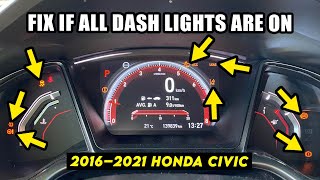
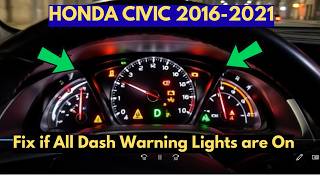
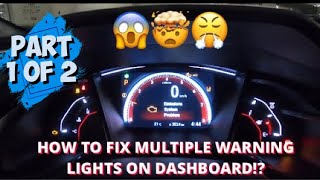
- Multiple warning lights on the dashboard, including 'Brake System Problem', 'Collision Mitigation Braking System Problem' (CMBS), 'Road Departure Mitigation System Problem' (RDM), and 'Adaptive Cruise Control Problem' (ACC)
- ABS and Vehicle Stability Assist (VSA) warning lights illuminated
- Brake lights may stay on constantly or not turn on at all
- In push-button start models, potential issues starting the vehicle if it doesn't detect the brake pedal being pressed
- Cruise control will not engage or will disengage unexpectedly
- Replacing the VSA/ABS module before thoroughly testing the brake switch and its circuit.
- Replacing wheel speed sensors, as a generic C0041 definition on other car brands can point to a wheel speed sensor issue, which is incorrect for this Honda.
Most Likely Causes
- Driver resting foot on brake pedal 🔴 High Probability The sensitivity of the ADAS (Advanced Driver-Assistance Systems) logic in this platform can interpret light, prolonged pedal pressure as a circuit fault, as documented in Honda TSB A20090C.
How to confirm: Interview the driver about their habits. If they confirm they often rest their left foot on the brake pedal, this is the likely cause. A test drive may also reveal this habit.
Typical fix: Clear the Diagnostic Trouble Code (DTC) using an OBD-II scanner. Educate the driver to use the 'dead pedal' (footrest) for their left foot instead of resting it on the brake pedal. No parts are replaced.
Est. part cost: $0 - Faulty Brake Pedal Position Switch 🔴 High Probability This is a common failure point on many modern vehicles due to its constant use. If driver habit is ruled out, this is the next most likely culprit.
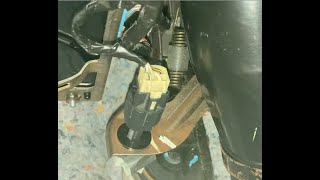
How to confirm: After confirming the switch is properly adjusted, test its electrical function. Using a multimeter, check for the correct voltage change when the pedal is pressed and released. If the switch fails to send a consistent signal, it is faulty. The switch can typically be removed by rotating it counter-clockwise.
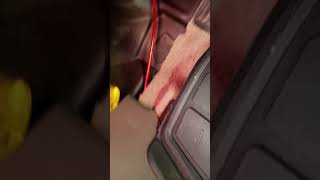
Typical fix: Replace the brake pedal position switch located at the top of the brake pedal arm. The OEM part number is 36750-T2A-A02. 🎬 See this walkthrough on replacing the brake pedal position switch.
Est. part cost: $20-$50 - Improperly Adjusted Brake Pedal Position Switch 🟡 Medium Probability
How to confirm: Visually inspect the switch to ensure it is correctly positioned, making contact with the pedal arm when released and fully disengaging when pressed. If there is a gap or it's improperly threaded, it needs adjustment.
Typical fix: Adjust the switch's position so that it operates correctly with the pedal's movement. This is often done by loosening a lock nut, turning the switch body, and re-tightening the nut.
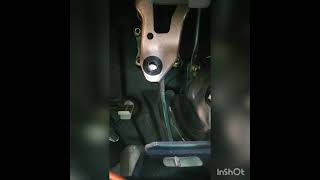
Est. part cost: $0 - Broken Brake Pedal Stopper Pad ⚪ Low Probability → Shop Brake Pedal Over time, the small plastic pad on the brake pedal arm that physically contacts the switch plunger can become brittle and break. This is a known issue on many Honda models across decades.
How to confirm: Look for small, broken pieces of blue or white plastic on the driver's side floor mat. Visually inspect the brake pedal arm for a missing stopper pad where it should contact the switch. This failure often causes the brake lights to stay on constantly.
Typical fix: Install a new brake pedal stopper pad into the hole on the pedal arm. The OEM part number is 46505-SA5-000. 🎬 Watch: How to replace a broken brake pedal stopper pad.
Est. part cost: $5-$10
Rare But Worth Checking
- Wiring or Connector Issue: Damage to the wiring harness or corrosion in the connector for the brake switch can cause an intermittent or lost signal. This should be checked if a new switch doesn't resolve the code.
- VSA Modulator-Control Unit Fault: In very rare cases, the problem may lie within the ABS/VSA control module itself. This is an expensive component and should only be considered after all other possibilities (switch, wiring, adjustment) have been exhaustively ruled out.
- PGM-FI System Fault: Honda's official diagnostic procedure for C0041-14 states that if the code returns after a test drive, troubleshooting for the PGM-FI (Programmed Fuel Injection) system should be performed, as the brake operation information is routed through the PCM.
Diagnosis Steps
- Connect an OBD-II scanner capable of reading chassis codes and confirm the presence of C0041-14.
- Interview the driver about their driving habits, specifically if they rest their foot on the brake pedal.
- If driver habit is suspected, clear the code and perform a test drive at over 6 mph (10 km/h) for at least 30 seconds, including pressing the brake pedal for at least 2 seconds. Advise the driver to use the dead pedal.
- If the code returns, inspect the driver's floor area for broken plastic pieces from a failed stopper pad.
- Visually inspect the brake pedal position switch, its adjustment, connector, and nearby wiring for any obvious damage.
- With the ignition on, test the brake lights. Check if they are stuck on, stuck off, or operate normally.
- Using a multimeter, back-probe the connector and verify the switch is sending the correct voltage signal when the pedal is pressed and released. A typical test involves checking for a change from a reference voltage (e.g., 5V) to 0V.
- If the switch is faulty or out of adjustment, replace or adjust it. The switch is typically removed by rotating it counter-clockwise.
- If the switch and wiring test good, the issue may be more complex and require advanced diagnostics of the PGM-FI or VSA system as per Honda's service information.
Parts You'll Likely Need
- Brake Light Switch / Brake Pedal Position Switch
(OEM #36750-T2A-A02)— This is the most common hardware failure that causes the C0041-14 code when driver habit is not the cause. It provides the primary signal for brake pedal application. This part number supersedes 36750-T2A-A01.
Trusted brands: Honda (Genuine), Duralast, Carquest, Beck/Arnley
OEM price range: $16-$30
Aftermarket price range: $15-$30 - Brake Pedal Stopper Pad
(OEM #46505-SA5-000)— This small plastic piece can disintegrate over time, preventing the brake pedal arm from depressing the switch plunger, causing the brake lights to stay on and triggering this code. It is a very common failure part on Hondas.
Trusted brands: Honda (Genuine), Dorman
OEM price range: $5-$10
Aftermarket price range: $2-$5
Technical Service Bulletins (TSBs) & Recalls
- A20090C: States that resting a foot on the brake pedal can cause multiple ADAS warning lights and set code C0041-14. It advises service advisors to interview the customer about this habit before beginning repairs.
Platform-Specific Known Issues
- Honda Technical Service Bulletin (TSB) #A20090C explicitly states that resting a foot on the brake pedal while driving can cause the ACC, Collision Mitigation Braking System, and Road Departure Mitigation indicators to come on and set DTC C0041-14.
- The official Honda diagnostic tree for C0041-14 points technicians toward troubleshooting the PGM-FI system if the code persists after basic checks, indicating a deeper integration than a simple switch fault.
Mechanic-Grade Diagnostic Values
- Voltage between ECM/PCM connector terminals A24 and E22 with the brake pedal pressed. — expected: Battery Voltage. Failure: No or low voltage indicates a problem in the brake pedal position switch circuit.
Hidden / Shadow Codes Worth Checking
- C0041-14: This is the specific sub-code for 'Brake Switch Signal Circuit Error' that is consistently referenced in Honda Technical Service Bulletins and diagnostic procedures for this platform. (see via A professional OBD-II scanner capable of reading chassis (C-prefix) codes from the ABS/VSA module.)
Scan Tool Commands That Help
- Honda HDS (or equivalent professional scanner): VSA Sensor Neutral Position Memorization — This procedure is required if the VSA modulator-control unit is replaced or if other related work like wheel alignment or steering component replacement has been performed. It resets the neutral position for the VSA sensors. While not a direct fix for a faulty switch, loss of this calibration can cause system logic errors. The function is typically found in the ABS/VSA menu under 'ADJUSTMENT'.
Wiring & Ground Locations
- G501 — Under the driver's side of the dashboard.. This is a main ground point for several modules, including the Gauge Control Module, which communicates with the VSA system via CAN bus. A poor ground here can cause intermittent communication faults that could potentially be misinterpreted by the VSA module, leading to various DTCs.
OEM Part Supersession History
36750-T2A-A01→36750-T2A-A02— Standard part revision or change in manufacturer (e.g., from one OEM supplier to another like Toyo Denso).
Heads up: None found; 36750-T2A-A02 is the correct and current replacement part.
Helpful Videos

The information in this article is provided for general reference and educational purposes only. Vehicle specifications, procedures, and part compatibility can vary by production date, trim level, and region. Always consult your vehicle's factory service manual and verify part numbers before purchasing or performing repairs. Safety-critical components such as airbags, seat belts, and braking systems should be installed by a qualified professional.
- Honda CIVIC:
- 🧭 Diagnostic Flowchart
- 🎬 Helpful Videos
- What's Unique About the 2019-2020 Honda CIVIC
- Symptoms You May Notice
- Most Likely Causes
- Rare But Worth Checking
- Diagnosis Steps
- Parts You'll Likely Need
- Technical Service Bulletins (TSBs) & Recalls
- Platform-Specific Known Issues
- Mechanic-Grade Diagnostic Values
- Hidden / Shadow Codes Worth Checking
- Scan Tool Commands That Help
- Wiring & Ground Locations
- OEM Part Supersession History
- 🎟️ Get 5% Off