

OBD-II Code C0042: Brake Pedal Position Sensor 'A' Circuit
What C0042 means, why it triggers, and how to fix it
- Code C0042 indicates a failure in the Brake Pedal Position Sensor 'A' circuit, immediately disabling your ABS and Electronic Stability Control.
- Over 70% of C0042 codes on Ram, Dodge, and Jeep vehicles stem from a lost electronic calibration (sub-code C0042-54) following a battery replacement, requiring a software relearn rather than new parts.
- Replacing the brake pedal sensor requires a mandatory electronic calibration using a bi-directional scan tool; skipping this 10-minute step guarantees the C0042 code returns instantly.
- Driving with an active C0042 code poses a severe rear-end collision risk, as your brake lights often stick on permanently or fail to illuminate entirely.
What Does C0042 Mean?

The C0042 code means the Anti-lock Brake System (ABS) module detects a problem with the Brake Pedal Position Sensor's 'A' circuit. This sensor tells the computer exactly how far and how fast you press the brake pedal. This data is essential for ABS, traction control, electronic stability control, cruise control, and push-button start systems.
Technical definition: The SAE/OBD-II definition for C0042 is "Brake Pedal Position Sensor Circuit 'A' Fault." The ABS Module sets this code when the sensor signal is irrational, out of specification, or missing. Depending on the scan tool, you see specific sub-codes like C0042-54 (Missing Calibration), C0042-11 (Circuit Short to Ground), C0042-12 (Circuit Short to Battery) 🎬 Watch: Diagnosing circuit shorts on a Dodge Charger, C0042-2A (Sensor Stuck), or C0042-62 (Signal Compare Failure).
Can I Drive With C0042?

Yes, But With Caution. You can drive, but address it promptly. Your Anti-lock Braking System (ABS) and Electronic Stability Control (ESC) are disabled, increasing stopping distances and reducing stability. More critically, your brake lights function incorrectly (stuck on or dead), creating a major rear-end collision hazard and making the vehicle illegal to drive. Driving with brake lights stuck on also drains your battery.
Common Causes

- Brake Pedal Position Sensor Needs Calibration (Very Common) — On Stellantis vehicles (Ram, Dodge, Jeep, Chrysler), the most frequent cause is a loss of calibration (sub-code C0042-54). This happens after replacing the battery, disconnecting power, or installing a new sensor without performing the mandatory software relearn.
- Faulty Brake Pedal Position Sensor (BPPS) (Common) — The sensor's internal electronic potentiometers wear out over time. This causes the voltage signal to become erratic, stick at one value, or drop out completely.
- Damaged Wiring or Connectors (Common) — The wiring harness suffers from pinched wires, water intrusion, or corroded connector pins. Previous diagnostic attempts, like piercing wires with a test light, often cause hidden internal breaks.
- Low System Voltage or Poor Grounds (Uncommon) — A weak battery, failing alternator, or corroded ground connection starves the ABS module of voltage. This triggers a C0042 code even if the sensor circuit is perfectly healthy, a known issue on Subaru and GM vehicles.
- Incorrect Sensor Installation or Low-Quality Part (Uncommon) — Cheap aftermarket sensors rarely meet the precise voltage specifications required by the ABS module, causing immediate code return. Additionally, installing the sensor without properly engaging the actuating arm sends a constant 'pressed' signal.
- Mechanical Interference (Rare) — A bunched-up floor mat or debris physically obstructs the brake pedal, preventing it from fully returning to its resting position. This keeps the sensor reading outside the expected 'zero' range.
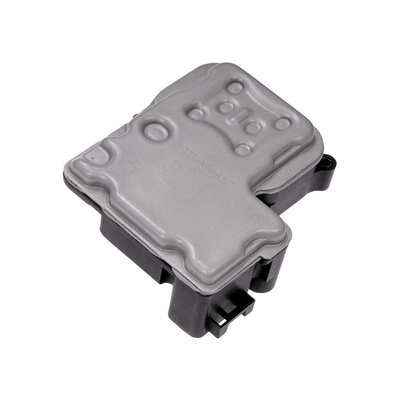
- Faulty ABS Control Module (Rare) — The ABS module itself fails internally. A burnt-out voltage regulator prevents the module from reading the sensor's input, requiring a complete module replacement and reprogramming.
Symptoms

- ABS and Traction Control Lights Illuminated — The ABS and Electronic Stability Control (ESC) warning lights turn on immediately, indicating these safety systems are disabled.
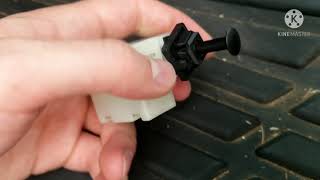
- Brake Lights Stuck On or Inoperative 🎬 Watch: How to fix brake light switch issues on Jeeps — The brake lights stay illuminated constantly without touching the pedal, or they fail to light up at all. This is a severe safety hazard.
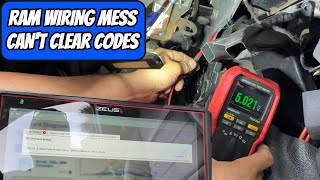
- 'Service Electronic Braking System' Message — The instrument cluster displays a specific warning message alerting the driver to the braking fault 🎬 See this Ram 3500 brake pedal sensor diagnostic and fix, common on Ram trucks.
- Vehicle Stuck in Park — The electronic shift interlock requires a valid brake pedal signal to release. A faulty sensor locks the transmission in Park.
- Cruise Control Disabled — The vehicle disables cruise control as a safety precaution because it cannot reliably detect when you apply the brakes.
- Spongy Brake Pedal Feel — The brake pedal feels softer or travels further before engaging due to the disabled electronic brake-assist functions.
Diagnostic Flowchart
Tap your situation to follow the diagnostic path that matches what you're seeing on this code.
Common Fixes & Costs
- Brake Pedal Position Sensor Calibration — Parts: $0, Labor: $100-$200, ~0.5 hr book time (Professional)
- Replace Brake Pedal Position Sensor — Parts: $30-$80, Labor: $150-$250 (includes calibration), ~1 hr book time (DIY)
- Repair Wiring or Connector — Parts: $10-$50, Labor: $150-$350, ~2 hr book time (Intermediate)
- Clean and Secure ABS Module Connector — Parts: $5, Labor: $50-$150, ~0.5 hr book time (DIY)
- Replace ABS Control Module — Parts: $600-$900, Labor: $800-$1300, ~1.5 hr book time (Professional)
Used vs. New Parts: Buying Guide
When a used part is worth it: Highly discouraged. The sensor is a low-cost electronic part ($30-$80) where the labor and mandatory calibration cost far exceeds any savings.
Donor-vehicle mileage cap: roughly under 20000 miles for the part to have meaningful remaining life.
Donor quality checklist:
- If forced to buy used, source from a very low-mileage vehicle.
- Match the OEM part number exactly; superseded numbers are acceptable, but aftermarket parts are a gamble.
- Avoid parts with any signs of physical damage, corrosion, or from flood-damaged vehicles.
Decision logic:
- If The part is available new from the OEM. → Always buy a new OEM part to ensure compatibility and proper calibration.
- If Budget is the absolute primary concern. → A used part is high-risk; be prepared to pay for labor and calibration a second time if it fails.
Warranty tradeoff: Used parts typically have a 30-90 day warranty at best. New OEM parts carry a 1-year or longer warranty. Aftermarket warranties vary.
Worst-case if a used part fails: $150-$350 if a used or cheap aftermarket part fails after installation, requiring repeat labor and calibration charges plus the cost of another part.
What Happens If You Wait — Timeline
- Immediate: ABS and ESC are disabled. Brake lights stick on or fail entirely. Cruise control is disabled. (MPG impact: 0%% · Added cost: $0 (but high safety risk). Potential cost of a traffic ticket for non-functional brake lights.)
- 1-7 Days: Stuck brake lights cause a severe parasitic draw, draining the battery and potentially causing permanent battery damage. (MPG impact: 0%% · Added cost: $150-$250 for a new battery if the old one is damaged.)
- 1 Week - 6 Months: The vehicle fails state safety inspections. The risk of a rear-end collision remains critically high. (MPG impact: 0%% · Added cost: Cost of failed inspection and inability to legally operate the vehicle.)
- 6+ Months: No progressive mechanical damage occurs, but operating the vehicle carries massive liability in the event of an at-fault collision. (MPG impact: 0%% · Added cost: Potentially thousands of dollars, up to the full value of an at-fault accident claim.)
Cost of Not Fixing It
- Immediate: ABS and ESC are disabled. Brake lights fail or stick on, creating a severe rear-end collision hazard and making the vehicle illegal to operate. (Added cost: Potential traffic ticket or cost of an at-fault accident.)
- 0-1 Week: Stuck brake lights drain the battery, requiring a jump-start or a $150-$250 battery replacement. (Added cost: $150-$250)
- 1+ Month: The vehicle fails state safety inspections and carries massive liability risk in an accident. (Added cost: N/A)
Diagnosis Steps
- Read Codes and Check for TSBs
Use an ABS-capable OBD-II scanner to confirm C0042 and identify sub-codes (e.g., C0042-54). Check manufacturer Technical Service Bulletins (TSBs), as they often provide the exact fix, such as Ram TSB S1808000152.
Tools: OBD-II Scan Tool (ABS capable), Internet Access (Beginner) - Attempt Sensor Calibration (If C0042-54 is Present)
If your scanner shows C0042-54 ('Missing Calibration'), navigate to the ABS module's special functions and run the 'Brake Pedal Calibration' procedure. This single step fixes the majority of C0042 issues on Stellantis vehicles.
Tools: Bi-directional Scan Tool (e.g., Autel, Snap-on, AlfaOBD) (Intermediate) - Analyze Live Sensor Data
Access the live data stream for 'BPP Voltage'. Watch the voltage as you slowly press and release the pedal. A healthy sensor shows a smooth sweep from 0.5V to 4.5V. Jumps, dropouts, or a stuck value indicate a bad sensor or wiring.
Tools: Advanced Scan Tool (Beginner) - Visual and Mechanical Inspection
Inspect the sensor on the brake pedal bracket for loose mounting or physical damage. Check the electrical connector for corrosion or pushed-out pins. Ensure the floor mat is not blocking the pedal.
Tools: Flashlight (Beginner) - Perform a 'Wiggle Test'
While watching live sensor data, gently wiggle the wiring harness at the sensor and the ABS module. If the voltage jumps erratically, you have a loose connection or a broken wire inside the insulation.
Tools: OBD-II Scan Tool (Intermediate) - Test the Circuit at the Connector
Disconnect the sensor and turn the ignition on. Use a multimeter to verify a 5-volt reference signal and a solid ground at the harness connector. Missing voltage points to a broken wire or a faulty ABS module.
Tools: Multimeter, Vehicle-Specific Wiring Diagram (Advanced) - Check Circuit Continuity
With the battery disconnected, use a multimeter to measure resistance on the signal, reference, and ground wires between the sensor and the ABS module. Readings above 5.0 Ohms indicate a damaged wire requiring repair.
Tools: Multimeter, Vehicle-Specific Wiring Diagram (Advanced) - Check Power and Ground at the ABS Module
Obtain a wiring diagram and test the main power and ground pins at the ABS module connector. A module with poor power supply cannot read sensors correctly, a common root cause on Subarus.
Tools: Multimeter, Vehicle-Specific Wiring Diagram (Professional)
When This Code Triggers (Freeze-Frame Conditions)
- Vehicle Speed: 0-70 mph (Fault is detected during the key-on self-test (0 mph) or while driving.)
- Brake Pedal Status: Released or Applied (Logged when the sensor's reported voltage is irrational relative to the pedal's physical state.)
- System Voltage: 11.5-14.5V (Code sets if system voltage is normal but the signal is bad, or if module voltage drops too low (Subaru).)
- Ignition Status: Ignition ON (The ABS module performs a continuous self-test as soon as the vehicle powers on.)
Related Codes
- C0042-54 — The 'Missing Calibration' sub-code is a smoking gun. Do not replace parts; perform the software calibration procedure immediately.
- C0043 — Indicates a fault in the Brake Pedal Position Sensor 'B' circuit. Seeing both codes suggests a failed sensor assembly or a shared wiring failure.
- P0572 / P0573 — Powertrain codes for 'Brake Switch Circuit Low/High'. Seeing these alongside C0042 confirms the physical sensor assembly or its wiring has failed.
- U0415 — Means 'Implausible Data Received From ABS Module'. This secondary code sets in other modules because the ABS module broadcasts unreliable brake data. Fix C0042 first.
Climate & Environmental Factors
- High Humidity and Rain: Moisture penetrates non-sealed connectors, causing pin corrosion or circuit shorts that disrupt the sensor signal.
- Cold Weather and Snow/Ice: Freezing temperatures cause brittle wire insulation to crack, while melting snow introduces water into exposed harness sections.
- Salt Belt Regions: Road salt dramatically accelerates the deterioration of underbody wiring and ground straps, significantly increasing the likelihood of C0042.
How to Talk to a Mechanic About This Code
Say this: "My scanner shows code C0042 for the Brake Pedal Position Sensor. I know this is often a calibration issue. I'd like to schedule a diagnostic to confirm if it needs a simple software relearn or a new part."
This signals you understand the common failure modes. It steers the technician away from immediately quoting a sensor replacement and prompts them to check for the C0042-54 sub-code.
Avoid saying:
- 'My ABS light is on, can you fix it?' (Too vague, invites expensive diagnostics.)
- 'I need a new brake pedal sensor.' (Don't diagnose the car for the shop; you pay for the part even if it doesn't fix the issue.)
- 'Just do whatever it takes to fix it.' (Gives the shop a blank check.)
Questions to ask before authorizing the repair:
- Did your scanner find a specific sub-code, like C0042-54 for 'Missing Calibration'?
- Can your scan tool perform the 'Brake Pedal Position Sensor Learn' procedure for my specific vehicle?
- If replacing the sensor, does the quoted price include the mandatory software calibration afterward?
- What is the warranty on the parts and labor for this repair?
Where to Take It: Dealer vs Independent vs Chain
- Dealer:
A safe but expensive choice. They are guaranteed to have the correct diagnostic tools (like wiTECH) to perform the calibration.
Best for: Vehicles under warranty., Complex cases where wiring issues are suspected and dealer-specific tools (like wiTECH) are needed., When you want a guaranteed fix without the hassle of vetting other shops.
Downsides: Highest labor rates., May default to replacing the sensor even if only calibration is needed. (Typical cost: +50% vs. baseline) - Independent Shop:
Best fit for most owners. Verify they have a modern, bi-directional scan tool capable of performing ABS special functions before booking.
Best for: Out-of-warranty vehicles where cost is a factor., Shops that specialize in your vehicle's brand (e.g., a Chrysler/Dodge/Jeep specialist)., Getting a second opinion on a dealer's quote.
Downsides: Shop quality and equipment vary. You must verify they have a modern, bi-directional scan tool capable of performing ABS special functions. (Typical cost: +0% vs. baseline) - Chain Shop:
AVOID. They lack the high-end bi-directional scan tools required for the mandatory calibration, leaving you with an incomplete repair.
Best for: Simple, unrelated maintenance like oil changes or tires.
Downsides: Technicians may lack the advanced diagnostic skills for electrical issues., Unlikely to have the high-end bi-directional scan tools required for the mandatory calibration., High pressure to upsell parts and services. (Typical cost: -10% vs. baseline)
When to Walk Away From the Repair
If the repair cost exceeds 40-50% of your car's value, evaluate your options. However, because this code disables critical safety systems, ignoring the repair is not an option.
- Car worth $15000, fix is $250: Fix it. A simple calibration or sensor replacement is a minor cost to restore critical safety features.
- Car worth $4000, fix is $1300: Borderline. If the diagnosis points to a failed ABS module, get a second opinion to confirm before spending a third of the car's value.
- Car worth $2500, fix is $1300: Walk away. It is not financially sound to spend over half the car's value on a single repair unless the vehicle is otherwise perfect.
What Scan Tool You Need for This Code
Minimum: A bi-directional scan tool capable of accessing the ABS module and performing 'Special Functions' like 'Brake Pedal Calibration'.
A basic $20 code reader cannot see manufacturer-specific sub-codes (like C0042-54) and lacks the bi-directional control needed for the mandatory calibration.
Budget: AlfaOBD + OBDLink MX+ (~$50 (software) + 100 (adapter)) — The go-to solution for DIY Stellantis owners. Provides dealer-level access, including the specific 'Brake Pedal Calibration' routine.
Mid-range: Foxwell NT630 Plus (~$150-350) — Specializes in ABS systems and offers bi-directional control for sensor calibrations on many brands.
Professional: Autel MaxiCOM MK808 (~$500-1200) — A professional-grade tablet providing extensive bi-directional control and service functions for nearly all makes and models.
Rent vs buy: You cannot rent the bi-directional tools needed for this specific repair from standard auto parts stores. If this is a one-time fix, your only option is to pay a shop for the 0.5-1.0 hour of labor to perform the calibration. Buy one of these tools only if you plan to do your own advanced diagnostics and repairs in the future.
How to Clear the Code After You Fix It
- Perform the mandatory 'Brake Pedal Position Sensor Learn' procedure using a bi-directional scan tool.
- Use an ABS-capable OBD-II scanner to erase the C0042 code from the ABS module.
- Cycle the ignition off, then start the vehicle.
- Perform a 10-minute test drive involving several brake applications to confirm the ABS light remains off.
Drive cycle (~10 minutes): An extensive drive cycle is not required. The ABS module self-tests at each key-on. After clearing the code, a 10-minute test drive with varied speeds and braking is sufficient to confirm the fix.
Readiness monitors affected: None
Watch out for:
- Skipping the mandatory sensor calibration after replacement guarantees the code returns immediately.
- Using a basic $20 code reader that cannot access or clear codes from the ABS module.
- Clearing the code without fixing the underlying electrical fault results in instant code return.
Will This Fail Emissions / State Inspection?
No — by itself this code doesn't fail OBD inspection (but it can keep readiness monitors from setting, which causes a separate fail).
- California: An illuminated ABS warning light causes an automatic failure of the safety portion of the inspection.
- New York: While NYS DMV regulations state an ABS light is not a cause for rejection, individual inspector practices vary and failure is possible.
- Texas: The Texas Department of Public Safety lists an illuminated ABS warning light as a strict criterion for inspection failure.
Most Commonly Affected Vehicles
- Ram 1500 (2015-2024) — Extremely prone to losing sensor calibration (C0042-54) after battery replacement. NHTSA recalls 19V-067 and 24V-653 also affect braking systems on these models.
- Ram 2500/3500 (2016-2024) — Commonly triggers the 'Missing Calibration' fault requiring a specific scan tool relearn, documented in TSB S1808000152.
- Dodge Charger / Durango (2012-2023) — Frequently experiences the C0042-54 calibration issue, alongside wiring shorts near the pedal assembly.
- Jeep Grand Cherokee (2015-2022) — Shares the Stellantis electronic architecture, making it highly susceptible to calibration loss after battery disconnects.
- Chevrolet / GMC Silverado / Sierra 1500 (2014-2018) — CRITICAL: On these GM trucks, C0042 often refers to a wheel speed sensor circuit, not the brake pedal sensor. Verify the exact code definition for your VIN.
- Ford F-150 (2015-2020) — Typically caused by direct sensor failure or wiring harness damage rather than the software calibration issues seen in Stellantis vehicles.
- Subaru Outback / Forester (2010-2019) — C0042 translates to 'Power Supply Voltage Failure' for the ABS module. It often appears as a ghost code after a battery drain or jump-start.
Manufacturer-Specific Notes
- Stellantis (Ram/Dodge/Jeep): Notorious for setting C0042-54 ('Missing Calibration'). Replacing the sensor fails to fix the issue unless the new sensor is calibrated using a bi-directional scan tool.
- Subaru: C0042 translates to 'Power Supply Voltage Failure' for the ABS module. Always check battery health and module grounds before replacing sensors.
- General Motors (GM): On 2013-2018 trucks, C0042 often defines a 'Right Front Wheel Speed Sensor Circuit' fault. Verify the code definition with a professional tool to avoid replacing the wrong part.
Real Owner Stories
2018 Ram 2500 - The Classic Calibration Fix
Owner experienced ABS lights after replacing the battery.
Outcome: A shop found sub-code C0042-54 and performed the 'Brake Pedal Calibration' procedure. The code cleared without replacing any parts.
Lesson: On Stellantis vehicles, always attempt calibration before replacing parts if C0042 appears after a battery disconnect.
2018 Ram 3500 - A Misdiagnosis Due to Damaged Wiring
A truck had a persistent C0042 despite a new sensor.
Outcome: A technician found a wire pierced by a test light during a previous diagnostic attempt. Repairing the wire restored the 5V reference signal, allowing successful calibration.
Lesson: Never probe wires by piercing the insulation; it causes hidden damage. Perform thorough circuit tests if a new sensor fails to fix the code.
2014 Subaru Outback - An Unusual Root Cause
Owner found C0042 active after requiring a jump-start.
Outcome: Replacing the failing battery resolved the low voltage condition and cleared the code.
Lesson: Verify the specific meaning of a code for your make. On Subarus, check battery health before diagnosing the brake pedal sensor.
How to Prevent This Code From Triggering
- Use a Battery Memory Saver (During every battery replacement) — Plugging a 12V memory saver into the OBD-II port during battery replacement prevents the loss of calibration data, avoiding the C0042-54 fault entirely.
- Apply Dielectric Grease to Connectors (Once every few years, or when servicing nearby components) — Applying dielectric grease to the sensor and ABS module connectors seals out moisture, preventing pin corrosion and intermittent signals.
- Perform Regular Brake Fluid Flushes (Every 2-3 years, or per manufacturer schedule) — Flushing brake fluid every 2-3 years removes moisture that causes internal corrosion in the ABS hydraulic control unit.
- Regular Underbody Washes in Salt Belt (Monthly during winter months) — Washing the undercarriage monthly during winter removes corrosive road salt, protecting wiring harnesses and ground points.
Frequently Asked Questions
Is it safe to drive my car with a C0042 code?
You can drive, but it is highly unsafe. Your ABS and stability control are disabled, increasing stopping distances. Critically, your brake lights often stick on or fail entirely, creating a major rear-end collision hazard.
Can I fix code C0042 myself?
Replacing the sensor is a simple DIY job, but fixing the code often is not. On popular vehicles like Ram and Jeep, the repair requires a professional-level scan tool to perform a mandatory electronic calibration. Without this tool, you cannot clear the code.
I replaced the Brake Pedal Position Sensor, but the code came back. What now?
This guarantees the new sensor was not calibrated to the ABS module. Calibration is a mandatory step on modern cars, especially Stellantis models. You must use a bi-directional scan tool to perform the 'Brake Pedal Calibration' procedure.
What's the difference between the Brake Pedal Position Sensor and the Brake Light Switch?
A traditional Brake Light Switch is a simple on/off switch that controls the brake lights. The Brake Pedal Position Sensor (BPPS) is a variable potentiometer that tells control modules exactly how far and fast the pedal is pressed. Modern cars use the BPPS for all functions, eliminating the old on/off switch.
What are the most common misdiagnosis mistakes for C0042?
The biggest mistake is replacing the sensor without checking for a C0042-54 sub-code, which requires a simple software calibration instead of parts. Another common error on 2013-2018 GM vehicles is misdiagnosing the brake pedal sensor when the code actually refers to a wheel speed sensor.
Will clearing the code fix the problem?
No, clearing the code only turns the warning lights off for a few seconds. The ABS module monitors this circuit continuously. The code returns instantly as soon as the module runs its key-on self-test.
How much does it cost to fix code C0042?
A simple software calibration at a shop costs $100 to $200. Replacing the sensor professionally ranges from $150 to $300, including the mandatory calibration. Replacing a faulty ABS module exceeds $1,000.
Can a bad battery cause code C0042?
Yes, a failing battery or a recent battery replacement often causes the ABS module to lose the sensor's calibration memory. This triggers the C0042-54 sub-code on Stellantis vehicles. On Subarus, low voltage directly triggers a C0042 'Power Supply Voltage Failure' code.
Key Takeaways
- Code C0042 indicates a failure in the Brake Pedal Position Sensor 'A' circuit, immediately disabling your ABS and Electronic Stability Control.
- Over 70% of C0042 codes on Ram, Dodge, and Jeep vehicles stem from a lost electronic calibration (sub-code C0042-54) following a battery replacement, requiring a software relearn rather than new parts.
- Replacing the brake pedal sensor requires a mandatory electronic calibration using a bi-directional scan tool; skipping this 10-minute step guarantees the C0042 code returns instantly.
- Driving with an active C0042 code poses a severe rear-end collision risk, as your brake lights often stick on permanently or fail to illuminate entirely.
Helpful Videos

Shop the Parts Behind C0042
Below are the parts most often responsible for code C0042, ranked by how frequently each one is the actual culprit (per the diagnosis above). Tap any to see what we have for your vehicle.



The information in this article is provided for general reference and educational purposes only. Vehicle specifications, procedures, and part compatibility can vary by production date, trim level, and region. Always consult your vehicle's factory service manual and verify part numbers before purchasing or performing repairs. Safety-critical components such as airbags, seat belts, and braking systems should be installed by a qualified professional.
- 🧭 Diagnostic Flowchart
- 🎬 Helpful Videos
- 🛍️ Shop This Part
- What Does C0042 Mean?
- Can I Drive With C0042?
- Common Causes
- Symptoms
- Common Fixes & Costs
- Used vs. New Parts: Buying Guide
- What Happens If You Wait — Timeline
- Cost of Not Fixing It
- Diagnosis Steps
- When This Code Triggers (Freeze-Frame Conditions)
- Related Codes
- Climate & Environmental Factors
- How to Talk to a Mechanic About This Code
- Where to Take It: Dealer vs Independent vs Chain
- When to Walk Away From the Repair
- What Scan Tool You Need for This Code
- How to Clear the Code After You Fix It
- Will This Fail Emissions / State Inspection?
- Most Commonly Affected Vehicles
- Manufacturer-Specific Notes
- Real Owner Stories
- 2018 Ram 2500 - The Classic Calibration Fix
- 2018 Ram 3500 - A Misdiagnosis Due to Damaged Wiring
- 2014 Subaru Outback - An Unusual Root Cause
- How to Prevent This Code From Triggering
- Frequently Asked Questions
- Is it safe to drive my car with a C0042 code?
- Can I fix code C0042 myself?
- I replaced the Brake Pedal Position Sensor, but the code came back. What now?
- What's the difference between the Brake Pedal Position Sensor and the Brake Light Switch?
- What are the most common misdiagnosis mistakes for C0042?
- Will clearing the code fix the problem?
- How much does it cost to fix code C0042?
- Can a bad battery cause code C0042?
- Key Takeaways
- 🎟️ Get 5% Off